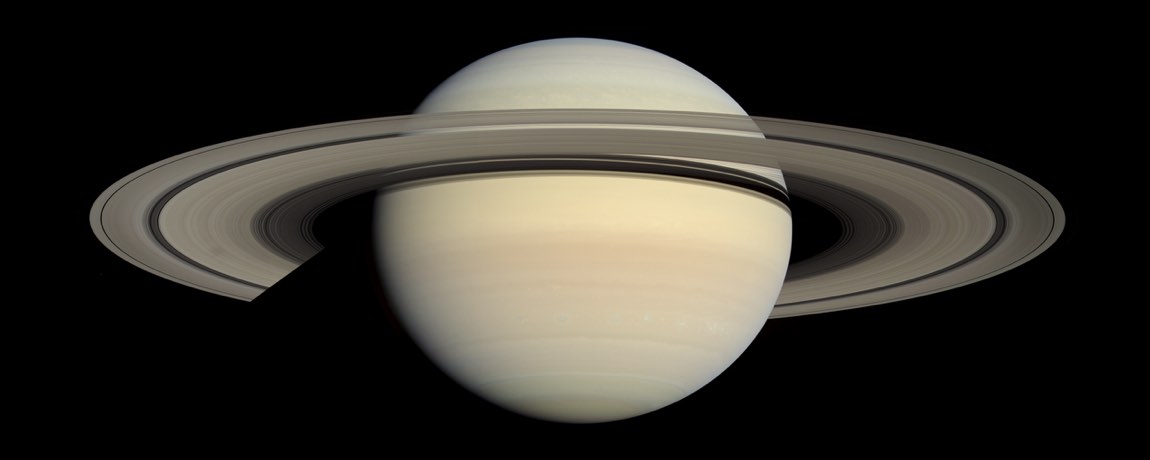
 Photograph · NASA/JPL/Space Science Institute
Planet · Deep guide · orbits The Sun
Saturn
Wrapped in rings of ice, this golden gas giant is the jewel of the Solar System.
What is it?
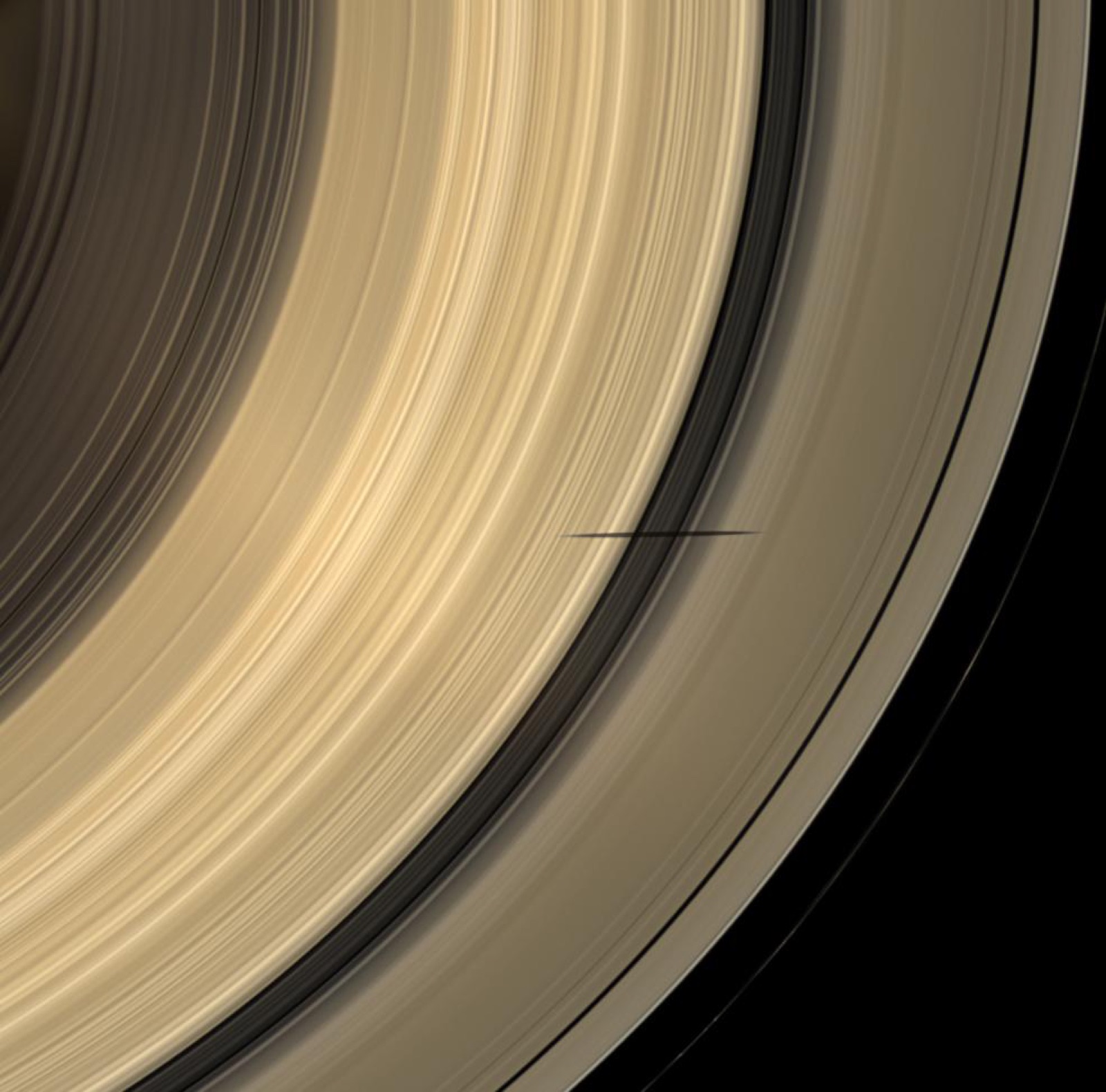
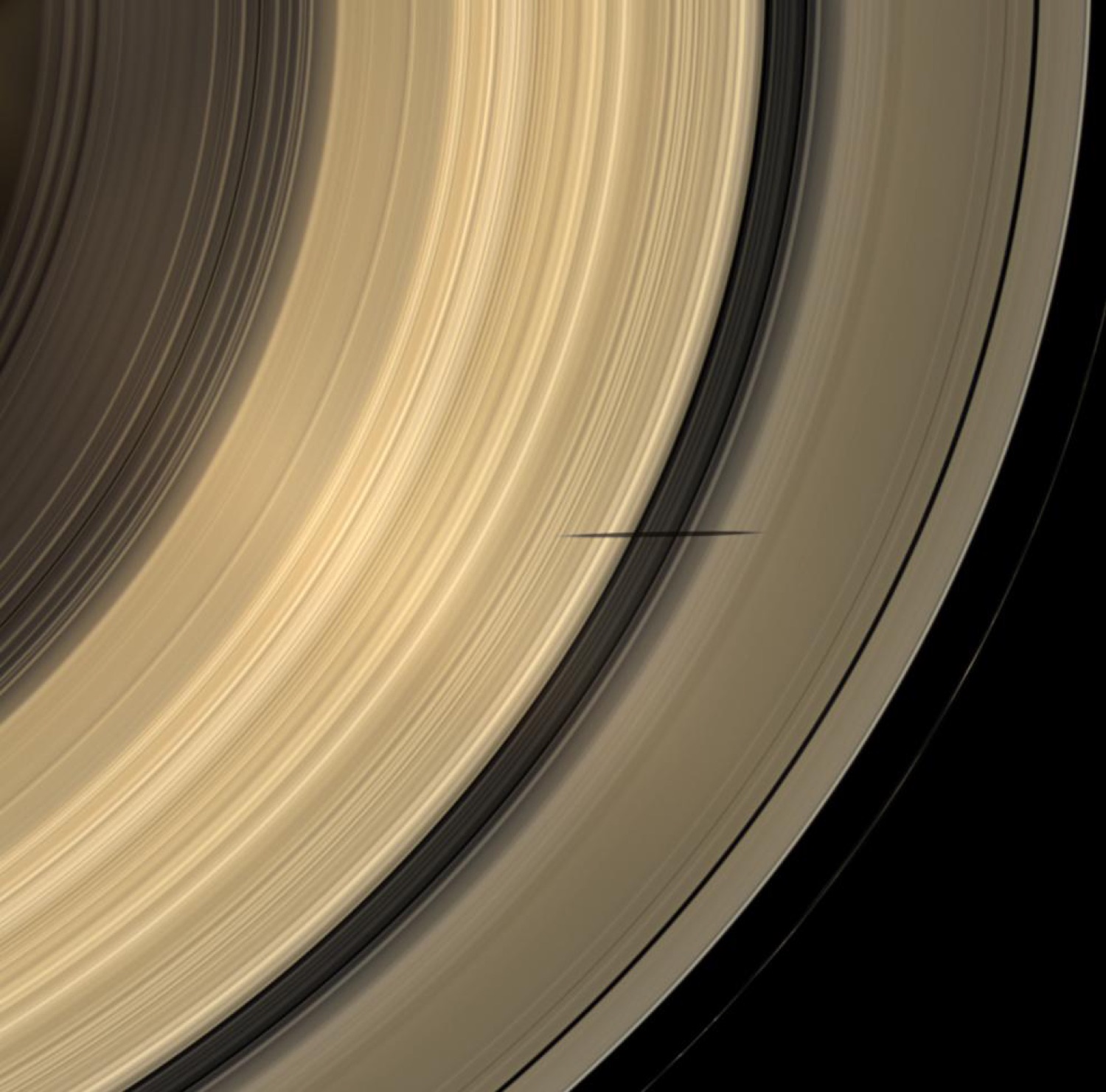
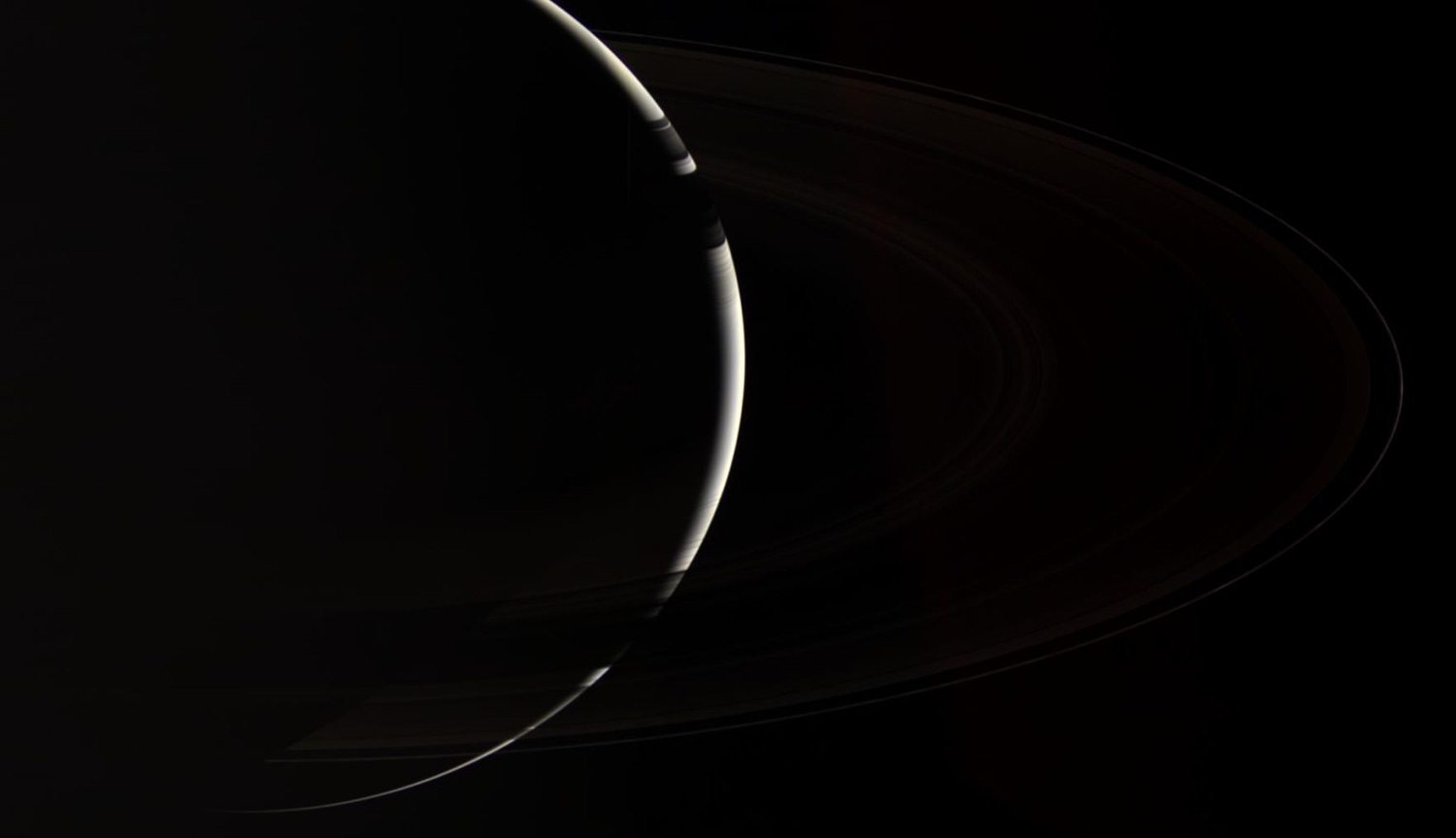
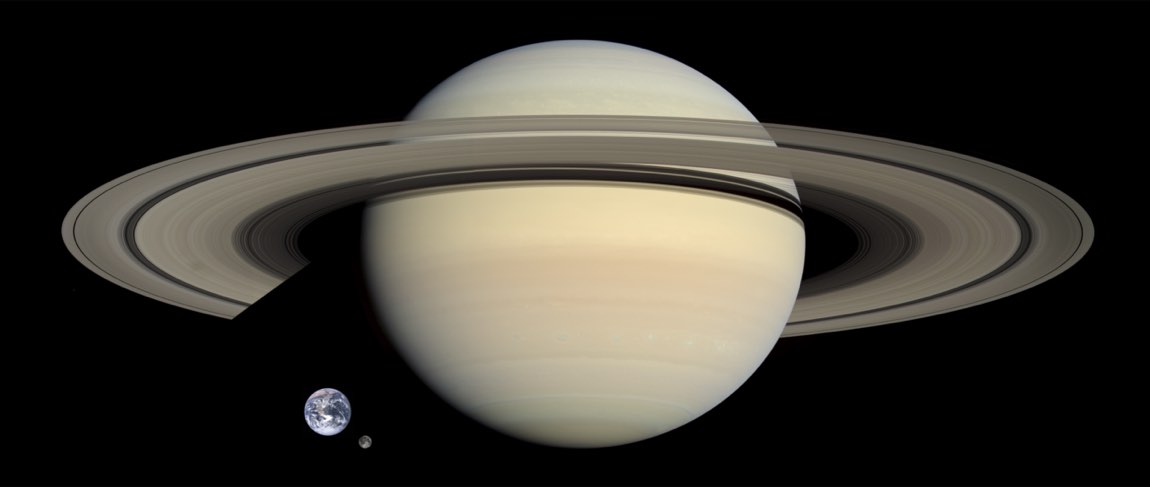
Saturn is the sixth planet from the Sun and the second largest. Like Jupiter it is a gas giant with no solid surface, but Saturn's signature is its rings: billions of chunks of nearly pure water ice, from dust grains to house-sized boulders, spread across a disk 270,000 km wide yet often only about 10 meters thick. It also has the most moons of any planet — 274 at the latest count.
Go deeper
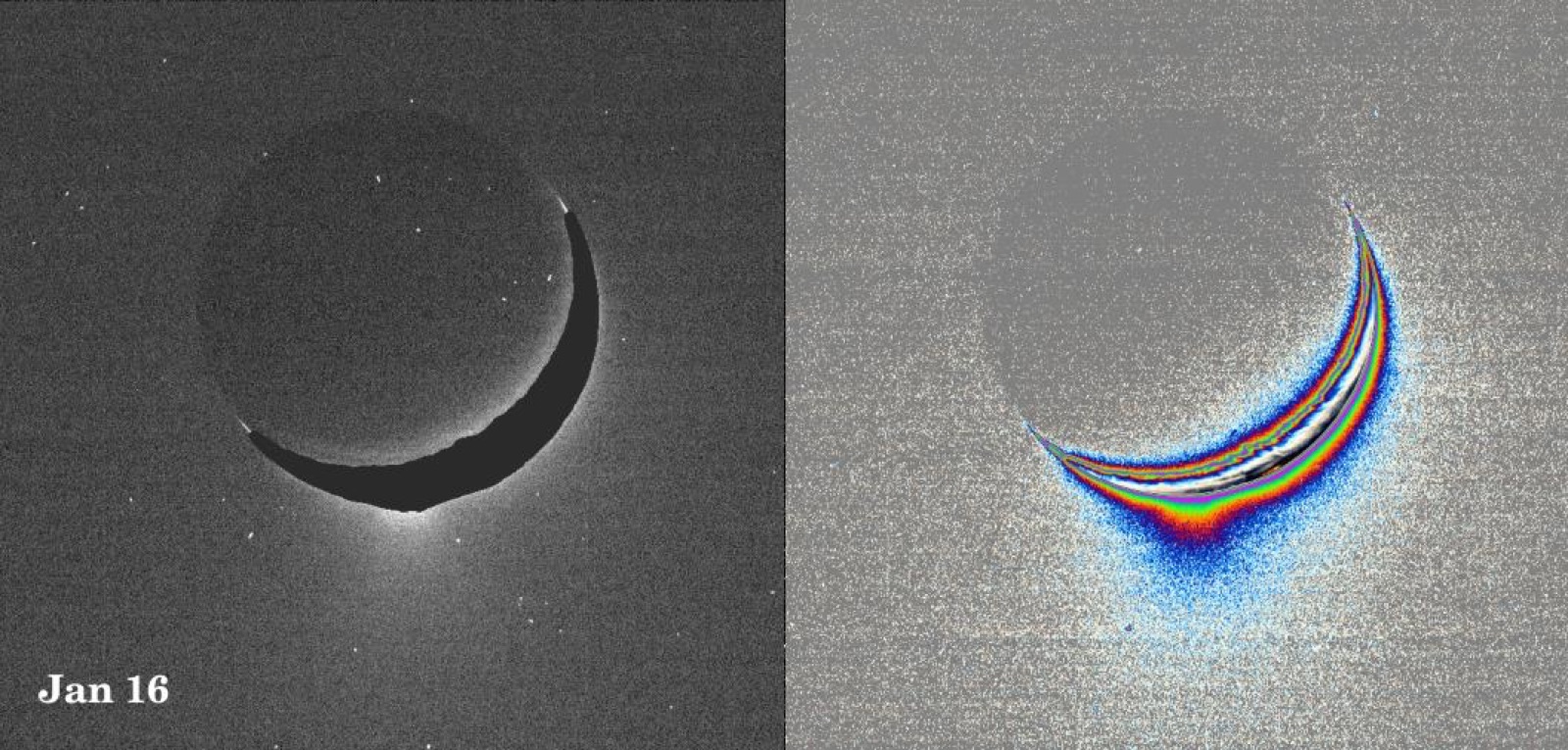
Saturn is the least dense planet — lighter than water on average — and its rapid spin flattens it visibly. Cassini (2004–2017) transformed our picture: it watched seasons turn, discovered Enceladus's water plumes, mapped Titan's methane seas, and in its finale dived between planet and rings, weighing them precisely. The rings turn out to be young — likely under a few hundred million years — and are slowly raining into the planet ('ring rain'), so we may be lucky to see them at their best. In March 2025 astronomers announced 128 new small outer moons, taking the total to 274.
01 What are the rings, really?
Countless icy chunks, each on its own orbit — a blizzard frozen into a disk. If you hovered inside the rings, you would see slowly tumbling snowballs and icebergs drifting past in near silence, with Saturn's golden globe filling half the sky. The rings likely formed when a moon or comet strayed too close and was torn apart by gravity.
02 A system of worlds
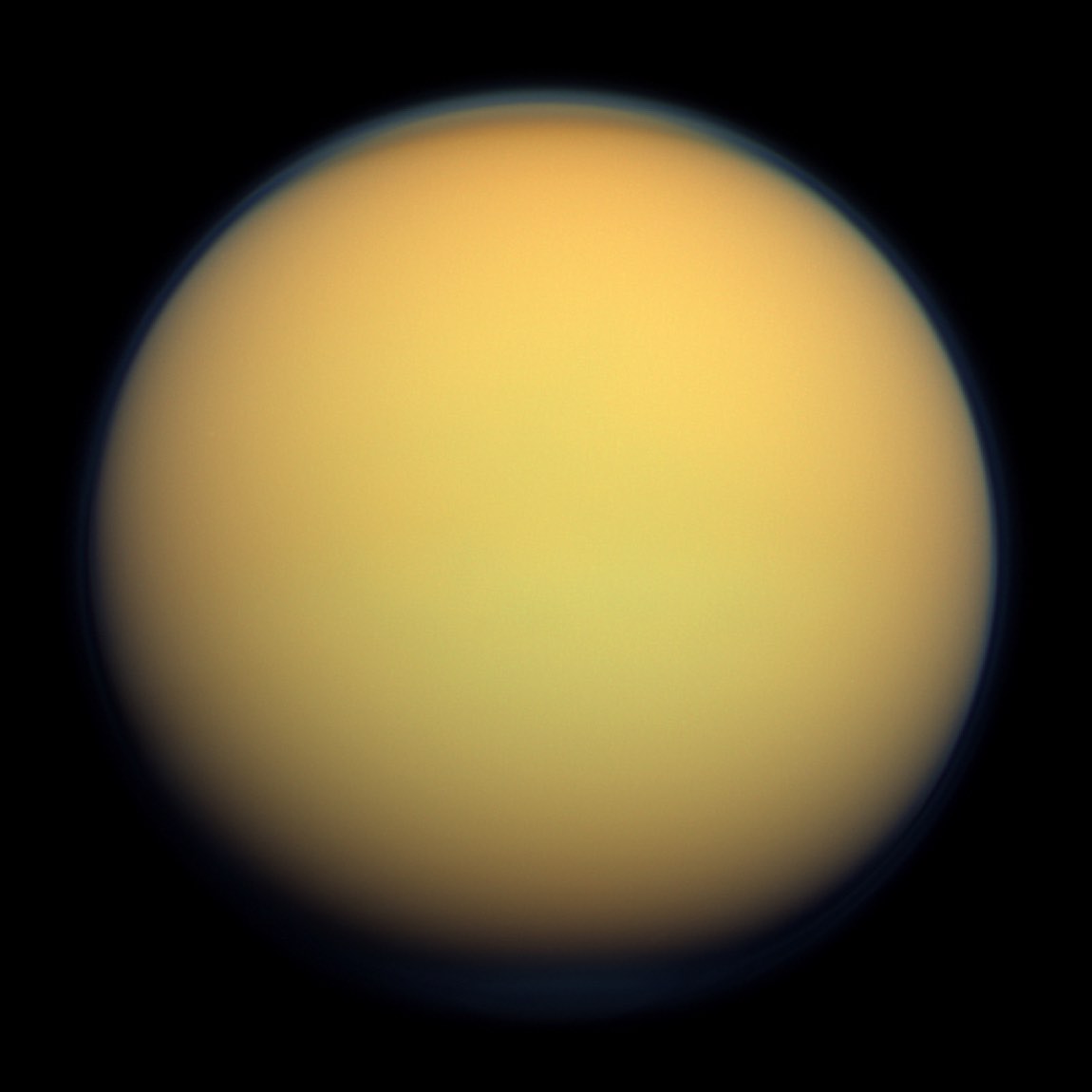
Saturn's moons steal the show: Titan has lakes of liquid methane and a thicker atmosphere than Earth's; tiny Enceladus jets its buried ocean into space; two-faced Iapetus is black on one side and white on the other; sponge-like Hyperion tumbles chaotically. Shepherd moons carve and guard gaps in the rings.
03 The rings are temporary Deeper
Cassini measured ring material 'raining' into Saturn at tonnes per second, and the rings' low mass implies a young age — probably formed within the last few hundred million years, long after Saturn itself, and likely to fade over the next few hundred million. Dinosaurs may have looked up (metaphorically) at a ringless Saturn.
04 Cassini's grand finale Deeper
In September 2017, low on fuel, Cassini was deliberately flown into Saturn's atmosphere to protect the possibly habitable moons from contamination — transmitting science until its signal cut off. Its 13 years in orbit remain the definitive study of a giant planet system.
 ⤢
⤢
The deep dive
Researched for the Atlas from Wikipedia — Saturn (30,805 characters read) · updated Sep 20, 2026
05 A planet lighter than water
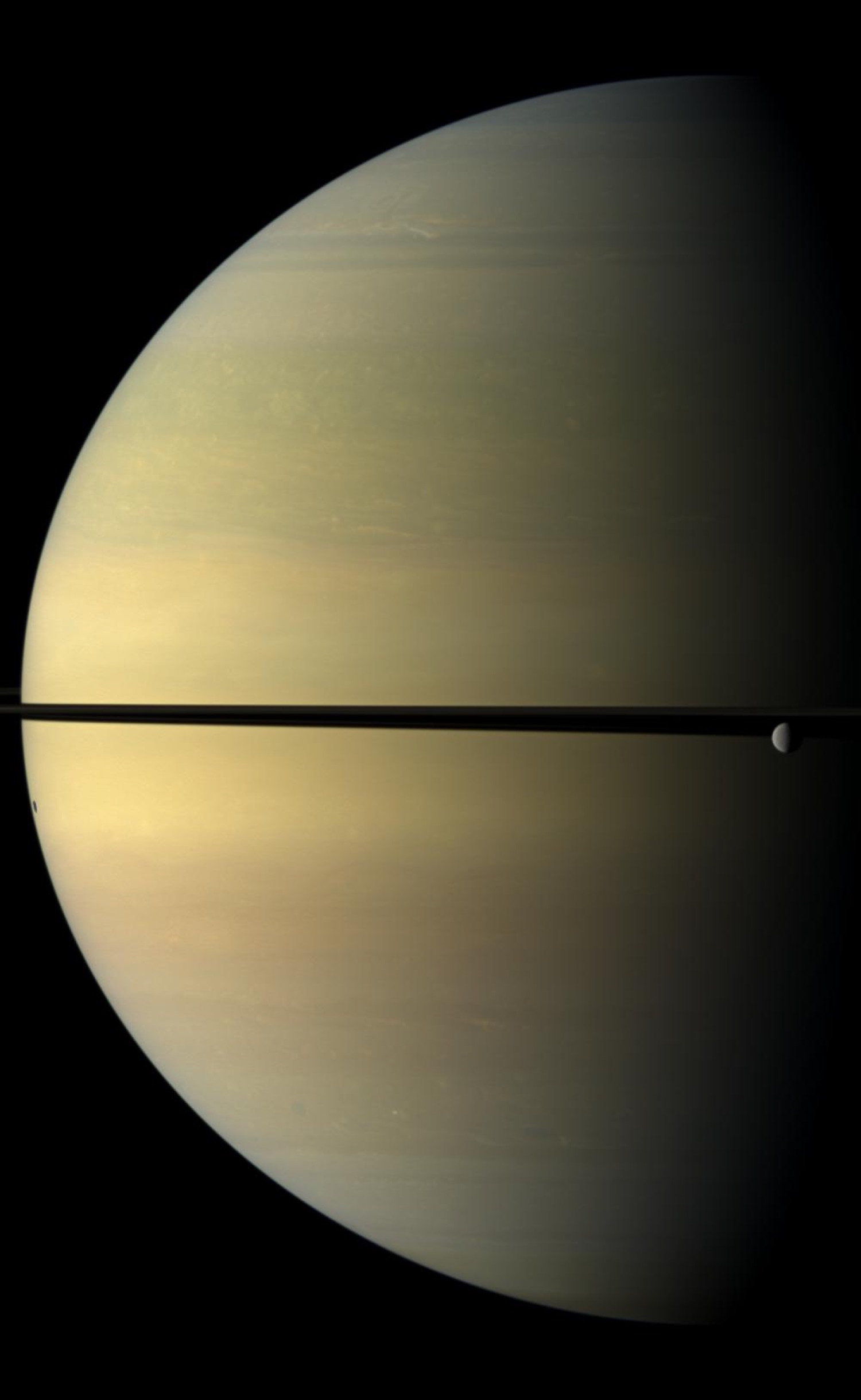
Saturn holds a record no other planet in the Solar System can claim: it is the only one less dense than liquid water — about 30% less dense, in fact. Its average specific density is just 0.69 g/cm³. That figure sounds abstract until you consider what it means physically. Jupiter is 318 times Earth's mass; Saturn is only 95 times Earth's mass, yet Saturn is almost as large. The difference is interior structure. So much of Saturn's bulk is low-density hydrogen and helium gas and fluid that the planet's overall mass is spread through an enormous volume. Together, Jupiter and Saturn account for 92% of all the mass held in the Solar System's planets — a reminder of just how dominant these two gas giants are compared to everything else, including the four rocky inner worlds.
06 What the inside actually looks like Deeper
Saturn's interior is not the simple layered onion that early textbook diagrams suggested. Scientists now describe a "diffuse core" that extends about 60% of the way to the planet's surface — a gradually changing mixture of rock and ice rather than a sharp rocky ball. Measurements of Saturn's gravitational harmonics and its oblateness reveal it to be more centrally condensed than Jupiter, with a much higher concentration of heavy elements deep inside. The central regions are roughly 50% hydrogen by mass, compared to about 67% for Jupiter's core. Ring-seismology measurements suggest the core has a mass equal to about 17 Earths and a radius equal to about 60% of Saturn's total radius. Surrounding this diffuse core is a thicker layer of liquid metallic hydrogen, then a liquid layer of helium-saturated molecular hydrogen that gradually transitions to gas over the outermost 1,000 km.
 ⤢
⤢
07 Saturn's mysterious extra heat Deeper
Saturn radiates 2.5 times more energy into space than it receives from the Sun. Its core temperature reaches 11,700 °C. For Jupiter, the Kelvin–Helmholtz mechanism — slow gravitational compression releasing heat — largely explains that planet's internal warmth. But Saturn is less massive, so compression alone may not be enough. Scientists have proposed an additional source: helium rain. Deep inside Saturn, droplets of helium are thought to condense and fall through the surrounding lower-density hydrogen. As these droplets descend, friction releases heat. The process also strips helium from Saturn's outer layers, which is consistent with observations showing that Saturn's atmosphere is significantly deficient in helium compared to the Sun's abundance of the element. Those descending droplets may even have accumulated into a helium shell surrounding the core.
08 Winds, storms, and the Great White Spot
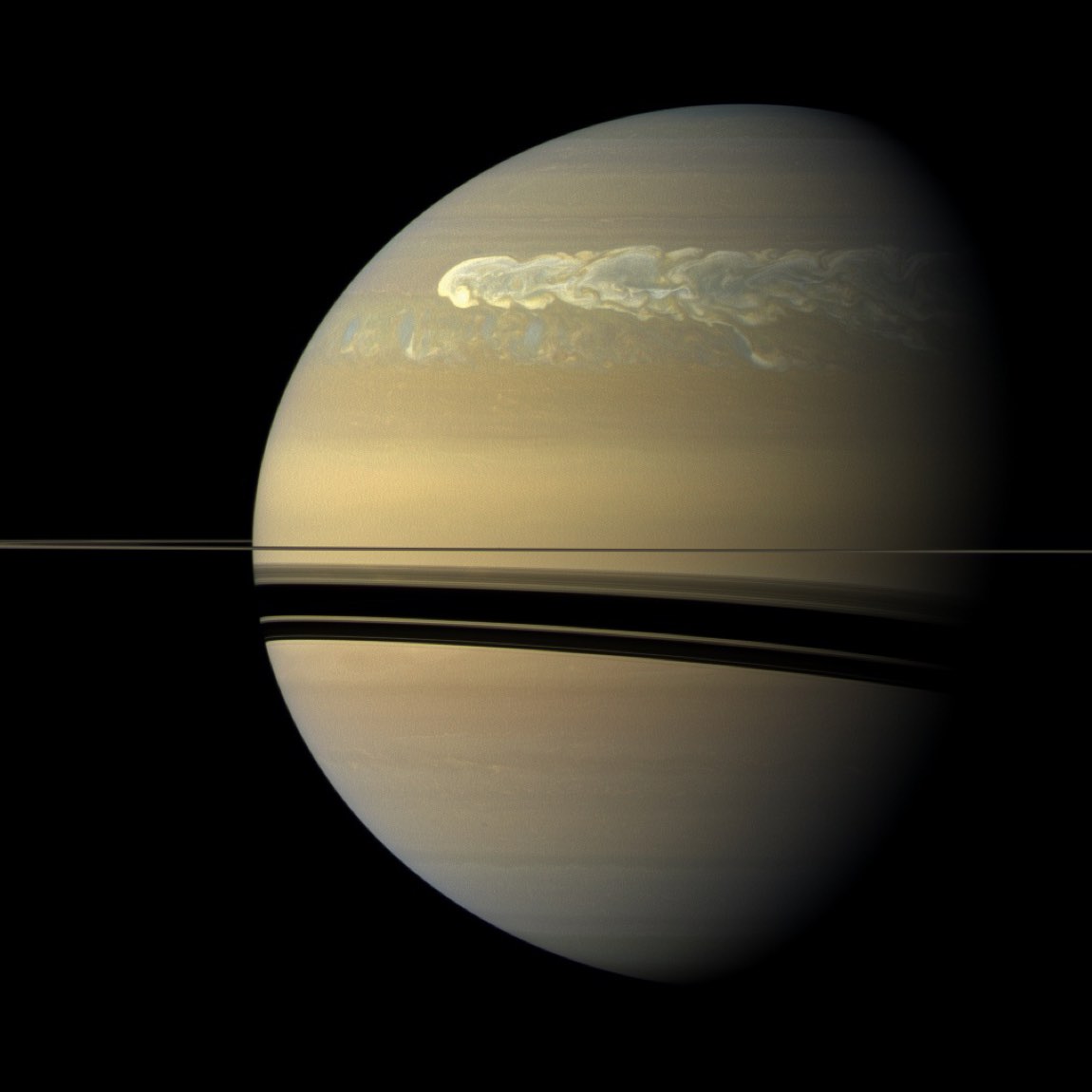
Saturn's winds are the second fastest in the Solar System, trailing only Neptune's. Voyager data recorded peak easterly winds of 500 m/s — that is 1,800 km/h. The planet's normally featureless pale atmosphere occasionally erupts into dramatic storms called Great White Spots, which appear roughly once every Saturnian year, or about every 30 Earth years, near the northern hemisphere's summer solstice. Previous Great White Spots were documented in 1876, 1903, 1933, and 1960, with the 1933 event being the best observed of the historical record. The most recent giant storm was seen in 2010. In 2015, researchers using the Very Large Array found lasting chemical signatures of mid-latitude giant storms and equatorial disturbances that may be hundreds of years old, suggesting that even "quiet" periods leave deep atmospheric scars.
09 The strange hexagon at the north pole
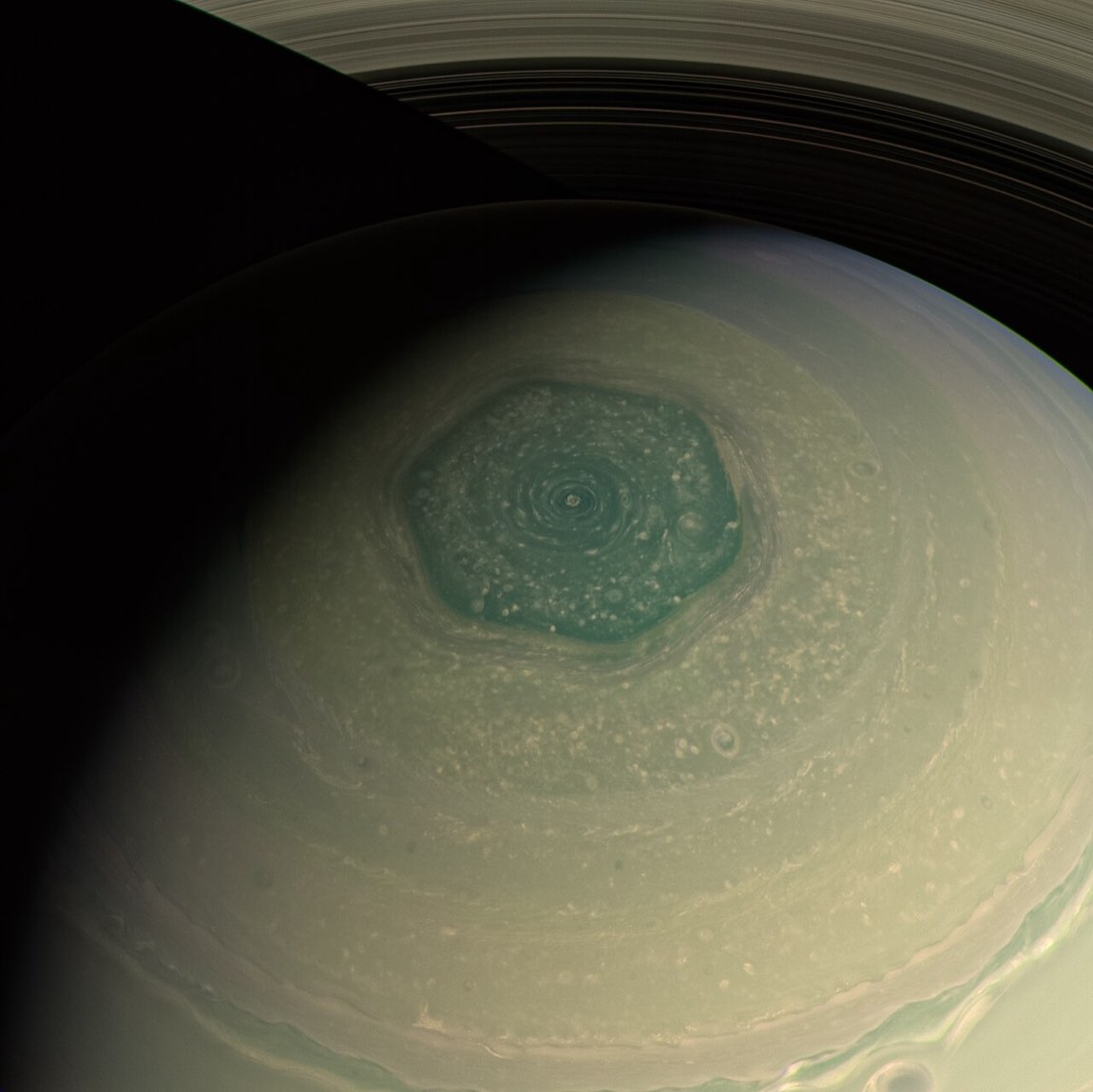
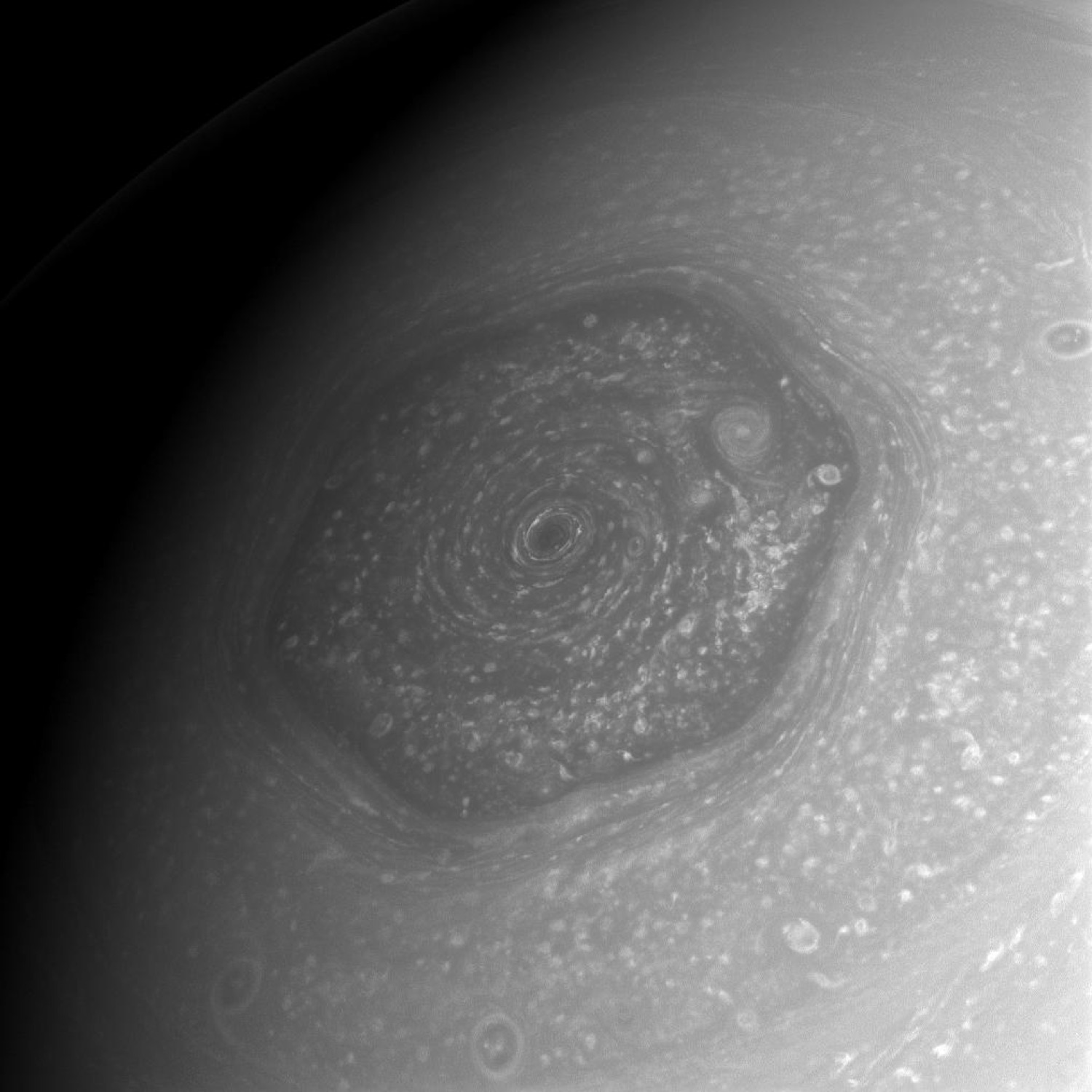
Locked around Saturn's north pole at about 78° N latitude is a persisting six-sided cloud pattern that has drawn fascination since it first appeared in Voyager images. Each side of this hexagon is about 14,500 km long — longer than the entire diameter of Earth. The whole structure rotates with a period of 10 hours 39 minutes 24 seconds, matching the assumed rotation period of Saturn's interior, and unlike other cloud features it does not drift in longitude. Scientists generally interpret it as a standing wave in the atmosphere, and polygonal patterns resembling it have been recreated in laboratory experiments using differentially rotating fluids. Since at least 2023 an analogous ten-sided wave called "the decagon" has been developing at the south pole, centered around 63° S, with each of its ten sides measuring roughly 17,000 km.
 ⤢
⤢
10 A magnetic field almost perfectly aligned Deeper
Saturn's magnetic field is unusual among the gas giants for its near-perfect symmetry. It takes the shape of a magnetic dipole aligned almost exactly with the planet's rotation axis, unlike Earth's field, which is tilted about 11° away from the spin axis. The field strength at Saturn's equator is 0.2 gauss — roughly one-twentieth that of Jupiter and slightly weaker than Earth's — but because of Saturn's much greater size, its magnetic moment is 580 times that of Earth's field. The field is thought to be generated by a metallic-hydrogen dynamo, similar to Jupiter's mechanism. Saturn's magnetosphere is large enough that Titan orbits inside its outer boundary, and ionized particles from Titan's upper atmosphere feed plasma into the magnetosphere. Like Earth, Saturn also produces aurorae where charged particles funnel into its upper atmosphere.
11 How Saturn's rotation resists a clean answer Deeper
Pinning down exactly how fast Saturn rotates has proved surprisingly difficult. Because the planet has no solid surface, different latitudes spin at different speeds. Astronomers defined three reference systems: System I covers equatorial latitudes with a period of 10h 14m 00s, System II covers other latitudes at 10h 38m 25.4s, and System III, based on radio emissions detected by Voyager 1 and Voyager 2, runs at 10h 39m 22.4s. When Cassini arrived in 2004, it measured the radio rotation period at approximately 10h 45m 45s — noticeably longer than the Voyager-era value. One proposed explanation is that geyser activity on Enceladus releases water vapor that becomes charged, creating drag on Saturn's magnetic field and slightly slowing the radio signal period relative to the planet's true spin. A best overall estimate compiled from Cassini, Voyager, and Pioneer data gives 10h 32m 35s.
12 Four centuries of telescopic discovery
When Galileo pointed his primitive telescope at Saturn in 1610, he concluded the planet had two moons flanking it — he was actually seeing the rings, but lacked the resolution to understand them. Christiaan Huygens, using greater magnification, resolved the rings correctly in 1655 and published his findings in 1659; he also discovered Titan that same period. Giovanni Domenico Cassini followed with the discovery of four more moons — Iapetus, Rhea, Tethys, and Dione — and in 1675 identified the gap in the rings that now bears his name. William Herschel added Mimas and Enceladus in 1789. Phoebe, a retrograde irregular moon, was found by William Henry Pickering in 1899 and took more than a year to complete one orbit. As recently as 1944, researchers confirmed that Titan possessed a thick atmosphere — a feature still unique among all moons in the Solar System.
 ⤢
⤢
13 Three robotic visitors before Cassini
Saturn received its first spacecraft visitor in September 1979, when Pioneer 11 flew within 20,000 km of the cloud tops. The images were low resolution, but the mission revealed the thin F ring and showed that dark ring gaps scatter light forward toward the Sun — evidence of fine dust particles. Voyager 1 arrived in November 1980, returning the first high-resolution views of the planet, its rings, and its moons, and performing a close Titan flyby that proved Titan's atmosphere is opaque at visible wavelengths. Voyager 2 followed in August 1981, gathering additional data on atmospheric changes and ring structure, though a stuck camera platform caused some planned images to be lost. Together the two Voyagers confirmed several new small moons and identified the Maxwell Gap inside the C Ring and the 42-km-wide Keeler Gap in the A Ring.
14 Huygens on Titan: landing another world
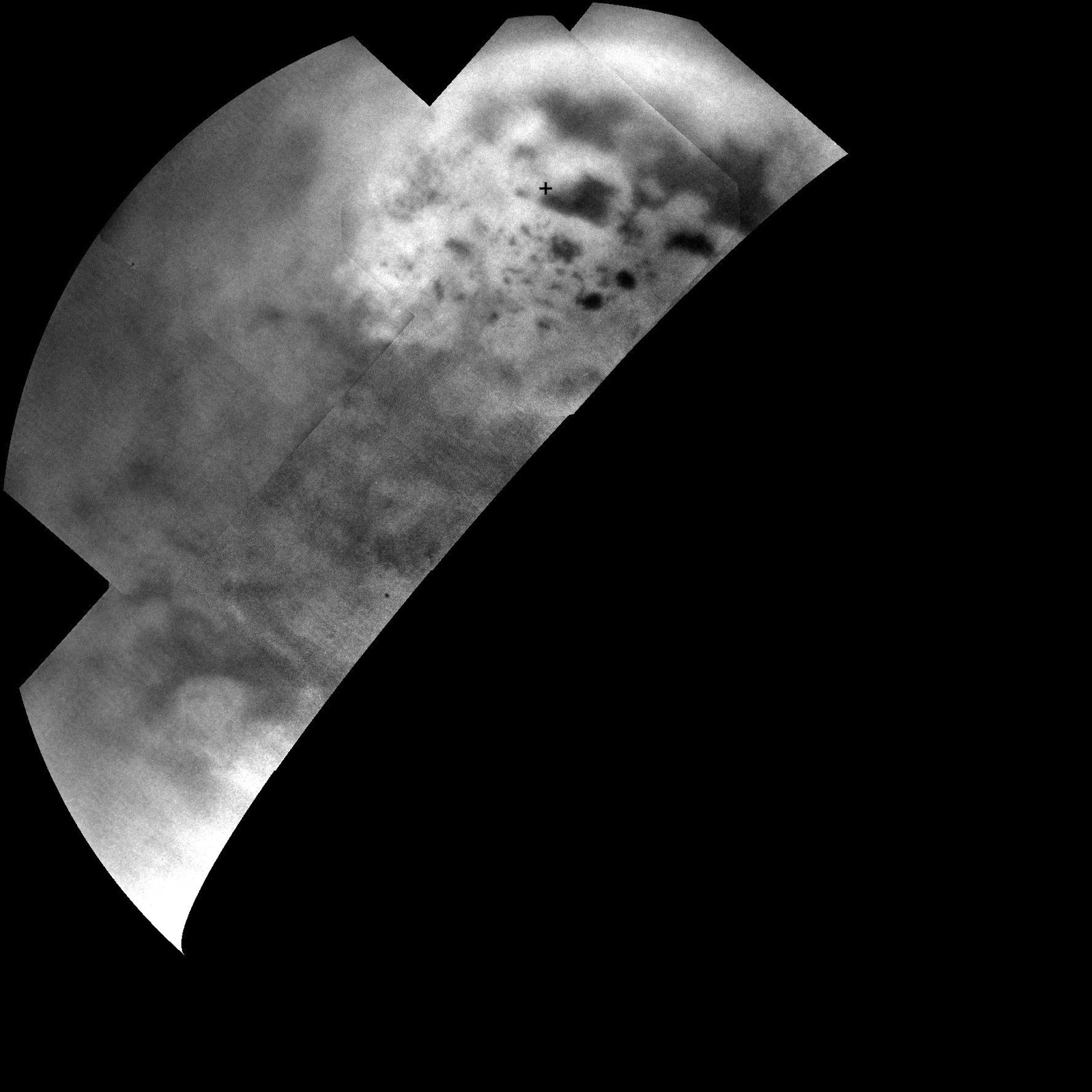
The Cassini–Huygens spacecraft entered Saturn orbit on 1 July 2004, and after two Titan flybys, released the Huygens probe on 25 December 2004. Huygens descended onto Titan's surface on 14 January 2005, becoming the most distant landing ever achieved at that time. Cassini's own radar sweeps of Titan revealed large lakes and their coastlines, complete with islands and mountains. In July 2006, images confirmed hydrocarbon lakes near Titan's north pole, and by March 2007 hydrocarbon seas had been identified, the largest comparable in size to the Caspian Sea. In June 2013, scientists reported detection of polycyclic aromatic hydrocarbons — possible chemical precursors for life — in Titan's upper atmosphere, and in 2014 NASA reported evidence that Titan's nitrogen originated from Oort Cloud cometary material rather than from the gas and dust that originally formed Saturn.
15 Watching Saturn from your own backyard
Saturn is the most distant of the five planets easily visible to the unaided eye, appearing as a steady yellowish point of light with a mean apparent magnitude of 0.46. Its brightness swings noticeably depending on how the ring system is tilted toward Earth: at its brightest Saturn reaches magnitude −0.55 when the rings are most inclined, and fades to magnitude 1.17 when the rings are nearly edge-on. Those rings vanish entirely when Earth crosses Saturn's ring plane, which happens roughly every 15 years; the most recent such event was in 2025, though Saturn was unfortunately too close to the Sun to observe well. To actually resolve the rings as a distinct structure, most observers need binoculars or a telescope that magnifies at least 30 times. Saturn reaches opposition — its closest, brightest point for each year — roughly every 378 days.
 ⤢
⤢
16 Saturn's enormous extended moon family
Saturn hosts at least 293 known moons, of which 63 carry formal names, making it the planet with the most confirmed moons in the Solar System. The vast majority are small: 143 have diameters under 50 km. Titan alone accounts for more than 90% of all the mass orbiting Saturn, including the rings. Saturn's second-largest moon, Rhea, may maintain its own faint ring system and a tenuous atmosphere. Beyond the major named moons, hundreds of moonlets with diameters between 40 and 500 meters are thought to lurk within the rings themselves, though these are not counted as true moons. In April 2014, NASA scientists even reported Cassini imagery suggesting a possible new moon beginning to coalesce within the A Ring. Pandora and Prometheus act as shepherd moons that confine the F ring, while Pan and Atlas generate measurable density waves in the rings that have helped scientists calculate their masses.
17 Saturn's long cultural shadow on Earth
Saturn's influence on human timekeeping and language is older than any telescope. The Romans named the seventh day of the week Sāturni diēs — Saturn's Day — which survives directly in the English word Saturday. The planet is named for the Roman god of wealth and agriculture, father of Jupiter, and the Romans equated him with the Greek Cronus; modern Greek still calls the planet Kronos. Saturn's astronomical symbol can be traced to the Greek Oxyrhynchus Papyri, where it appears as a kappa-rho ligature abbreviating Kronos, later evolving into a shape resembling a lowercase Greek eta before a cross was added at the top in the 16th century to Christianize the symbol. In ancient Chinese and Japanese tradition the planet was called the "earth star" or "soil star," linked to the classical Five Elements. In Hebrew tradition Saturn is Shabbathai, and across Ottoman Turkish, Urdu, and Malay the planet is known as Zuhal, from the Arabic.
 ⤢
⤢
You would weigh…
Surface gravity 10.44 m/s² vs Earth’s 9.81 m/s². Try every world →
Could life exist here?
Saturn itself: no surface, deep cold at the cloud tops, violent interior — extremely unlikely. Its moons are another story: Enceladus vents a salty ocean with organic molecules and energy sources, making it one of astrobiology's top targets.
Our labels: Confirmed · Strong Evidence · Estimated · Hypothesis · Theoretical · Speculative (see Methodology).
Could humans live here?
Not the planet — like Jupiter, there is nothing to land on. Titan, with its thick atmosphere and Earth-like landscapes (in alien materials), is often ranked among the more plausible far-future outposts in the outer Solar System.
How would we get there?
Cassini took 6.7 years with gravity assists. NASA's Dragonfly rotorcraft, planned to launch in 2028, will take about 6 years to reach Titan. A crewed Saturn mission is beyond current technology — the round trip alone would consume most of a career.
| Technology | Status | Travel time (one way, straight line) |
|---|---|---|
| Apollo-style spacecraft, about 39,000 km/h | Flown technology | 4 years |
| Ion-propulsion probe, about 90,000 km/h | Flown technology | 662 days |
| Voyager 1, about 61,000 km/h | Flown technology | 3 years |
| Parker Solar Probe, about 690,000 km/h | Flown technology | 87 days |
| Nuclear-thermal rocket, about 120,000 km/h cruise | In development | 502 days |
| Laser light-sail at 20% of light speed | Proposed concept | 6.6 hours |
| Light itself, 299,792 km/s | Physical limit | 79 minutes |
Simplified straight-line times at cruise speed. Real missions fly curved orbital paths and take longer. Full travel calculator →
Weird & wonderful
- Saturn would float in water — if you could find a bathtub 120,000 km wide.
- Its rings are wider than 21 Earths but about as thick as a house.
- A hexagonal jet stream, two Earths wide, spins at Saturn's north pole — and scientists can reproduce it in lab tanks.
- Saturn has 274 known moons — more than every other planet combined.
- It rains helium (and in models, diamonds) deep inside.
Worlds that orbit Saturn
Latest news about Saturn
More real images of Saturn
Genuine spacecraft and telescope imagery, every frame credited and licensed. Tap any photo to enlarge.