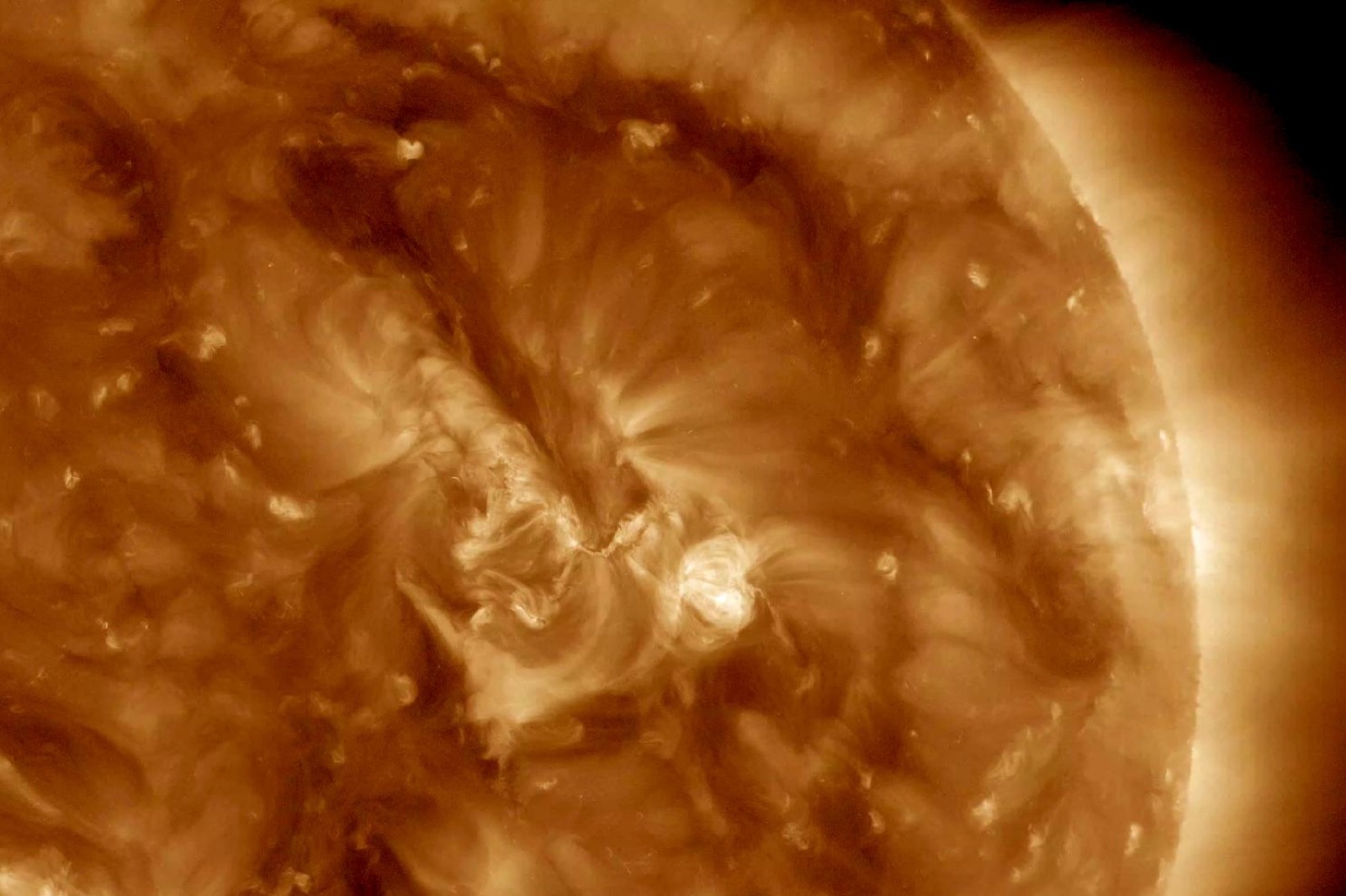
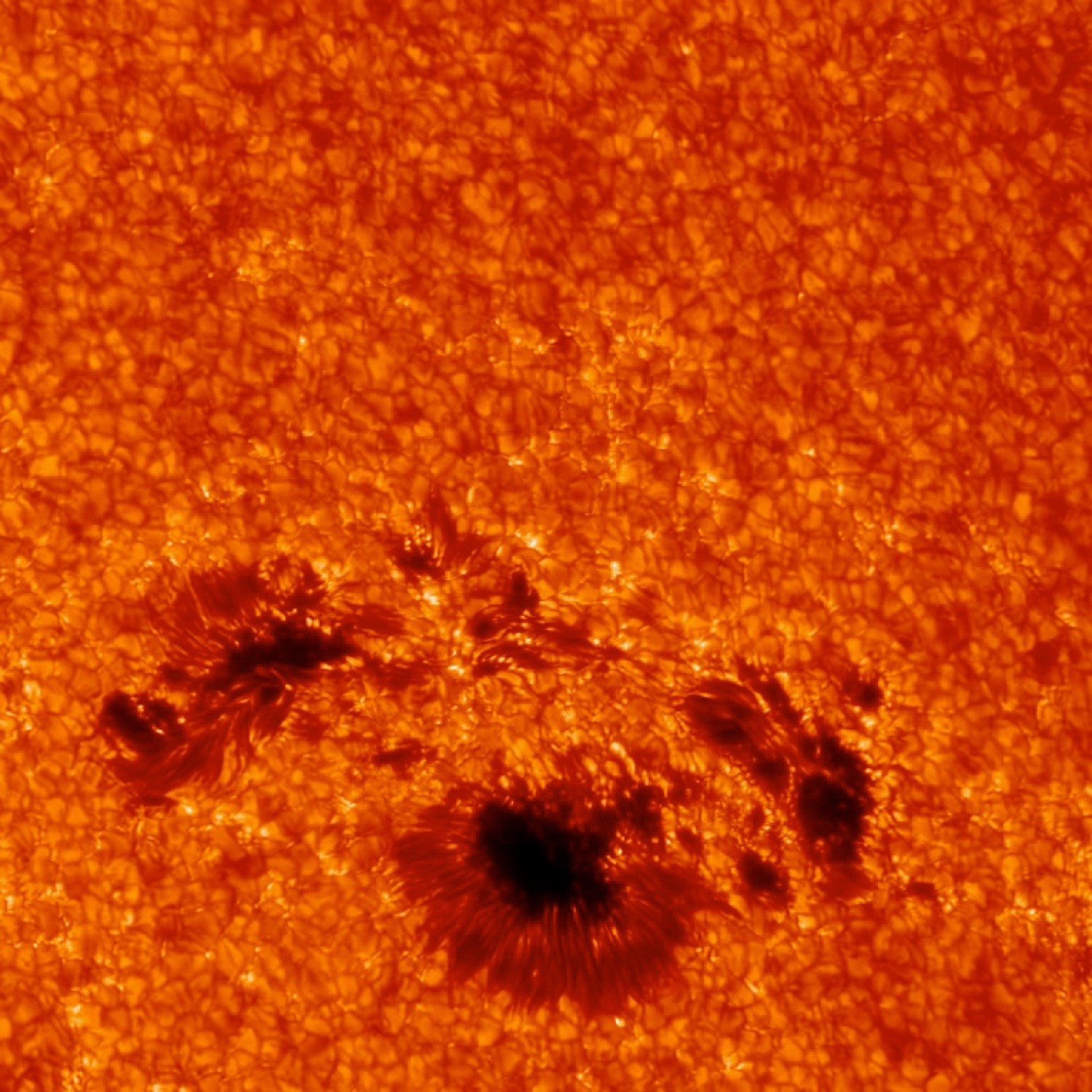
 Photograph · NASA/GSFC/Solar Dynamics Observatory
Star · Deep guide
The Sun
Also called: Sol
The star at the center of our Solar System, and the engine that powers almost everything on Earth.
What is it?
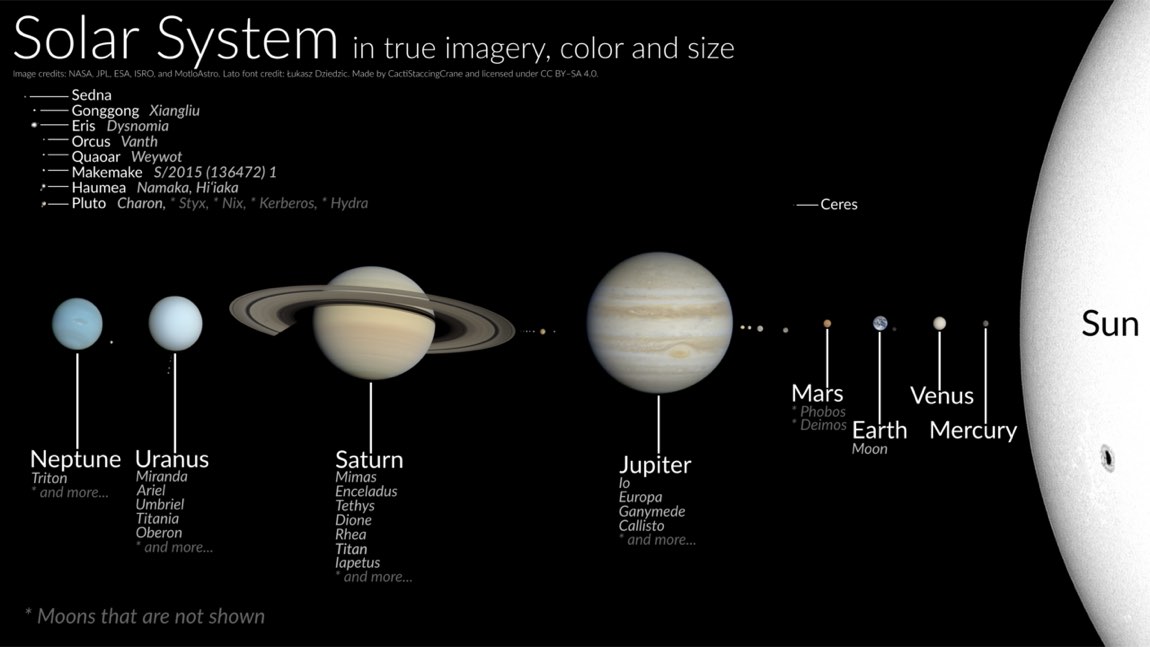
The Sun is a star: a colossal ball of hot, glowing gas held together by its own gravity. It is so big that about 1.3 million Earths could fit inside it, and it holds 99.8% of all the mass in the Solar System. Deep in its core, the Sun smashes hydrogen atoms together to make helium — a process called nuclear fusion — and that releases the light and heat that make life on Earth possible.
Go deeper
The Sun is a G2V main-sequence star about 4.6 billion years into a roughly 10-billion-year hydrogen-burning lifetime. Its core runs at about 15 million °C and fuses some 600 million tonnes of hydrogen every second; photons then take of order 100,000 years to random-walk out through the radiative zone before escaping the photosphere at 5,500 °C. In about 5 billion years it will swell into a red giant, shed its outer layers as a planetary nebula, and end as a white dwarf.
01 What is it made of?
Almost entirely hydrogen and helium — the two lightest elements in the universe. The Sun is not solid; it is plasma, a gas so hot that electrons have been stripped off the atoms. There is no surface to stand on. What we call the 'surface' (the photosphere) is just the layer where the gas becomes transparent enough for light to escape.
02 Sunspots and space weather
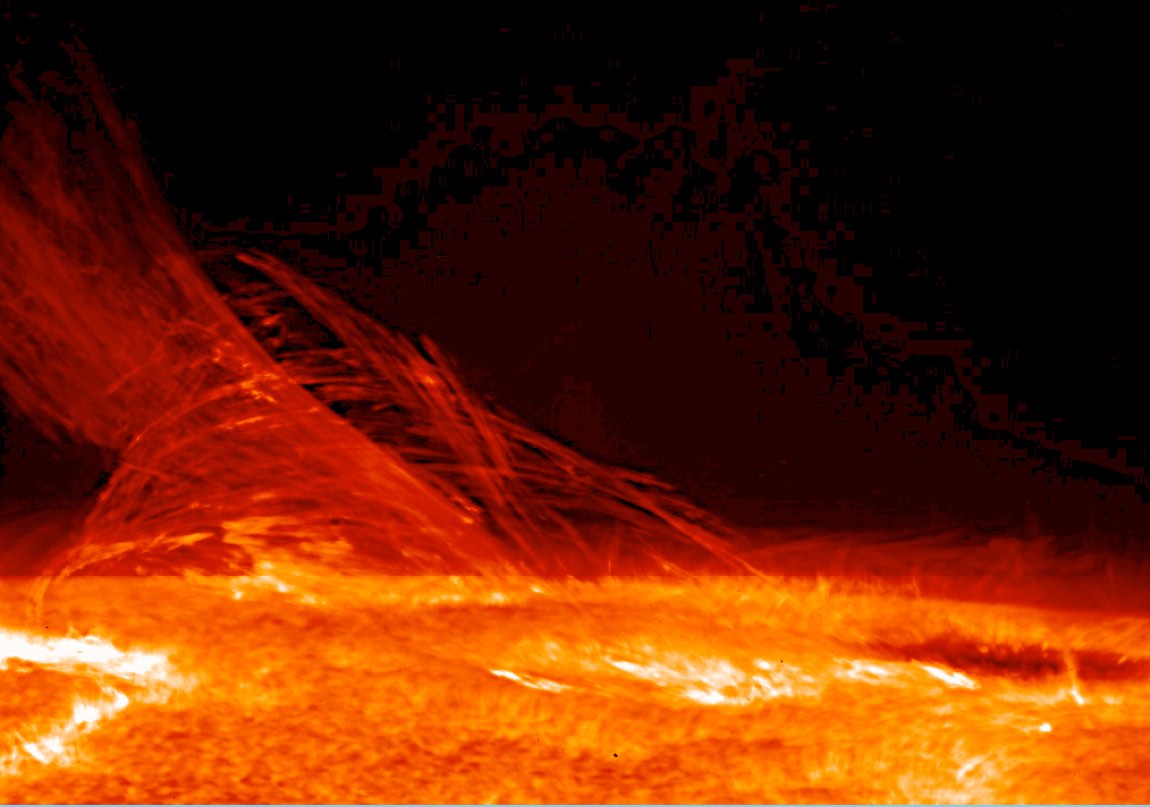
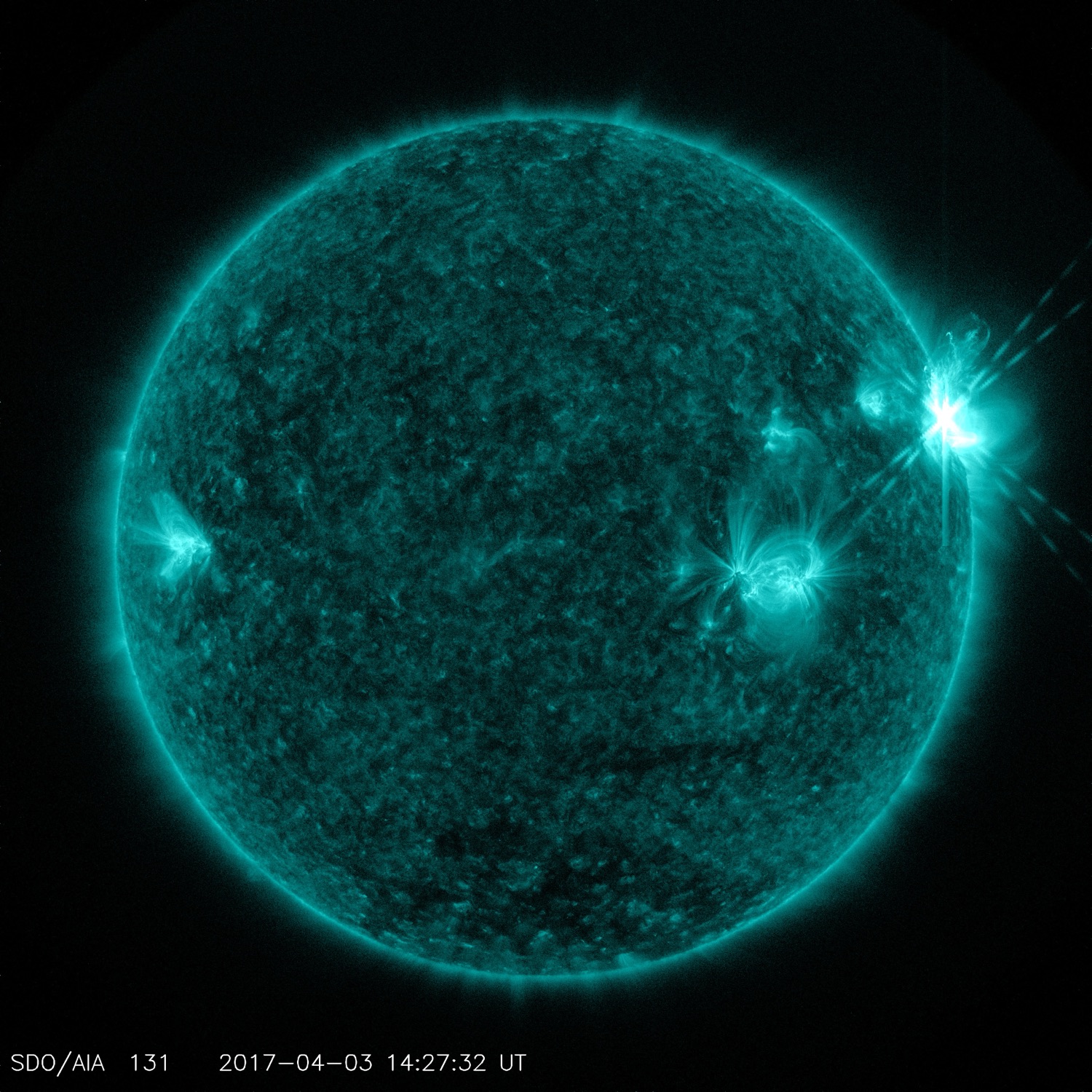
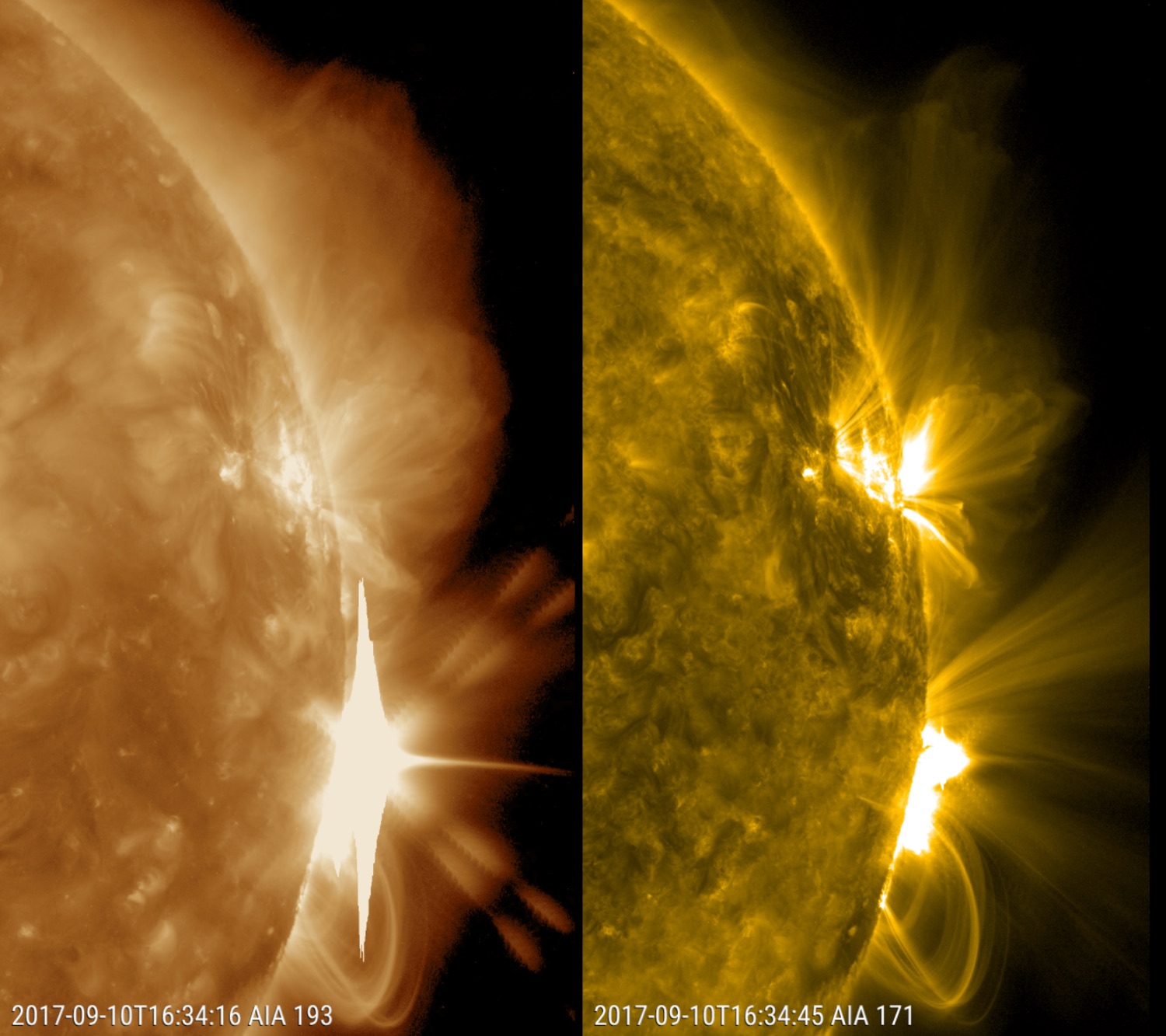
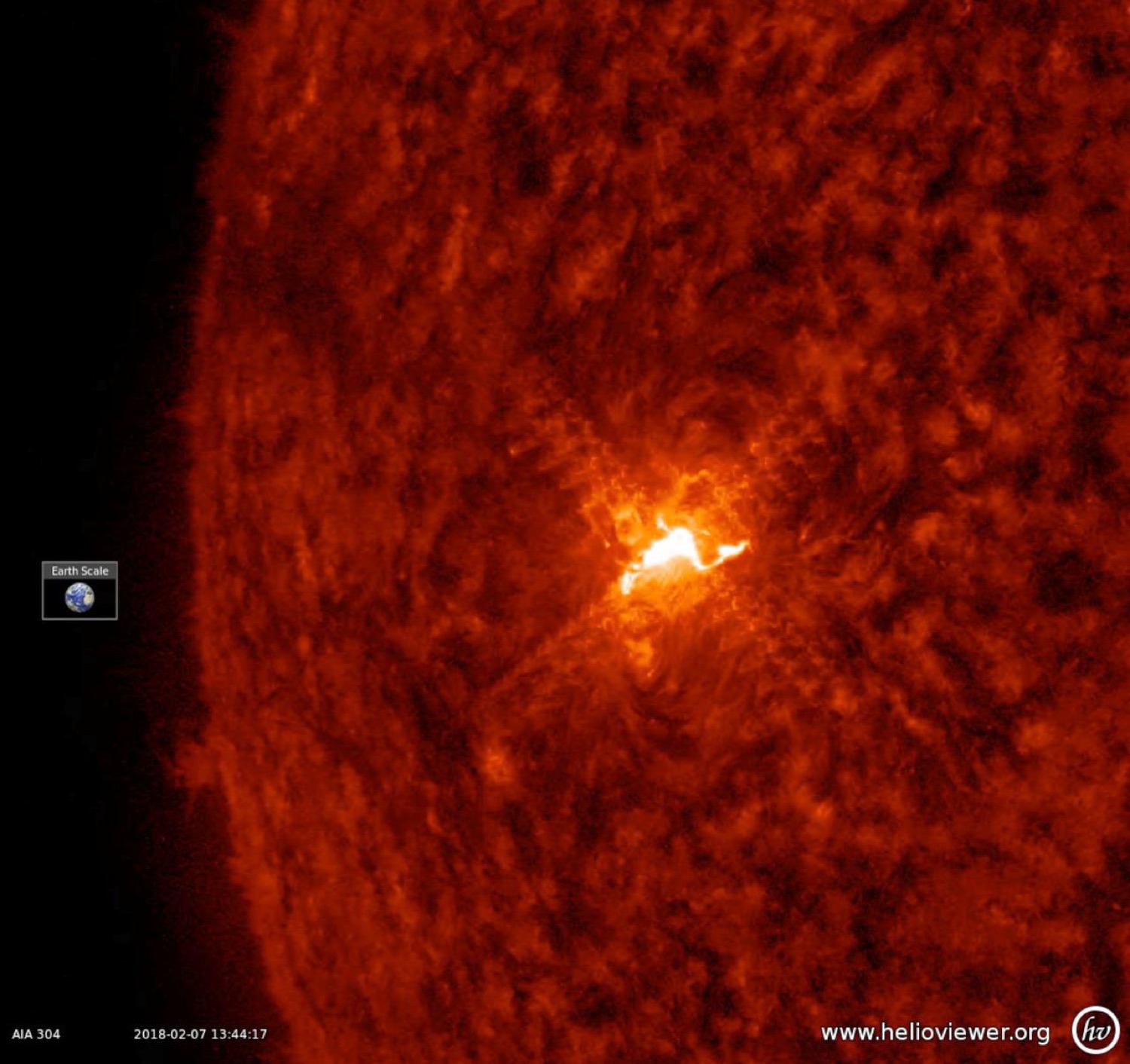
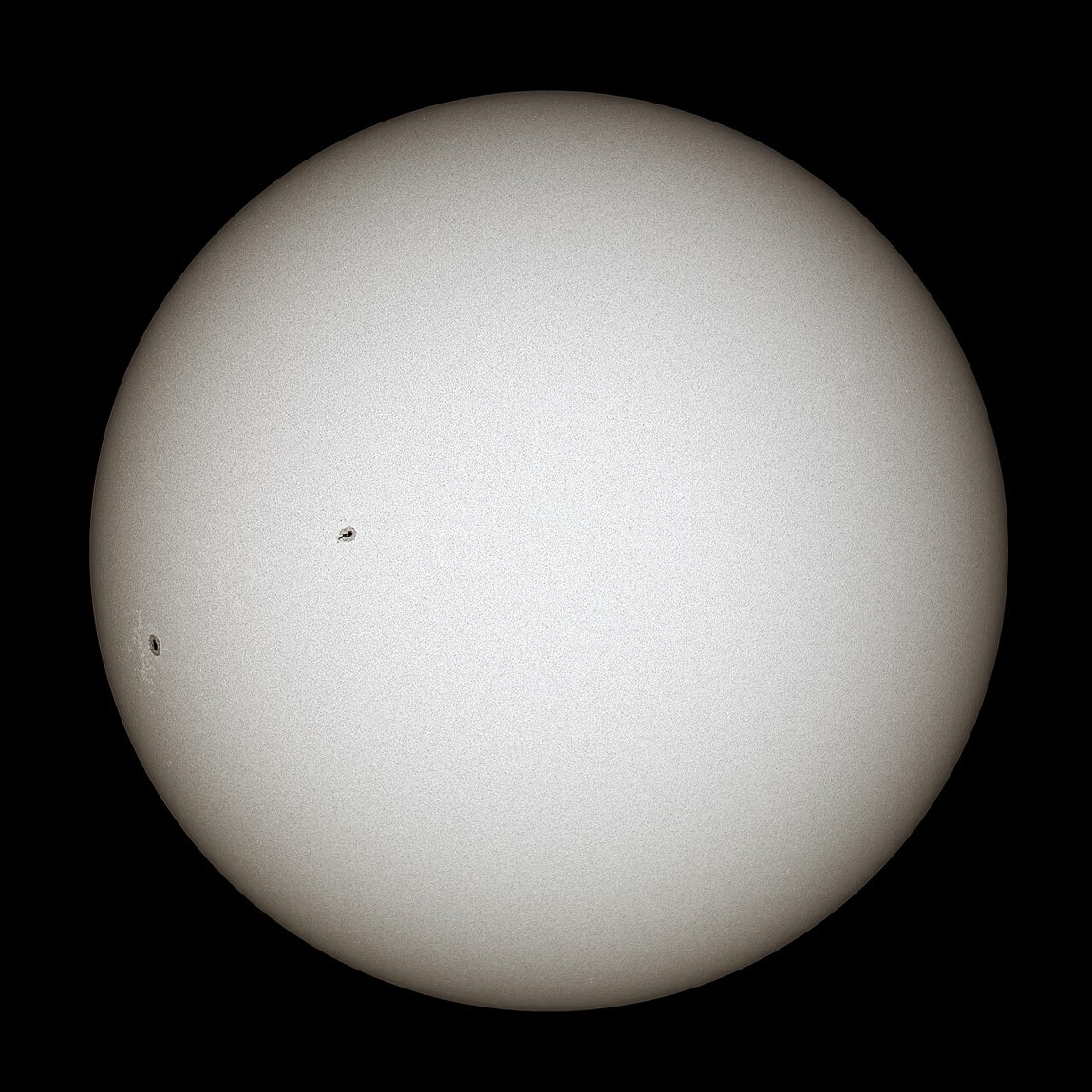
The Sun's magnetic field tangles and snaps, creating dark sunspots, sudden flares, and huge eruptions of particles called coronal mass ejections. When those particles reach Earth they paint auroras in the sky — and can disturb satellites and power grids. Activity rises and falls on a roughly 11-year cycle.
03 Why does the corona matter? Deeper
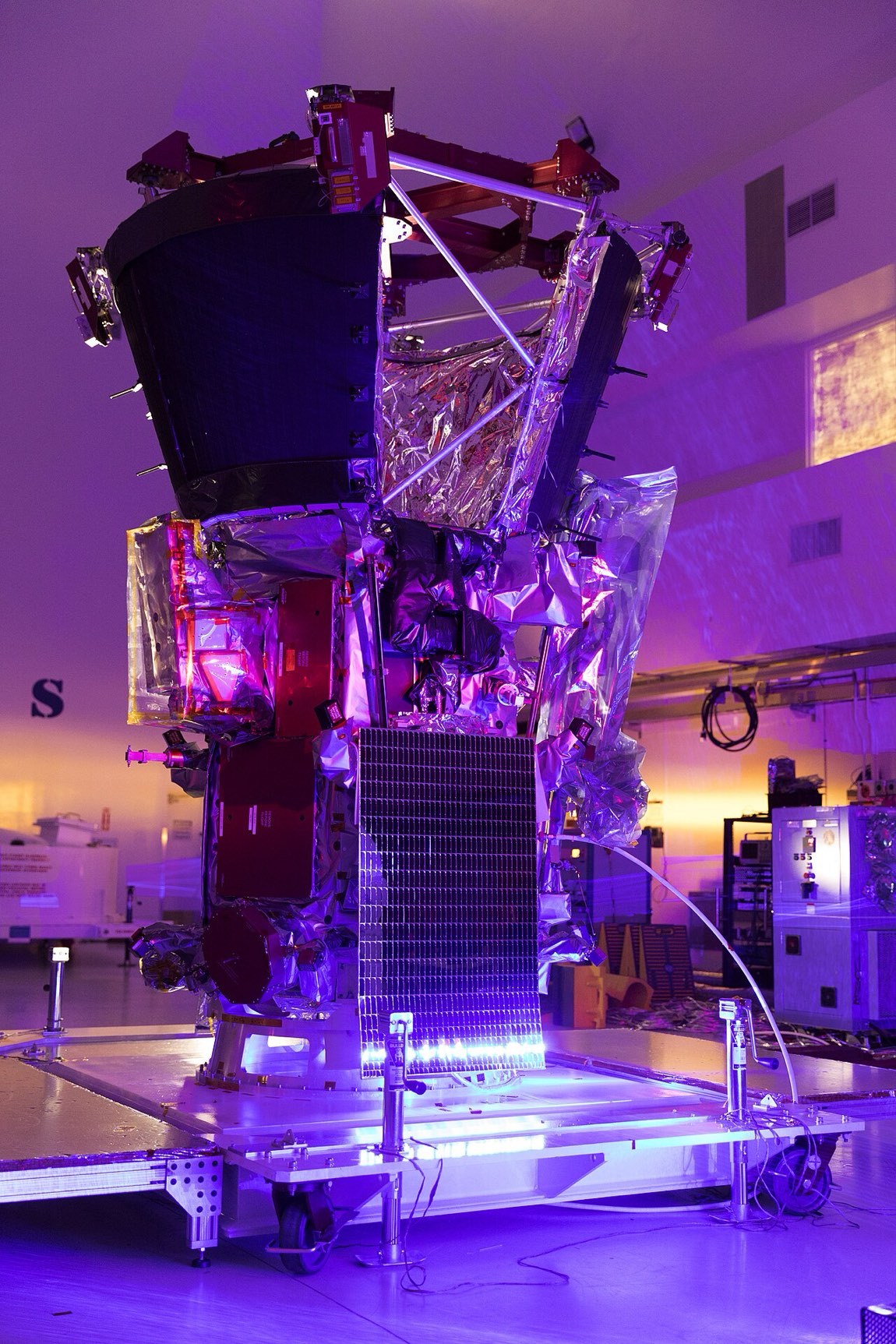
The corona — the Sun's wispy outer atmosphere, visible during a total eclipse — is mysteriously hot: over a million °C, hundreds of times hotter than the surface below it. Solving the 'coronal heating problem' is a main goal of NASA's Parker Solar Probe, which has flown through the corona itself.
04 The Sun's future Deeper
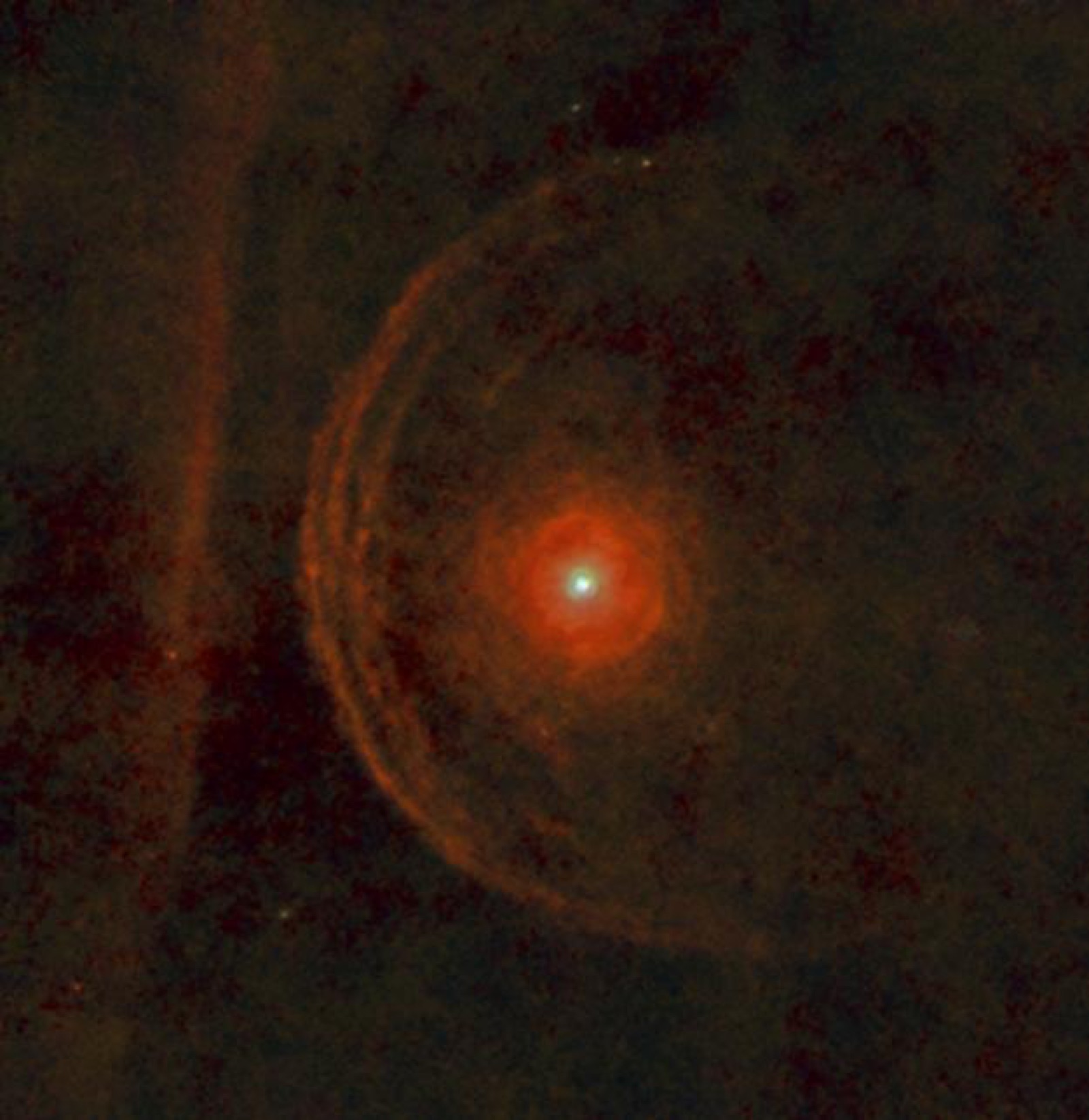
In about 5 billion years the core will run out of hydrogen. The Sun will swell into a red giant — likely swallowing Mercury and Venus — then puff off its outer layers and shrink into an Earth-sized white dwarf that will cool for trillions of years. Long before that, in roughly a billion years, the slowly brightening Sun will make Earth too hot for oceans.
 ⤢
⤢
The deep dive
Researched for the Atlas from Wikipedia — Sun (58,000 characters read) · updated Sep 20, 2026
05 How the Sun was born from a dying star
About 4.6 billion years ago, a region of a giant molecular cloud — a vast, cold mass of mostly hydrogen and helium — began to collapse under its own gravity. Scientists believe the collapse was almost certainly triggered by a shockwave from a nearby supernova, because ancient meteorites contain traces of iron-60, a stable daughter isotope that can only be produced inside short-lived exploding stars. As one fragment of that cloud fell inward, conservation of angular momentum set it spinning faster and faster. Material that could not fall straight to the centre spread into a rotating protoplanetary disk, which eventually became the planets. The accumulating central mass grew so hot and dense that nuclear fusion ignited in its core. The result was a Population I star — rich in heavy elements like gold and uranium — compared to older Population II stars that formed before previous stellar generations had seeded space with those heavier atoms. This enrichment is itself indirect evidence of at least one supernova ancestor. The age derived from computer models of stellar evolution agrees closely with the radiometric date of the oldest Solar System material: 4.567 billion years ago.
06 Layers inside the Sun, from core outward Deeper
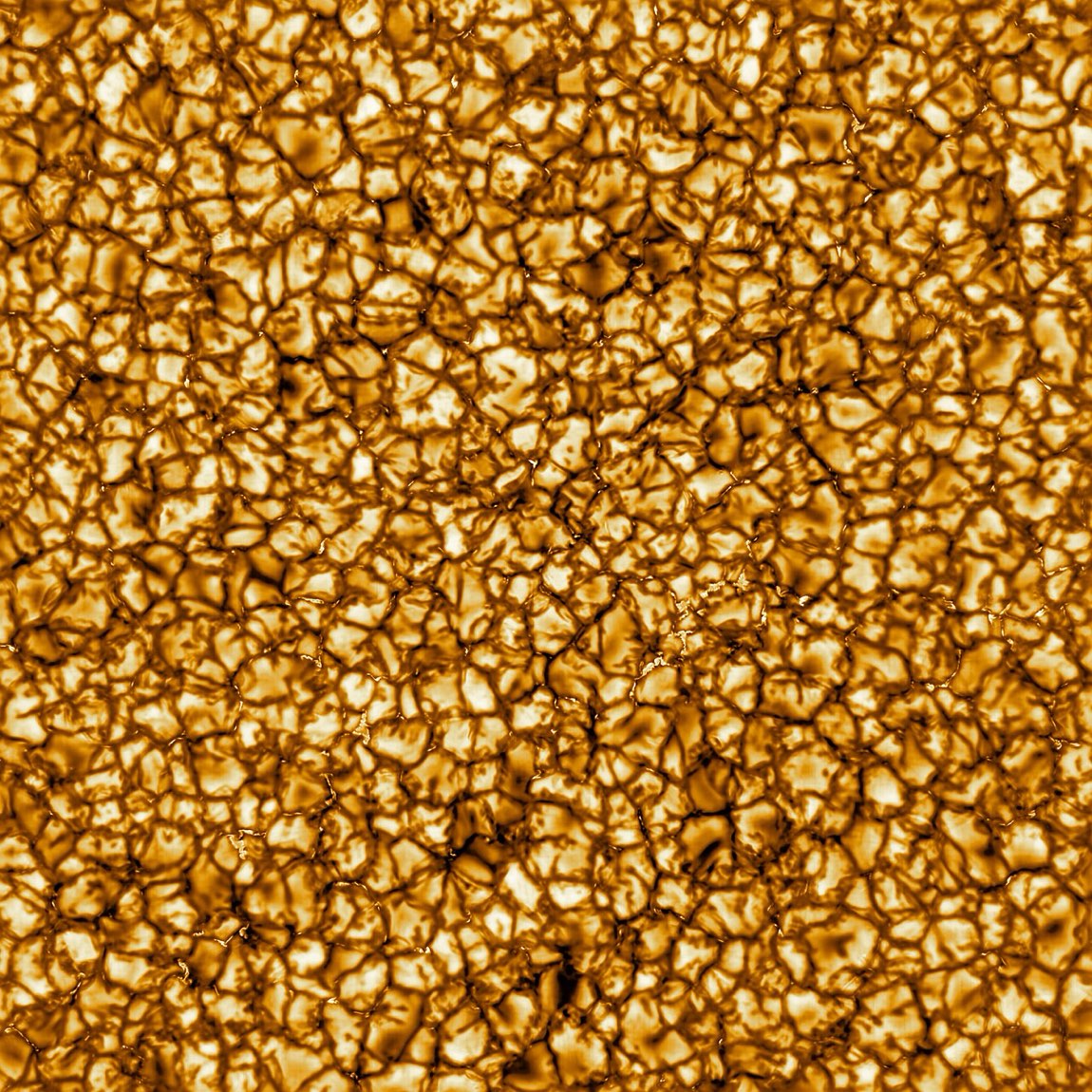
The Sun's interior is divided into three distinct zones. The innermost is the core, extending from the centre to roughly 20–25% of the solar radius, where temperatures reach close to 15.7 million kelvins and densities climb to 150 g/cm³ — about 150 times the density of liquid water. Virtually all of the Sun's energy, 99% of it, is produced in the innermost 24% of its radius. Surrounding the core is the radiative zone, running from about 0.25 to 0.7 solar radii. Here, photons scatter so relentlessly off dense gas that each one takes roughly a million years to cross the layer, while the density drops a hundredfold from 20,000 kg/m³ to 200 kg/m³. Above that lies the convective zone, extending to the visible surface, where the plasma is too cool and thin for radiation to carry heat efficiently. Instead, giant thermal columns — Bénard cells shaped roughly like hexagonal prisms — physically carry hot material upward and cool material downward. The boundary between the radiative and convective zones is the tachocline, a thin shear layer where scientists believe a magnetic dynamo generates the Sun's overall magnetic field. At the photosphere, the temperature has dropped 350-fold compared to the core, landing at about 5,700 K.
 ⤢
⤢
07 The Sun's almost perfect roundness
Despite rotating and housing enormous internal turbulence, the Sun is strikingly close to a perfect sphere. Its oblateness — the fractional difference between its equatorial and polar radii — was measured using the Solar Dynamics Observatory and the Picard satellite and found to be only 8.2×10⁻⁶, or 8 parts per million. That makes the Sun the natural object closest to a perfect sphere ever observed. The value was even smaller than scientists had anticipated. This matters historically: before precise measurements existed, some researchers proposed that a measurable solar oblateness could explain why Mercury's orbit precesses around the Sun. Einstein, however, showed that general relativity alone, with no need for an oblate Sun, fully accounts for Mercury's perihelion precession. The modern measurements vindicated Einstein's approach. Interestingly, the Sun's oblateness does not change with variations in solar irradiance or activity, and the gravitational tug of the planets is too weak to reshape it. The Sun has no solid surface to define a boundary, so its radius is formally taken to be the distance from its centre to the photosphere, the layer at which it becomes opaque to visible light.
08 How long a photon spends inside the Sun Deeper
Energy born in nuclear fusion does not race straight from the core to the surface. Each gamma-ray photon produced in the core is almost immediately absorbed by the dense plasma of the radiative zone, typically after travelling only a few millimetres. It is then re-emitted in a random direction at a slightly lower energy. This random-walk process repeats an astronomical number of times, and estimates of how long the resulting radiation takes to reach the Sun's surface range between 10,000 and 170,000 years. The broader timescale relevant to the Sun's energy balance — how long it would take the Sun to return to a stable state if core fusion suddenly switched off — is around 30 million years; that is the thermal or Kelvin-Helmholtz timescale. By contrast, neutrinos produced in the same fusion reactions almost never interact with matter at all. They reach the Sun's surface in just 2.3 seconds and carry away about 2% of the total energy produced. Intriguingly, early detectors recorded far fewer solar neutrinos than theory predicted — only one-third of the expected number. The puzzle was resolved in 2001 when it was established that neutrinos change flavour in flight, a phenomenon called neutrino oscillation, so the detectors were simply missing the transformed ones.
09 The Sun's strange differential rotation
Unlike a rigid ball, the Sun does not spin as one piece. Its equatorial regions complete one rotation in about 25.6 days relative to the stars, while the polar regions take around 33.5 days — a behaviour called differential rotation, driven by convective heat transport and the Coriolis force. Viewed from Earth as our planet orbits, the Sun's equatorial rotation appears to take about 28 days. Deep inside, the picture is different again: recent analysis of SOHO mission data suggests the core is rotating at once per week, about four times the mean surface rate. Scientists believe this faster-spinning core is a relic of the Sun's youth, when surveys of solar analogues suggest it was rotating up to ten times faster than today. That youthful rapid spin would have driven intense X-ray and ultraviolet emission and left sunspots covering 5% to 30% of the surface. Over billions of years, the solar magnetic field interacting with the outflowing solar wind braked the outer layers through a process called magnetic braking, gradually slowing surface rotation while the core apparently kept much of its original angular momentum.
 ⤢
⤢
10 The thin, fiery layers above the photosphere Deeper
Above the familiar visible surface lie two atmospheric layers with surprisingly extreme properties. The chromosphere, about 2,000 km thick, takes its name from the Greek for colour because it flashes as a coloured arc at the edges of a total solar eclipse. Its temperature rises with altitude, reaching around 20,000 K near its top. Above that sits a thin transition region, only about 200 km thick, where the temperature rockets from 20,000 K to nearly 1,000,000 K over an astonishingly short distance. This dramatic jump is partly explained by the full ionisation of helium in that layer, which sharply reduces the plasma's ability to radiate heat away and lets the temperature soar. The transition region is not a smooth, well-defined shell but forms a chaotic nimbus around features such as spicules and filaments. It cannot be seen from Earth's surface because it emits mainly in extreme ultraviolet, requiring space-based instruments. Intriguingly, the coolest point in the entire solar atmosphere is not at the photosphere's top but in a temperature minimum region about 500 km above the photosphere, where temperatures fall to roughly 4,100 K — cool enough for simple molecules such as carbon monoxide and water to exist briefly.
11 The Sun's orbit through the Milky Way
The Sun is not fixed in space: it carries the entire Solar System around the centre of the Milky Way at an average speed of about 230 km/s, completing one galactic orbit — called a galactic year — roughly every 220 to 250 million Earth years. The Sun has made this circuit about 20 times since it formed. Its distance from the galactic centre ranges from about 24,000 to 28,000 light-years. At the same time, the Sun bobs north and south of the galactic plane with a separate period of about 83 million years, straying up to roughly 99 parsecs from the midplane. Meanwhile, it also drifts in an ellipse relative to nearby stars, with the long axis of that ellipse around 1,760 parsecs and the short axis around 1,170 parsecs, completing that loop in about 166 million years. The Sun's heading through space — called the Solar apex — points roughly toward the star Vega. Scientists have proposed that when the Sun passes through the denser spiral arms of the galaxy it may coincide with elevated rates of asteroid impacts on Earth, and possibly with mass extinction events, though this remains a subject of debate.
12 Centuries of solar science: who figured out what
Systematic records of sunspots date to Chinese astronomers of the Han dynasty, from 202 BC to AD 220, maintained for centuries. Galileo Galilei and Thomas Harriot used the newly invented telescope in the early 17th century to study sunspots in detail, and Galileo argued they were features on the Sun's surface rather than objects passing in front of it. Isaac Newton split sunlight through a prism in 1666, revealing it as a mixture of many colours, while William Herschel discovered infrared radiation in 1800. Joseph von Fraunhofer recorded over 600 dark absorption lines in the solar spectrum, now bearing his name. In 1868 Norman Lockyer noticed lines matching no known element and named the mystery substance helium after the Greek sun god Helios; helium was only isolated on Earth 25 years later. The question of what powered the Sun was resolved in stages: Ernest Rutherford in 1904 proposed an internal heat source, Arthur Eddington in 1920 proposed nuclear fusion, Cecilia Payne confirmed the Sun's dominant hydrogen composition in 1925, and Hans Bethe in the 1930s calculated the detailed nuclear reactions. Giovanni Cassini made the first reasonably accurate measurement of the Earth-Sun distance in 1684, coming within about 10% of the modern value.
 ⤢
⤢
13 Spacecraft that have studied the Sun up close
The first dedicated solar monitoring satellites were NASA's Pioneer 6 through 9, launched between 1959 and 1968. Orbiting the Sun at roughly Earth's distance, they made the first detailed measurements of the solar wind and the interplanetary magnetic field; Pioneer 9 transmitted data until May 1983. In the 1970s, the Helios 1 and 2 spacecraft — a U.S.-German collaboration — dived inside Mercury's orbit to sample the solar wind at close range, while the Skylab space station's Apollo Telescope Mount made the first time-resolved observations of the solar transition region and first recorded coronal mass ejections, then called coronal transients. NASA's Solar Maximum Mission launched in 1980 to observe solar flares in gamma rays, X-rays, and ultraviolet, was rescued and repaired in orbit by Space Shuttle Challenger during mission STS-41-C in 1984, and re-entered the atmosphere in June 1989 after collecting thousands of coronal images. Japan's Yohkoh satellite, launched in 1991, observed the corona in X-rays through an entire solar cycle, revealing the corona to be far more dynamic than expected. SOHO, a joint ESA-NASA observatory launched on 2 December 1995, was placed at the gravitational balance point between Earth and the Sun and was still operating as of 2024. In April 2021, the Parker Solar Probe crossed the Alfvén critical surface — the outer boundary of the corona — at heliocentric distances ranging from 16 to 20 solar radii.
14 How bright is the Sun, exactly?
The Sun is so overwhelmingly bright that its apparent magnitude is −26.74, making it nearly 13 billion times brighter in Earth's sky than Sirius, the next brightest star, which shines at magnitude −1.46. Despite its visual dominance, the Sun ranks only modestly among the stars in the galaxy: its absolute magnitude of +4.83 puts it brighter than approximately 85% of Milky Way stars, most of which are faint red dwarfs. It is more massive than 95% of stars within 7 parsecs (about 23 light-years). The solar constant — the power delivered to a surface facing the Sun at Earth's orbital distance — is approximately 1,368 W/m². By the time sunlight reaches Earth's surface under clear skies near noon, the atmosphere has reduced that to closer to 1,000 W/m². Sunlight arriving at the top of the atmosphere breaks down by energy to about 50% infrared, 40% visible, and 10% ultraviolet. The atmosphere absorbs more than 70% of the solar ultraviolet before it reaches the ground, particularly at the shortest, most energetic wavelengths. The Sun's true colour, viewed from space, is white, with its spectral radiance peaking in the green portion of the spectrum.
15 The Sun's magnetic polarity flip every 11 years Deeper
The 11-year sunspot cycle familiar to most observers is actually only half of a deeper 22-year magnetic rhythm called the Babcock-Leighton dynamo cycle. During each 11-year sunspot cycle, the Sun's overall large-scale magnetic polarity reverses, so that after 22 years it returns to its original orientation. The driving mechanism is a continuous exchange of energy between two types of magnetic field. A poloidal field — the familiar north-south dipole — is wound by the Sun's differential rotation in the tachocline into a toroidal field wrapped around the Sun's interior. When the toroidal field grows strong enough, buoyant upwelling forces loops of it through the photosphere, producing pairs of sunspots whose east-west alignment follows Hale's law of alternating magnetic polarity in successive cycles. As each cycle peaks, the polar (poloidal) field is at its weakest; as the cycle declines toward minimum, the toroidal field weakens and the poloidal field rebuilds at opposite polarity. The Sun's polar field strength is only 1 to 2 gauss, but inside sunspots the field reaches around 3,000 gauss — more than 1,000 times stronger. Solar prominences measure 10 to 100 gauss. Historical records reveal that the cycle can also apparently halt altogether; during the Maunder minimum in the 17th century, few sunspots appeared for several decades, a period that coincided with the Little Ice Age in Europe.
 ⤢
⤢
16 The Sun's final centuries before becoming a white dwarf Deeper
Long after the red giant phase the Sun enters an asymptotic giant branch stage, alternately burning hydrogen and helium in nested shells. After about 20 million years on this branch, the Sun becomes increasingly unstable, losing mass rapidly and experiencing thermal pulses — runaway helium flashes in the shell — roughly every 100,000 years. Each pulse boosts the luminosity for a few hundred years, with the later pulses potentially driving it to as much as 5,000 times its present level. Models predict four such thermal pulses before the Sun sheds its outer envelope entirely. As the exposed core heats to 30,000 K, the ejected gas becomes ionised into a planetary nebula. Simulations suggest the Sun may be among the least massive stars capable of forming such a nebula at all. The nebula will disperse in about 10,000 years. The remaining white dwarf core will contain an estimated 54.05% of the Sun's present-day mass and have a surface temperature exceeding 100,000 K at its birth, though it will never again generate energy by fusion. It will radiate stored heat for trillions of years, then theoretically cool to a black dwarf that gives off negligible energy. The maximum size the Sun reaches during the asymptotic giant branch phase — about 0.832 au — will actually be slightly less than its tip-red-giant-branch maximum of 1.19 au.
You would weigh…
Surface gravity 274.00 m/s² vs Earth’s 9.81 m/s². Try every world →
Could life exist here?
Nothing we know of could survive on or in the Sun — it is millions of degrees inside and has no surface. But the Sun is the reason life exists on Earth at all.
Our labels: Confirmed · Strong Evidence · Estimated · Hypothesis · Theoretical · Speculative (see Methodology).
Could humans live here?
Impossible, and not just because of the heat: there is nothing to stand on, and the radiation would be lethal long before arrival. Spacecraft like Parker Solar Probe survive close passes only behind a thick heat shield, for brief swings.
How would we get there?
Parker Solar Probe made the closest-ever approach — about 6.1 million km from the surface in December 2024, at around 690,000 km/h. Counterintuitively, getting close to the Sun is hard: a spacecraft has to shed most of Earth's orbital speed, which is why Parker needed seven Venus flybys.
| Technology | Status | Travel time (one way, straight line) |
|---|---|---|
| Apollo-style spacecraft, about 39,000 km/h | Flown technology | 160 days |
| Ion-propulsion probe, about 90,000 km/h | Flown technology | 69 days |
| Voyager 1, about 61,000 km/h | Flown technology | 102 days |
| Parker Solar Probe, about 690,000 km/h | Flown technology | 9 days |
| Nuclear-thermal rocket, about 120,000 km/h cruise | In development | 52 days |
| Laser light-sail at 20% of light speed | Proposed concept | 42 minutes |
| Light itself, 299,792 km/s | Physical limit | 8 minutes |
Simplified straight-line times at cruise speed. Real missions fly curved orbital paths and take longer. Full travel calculator →
Weird & wonderful
- The Sun accounts for 99.8% of all the mass in the Solar System.
- Light made in the Sun's core takes about 100,000 years to reach the surface — then just 8.3 minutes to reach Earth.
- The Sun loses about 4 million tonnes of mass every second, converted into pure energy.
- You could line up 109 Earths across the face of the Sun.
Worlds that orbit The Sun
More real images of The Sun
Genuine spacecraft and telescope imagery, every frame credited and licensed. Tap any photo to enlarge.