Tonight's Sky
Computed for right now: October 01, 2026 · 05:31 UTC. Everything below is location-independent guidance; exact rise and set times depend on where you stand.
The Moon
Waning Gibbous78% illuminated · 19.4 days old
Next full moon: Oct 26 · next new moon: Oct 11
Sky darkness tonight: Bright: the Moon will wash out faint objects, so stick to planets and the Moon itself.
Visit the Moon →The planets
| Planet | Where to look | Naked eye? | Light delay |
|---|---|---|---|
| Mercury | Evening sky: look west after sunset | Bright but always low near the horizon in twilight | 10 min |
| Venus | Evening sky: look west after sunset | The brightest planet, unmistakable when it's up | 3 min |
| Mars | Morning sky: look east before dawn | Distinctly orange; brightness varies a lot with distance | 14 min |
| Jupiter | Morning sky: look east before dawn | Second-brightest planet, bright even from cities | 49 min |
| Saturn | Up nearly all night, close to opposition | Steady golden point; rings need a small telescope | 70 min |
| Uranus | Morning sky: look east before dawn | At the naked-eye limit, so binoculars help | 157 min |
| Neptune | Up nearly all night, close to opposition | Telescope only | 240 min |
Positions computed with JPL approximate orbital elements give good visibility guidance, not precise ephemerides. Light delay = how old the planet’s light is when it reaches your eye tonight.
Meteor activity
No major shower peaks in the next two weeks. See the full calendar for the year’s schedule.
Full calendar →Coming up
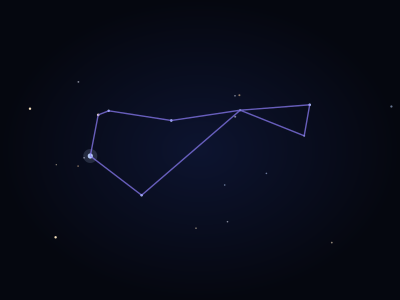
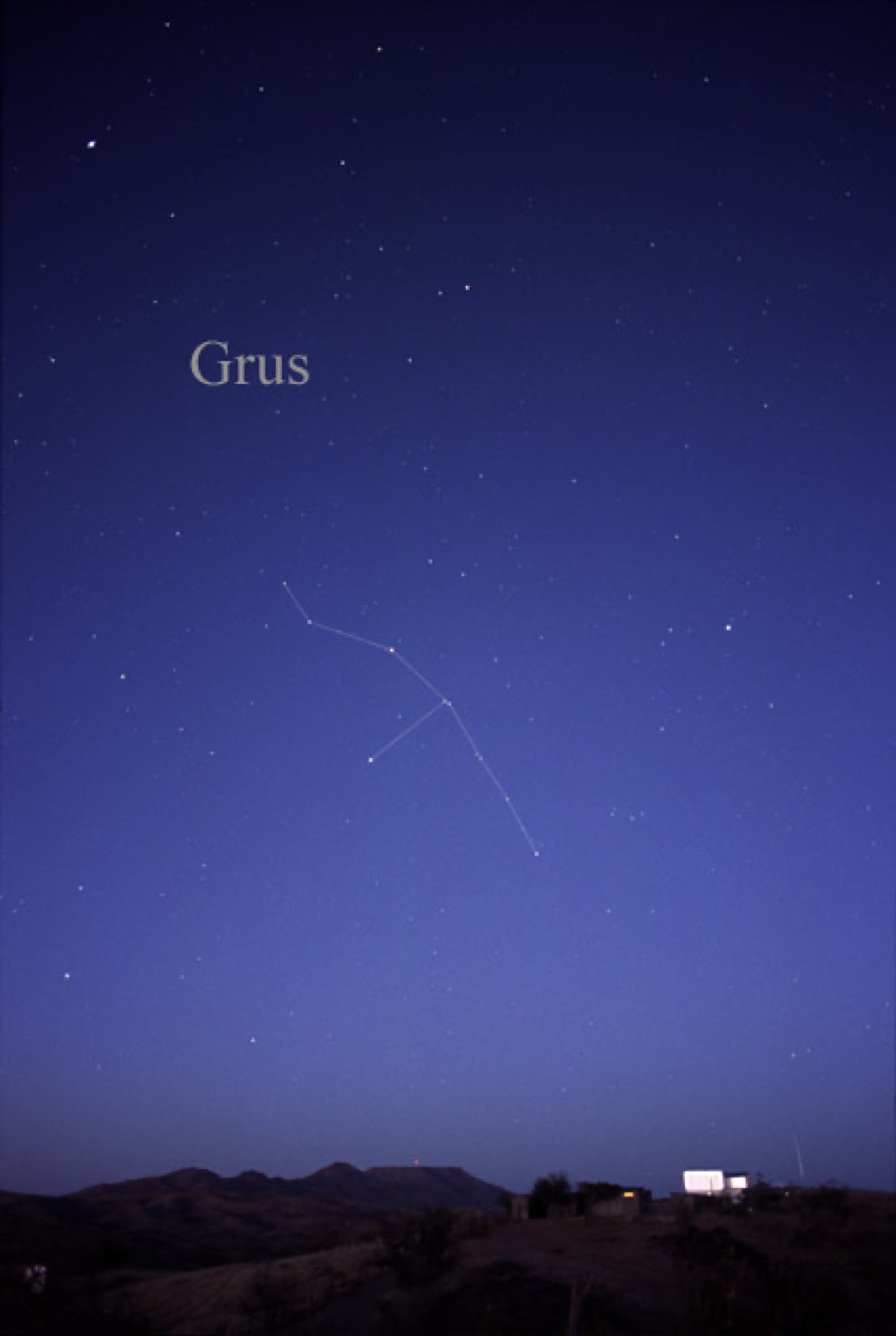
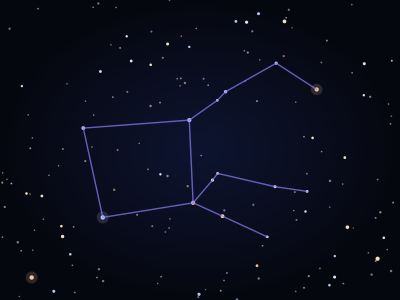
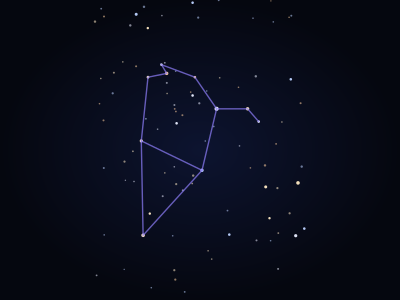
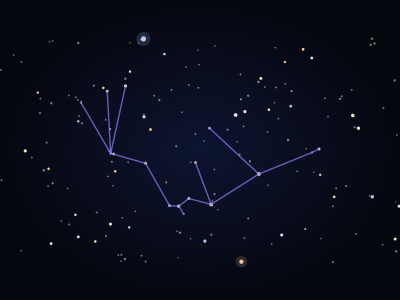
Constellations riding high
Highest around 9 pm this month:
Spot the Space Station
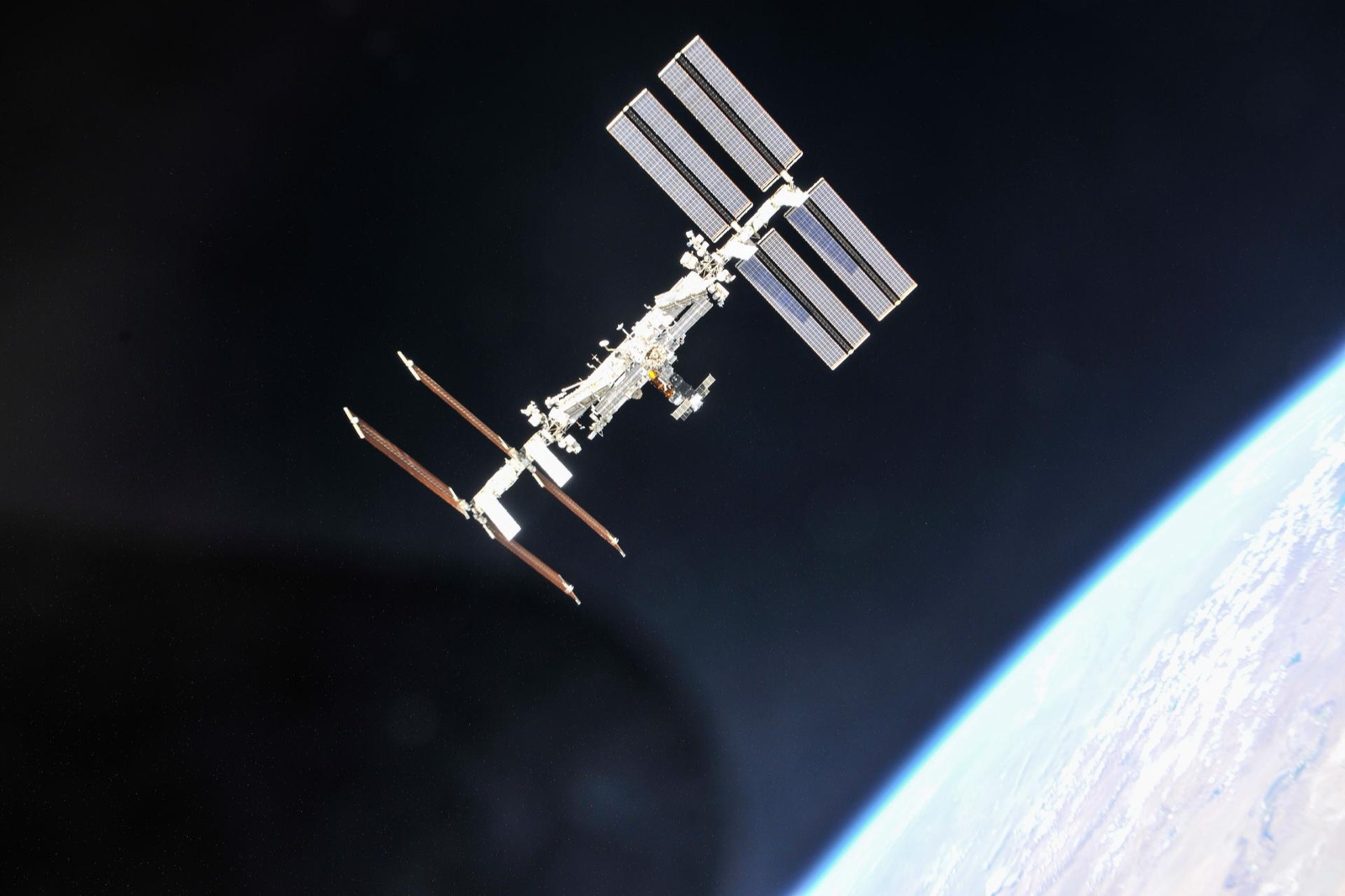
The ISS looks like a brilliant, silent, non-blinking star crossing the sky in about five minutes, usually within two hours of sunset or sunrise.
Pass times depend on your exact location, and NASA’s free Spot the Station service lists them for your town.
About the ISS →Photographs on this page: Grus, Till Credner (CC BY-SA 3.0).