 Photograph · NASA/JPL/Space Science Institute
Moon · Deep guide · orbits Saturn
Enceladus
The little moon that leaks its ocean into space. Free samples included.
What is it?
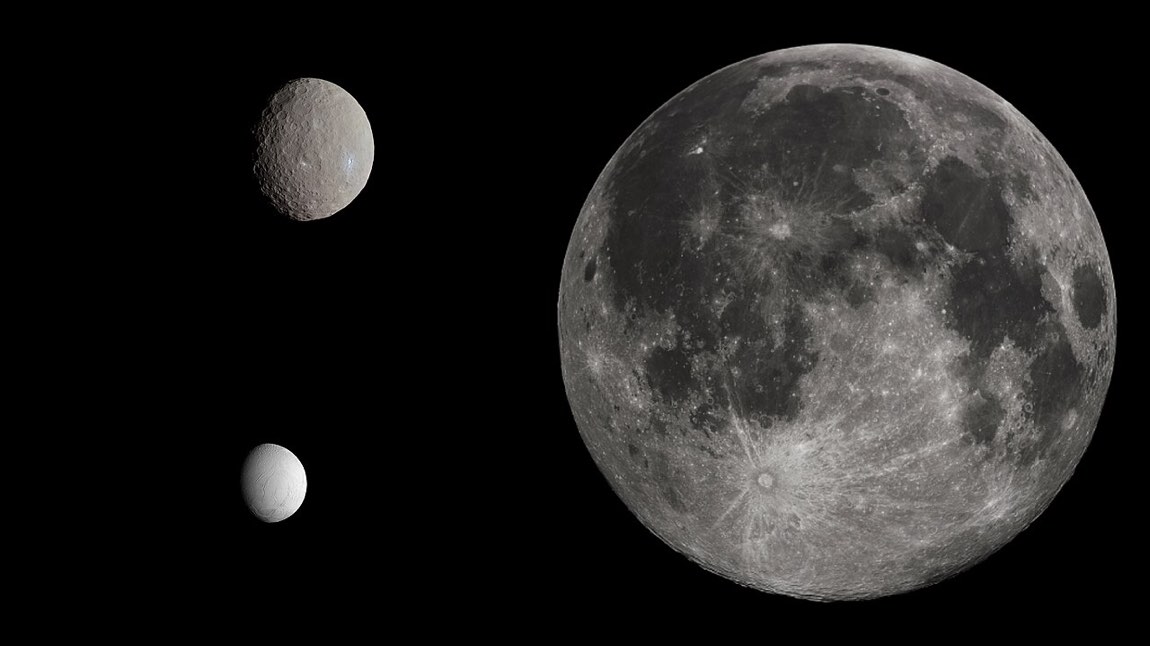
Enceladus is a small, blindingly white moon of Saturn, only about 500 km across — it would fit inside Colorado. From cracks near its south pole, it constantly sprays geysers of water vapor and ice hundreds of kilometers into space. That spray comes from a salty ocean hidden under the ice, and it contains organic molecules — which means a spacecraft can sample an alien ocean just by flying through the plume. Cassini already did.
Go deeper
Cassini flew through the plumes repeatedly and measured salts, silica nanograins (evidence of hot-water rock interaction at the seafloor), molecular hydrogen (a direct chemical energy source — the same one that feeds microbes at Earth's vents), and complex organics; a 2023 re-analysis added phosphates, completing the list of life's key ingredients. Libration measurements show the ice shell floats free on a global ocean. No other world offers confirmed water, organics, and energy with samples delivered to orbit — which is why 'fly through the plume with a life-detection instrument' is one of astrobiology's most requested missions (an Enceladus orbilander ranked second only to Uranus in the 2023 decadal survey).
01 A free ocean sample
Most ocean worlds hide their water under kilometers of ice. Enceladus hands it out: its geysers loft ocean spray into space, where a passing spacecraft can taste it. Cassini flew through the plume at just 49 km altitude — its instruments were never designed for life detection, and even so they found salt water, organic carbon, and chemical fuel.
02 Why is a tiny moon warm inside? Deeper
Enceladus is squeezed. Its orbit is kept slightly oval by a resonance with the moon Dione, so Saturn's tides knead it continuously; friction in the rocky core and flexing ice generates heat — over 10 gigawatts pouring from the south-polar 'tiger stripe' fractures. Small worlds can stay active for billions of years if a resonance keeps feeding them.
The deep dive
Researched for the Atlas from Wikipedia — Enceladus (48,674 characters read) · updated Sep 20, 2026
03 Herschel's discovery and what came next
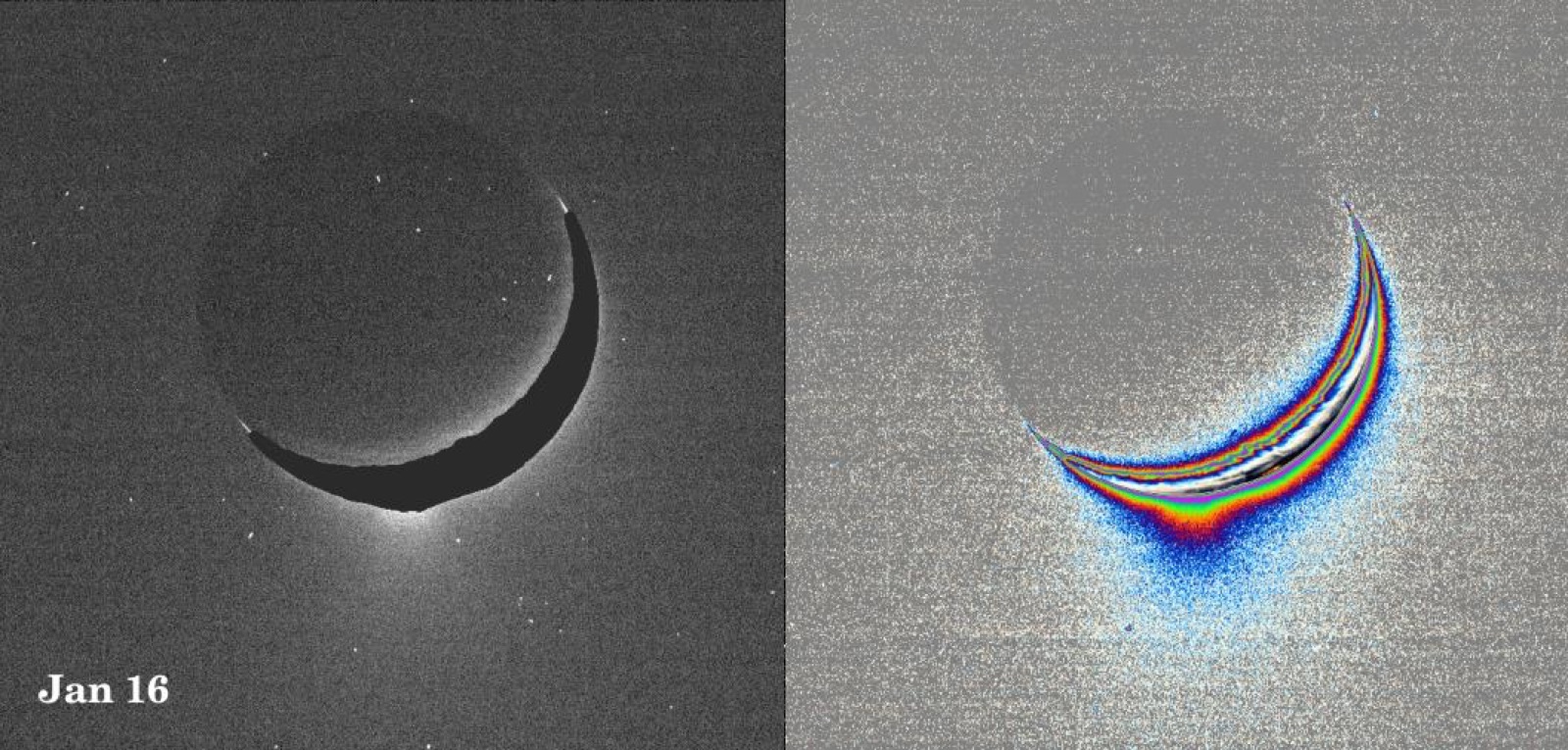
William Herschel spotted Enceladus on August 28, 1789, during the very first night he used his new 1.2-metre, 40-foot reflecting telescope at Observatory House in Slough, England — at the time the largest telescope in the world. Even so, the moon is hard to find: its faint apparent magnitude of HV = +11.7, combined with its closeness to the brilliantly lit Saturn and its rings, keeps it hidden from smaller instruments. Herschel caught it during a Saturnian equinox, when Earth sits within Saturn's ring plane and the rings' glare is at its lowest. For almost two centuries after that first sighting, almost nothing was learned beyond basic orbital data, rough estimates of mass and density, and a suspiciously high albedo. The view barely improved from a featureless dot until Voyager 1 and Voyager 2 swung past Saturn in 1980 and 1981 — nearly 200 years of mystery compressed into two brief flybys.
 ⤢
⤢
04 A name drawn from mythology and fairy tales
The moon takes its name from Enceladus, a giant of Greek mythology. The name was not chosen by William Herschel himself but by his son John, who proposed it in his 1847 publication "Results of Astronomical Observations made at the Cape of Good Hope." John Herschel picked names from the world of Titans and Giants because Saturn was known in Greek myth as Cronus, leader of the Titans. The surface features of Enceladus follow a completely different literary tradition: the International Astronomical Union names them after characters and places from Richard Francis Burton's 1885 translation of "The Book of One Thousand and One Nights." Craters are named after characters; other feature types — fossae, dorsa, planitiae, sulci, and rupes — are named after places from those stories. The IAU has officially named 85 features so far, the most recent being Samaria Rupes. A proposed symbol combining the Greek letter epsilon with the crook of the Saturn symbol was designed by software engineer Denis Moskowitz, but it has not come into widespread use.
05 An orbit that keeps Enceladus alive Deeper
Enceladus circles Saturn at a distance of 238,000 km from the planet's center, completing one full orbit every 32.9 hours — fast enough that a patient observer can watch it move across the sky in a single night. It sits in a 2:1 mean-motion orbital resonance with the larger moon Dione: Enceladus completes exactly two orbits for every one Dione completes. This gravitational tug keeps Enceladus's orbital eccentricity at 0.0047, a value called a forced eccentricity. Because the orbit is not a perfect circle, Enceladus is alternately squeezed and stretched by Saturn's gravity as it moves closer and farther away. That constant kneading dissipates energy as heat inside the moon, and that heat is the primary driver of its entire geological engine. The 2016 "young moons" study estimated that Enceladus and its siblings interior to Titan may have formed as recently as 100 million years ago, while a 2019 study estimated the ocean itself is around one billion years old — leaving the exact timeline actively debated.
06 The Voyager encounters and their surprises
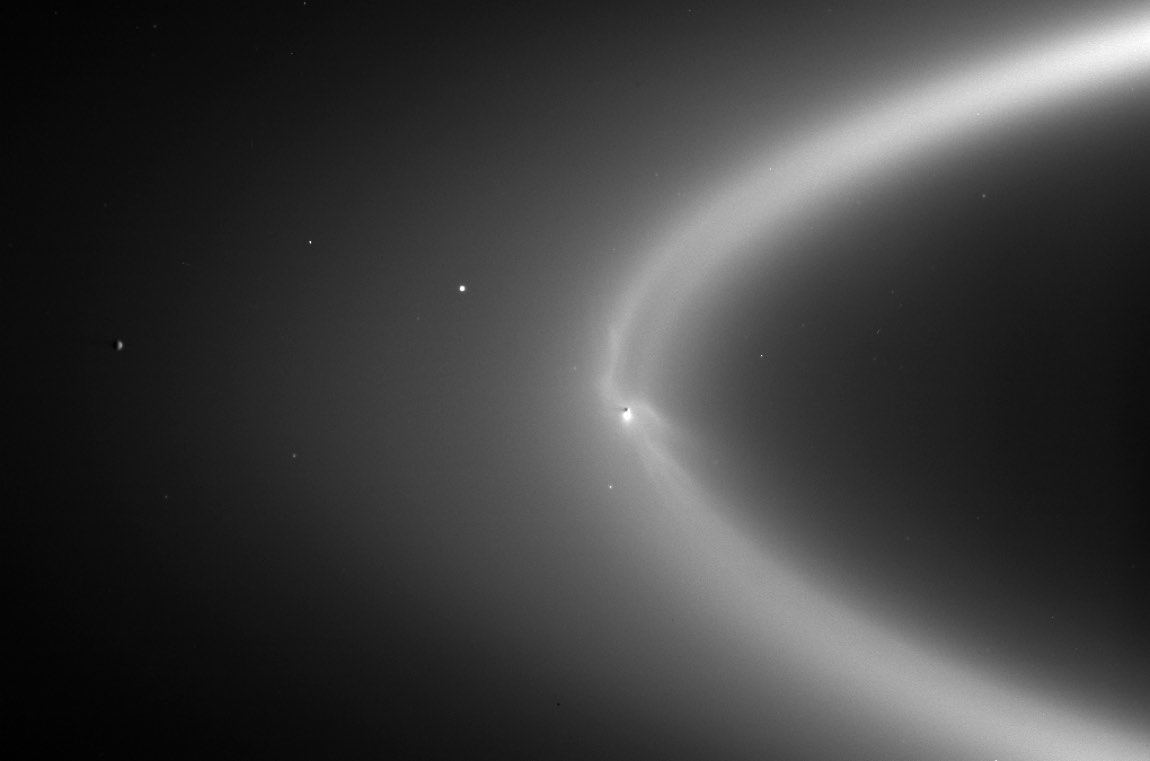
Voyager 1 made the first close look at Enceladus on November 12, 1980, passing at 202,000 km — far enough that images were blurry, but close enough to reveal a startlingly bright, crater-free surface hinting at recent resurfacing. It also confirmed that Enceladus sits embedded in the densest part of Saturn's E ring, fueling early suspicions that the moon was feeding material into that ring. Voyager 2 came considerably closer, passing at 87,010 km on August 26, 1981, and returned images showing at least five distinct terrain types: heavily cratered regions, smooth young plains, and lanes of ridged terrain. The smooth plains had so few craters they were probably less than a few hundred million years old. Scientists were genuinely shocked — no existing theory could explain why such a small, cold body showed signs of geological activity rivaling much larger worlds. In 2017, a reprocessing of Voyager 1 departure images even revealed a possible early glimpse of the plumes, decades before anyone realized what they were looking at.
 ⤢
⤢
07 Cassini's campaigns: flyby by flyby Deeper
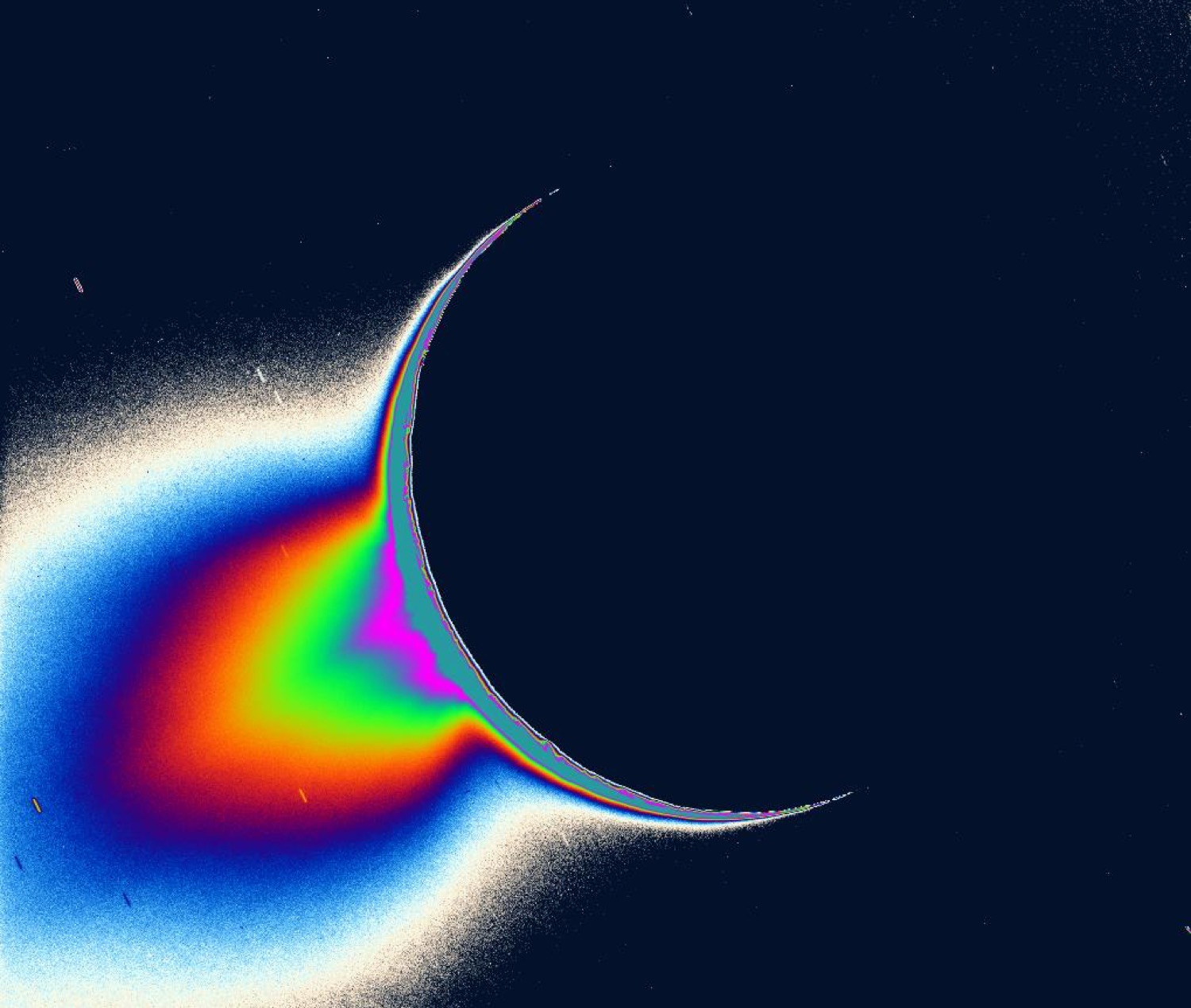
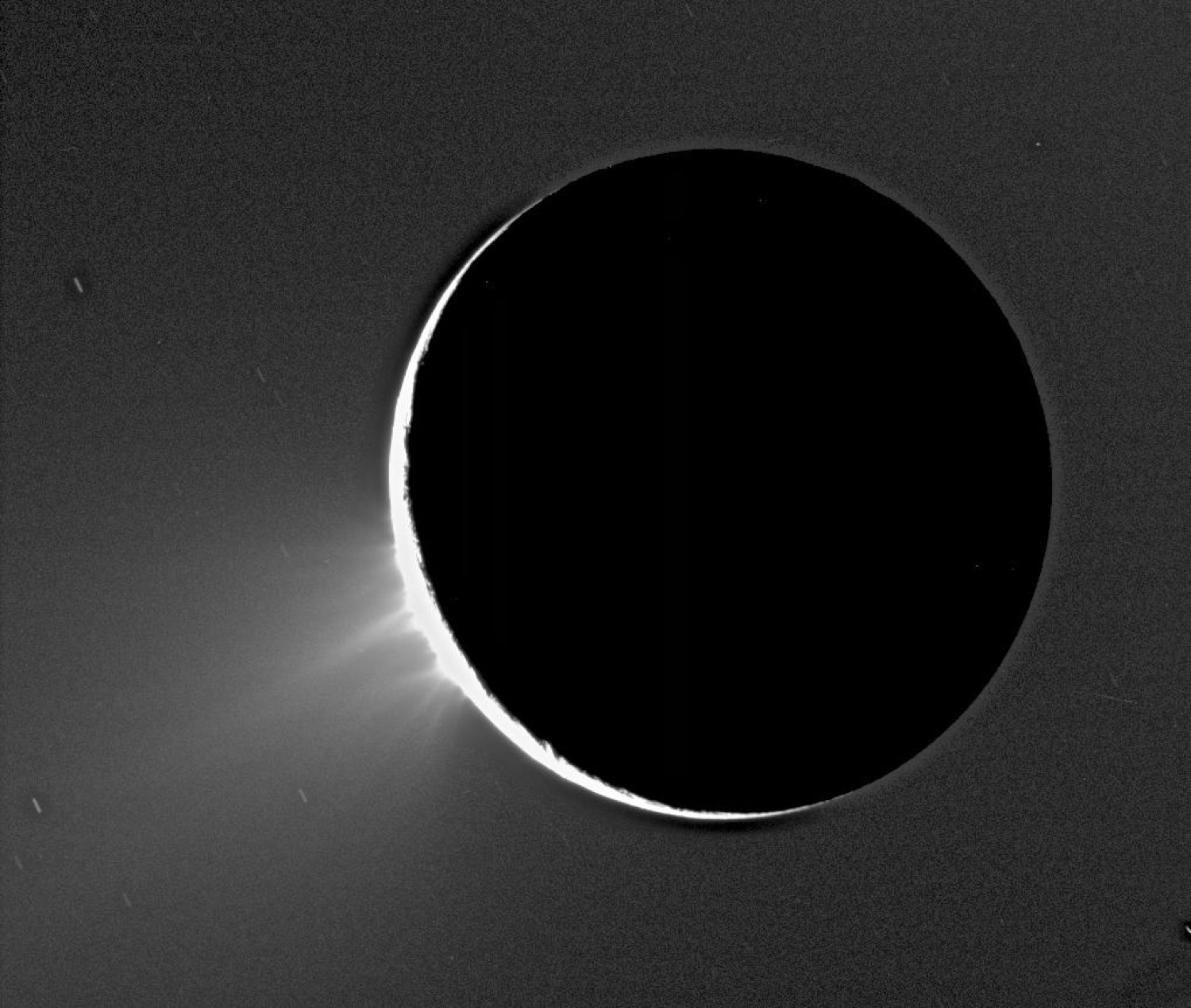
The Cassini spacecraft entered Saturn orbit on July 1, 2004, and mission planners had already marked Enceladus as a priority target based on the Voyager results. During its first two close flybys in 2005 its Cosmic Dust Analyzer detected a large increase in particle density near the moon, and magnetometer data revealed the draping of Saturn's magnetic field — a clear sign of a local atmosphere. The Ultraviolet Imaging Spectrograph confirmed water vapor specifically over the south pole. These findings triggered replanning of Cassini's entire trajectory to enable closer passes, including a March 2008 encounter at just 48 km from the surface. The extended mission added seven close flybys between July 2008 and July 2010, including two at only 50 km in late 2008. On October 28, 2015, Cassini flew through a plume at 49 km, allowing its mass spectrometer to directly sample the material and detect molecular hydrogen — the key evidence pointing to active hydrothermal chemistry on the seafloor far below.
08 Tiger stripes: Saturn's strangest fissures
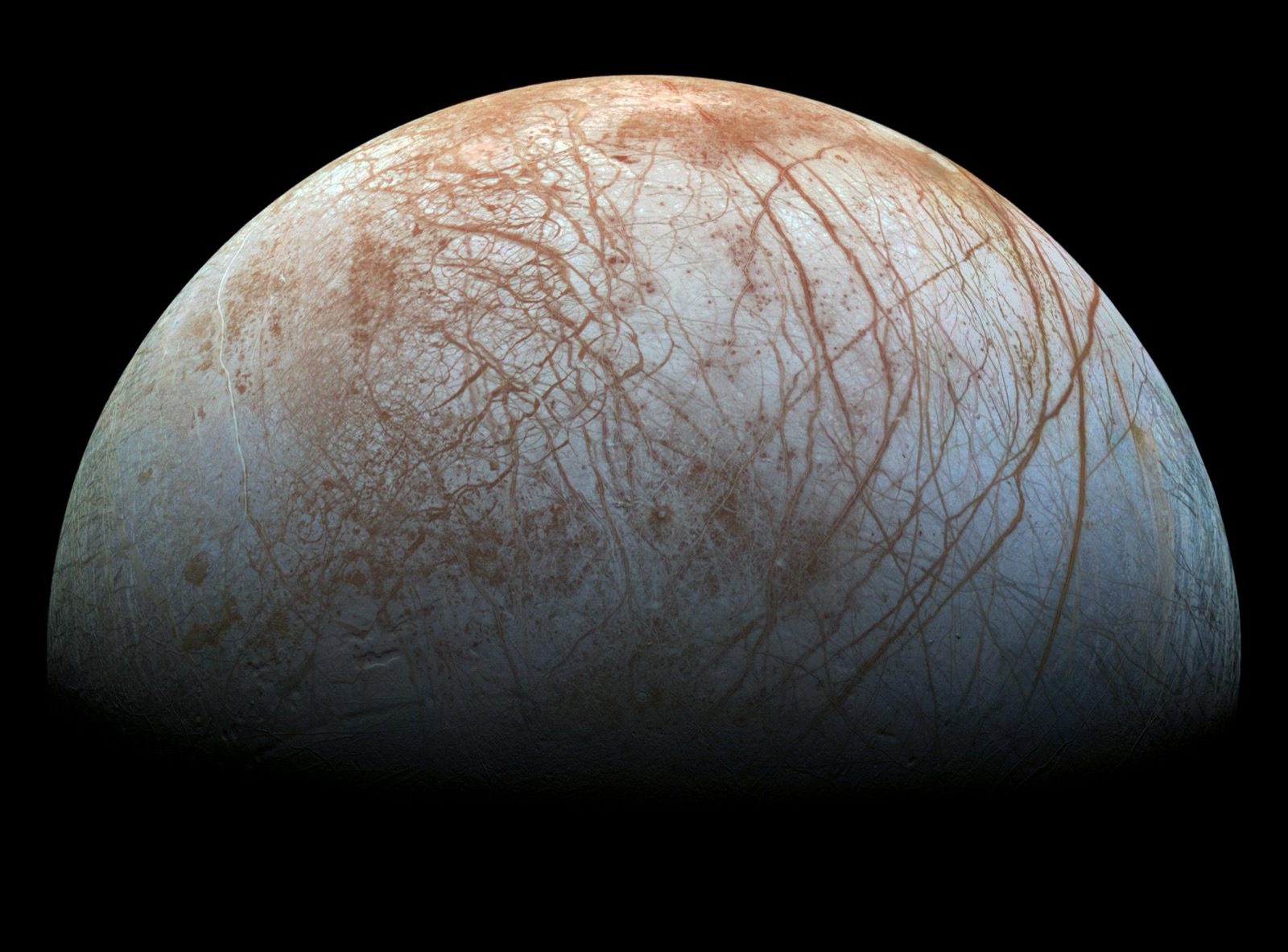
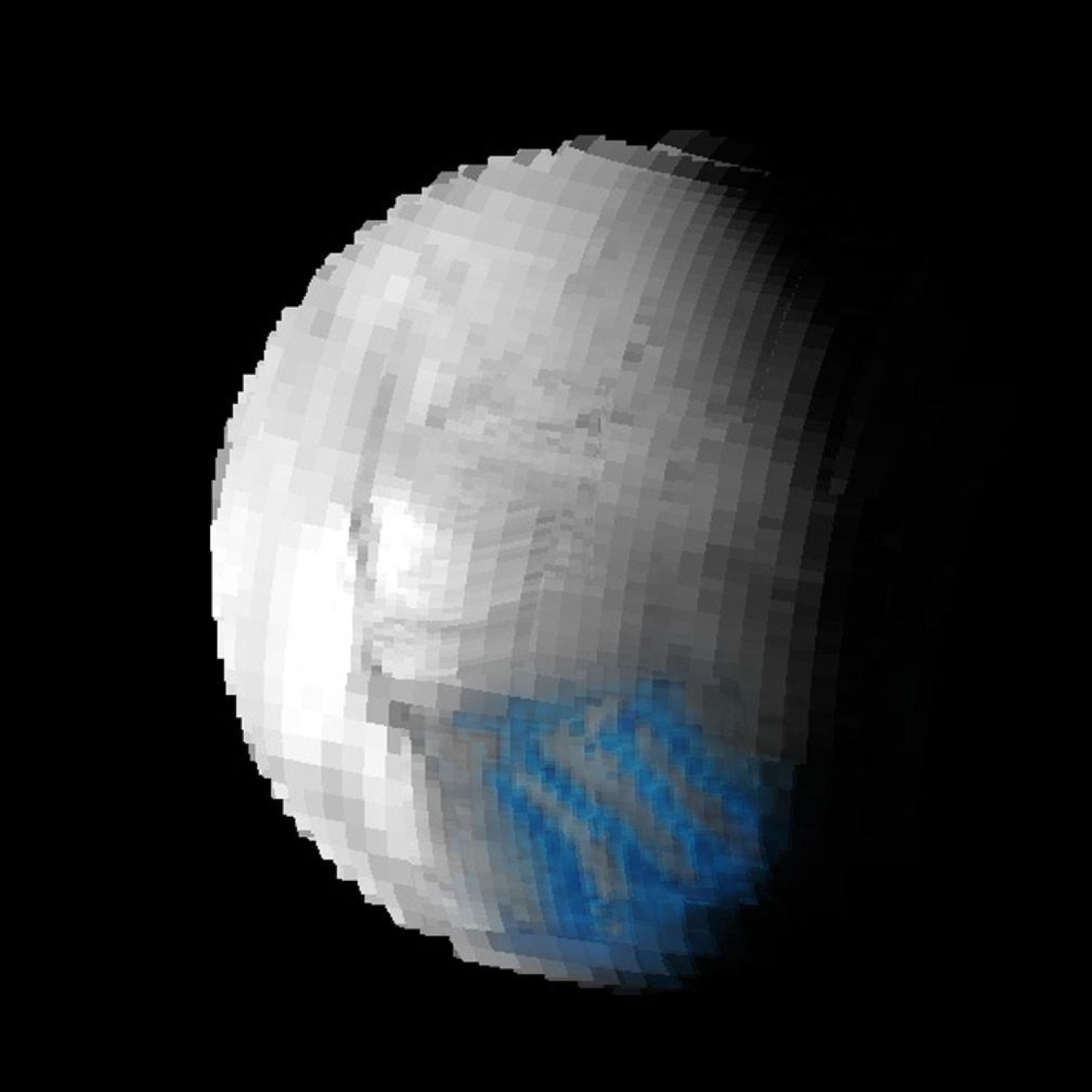
Near the center of Enceladus's south polar terrain lie four distinctive fractures bounded by ridges, unofficially called "tiger stripes." They appear to be the youngest features on an already-young surface, and are surrounded by coarse-grained water ice that appears mint-green in false-color ultraviolet–green–near-infrared images. This ice sits on flat ground and has not been coated by the fine-grained ice particles raining down from the E ring, confirming the surface here is geologically very fresh. The Visual and Infrared Mapping Spectrometer detected crystalline water ice in the stripes — a form that reverts to an amorphous state over time from radiation damage, suggesting the stripes are likely less than 1,000 years old, or have been thermally re-heated very recently. Simple organic compounds were also detected in the tiger stripes that were not found anywhere else on Enceladus's surface. The plumes erupting from them are not constant: they are about four times brighter when Enceladus is near apoapsis than at periapsis, because tidal stresses pull the fissures open at the far point of the orbit and compress them shut at the near point.
09 A world reshaped: craters, canyons, and plains Deeper
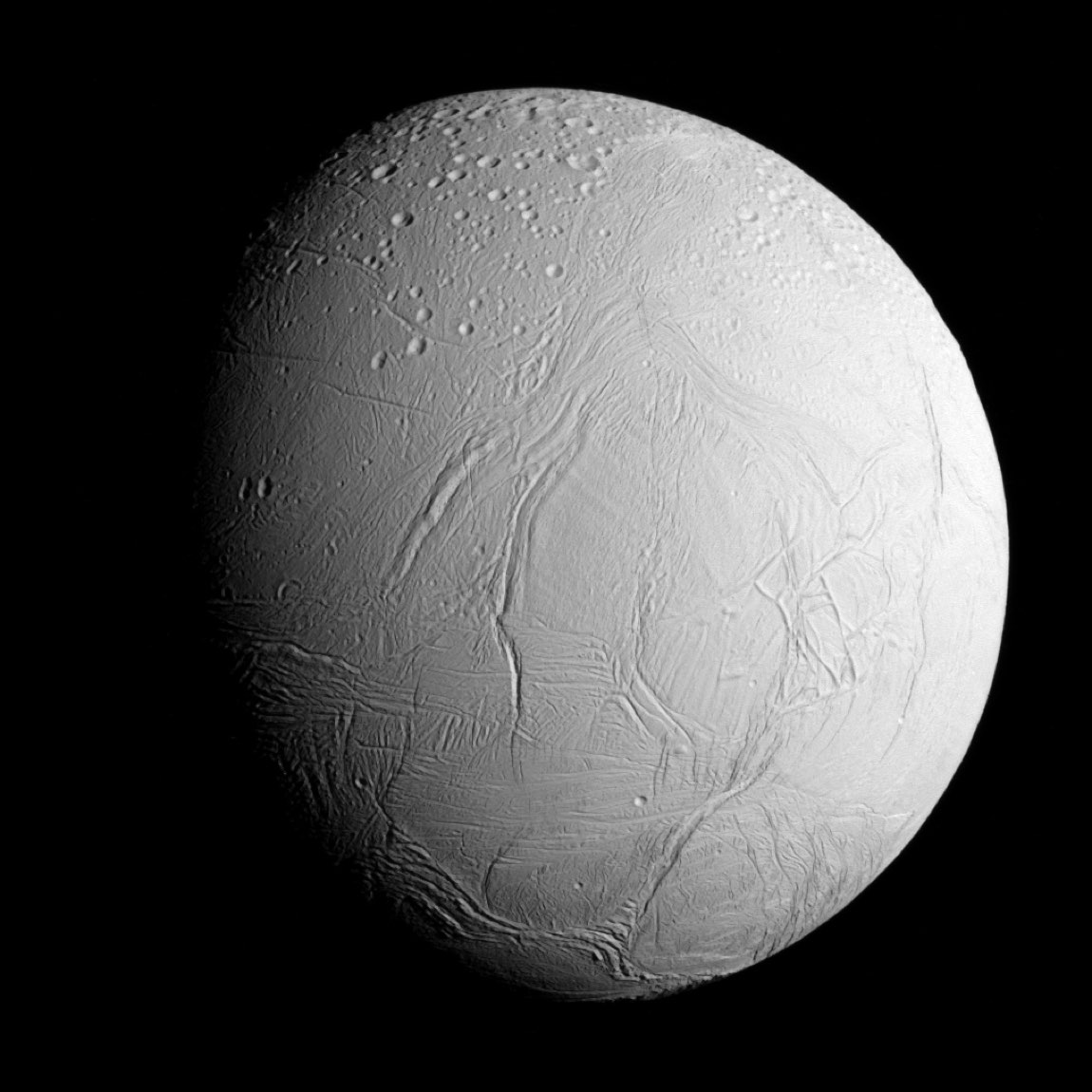
Enceladus hosts a remarkably varied landscape for a body only 500 km across. Its tectonic canyons can stretch up to 200 km long, span 5–10 km wide, and plunge 1 km deep — proportionally as dramatic as anything on Earth. One-kilometer-high ridges and domes have also been observed. Many older craters have been softened or nearly erased by viscous relaxation, the process by which warm ice slowly flows under gravity, leaving features with domed floors like Dunyazad crater rather than sharp bowl shapes. In the smooth plains of Sarandib Planitia, no craters at all were visible to Voyager 2; Cassini's higher-resolution images later revealed a few small ones, allowing a surface age estimate of either 170 million years or 3.7 billion years, depending on which impactor population model is used — a huge uncertainty that illustrates how much is still unknown. The placement of Sarandib and Diyar Planitiae on opposite sides of the moon from the south polar smooth terrain hints that Saturn's tidal forces control where resurfacing happens.
 ⤢
⤢
10 Why Mimas is dead and Enceladus is not Deeper
Mimas orbits closer to Saturn than Enceladus and should, by simple geometry, experience stronger tidal forces — yet it is geologically inert, while Enceladus bubbles with activity. This "Mimas–Enceladus paradox" has a subtle explanation rooted in material properties. Tidal heating depends not just on distance and eccentricity but also on the shear modulus and dissipation factor of the ice, both of which drop sharply as temperature rises toward the melting point. Models show that Enceladus can sustain a stable high-energy thermal state with active convection, whereas Mimas can only maintain a cold, stiff low-energy state. A warmer interior makes Enceladus's ice more deformable, which generates more heat, reinforcing the warm state. Enceladus also has a significantly higher density than Mimas — 1.61 g/cm³ versus 1.15 g/cm³ — implying a larger rock fraction and more radiogenic heating in its early history. Being larger, Enceladus also cooled more slowly, giving it a longer window in which to be nudged into orbital resonance and kick-start that self-sustaining warm state.
11 The heat budget that doesn't quite add up Deeper
Enceladus radiates about 4.7 gigawatts of internal heat from its south polar region, measured by Cassini's infrared spectrometer over 16 months of observation. That number is deeply puzzling. Long-lived radioactive isotopes — uranium-238, uranium-235, thorium-232, and potassium-40 — contribute only about 0.3 gigawatts. A 2007 theoretical study predicted that tidal forces could supply no more than 1.1 gigawatts. Neither source alone, nor both combined, comes close to 4.7 gigawatts. A 2017 computer simulation offered a possible contribution: friction between sliding rock fragments inside Enceladus's porous, fragmented core could generate heat and keep the ocean warm for billions of years. The measured heat flux of roughly 200 milliwatts per square meter near the south pole is about 10 times what radiogenic heating alone could supply. Some scientists argue the ocean is a remnant from a past era of higher orbital eccentricity; others think an unidentified mechanism is still at work. The energy budget remains one of the most pressing open questions in planetary science.
12 Hydrogen cyanide and the newest clues for life
On December 14, 2023, astronomers announced the first detection of hydrogen cyanide in Enceladus's plumes. Hydrogen cyanide is a known chemical precursor to amino acids and the building blocks of DNA, making its presence particularly striking. The same analysis identified additional organic compounds that scientists have not yet fully characterized. Earlier, in June 2023, astronomers confirmed the presence of phosphates in the plume material, completing what researchers describe as the full set of basic chemical ingredients considered necessary for life as we know it — carbon, hydrogen, nitrogen, oxygen, sulfur, and phosphorus. A 2019 study had already found nitrogen-bearing and oxygen-bearing amines likely present in plume ice grains, compounds that could be precursors to biologically relevant molecules. And a 2025 paper reported the further detection of organic molecules in plume samples analyzed by the Cosmic Dust Analyzer. Each new result tightens the chemical case, though none proves life exists — only that the raw materials and energy sources are available.
 ⤢
⤢
13 Missions waiting to be flown
Cassini's discoveries sparked a wave of proposed follow-up missions. The Enceladus Life Finder (ELF) and Life Investigation For Enceladus (LIFE) would focus on astrobiology. The Enceladus Explorer (EnEx), funded by the German Aerospace Center, envisions a lander designed to probe habitability of the subsurface ocean. The Journey to Enceladus and Titan (JET) would perform in-situ plume sampling during a flyby. In November 2017, Russian billionaire Yuri Milner proposed a privately funded, low-cost, high-speed single flyby to sample plume biosignatures; NASA signed a cooperation agreement with his Breakthrough Initiatives in September 2018, and provided technical reviews through December 2019. The most ambitious concept, the Enceladus Orbilander, was recommended as a Flagship-class mission by the 2022 Planetary Science Decadal Survey. Estimated to cost about $5 billion, it would spend eighteen months orbiting and sampling plumes before landing for two Earth years of surface astrobiology research. In 2024, the European Space Agency named an Enceladus mission — designated L4, an orbiter-lander — its top priority, targeting launch in 2042 and arrival in 2053.
14 The snow world you could almost see tonight
Enceladus is not easy to observe from Earth, but it is not impossible. Its apparent magnitude of HV = +11.7 puts it at the edge of what a decent backyard telescope can reach, and the biggest obstacle is glare from Saturn itself and from the rings. The best viewing windows come during Saturnian equinoxes, when Earth sits within the ring plane and ring brightness drops sharply — the same geometry that helped Herschel spot it in 1789. What makes Enceladus extraordinary to contemplate even from a distance is that its surface is covered in clean, freshly deposited snow hundreds of meters thick — up to an estimated 700 meters at its deepest — deposited by its own geysers falling back as precipitation. That snow gives it a visual geometric albedo of 1.38, making it the most reflective body in the Solar System. The trade-off is a surface temperature at noon of only −198 °C, colder than it would be if it absorbed more sunlight. The entire surface is in constant slow renewal, a world perpetually dusting itself in its own exhaust.
 ⤢
⤢
You would weigh…
Surface gravity 0.11 m/s² vs Earth’s 9.81 m/s². Try every world →
Could life exist here?
Everything life needs is measured and confirmed in one place: liquid water, organic chemistry, phosphorus, and a usable energy source. That is not evidence of life — it is evidence of habitability, the strongest of any world beyond Earth. The next step is a mission built to look.
Our labels: Confirmed · Strong Evidence · Estimated · Hypothesis · Theoretical · Speculative (see Methodology).
Could humans live here?
A visit-only world for the far future — 1% gravity and −200 °C rule out settlement in any meaningful sense. But as a science destination it is priceless.
How would we get there?
Same road as Saturn: ~7 years with gravity assists. Mission concepts (plume-flyer, orbilander) are studied; none is officially scheduled yet.
| Technology | Status | Travel time (one way, straight line) |
|---|---|---|
| Apollo-style spacecraft, about 39,000 km/h | Flown technology | 4 years |
| Ion-propulsion probe, about 90,000 km/h | Flown technology | 648 days |
| Voyager 1, about 61,000 km/h | Flown technology | 3 years |
| Parker Solar Probe, about 690,000 km/h | Flown technology | 85 days |
| Nuclear-thermal rocket, about 120,000 km/h cruise | In development | 491 days |
| Laser light-sail at 20% of light speed | Proposed concept | 6.5 hours |
| Light itself, 299,792 km/s | Physical limit | 78 minutes |
Simplified straight-line times at cruise speed. Real missions fly curved orbital paths and take longer. Full travel calculator →
Weird & wonderful
- Enceladus snows on itself — plume fallout keeps it the whitest world in the Solar System.
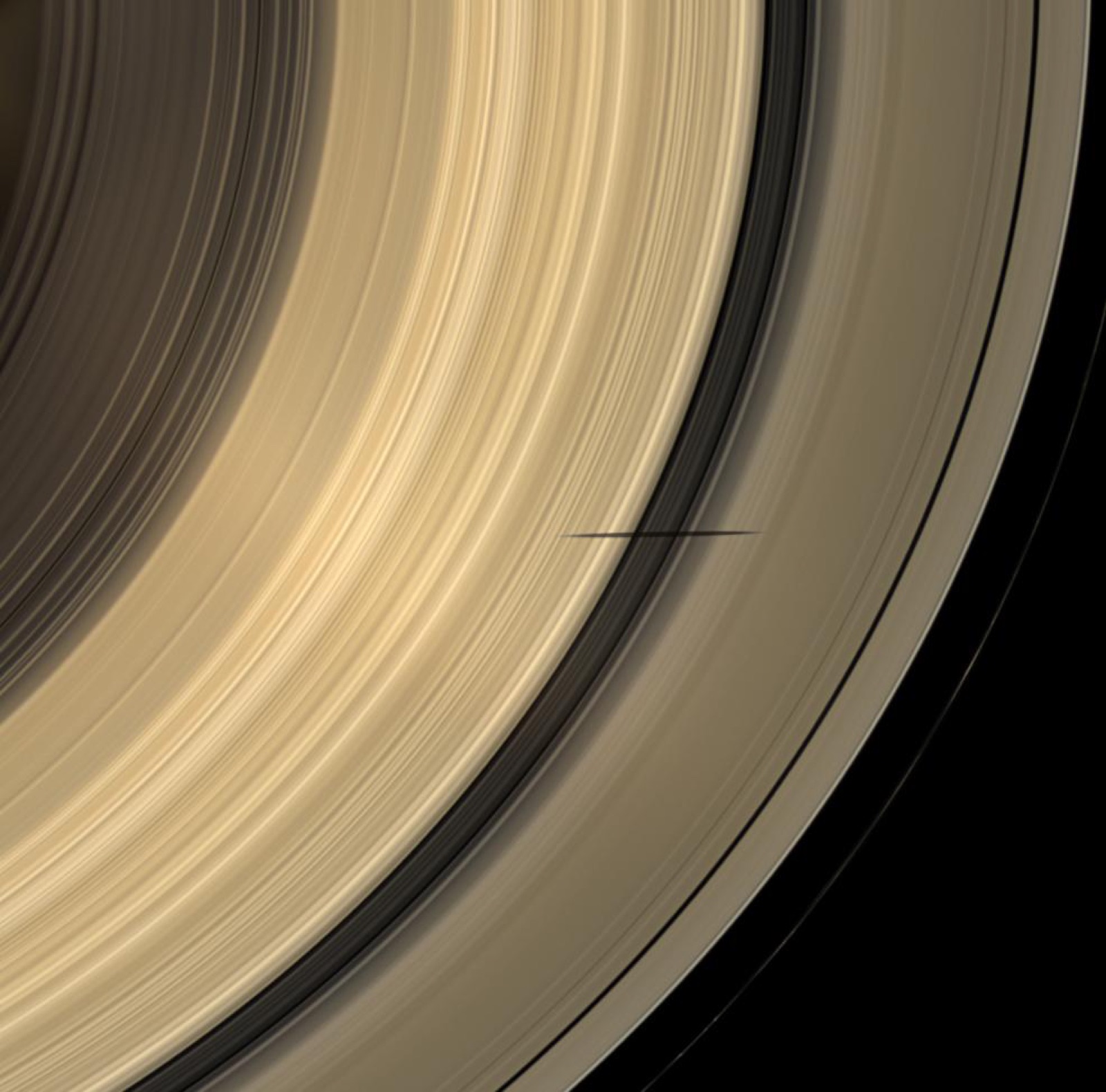
- Its geysers supply the material for one of Saturn's rings.
- It reflects ~90% of sunlight, which is partly why it is so absurdly cold.
- All of life's six key elements (CHNOPS) have now been detected in its plume material.
Latest news about Enceladus
More real images of Enceladus
Genuine spacecraft and telescope imagery, every frame credited and licensed. Tap any photo to enlarge.