Moon · Deep guide · orbits Saturn
Siarnaq
Also called: Saturn XXIX · S/2000 S 3
Saturn's biggest prograde irregular moon, named for the Inuit goddess of the sea.
What is it?
Siarnaq is the second-largest irregular moon of Saturn, about 39 km across, and the largest of the Inuit group of moons that orbit far out in the same direction as Saturn spins. Brett Gladman's team found it in September 2000 with the Canada-France-Hawaii Telescope on Mauna Kea. Cassini measured its spin at about 10.2 hours, and its light curve suggests a roughly triangular shape. Its light red colour matches Kiviuq and Paaliaq, supporting a common origin.
The deep dive
Researched for the Atlas from Wikipedia — Siarnaq (9,638 characters read) · updated Nov 14, 2026
01 How Siarnaq Got Its Unusual Name
The story behind Siarnaq's name is one of the more charming anecdotes in planetary science. When astronomer John Kavelaars needed names for the newly found Saturnian moons, colleagues urged him to break from tradition and avoid Greco-Roman mythology. He spent months consulting Amerindian scholars, then one evening in March 2001, while reading the Inuit children's book Hide and Sneak to his kids, inspiration struck. He contacted the book's author, Michael Kusugak, who suggested the names Kiviuq and Sedna. Kavelaars decided all Inuit group moon names should end in the letter q to visually distinguish the group — so Sedna became Siarnaq. That freed up the name Sedna, which was later applied to 90377 Sedna, a distant trans-Neptunian object discovered in 2003. The IAU formally published the name on 8 August 2003, one month after approval, and assigned Siarnaq the Roman numeral Saturn XXIX — the 29th moon of Saturn. Before that, it had carried the placeholder designation S/2000 S 3, meaning the third Saturnian satellite identified in images taken in the year 2000.
02 The Myth Behind the Moon
Siarnaq is named for an Inuit sea giantess and ruler of the underworld called Adlivun — a figure known by many names including Nuliajuk and, most famously in Western popular culture, Sedna. According to Inuit tradition, Siarnaq resides at the bottom of the ocean and is the creator and keeper of all sea life, which she withholds from hunters when she is angered. Appeasing her falls to shamans, who must descend into the deep and comb the tangles from her hair. In some versions of the legend, Siarnaq was once a beautiful maiden who was deceived into marrying a bird-man and later rescued by her father, only for him to sacrifice her to the sea during a storm to save himself. Author Michael Kusugak, whose children's book prompted Kavelaars's choice, noted with delight that he had invented the character of the shaman Paaliaq for his own story — and was genuinely surprised when Paaliaq turned up as an officially approved moon name on the same final list.
03 A Night of Discovery at Mauna Kea
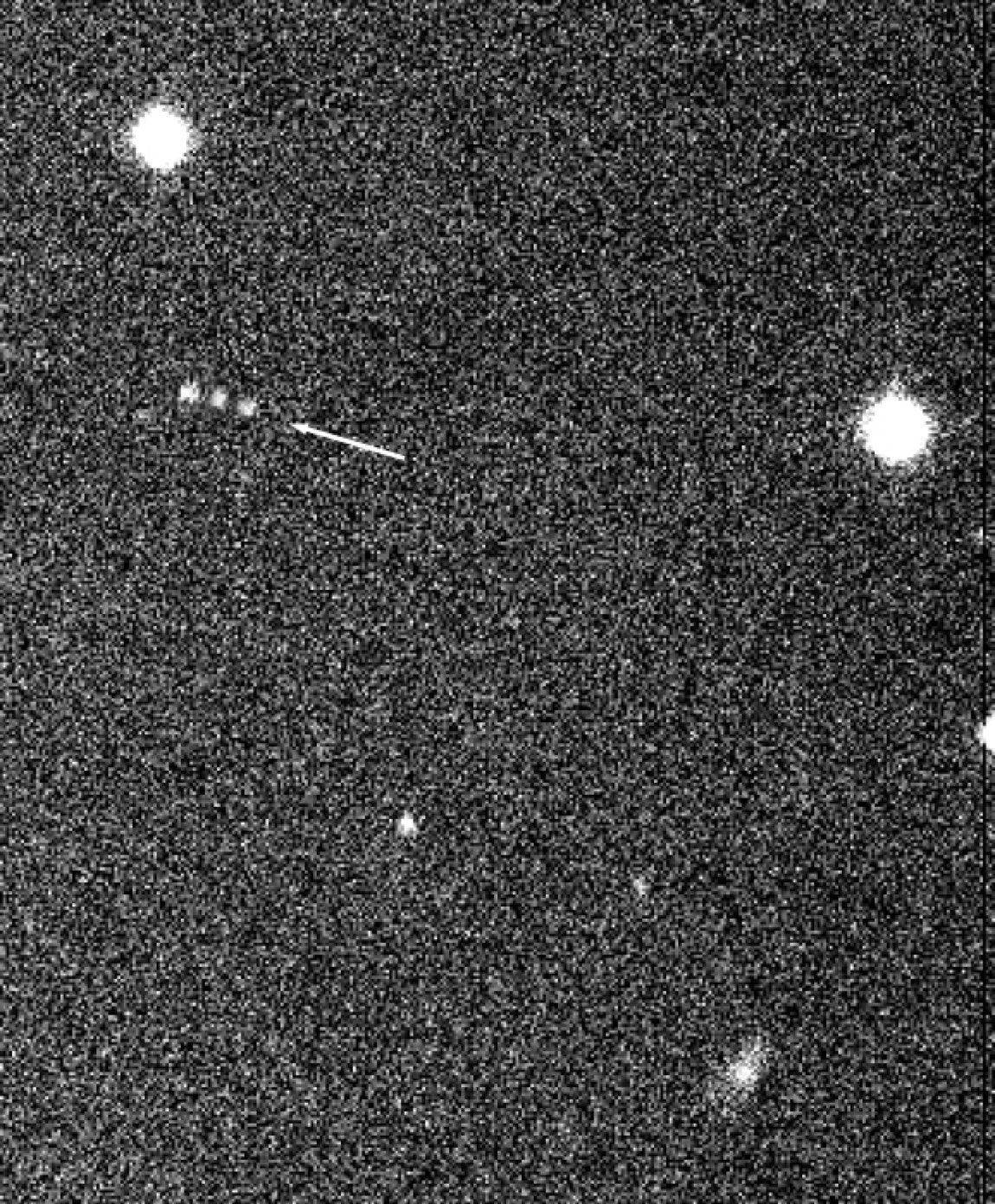
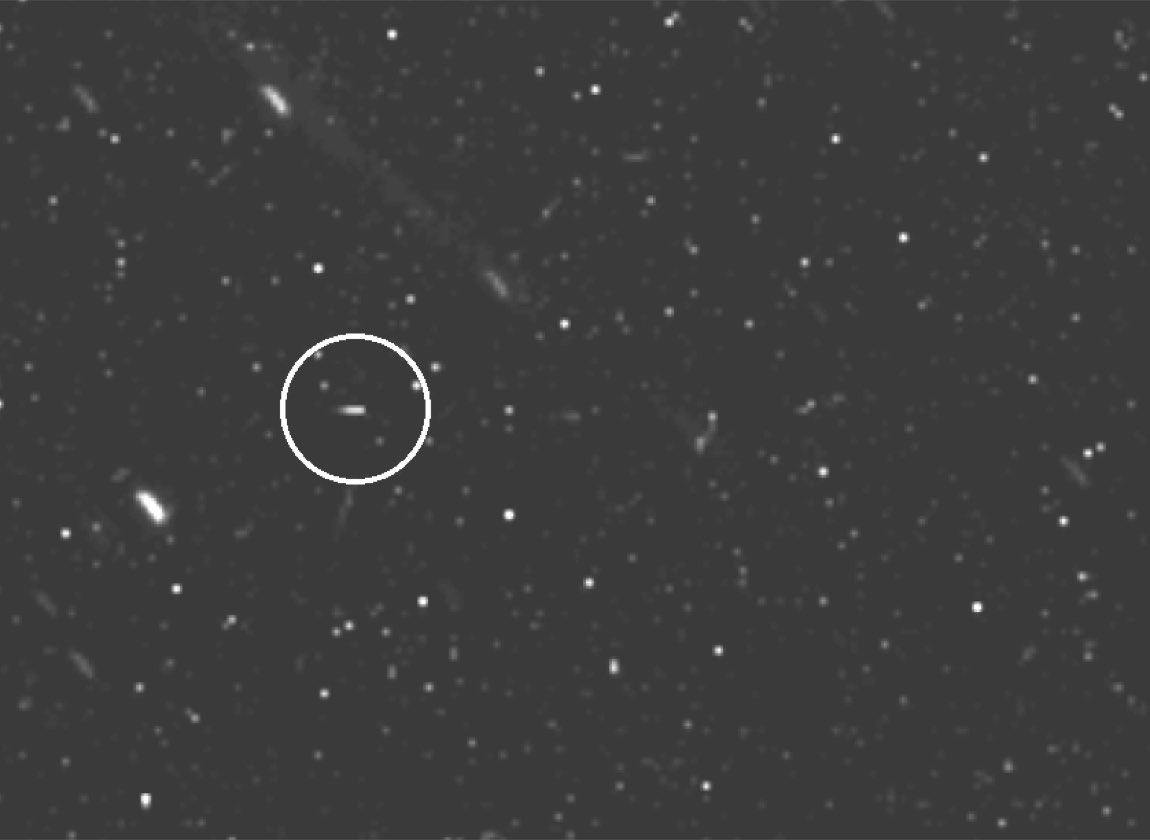
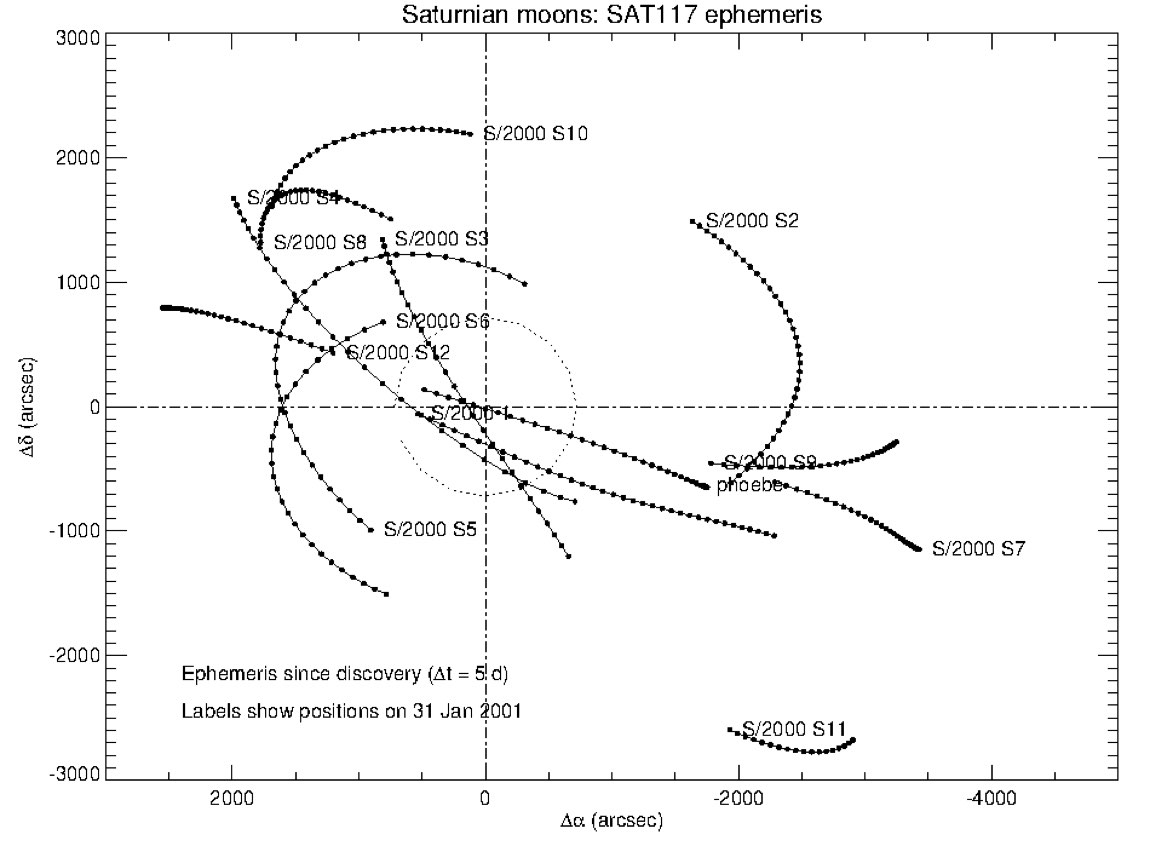
Siarnaq was spotted on 23 September 2000 during a systematic survey of Saturn's Hill sphere — the gravitational territory within which the planet can hold moons in stable orbits. The team, led by Brett J. Gladman and including seven collaborators, used the 3.6-meter Canada-France-Hawaii Telescope at Mauna Kea Observatory in Hawaii, pushing down to an R-band limiting magnitude of 24.5. That is roughly ten million times fainter than the dimmest star a sharp human eye can detect unaided. Siarnaq itself appeared at an apparent magnitude of 20, making it the brighter of two new satellite candidates identified that night — the other being Tarvos. The team had already found Ymir and Paaliaq the previous month. Follow-up observations between 25 and 29 September at multiple observatories confirmed that the objects were truly in orbit around Saturn rather than being foreground asteroids. The formal announcement came from the International Astronomical Union on 25 October 2000, with Gladman's team presenting the results a day later at an American Astronomical Society Division for Planetary Sciences meeting.
04 How One Survey Reshaped the Moon Count
The discovery of Siarnaq was part of a campaign that dramatically reshuffled the solar system's moon rankings. When Siarnaq, Ymir, Paaliaq, and Tarvos were confirmed, Saturn's known moon count jumped to 22, overtaking Uranus's tally of 21. The campaign did not stop there: by the time Gladman's team had finished, they had announced eight more irregular Saturnian satellites, pushing Saturn to 30 known moons and briefly unseating Jupiter as the planet with the most known moons — a lead Jupiter reclaimed in 2003. The key to this productivity was the deliberate use of sensitive CCD cameras on ground-based telescopes to sweep Saturn's Hill sphere systematically, an approach that proved far more efficient than waiting for accidental discoveries. Siarnaq's confirmation itself required a little patience: the initial orbit was poorly constrained, requiring follow-up observations at Kitt Peak National Observatory in December 2000 and later at the Palomar and La Palma observatories in early 2001 before the orbit could be pinned down reliably.
05 Surface Chemistry: Ice-Free but Not Bare Deeper
Data from the James Webb Space Telescope's NIRSpec instrument, covering the 0.7 to 5.3 micron wavelength range, revealed a surface chemistry that is notably different from what many had assumed for outer solar system bodies. A clear absorption feature at 3.0 microns points to the presence of hydrated minerals, yet water ice itself was not found in substantial quantities — a sharp contrast with Phoebe, Saturn's largest irregular satellite, which does carry significant water ice. JWST also detected carbon dioxide on the surface, and the article attributes this CO₂ to irradiation of organic compounds rather than any icy reservoir. Siarnaq's overall composition was found to be nearly identical to Albiorix, another Saturnian irregular satellite also studied by JWST, hinting at a shared chemical heritage. The moon is light red in color, and its infrared spectrum closely resembles those of its Inuit-group relatives Paaliaq and Kiviuq, lending further weight to the idea that all three descend from the same fragmented progenitor body.
06 A Porous, Regolith-Covered World Deeper
Brightness measurements of Siarnaq taken at different phase angles reveal a distinctive pattern with real physical meaning. At high phase angles the brightness stays relatively constant, producing what scientists describe as a shallow phase curve. But right at opposition — when Earth, the Sun, and Siarnaq line up — the moon abruptly brightens by 0.2 magnitudes. This sharp opposition surge is a recognized signature of a highly porous surface blanketed with substantial regolith, the loose fragmental debris that accumulates on airless bodies over billions of years of micrometeorite impacts. The porous structure of the regolith scatters light preferentially back toward the source, creating the surge. This behavior is entirely consistent with Siarnaq's history as a collision fragment: a body that has been battered and ground down over geological time would naturally develop a deep, loosely packed surface layer. The light curve itself shows three maxima and minima per rotation, implying Siarnaq has a roughly triangular shape, similar in form to fellow Saturnian irregular moon Ymir.
07 Extreme Seasons on a Fast-Spinning Moon Deeper
With a rotation period of just 10.19 hours measured by the Cassini spacecraft, Siarnaq spins faster than any other prograde irregular moon of Saturn — a distinction that marks it as unusual even within its own family. Cassini observations at multiple phase angles also pinned down the orientation of Siarnaq's north rotational pole, placing it at −23° ecliptic latitude and 98° ecliptic longitude. What that geometry means in practice is a sideways axial tilt — roughly comparable to the extreme tilt of Uranus, which lies on its side relative to its orbital plane. For Siarnaq, orbiting Saturn once every 896 days, such a tilt translates into long, severe seasons. During part of its orbit one pole is turned almost directly toward the Sun while the other sits in prolonged darkness; the situation reverses roughly half an orbit later. This is not merely a curiosity: extreme seasonal cycles affect how surface materials are heated, processed by radiation, and potentially redistributed over time.
08 An Orbit That Never Quite Settles Deeper
Siarnaq orbits Saturn at an average distance of 17.9 million km — roughly 47 times the distance from Earth to the Moon — and completes one orbit in 896 days, or about 2.45 years. But that average conceals a great deal of restlessness. Over any 200-year window, gravitational tugs from the Sun and other planets cause Siarnaq's semi-major axis to wander between 17.5 and 18.3 million km, its eccentricity to swing between 0.089 and 0.554, and its inclination to vary between 41.4° and 54.3° relative to the ecliptic. The eccentricity range is particularly striking: at its most elliptical, the orbit is very elongated, while at its roundest it is nearly circular. The moon also sits in a temporary secular resonance with Saturn, meaning the two bodies' apsidal precession periods currently match — a gravitational coincidence that will not last forever. Additionally, Siarnaq's high eccentricity and inclination place it close to the threshold for Lidov-Kozai resonance, a mechanism capable of dramatically altering orbital shapes over long timescales.
09 The Inuit Group and Its Violent Origin
Siarnaq is the largest member of the Inuit group, a family of prograde irregular moons that orbit Saturn at average semi-major axes between 11.2 and 18.4 million km, all tilted at high average inclinations of 45° to 50° relative to the ecliptic. The prevailing explanation for the group's existence is that a single larger body was gravitationally captured by Saturn billions of years ago, then subsequently shattered in a collision. The resulting fragments became the Inuit group moons. The Inuit group divides further into three subgroups: the Kiviuq group, the Paaliaq group, and the outermost Siarnaq group, to which Siarnaq belongs along with six other known members — Tarqeq, S/2004 S 31, S/2019 S 14, S/2020 S 3, S/2019 S 6, and S/2020 S 5. The fact that several of these small moons share very similar orbits to Siarnaq itself suggests that Siarnaq experienced at least one additional collision after the initial breakup, spawning its own cluster of daughter fragments. The relative scarcity of small Inuit group moons is thought to indicate that the group is old enough for repeated collisions to have ground most tiny members out of existence.
10 What Cassini and WISE Revealed
Although no spacecraft visited Siarnaq directly, two space missions contributed substantially to what is known about it. NASA's Wide-field Infrared Survey Explorer, known as WISE, observed Siarnaq in infrared light and provided the best current estimate of its size: a diameter of 39.3 km (24.4 miles) — roughly the driving distance across a mid-sized city — with a geometric albedo of 0.050 ± 0.017, meaning it reflects only about 5% of incoming sunlight, making it quite dark. The Cassini spacecraft, orbiting Saturn from 2004 to 2017, observed Siarnaq at different phase angles and measured its 10.19-hour rotation period, determined the orientation of its rotational pole, and helped characterize its light curve shape. Neither mission resolved the moon into a detailed image — Siarnaq remains too small and distant for that — but together they transformed it from a point of light into a physically characterized world with a known spin, shape class, pole orientation, and surface reflectivity.
11 Open Questions and Future Research Deeper
Despite the insights from WISE, Cassini, and JWST, Siarnaq leaves several important questions unanswered. The precise mechanism by which the original Inuit group progenitor was captured by Saturn remains debated — capture of a large body by a planet without some energy-dissipating process is dynamically difficult, and the details of how it happened billions of years ago are not settled. The internal structure of Siarnaq is entirely unconstrained; whether it is a solid fragment, a loosely bound rubble pile, or something in between is unknown. The temporary secular resonance Siarnaq currently shares with Saturn raises the question of how long this configuration has persisted and what orbital evolution preceded it. The identification of hydrated minerals by JWST is intriguing but raises further questions: where did those minerals form, and how were they delivered or created? The near-identical composition of Siarnaq and Albiorix — which belongs to the separate Gallic group — also invites explanation. Future dedicated infrared spectroscopy and improved orbital modeling will be needed to address these puzzles.
 ⤢