 Photograph · NASA/JPL-Caltech/SSI/JHUAPL/Univ. of Arizona
Moon · Deep guide · orbits Saturn
Titan
Saturn's giant moon, and the only world besides Earth with rain, rivers, lakes and seas.
What is it?
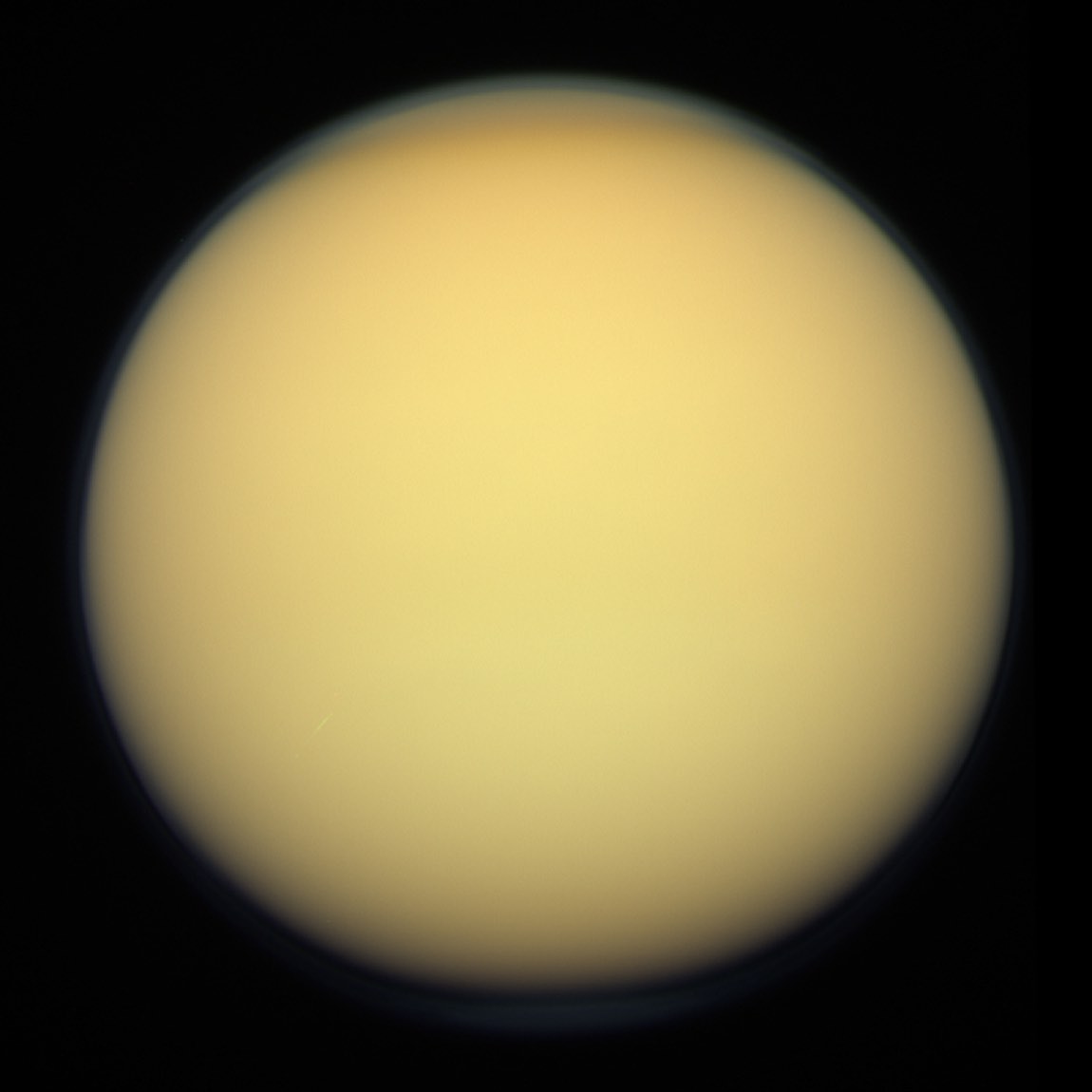
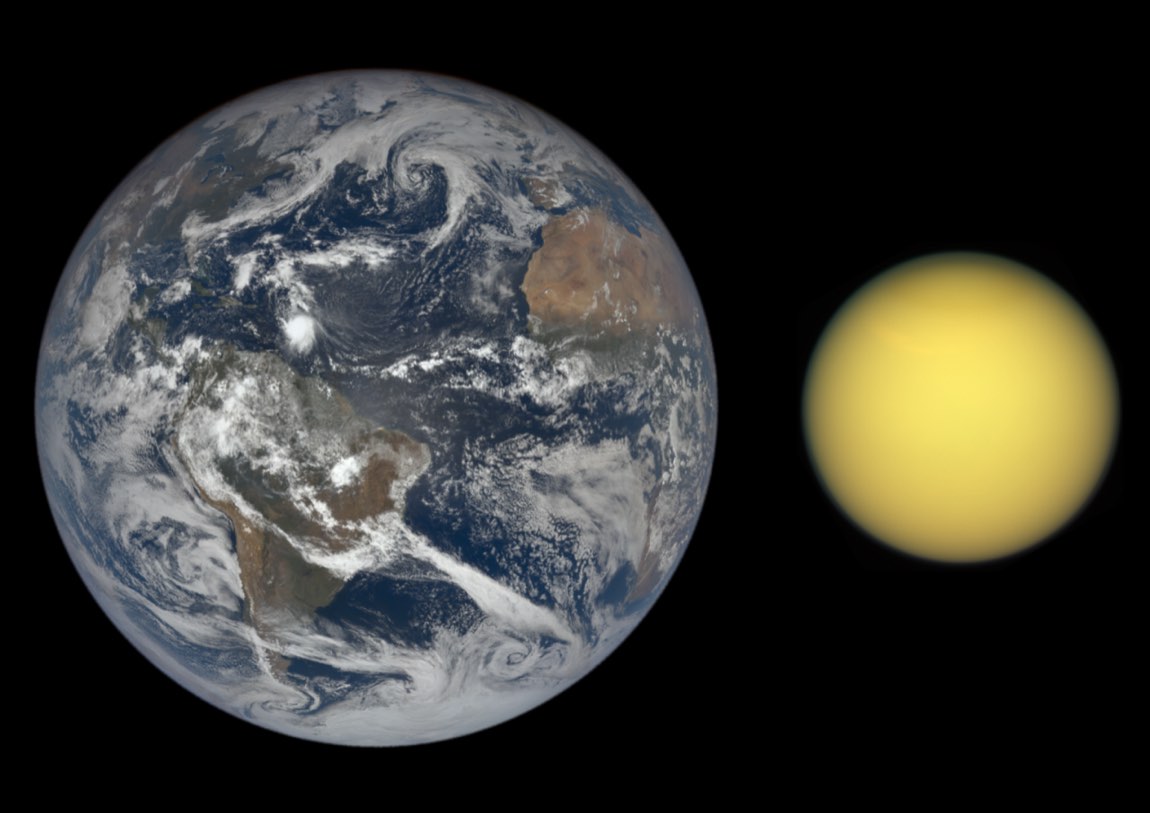
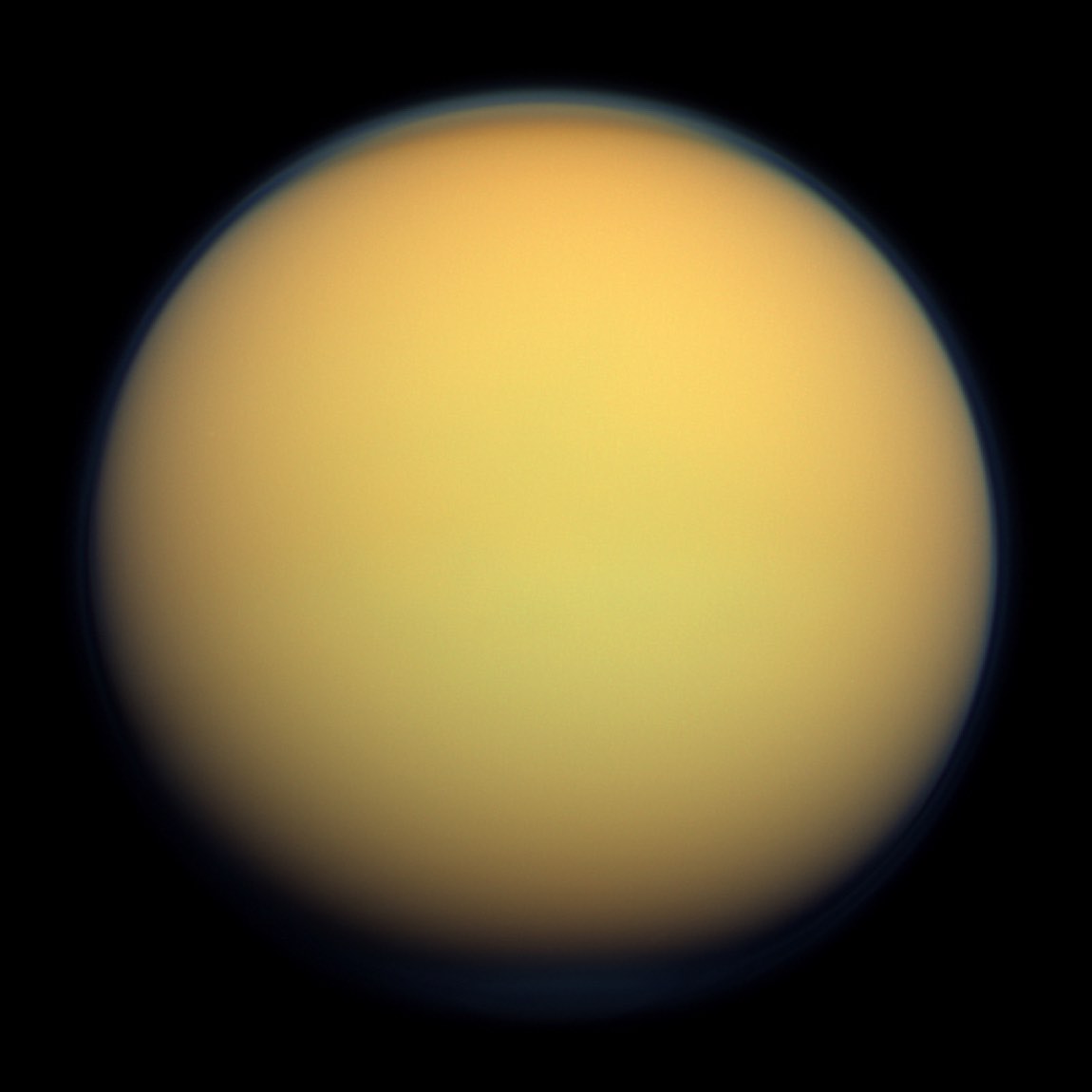
Titan is Saturn's largest moon and the second largest in the Solar System — bigger than the planet Mercury. It is the only moon with a thick atmosphere, and the only world besides Earth where liquid rains from the sky, carves rivers, and pools into lakes and seas. The twist: at −179 °C, the liquid is methane and ethane, not water. Under its orange smog, Titan looks hauntingly like home, built from completely different materials.
Go deeper
Titan runs a full 'hydrological' cycle on hydrocarbons: methane evaporates, forms clouds, rains, carves dendritic river networks (imaged by Huygens during its 2005 descent), and fills polar seas — Kraken Mare is larger than the Caspian. Beneath the ice crust, gravity data indicate a salty water ocean. Titan therefore offers two habitability experiments in one world: exotic methane-based chemistry on the surface (Speculative), and a familiar water ocean at depth (Hypothesis). Its dense atmosphere and low gravity make flight absurdly easy — the reason NASA's next outer-planets flagship is a nuclear-powered rotorcraft, Dragonfly.
01 What is it like there?
A dim orange world under a permanent smoggy sky — daylight is about like Earth ten minutes after sunset. Hills of rock-hard water ice, dunes of organic sand, riverbeds of pebble-smooth ice cobbles, and, near the poles, glassy-calm methane seas. The air is thick and the gravity gentle: with strap-on wings, a human could literally fly.
02 Huygens' landing
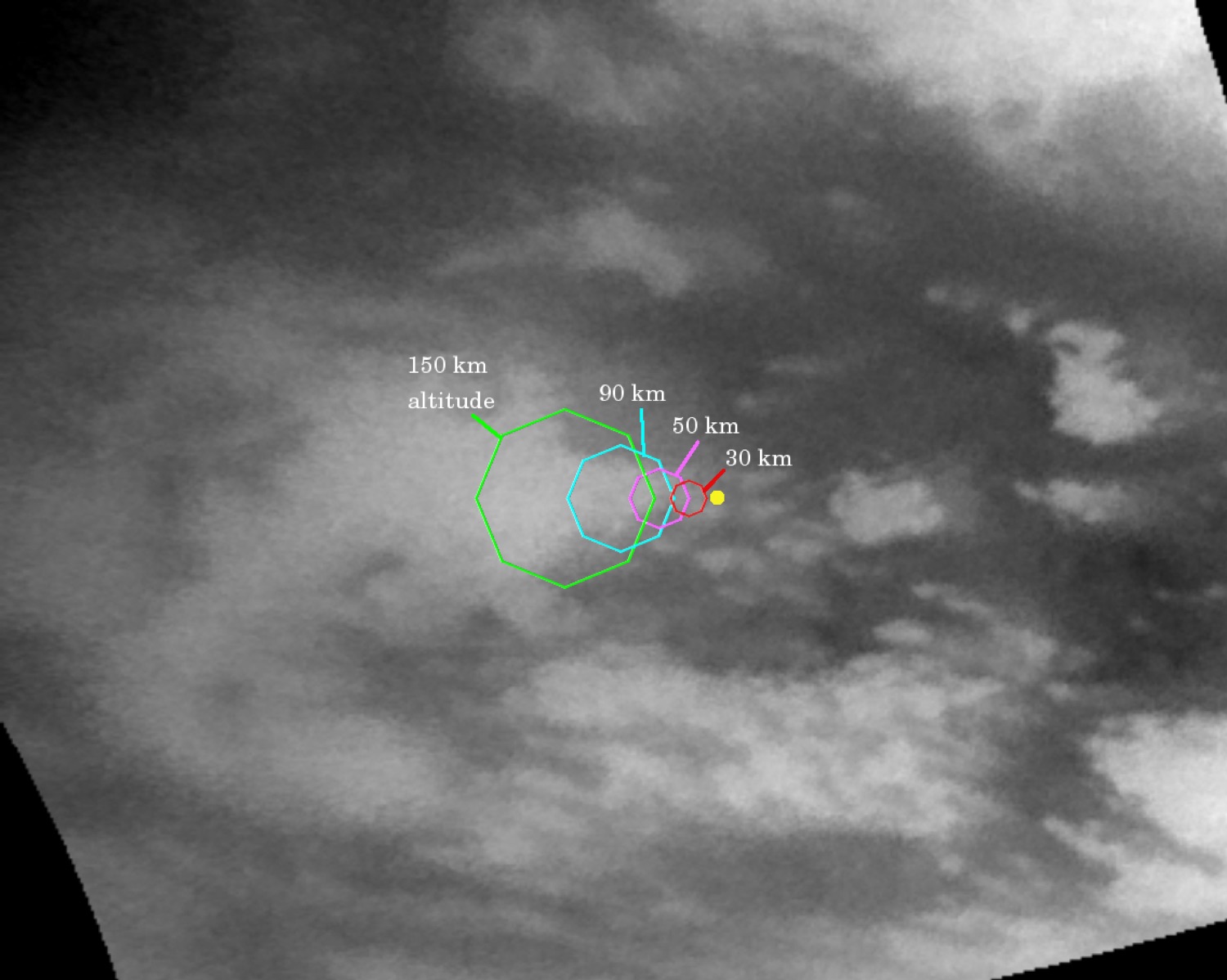
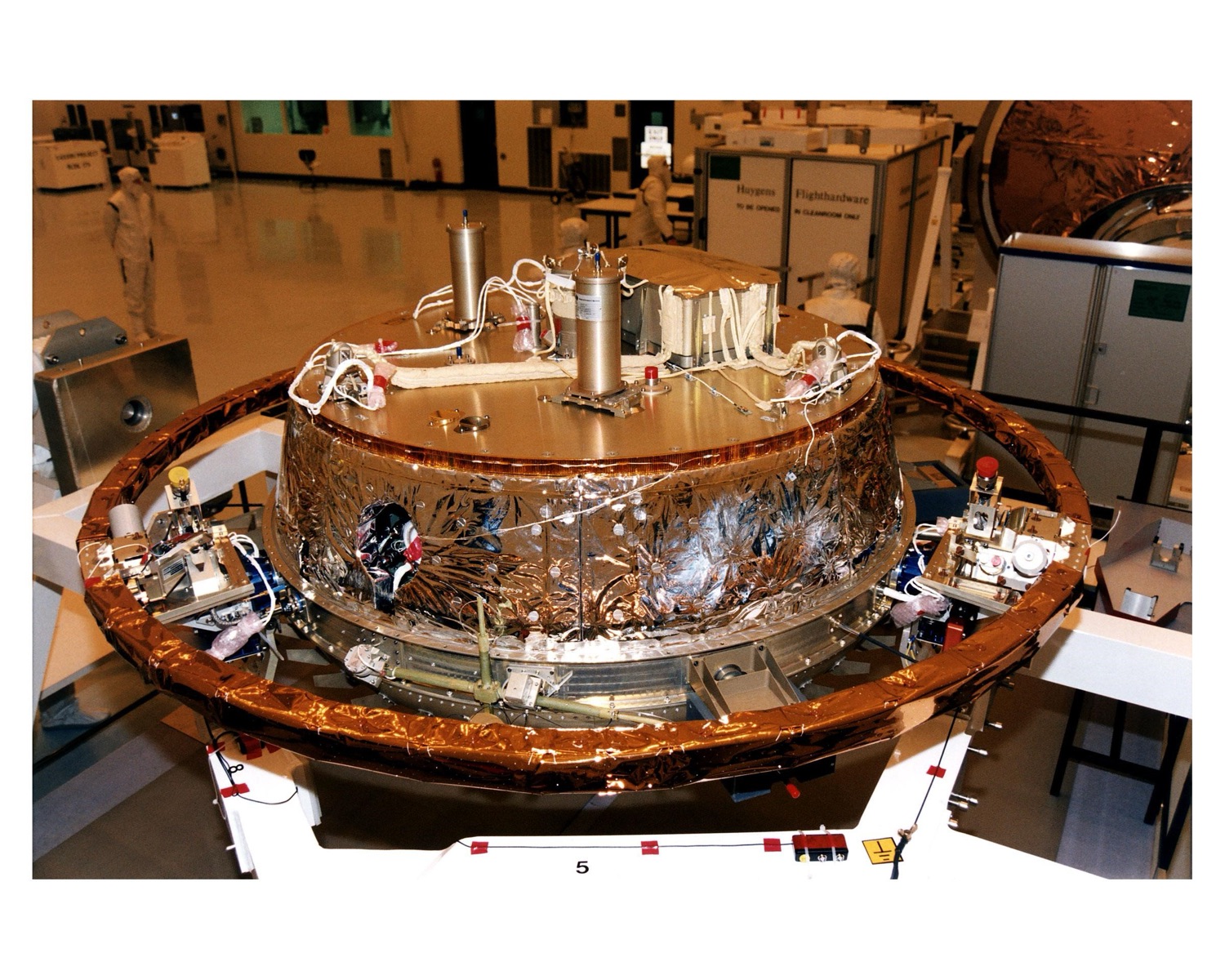
In January 2005, ESA's Huygens probe parachuted for 2.5 hours through Titan's haze and landed on a soft plain scattered with rounded ice pebbles — the most distant landing ever made. Its photos of river channels and shorelines, from a moon of Saturn, remain some of the most quietly astonishing images in space history.
03 Life, but not as we know it? Deeper
Could chemistry become biology in liquid methane at −179 °C? It would need cell membranes and solvents utterly unlike ours — lab work shows some candidate structures (like proposed 'azotosome' membranes) are possible in principle. Status: Speculative, and clearly labeled so — but Titan is the one world where we can test whether life strictly requires water. Meanwhile its buried water ocean offers a more conventional target.
04 Dragonfly Deeper
NASA's Dragonfly is a car-sized, nuclear-powered octocopter that will hop between Titan landing sites, sampling surface chemistry with a mass spectrometer. Titan's thick air and low gravity make flying easier than on Earth. Launch is planned for 2028 with arrival in the mid-2030s.
 ⤢
⤢
The deep dive
Researched for the Atlas from Wikipedia — Titan (moon) (40,881 characters read) · updated Sep 20, 2026
05 How Titan got its name — and its symbol
When Christiaan Huygens spotted Titan on March 25, 1655, he simply called it Saturni Luna — Latin for "moon of Saturn" — and published the find in a short 1655 tract titled De Saturni Luna Observatio Nova. For almost two centuries it had no proper name. After Giovanni Domenico Cassini discovered four more Saturnian moons between 1673 and 1686, astronomers started numbering all five as Saturn I through V, with Titan sitting in fourth position. The name Titan finally arrived in 1847, chosen by John Herschel — son of William Herschel, who had himself found Mimas and Enceladus — in his publication Results of Astronomical Observations Made during the Years 1834, 5, 6, 7, 8, at the Cape of Good Hope. Herschel drew the name from the Titans, a race of immortals in Greek mythology, a convention now applied to all Saturnian moons. The International Astronomical Union officially lists it as Saturn VI. More recently, software engineer Denis Moskowitz proposed an unofficial symbol: a Greek tau (the initial of Titan) merged with the crook of the Saturn symbol, though it has not come into wide use.
06 A violent birth: how Titan probably formed Deeper
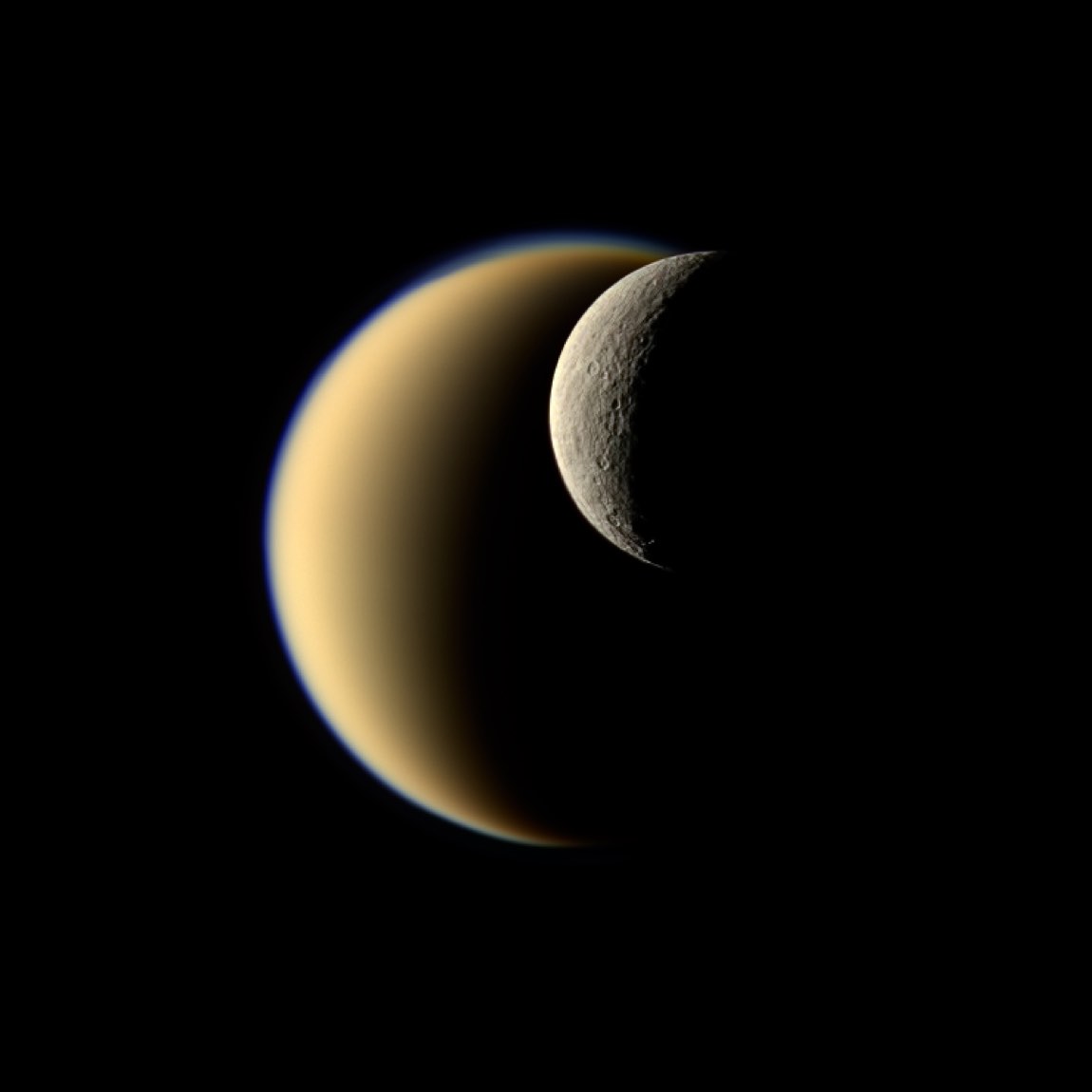
The regular moons of Saturn are thought to have formed by co-accretion — material in a disc around the young planet gradually clumping together, much as the planets themselves formed from the solar nebula. But Titan doesn't fit neatly into that picture. Unlike Jupiter's four Galilean moons, which share orbital space fairly evenly, Titan overwhelmingly dominates Saturn's moon system and has an orbital eccentricity of 0.0288 that co-accretion alone doesn't easily explain. One leading hypothesis proposes that Saturn originally had a set of Galilean-style moons that were shattered by a series of giant impacts. The wreckage from those collisions coalesced into Titan, while the remaining debris formed the mid-sized moons such as Iapetus and Rhea. Titan's high eccentricity would be a lasting scar from that violent history. Supporting the idea that Titan's raw materials came from far away, a 2014 analysis of the nitrogen in Titan's atmosphere suggested it originated from material similar to that found in the Oort cloud, rather than from the local disc around Saturn. Titan also appears to have played a role in creating Hyperion: numerical simulations suggest a mid-sized satellite collided with Titan a few hundred million years ago, and the debris accreted into Hyperion.
 ⤢
⤢
07 Inside Titan: layers of ice around a rocky heart Deeper
Titan's bulk density of 1.881 g/cm³ tells us it is roughly 40–60% rock, with the rest being water ice and other materials — a very different recipe from rocky Mercury, which is why Titan is larger than Mercury in diameter yet only 40% as massive. The rocky core stretches about 3,400 km across, and surrounding it are several distinct layers of ice in different crystalline forms. Between the outermost crust of ordinary ice Ih and those deeper high-pressure ice layers, there may be a liquid zone: a "magma" of water and ammonia that stays liquid down to as low as 176 K (−97 °C) thanks to the antifreeze effect of ammonia. The Cassini probe found indirect evidence for this ocean in natural extremely low-frequency radio waves in Titan's atmosphere; because the surface is a poor reflector of such waves, they are thought to bounce off a liquid–ice boundary underground. The clincher came from Cassini tracking surface features, which shifted by up to 30 km between October 2005 and May 2007 — a clear sign that the icy crust is decoupled from the interior, floating over a liquid layer below. Even so, comparison of gravity and radar topography suggests the ice shell may be substantially rigid.
08 The methane puzzle: where does it come from?
Methane is the second most abundant gas in Titan's atmosphere, sitting at about 4.92% concentration near the surface, but it has a problem: sunlight should destroy all of it within 50 million years, a blink in Solar System history. Something must be constantly topping it up. The leading candidate is Titan's interior, with cryovolcanoes acting as vents that release methane from below. One specific proposed reservoir is methane hydrate — "methane-filled ice" — locked inside Titan's icy shell. Laboratory experiments have shown that a filled-ice phase of methane hydrate stays stable at pressures of at least 2 GPa, and a denser version persists to at least 150 GPa, well beyond anything found inside Titan, meaning such layers could survive throughout the moon's icy mantle and keep feeding the atmosphere over billions of years. Without this methane, Titan's greenhouse warming would collapse and the surface would grow far colder. The ultimate source of that original methane — whether primordial, volcanic, or biological — remains one of the central open questions in Titan science.
09 Titan's skies: haze, clouds, and methane rain
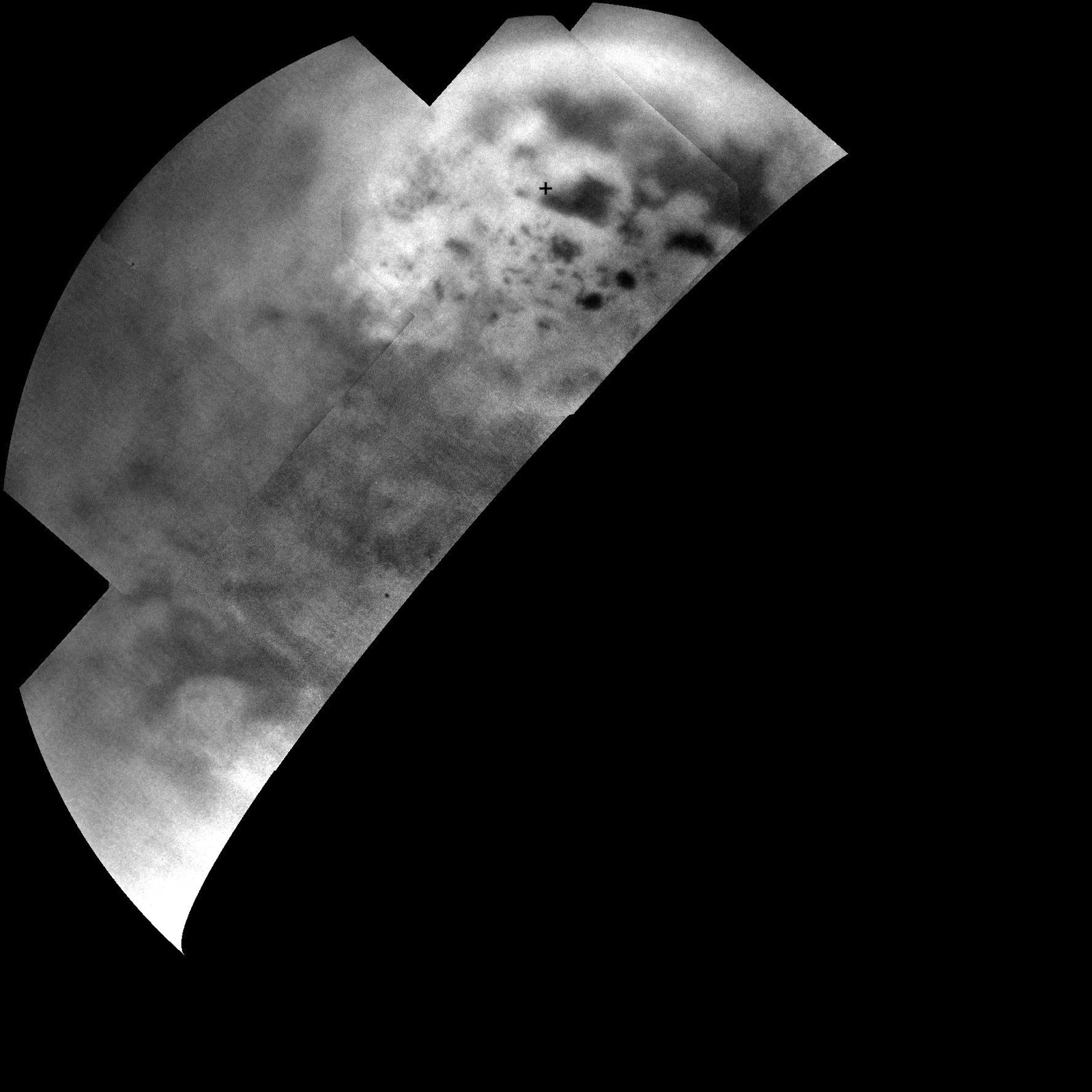
Titan's atmosphere is about four times as thick as Earth's and nearly opaque. Sunlight arriving from 1.4 billion kilometres away is already faint — Titan gets about 1% as much as Earth — and then about 90% of that is absorbed on the way down, leaving just 0.1% of Earth's surface illumination reaching the ground. The thick orange haze is made of tholins and polycyclic aromatic hydrocarbons that form when ultraviolet light breaks apart methane and nitrogen in the upper atmosphere. Despite the gloom, Titan has real weather. Clouds, probably composed of methane, ethane, or other simple organics, typically cover only about 1% of Titan's disc, but outburst events can swell that coverage to 8% rapidly. The Huygens probe confirmed that these clouds periodically drop liquid methane rain onto the surface. Southern hemisphere clouds appear linked to summer convection driven by heightened sunlight, though clouds have also been observed in mid-spring, complicating simple models. As seasons shift — Titan's southern summer ended around 2010 — ethane is expected to begin condensing over the south pole, changing the chemical character of the polar weather.
 ⤢
⤢
10 Dunes, plains, and mountains across the surface
Titan's surface is geologically young, estimated at between 100 million and 1 billion years old despite the moon itself being as old as the Solar System. The most striking landscape features are enormous sand seas within 30 degrees of the equator. Individual dunes are typically 1–2 km wide, spaced 1–4 km apart, and some stretch over 100 km in length — comparable to the longest dunes on Earth's Sahara. Radar height data puts them at 80–130 meters tall. The sand is dominated by organic material, probably sediment settling from the atmosphere, and it migrates generally west-to-east as shown by the way dunes pile up against mountains. Beyond the dune fields, vast undifferentiated plains cover most of the surface, appearing radar-dark and uniform, likely built from wind-driven organic sediment. Topographic relief is generally modest — typically no more than 150 meters — though occasional rises of 500 meters exist and some mountains reach more than a kilometer in height. Bright Xanadu, an equatorial region roughly the size of Australia, stands out as a heavily dissected highland laced with valleys, chasms, and dark sinuous lineaments that may indicate tectonic fracturing or ancient river channels.
11 Kraken, Ligeia, and the polar seas in detail Deeper
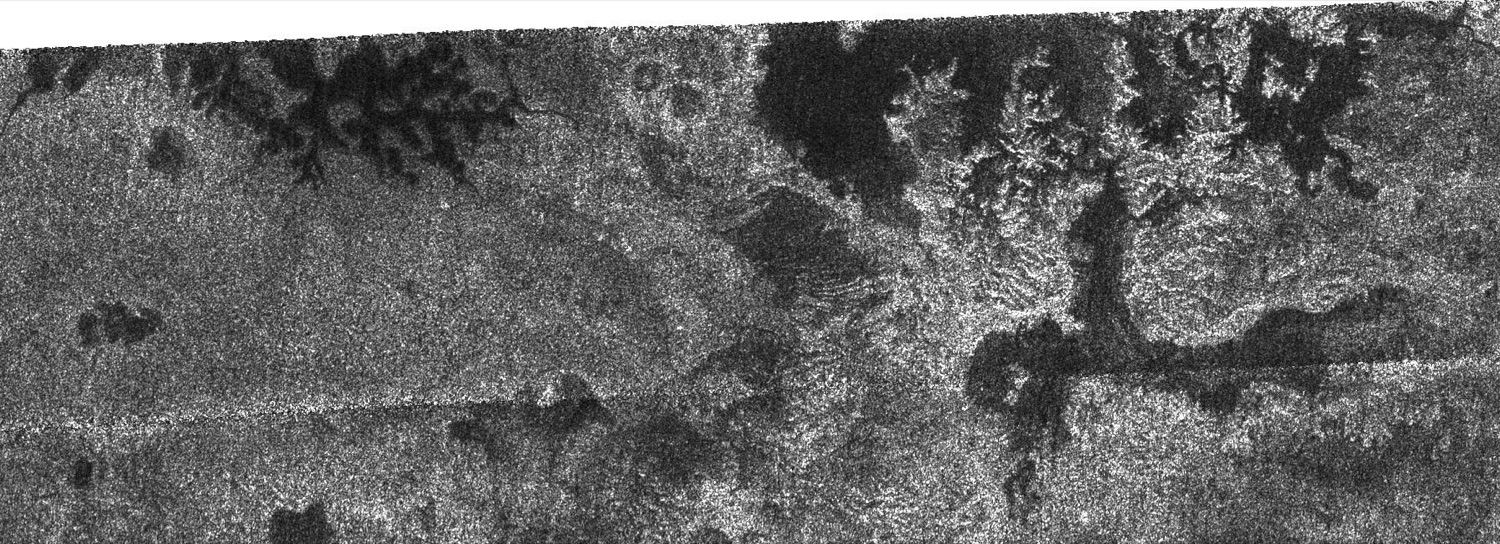
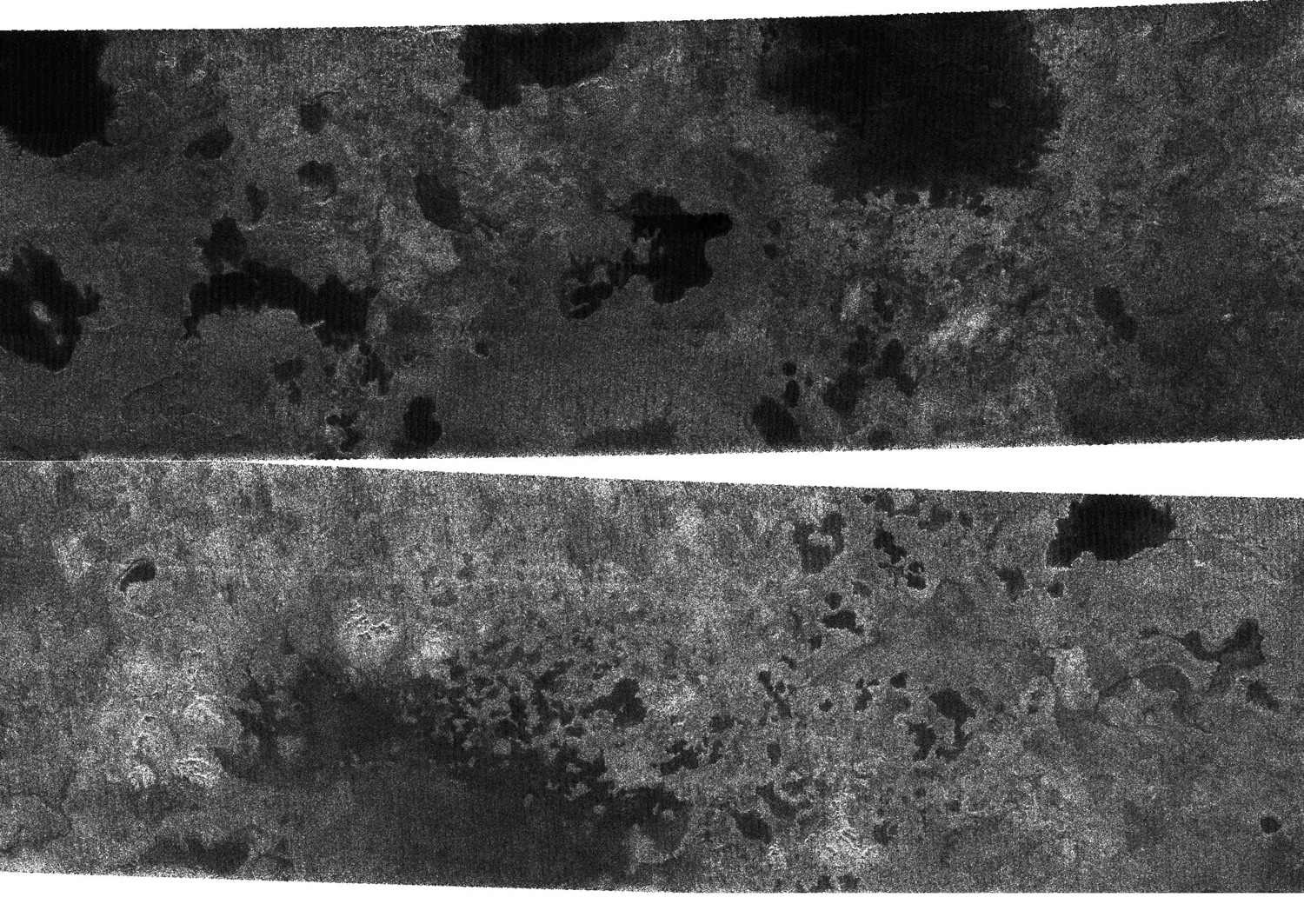
Titan's lakes and seas are concentrated in the polar regions, where colder temperatures keep liquid hydrocarbons stable year-round. The three largest bodies — Kraken Mare, Ligeia Mare, and Punga Mare — cluster around the north pole and together cover roughly 691,000 km², accounting for about 80% of all lake and sea coverage. Their sea levels are similar enough that scientists believe they may be hydraulically connected underground. Cassini radar was even used for bathymetry: Ligeia Mare reaches a measured maximum depth of around 200 meters, while Ontario Lacus in the south reaches about 90 meters. The chemistry differs between bodies — Ligeia Mare is estimated at 71% methane, 12% ethane, and 17% dissolved nitrogen by volume, while Ontario Lacus is closer to 49% methane, 41% ethane, and 10% nitrogen. Tides exist but are gentle: the tidal range of the major seas is estimated at just 0.2–0.8 meters, because although Titan's orbital eccentricity causes tidal acceleration to vary by 9%, the 15-day-22-hour orbital period means the cycle is very slow. There are also about 215,000 km² of smaller lakes across the polar regions, and the southern polar area shows four dry broad depressions that look like ancient, drained seabeds.
12 Cryovolcanism: Titan's frozen fire Deeper
Instead of lava, Titan may erupt water and ammonia — a process called cryovolcanism. The most compelling candidate site is a complex called Doom Mons and Erebor Mons (two mountains), Sotra Patera (a large depression), and Mohini Fluctus (a system of flow-like features). Between 2005 and 2006, parts of Sotra Patera and Mohini Fluctus brightened significantly while surrounding plains stayed unchanged — a possible sign of fresh material being emplaced. Other candidates include steep-sided lakes in the northern hemisphere that resemble maar craters, formed on Earth by explosive subterranean eruptions. The clearest indirect evidence for ongoing geological activity is the detection of Argon-40 in Titan's atmosphere. This isotope is radiogenic: it comes from the decay of potassium-40 inside the rocky core, where it has been accumulating for billions of years. Its appearance at the surface strongly implies that geological processes — cryovolcanism being one — are actively transporting interior material upward. Despite this evidence, the identification of cryovolcanic features remains contested, primarily because Cassini's imagery and coverage had real limitations. Definitive confirmation awaits a future mission with higher-resolution instruments.
 ⤢
⤢
13 Pioneer, Voyager, and the first looks at Titan
Humanity's first close look at Titan came from Pioneer 11, which flew through the Saturnian system in 1979 and returned early images, though its main conclusion about Titan was sobering: the moon was probably too cold to support life. The real revelation came from the Voyager missions. Voyager 1's trajectory in 1980 was specifically designed to optimise the Titan flyby, and the spacecraft successfully measured the density, composition, and temperature of the atmosphere and obtained a precise measurement of Titan's mass. But the thick orange haze defeated every attempt to photograph the surface — it wasn't until 2004 that intensive digital reprocessing of Voyager 1 images taken through an orange filter teased out faint hints of the bright region now called Xanadu and the dark area called Shangri-la. Voyager 2 followed in 1981 but did not pass near Titan; it had been kept as a backup in case Voyager 1 failed the flyby, and once that mission succeeded, Voyager 2 was sent onward to Uranus and Neptune. It was Gerard P. Kuiper who had first confirmed Titan's atmosphere in 1944 using spectroscopy to detect methane, and Josep Comas i Solà who had first suspected one back in 1903 by observing limb darkening.
14 What Cassini taught us over 13 years
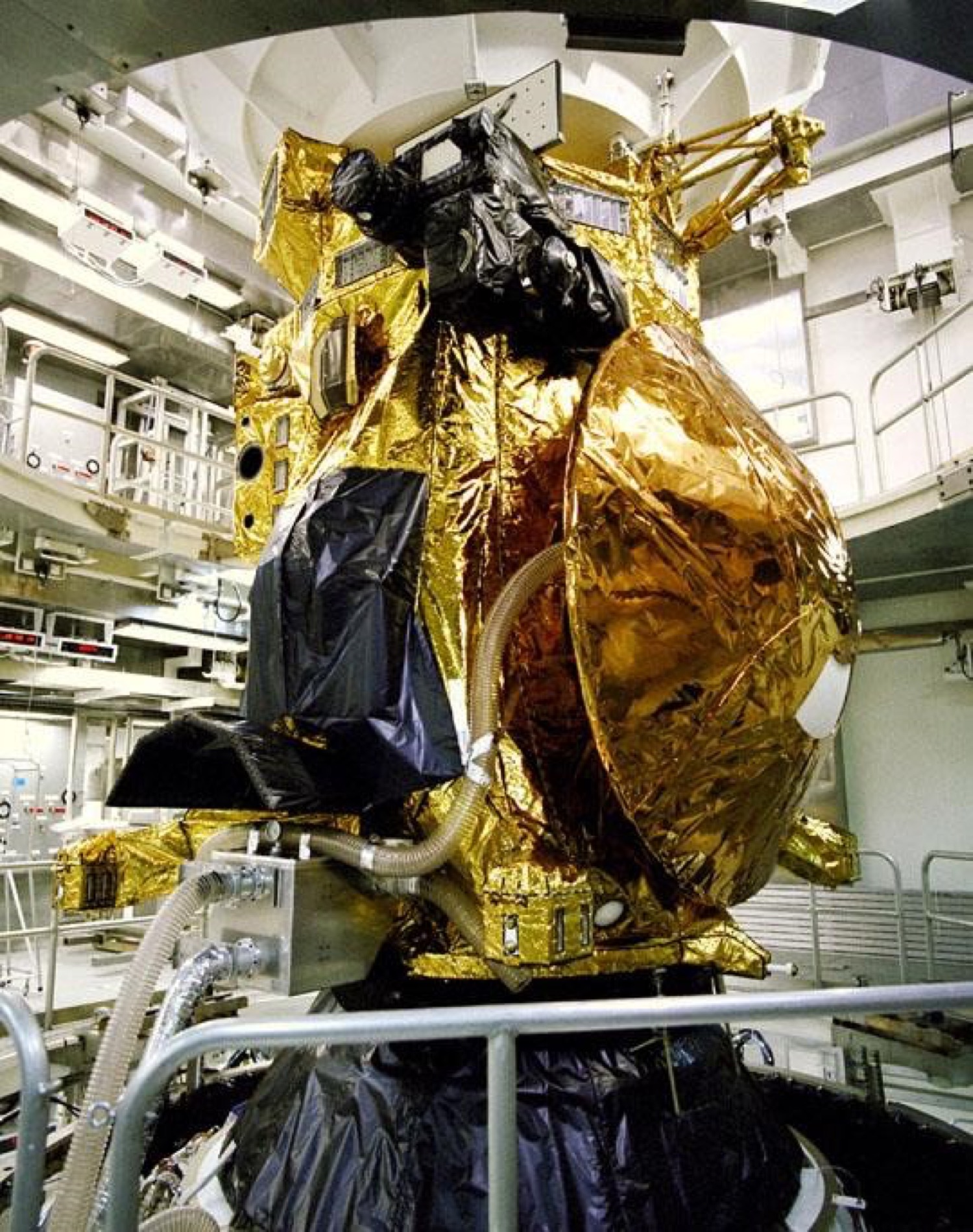
The Cassini–Huygens spacecraft arrived at Saturn on July 1, 2004, and Cassini made its first close Titan flyby on October 26, 2004, at just 1,200 km from the surface — close enough to reveal patches of light and dark terrain invisible to the human eye. Over the following years it made dozens of targeted flybys, with the closest approach reaching 880 km on June 21, 2010. Using infrared instruments, radar altimetry, and synthetic aperture radar imaging, Cassini progressively built up a picture of a complex world shaped by fluids. Its most celebrated discovery was the definitive confirmation of liquid hydrocarbon lakes in January 2007, ending decades of speculation. Cassini also discovered atmospheric super-rotation — winds in the upper atmosphere circling Titan far faster than the surface rotates. Radar mapping revealed dune fields, candidate cryovolcanic landforms, river channels, and the bathymetry of the seas. The mission detected propene in Titan's atmosphere in September 2013 using the Composite Infrared Spectrometer — the first detection of propene on any world other than Earth. The probe also tracked subtle surface shifts of up to 30 km, providing strong evidence for a subsurface liquid layer decoupled from the crust.
15 How to spot Titan with your own telescope
Titan is never visible to the naked eye, but it is within reach of a small telescope or even strong binoculars. Its maximum apparent magnitude is +8.2, with a mean opposition magnitude of 8.4 — considerably fainter than the +4.6 of Ganymede in Jupiter's system, which is sometimes glimpsed with the naked eye under ideal conditions. The main challenge is not Titan's faintness but Saturn itself: the dazzling globe and ring system wash out nearby objects. Amateur astronomers use an occulting bar — a small opaque strip placed in the eyepiece — to block the planet and dramatically improve the view of its moons. Titan orbits Saturn once every 15 days and 22 hours, so its position relative to Saturn shifts noticeably from night to night, making it straightforward to identify once you know what to look for. From Titan's own surface, Saturn would be a spectacular sight, subtending 5.09 degrees across the sky — more than ten times the angular size of the Moon as seen from Earth, even setting aside the rings entirely.
 ⤢
⤢
16 Azotosomes and the chemistry of possible life Deeper
Scientists wondering whether life could exist in Titan's methane lakes face a fundamental problem: every known life form uses liquid water as a solvent, and there is none at Titan's surface. In 2015 researchers modeled a hypothetical alternative: a cell membrane made of small molecules containing carbon, hydrogen, and nitrogen — rather than the phospholipid membranes of Earth life — that could remain stable and flexible in liquid methane at −179 °C. They named it an "azotosome," combining "azote" (the French word for nitrogen) with "liposome." Astrobiologist Chris McKay argued in 2005 that if methane-metabolising life existed on Titan, it would consume hydrogen and acetylene from the atmosphere and exhale methane, reducing hydrogen concentrations at the surface by a factor of 1,000. In 2010 Darrell Strobel of Johns Hopkins University found evidence for a downward flow of molecular hydrogen at roughly 10²⁸ molecules per second with apparent disappearance near the surface, and other researchers noted low acetylene levels at the surface. McKay explicitly cautioned that non-biological explanations — unknown catalysts or flaws in atmospheric models — are more likely, and NASA's own statements note that methane-based life remains entirely hypothetical. In July 2025, NASA researchers published a study identifying cell-like compartments called vesicles that could potentially form in Titan's hydrocarbon lakes.
You would weigh…
Surface gravity 1.35 m/s² vs Earth’s 9.81 m/s². Try every world →
Could life exist here?
Two separate possibilities: exotic methane-solvent life on the surface (pure speculation, but testable) and water-based life in the subsurface ocean (comparable to other ocean worlds). Either would be revolutionary; neither has any evidence yet.
Our labels: Confirmed · Strong Evidence · Estimated · Hypothesis · Theoretical · Speculative (see Methodology).
Could humans live here?
Oddly, one of the less-terrible options in the outer Solar System: Titan's thick atmosphere blocks radiation and removes the need for pressure suits (just very serious insulation and breathing gear). The killers are cold and distance. A staple of far-future settlement fiction; nothing is planned.
How would we get there?
Cassini–Huygens took 6.7 years. Dragonfly's cruise is about 6 years. A crewed round trip with current propulsion would take most of a decade and is not on any agency's roadmap.
| Technology | Status | Travel time (one way, straight line) |
|---|---|---|
| Apollo-style spacecraft, about 39,000 km/h | Flown technology | 4 years |
| Ion-propulsion probe, about 90,000 km/h | Flown technology | 648 days |
| Voyager 1, about 61,000 km/h | Flown technology | 3 years |
| Parker Solar Probe, about 690,000 km/h | Flown technology | 85 days |
| Nuclear-thermal rocket, about 120,000 km/h cruise | In development | 491 days |
| Laser light-sail at 20% of light speed | Proposed concept | 6.5 hours |
| Light itself, 299,792 km/s | Physical limit | 78 minutes |
Simplified straight-line times at cruise speed. Real missions fly curved orbital paths and take longer. Full travel calculator →
Weird & wonderful
- On Titan you could fly by flapping strap-on wings — the air is dense and gravity is low.
- It rains gasoline-like methane, in drops that fall slow as snowflakes.
- Titan's sand dunes are made of organic 'plastic-like' grains, and they sing in the wind like Earth's dunes.
- One Titan day lasts about 16 Earth days.
More real images of Titan
Genuine spacecraft and telescope imagery, every frame credited and licensed. Tap any photo to enlarge.