 Photograph · ARC / NASA Image Library
Planet · Deep guide · orbits The Sun
Neptune
The wildest winds in the Solar System blow on the farthest planet, a deep-blue ice giant.
What is it?
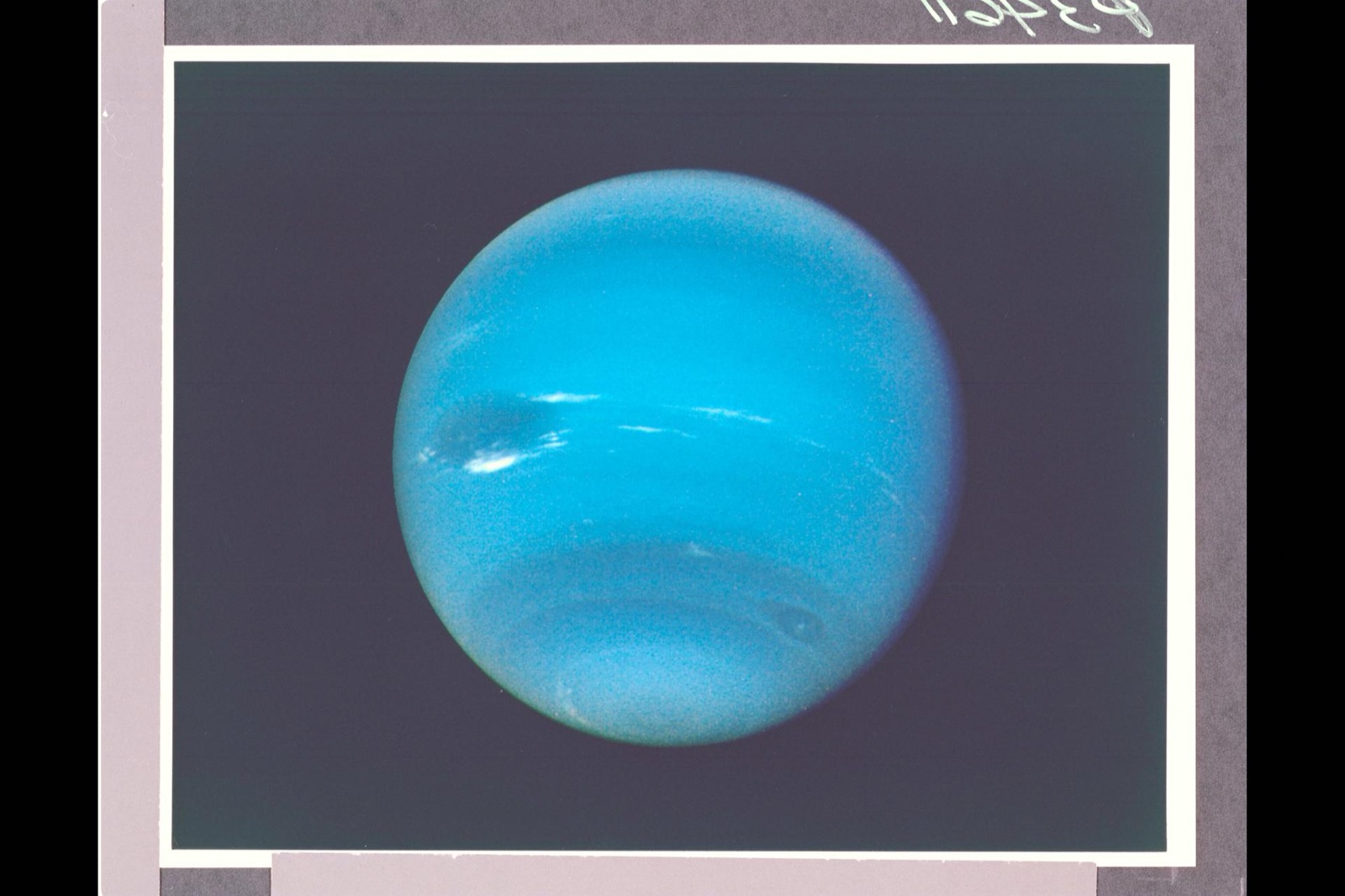
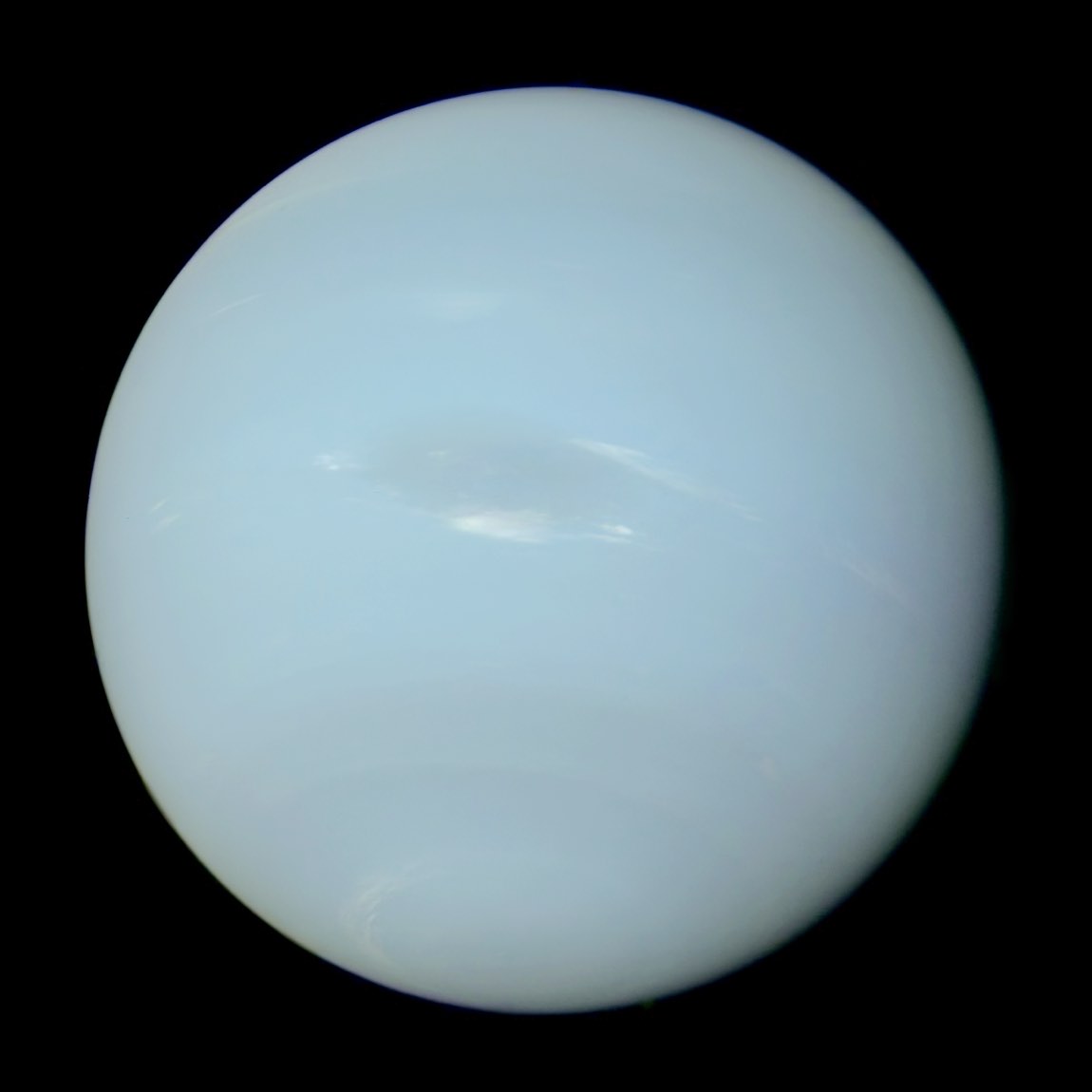
Neptune is the eighth and most distant planet — so far away that it takes 165 years to circle the Sun and sunlight there is 900 times dimmer than on Earth. It was the first planet found by mathematics: astronomers predicted it from wobbles in Uranus's orbit before anyone saw it in 1846. Despite the deep cold, Neptune's winds are the fastest of any planet, screaming past 2,000 km/h.
Go deeper
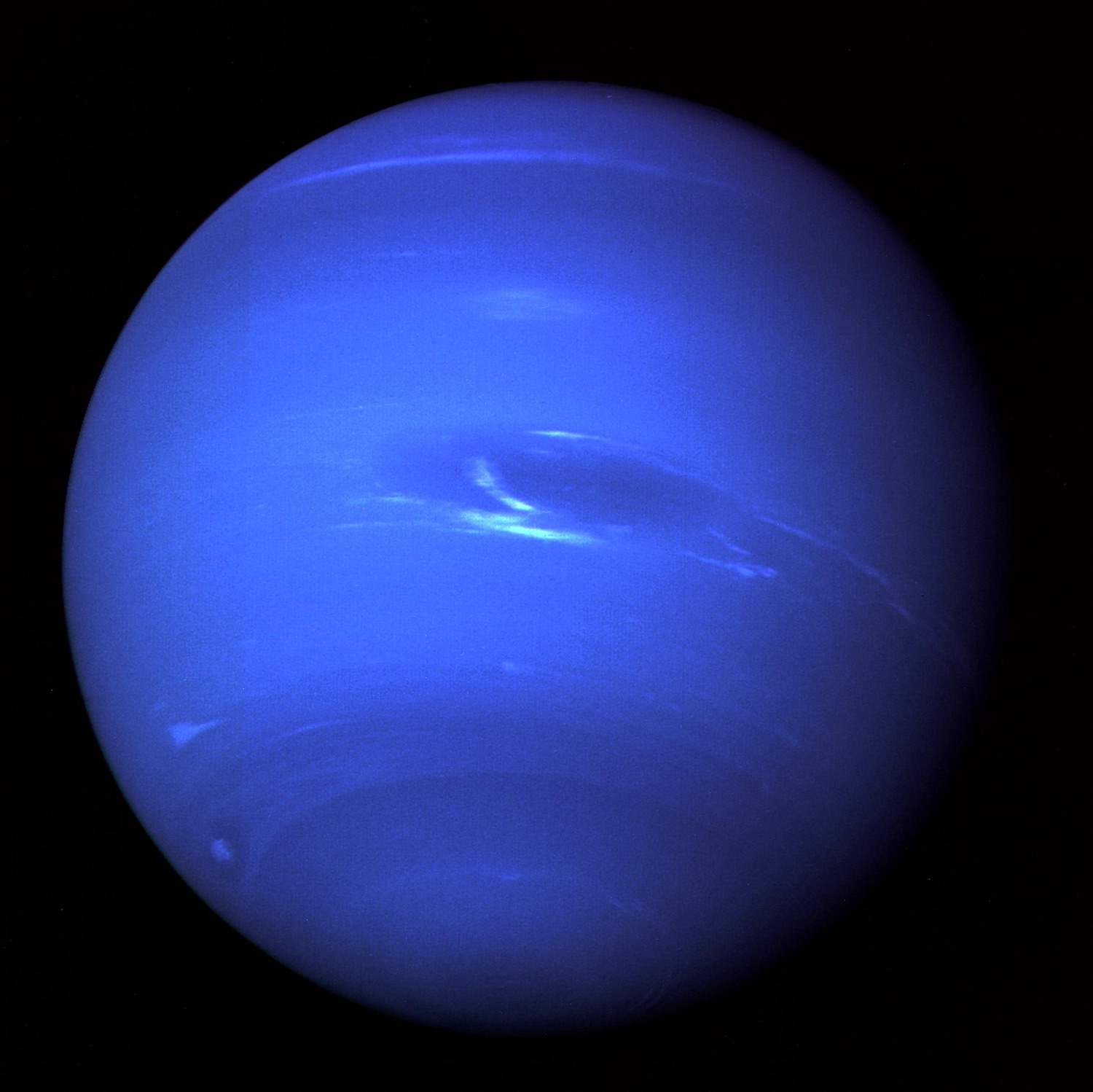
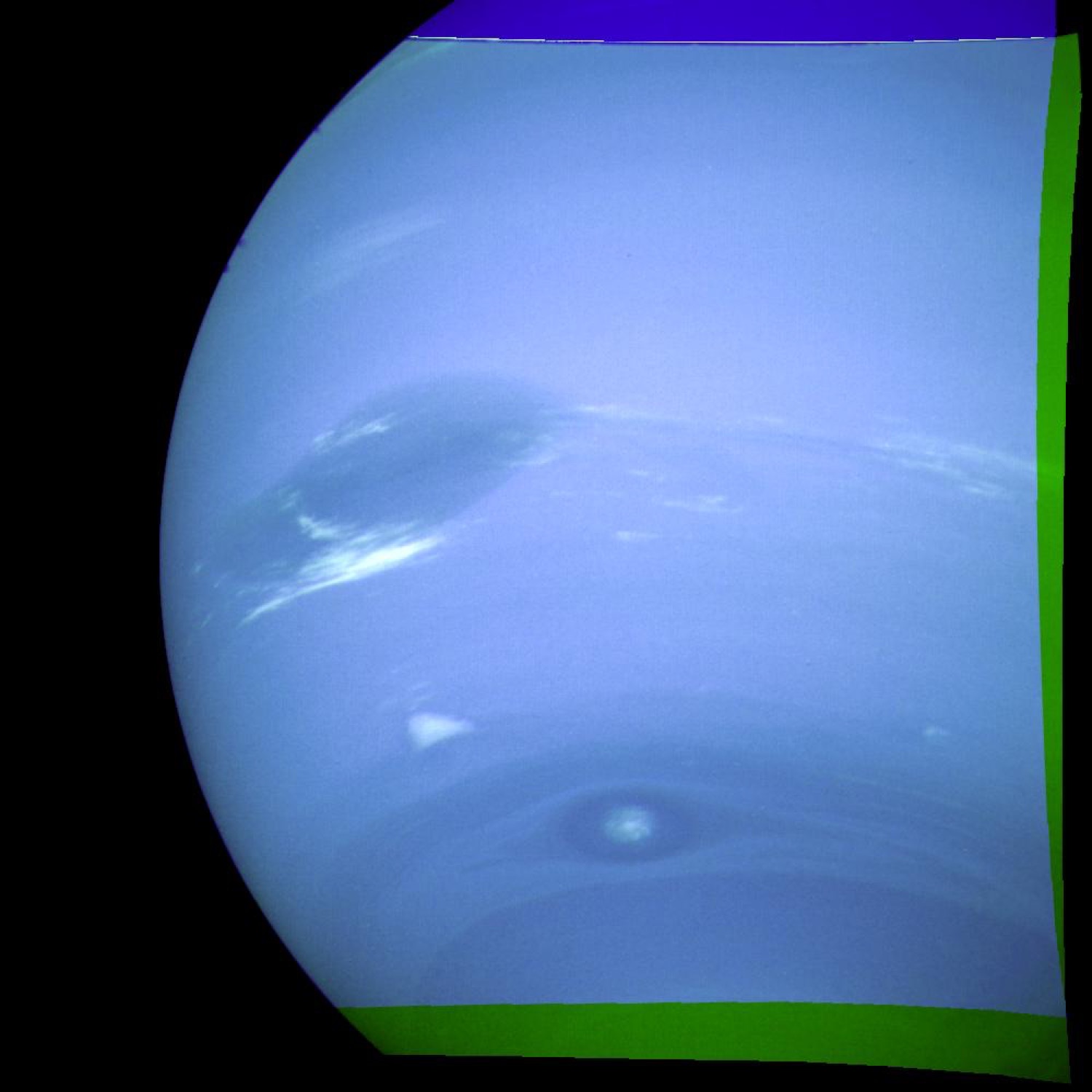
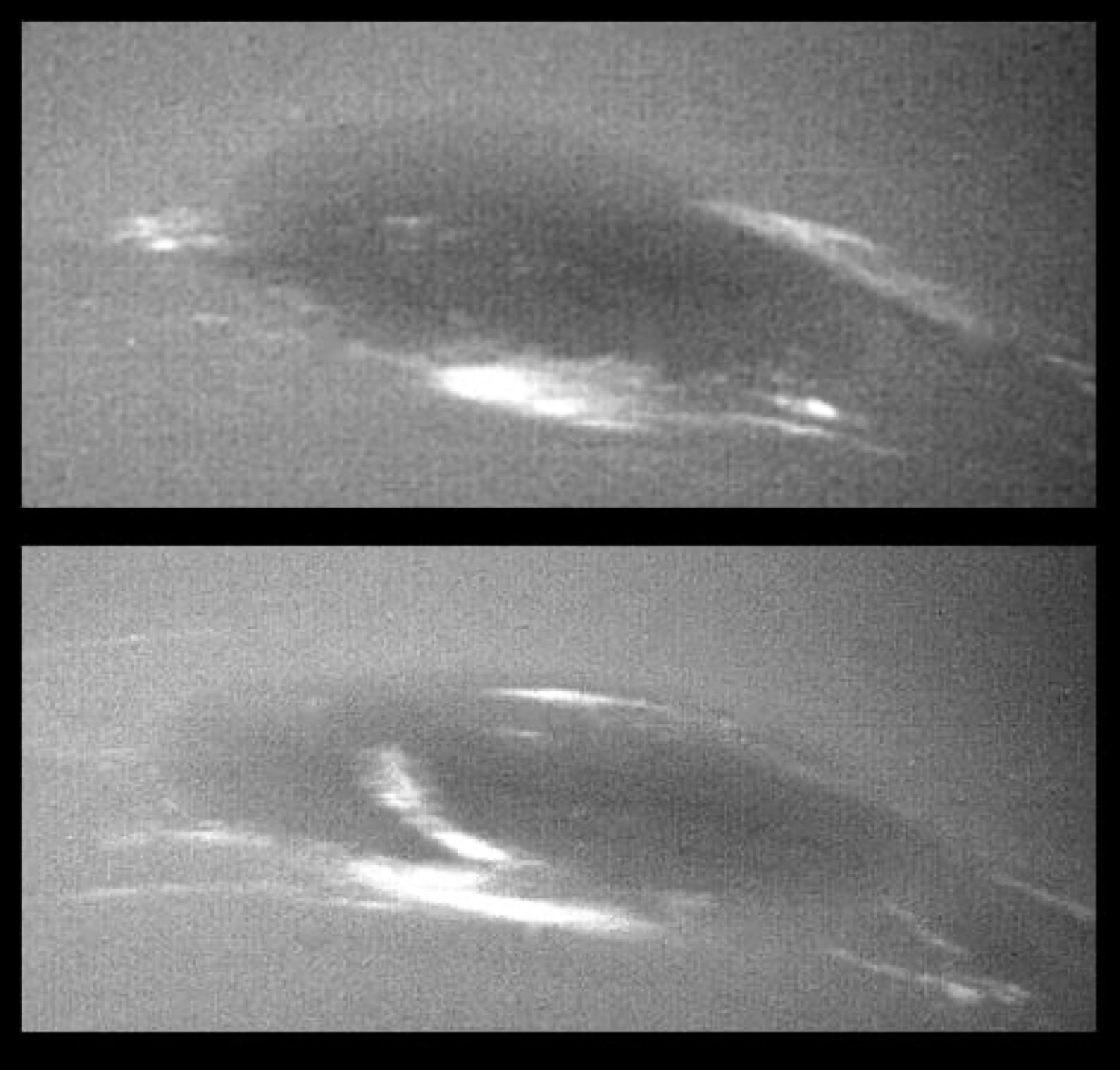
Neptune radiates 2.6 times the heat it receives from the Sun — an internal engine that likely powers its violent weather, in sharp contrast to strangely quiet Uranus. Voyager 2 (1989, the only visit) found a Great Dark Spot storm that had vanished when Hubble looked a few years later; dark spots have come and gone since. Its big moon Triton orbits backwards — almost certainly a captured Kuiper Belt object, a sibling of Pluto — and vents nitrogen geysers. Neptune's discovery site marks the inner edge of the Kuiper Belt, whose orbital structure still bears its gravitational fingerprints.
01 Found with a pencil
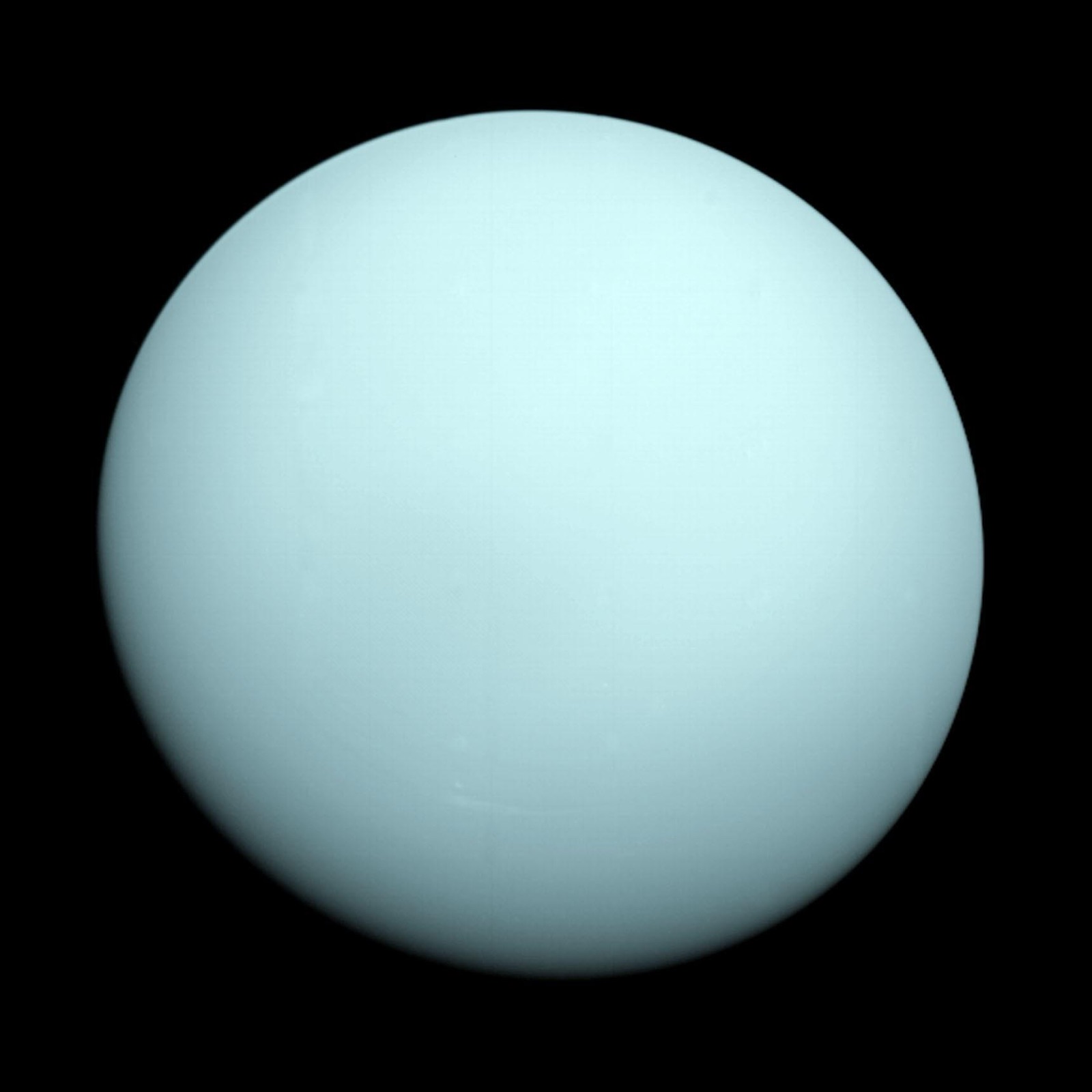
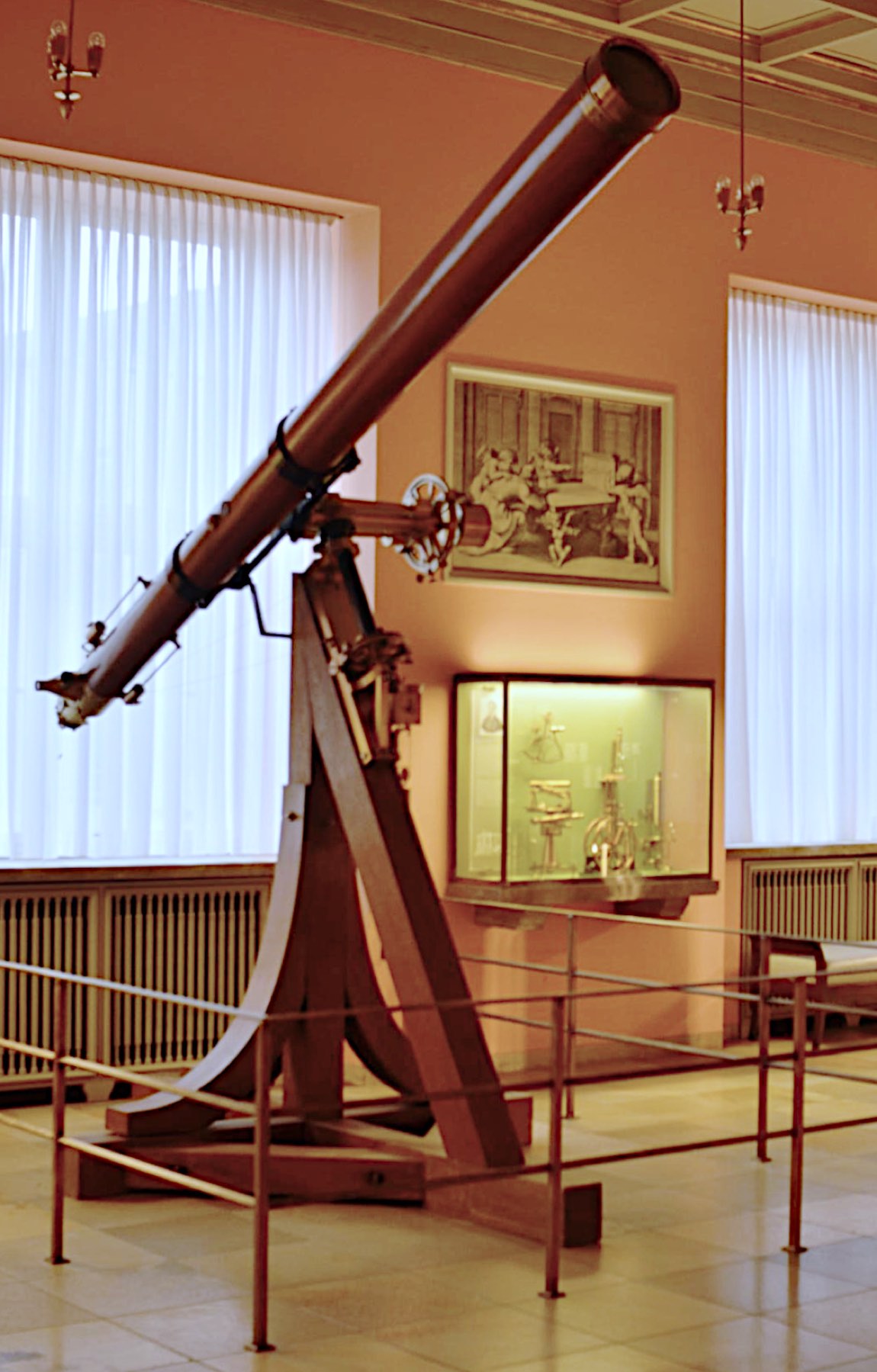
Uranus kept drifting off its predicted path, so mathematicians Urbain Le Verrier and John Couch Adams independently calculated where an unseen planet must be pulling it. A Berlin astronomer pointed his telescope at Le Verrier's coordinates and found Neptune within one degree, on the first night. It remains one of the great triumphs of physics.
02 Supersonic weather in the dark Deeper
With 0.1% of Earth's sunlight, Neptune shouldn't have energy for much weather — yet its jets outrun Saturn's and Jupiter's. The engine is internal heat left from formation (plus possible ongoing settling of heavier material), and, counterintuitively, thin sunlight may mean less turbulence to brake the winds. Neptune is the standing counterexample to 'more sunlight, wilder weather.'
03 Triton, the stolen moon Deeper
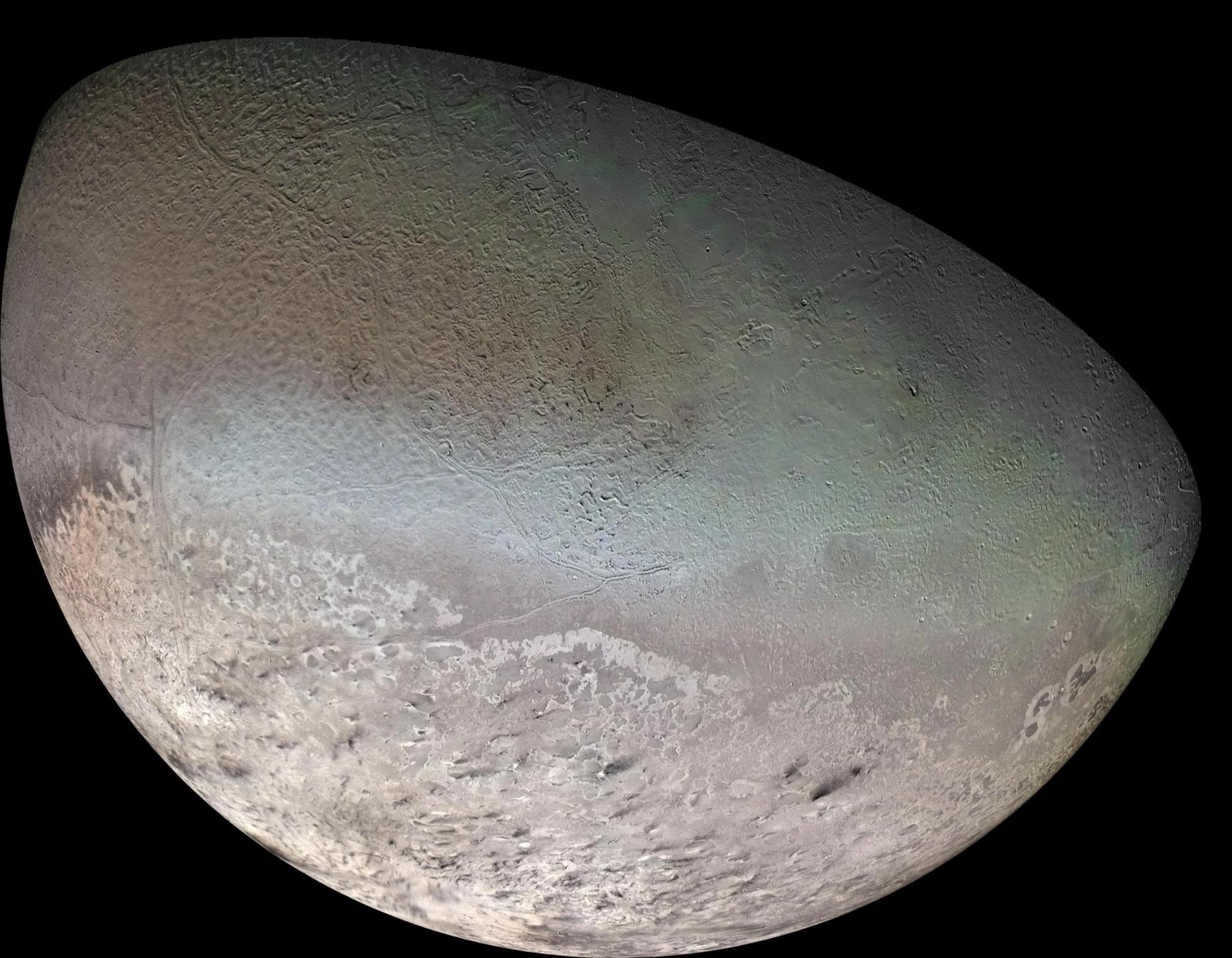
Triton circles Neptune backwards and tilted — impossible for a moon that formed in place. It is almost certainly a captured dwarf planet from the Kuiper Belt, cousin to Pluto, and the capture likely wrecked Neptune's original moon system. Tidal forces are slowly dragging Triton inward; in a few billion years it will shatter into a spectacular ring.
The deep dive
Researched for the Atlas from Wikipedia — Neptune (43,496 characters read) · updated Sep 20, 2026
 ⤢
⤢
04 A planet born in the wrong place
Neptune almost certainly did not form where we find it today. Current models of the early Solar System suggest that the outer regions were far too thinly spread with material to build a world 17 times the mass of Earth by the conventional process of core accretion. Scientists have proposed two competing alternatives. In the first, Neptune and Uranus formed from instabilities in the original protoplanetary disc rather than by gradual accumulation, and powerful radiation from a nearby massive OB star then stripped away their early atmospheres. The second and currently more favoured explanation is that both ice giants formed much closer to the Sun, where material was denser, and then migrated outward after the gas disc dispersed. This migration hypothesis is formalized in the Nice model, a scenario that also explains why the Kuiper belt has the structure it does today, with particular gaps and clustered populations of small icy objects sculpted by a wandering Neptune sweeping gravitationally through the outer Solar System.
05 What is actually inside Neptune Deeper
Beneath Neptune's hydrogen-and-helium atmosphere — which accounts for only 5 to 10 percent of the planet's mass — lies a mantle equivalent in mass to 10 to 15 Earths, rich in water, ammonia, and methane. Despite being called "icy," this material is actually a hot, dense supercritical fluid sometimes described as a water-ammonia ocean. Deeper still, at around 7,000 km depth, pressure and temperature conditions may cause methane to decompose and crystallize into diamonds that fall like hailstones through the fluid interior. High-pressure experiments at Lawrence Livermore National Laboratory further suggest the top of the mantle could harbour an ocean of liquid carbon with solid diamonds floating in it. At the very centre sits a rocky core of iron, nickel, and silicates with a mass roughly 1.2 times that of Earth, squeezed under a pressure of 7 Mbar (700 GPa) — about twice the pressure at Earth's core — and heated to approximately 5,400 K (5,100 °C; 9,300 °F).
06 A magnetic field that breaks the rules Deeper
Earth's magnetic field is tilted only modestly from its rotational axis, but Neptune's is tipped a dramatic 47° and, stranger still, does not even originate near the planet's geometric centre — it is offset by at least 0.55 of Neptune's radius, roughly 13,500 km, from the centre. This creates a complex field geometry in which the quadrupole component may actually exceed the dipole component in strength, something quite unlike Earth, Jupiter, or Saturn. Scientists believe the field is generated not deep in a metallic core but in a thin spherical shell of electrically conducting fluid — likely a mixture of ammonia, methane, and water — through a dynamo process. Because Uranus has a similarly tilted, offset field, researchers now think this geometry is a signature of ice giant interiors generally, rather than a quirk of any particular orientation. The magnetosphere is vast: the bow shock sits 34.9 Neptune radii out, and the magnetic tail extends at least 72 radii behind the planet.
 ⤢
⤢
07 Aurorae hiding in the mid-latitudes
Because Neptune's magnetic poles are so far from its rotational poles, its aurorae do not cluster around the geographic north and south poles as they do on Earth or Jupiter. Instead, they appear mainly at mid-latitudes, making them fundamentally different in character. Voyager 2 detected faint, weak aurorae in extreme-ultraviolet and radio frequencies during its 1989 flyby, but the observations were brief and contained no infrared data. Subsequent attempts with the Hubble Space Telescope failed to glimpse them at all. The breakthrough came in 2023 when the James Webb Space Telescope observed Neptune's atmosphere and made the first-ever detection of the trihydrogen cation (H₃⁺) at the planet. JWST's sharper spatial resolution allowed it to separate the narrow H₃⁺ emissions from the broad reflected sunlight of the clouds below, and some of these emissions showed temperature, ion density, and spatial patterns consistent with aurora — marking the first observation of Neptune's infrared aurora.
08 A thermosphere that runs mysteriously hot Deeper
Neptune's thermosphere — the uppermost layer of its atmosphere — registers an anomalously high temperature of about 750 K (477 °C; 890 °F). This is puzzling because Neptune receives so little sunlight, being more than 50 percent farther from the Sun than Uranus, that ultraviolet radiation alone cannot account for the heat. Two candidate mechanisms have been proposed: interaction between atmospheric particles and ions trapped in Neptune's magnetic field, and the dissipation of gravity waves rising from the interior. Even more intriguing, the first temperature measurement of Neptune's thermosphere since Voyager 2, made possible by the 2023 JWST detection of H₃⁺, returned a reading of 450 K — significantly cooler than the Voyager-era figure. This implies Neptune's upper atmosphere is experiencing an unexplained cooling trend of roughly 10 K per year, a phenomenon also observed in Uranus's upper atmosphere. The thermosphere also contains traces of carbon dioxide and water, thought to have been deposited by infalling meteorites and dust.
09 Lightning in the ammonia clouds
Neptune is not just a world of wind — it is also an electrically active one. During Voyager 2's 1989 flyby, the spacecraft's Planetary Radio Astronomy experiment detected around 60 lightning flashes, formally called Neptunian electrostatic discharges, each releasing energies exceeding 7 × 10⁸ joules. A plasma wave system aboard the same spacecraft recorded 16 electromagnetic wave events with frequencies ranging from 50 to 12 kHz at magnetic latitudes between 7° and 33°. These detections may have been triggered by lightning occurring over just 20 minutes in the ammonia clouds of the magnetosphere. Theoretical modelling suggests Neptunian lightning most commonly occurs in water clouds deep in the troposphere or in shallow ammonia clouds, and that it concentrates mostly at high latitudes. The overall flash rate is predicted to be only about 1/19th that of Jupiter. Interestingly, the character of Neptune's lightning appears to resemble terrestrial lightning more closely than the Jovian variety.
 ⤢
⤢
10 The ring arcs and why they still exist
Neptune's ring system is faint and fragmented — so fragmented that when a stellar occultation in 1984 showed the rings blocking starlight on one side of the planet but not the other, astronomers initially suspected the rings were incomplete arcs rather than full circles. Voyager 2 confirmed this picture in 1989. The outermost ring, the Adams Ring at 63,000 km from Neptune's centre, contains five prominent arcs named Courage, Liberté, Egalité 1, Egalité 2, and Fraternité. This is dynamically strange: orbital mechanics predicts that arcs should smear out into a uniform ring within a short time. The explanation accepted today is that the moon Galatea, orbiting just inside the Adams Ring, corrals the arc material gravitationally and prevents it from spreading. Even so, Earth-based images from the W. M. Keck Observatory taken in 2002 and 2003 showed considerable decay compared to the Voyager images, and the Liberté arc in particular may disappear entirely within as little as one century.
11 Neptune's grip on the Kuiper belt
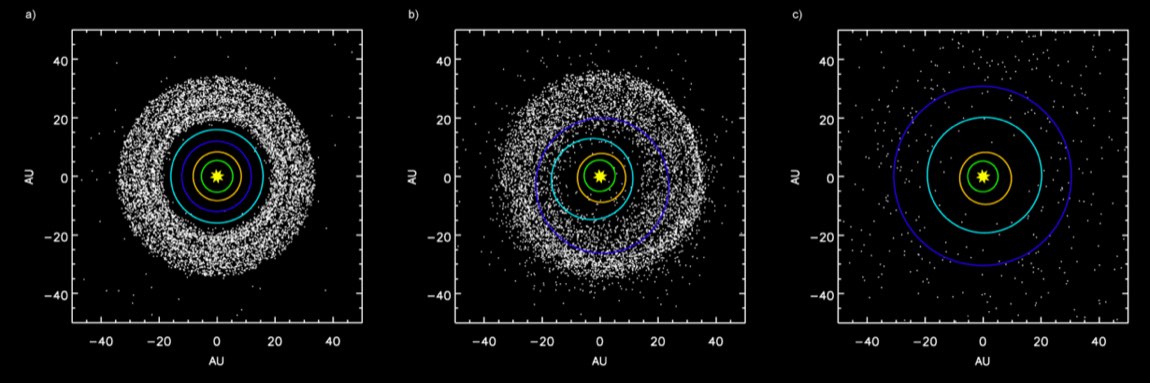
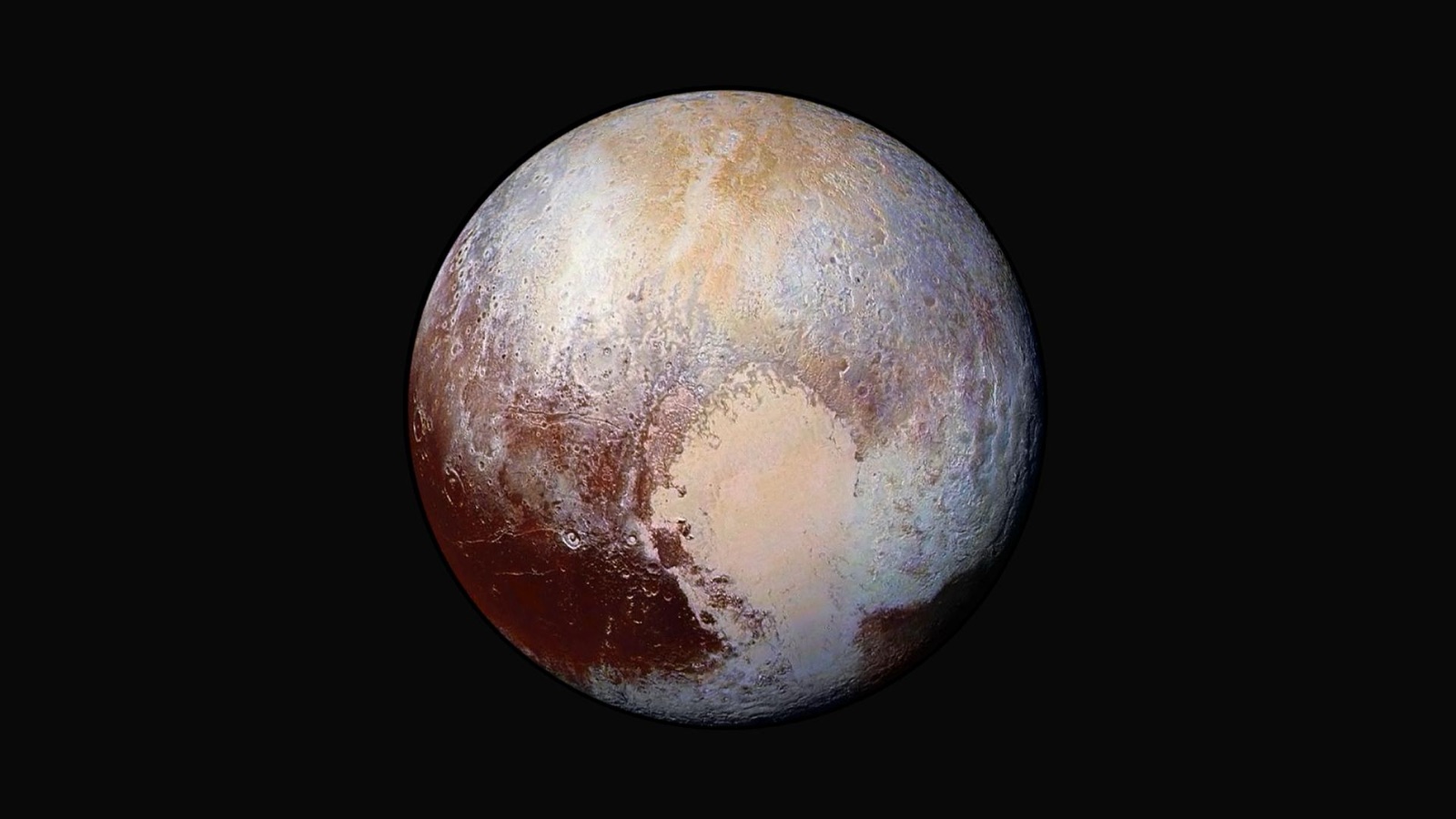
Neptune acts as the gravitational architect of the Kuiper belt, the vast ring of icy bodies extending from roughly 30 AU out to about 55 AU. Over the age of the Solar System, Neptune's gravity has destabilised certain orbital zones, carving gaps — the region between 40 and 42 AU is one clear example. Yet orbital resonances create safe havens inside those gaps: objects that orbit the Sun in a period that is a precise fraction of Neptune's year are repeatedly nudged at the same point in their orbit and can remain stable for billions of years. The most densely populated of these is the 2:3 resonance, which holds more than 200 known objects, including Pluto. Despite Pluto regularly crossing Neptune's orbit, the resonance geometry ensures the two bodies never come close to colliding. Neptune also hosts trojan objects at its L4 and L5 Lagrangian points, and one body — (309239) 2007 RW10 — has been a quasi-satellite of Neptune for about 12,500 years and will remain so for another 12,500.
12 Seasons that last forty Earth years
Neptune's axial tilt of 28.32° is remarkably close to Earth's 23° and Mars's 25°, so the planet experiences genuine seasons — but because each orbit takes 164.8 years, each season stretches for roughly 40 Earth years. This has measurable consequences. By 2007, observations showed that Neptune's south pole was about 10 K warmer than the rest of its atmosphere, which averages around 73 K (−200 °C). The warmth is enough to allow methane — normally frozen into the troposphere — to escape into the stratosphere near the pole. The south pole has been sunlit for the last quarter of Neptune's year, approximately 40 Earth years, and as the planet slowly moves to the opposite side of the Sun, the warming will shift to the north pole. Separately, a 30-year study published around 2023 found that the disappearance of Neptune's high-altitude clouds in August 2023 was tied not to the planet's seasons but to the 11-year solar activity cycle, showing that the Sun's behaviour can affect a world nearly 4.5 billion kilometres away.
 ⤢
⤢
13 Naming Neptune across the world
The name Neptune was not agreed upon quickly or easily. After the 1846 discovery, the planet was called simply "Le Verrier's planet" or "the planet exterior to Uranus." Galle himself suggested Janus; Challis proposed Oceanus. Le Verrier pushed for Neptune — but also attempted to name it after himself, earning stiff resistance outside France. Astronomer Struve formally endorsed Neptune in December 1846, citing the planet's blue colour as seen through a telescope, and the name stuck internationally. Different cultures have since given it their own meanings. In Chinese, Japanese, Korean, and Vietnamese it became "sea king star." In modern Greek it is Poseidon. Hebrew officially adopted Rahab, from a biblical sea monster in the Book of Psalms, after a vote by the Academy of the Hebrew Language in 2009, though the Latin-derived Neptun remains in common use. In Māori it is Tangaroa, in Nahuatl Tlāloccītlalli, and in Malay the historical name Waruna — after the Hindu god of seas — was eventually replaced by Latinate forms.
14 Voyager 2: still the only visitor
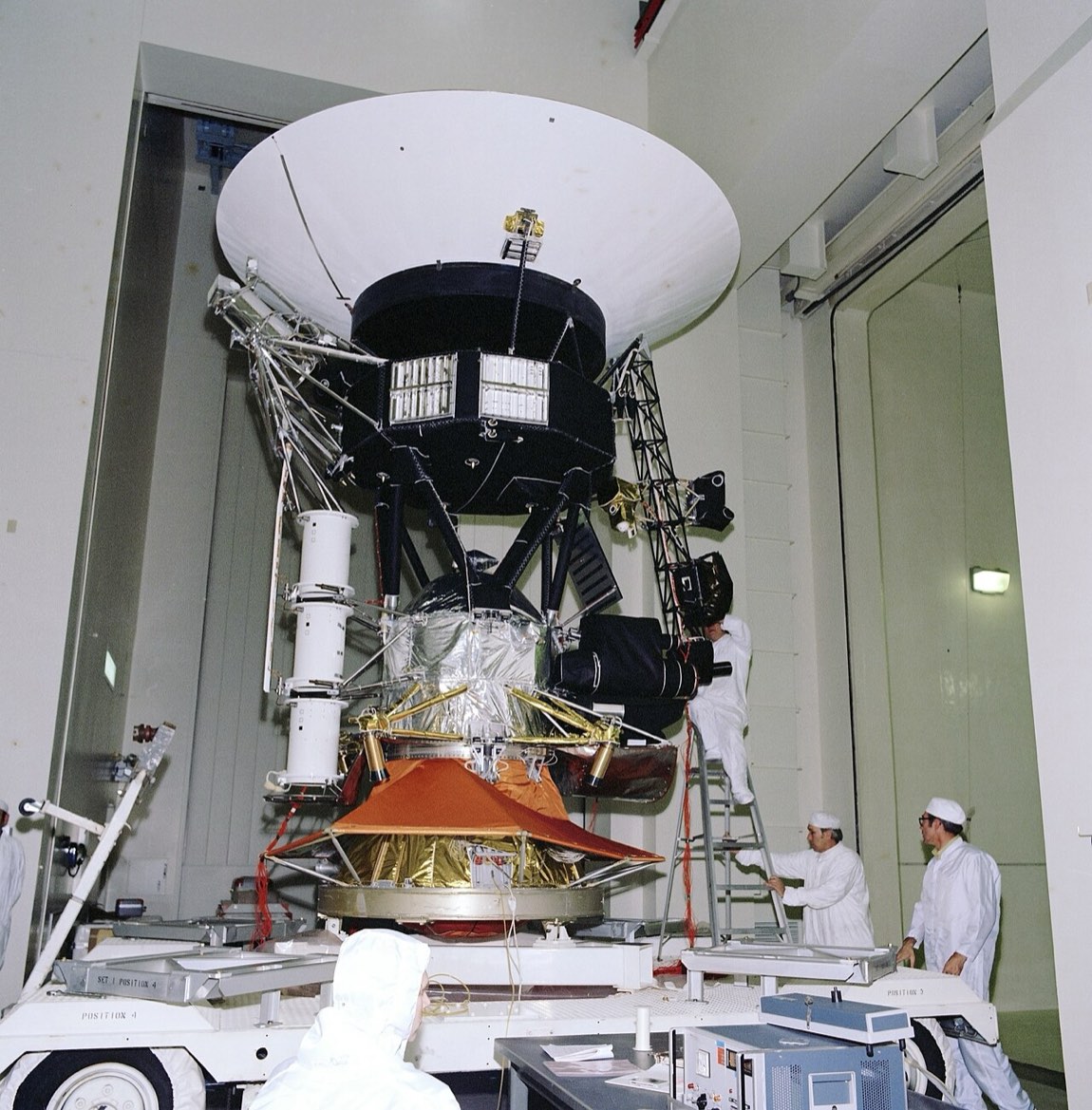
Every fact Voyager 2 gathered during its 25 August 1989 flyby took 246 minutes — more than four hours — to reach Earth at the speed of light, so the spacecraft operated almost entirely on pre-programmed commands. Coming within 4,400 km of Neptune's atmosphere, it then swung past Triton the same day. The mission confirmed the magnetic field's existence and measured its offset and tilt, determined Neptune's rotation period from radio emissions, discovered six new moons, showed the ring system has more than one component, and measured Neptune's mass to within 0.5 percent of the previous best estimate — a correction that eliminated the need for a hypothetical Planet X. It also revealed that in 1989 Triton was the coldest measured object in the Solar System at 38 K (−235 °C). The flyby images were dramatic enough to anchor a PBS all-night television program, Neptune All Night. No spacecraft has returned since, making every subsequent discovery about Neptune — from ground-based adaptive optics first used successfully in Hawaii in 1997 to JWST observations in 2023 — the result of remote observation across more than 4 billion kilometres.
15 Future missions still on the drawing board
Scientists have proposed numerous follow-up missions to Neptune, and none has yet launched. China's Shensuo concept envisions a pair of Voyager-like interstellar probes; the second, IHP-2, would fly just 1,000 km above Neptune's cloud tops in January 2038, potentially releasing an atmospheric impactor on approach before heading into the unexplored tail of the heliosphere. NASA's community has studied several options: a "Neptune Orbiter with Probes" proposed in 2003, the flyby spacecraft Argo (not selected), the Trident flyby of Neptune and Triton (not selected for Discovery missions 15 or 16), and Neptune Odyssey, an orbiter and atmospheric probe concept that would have launched between 2031 and 2033 and arrived by 2049. Two New Frontiers–class proposals, Triton Ocean World Surveyor and Nautilus, focus on Triton specifically. Ultimately, NASA's planetary science decadal survey prioritised a Uranus orbiter and probe ahead of any Neptune mission. China's Tianwen-5 is also listed as a potential Neptune target, with a possible arrival in 2058.
 ⤢
⤢
You would weigh…
Surface gravity 11.15 m/s² vs Earth’s 9.81 m/s². Try every world →
Could life exist here?
No surface, brutal cold, crushing depths: extremely unlikely. Triton's possible subsurface ocean, though, keeps it on astrobiologists' long list.
Our labels: Confirmed · Strong Evidence · Estimated · Hypothesis · Theoretical · Speculative (see Methodology).
Could humans live here?
Beyond any near-term scenario. Even robotic return visits are generational projects — a Neptune orbiter concept (Neptune Odyssey) would launch in the 2030s and arrive in the 2040s.
How would we get there?
Voyager 2 needed 12 years and a once-in-176-year planetary alignment. With current rockets an orbiter takes roughly 13–15 years. New Horizons crossed Neptune's orbit in 2014 — 8.5 years after launch — but was doing 84,000 km/h and couldn't stop.
| Technology | Status | Travel time (one way, straight line) |
|---|---|---|
| Apollo-style spacecraft, about 39,000 km/h | Flown technology | 13 years |
| Ion-propulsion probe, about 90,000 km/h | Flown technology | 6 years |
| Voyager 1, about 61,000 km/h | Flown technology | 8 years |
| Parker Solar Probe, about 690,000 km/h | Flown technology | 273 days |
| Nuclear-thermal rocket, about 120,000 km/h cruise | In development | 4 years |
| Laser light-sail at 20% of light speed | Proposed concept | 20.8 hours |
| Light itself, 299,792 km/s | Physical limit | 4.2 hours |
Simplified straight-line times at cruise speed. Real missions fly curved orbital paths and take longer. Full travel calculator →
Weird & wonderful
- Neptune has only completed one orbit since its discovery (in 2011).
- Its winds move faster than a fighter jet — in air 900 times dimmer than Earth's daylight.
- Triton is one of only four worlds known to be volcanically active today (with Earth, Io, and Enceladus).
- Summer on Neptune lasts over 40 years — at −200 °C.
Worlds that orbit Neptune
Latest news about Neptune
More real images of Neptune
Genuine spacecraft and telescope imagery, every frame credited and licensed. Tap any photo to enlarge.