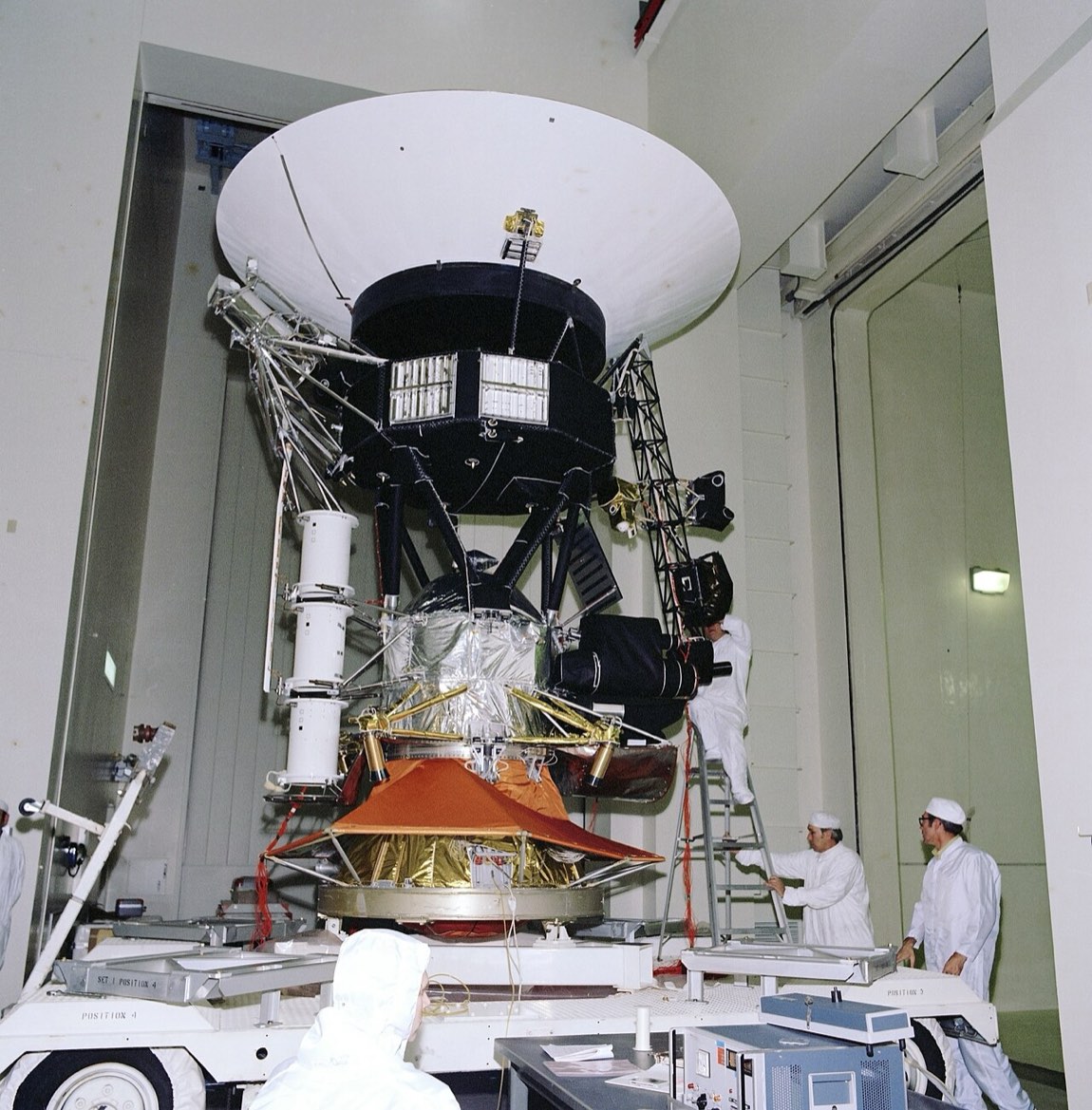
 Photograph · NASA/JPL · Public domain
Spacecraft · Deep guide
Voyager 2
The only spacecraft to visit all four giant planets, on the grandest tour ever flown.
What is it?
Voyager 2 is the only spacecraft ever to visit Uranus and Neptune — completing the full Grand Tour of Jupiter, Saturn, Uranus, and Neptune between 1979 and 1989. Launched 16 days before its twin, it took the slower, richer road, and in 2018 it followed Voyager 1 into interstellar space, where it still reports the plasma between the stars.
Go deeper
The 176-year planetary alignment enabling the four-planet tour was spotted by grad student Gary Flandro in 1965; Voyager 2 is the only craft that flew it. Its Uranus (1986) and Neptune (1989) encounters remain our ONLY close-up datasets for ice giants — every textbook image of those worlds is Voyager 2's. Unlike Voyager 1, its plasma spectrometer still worked at the 2018 heliopause crossing, giving the direct measurement its twin couldn't. Same dwindling RTGs, same late-2020s horizon.
01 The once-in-176-years road trip
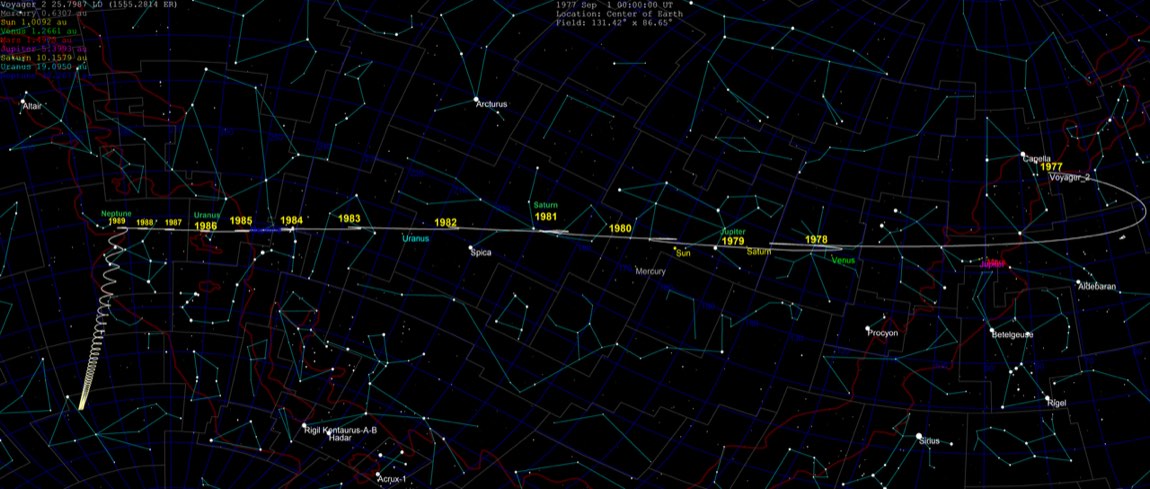
The four giant planets line up for a chained gravity-assist tour only every 176 years. NASA caught the 1977 window with Voyager 2: each planet's gravity bent its path and flung it onward to the next, turning a 30-year direct Neptune trip into 12. Miss the window and the tour reopens in the 2150s.
02 Everything we know about ice giants Deeper
Two flybys, a few days each, in 1986 and 1989 — that is the entire close-up record for the most common planet class in the galaxy. Voyager 2 found Uranus's tumbling magnetic field, Neptune's supersonic winds, and Triton erupting. Every argument for a new Uranus orbiter begins: 'Our only data is one 1986 flyby…'
The deep dive
Researched for the Atlas from Wikipedia — Voyager 2 (23,516 characters read) · updated Sep 20, 2026
03 A spacecraft held together by ingenuity
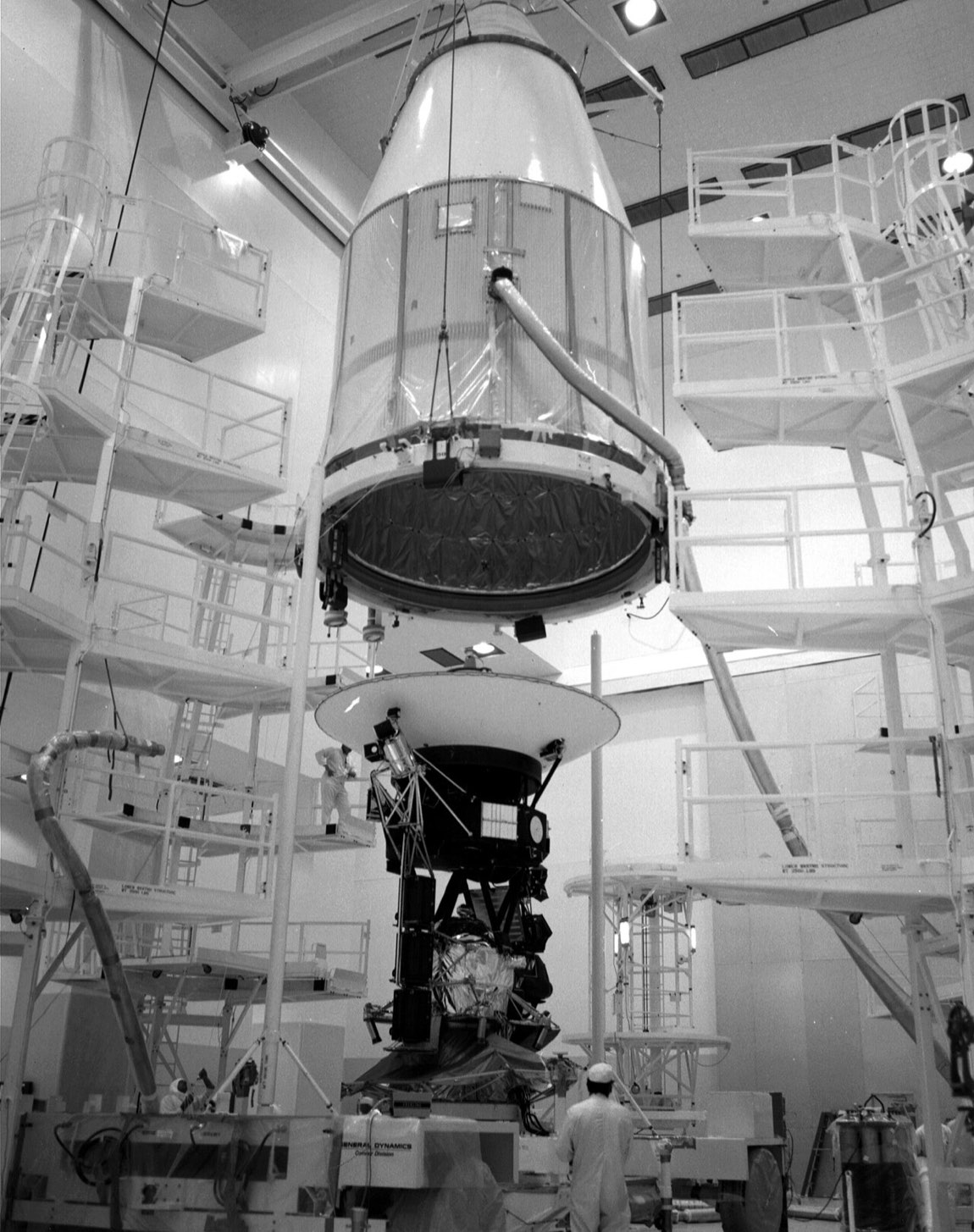
Voyager 2 was built at NASA's Jet Propulsion Laboratory in California, and its main body — the bus — is shaped like a decagonal prism. To keep its 3.7-meter (12-foot) high-gain antenna locked on Earth across billions of kilometers, the spacecraft relies on a Sun sensor, a Canopus star tracker, gyroscopes, and 16 hydrazine thrusters, all coordinated by a system called the Attitude and Articulation Control Subsystem. Most of those instruments have redundant backups built in. Power comes from three radioisotope thermoelectric generators, each packed with 24 pressed plutonium oxide spheres. At launch they together produced 470 watts — about the same as five old-fashioned incandescent light bulbs — and that output halves only every 87.7 years. The hydrazine propellant tank, a spherical titanium vessel just 70 centimeters (28 inches) across, held 100 kilograms (220 pounds) of fuel at launch, enough, engineers calculated, to last until 2034. When the spacecraft needs to record data it cannot immediately send home, a digital tape recorder stores up to 64 megabytes for later transmission.
04 Why only one antenna can talk to it
Voyager 2 communicates with Earth through NASA's Deep Space Network, but not through just any station. Because the probe was sent on a southward trajectory to enable its Uranus and Neptune flybys, it now sits far below the plane of the Solar System. That geometry places it permanently out of range of the network's Goldstone complex in California and its Madrid complex in Spain. The only station that can reliably reach it is Australia's DSS 43 antenna, part of the Canberra Deep Space Communication Complex. The importance of a single dish became starkly clear in 2020, when maintenance work on that antenna cut all outbound contact with Voyager 2 for eight months. When contact was reestablished on November 2, 2020, engineers sent a series of instructions that were executed and relayed back successfully. Full two-way communications were not restored until February 12, 2021, after a major upgrade of the Canberra ground station antenna that had taken a full year to complete.
05 The backup receiver that changed everything Deeper
In April 1978, flight controllers stopped transmitting commands to Voyager 2 for a period, and the resulting silence caused the spacecraft to switch automatically from its primary radio receiver to its backup. Shortly afterward, the primary receiver failed completely. The backup worked, but it had a failed capacitor that imposed a strict constraint: it could only receive transmissions sent at a very precise frequency. That frequency was not fixed — it shifted depending on Earth's rotation (because of the Doppler effect) and on the temperature of the onboard receiver. Engineers back on the ground had to calculate and apply the correct frequency offset before every single transmission for the rest of the mission, accounting for both effects simultaneously. This remained a constant operational challenge for decades. Communications are conducted over the S-band, at roughly 13 centimeters wavelength, and the X-band, at roughly 3.6 centimeters, with data rates reaching up to 115.2 kilobits per second at the distance of Jupiter — a rate that decreases following the inverse-square law as the probe travels ever farther from home.
06 Jupiter up close: volcanoes and a felt-tip ocean
Voyager 2's closest approach to Jupiter came at 22:29 Universal Time on July 9, 1979, bringing the probe within 570,000 kilometers (350,000 miles) of the planet's cloud tops. The Great Red Spot was revealed to be a complex storm rotating counterclockwise, and smaller storms and eddies were tracked throughout the banded cloud layers. On the moon Io, a 10-hour dedicated "volcano watch" confirmed active volcanism first spotted by Voyager 1 and showed the surface had visibly changed in the four months between the two visits. Between both Voyagers, nine volcanic eruptions were directly observed on Io, with evidence of additional eruptions in the gap. Europa told a stranger story. Low-resolution Voyager 1 images had suggested deep cracks from tectonic forces, but Voyager 2's sharper images showed the surface features had almost no topographic relief whatsoever — one scientist remarked they looked as though they "might have been painted on with a felt marker." Europa is now understood to have a water-ice crust less than 30 kilometers (19 miles) thick, possibly floating on an ocean 50 kilometers (31 miles) deep. Three new Jovian moons — Adrastea, Metis, and Thebe — were also discovered during the flyby.
07 Saturn's cold poles and a platform that seized Deeper
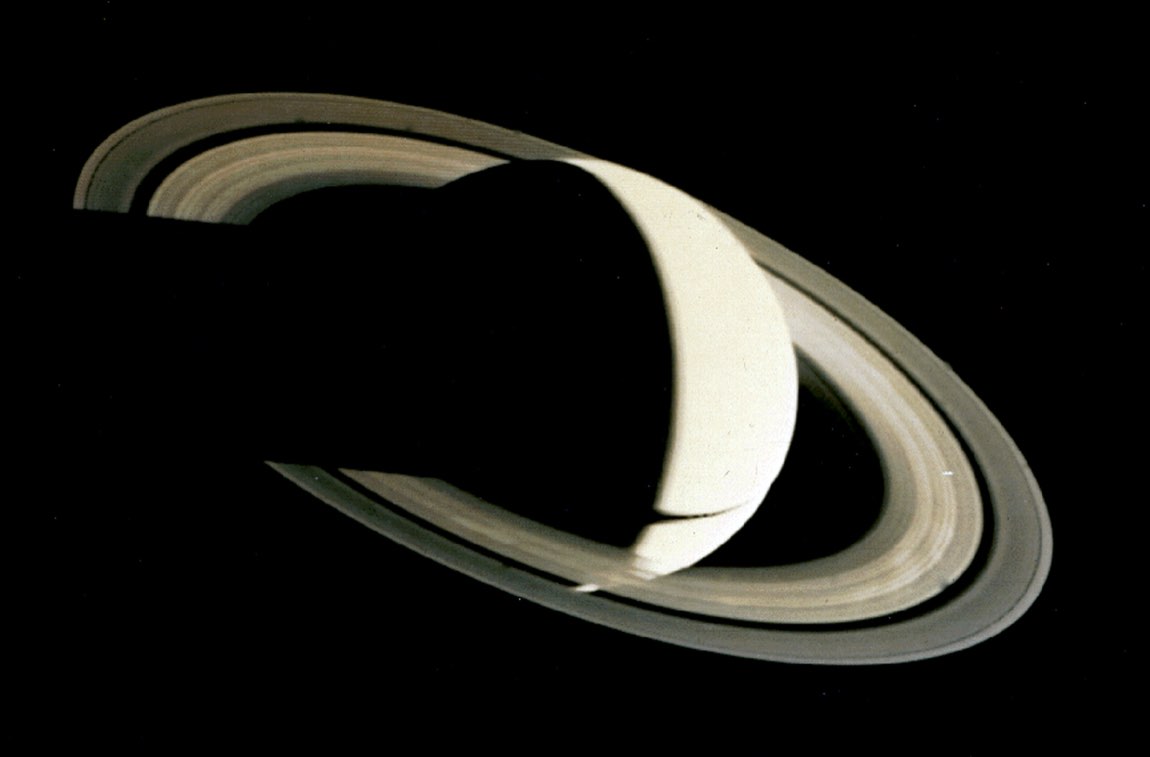
Voyager 2 made its closest approach to Saturn at 03:24:05 Universal Time on August 26, 1981. As the probe passed behind the planet from Earth's perspective, scientists used its radio link as a probe of Saturn's upper atmosphere, measuring both temperature and pressure at multiple depths. At the highest altitudes sampled, where pressure read 70 millibars (1.0 psi), the temperature was just 82 K (−191.2 °C). Deeper in, at 1,200 millibars (17 psi), it climbed to 143 K (−130 °C). The north pole turned out to be about 10 °C (18 °F) cooler than mid-latitudes at the 100-millibar level, a difference scientists attributed to seasonal effects. Almost immediately after the flyby, catastrophe struck: the spacecraft's scan platform — the mount holding its cameras and other pointed instruments — seized when its azimuth actuator locked up. Engineers traced the failure to a combination of a design flaw in the actuator's bearing and gear lubrication system, corrosion, debris build-up, dissimilar metal reactions, and a lack of relief ports. Some data was lost. Ground controllers eventually issued commands that partially freed the platform, allowing the mission to continue toward Uranus, but the incident served as a permanent reminder of how little margin for error existed across billions of kilometers of space.
 ⤢
⤢
08 Uranus: tilted world, weird magnetism, violent lightning
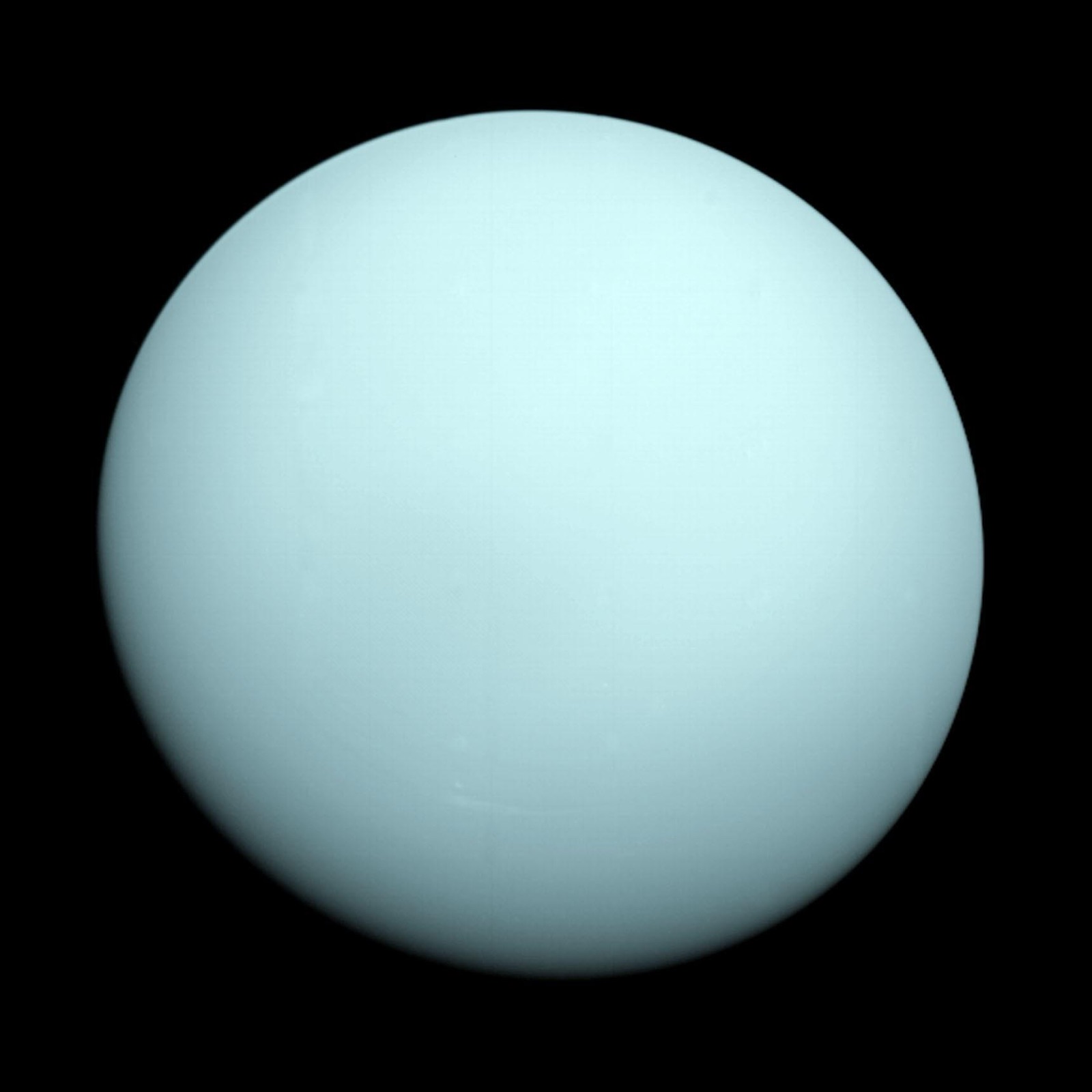
Voyager 2 swept within 81,500 kilometers (50,600 miles) of Uranus's cloud tops on January 24, 1986, becoming the only spacecraft ever to visit the planet. It measured the length of a Uranian day at 17 hours and 14 minutes and found a magnetic field dramatically misaligned from the planet's rotational axis — unlike any other planet visited up to that point. That magnetic field dragged a helix-shaped magnetic tail stretching 10 million kilometers (6.2 million miles) away from the Sun. Most of the cloud structure was hidden under a layer of haze, but enhanced images revealed concentric cloud bands around the south pole, which was also radiating unusual amounts of ultraviolet light in a phenomenon called "dayglow." The average atmospheric temperature was measured at about 60 K (−213.2 °C). The Planetary Radio Astronomy experiment detected 140 lightning flashes — Uranian electrostatic discharges — across a frequency range of 0.9 to 40 MHz, observed from 600,000 kilometers (370,000 miles) away over 24 hours. Each lightning bolt carries a power of around 10⁸ watts, releases 10 million to 20 million joules of energy, and lasts an average of 120 milliseconds. Voyager 2 also discovered 11 new moons and two previously unknown rings, and found the rings likely did not form at the same time as the planet itself.
09 Miranda: canyons that defied explanation Deeper
Among all the discoveries made during the Uranus flyby, the moon Miranda produced some of the most geologically startling images. Voyager 2's detailed photographs revealed a world covered in enormous canyons formed by geological faults — features that seemed wildly out of proportion for a moon so small. One leading hypothesis put forward at the time proposes that Miranda might be a reassembled body: a moon that was shattered into pieces by a catastrophic, high-velocity impact at some point in its past and then slowly pulled back together by its own gravity, with the resulting jumbled interior explaining the chaotic surface topography. Miranda's strange terrain remains one of the enduring mysteries of the outer Solar System. The Uranus flyby data also yielded a surprising finding decades later, in March 2020, when NASA astronomers reanalyzed old Voyager 2 recordings and reported detecting a large atmospheric magnetic bubble — a plasmoid — that had been released into outer space from Uranus during the original 1986 encounter, hidden in the data for more than 30 years.
10 Neptune and the storm that later vanished
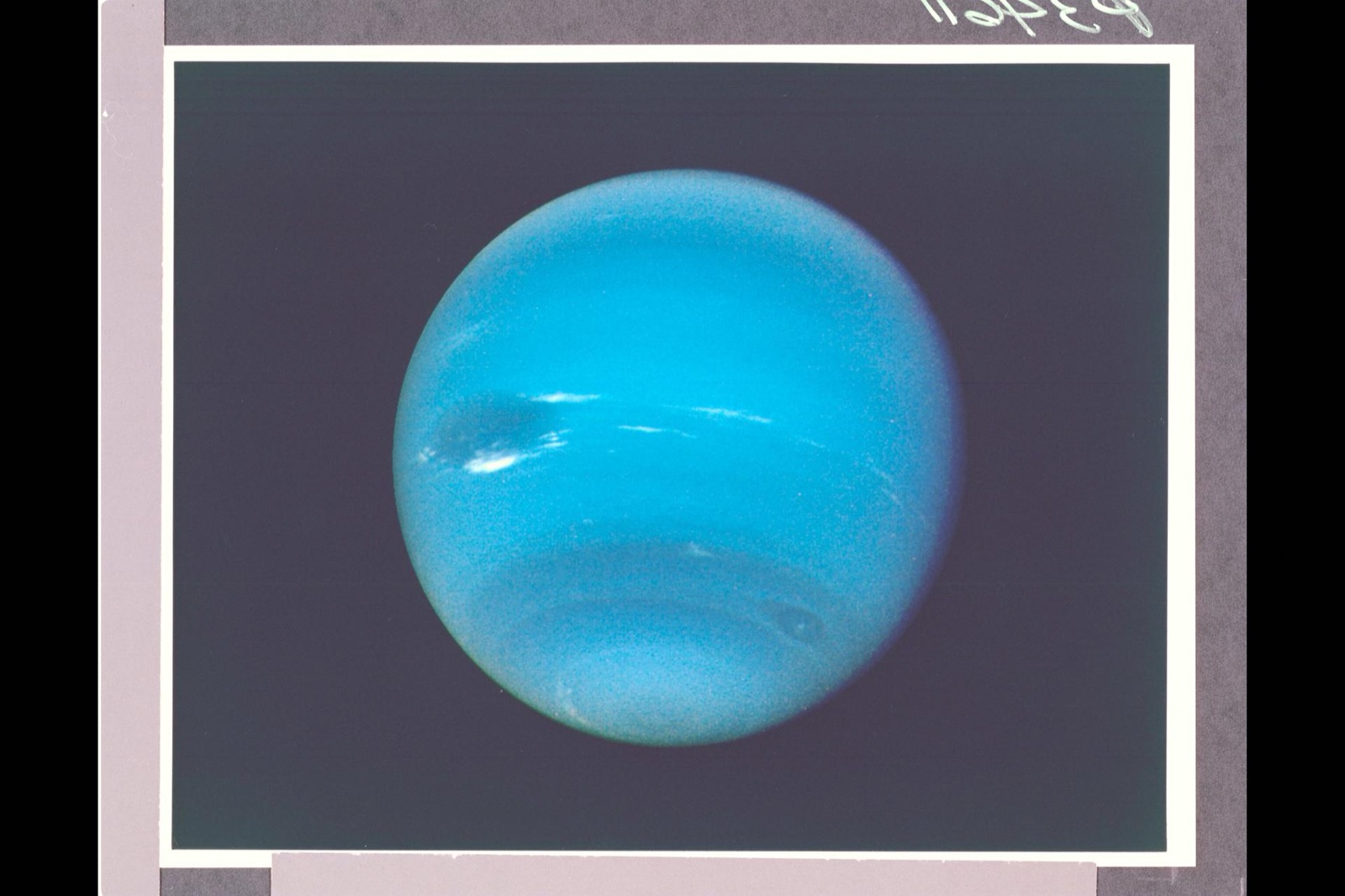
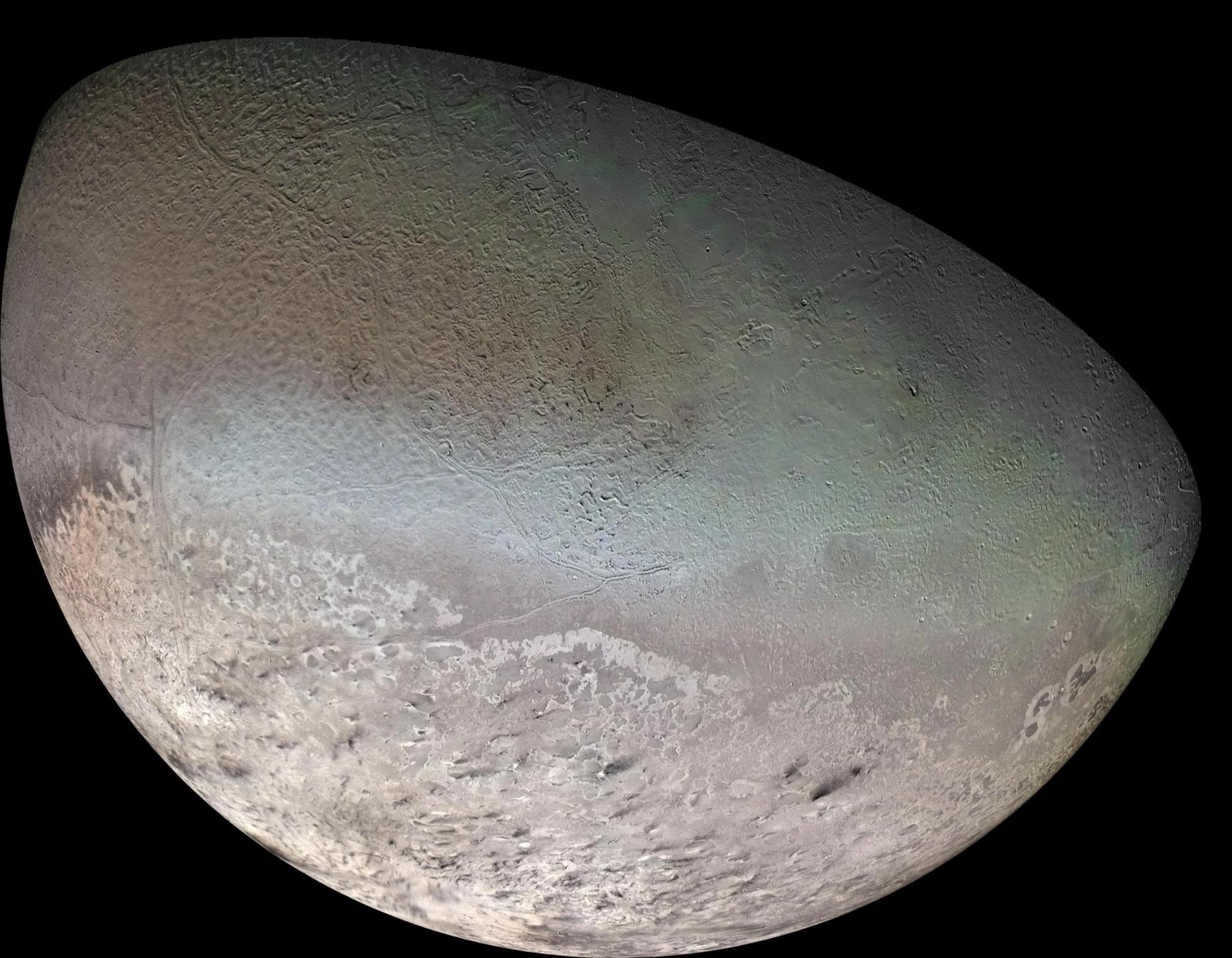
Voyager 2's Neptune encounter on August 25, 1989, was the culmination of 12 years of travel. Flight controllers routed the probe about 4,950 kilometers (3,080 miles) above Neptune's north pole, a path chosen through repeated computerized trajectory simulations to maximize what the spacecraft could see. Just five hours after its closest approach to Neptune, Voyager 2 flew within approximately 40,000 kilometers (25,000 miles) of Triton, the planet's largest moon, whose orbital plane is tilted significantly with respect to the ecliptic. Among Neptune's discoveries was the Great Dark Spot, a storm system that has since disappeared entirely, confirmed gone by the Hubble Space Telescope. Scientists later hypothesized it was a region of clear gas forming a window in Neptune's high-altitude methane cloud deck rather than a solid storm feature. Voyager 2 also found previously unknown rings around Neptune and confirmed six new moons: Despina, Galatea, Larissa, Proteus, Naiad, and Thalassa. The Planetary Radio Astronomy experiment recorded roughly 60 lightning flashes emitting energies over 7 × 10⁸ joules each, and the plasma wave instrument measured Neptune's plasma environment at a sample rate of 28,800 samples per second, detecting plasma densities ranging from 10⁻³ to 10⁻¹ particles per cubic centimeter.
11 Crossing into interstellar space
On November 5, 2018, Voyager 2 crossed the heliopause — the boundary where the Sun's outward flow of charged particles gives way to interstellar space — at a distance of 119.7 AU (17.9 billion kilometers; 11.1 billion miles) from the Sun, moving at 15.341 km/s (34,320 mph). Voyager project scientist Edward C. Stone and colleagues had spent years searching for the key signature of interstellar space: a shift in the direction of the magnetic field. Stone formally announced the crossing in December 2018. Voyager 1 had made the same crossing in 2012, and because both probes left the heliosphere in different directions, scientists can compare conditions in the interstellar medium from two separate vantage points. Voyager 2 crossed the termination shock — the inner boundary of the heliosheath — on August 30, 2007, roughly 1.6 billion kilometers (1 billion miles) closer to the Sun than Voyager 1 had, a difference attributed to the interstellar magnetic field pushing in the southern hemisphere of the heliosphere. Since its crossing, Voyager 2 has been providing the first direct measurements of the density and temperature of the interstellar plasma, transmitting scientific data at about 160 bits per second as of September 2023 — slow enough that a single high-resolution photograph would take days to send.
12 Power rationing in the dark between the stars Deeper
Managing power on Voyager 2 has become an increasingly precise engineering exercise. The three RTGs that launched with 470 watts collectively now produce far less, as their plutonium oxide fuel has steadily decayed. The first scientific instrument to be switched off was the photopolarimeter in 1991, saving 1.2 watts. By early 2023 the remaining power supported five instruments. In April 2023, JPL engineers began drawing on a power reserve originally intended for an onboard safety mechanism. In September 2024, the plasma science instrument was turned off to protect the remaining four, and in March 2025, the low-energy charged particle instrument was decommissioned as well. In August 2026, engineers completed an operation internally nicknamed "Big Bang" — a simultaneous swap of multiple power-consuming devices for lower-power alternatives — that freed enough power to keep the three remaining science instruments operating for at least one additional year beyond 2026. The procedure required keeping the spacecraft warm enough to function in temperatures near absolute zero throughout the transition. Without it, a third instrument would have needed to be shut off before the end of 2026. The probe is now expected to power its three remaining instruments at least through the end of 2027, 50 years after it launched.
13 The flipped bit and other close calls Deeper
Voyager 2 has survived several software and hardware crises that would have ended a less carefully engineered mission. On November 29, 2006, a random error caused a telemetered command to be incorrectly decoded by the spacecraft's computer as an instruction to turn on the electrical heaters of the magnetometer. Those heaters ran unintentionally until December 4, 2006, pushing temperatures above 130 °C (266 °F) — far beyond what the magnetometers were designed to withstand — and causing a sensor to rotate away from its correct orientation. On April 22, 2010, Voyager 2 began sending garbled scientific data. JPL engineers diagnosed the problem on May 17: a single bit had flipped in the spacecraft's computer memory. A reset was scheduled, executed on May 19, and confirmed on May 23, when normal science data transmission resumed. Then in July 2023, a programming error misaligned the high-gain antenna by just 2 degrees — enough to sever all communications with Earth. The spacecraft's carrier signal was recovered using Deep Space Network antennas by August 1, and on August 4 the Canberra station sent a high-power command to reorient the probe, restoring full communications. As a built-in safeguard, Voyager 2 is programmed to autonomously reset its antenna pointing toward Earth, a reset that would have triggered automatically by October 15 had ground intervention failed.
14 What awaits Voyager 2 in deep time
Voyager 2 is not aimed at any particular destination. It travels at 15.341 km/s relative to the Sun, a speed that carries it one light-year every 19,541 years — yet the nearest star is still 4.2 light-years away, and all nearby stars are themselves moving. In roughly 42,000 years, Voyager 2 will pass the star Ross 248 — currently 10.30 light-years from Earth — at a closest distance of 1.7 light-years. If undisturbed for 296,000 years, it should pass by Sirius, 8.6 light-years away, at a distance of 4.3 light-years. NASA notes that "The Voyagers are destined — perhaps eternally — to wander the Milky Way." The probe carries a gold-plated audio-visual disc intended for any intelligent life that might one day encounter it, containing photographs of Earth and its lifeforms, scientific information, spoken greetings from the United Nations Secretary-General, the U.S. President, and children, and a sound medley including whale calls, a baby crying, breaking waves, and music ranging from Mozart to Chuck Berry's 1958 recording of "Johnny B. Goode" to Valya Balkanska and other Eastern and Western performers.
 ⤢
⤢
Weird & wonderful
- Voyager 2 launched first but is number two — it took the scenic route.
- In 2023 a wrong command pointed its antenna away; a 'shout' from the biggest dish on Earth brought it back.
- It will pass 'near' Sirius — in 296,000 years.