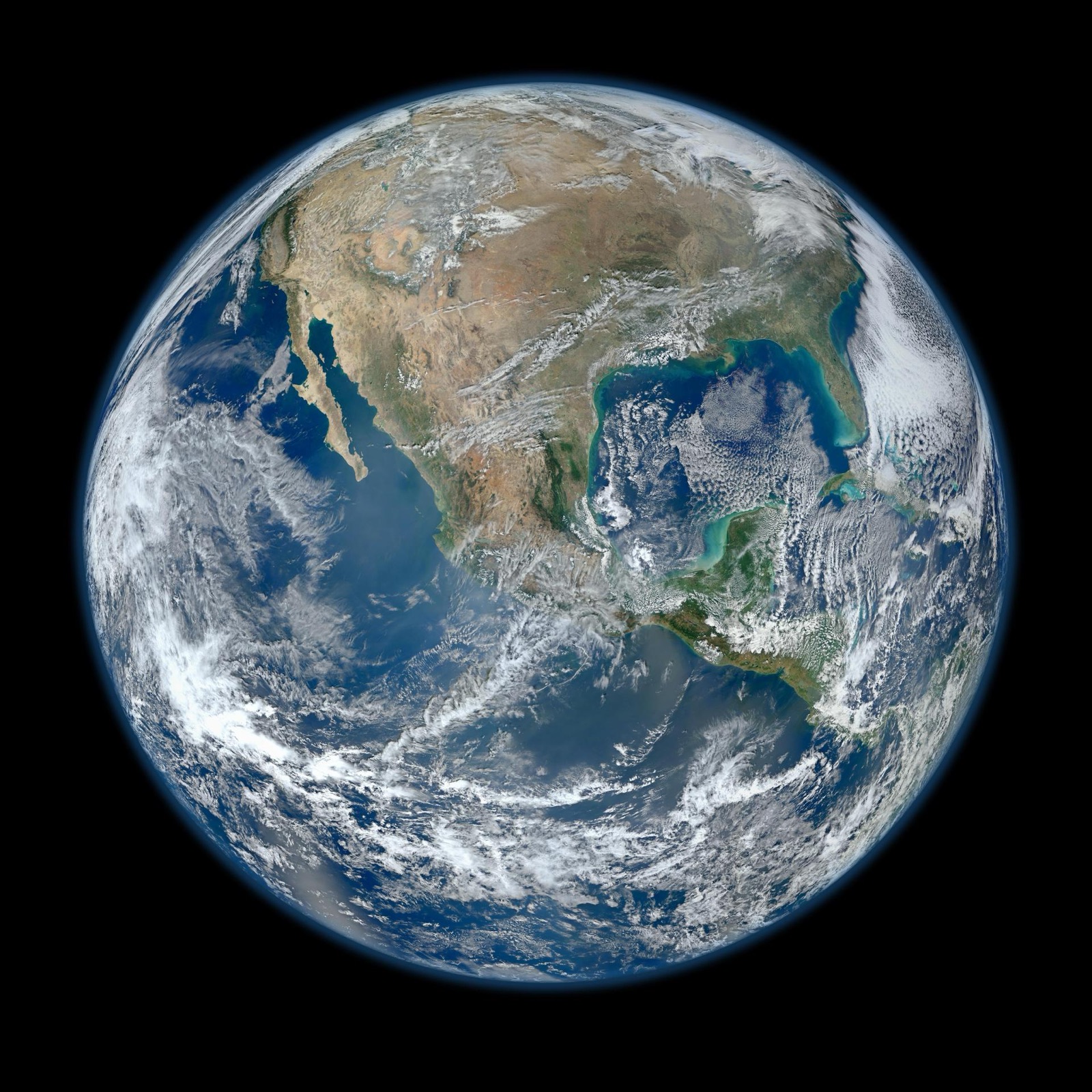
 Photograph · NASA
Planet · Deep guide · orbits The Sun
Earth
Also called: Terra · The Blue Marble
The only place in the universe where life is confirmed to exist. We call it home.
What is it?
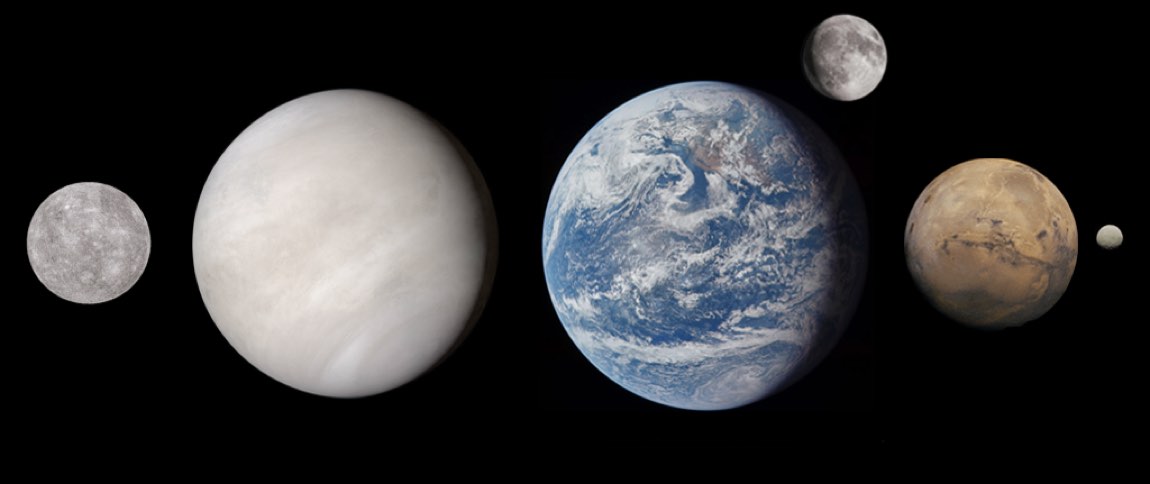
Earth is the third planet from the Sun and, as far as anyone knows, the only world with life. It is the biggest of the four rocky planets, the only planet with liquid water oceans on its surface, and the only one with an oxygen-rich atmosphere — which exists because living things put the oxygen there.
Go deeper
Earth sits in the Sun's habitable zone with a rare combination: plate tectonics recycling carbon (a long-term thermostat), a large moon stabilizing its axial tilt, a molten-iron dynamo generating a protective magnetosphere, and abundant surface water. Life appears in the rock record within a billion years of formation; photosynthesis then re-engineered the atmosphere in the Great Oxidation Event ~2.4 billion years ago. Earth remains the only known data point for biology — the reference world for every exoplanet comparison.
01 Why is Earth habitable?
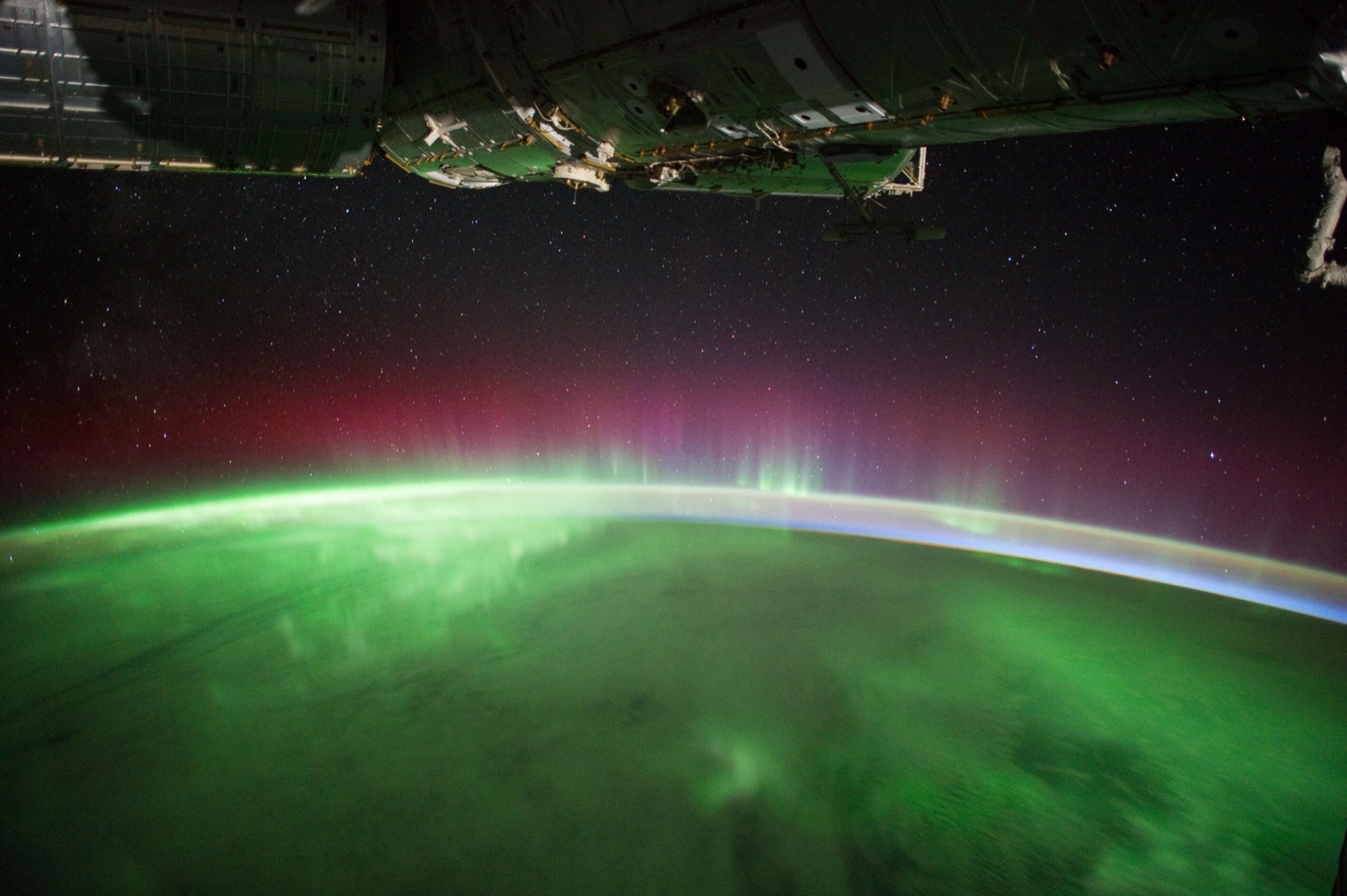
Earth orbits at the right distance for liquid water, has enough gravity to keep a thick atmosphere, a magnetic field that deflects harmful particles from the Sun, and a big moon that keeps its tilt — and therefore its seasons — steady over billions of years. Change any one of these very much and Earth would be a different world.
02 A planet that recycles itself Deeper
Plate tectonics constantly buries and re-releases carbon, acting as a thermostat on hundred-million-year timescales: warmer weathering pulls CO₂ down, volcanoes top it back up. No other rocky planet in the Solar System does this today, and it may be a key ingredient for keeping a world habitable for billions of years.
03 Earth from space
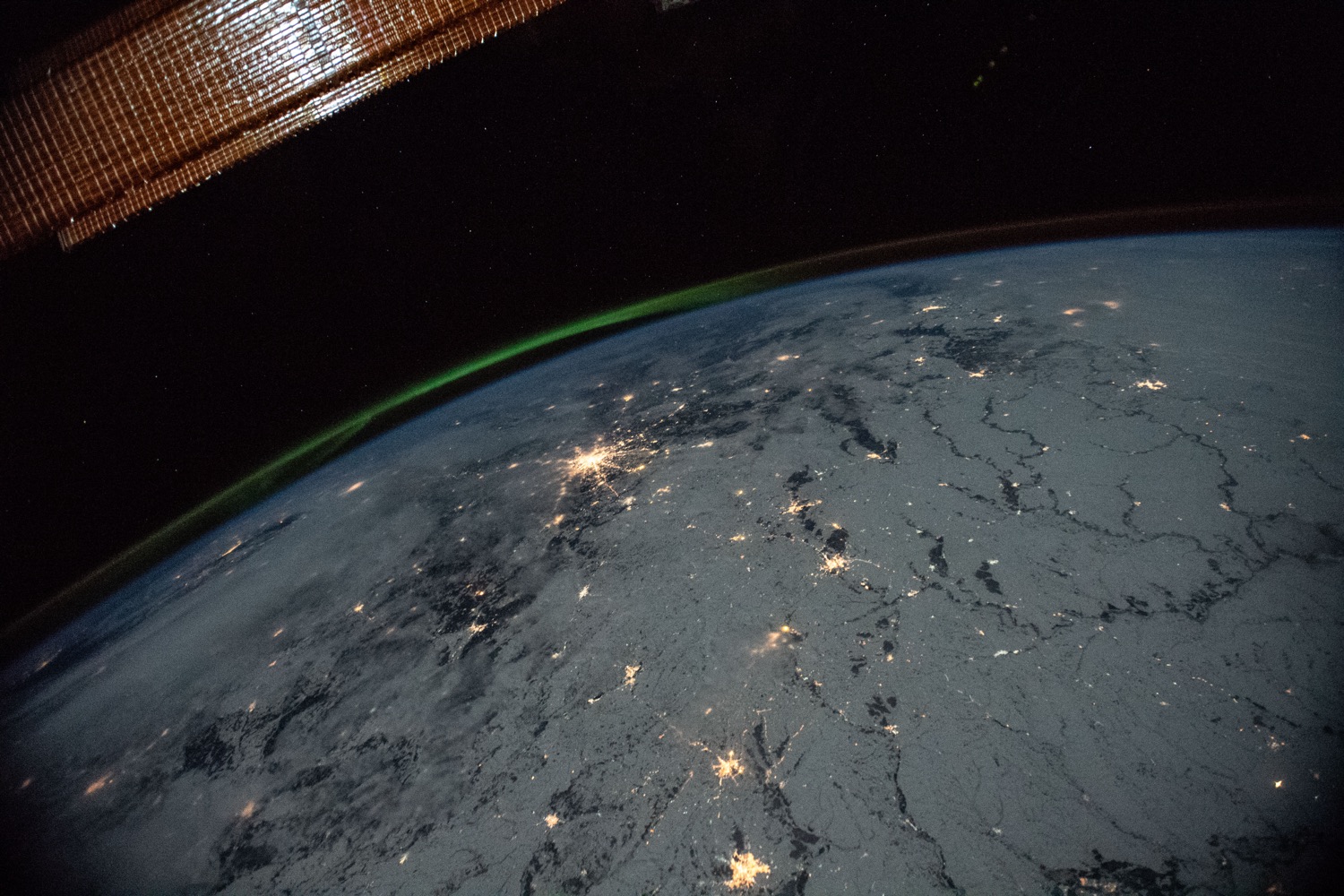
Astronauts consistently describe the same shock — a thin glowing blue line of atmosphere hugging the planet, no borders, and weather systems moving like living things. The 'overview effect' is real enough that psychologists study it.
The deep dive
Researched for the Atlas from Wikipedia — Earth (58,000 characters read) · updated Sep 20, 2026
 ⤢
⤢
04 How Earth got its name
Earth is the only planet in the Solar System whose English name does not come from classical Roman or Greek mythology — at least not directly. The word traces back through Middle English to the Old English noun most often spelled eorðe, which has cognates in every Germanic language; linguists have reconstructed the common ancestor as *erþō. In its earliest uses, eorðe translated many senses of both Latin terra and Greek gē: the ground underfoot, soil, dry land, the human world, and the globe itself. Earth may even have been a personified goddess in Germanic paganism — late Norse mythology included Jörð, a giantess often named as the mother of Thor. The capitalized form Earth, by analogy with Mercury or Venus, is a relatively recent convention; Oxford spelling still lists the lowercase earth as the more common form. Alternative names survive in technical and literary contexts: Terra appears in some scientific writing and much science fiction, Tellus shows up in poetry, and the Greek-derived Gaia gained wide cultural currency through the Gaia hypothesis of the mid-twentieth century.
05 A violent birth: Theia and the Moon
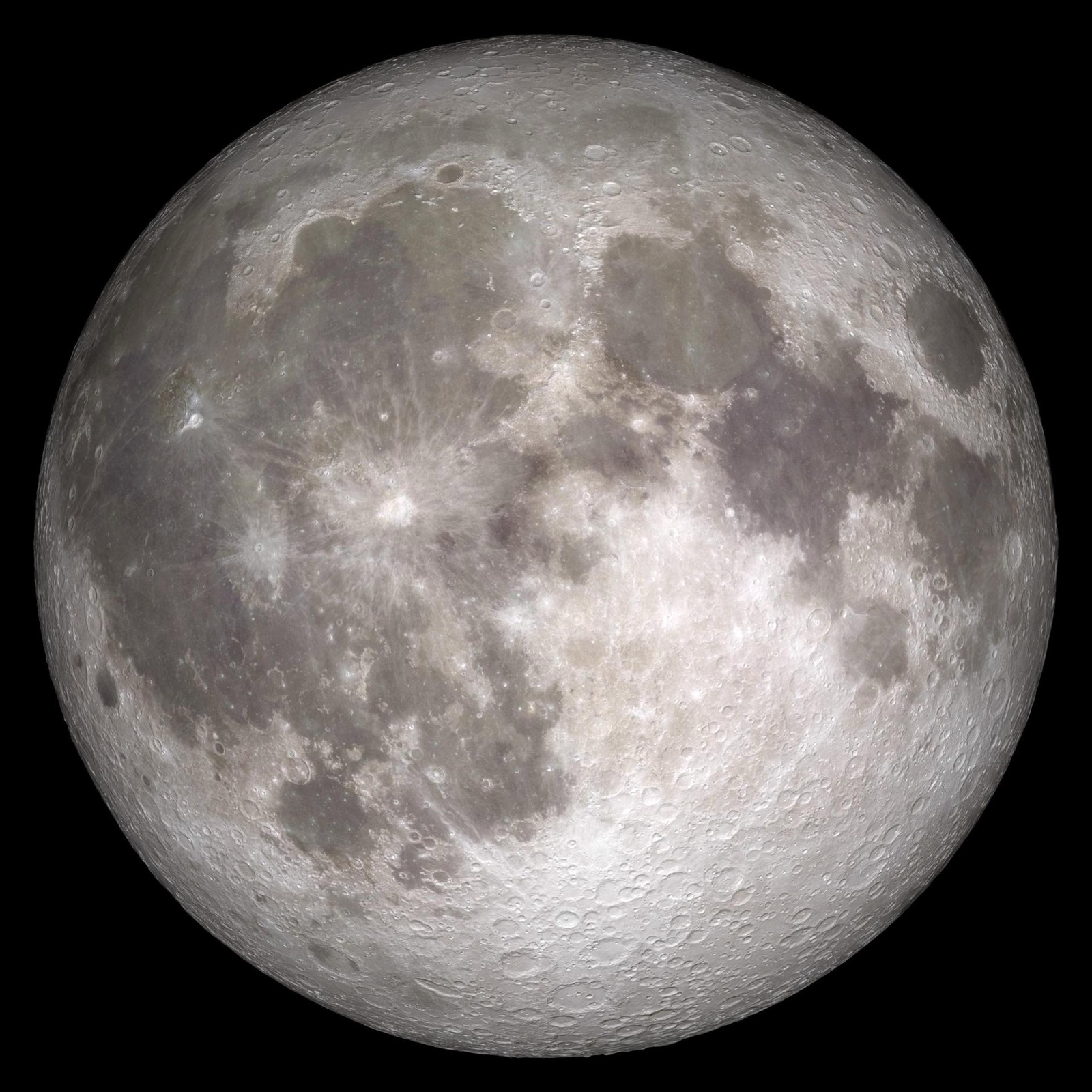
The leading explanation for how the Moon formed is the giant-impact hypothesis: early in Solar System history, a Mars-sized protoplanet named Theia — carrying about 10% of Earth's current mass — struck the primordial Earth with a glancing blow. Some of Theia's mass merged with Earth; the rest was hurled into orbit and accreted into the Moon. The hypothesis elegantly explains why the Moon is relatively poor in iron and volatile elements, and why its composition is nearly identical to Earth's own crust. Computer simulations even suggest that two blob-like remnants of Theia may still reside deep inside Earth today. Estimates of the Moon's age range from 4.5 billion years ago to significantly younger, so the precise timing of the impact remains debated. Between about 4.0 and 3.8 billion years ago, a separate violent episode called the Late Heavy Bombardment pelted both the Moon and Earth with numerous asteroid impacts, dramatically reshaping their surface environments.
06 Layers all the way down Deeper
Earth's interior is divided into chemically and physically distinct shells. The outermost silicate crust ranges from roughly 6 km thick under the ocean basins to 30–50 km under the continents; it meets the mantle at the Mohorovičić discontinuity. The crust and the rigid top of the upper mantle together form the lithosphere, which rides on the lower-viscosity asthenosphere beneath. Crystal-structure changes in the mantle occur at depths of 410 and 660 km, marking a transition zone between upper and lower mantle. Below the mantle sits an extremely low-viscosity liquid outer core, and at the very center a solid inner core whose radius is about one-fifth of Earth's total radius. Remarkably, the inner core may be rotating at a slightly higher angular velocity than the rest of the planet — advancing by 0.1–0.5° per year, though estimates both higher and much lower have been proposed. At Earth's center, temperatures may reach 6,000 °C (10,830 °F) and pressure could reach 360 GPa (52 million psi). Earth is also the densest planet in the Solar System.
 ⤢
⤢
07 The heat engine inside the planet Deeper
Earth releases heat through two main mechanisms: primordial heat left over from the planet's violent formation, and radiogenic heat generated by the ongoing decay of radioactive isotopes — principally potassium-40, uranium-238, and thorium-232. Earth's mean heat loss at the surface is 87 mW/m², giving a total global heat loss of 4.42×10¹³ W. Some of that energy travels upward through mantle plumes — columns of hotter-than-average rock — which can produce volcanic hotspots and flood basalts at the surface. Most heat escapes via plate tectonics, through mantle upwelling at mid-ocean ridges. Early in Earth's history the output was far greater: around 3 billion years ago, roughly twice today's heat was being produced. That higher flux drove faster mantle convection and plate movement, enabling the formation of komatiites — rare, magnesium-rich lavas almost never seen in modern geology. As the core gradually cools over future billions of years, reduced steam venting from mid-ocean ridges would allow ocean water to descend into the mantle, slowly depleting the surface supply.
08 Tectonic plates: speeds and boundaries
Earth's lithosphere is divided into seven major tectonic plates — the Pacific, North American, Eurasian, African, Antarctic, Indo-Australian, and South American — along with several notable smaller ones including the Arabian, Caribbean, Nazca, and Scotia plates. Plates interact at three kinds of boundary: convergent (colliding), divergent (pulling apart), and transform (sliding sideways). The fastest-moving plates are oceanic: the Cocos Plate advances at 75 mm per year and the Pacific Plate moves 52–69 mm per year — about as fast as a fingernail grows, yet enough to rebuild ocean floors over millions of years. The slowest is the South American Plate, creeping at only 10.6 mm per year. Because oceanic crust is continuously recycled into the mantle at convergent boundaries, most of the ocean floor is less than 100 million years old; the oldest oceanic crust, in the western Pacific, is estimated at 200 million years. By contrast, the oldest dated continental crust reaches 4,030 million years, and preserved zircon grains push evidence of continental material back to 4,400 million years ago.
09 The oceans: depth, salt, and scale
Earth's global ocean covers 361.8 million km² and has a mean depth of 3,682 m (12,080 ft), giving an estimated volume of 1.332 billion km³ — enough that if Earth's crust were perfectly smooth, the resulting worldwide ocean would be 2.7 to 2.8 km deep everywhere. The mass of all that water is approximately 1.35×10¹⁸ metric tons, about 1/4,400 of Earth's total mass. About 97.5% of it is saline, with an average salt content of roughly 35 grams per kilogram of seawater. Of the remaining 2.5% that is fresh, about 68.7% is locked in ice caps and glaciers, and most of the rest is groundwater; surface freshwater — lakes and rivers combined — covers only 2.8% of Earth's land area. The ocean floor is far from featureless: it hosts abyssal plains, seamounts, submarine volcanoes, oceanic trenches, and a globe-spanning mid-ocean ridge system. The deepest point is the Mariana Trench, reaching 10,925 m (35,843 ft) below local sea level.
 ⤢
⤢
10 Earth's magnetic shield in detail Deeper
Earth's magnetic field is generated by a dynamo process in the liquid outer core, where convection of electrically conducting iron converts thermal and compositional energy into electrical and magnetic field energy. At the equator, the surface field strength measures 3.05×10⁻⁵ T, with a magnetic dipole moment of 7.79×10²² Am² at epoch 2000 — and it is decreasing by nearly 6% per century, though it remains stronger than its long-term average. The field extends into the magnetosphere, which is compressed on the sunlit side to about 10 Earth radii by solar wind pressure, while stretching into a long tail on the night side. A supersonic bow shock precedes the day-side magnetosphere because the solar wind moves faster than waves can propagate through it. Within this structure, low-energy particles define the plasmasphere, medium-energy particles form the ring current, and high-energy particles populate the Van Allen radiation belts. The convection in the core is chaotic: the magnetic poles drift continuously and periodically reverse, averaging a few reversals per million years. The most recent reversal occurred approximately 700,000 years ago.
11 Axial tilt, wobbles, and Milankovitch cycles Deeper
Earth's axial tilt of approximately 23.439281° is what drives the seasons, but the tilt itself is not perfectly steady. It undergoes a slight irregular wobble called nutation, with a main period of 18.6 years, caused by the varying gravitational pull of the Sun and Moon on Earth's equatorial bulge. On longer timescales, the entire orientation of the axis precesses in a complete circle every 25,800 years — the reason a sidereal year and a tropical year differ in length. Earth's orbit also breathes: it is slightly elliptical, and perihelion (closest approach to the Sun) currently falls around January 3rd, while aphelion falls around July 4th. This geometry produces about 6.8% more solar energy at perihelion than aphelion. Layered over these cycles are the Milankovitch cycles — linked variations in orbital eccentricity, axial tilt, and precession — that correlate with the recurring ice ages of the past few million years, which have repeated on rhythms of approximately 21,000, 41,000, and 100,000 years. The poles themselves also migrate a few meters across Earth's surface, a motion that includes a 14-month cycle known as the Chandler wobble.
12 The atmosphere layer by layer
Earth's atmosphere has no sharp outer edge; it thins gradually into space. Three-quarters of its mass is packed into the lowest 11 km — the troposphere — where all surface weather and climate occur. The troposphere ranges in height from 8 km at the poles to 17 km at the equator. Above it lies the stratosphere, home to the ozone layer that absorbs harmful ultraviolet radiation and makes land life possible. Higher still are the mesosphere and thermosphere. The working definition for the boundary between atmosphere and outer space, the Kármán line, sits at 100 km altitude. Atmospheric pressure at sea level averages 101.325 kPa (14.696 psi). The air is 78.084% nitrogen and 20.946% oxygen, with 0.934% argon and traces of carbon dioxide and other gases; water vapor varies between 0.01% and 4%, averaging about 1%. Without the greenhouse effect — primarily driven by water vapor, CO₂, methane, nitrous oxide, and ozone — the average surface temperature would be −18 °C (−0.4 °F) rather than the current roughly +15 °C (59 °F), and life as we know it would not exist.
 ⤢
⤢
13 How science discovered Earth's true age
For most of human history, Earth's age was unknown. It was only in the nineteenth century that geologists began to argue the planet must be at least many millions of years old, based on the enormous thicknesses of sedimentary rock that erosion produces only slowly. In 1864, Lord Kelvin applied thermodynamics to estimate Earth's age at between 20 million and 400 million years — a calculation that sparked fierce debate with biologists and geologists who needed far more time for evolution and sedimentation. The impasse was broken only with the discovery of radioactivity and radioactive dating in the late nineteenth and early twentieth centuries, which provided a reliable physical clock. Today, the oldest material found in the Solar System is dated to 4.5682 (+0.0002/−0.0004) billion years ago, and Earth itself is estimated to have formed by 4.54 ± 0.04 billion years ago. Hadean-aged zircon grains discovered in Western Australia, dating back as far as 4.4 billion years, are the oldest direct evidence of Earth's surface, showing that felsic continental crust and liquid water existed within 140–160 million years of the planet's formation.
14 Earth's future: a world undone by its star
Earth's long-term fate is inseparable from the Sun's evolution. Over the next 1.1 billion years solar luminosity will increase by 10%, and by 40% over 3.5 billion years. Rising temperatures will accelerate the inorganic carbon cycle, potentially dropping atmospheric CO₂ to lethally low levels — around 10 ppm for C4 photosynthesis — within 100 to 900 million years. Without plants, oxygen would vanish from the atmosphere. In roughly 1.5 billion years, mean surface temperatures could reach 100 °C (212 °F), and within an estimated 1.6 to 3 billion years, all ocean water will have evaporated and been lost to space, potentially triggering a runaway greenhouse effect. In about 5 billion years the Sun will swell into a red giant, expanding to roughly 1 AU (about 250 times its present radius). Earth's fate at that point is genuinely uncertain: losing about 30% of the Sun's mass would push Earth out to an orbit of 1.7 AU, possibly sparing it — but tidal effects could also drag it into the Sun's outer atmosphere to be vaporized. A study published in 2026 suggested Earth may survive the Sun's asymptotic giant branch phase.
15 Quasi-satellites and artificial neighbors
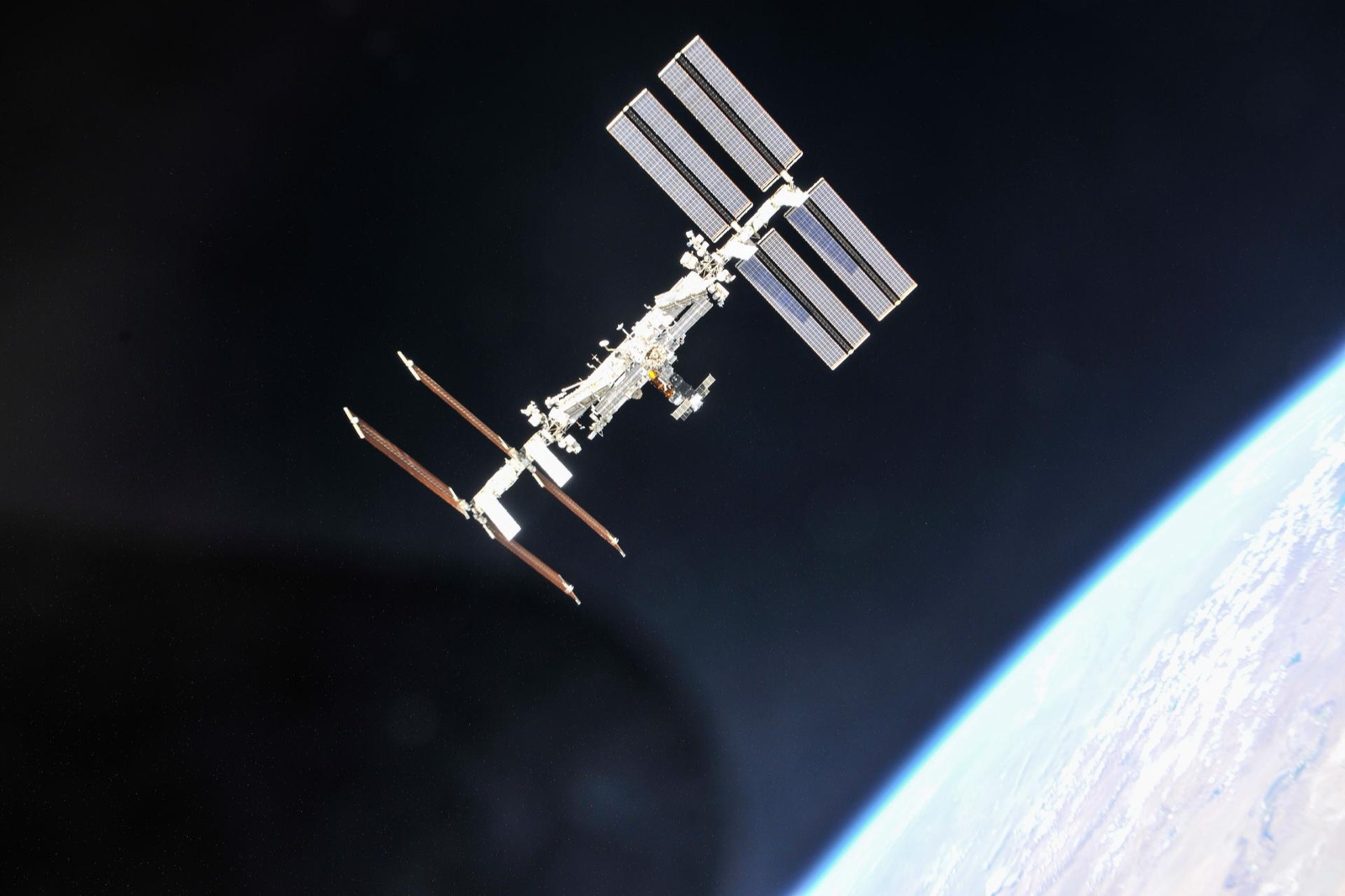
Earth is accompanied by more than just the Moon. A population of co-orbital asteroids shares Earth's path around the Sun in three categories: quasi-satellites, horseshoe-orbit objects, and trojans. At least seven quasi-satellites have been identified, including 469219 Kamoʻoalewa, and they range in diameter from 10 m to 5,000 m. A trojan asteroid, 2010 TK7, librates around the leading Lagrange triangular point, L4, ahead of Earth in its orbit. The small near-Earth asteroid 2006 RH120 makes close approaches to the Earth–Moon system roughly every twenty years and can temporarily enter orbit around Earth during those passes. Beyond these natural companions, as of May 2023 there were 7,560 operational human-made satellites orbiting Earth, plus many inoperative ones — including Vanguard 1, the oldest satellite still in orbit — and over 16,000 tracked pieces of space debris. The largest artificial satellite is the International Space Station.
 ⤢
⤢
16 Photographs that changed how humans see home
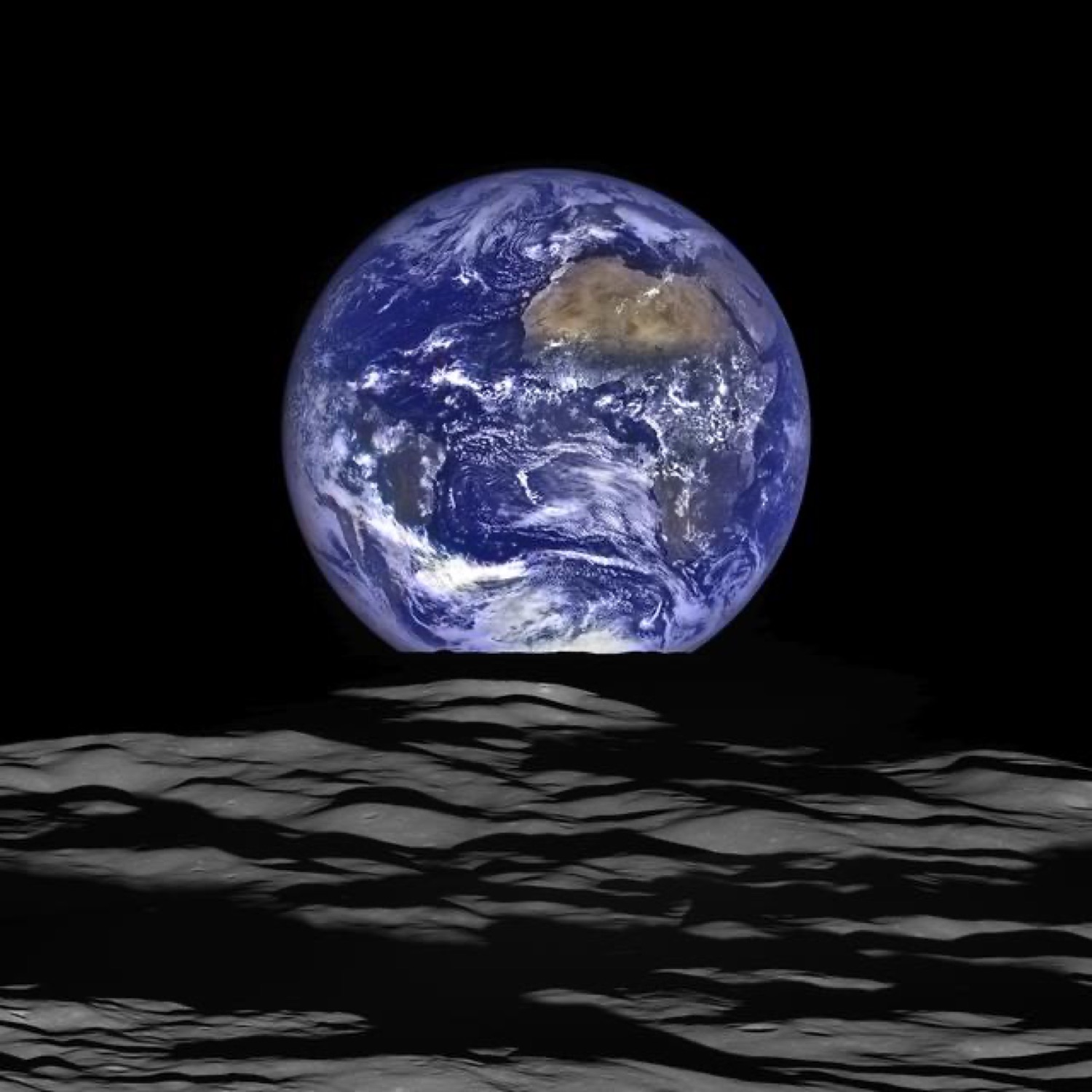
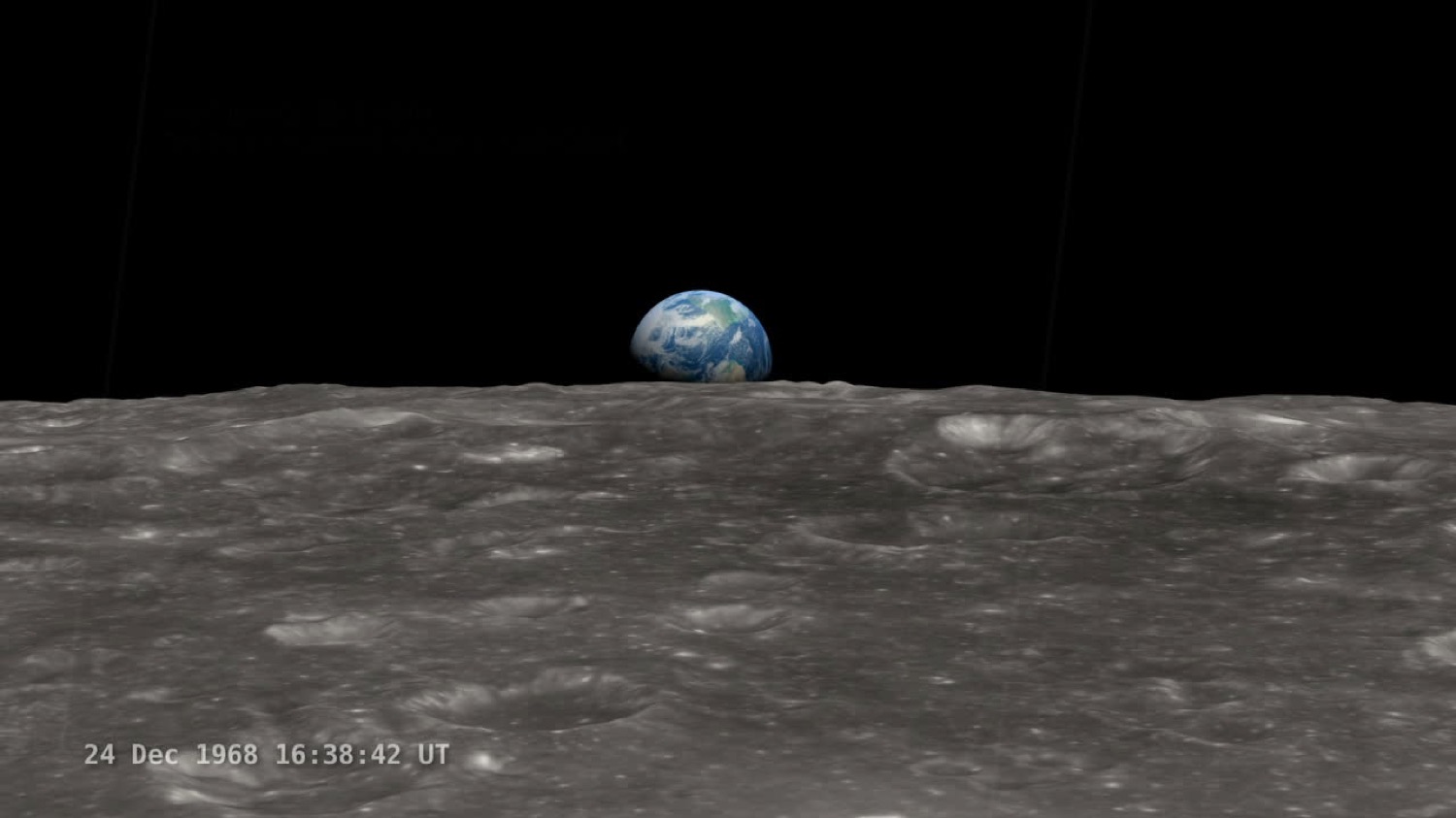
Two photographs in particular transformed the cultural understanding of Earth. Earthrise, taken during the Apollo 8 mission in 1968, showed a fragile blue world suspended above the barren lunar surface. The Blue Marble, captured by Apollo 17 in 1972, became one of the most widely reproduced images in history and gave many people their first visceral sense of Earth as a finite, luminous sphere. The psychological response this kind of view produces has been called the overview effect — a cognitive shift in awareness described by astronauts as an overwhelming sense of Earth's beauty, uniqueness, and apparent fragility when seen from space. These images are widely credited with catalyzing the modern environmental movement, sharpening public awareness of the scope of human impact on the planet. The broader practice of Earth observation from space has since enabled humanity to monitor environmental changes at a global scale and has informed international responses to issues ranging from deforestation to climate change.
You would weigh…
Surface gravity 9.81 m/s² vs Earth’s 9.81 m/s². Try every world →
Could life exist here?
Earth is the only place in the universe where life is confirmed. Everything else on this site is measured against it.
Our labels: Confirmed · Strong Evidence · Estimated · Hypothesis · Theoretical · Speculative (see Methodology).
Could humans live here?
8+ billion of us live here. Every plan for living anywhere else — the Moon, Mars, orbital habitats — currently depends on supplies from Earth.
How would we get there?
Look down.
Weird & wonderful
- Earth is the densest planet in the Solar System.
- The planet spins at about 1,670 km/h at the equator — you never feel it.
- There is more water in Earth's mantle rocks, chemically bound, than in all the oceans — possibly several oceans' worth.
- Earth's magnetic north pole wanders tens of kilometers per year.