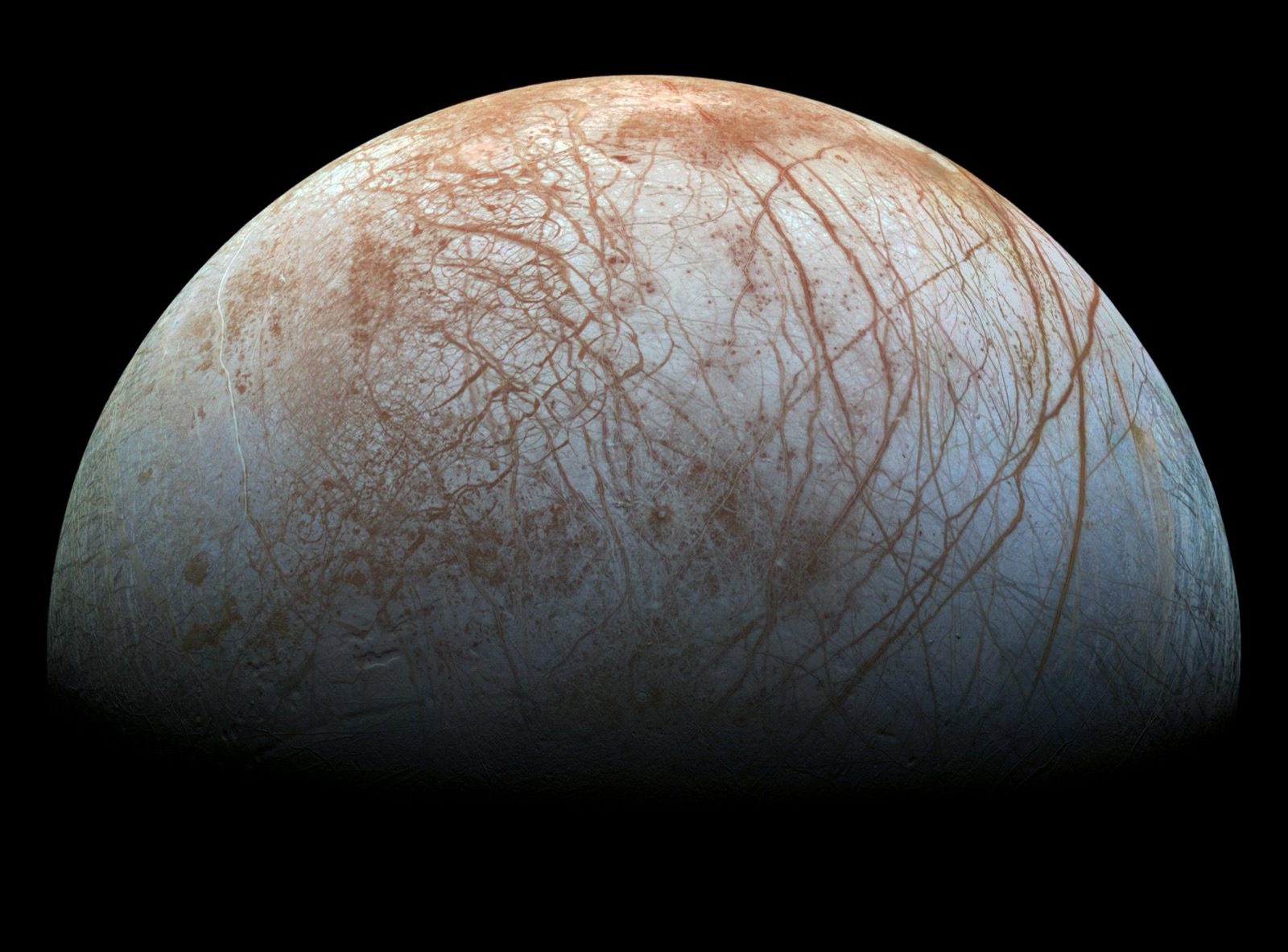
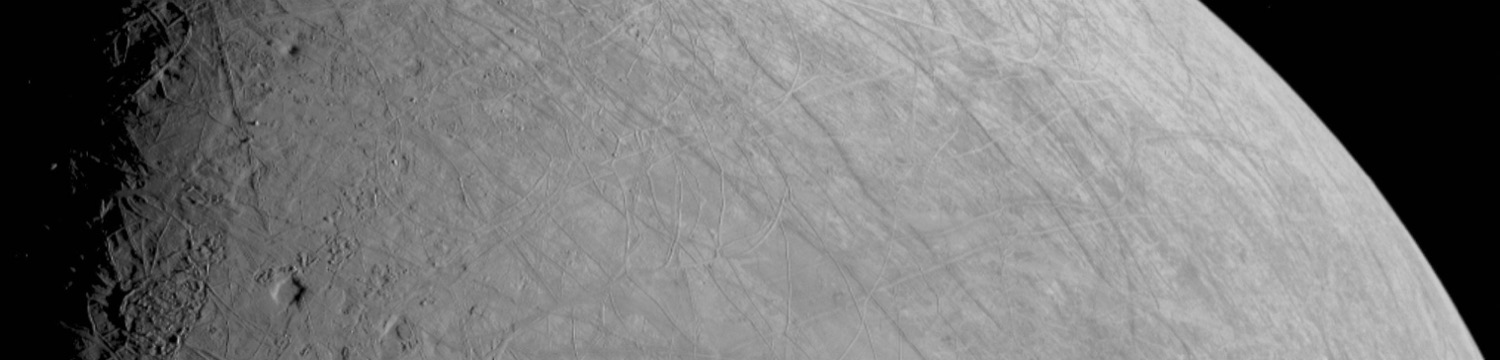
 Photograph · NASA/JPL-Caltech/SETI Institute
Moon · Deep guide · orbits Jupiter
Europa
Jupiter's ice-shelled moon hides an ocean with twice the water of all Earth's seas.
What is it?
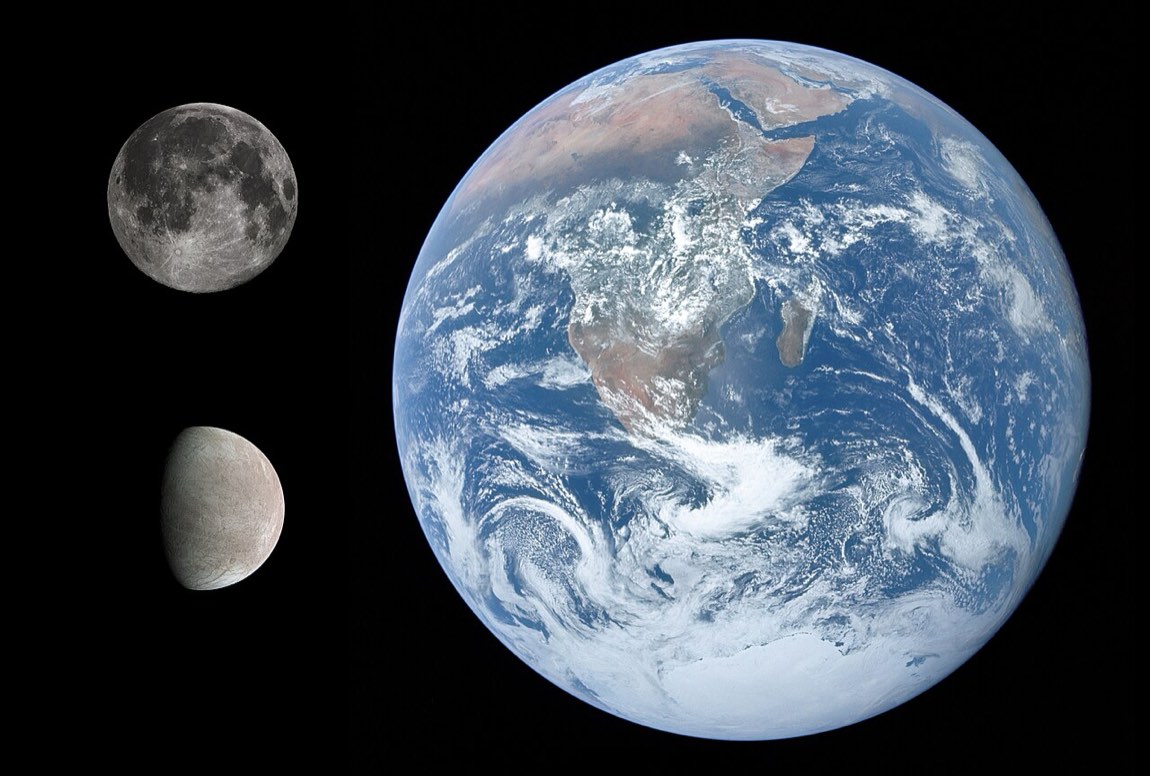
Europa is one of Jupiter's four big moons, a little smaller than our Moon, wrapped in a shell of water ice that is cracked all over like a dropped egg. Beneath that shell, multiple lines of evidence point to a global ocean of salty liquid water 60–150 km deep — containing about twice as much water as every ocean on Earth combined. Many scientists consider it the most promising place to look for life beyond Earth.
Go deeper
Europa's ocean is kept liquid by tidal heating: Jupiter's gravity flexes the moon as its slightly eccentric orbit (maintained by resonance with Io and Ganymede) brings it nearer and farther each 3.5 days. Evidence for the ocean is stacked: induced magnetic field measured by Galileo (a conductive salty layer), chaos terrain where the shell has broken and refrozen, salt minerals on the surface, and repeated (though difficult) plume detections by Hubble. The open questions — shell thickness, ocean chemistry, seafloor activity — are exactly what NASA's Europa Clipper (arriving 2030) is designed to answer with ~50 close flybys.
01 Why do scientists care so much?
Life as we know it needs three things: liquid water, chemistry (carbon compounds and useful elements), and energy. Europa very likely has all three — a huge, ancient, salty ocean; carbon-bearing material; and energy from tidal squeezing plus chemicals raining down from Jupiter's radiation belts. It is the closest world where a second, completely independent origin of life could plausibly have happened.
02 What would the ocean be like? Deeper
Pitch dark, sealed under kilometers of ice, and possibly floored with hydrothermal vents like the ones that host rich ecosystems in Earth's deep oceans. On Earth, vent life runs on chemical energy, no sunlight required — the existence proof that an ice-roofed ocean could be habitable. Whether Europa's seafloor is rocky and active enough is one of Clipper's key questions.
03 The ice shell problem Deeper
Estimates of the shell's thickness range from ~3 km (thin, with water near the surface) to ~30 km (thick and sluggish). The answer decides everything practical: whether plumes sample the ocean directly, whether a future lander could reach liquid water, and how material cycles between ocean and surface. Clipper's radar is built to settle it.
The deep dive
Researched for the Atlas from Wikipedia — Europa (moon) (45,201 characters read) · updated Sep 20, 2026
 ⤢
⤢
04 Who discovered Europa and how it got its name
Europa was discovered by Galileo Galilei on 8 January 1610, though Simon Marius may have spotted it independently around the same time. On the night of 7 January, Galileo observed Io and Europa together through a 20×-magnification refracting telescope at the University of Padua, but the resolution was too low to separate the two points of light. Only the following night did he see them as distinct objects. The naming scheme was proposed by Marius, who credited Johannes Kepler with the idea: each of Jupiter's large moons would be named for a lover of Zeus. Europa takes her name from a Phoenician princess, daughter of the king of Tyre, who became queen of Crete. Despite being assigned the Roman numeral Jupiter II by Galileo himself, the mythological names fell out of favor for centuries and were not revived in general use until the mid-twentieth century. The discovery of Amalthea in 1892 pushed Europa to the third orbital position, and after the Voyager probes found three more inner satellites in 1979, Europa is now counted as Jupiter's sixth moon — though astronomers still refer to it as Jupiter II in historical contexts.
05 Europa's place in the Jovian system
Europa is the smallest and least massive of Jupiter's four Galilean moons, yet it still qualifies as a planetary-mass object, sitting slightly smaller and less massive than Earth's own Moon. At just over 3,100 kilometres in diameter it ranks as the sixth-largest moon and the fifteenth-largest object in the entire Solar System. Its bulk density points to a composition similar to the terrestrial planets — primarily silicate rock — rather than the ice-dominated bulk of its outer siblings Ganymede and Callisto. Among the three icy Galilean moons, Europa orbits closest to Jupiter, a position that has enormous consequences: proximity to Jupiter intensifies the gravitational tug-of-war that generates tidal heat, which in turn keeps a liquid ocean buried under the ice and continuously resurfaces the crust. That active resurfacing is why Europa's surface is estimated to be only about 20 to 180 million years old — geologically speaking, a fresh coat of paint on a Solar System that is 4.5 billion years old.
06 The resonance that keeps the ocean warm Deeper
Europa's orbital eccentricity of 0.009 is tiny, but it is enough to produce the tidal flexing that heats the moon's interior. That small eccentricity is not accidental: it is continuously maintained by a gravitational chain reaction called mean-motion resonance. For every four orbits Io completes, Europa completes exactly two, and Ganymede completes one. This coordination prevents the orbits from circularizing as they otherwise would. The ultimate energy source is Jupiter's own rotation, which Io taps by raising tides on Jupiter; that energy transfers along the resonance chain to Europa and Ganymede. Inside Europa the flexing operates on three levels: the rocky core, the internal ocean, and the ice crust. Tidal friction in the ocean converts wave motion to heat, and a 2008 study suggested Jupiter's small but non-zero gravitational effect on Europa's 0.1-degree axial tilt could excite Rossby waves carrying 7.3×10¹⁸ J of kinetic energy — two thousand times larger than the energy excited by the dominant tidal forces alone. Meanwhile, 2016 experiments found that tidal deformation of the ice generates one order of magnitude more heat through distortion of its crystalline lattice than scientists had previously assumed, with most heat coming from lattice deformation rather than grain-boundary friction.
 ⤢
⤢
07 A surface smoother than a billiard ball
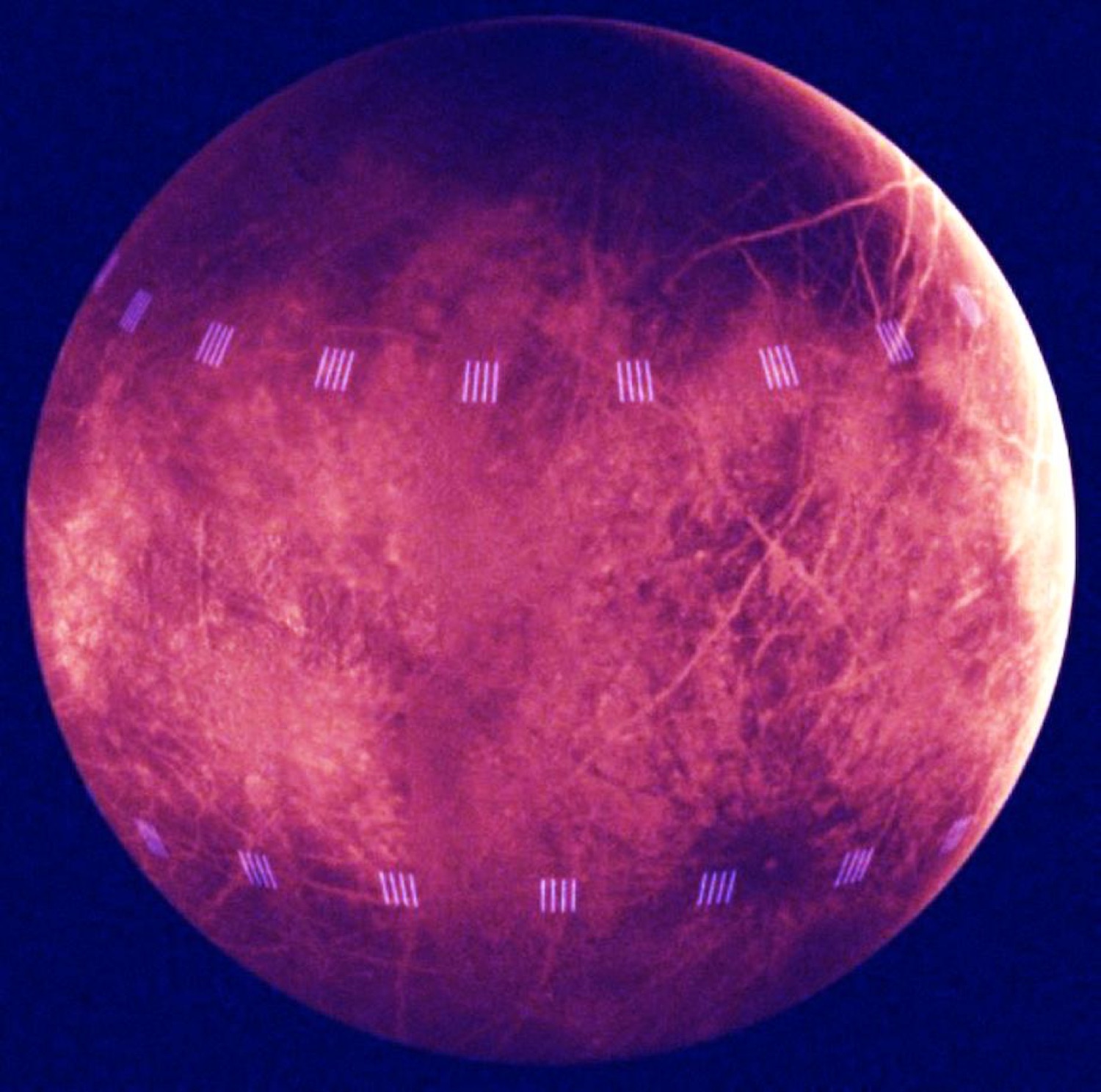
Europa holds an unusual record: it is the smoothest known solid object in the Solar System. Unlike the Moon or Mars, it has no great mountain ranges and almost no impact craters. The few craters that do exist are surrounded by concentric rings and appear filled with fresh, relatively flat ice, which tells geologists that the crust is dynamic enough to erase evidence of bombardment within tens of millions of years. The surface's albedo — its reflectivity — is 0.64, one of the highest of any moon, a sign that clean ice is continuously being exposed. Planetary scientists estimate the surface is somewhere between 20 and 180 million years old based on the calculated rate of cometary impacts Europa experiences. One intriguing possibility is that Europa's equatorial regions are studded with icy spikes called penitentes, potentially up to 15 metres high, formed where direct overhead sunlight causes ice to sublime into vertical cracks rather than melt. Galileo orbiter imagery lacked the resolution to confirm them, but radar and thermal data are consistent with their existence — a detail that future landers would need to plan carefully around.
08 Reading the lineae: Europa's global scar network Deeper
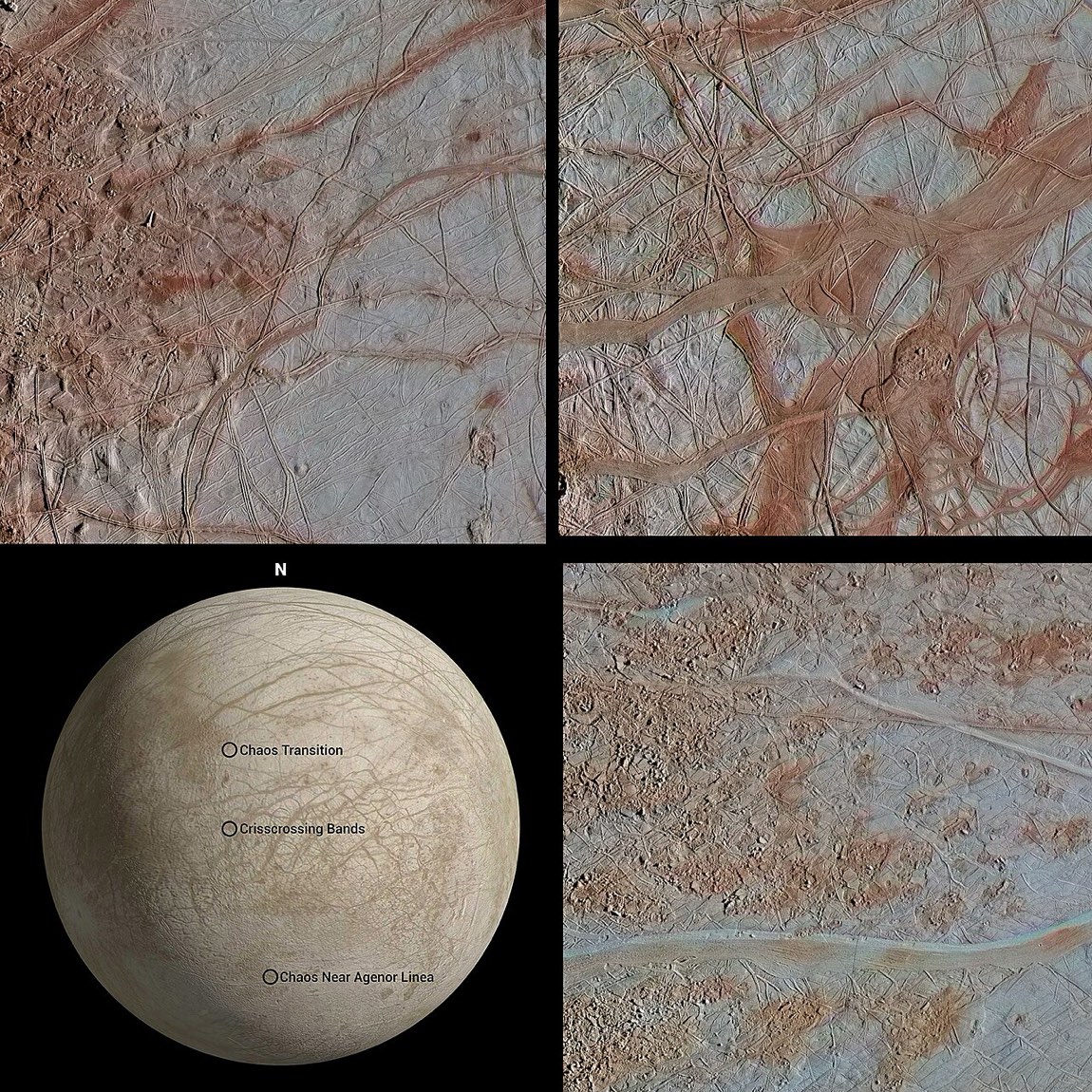
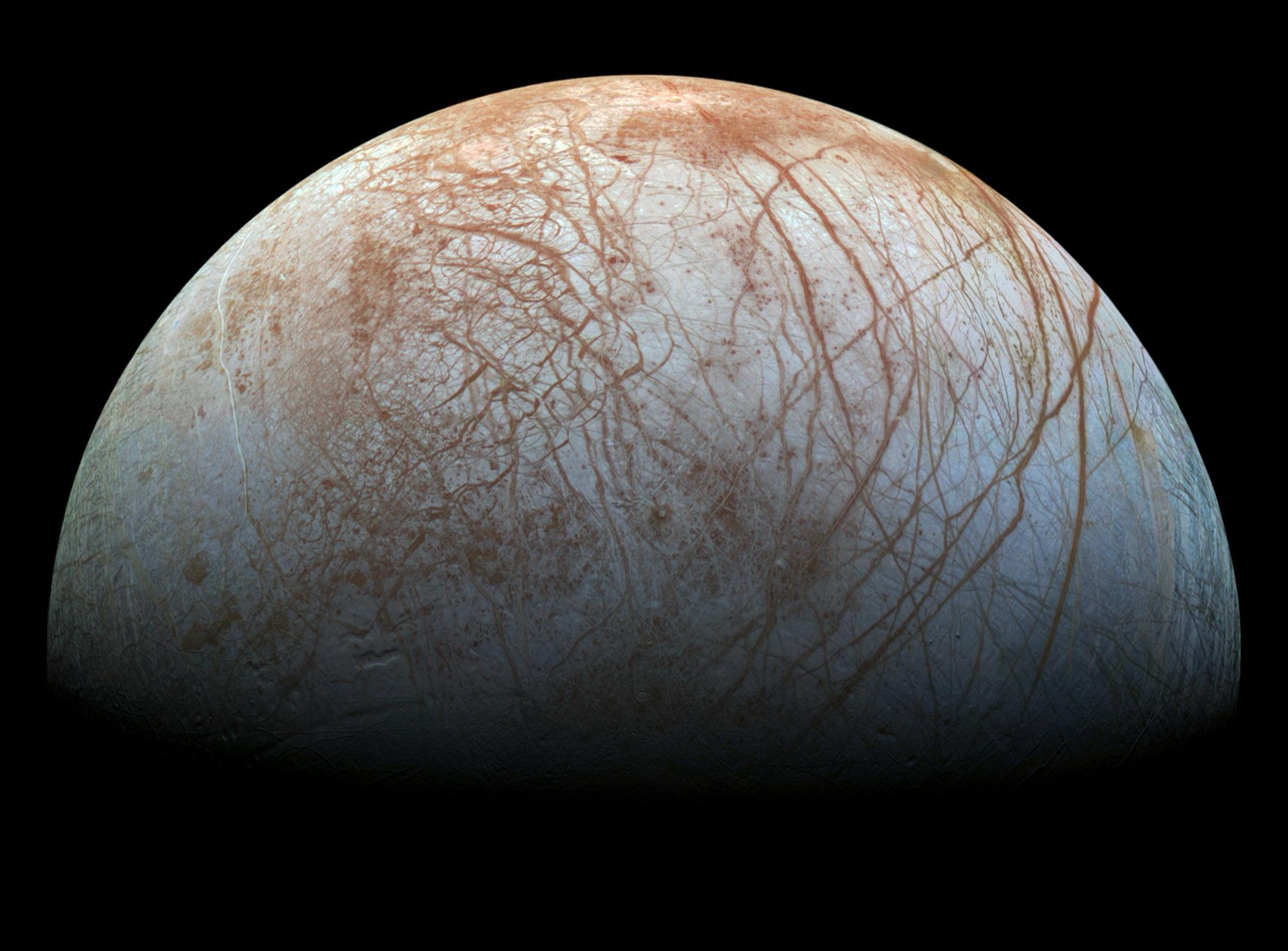
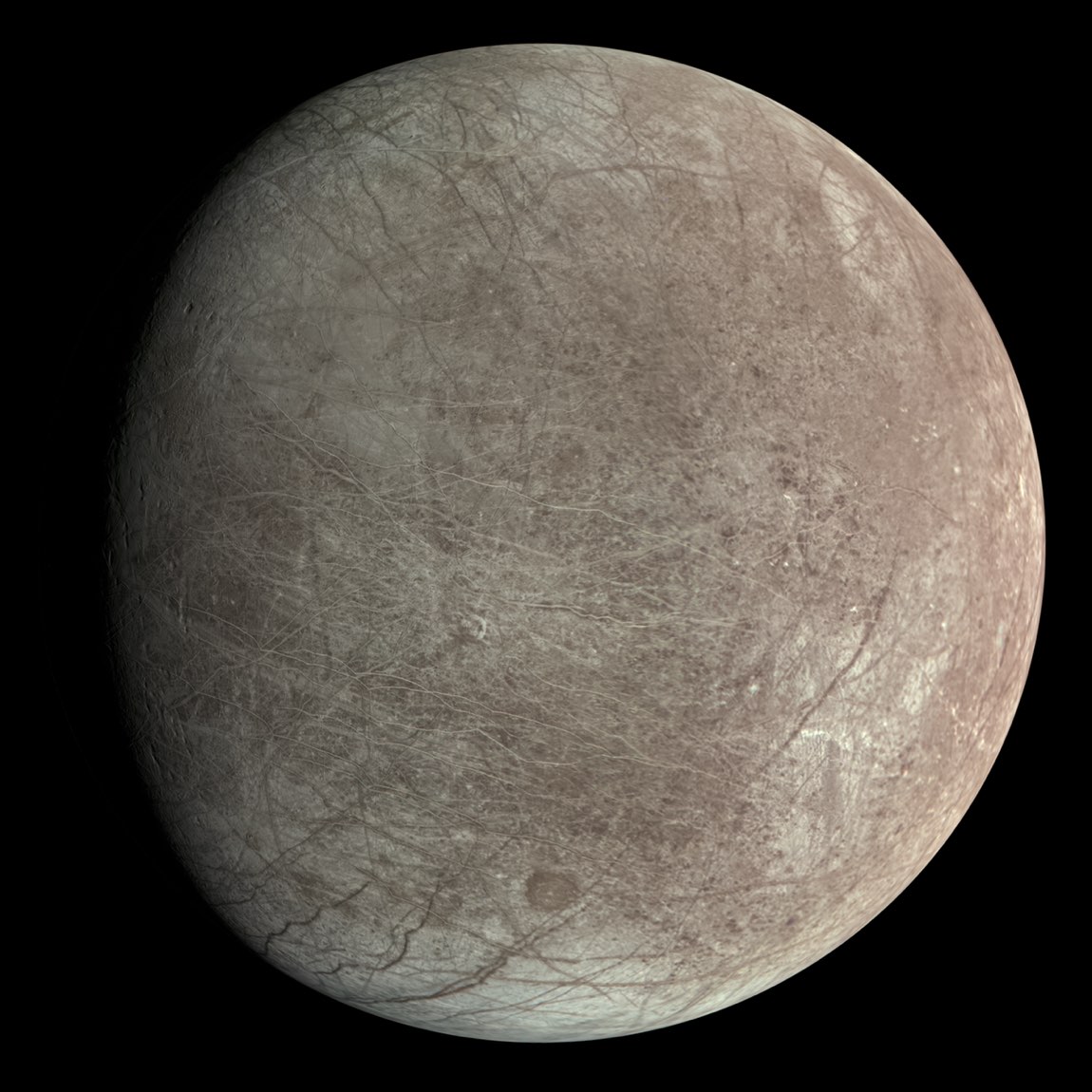
The most visually striking feature of Europa is its web of dark streaks called lineae, which crisscross the entire globe. The larger bands exceed 20 kilometres in width, typically showing dark diffuse outer edges, regular internal striations, and a lighter central band. The leading hypothesis is that warm ice or liquid water welled up as the crust slowly pulled apart, analogous to spreading ridges on Earth's ocean floors. Because Europa is tidally locked to Jupiter, stress patterns should be predictable and fixed — yet only the youngest fractures match the predicted geometry. Older fractures appear at increasingly different orientations, implying that Europa's outer ice shell rotates slightly faster than its interior. If the subsurface ocean mechanically decouples the shell from the rocky mantle, Jupiter's gravity can drag the shell independently. Comparisons of Voyager and Galileo images place a lower bound on how slowly this slippage occurs: a full revolution of the outer shell relative to the interior takes at least 12,000 years. Galileo and Voyager images also revealed evidence of subduction zones where crustal plates are recycled, suggesting that Europa may have active plate tectonics — though the forces involved are physically distinct from those driving plate motion on Earth.
09 Lenticulae, chaos terrain, and hidden lakes
Scattered across Europa's surface are hundreds of circular and elliptical features called lenticulae — Latin for freckles. They appear as domes, pits, and dark smooth spots, and some have a jumbled, rough texture that resembles icebergs frozen into a sea. One leading explanation is that warm ice diapirs, blobs of buoyant ice rising through colder surrounding ice much like magma chambers on Earth, push the surface upward to form the domes and occasionally break through to create chaotic regions. Conamara Chaos is one of the best-studied examples: a landscape of fragmented icy slabs embedded in darker hummocky material. In November 2011 a research team that included scientists from the University of Texas at Austin presented evidence that many chaos terrain features sit atop vast lakes of liquid water entirely enclosed within Europa's ice shell — distinct from and shallower than the deep ocean far below. Additionally, some researchers have proposed that M-shaped ice ridges resembling structures found in Greenland could mark sites where pockets of water froze near the surface. If these shallow lakes are real, they could represent additional potential habitats and easier targets for future missions than the deep ocean.
 ⤢
⤢
10 What the reddish-brown streaks are made of Deeper
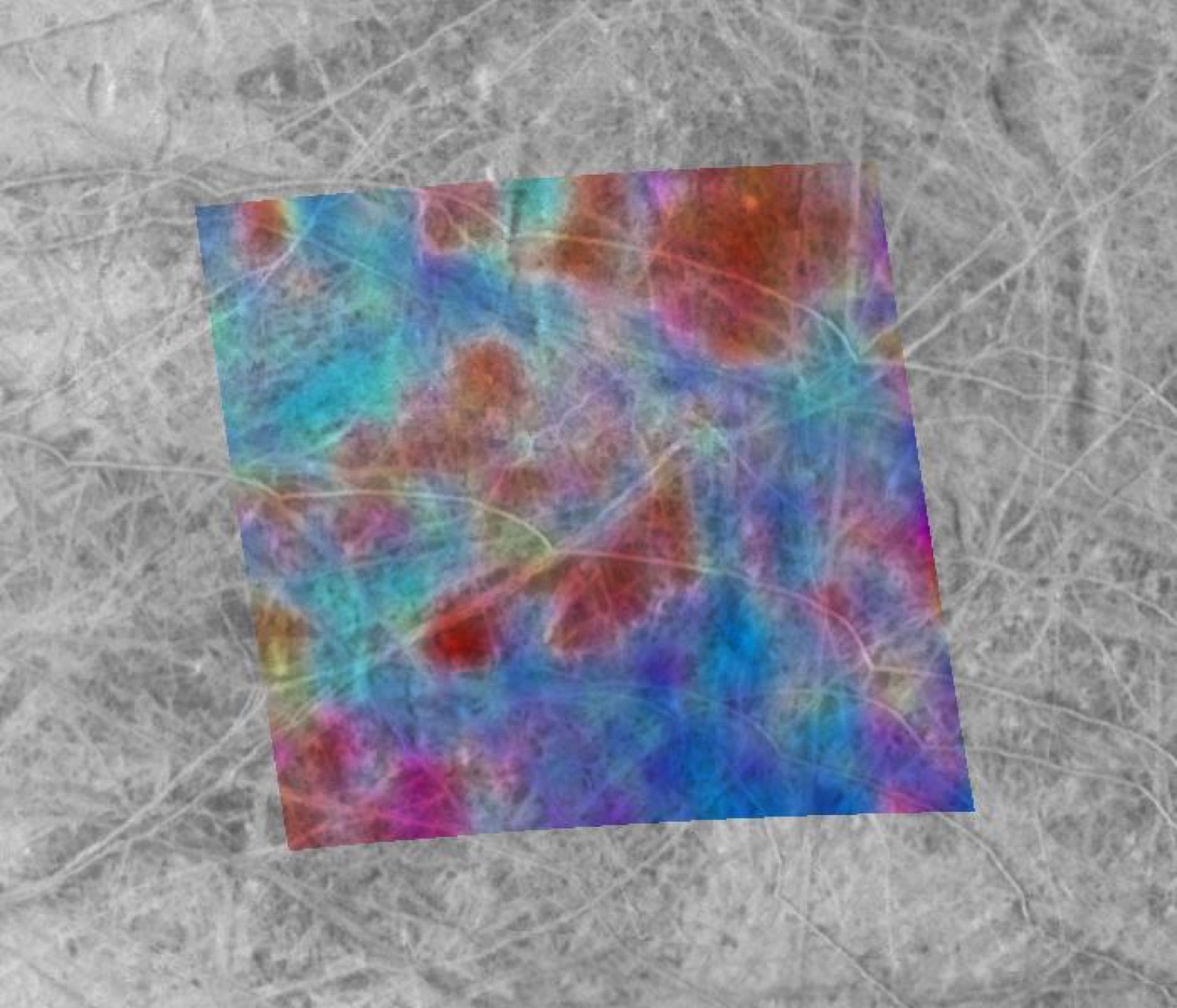
The dark, reddish-brown material coating Europa's fractures and geological features has puzzled scientists since the Voyager flybys of 1979. Spectrographic analysis suggests the coloring agents may include magnesium sulfate salts deposited by evaporating water that emerged from within, and possibly sulfuric acid hydrate. Because these compounds are colorless or white in pure form, sulfur compounds are suspected as a source of the reddish tint. A separate hypothesis proposes that the streaks contain abiotic organic compounds called tholins, produced when carbon, nitrogen, and water are energized by radiation — a chemistry with significant astrobiological implications since tholins may play roles in prebiotic chemistry. Hubble Space Telescope observations of chaos regions have detected a 450-nanometre absorption feature characteristic of irradiated sodium chloride crystals, suggesting table salt in the internal ocean. JWST NIRSpec data show that in the Tara and Powys Regio areas of the southern hemisphere, crystalline water ice dominates both the surface and deeper layers, with radiation near Jupiter amorphizing the top 10 microns within a period of less than 15 days. Reprocessed Galileo infrared spectra also revealed a weak absorption band at 2.2 micrometres attributed to ammonia, present either as ammonia hydrate or ammonium chloride, whose distribution correlates with linear surface features suggesting recent upwelling via cryovolcanism.
11 Europa's oxygen atmosphere — thin but real
Europa has an atmosphere, though calling it that requires some qualification: it is so thin it is really an exosphere, a collection of molecules that barely interact with each other. Its primary component is molecular oxygen, but this oxygen was not produced by any biological process. When solar ultraviolet radiation and charged particles from Jupiter's magnetosphere strike Europa's icy surface, they split water molecules into oxygen and hydrogen. Hydrogen, being light, escapes Europa's weak gravity — approximately 13 percent of Earth's — while oxygen lingers, reaching heights of up to 190 kilometres above the surface. Molecular oxygen persists because when it falls back to the surface it does not freeze there the way water or hydrogen peroxide would; instead it bounces back into another ballistic arc. The atmosphere was first detected in 1995 by astronomer D. T. Hall and collaborators using the Goddard High Resolution Spectrograph on the Hubble Space Telescope, and later confirmed by Galileo radio occultation experiments led by A. J. Kliore. Europa also produces a neutral torus of oxygen and hydrogen atoms along its orbital plane, a cloud that the Cassini and Galileo spacecraft detected and which has been confirmed through Energetic Neutral Atom imaging.
12 Plumes: tantalizing but still uncertain Deeper
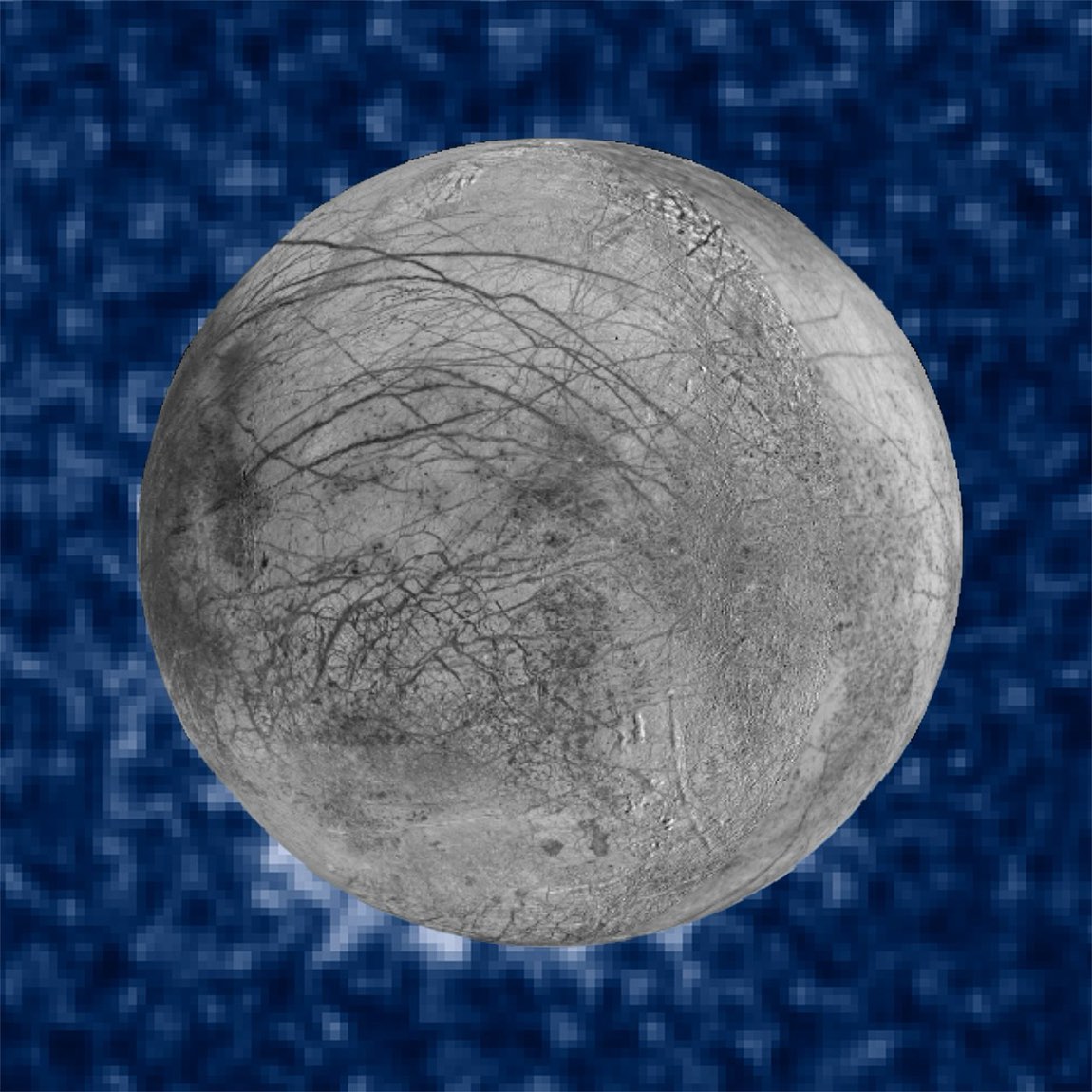
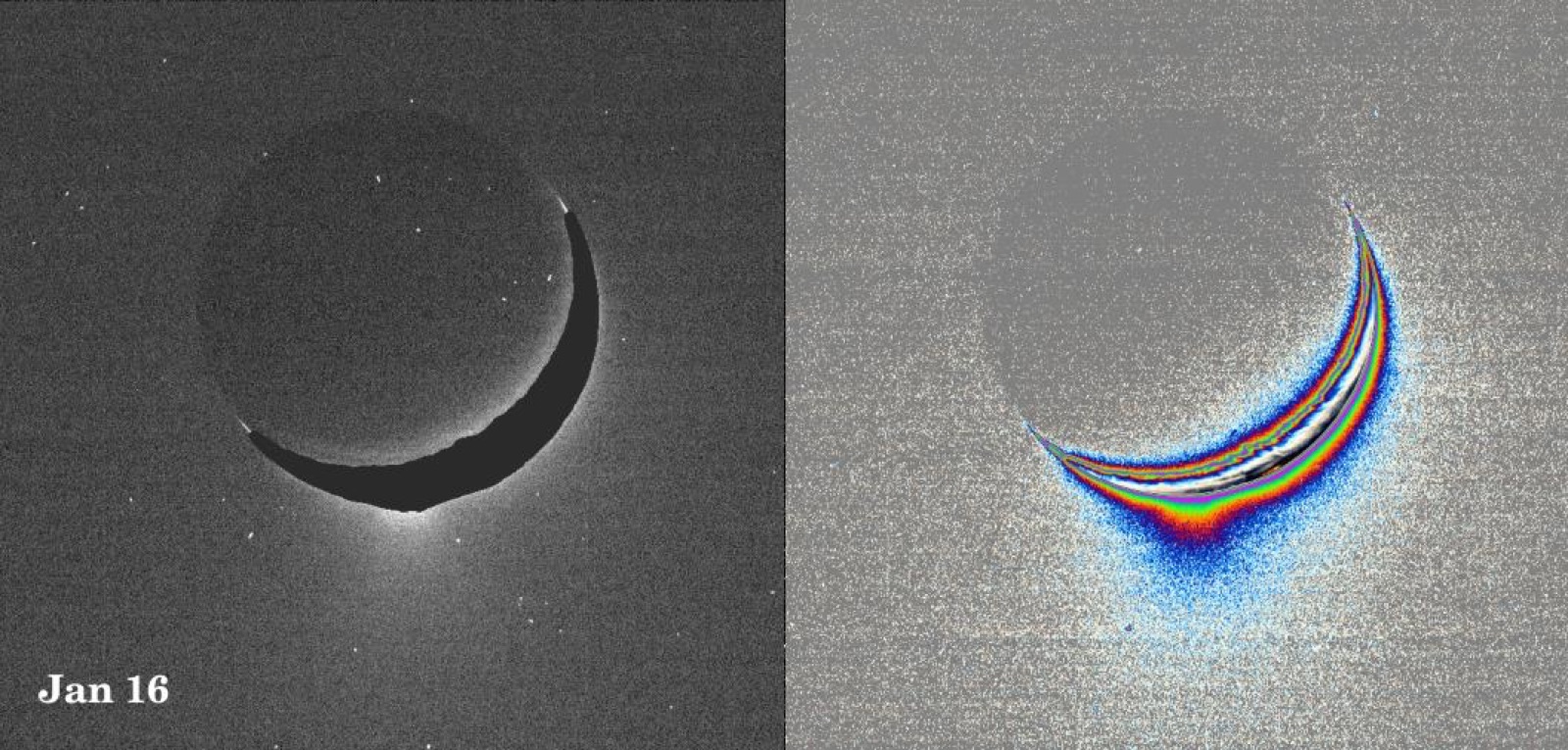
In 2012 the Hubble Space Telescope captured an image interpreted as a water vapor plume erupting near Europa's south pole, potentially reaching 200 kilometres high — more than twenty times the height of Mount Everest. Additional Hubble evidence was presented in September 2016. In May 2018, astronomers reanalyzed data from the Galileo probe's 1997 flyby, which passed within 206 kilometres of the surface, and argued it may have flown directly through a plume. The estimated eruption rate at Europa is about 7,000 kilograms per second, compared to about 200 kilograms per second for the plumes of Saturn's Enceladus. Europa's tidal forces are about 1,000 times stronger than the Moon's effect on Earth, and models predict plumes are most likely when Europa is at its farthest point from Jupiter. However, a 2020 study proposed that at least some plume activity originates not from the deep ocean but from pressurized pockets of briny water within the ice crust — a mechanism first modeled by Sarah Fagents at the University of Hawaiʻi at Mānoa in 2003. Crucially, a 2026 paper found no evidence of localized water vapor on Europa, suggesting earlier detections may have resulted from inaccurate positioning of Europa's disk on telescope images. The question of whether Europa genuinely vents material to space remains open.
 ⤢
⤢
13 Five decades of spacecraft exploration
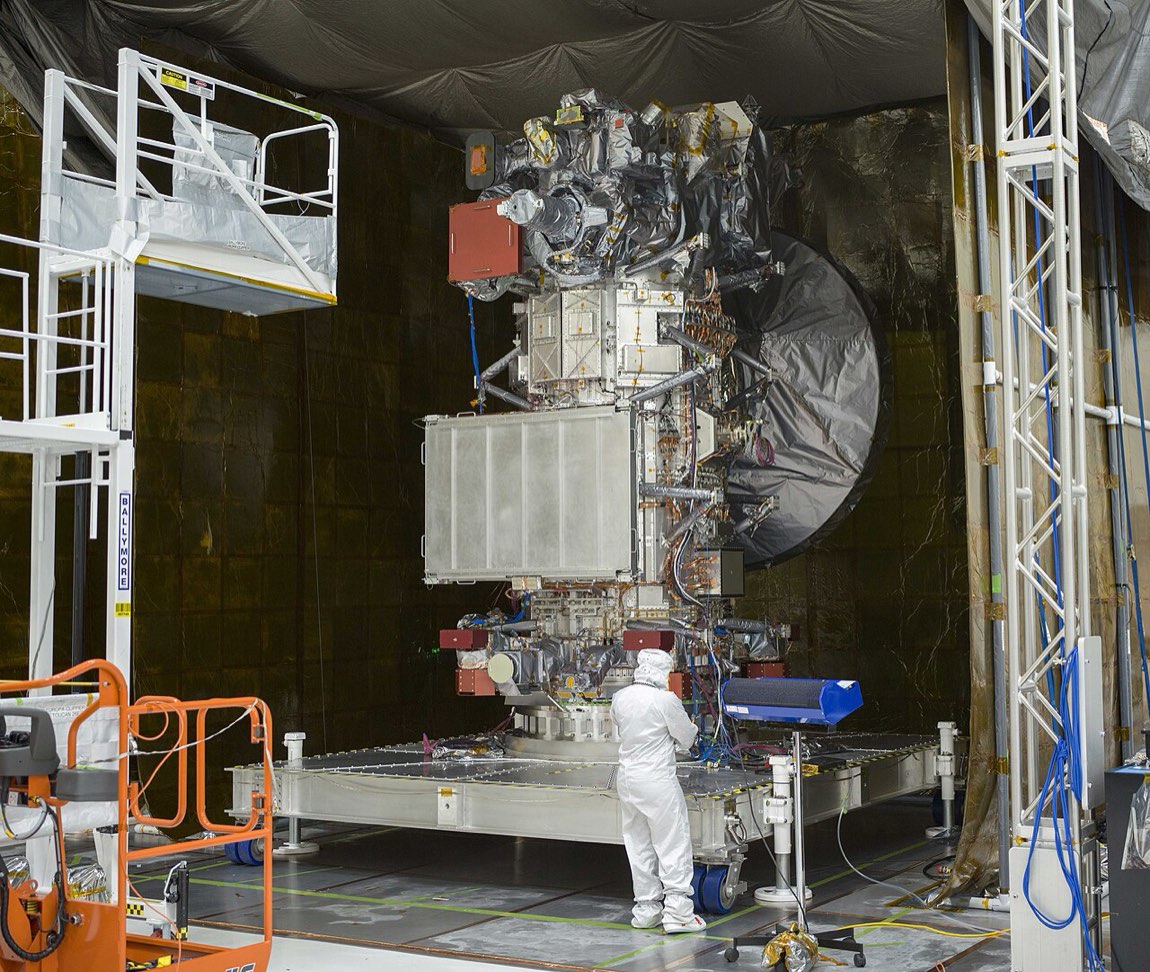
Ground-based observations by Gerard Kuiper confirmed Europa's water-ice composition in 1957, but spacecraft exploration began with Pioneer 10 and 11 flybys in 1973 and 1974, which returned only low-resolution images. The two Voyager probes passed through the Jovian system in 1979 and delivered the first detailed views of Europa's fractured surface, raising the possibility of a subsurface ocean. The transformative mission was Galileo, launched in 1989 and orbiting Jupiter from 1995 to 2003 — eight years of close observation that provided the magnetic-field data, surface chemistry measurements, and imaging that underpin most of what we know today. New Horizons imaged Europa in 2007 during its Jupiter gravity assist on the way to Pluto. In September 2022 the Juno orbiter flew within approximately 352 kilometres of Europa, returning fresh close-up imagery. The European Space Agency's Jupiter Icy Moons Explorer (JUICE), launched on 14 April 2023 and targeting arrival at Jupiter in July 2031 after four gravity assists, will conduct two flybys of Europa. NASA's Europa Clipper was launched on 14 October 2024 aboard a Falcon Heavy rocket and is designed to perform 45 low-altitude flybys, carrying an ice-penetrating radar, short-wave infrared spectrometer, topographical imager, and ion-and-neutral-mass spectrometer.
14 How tidal forces sculpt the moon's interior Deeper
Europa's interior structure is layered: an outer water layer estimated at around 100 kilometres thick, divided between a frozen crust and a liquid ocean beneath; a silicate rock mantle; and probably a metallic iron core. The crust itself is thought to be roughly 10 to 30 kilometres thick, including a ductile warm-ice layer at its base. Evidence that the outer crust is not rigidly attached to the mantle comes from two observations: first, portions of the crust appear to have undergone rotations of nearly 80 degrees, approaching what geologists call true polar wander, which would be impossible if the ice were frozen solid to the rock below; second, the distinct pattern of lineae suggests a shell that can slip independently. Galileo magnetic-field data revealed an induced magnetic field with an equatorial strength of about 120 nanoteslas — roughly one-sixth the strength of Ganymede's field and six times that of Callisto — requiring a layer of highly electrically conductive material, most plausibly a large saltwater ocean. Radioactive decay within the rocky mantle also contributes heat, but models show it accounts for only about one percent of the total heating, with tidal flexing dominating by roughly two orders of magnitude.
15 What Europa's ocean chemistry might tell us Deeper
The Europan ocean is not simply water: it has been evolving chemically for 4.5 billion years. Studies suggest that early on it was acidic, rich in sulfate, calcium, and carbon dioxide, but over geological time it transitioned to a chloride-dominated chemistry resembling Earth's oceans, which contain about 1.94 percent chloride. The presence of sodium chloride is supported by an absorption feature detected at 450 nanometres in Hubble observations of chaos regions. Carbon has also been detected: JWST observations identified carbon dioxide concentrated in Tara Regio, a geologically recently resurfaced terrain. Ammonia has been identified through a weak absorption band at 2.2 micrometres in reprocessed Galileo infrared spectra; its presence could lower the freezing point of the ocean water, potentially making the ocean thicker and more chemically reduced. A 2010 model proposed by Richard Greenberg of the University of Arizona suggested that tectonic transport of radiolytically generated oxygen from the surface into the ocean could oxygenate it to levels comparable to Earth's deep oceans within just 12 million years — fast enough that complex, multicellular life might be possible if other conditions are met. Whether the seafloor is geologically active enough to sustain ongoing chemistry is now disputed, with 2026 modeling suggesting the rocky crust may be too strong to fracture under current tidal forces.
 ⤢
⤢
16 Europa's distant future under a red giant Sun
Europa's long-term fate is tied to the life cycle of the Sun. In approximately 5 billion years the Sun will exhaust its hydrogen fuel and swell into a red giant, pushing its habitable zone outward to Jupiter's distance. When that happens, Europa's ice will sublimate or melt, creating a temporary global ocean exposed to space. The side of Europa facing Jupiter will sublimate faster than the far side, and the moon will develop a tenuous water-vapor atmosphere. According to the article's model, this brief warm window would last about 0.2 billion years before the expanding habitable zone moves beyond Europa and the water is blasted away. Researchers note that life on Earth required only a few hundred million years to emerge from a lifeless ocean, raising the speculative possibility that if microbial life exists in Europa's current subsurface ocean, or if the chemistry is otherwise favorable, something could take hold during that temporary thaw. After the Sun sheds its outer layers and collapses into a white dwarf, Europa and the other Galilean moons would be left in a dark, cold Jovian system far from any significant stellar warmth.
You would weigh…
Surface gravity 1.31 m/s² vs Earth’s 9.81 m/s². Try every world →
Could life exist here?
No life has been detected. But Europa is routinely ranked the single most promising place to look: confirmed-in-all-but-name liquid water, plausible chemistry and energy, and four billion years of stability. Europa Clipper will not detect life directly — it will determine whether the ocean is habitable.
Our labels: Confirmed · Strong Evidence · Estimated · Hypothesis · Theoretical · Speculative (see Methodology).
Could humans live here?
Not on the surface without heavy shielding — Jupiter's radiation is lethal there. Concepts for far-future outposts bury habitats under the ice, which blocks radiation completely. Any human presence is many decades away at minimum.
How would we get there?
Europa Clipper launched October 2024 and arrives in 2030 (5.5 years, with Mars and Earth gravity assists). ESA's JUICE, launched 2023, reaches the Jupiter system in 2031. Landing on Europa — through the radiation belts, onto ice of unknown texture — is a next-generation problem.
| Technology | Status | Travel time (one way, straight line) |
|---|---|---|
| Apollo-style spacecraft, about 39,000 km/h | Flown technology | 673 days |
| Ion-propulsion probe, about 90,000 km/h | Flown technology | 291 days |
| Voyager 1, about 61,000 km/h | Flown technology | 428 days |
| Parker Solar Probe, about 690,000 km/h | Flown technology | 38 days |
| Nuclear-thermal rocket, about 120,000 km/h cruise | In development | 220 days |
| Laser light-sail at 20% of light speed | Proposed concept | 2.9 hours |
| Light itself, 299,792 km/s | Physical limit | 35 minutes |
Simplified straight-line times at cruise speed. Real missions fly curved orbital paths and take longer. Full travel calculator →
Weird & wonderful
- Europa's ocean has been liquid for roughly 4 billion years — far longer than Earth's continents have existed.
- The cracks in its shell are tinted by salts turned reddish-brown by radiation — the ocean may literally be staining the surface.
- Europa glows faintly in the dark (lab experiments show its irradiated ice should emit a green-blue glow).
- Its ice shell slides: the whole surface may have rotated relative to the interior.
More real images of Europa
Genuine spacecraft and telescope imagery, every frame credited and licensed. Tap any photo to enlarge.