 Photograph · M. Brozovic/NASA/JPL-Caltech/University of Arizona
Asteroid · Deep guide
Bennu
Also called: 101955 Bennu
The asteroid we brought home is a rubble pile carrying the Solar System's original chemistry.
What is it?
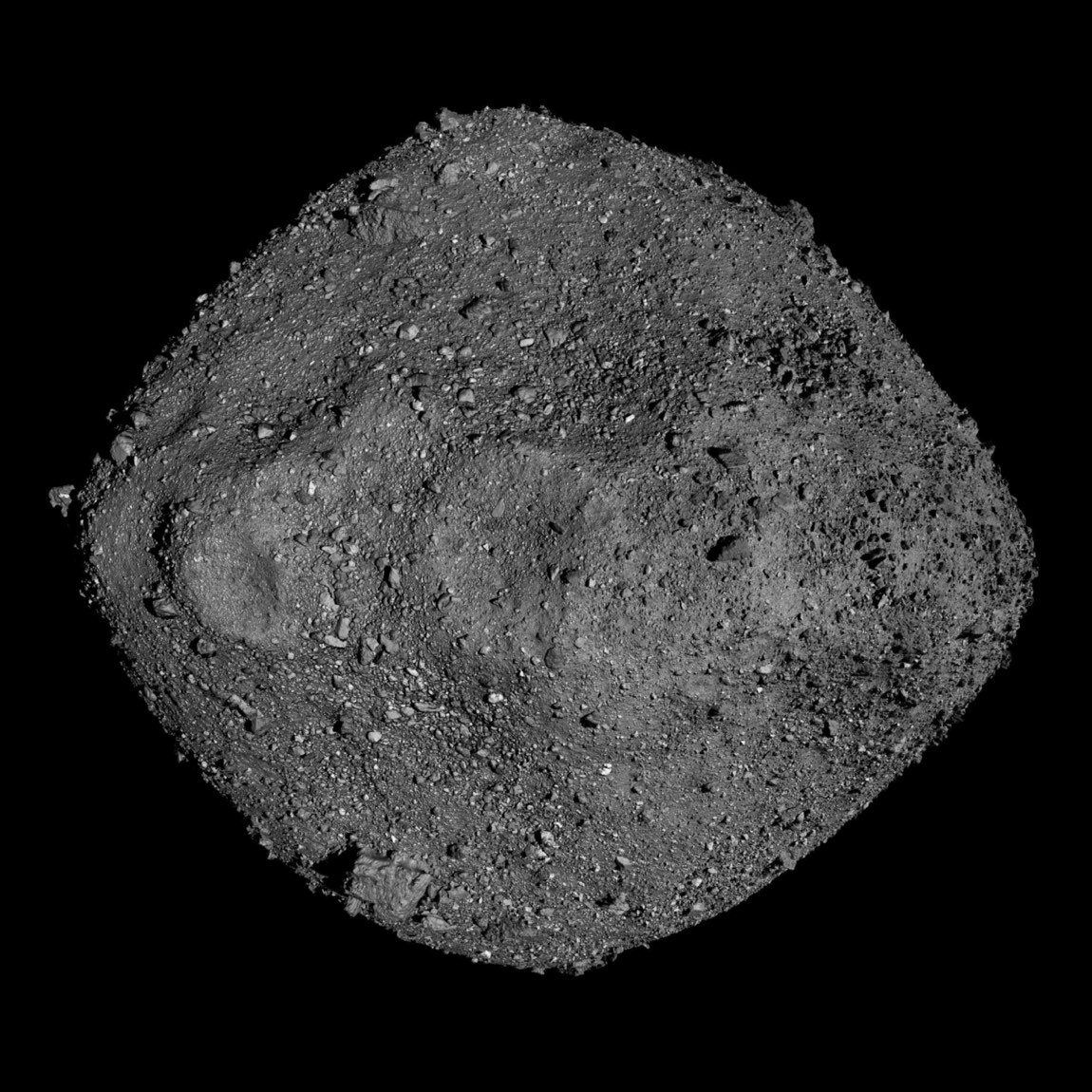
Bennu is a small, dark, diamond-shaped asteroid about 490 meters wide — and the source of the largest asteroid sample ever returned to Earth. NASA's OSIRIS-REx spacecraft grabbed 121.6 grams of its surface in 2020 and parachuted the capsule into the Utah desert in September 2023. The sample turned out to be rich in water-bearing clays, carbon compounds — and salts from a long-gone watery environment.
Go deeper
Bennu is a carbonaceous rubble pile — gravel and boulders loosely held by gravity, so weak that OSIRIS-REx's sampling arm sank half a meter in as if into a ball pit. Analyses published in 2024–25 found amino acids, all five DNA/RNA nucleobases, phosphates and evaporite salt minerals — evidence its parent body hosted liquid brines. Bennu is also the best-characterized hazardous asteroid: a cumulative 1-in-2,700 impact probability in 2182 (i.e., 99.96% miss), refined by years of precision tracking of the Yarkovsky effect — sunlight's tiny push measurably steering its orbit.
01 Why grab a piece of an asteroid?
Asteroids like Bennu are leftovers — unchanged scraps from the Solar System's construction site 4.5 billion years ago. Earth's original chemistry was erased by weather, oceans and life, but Bennu still carries it. Finding the building blocks of life in its dust supports the idea that asteroids delivered water and organic 'starter kits' to the young Earth.
02 Touching a ball pit in space Deeper
When OSIRIS-REx tagged the surface, the ground behaved like liquid: the arm plunged in and the recoil flung a curtain of rubble outward. Bennu's boulders are barely attached — a crucial fact for planetary defense, because deflecting a rubble pile is a completely different problem from deflecting a solid rock.
The deep dive
Researched for the Atlas from Wikipedia — 101955 Bennu (23,922 characters read) · updated Sep 20, 2026
03 A rubble pile born from a giant's wreck
Bennu is not a solid rock but a rubble pile — a loose collection of fragments held together more by their own feeble gravity than by any cohesive strength. Its bulk density has been measured at only 1,190 ± 13 kg/m³, barely denser than water, and its predicted macroporosity is 40 ± 10%, meaning nearly half of its interior may be empty space or very loosely packed voids. Scientists think Bennu formed within the past 65 million years from the debris of a parent body with a diameter of at least 100 km. That ancestor was large enough to generate the internal pressure, heat, and liquid water needed to cook simple minerals into the complex phyllosilicates and carbonates we see today. Two candidate families — the Polana family (70% probability) and the Eulalia family (30% probability) — are thought to be the source of Bennu's raw material, both located in the inner asteroid belt. Craters left by impactors on Bennu's boulders suggest the asteroid has been in near-Earth orbit, separated from the main belt, for somewhere between 1 and 2.5 million years.
 ⤢
⤢
04 The slow spin-up driving Bennu's fate Deeper
Bennu is not rotating at a constant speed. OSIRIS-REx observations confirmed that the Yarkovsky–O'Keefe–Radzievskii–Paddack (YORP) effect is gradually accelerating its spin: the rotation period shortens by about one second every 100 years. The mechanism is subtle — sunlight absorbed by Bennu's surface is re-emitted as infrared thermal radiation unevenly as the asteroid rotates, creating a tiny but cumulative torque. The equatorial ridge may be a direct consequence of this spin-up. As Bennu rotates faster, fine-grained regolith particles drift toward the equator under the combined influence of the low gravity and the increasing centrifugal effect, piling into the well-defined ridge visible in OSIRIS-REx imagery. The current rotation period is approximately 4.2905 ± 0.0065 hours — fast enough that this material migration makes physical sense. The same YORP-driven dynamics that sculpt Bennu's surface also contribute to long-term orbital changes, working alongside the Yarkovsky effect to shift the semimajor axis of its orbit by an average of 284 ± 1.5 meters per year.
05 Carbonate veins older than Bennu itself Deeper
Among the most striking features in Bennu's boulders are bright veins of carbonate minerals cutting through the darker rock. These veins, ranging from 3 to 15 centimeters wide and sometimes exceeding one meter in length, are far larger than any carbonate veins found in meteorites recovered on Earth. Scientists believe they formed not inside Bennu but inside its much larger parent body, where hot water channels carried dissolved minerals and deposited them as the water cooled. The high albedo of the carbonates makes them visually conspicuous against Bennu's otherwise very dark surface, which has a low visible geometric albedo of only 0.046 ± 0.005. A 2026 analysis of spacecraft observations further noted that Bennu's boulders display differing physical properties, with cracks interpreted as signatures of geological processes inside the parent body, or more recent damage from micrometeoroid impacts and thermal fatigue. The thermal fracturing timescale on Bennu is remarkably short — the Sun's heat is estimated to break apart surface rocks in just 10,000 to 100,000 years, far faster than the millions of years previously assumed for asteroids.
06 Bennu as an active, particle-ejecting world
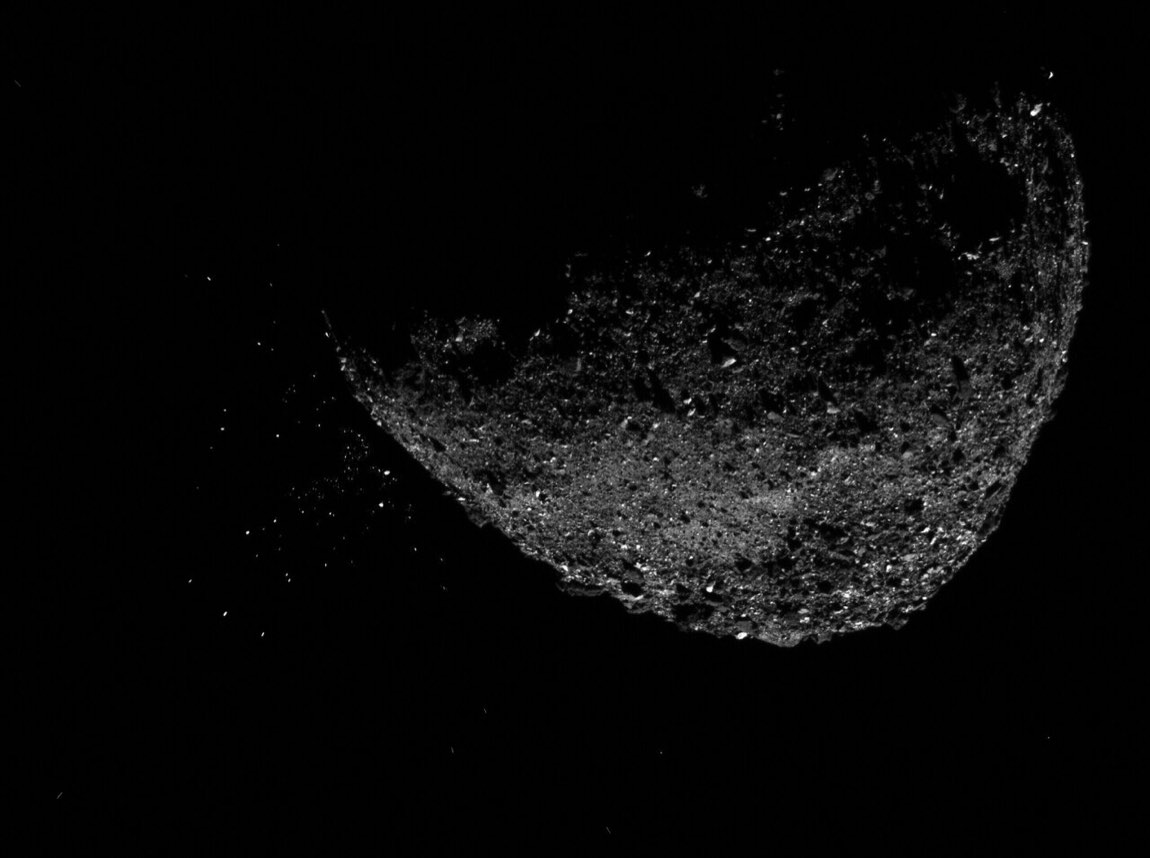
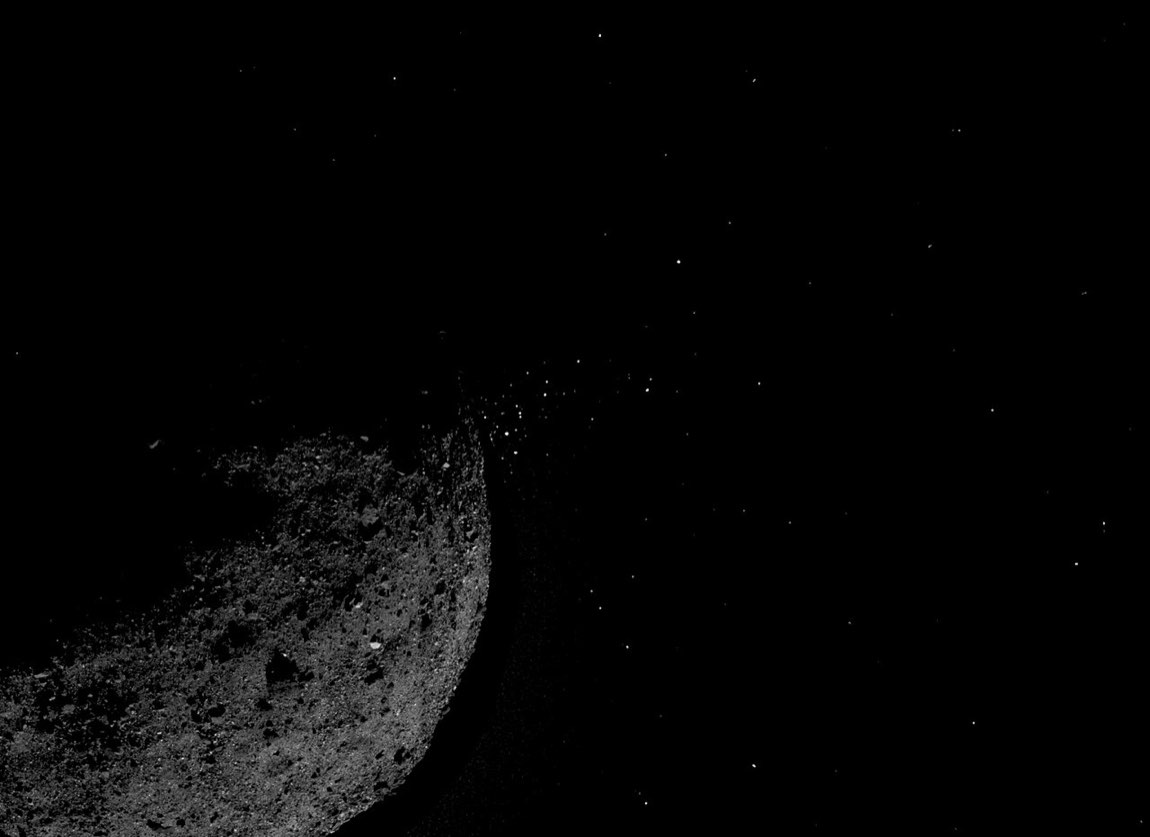
Bennu surprised scientists by behaving more like a comet than a stereotypical inert rock. It is classified as an active asteroid, sporadically launching plumes of particles, including rocks as large as 10 cm across — well beyond the dust-sized debris typical of cometary activity. Several mechanisms may be responsible: thermal fracturing of surface rocks as temperatures cycle from day to night, the release of volatiles as phyllosilicates lose water through dehydration, pockets of subsurface water creating pressure, and meteoroid impacts. Even before OSIRIS-REx arrived, ground-based polarimetric observations showed that Bennu's light-scattering behavior resembled that of Comet Hale-Bopp and the rock comet 3200 Phaethon. The asteroid's B-type classification — a blue-tinted subgroup of carbonaceous asteroids — is also associated with possible dormant comet populations. Some researchers, notably Cellino and colleagues, have proposed a cometary origin for Bennu outright, citing spectroscopic similarities to known comets. The estimated fraction of comets hiding among the near-Earth object population is 8% ± 5%, and Bennu fits the profile uncomfortably well.
 ⤢
⤢
07 What 121.6 grams of Bennu revealed
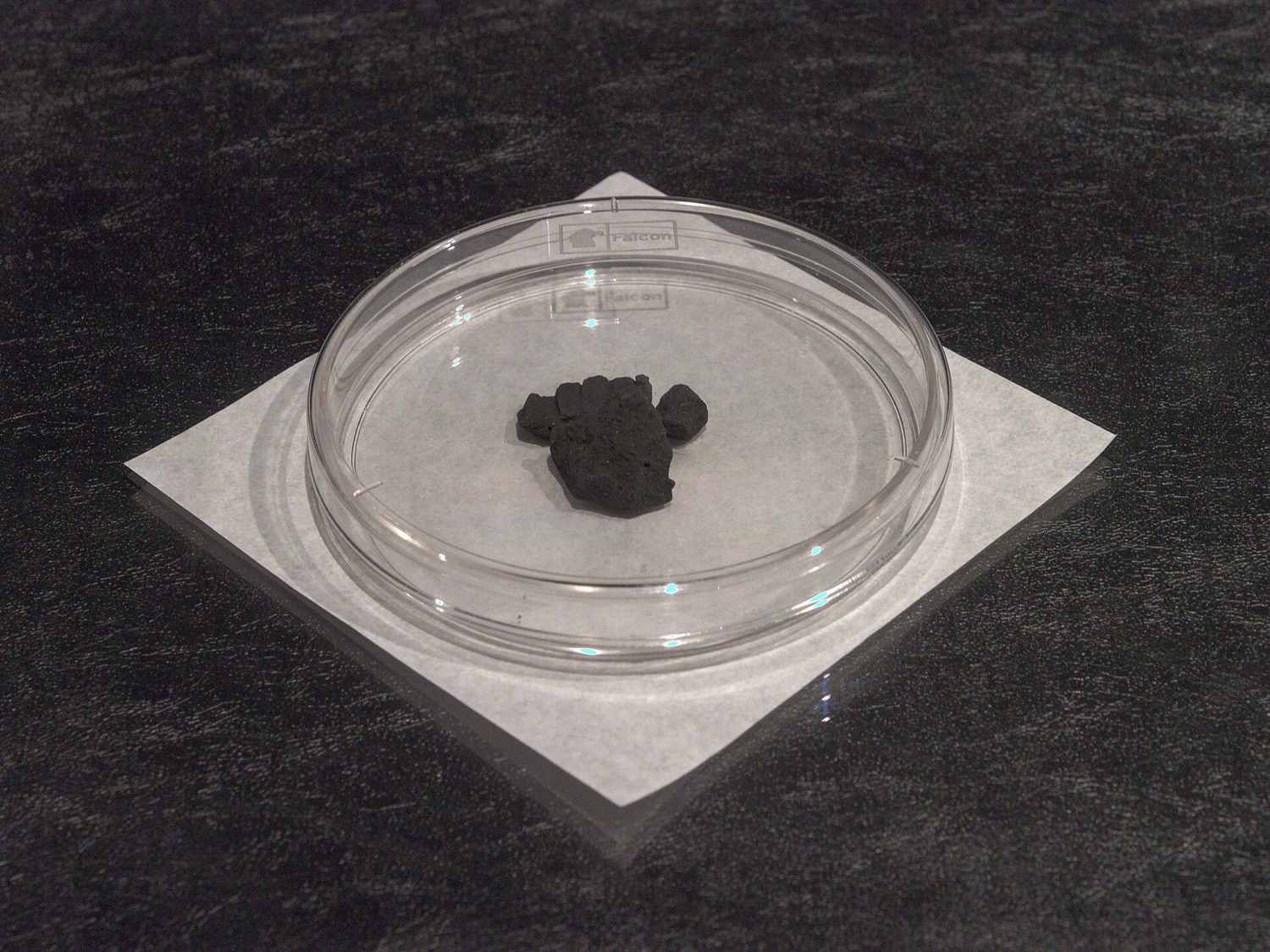
When the OSIRIS-REx sample capsule was finally fully opened — a process that took three months because two fasteners resisted standard tools — it contained 121.6 g (4.29 oz) of Bennu material, more than twice the mission's minimum goal. The recovered material is predominantly very dark, matching Bennu's surface reflectance, but contains brighter inclusions. Individual pieces range from submicron dust grains to rocks about 3.5 cm long. The sample is dominated by magnesium-rich phyllosilicates, with magnetite, sulfides, carbonates, and organic compounds also present. One genuinely unexpected find was phosphate minerals — magnesium and sodium-rich phosphates appearing as veins and crusts inside some particles. This kind of phosphate enrichment had not been anticipated from remote sensing. The carbon content came in at 4.5 to 4.7 wt%, higher than any known meteorite type and higher than samples from asteroid Ryugu. Presolar silicon carbide grains — material predating our solar system — were identified at 52 +12/−10 parts per million, and presolar graphite at 12 +7/−5 parts per million, indicating that some of this material has survived nearly unaltered since before the Sun formed.
08 DNA's building blocks found in an asteroid
In January 2025, researchers announced one of the most striking results from the returned Bennu sample: all five nucleobases used in DNA and RNA — adenine, thymine, cytosine, guanine, and uracil — were identified among the organic compounds. Additionally, 14 of the 20 amino acids that form proteins in living organisms on Earth were present. The existence of these molecules does not mean life existed on Bennu; they can form through purely chemical processes in space. However, one detail stands out as fundamentally different from terrestrial biochemistry. On Earth, organisms overwhelmingly use left-handed amino acids. The amino acids from Bennu had mixed chirality — both left- and right-handed forms were present in roughly equal measure — which is the signature expected of abiotic, non-biological chemistry rather than life. This finding strengthens the hypothesis that asteroids delivered organic building blocks to early Earth, potentially seeding the chemistry from which life eventually emerged. The Bennu sample joins the Ryugu sample from JAXA's Hayabusa2 mission as one of the most pristine and scientifically rich pieces of the early solar system available for laboratory study.
09 The 2135 flyby and its keyhole problem Deeper
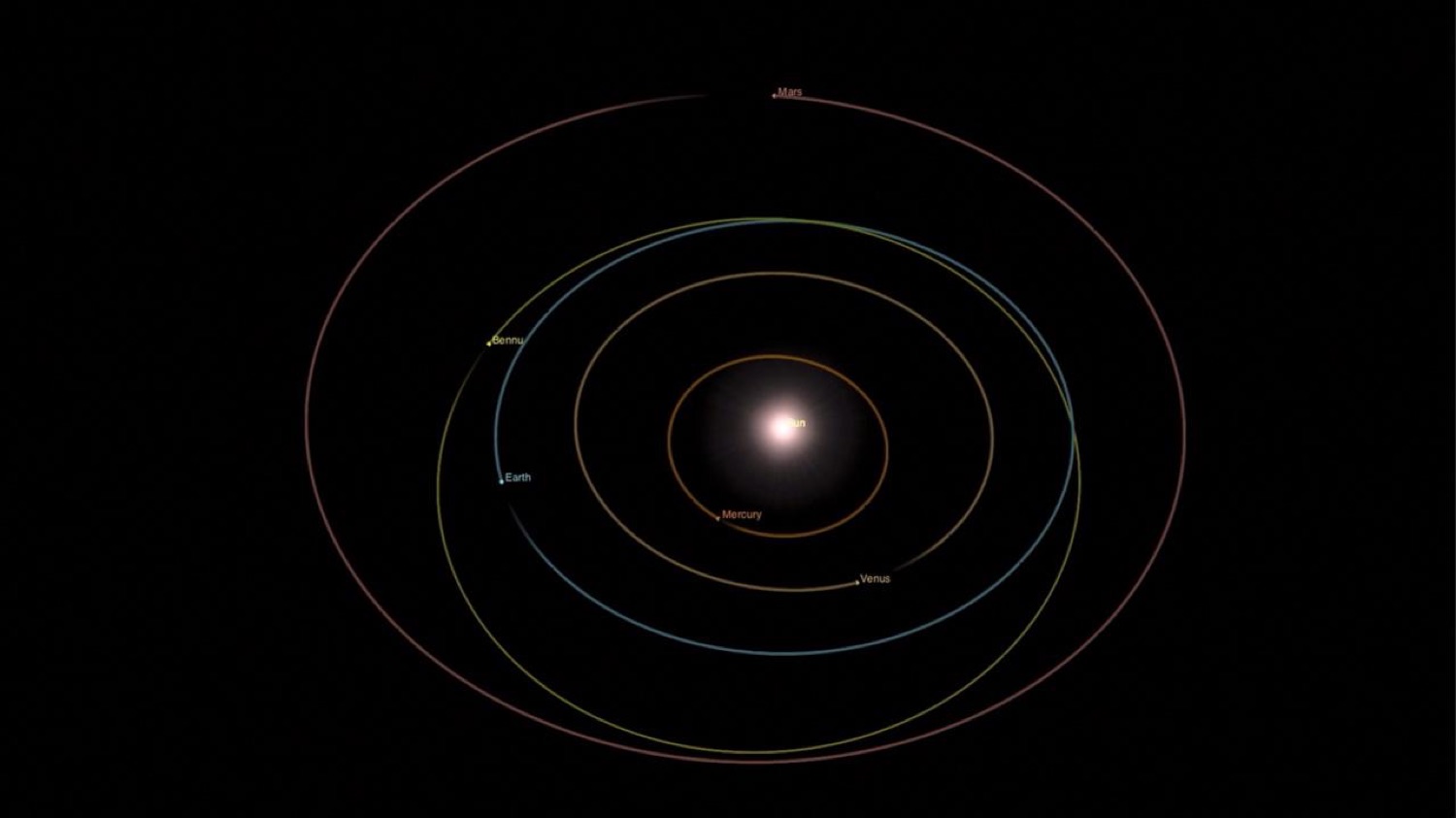
On 25 September 2135, Bennu will pass Earth at a distance of approximately 0.00136 au — about 203,000 km, roughly half the distance to the Moon — with an uncertainty of ± 20,000 km. There is no chance of an impact during that pass itself. What makes it dangerous is what comes after. Earth's gravity during the 2135 encounter will distort Bennu's orbit along many possible trajectories, some of which thread through narrow gravitational keyholes. A keyhole is a small region of space through which Bennu would need to pass in 2135 to be set on a collision course for a specific future date. The keyholes relevant to Bennu are remarkably small — all less than roughly 20 km wide, and some only 5 meters across. The most threatening scenario puts the asteroid through a keyhole about 5 km wide, which would create a 1 in 2,700 chance of impact on 24 September 2182. The 2135 flyby will also shift the orbital period: what is currently a 435-day year around the Sun will lengthen to approximately 452 days. Knowing Bennu's exact trajectory in 2135 to the precision needed to rule out keyhole passage remains one of the central scientific motivations for continued tracking.
 ⤢
⤢
10 Bennu's long-term fate beyond 2300 Deeper
Looking centuries further ahead, Bennu's orbital future grows increasingly uncertain, not because the physics is unknown but because tiny errors compound exponentially over long timescales. Lauretta and colleagues ran a simulation tracking 1,000 virtual copies of Bennu for 300 million years. The most likely single outcome is that Bennu falls into the Sun, with a 48% probability. A 26% chance exists that it eventually strikes Venus, while the probability of hitting Earth over that full timespan is 10% and Mercury 3%. There is a 10% chance that a close encounter with Jupiter ejects Bennu entirely out of the inner solar system. Mars has only a 0.8% probability of being struck, and Jupiter itself just 0.2%. The fundamental message is that Bennu, like all near-Earth objects, follows an intrinsically unstable orbit. Gravitational nudges from planets, the steady Yarkovsky thermal drift, and mean-motion resonances with Jupiter and Saturn all conspire to ensure that no near-Earth asteroid remains in its current orbit indefinitely. Bennu's story will almost certainly not end with an Earth impact; statistically, the Sun is the most probable final destination.
11 How a third-grader named an asteroid
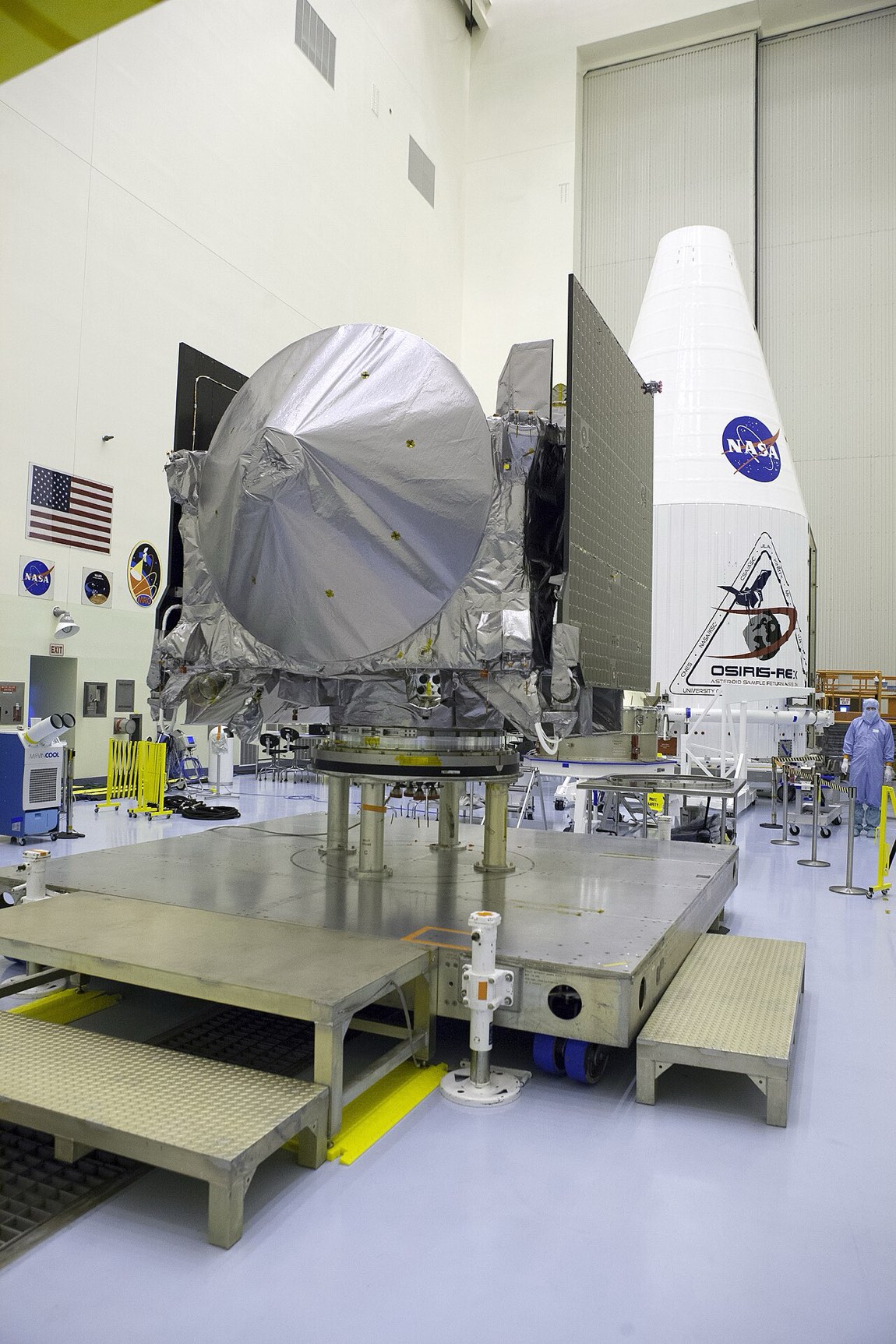
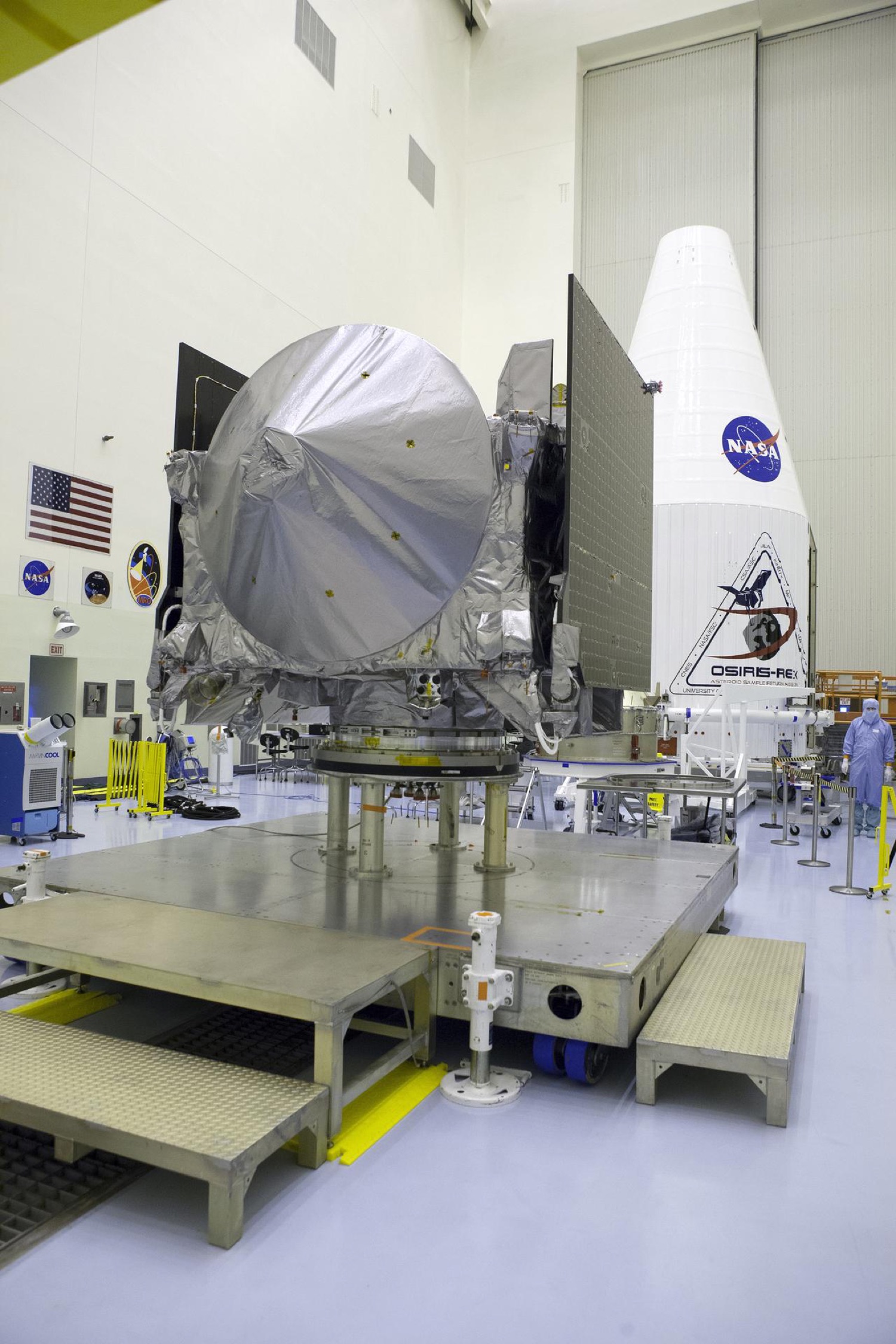
The name Bennu was not chosen by scientists sitting around a conference table — it came from a third-grade student named Michael Puzio from North Carolina, who entered a public contest in 2012. The "Name that Asteroid!" competition was organized by the University of Arizona, The Planetary Society, and the LINEAR Project, and drew more than eight thousand entries from students in dozens of countries. Puzio proposed the name Bennu in reference to the ancient Egyptian mythological heron-like bird associated with the Sun, creation, and rebirth. His insight was partly visual: to him, the OSIRIS-REx spacecraft with its extended TAGSAM sampling arm looked like the deity Bennu, which is classically depicted as a heron. The name was fitting in a deeper sense too, because the asteroid's provisional designation, 1999 RQ36, referenced its formal classification but carried no meaning. Bennu, a bird of rebirth, now lends its name to an asteroid carrying some of the oldest unaltered organic chemistry in the solar system. Following the Egyptian theme, every geological feature formally named on the asteroid is named after a bird or bird-like figure from mythology, a convention approved by the International Astronomical Union.
12 A possible meteor shower from Bennu
Because Bennu actively ejects particles and crosses Earth's orbital path, it may be the parent body of a meteor shower. Particles shed by Bennu over time could eventually spread along its orbit, and when Earth passes through that stream, the particles would burn up in the atmosphere as meteors. The expected radiant point — the spot in the sky from which the meteors would appear to stream — lies in the southern constellation Sculptor, with the shower expected around September 25th. The meteors would be faint, hovering near the naked-eye visibility limit, and the anticipated Zenith Hourly Rate is less than one meteor per hour, making it one of the weakest known potential meteor showers. This is consistent with Bennu being an intermittent rather than continuously active emitter. The shower has not been definitively confirmed, and whether Bennu has shed enough material over enough time to produce a detectable stream remains an open question. If confirmed, it would add another link in the chain connecting Bennu to cometary behavior, since most established meteor showers trace back to comets rather than asteroids.
 ⤢
⤢
13 What the LINEAR survey found on one night
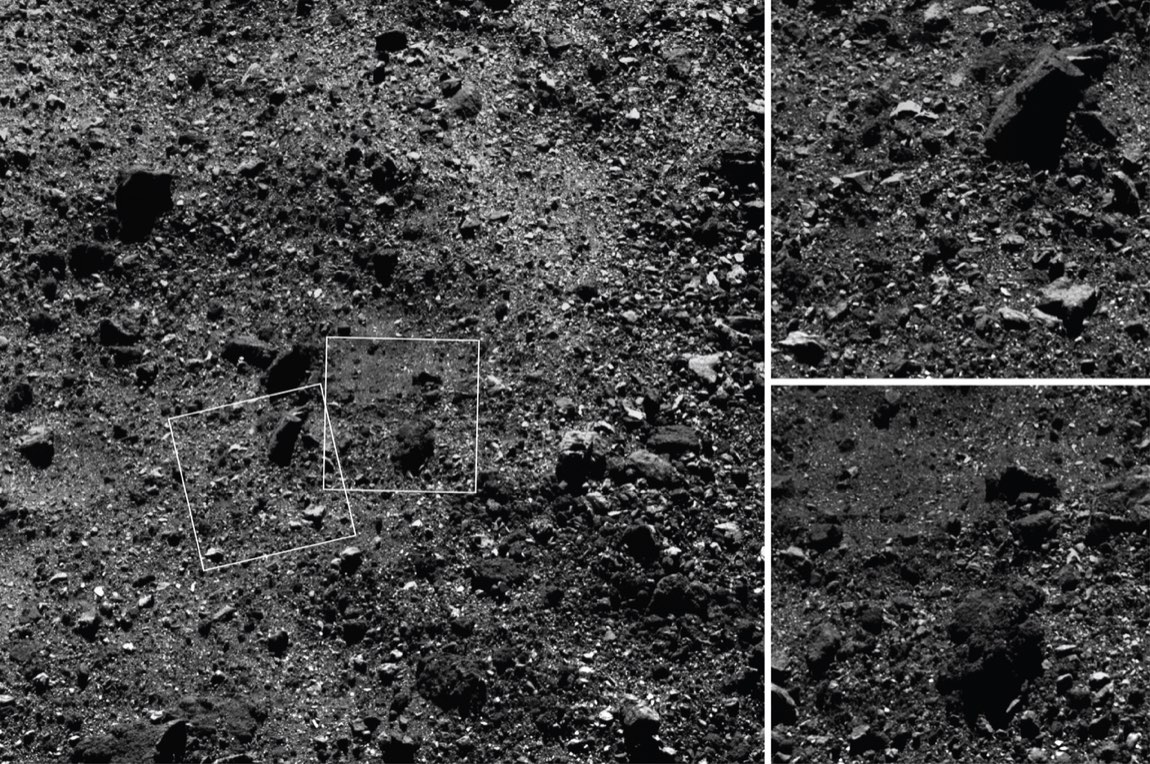
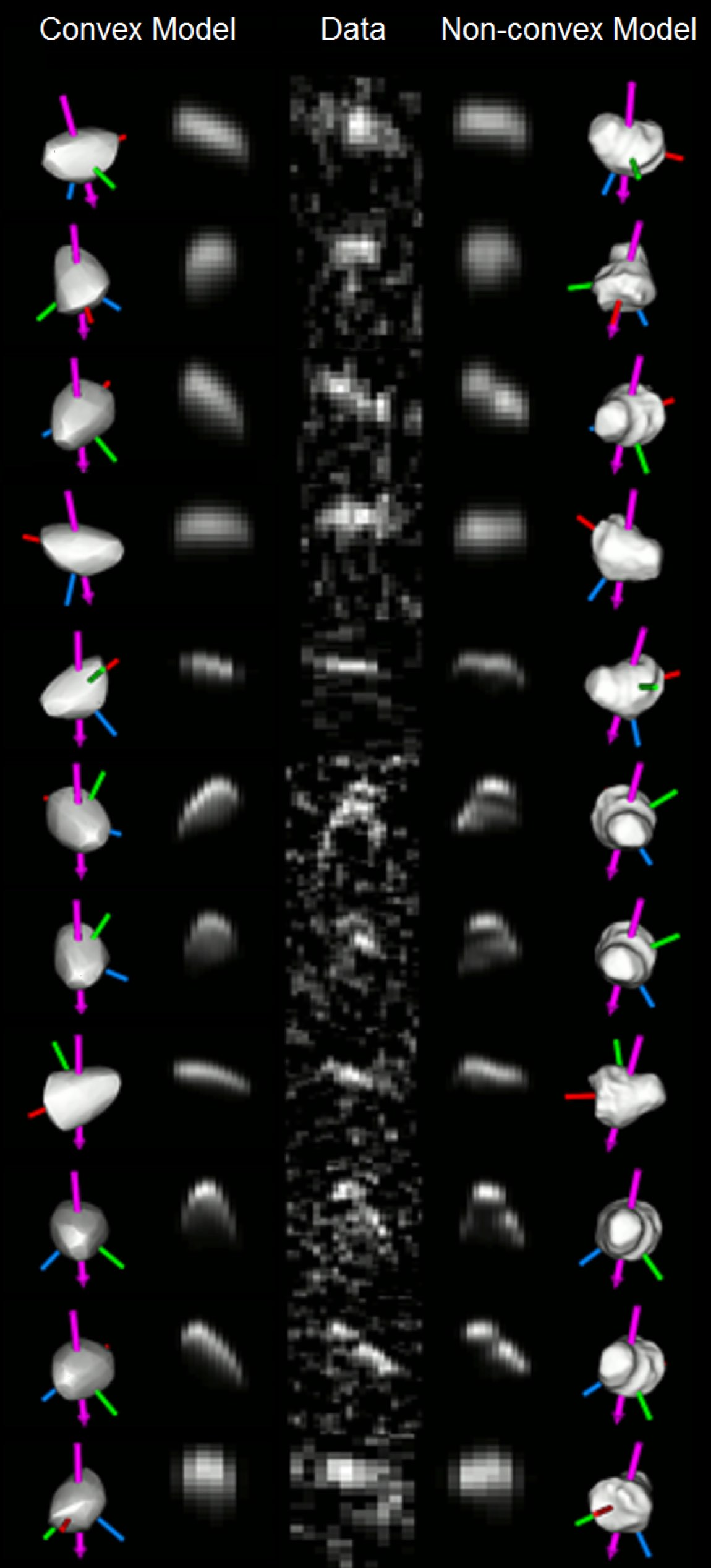
Bennu was discovered on a single night — 11 September 1999 — by the Lincoln Near-Earth Asteroid Research project, known as LINEAR, during a systematic survey specifically designed to find asteroids that approach Earth. The discovery came just twelve days before Bennu made a close pass by Earth on 23 September 1999, approaching to within 0.0147 au. Astronomers immediately pointed radar dishes at it: both the Arecibo Observatory and the Goldstone Deep Space Network tracked Bennu during that approach using planetary radar. The initial radar data suggested a fairly smooth surface with one notable boulder between 10 and 20 meters in size. That impression turned out to be very wrong — when OSIRIS-REx arrived nineteen years later, it found more than 200 boulders larger than 10 meters, with the largest measuring 58 meters across. The asteroid was assigned the provisional designation 1999 RQ36, reflecting the year and the order of discovery within the survey's cataloguing scheme. Subsequent astrometric observations collected between 1999 and 2013 accumulated enough data to measure the Yarkovsky effect precisely — a drift in the semimajor axis of 284 ± 1.5 meters per year — demonstrating how profoundly a single night's discovery can eventually be built into a detailed physical portrait.
14 Two rock types hint at a patchwork surface Deeper
The sample returned from Bennu is not uniform, and that heterogeneity may be telling scientists something important about the asteroid's interior and history. Three predominant types of particles were identified in the collected material: hummocky, angular, and mottled. They differ measurably in density — hummocky particles have the lowest average density at 1.55 ± 0.07 g/cm³, while mottled particles are the densest at 1.77 ± 0.04 g/cm³. The evidence suggests the sample draws from at least two distinct lithologies, meaning regions of Bennu's surface that formed under different conditions or from different source materials within the parent body. Spectral analysis of the sample shows a redder slope from 0.4 to 2.5 micrometers compared to Bennu's global surface spectrum, which could reflect differences in particle size, surface texture, or the degree of space weathering between fresh subsurface material and the sun-exposed exterior. Elemental composition closely resembles CI chondrite meteorites, but the isotopic ratios are distinct, and the oxygen isotopic composition places Bennu in the same region of three-isotope space as CI and CY chondrites and samples from Ryugu. These subtle chemical fingerprints are clues to where in the early solar system Bennu's parent body formed and how it evolved.
 ⤢
⤢
You would weigh…
Surface gravity 0.00 m/s² vs Earth’s 9.81 m/s². Try every world →
Could life exist here?
Bennu itself is airless and dead — but its ingredients-of-life chemistry is exactly why it matters to the origins question.
Our labels: Confirmed · Strong Evidence · Estimated · Hypothesis · Theoretical · Speculative (see Methodology).
Could humans live here?
Astronauts on an asteroid is a studied mission class (it was NASA's official plan for a while). Bennu's near-zero gravity means you dock with it rather than land on it.
How would we get there?
OSIRIS-REx took 2 years out, 2.5 back. Bennu's Earth-crossing orbit makes it one of the cheapest asteroids to reach — part of why it was chosen.
| Technology | Status | Travel time (one way, straight line) |
|---|---|---|
| Apollo-style spacecraft, about 39,000 km/h | Flown technology | 129 days |
| Ion-propulsion probe, about 90,000 km/h | Flown technology | 56 days |
| Voyager 1, about 61,000 km/h | Flown technology | 82 days |
| Parker Solar Probe, about 690,000 km/h | Flown technology | 7 days |
| Nuclear-thermal rocket, about 120,000 km/h cruise | In development | 42 days |
| Laser light-sail at 20% of light speed | Proposed concept | 33 minutes |
| Light itself, 299,792 km/s | Physical limit | 7 minutes |
Simplified straight-line times at cruise speed. Real missions fly curved orbital paths and take longer. Full travel calculator →
Weird & wonderful
- Bennu was ejecting pebbles into space when the spacecraft arrived — an 'active asteroid' surprise.
- Its surface is so weak an astronaut could scoop it with their hands.
- A teenager suggested the name, after the Egyptian heron-god of rebirth.
- Sunlight itself is steering Bennu — the Yarkovsky effect has moved it ~160 km since 1999.
More real images of Bennu
Genuine spacecraft and telescope imagery, every frame credited and licensed. Tap any photo to enlarge.