 Photograph · Kestrel
Asteroid · Deep guide
Ryugu
Sampled twice and bombed once, Japan's asteroid carries the ingredients of life.
What is it?
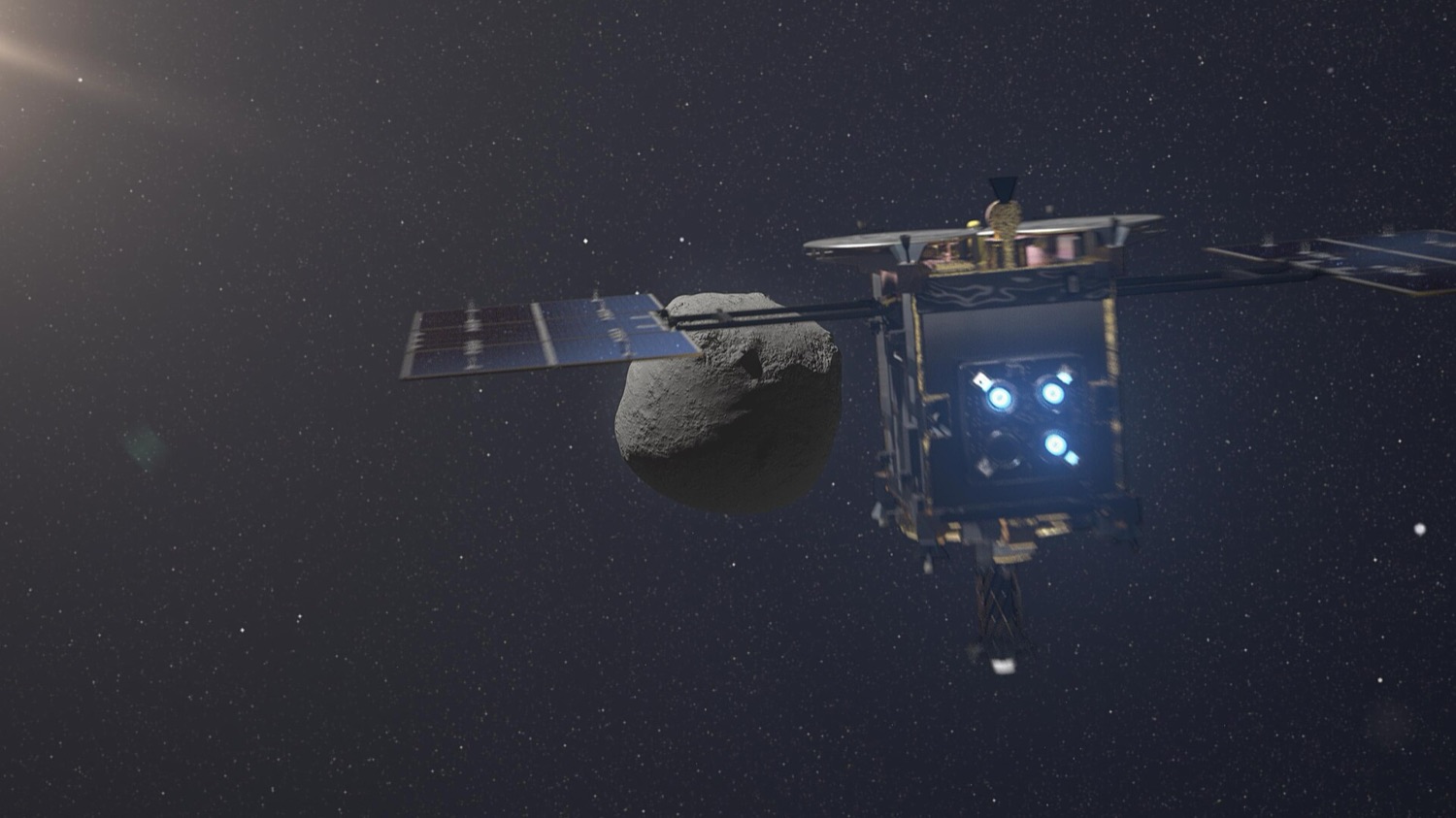
Ryugu is a kilometer-wide, top-shaped carbon-rich asteroid that Japan's Hayabusa2 spacecraft explored in 2018–19 with spectacular audacity: it landed twice, fired a copper cannonball to blast a fresh crater, deployed hopping rovers, and returned 5.4 grams of asteroid to Earth in 2020. Those grams rewrote textbooks: they contain amino acids, vitamin B3, and even uracil — one of RNA's four letters.
Go deeper
Ryugu samples are the most pristine primitive material ever analyzed — never heated, never wetted by Earth. They match CI chondrites (the most chemically solar-like meteorites) and show the parent body formed beyond the snow line, hosted liquid water, and was shattered and reassembled. Finding nucleobases and 20+ amino acids in demonstrably uncontaminated material closes the loop the Murchison meteorite opened in 1969: the chemistry of life is standard asteroid inventory.
01 The mission that did everything
Hayabusa2 treated a speck in space like a full planetary campaign: map it, land hopping robots (the first rovers ever on an asteroid), shoot it with a projectile to expose unweathered material, collect from both the surface and the fresh crater, and fly the loot home — then continue to a bonus asteroid (arriving 2031). All on a mid-size budget. It is planetary exploration's efficiency masterpiece.
02 Life's ingredients are everywhere Deeper
Between Ryugu and Bennu, two independent asteroid samples now show amino acids and nucleobases formed abundantly in the early Solar System and rained onto every young planet. That doesn't prove life is common — assembly is the hard part — but it removes 'where would the ingredients come from?' from the mystery entirely.
The deep dive
Researched for the Atlas from Wikipedia — 162173 Ryugu (17,141 characters read) · updated Sep 20, 2026
03 A dragon palace hiding in plain sight
Ryugu carries one of the more poetic names in the solar system. When the Minor Planet Center officially assigned it on 28 September 2015, the name pointed directly to Ryūgū-jō — the Dragon Palace — a magical underwater castle at the bottom of the sea in a classic Japanese folktale. In that story, a fisherman named Urashima Tarō rides a turtle to the palace and returns home carrying a mysterious sealed box. The parallel was almost too perfect: Hayabusa2 would travel to the asteroid, gather material from an alien world, and bring it back to Earth in a sealed capsule. The asteroid's earlier provisional designation, 1999 JU3, was assigned after its discovery on 10 May 1999, made by astronomers with the Lincoln Near-Earth Asteroid Research program near Socorro, New Mexico. For sixteen years it was just a number on a catalog. The folktale name transformed it into a destination with a story already attached — one that the mission would ultimately live up to in remarkable detail.
04 Rubble pile: mostly empty space
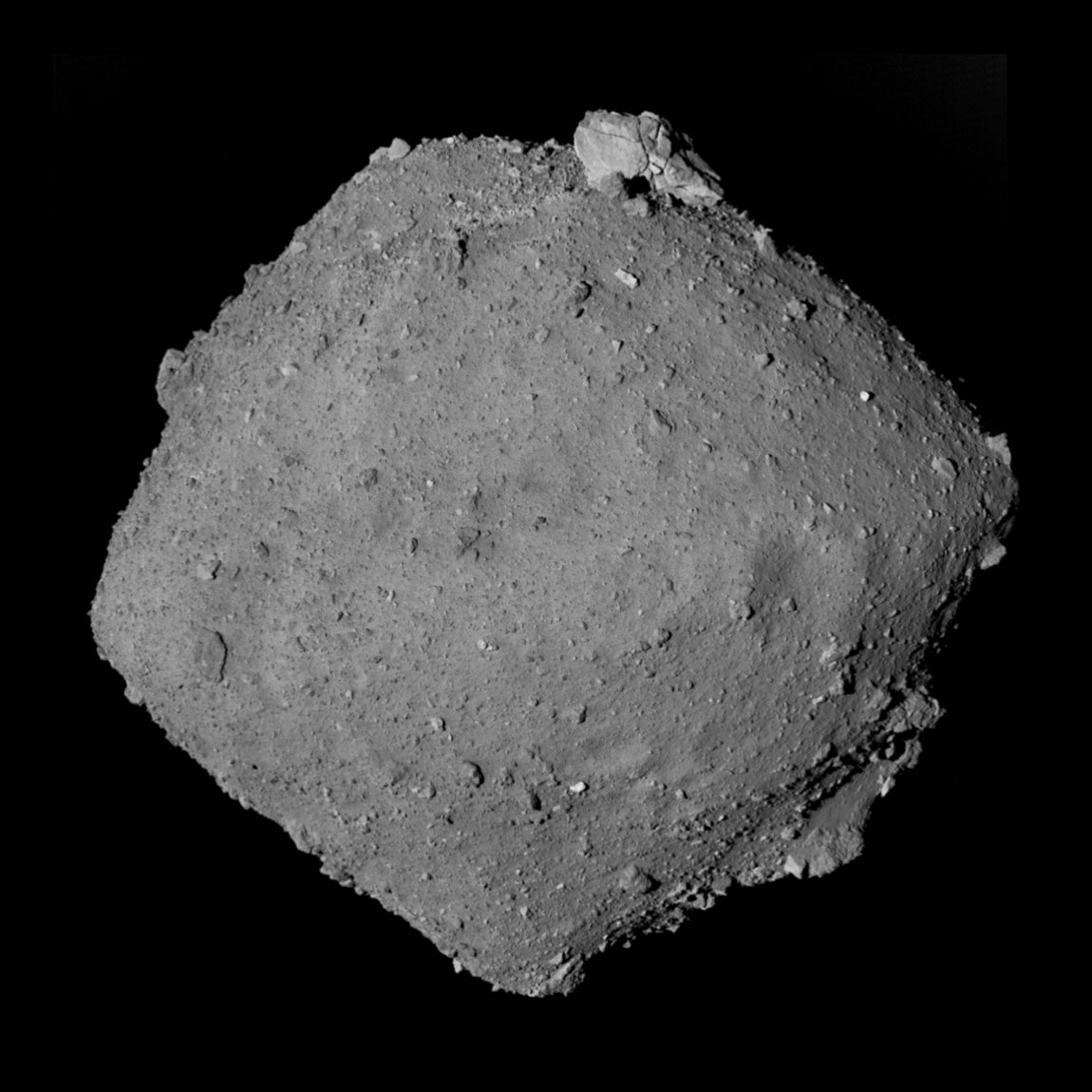
Despite measuring roughly 900 metres across, Ryugu is far less solid than it looks. After several months of close observation, JAXA scientists concluded that Ryugu is a rubble pile with about 50 percent of its volume being empty space — closer in structure to a loosely packed bag of gravel than to a coherent rock. Its bulk density has been measured at just 1.19 ± 0.03 grams per cubic centimeter, and its total volume is 0.377 ± 0.005 cubic kilometers. Its estimated mass is 450 million tonnes — enormous by human standards, but extraordinarily light for an object of its size. Gravity at the equator reaches only about 0.11 mm per second squared, rising slightly to 0.15 mm per second squared at the poles. These values are so low that a person standing on the surface would weigh roughly 60,000 times less than they do on Earth. The rubble-pile structure almost certainly traces back to a catastrophic collision that shattered a much larger parent body, leaving Ryugu to re-aggregate from the debris.
 ⤢
⤢
05 The spinning top and its rocky ridgeline
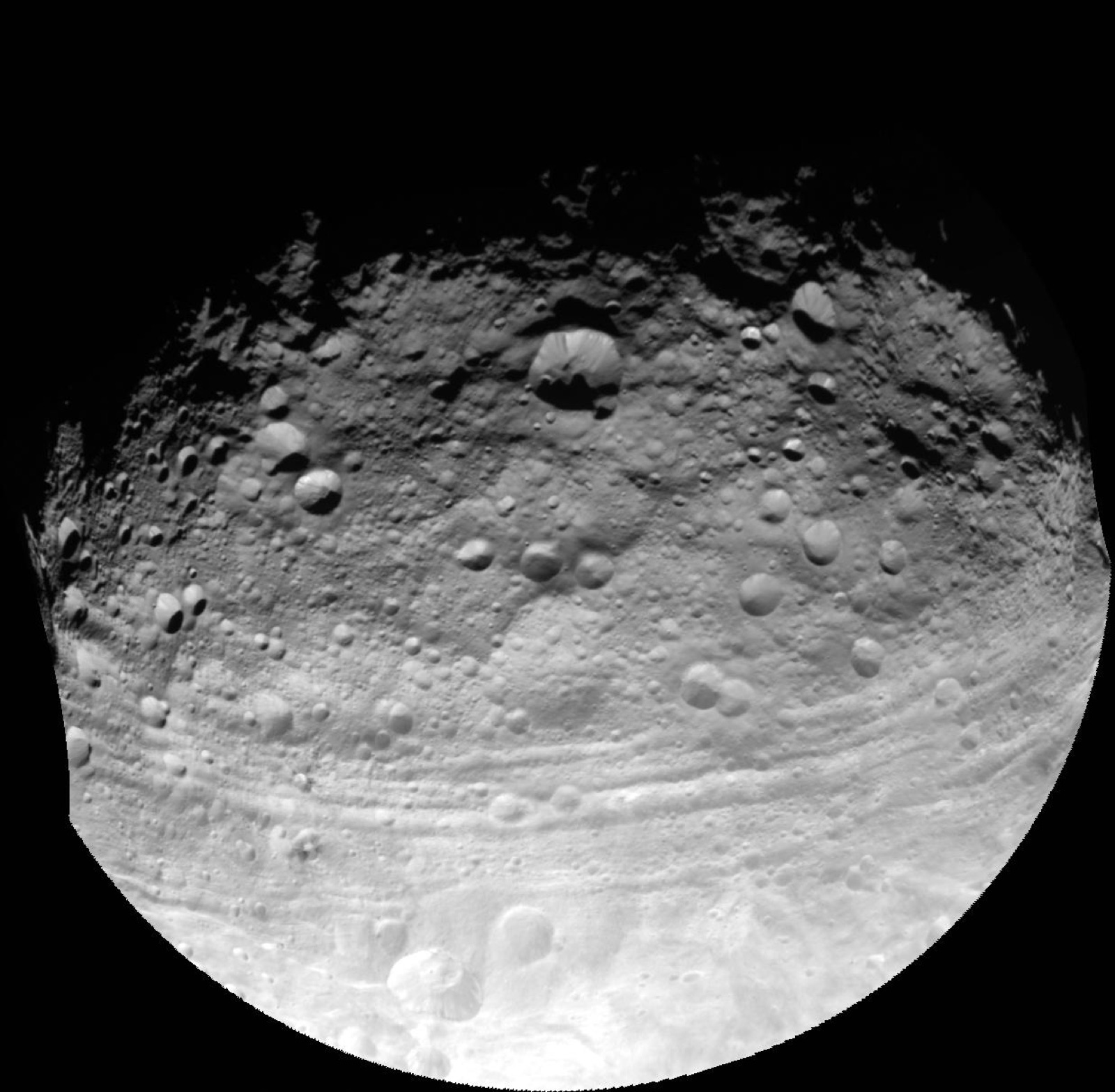
Ryugu's most striking visual feature is its shape: a flattened sphere pinched at the middle by a sharp equatorial ridge called Ryujin Dorsum, giving it the profile of a spinning top or a pointed diamond — a form also seen on the asteroid Bennu. This ridge was not a random accident. During an earlier phase of much faster rotation, centrifugal forces pushed material toward the equator through landslides and internal structural failure, sculpting the ridge we see today. The western side of the asteroid, known as the western bulge, tells a slightly different story. Modeling suggests that subsurface material there is structurally intact and relaxed — meaning it has already experienced past failure and the remaining material is now more stable. The western bulge is bordered by two ditch-like features called Tokoyo and Horai Fossae. This regional variation in structure and crater density across the surface points to a geologic history that is far more complicated than the asteroid's modest size might suggest.
06 Two kinds of rock and no dust at all Deeper
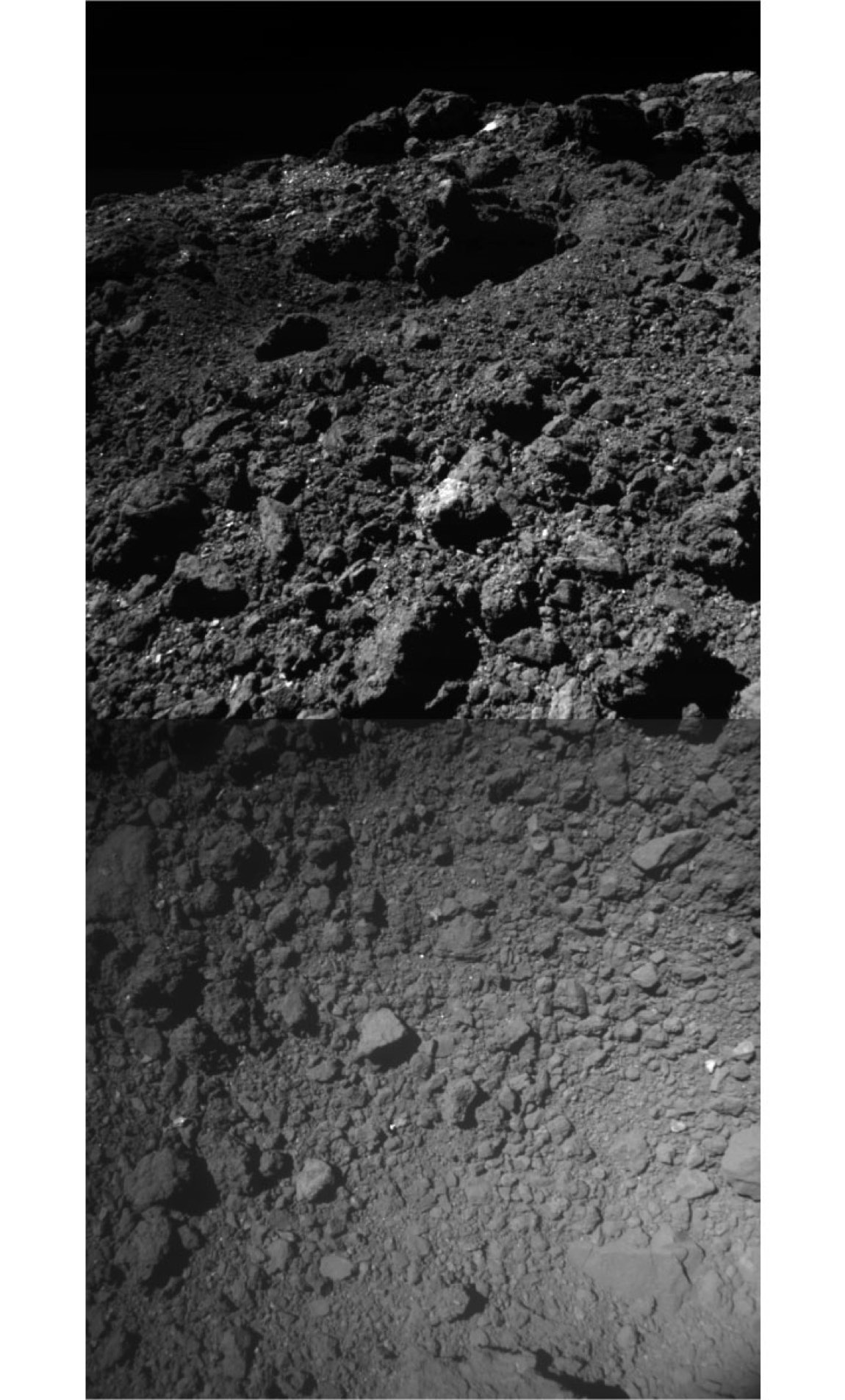
When the lander MASCOT settled onto Ryugu's surface in October 2018 and its camera MASCam began transmitting images, scientists found something unexpected: the surface held two distinct types of nearly black rock but essentially no dust. One rock type is relatively brighter, with a smooth surface and sharp edges. The other is darker, with a crumbly, cauliflower-like texture, a dark matrix, and small bright inclusions that resemble CI chondrites — the rarest and most chemically primitive class of meteorites. The thermal instrument MARA measured low thermal conductivity in the boulders, confirming high porosity in the material. This has a sobering implication: most meteorites that originate from C-type asteroids are probably too fragile to survive atmospheric entry intact, meaning the meteorite collection on Earth may give a systematically skewed picture of what carbonaceous asteroids are actually made of. A secondary discovery came from Hayabusa2's own thrusters, which accidentally revealed a coating of dark, fine-grained red material on the surface during proximity operations.
07 4,400 boulders and one enormous outlier Deeper
Ryugu is covered in boulders, and the count is striking: 4,400 boulders larger than 5 metres have been identified. Compared to other well-studied small bodies, Ryugu has more large boulders per unit of surface area than either Itokawa or Bennu — roughly one boulder larger than 20 metres for every 50 square kilometers of surface. The boulders' shapes resemble laboratory impact fragments, which strongly supports the hypothesis that Ryugu was assembled from the wreckage of a violent collision involving a much larger parent body. Most of those boulders can be explained as debris from that event, but the largest one, named Otohime, is a different matter entirely. Measuring approximately 160 by 120 by 70 metres — about the size of a large city block — Otohime is simply too big to have been thrown out by any crater on Ryugu itself. It must be a surviving chunk of the original parent body, sitting on the surface as a relic of the catastrophe that created the asteroid we see today.
08 A surface only 8.9 million years old
In geological terms, Ryugu's surface is startlingly young. Using data from the artificial crater deliberately created by Hayabusa2, scientists calculated the surface age at 8.9 ± 2.5 million years — a geological eyeblink compared to the 4.5-billion-year age of the solar system. That artificial crater was produced on 5 April 2019 when Hayabusa2 deployed the Small Carry-on Impactor, which fired a 2-kilogram copper mass into the surface from an altitude of 500 metres. The impact excavated material from up to 1 metre in depth, threw out an ejecta layer roughly 1 centimeter thick, and revealed darker subsurface material beneath the surface layer. Crater counting elsewhere on Ryugu shows a puzzling non-random pattern: more craters cluster at lower latitudes than at higher ones, and the western bulge has notably fewer craters than the region around the meridian. Ryugu currently has 77 identified craters in total, with this uneven distribution standing as evidence that the asteroid's surface has been actively reshaped rather than simply accumulating impacts passively over time.
 ⤢
⤢
09 A parent body born far from the Sun Deeper
The samples returned by Hayabusa2 carry isotopic fingerprints that point Ryugu's ancestry firmly toward the cold outer solar system. The deuterium-rich and nitrogen-15-rich compositions found in fine-grained minerals and organic compounds are signatures characteristic of material that formed at great distance from the Sun. Titanium, chromium, and molybdenum isotopic anomalies provide additional independent lines of evidence connecting Ryugu's origin to the outer solar system. Preserved magnetism in the samples led researchers to conclude that the parent body most likely formed in the darkness of nebular gas, in an environment without a strong magnetic field — a conclusion that matches the absence of any detectable magnetic field around Ryugu today. Simulation work suggests the parent body accumulated about 2 million years after the formation of the solar system, then warmed slowly to about 50 °C over the following 3 million years, driving reactions between rocky material and water. A smaller body, less than 10 kilometers across, eventually struck the roughly 100-kilometer parent body at around 5 kilometers per second, destroying it and seeding the debris field from which Ryugu later assembled.
10 Carbonated water locked in a crystal
Among the most unexpected discoveries in the Ryugu samples was liquid water — not ancient ice, but actual carbonated liquid water, trapped inside a hexagonal iron sulfide crystal. That water contained dissolved salts and organic matter. The carbon dioxide component was most likely originally CO2-ice, or dry ice, locked inside the parent body. When the parent body warmed after formation, the water ice melted and the CO2 dissolved into it, producing carbonated water that became sealed in the crystal before it could escape. Separately, researchers found crystals described as shaped like coral reefs, which are thought to have formed in liquid water once present in the interior of the parent body. These findings paint a picture of a two-layer parent body: a drier surface and a wetter interior. The collision that shattered that body mixed the two zones together, which is why Ryugu's surface today carries material from both the interior and the original outer surface of its predecessor. The bulk water content of a approximately 95-milligram sample was measured at 6.84 ± 0.34 weight percent.
11 Grains older than the Sun itself Deeper
Not everything in the Ryugu samples formed within our own solar system. NanoSIMS analysis conducted at the Carnegie Institution found presolar grains — tiny particles that predate the Sun and were incorporated into the material that eventually built the solar system. The abundance and composition of these grains closely resembled what has been found in CI chondrites, the benchmark class of primitive meteorites. A separate analysis using muon beams at the J-PARC particle accelerator confirmed that the overall chemical composition of the Ryugu samples is broadly similar to CI chondrites, with one notable difference: a 25 percent lower oxygen abundance relative to silicon. Researchers suspect that the oxygen excess routinely measured in meteorites may reflect contamination acquired during and after atmospheric entry — contamination that the Ryugu samples, collected and sealed in space and returned in an upgraded capsule specifically designed to preserve volatiles, were able to avoid. Additionally, some particles in the samples contained small amounts of material completely unaltered by water, including about 0.5 volume percent of anhydrous silicates, including magnesium-rich olivine and pyroxene linked to amoeboid olivine aggregates and magnesium-rich chondrules.
12 High-temperature grains in a cold asteroid Deeper
One of the more striking paradoxes revealed by sample analysis is the presence of grains that formed at temperatures above 1,000 degrees Celsius inside an asteroid that today sits in the frigid middle of the solar system. The September 2022 report from the Hayabusa2 Initial Analysis Stone Team confirmed that these high-temperature grains formed close to the Sun and were subsequently transported outward to the regions where Ryugu's parent body was assembling. This long-range transport of thermally processed material is consistent with models of the early solar system in which turbulent disk dynamics shuffled material across vast distances. The same analysis found that the samples are soft enough to be cut with a knife — a physical quality that reflects their fragile, porous, loosely consolidated nature — and that the samples preserve a record of ancient magnetic fields much as a hard disk stores data. By March 2026, all five canonical nucleobases had been identified in the samples, adding to the earlier confirmed detection of uracil and vitamin B3 announced in March 2023, and the 20 amino acids reported in retrieved samples.
 ⤢
⤢
13 Named features and the saxa category
As of August 2019, the International Astronomical Union had officially named 13 surface features on Ryugu, with the overarching theme of children's stories guiding the naming choices. The surface carries craters, the single equatorial ridge Ryujin Dorsum, and fossa features — the ditch-like Tokoyo and Horai Fossae that border the western bulge. Ryugu also holds a small distinction in planetary nomenclature: it is the first astronomical object to introduce the feature category called saxa, referring specifically to large boulders. Two boulders have received unofficial names from the JAXA team — Styx and Small Styx, both referencing the River Styx from Greek mythology — though it remains unknown whether those names will be submitted for formal IAU approval. JAXA has also assigned informal names to the landing and sample-collection sites used during the mission. The largest named boulder, Otohime, carries the name of a princess from the same Dragon Palace folktale that gave the asteroid its name, maintaining the thematic consistency that runs through Ryugu's entire catalog of named places.
14 An orbit that keeps Earth on edge
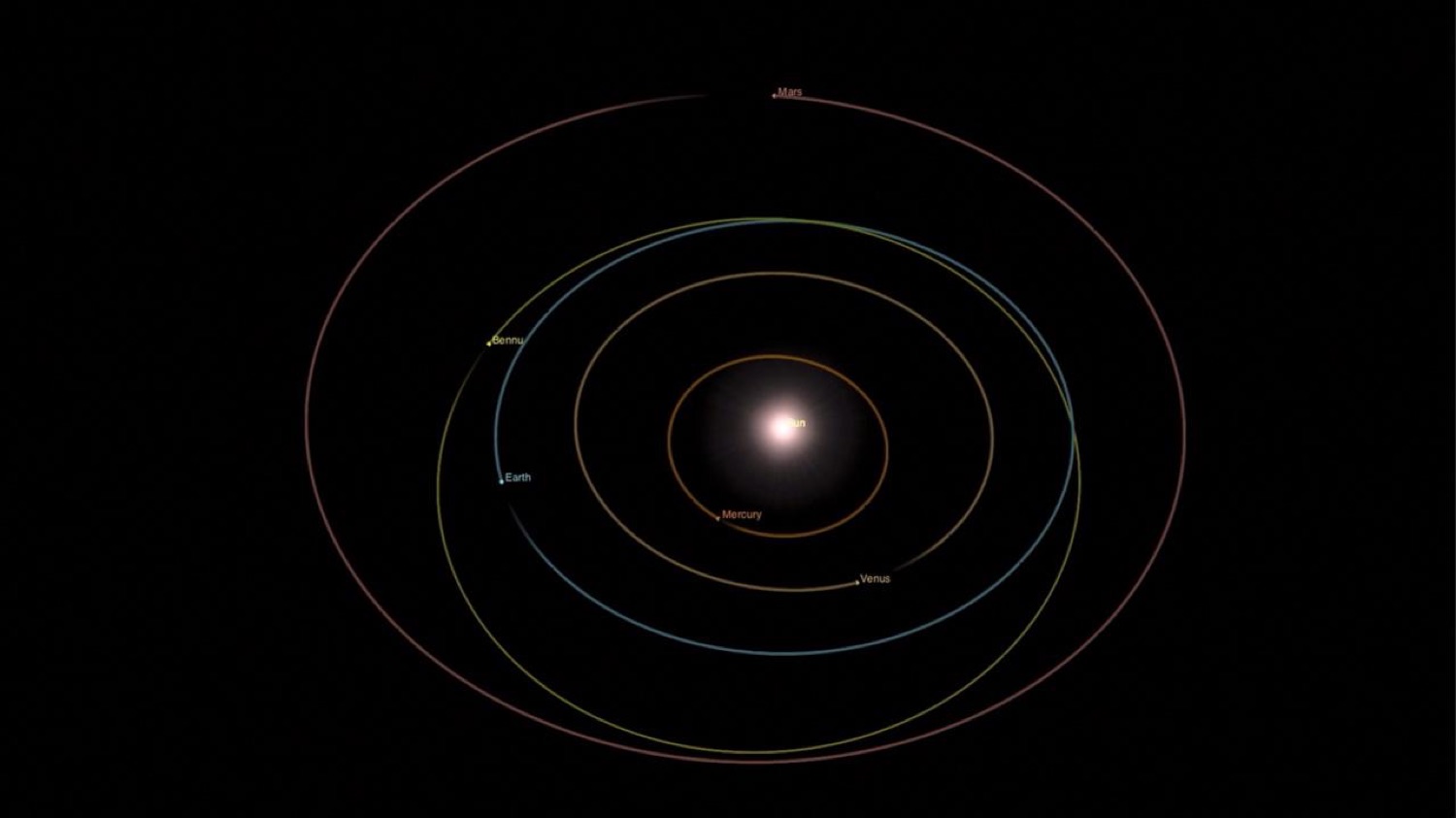
Ryugu is classified as both a near-Earth object and a potentially hazardous asteroid, a designation that reflects how closely its path through space can approach our planet. It orbits the Sun at distances ranging from 0.96 to 1.41 AU, completing one full circuit every 474 days — about 16 months — along an elliptical path with an eccentricity of 0.19 and an inclination of 6 degrees relative to the ecliptic. Its semi-major axis sits at 1.19 AU, placing it in the Apollo group of asteroids whose orbits cross Earth's. The minimum orbital intersection distance with Earth is 95,443 kilometers, equivalent to just 0.23 lunar distances — less than a quarter of the way to the Moon. For comparison, that gap is roughly eight times Earth's diameter. The asteroid's spectral classification is the rare Cb type, sharing qualities of both C-type and B-type asteroids, and its geometric albedo of 0.044 to 0.050 makes it extremely dark — reflecting only about 4 to 5 percent of sunlight, similar to fresh asphalt.
15 How the mission distributed its treasure Deeper
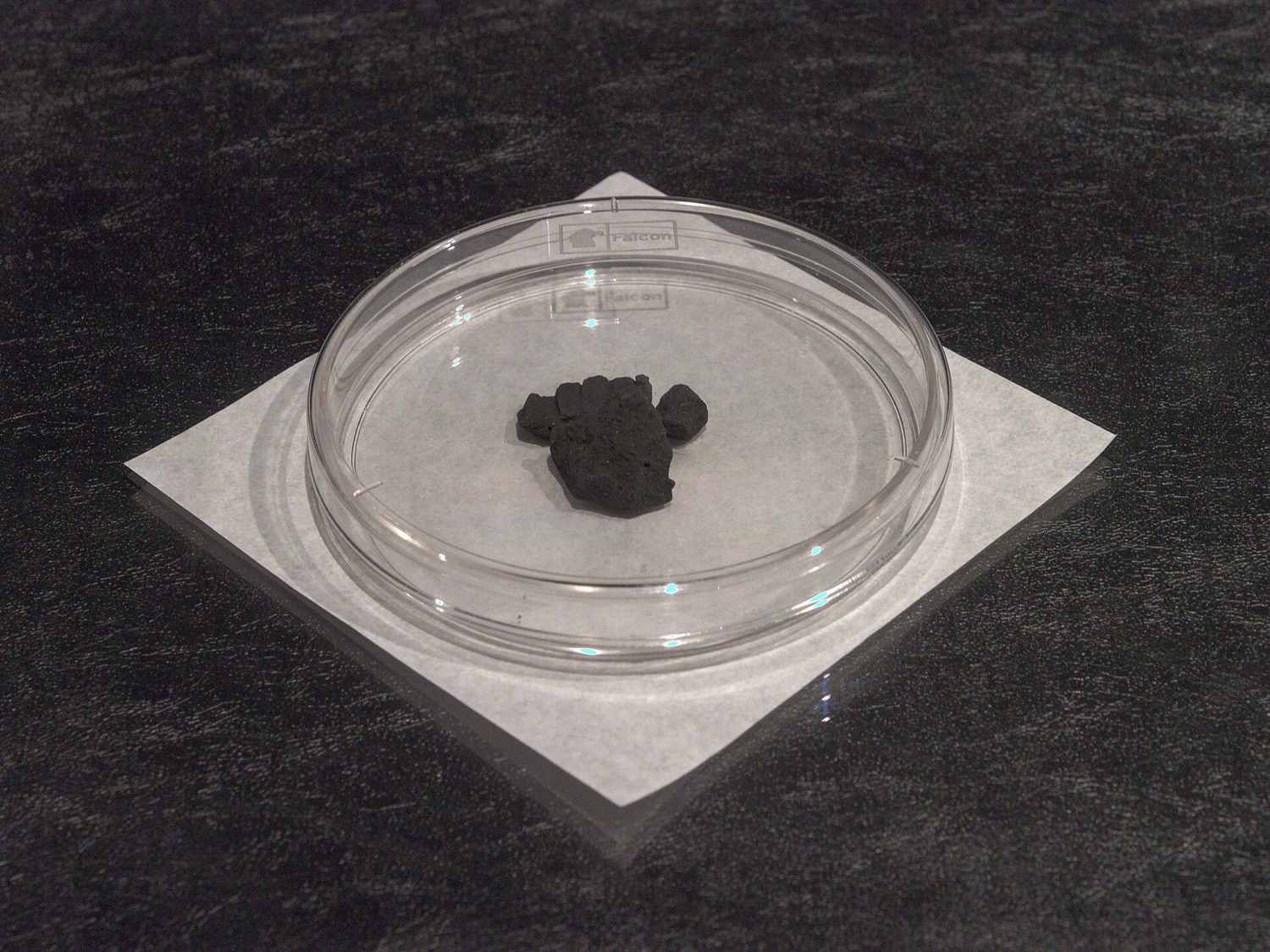
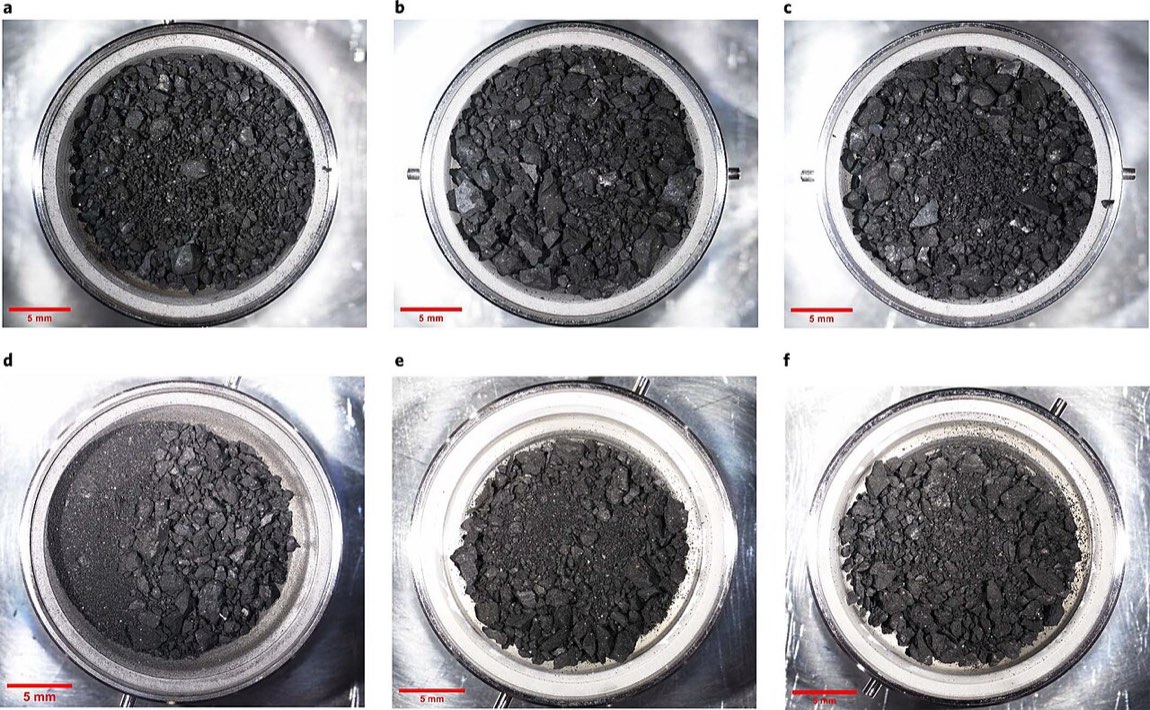
Before Hayabusa2 returned, mission planners expected to recover at least 0.1 grams of asteroid material — a tiny amount demanding careful allocation. The actual haul of approximately 5.4 grams, about 50 times more than anticipated, forced a complete revision of the distribution plan. Under the adjusted scheme, 60 weight percent of the total sample is being preserved untouched for future analysis — a deliberate investment in technologies and questions that do not yet exist. Of the remainder, 10 weight percent went to NASA, 15 weight percent became available through an international Announcement of Opportunity process, 6 weight percent supported initial analysis by the Hayabusa2 Initial Analysis Team and its six sub-teams, and smaller fractions went to phase-2 curation institutes at Okayama University and the JAMSTEC Kochi Institute for Core Sample Research. One weight percent was set aside for public outreach. The sample capsule itself, retrieved in Australia on 6 December 2020 (Australian time) after landing in the desert, represented a significant engineering improvement over its predecessor: the Hayabusa2 capsule was specifically upgraded to preserve water, light organics, gases, and other volatiles that the original Hayabusa mission could not protect.
 ⤢
⤢
Could life exist here?
Dead rock, alive with implications.
Our labels: Confirmed · Strong Evidence · Estimated · Hypothesis · Theoretical · Speculative (see Methodology).
Weird & wonderful
- Its tiny rovers moved by hopping — wheels don't work at one-80,000th of Earth's gravity.
- Ryugu's parent body once had warm water flowing through it.
- Hayabusa2's sample capsule streaked over the Australian desert like a fireball — carrying RNA letters.