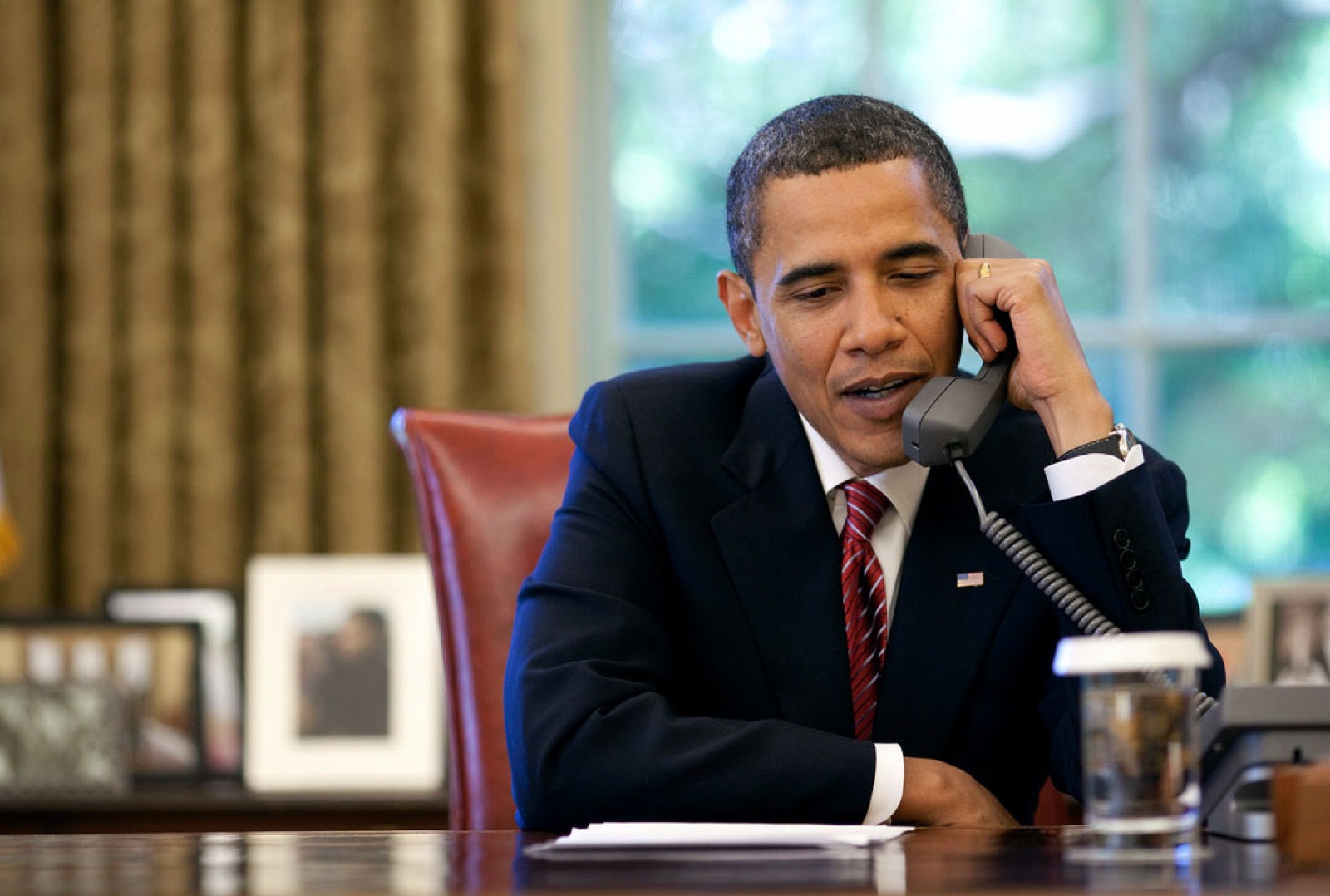
 Photograph · JSC / NASA Image Library
Spacecraft · Deep guide
Hubble Space Telescope
The telescope that rewrote astronomy has kept the universe in focus for 35 years.
What is it?
The Hubble Space Telescope has orbited Earth since 1990, above the blurring atmosphere, delivering the images that define modern astronomy: deep fields of thousands of galaxies in a speck of 'empty' sky, the Pillars of Creation, dying stars, colliding galaxies. It measured the universe's age (13.8 billion years) and helped discover that cosmic expansion is accelerating.
Go deeper
Hubble launched with a famously flawed mirror (2.2-micron spherical aberration) — fixed by astronauts in 1993 with corrective optics, the first of five servicing missions that made it effectively immortal until the Shuttle retired. Its cepheid program nailed the Hubble constant to a few percent — precision that exposed today's 'Hubble tension' with early-universe predictions, possibly new physics. Since the final 2009 servicing it has run on aging gyros (operating one-gyro since 2024, with reduced agility). It remains scientifically ferocious alongside JWST — visible/UV eyes to Webb's infrared — with reentry, unless boosted, in the mid-2030s.
01 Why put a telescope in space?
Stars twinkle because Earth's air wobbles their light — pretty for songs, fatal for detail. Above the atmosphere, stars are motionless pinpoints and the ultraviolet light the air blocks comes through. Hubble isn't huge (many ground mirrors dwarf it); it is simply unblurred, which for 30 years made it the sharpest eye humanity had.
02 The Deep Fields Deeper
In 1995, director Robert Williams spent his discretionary time staring at NOTHING — a patch of dark sky the size of a sand grain at arm's length — for ten days. The gamble returned ~3,000 galaxies. Every empty-looking sand-grain of sky, we learned, hides thousands of galaxies: extrapolated, hundreds of billions in the observable universe. No image did more to size the cosmos in the public mind.
The deep dive
Researched for the Atlas from Wikipedia — Hubble Space Telescope (58,000 characters read) · updated Sep 20, 2026
03 A mirror ground to perfection — wrongly
When Hubble's first images came back, engineers knew something was badly wrong. The primary mirror had been polished to extraordinary smoothness — accurate to about 10 nanometers — but its outer edge was too flat by roughly 2,200 nanometers, about one eleven-thousandth of an inch. That tiny mismatch, less than the width of a red blood cell, was enough to cause severe spherical aberration: light reflecting from the mirror's edge focused at a different point than light from its center. Instead of a crisp point, stars spread into blurry halos more than one arcsecond across, when the design called for a point spread function concentrated within 0.1 arcseconds. The culprit was a testing device called a reflective null corrector, one of whose lenses was misassembled — displaced by just 1.3 millimeters. Conventional tests during fabrication had actually flagged spherical aberration, but those results were dismissed because the reflective null corrector was considered more authoritative. An independent double-check, which rivals Kodak and Itek had proposed in their original bid, would almost certainly have caught the error before the mirror ever left the factory.
04 How astronauts gave Hubble its sight back
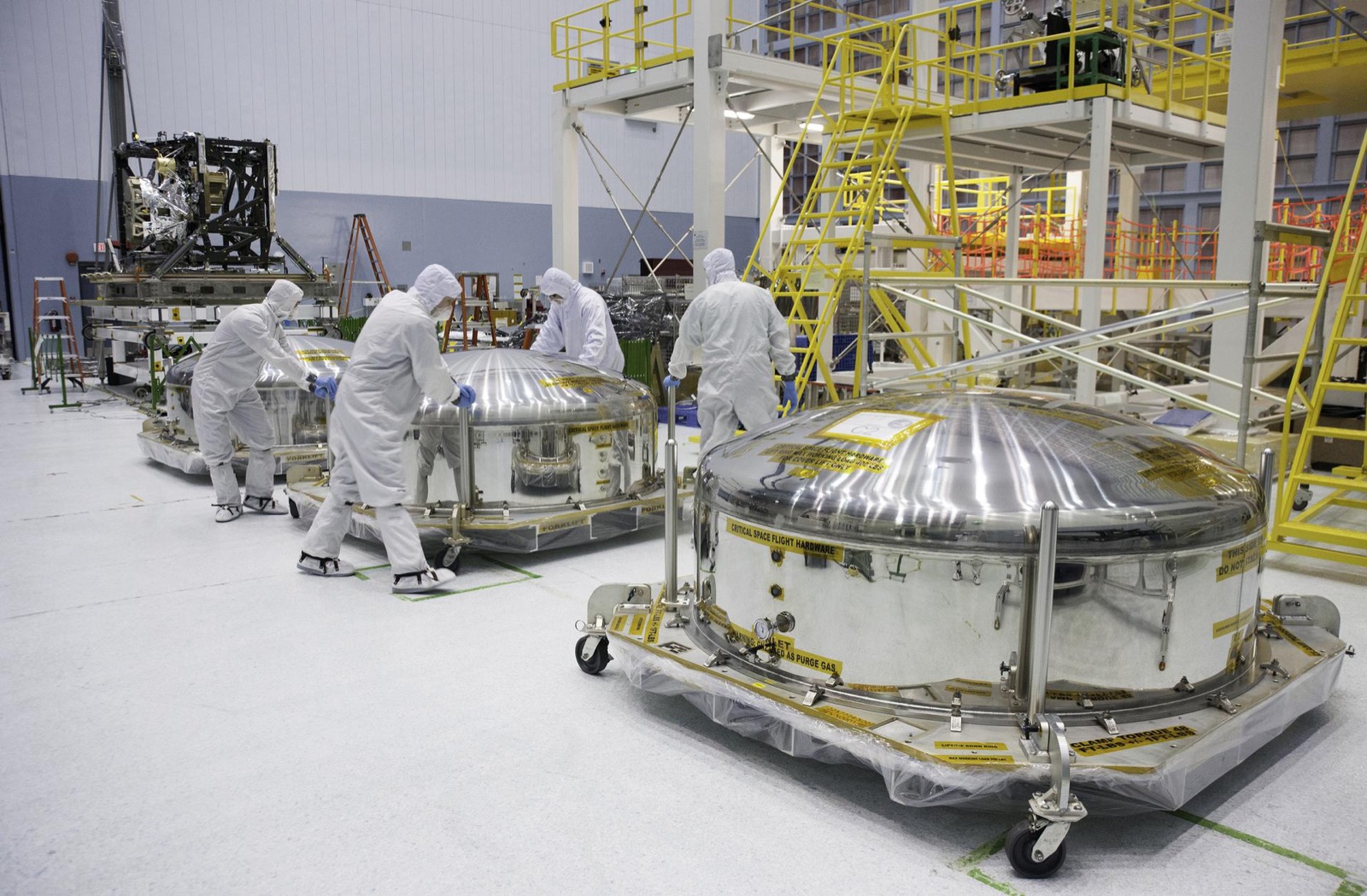
Because the mirror had been ground so precisely — just to the wrong shape — engineers could calculate exactly how wrong it was and design corrective optics with an equal but opposite error, effectively a pair of space spectacles. Two solutions were needed. The replacement Wide Field and Planetary Camera 2 had the correction built into its internal relay mirrors. For the other instruments, a device called COSTAR — Corrective Optics Space Telescope Axial Replacement — was designed: two small mirrors in the light path, one ground to counteract the aberration. To fit COSTAR into the telescope, the High Speed Photometer had to be sacrificed. Servicing Mission 1, flown aboard Endeavour in December 1993, accomplished all of this over five spacewalks across ten days. Story Musgrave, who had worked on satellite repair procedures since 1976, led a seven-person crew trained with roughly a hundred specialized tools. One unforeseen challenge: spacesuit gloves proved inadequate against the cold of space, a problem Musgrave discovered during vacuum training seven months before launch. NASA quickly redesigned equipment and procedures. On January 13, 1994, NASA declared the mission a complete success. By 2002, every instrument that needed COSTAR had been replaced by one with built-in correction, and COSTAR was removed and returned to Earth in 2009.
05 Five missions, 19 years of upgrades Deeper
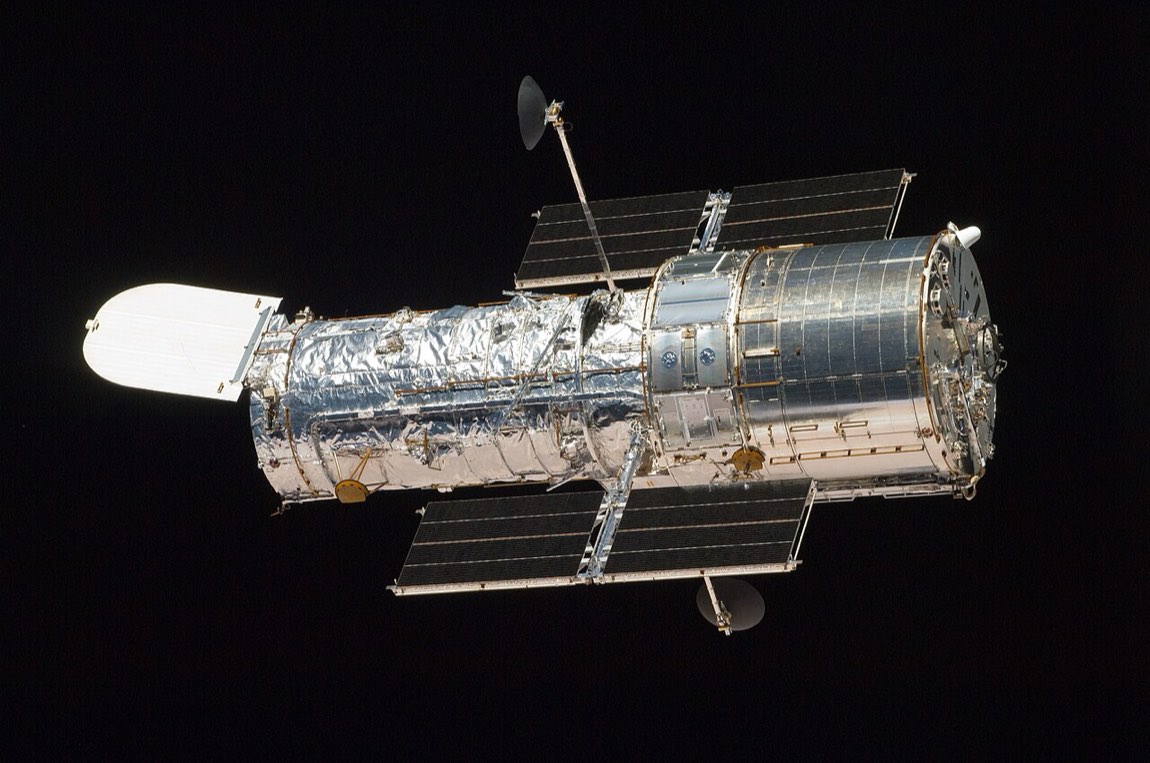
Hubble is unique as the only telescope designed from the start to be maintained in space by astronauts, and that design philosophy paid off across five servicing missions spanning December 1993 to May 2009. Servicing Mission 2, flown by Discovery in February 1997, swapped in the Space Telescope Imaging Spectrograph and the Near Infrared Camera and Multi-Object Spectrometer, while Servicing Mission 3A in December 1999 was an emergency split from a larger planned mission after four of six gyroscopes failed, leaving the telescope unable to do science. Servicing Mission 3B in March 2002 installed the Advanced Camera for Surveys, which replaced the original Faint Object Camera — the last first-generation instrument still operating — and revived the dormant NICMOS instrument with a closed-cycle cooler, while also fitting new solar arrays providing 30 percent more power. The final visit, Servicing Mission 4 in May 2009, installed the Wide Field Camera 3 and the Cosmic Origins Spectrograph, repaired both the ACS and the STIS systems, replaced all six gyroscopes, and added improved nickel-hydrogen batteries. It also attached the Soft Capture and Rendezvous System, enabling a future robotic or crewed vehicle to safely dispose of Hubble at end of life. Each servicing mission was preceded by years of training; no complete Hubble mockup ever existed, so crews studied many separate models and mentally merged their details.
 ⤢
⤢
06 The Columbia disaster nearly ended Hubble
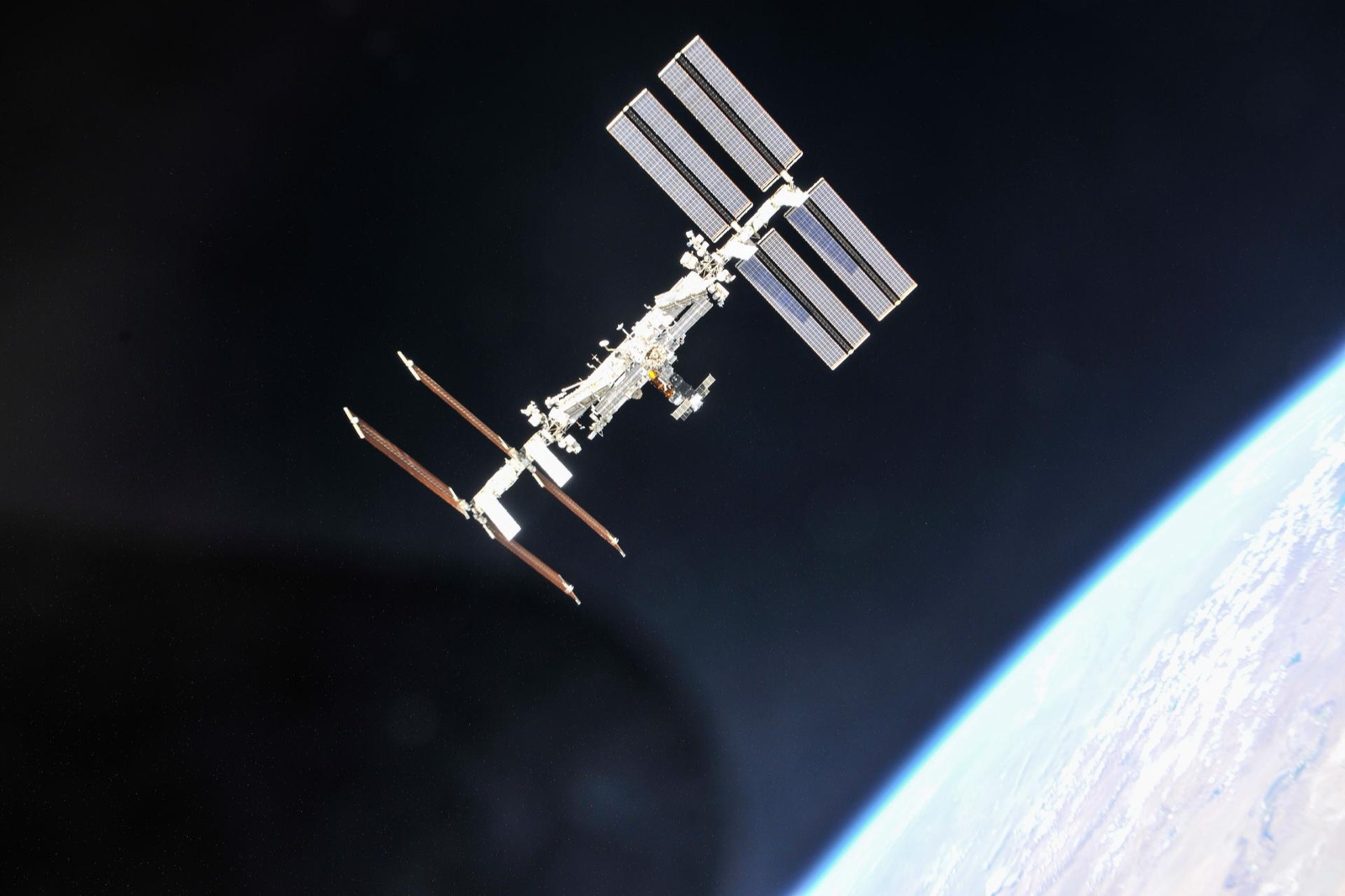
The loss of Space Shuttle Columbia on February 1, 2003, when the orbiter disintegrated during re-entry, cast a long shadow over Hubble's future. NASA Administrator Sean O'Keefe ruled that all future shuttle flights must be able to reach the International Space Station as a safe haven if problems developed in orbit. Because no shuttle could reach both Hubble and the station in a single mission, future crewed servicing flights were cancelled outright. Astronomers were alarmed: Hubble's planned successor, the James Webb Space Telescope, was not expected to launch until at least 2011 at the time, and a gap in observing capability was a serious concern. The National Academy of Sciences convened a panel that in July 2004 urged NASA to take no actions that would preclude a shuttle servicing mission. Senator Barbara Mikulski led congressional hearings, and thousands of letters — including many from school children — arrived at NASA. The turning point came with the April 2005 nomination of Michael D. Griffin as NASA Administrator. Griffin stated he would consider a crewed mission, authorized preparations, and in October 2006 gave the final go-ahead. The 11-day mission by Atlantis launched in May 2009 restored Hubble to full capability, except for the ACS High Resolution Channel, which could not be repaired and was disabled.
07 Computing power from 1974 to today Deeper
When Hubble launched in 1990 its primary onboard computer was a 1.25 MHz DF-224 system built by Rockwell Autonetics, containing three redundant CPUs — a design philosophy that prioritized reliability over raw speed. A co-processor was added during Servicing Mission 1 in 1993, consisting of two redundant strings of an Intel 80386 processor paired with an 80387 math co-processor. By Servicing Mission 3A in December 1999 even that was obsolete, and the DF-224 along with its 386 co-processor were replaced by a 25 MHz Intel 80486-based system. The new computer was 20 times faster than the DF-224 and carried six times more memory, and it allowed modern programming languages to be used, saving money by shifting some computing tasks from the ground up to the spacecraft itself. Individual instruments also ran their own embedded processors: the Multiple Access Transponder components used Hughes Aircraft CDP1802CD microprocessors, and the original Wide Field and Planetary Camera used an RCA 1802 chip. Meanwhile, on the ground, scheduling Hubble's observations is itself a computational challenge — because the telescope's orbital position six weeks out could be in error by up to 4,000 kilometers due to variable upper-atmosphere density, observation schedules are typically finalized only a few days before execution.
08 Orbiting blind spots: what Hubble cannot see
Being in orbit creates a surprising number of blind spots. Hubble circles Earth at roughly 540 kilometers altitude and an orbital inclination of 28.5 degrees, and for slightly less than half of every orbit, most astronomical targets are hidden behind Earth itself. Observations are also suspended whenever the telescope passes through the South Atlantic Anomaly, a region of elevated radiation levels. A solar avoidance angle of about 50 degrees keeps sunlight from entering the optical tube, which means Mercury — always close to the Sun in the sky — is essentially unobservable. Bright moonlight and Earthshine can flood the Fine Guidance Sensors, so the Moon and Earth are normally avoided too, though if the FGSs are switched off, both can be observed. There is a so-called continuous viewing zone within roughly 24 degrees of the orbital poles, where targets can be watched for long, uninterrupted periods, but because Earth's limb is always within about 30 degrees of those regions, scattered earthshine remains elevated throughout. The location of the continuous viewing zone itself drifts slowly, completing one cycle over about eight weeks due to orbital precession. All these constraints make scheduling Hubble's roughly one-fifth success-rate proposal process a complex optimization problem handled by the Space Telescope Science Institute in Baltimore, Maryland.
09 The long road from idea to launch
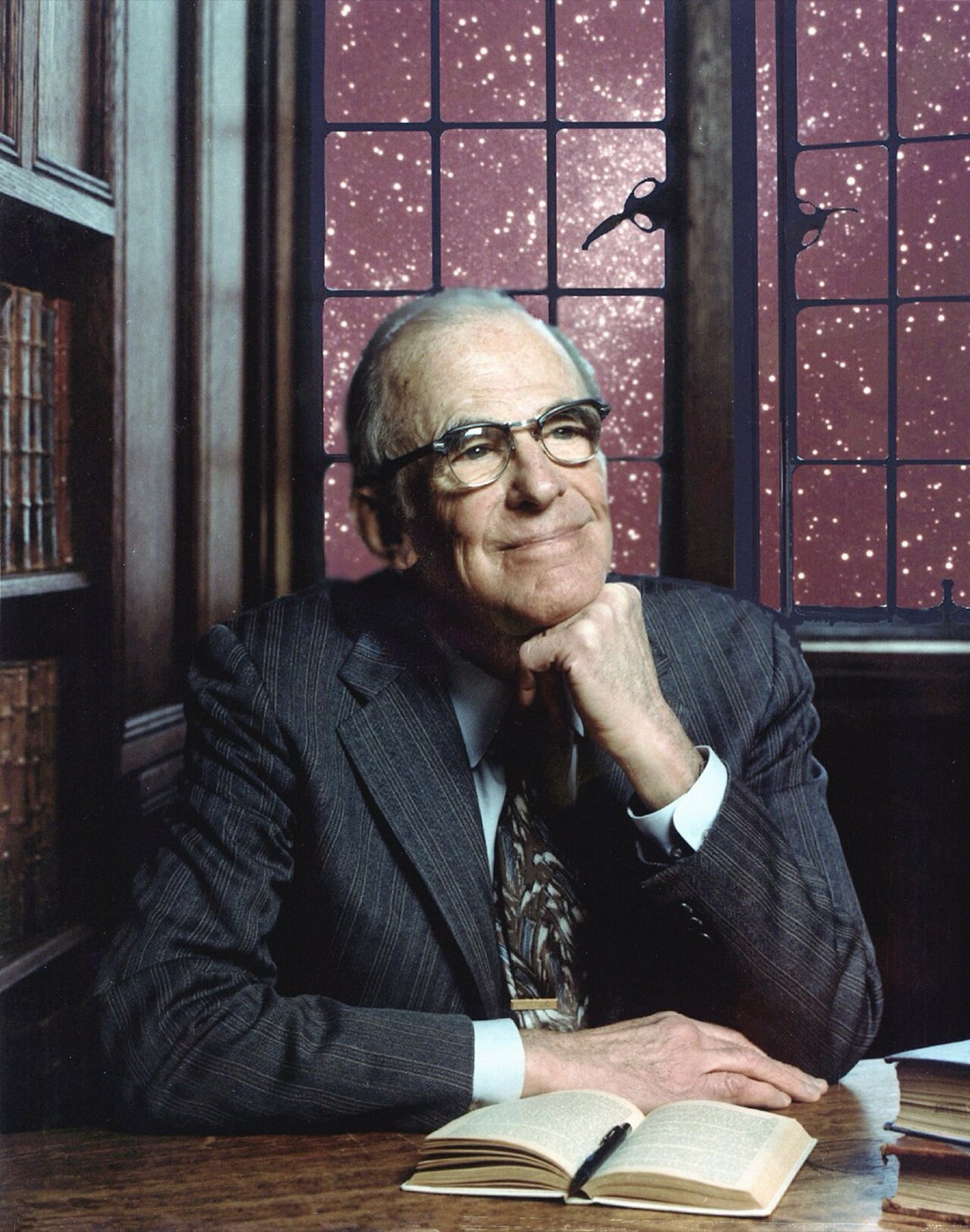
The intellectual foundation for Hubble stretches back to 1946, when astronomer Lyman Spitzer wrote "Astronomical advantages of an extraterrestrial observatory," laying out two core arguments: a space telescope would not be blurred by atmospheric turbulence, and it could observe ultraviolet and infrared light that the atmosphere blocks entirely. Ground-based telescopes of that era were limited to angular resolutions of 0.5 to 1.0 arcseconds; a space telescope with a mirror 2.5 meters across could theoretically reach about 0.05 arcseconds — a tenfold improvement. Spitzer spent decades advocating for the idea. Congress cut all telescope funding in 1974, and in a deliberate political gamble, NASA associate administrator Noel Hinners zeroed out the telescope's budget entirely rather than accept a token five-million-dollar placeholder, betting that the astronomy community would fight harder for full funding than for a symbolic gesture. The gamble worked: nationwide lobbying campaigns, in-person meetings with senators and congresspeople, and a National Academy of Sciences report eventually won back support. Congress approved $36 million for 1978. To cut costs, the proposed mirror diameter shrank from 3 meters to 2.4 meters, and the European Space Agency joined as a partner, supplying one first-generation instrument, the solar cells, and staff, in exchange for European astronomers receiving at least 15 percent of observing time.
10 Nancy Grace Roman and the science of persuasion
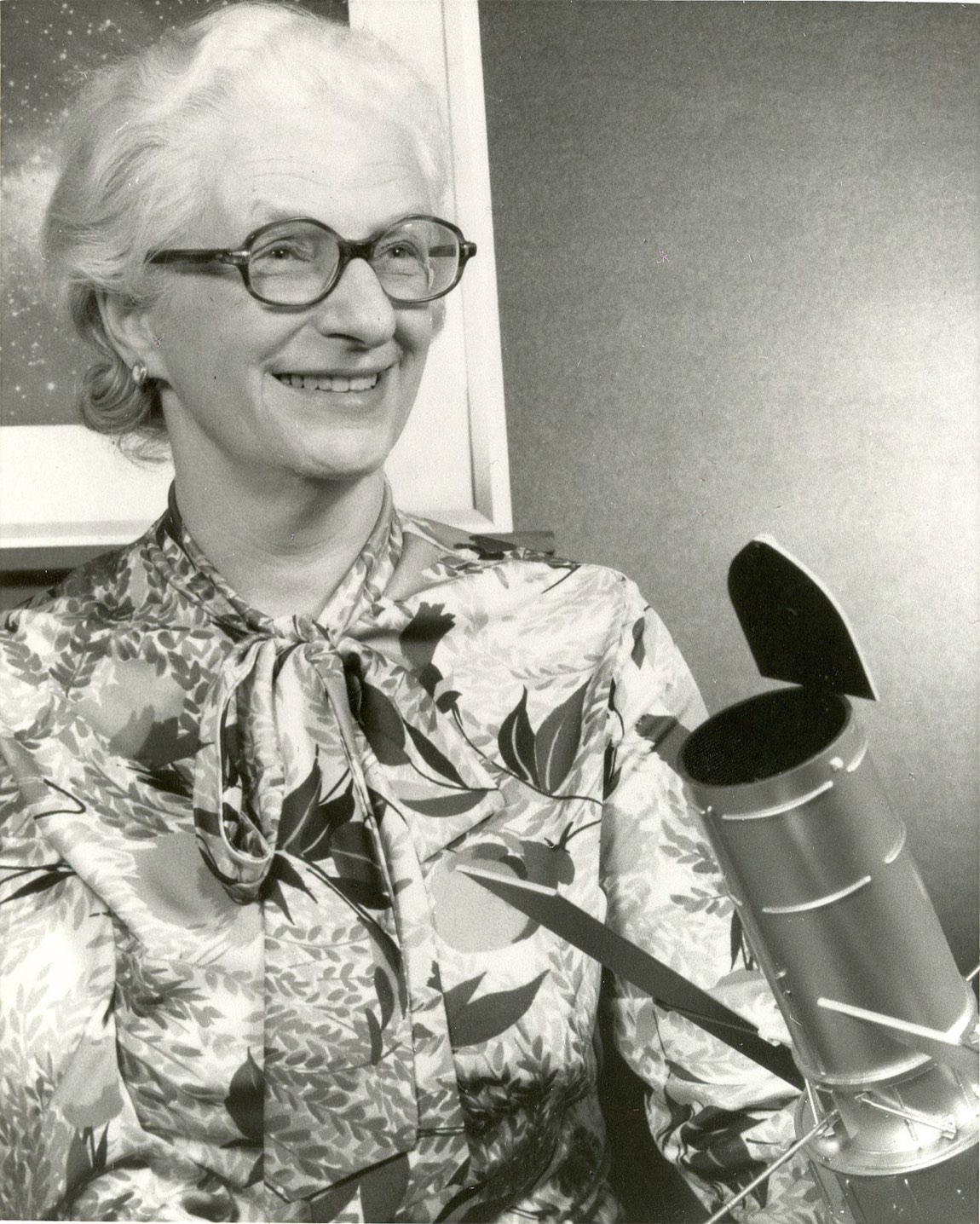
Before Hubble was an official NASA project, it needed a champion who could translate scientific ambition into political reality, and that person was Nancy Grace Roman, known as the "Mother of Hubble." Well before the project received formal approval, Roman gave public lectures making the scientific case for a large space telescope. Once the project was sanctioned, she became program scientist and set up the steering committee that translated astronomers' needs into engineering requirements that could actually be built and funded. Throughout the 1970s she wrote testimony to Congress, advocating continued funding through budget pressures and political skepticism. Her approach — making large scientific projects legible and defensible to non-specialists — helped establish the standards by which NASA would manage major observatories for decades to come. Her legacy is inseparable from the telescope's existence: without sustained political advocacy as determined as the scientific vision behind it, Hubble would have remained a paper concept. The Nancy Grace Roman Space Telescope, Hubble's wide-field successor, was launched on August 30, 2026, and is named in her honor.
 ⤢
⤢
11 Measuring the universe's expansion rate Deeper
One of Hubble's three formally designated key projects from the outset was pinning down the Hubble constant — the rate at which the universe is expanding — to within ten percent. Before the space telescope launched, estimates of that constant carried errors of up to 50 percent, an uncertainty so large that astronomers disagreed by a factor of two on the age of the universe itself. Hubble's sharp imaging allowed precise distance measurements to Cepheid variable stars in the Virgo Cluster and other distant galaxy clusters, ultimately yielding a value accurate to plus or minus 10 percent, consistent with more precise techniques developed afterward. That work anchored the universe's age at 13.7 billion years, narrowing it from a previous range of ten to twenty billion. Separately, astronomers from the High-z Supernova Search Team and the Supernova Cosmology Project used Hubble alongside ground-based telescopes to study distant supernovae and found that the universe's expansion is not slowing under gravity — it is accelerating. Three members of those two groups were subsequently awarded Nobel Prizes for the discovery. The cause of the acceleration remains unknown; physicists call it dark energy, a label that honestly admits how invisible it is to current instruments.
12 Black holes at the heart of every galaxy
Before Hubble, astronomers had hypothesized since the early 1960s that massive black holes might lurk at the centers of some galaxies, and by the 1980s a handful of strong candidates had been identified. Hubble's ability to deliver high-resolution spectra and razor-sharp images of galactic cores transformed that hypothesis into something close to a universal law. Observations showed that black holes are probably common to the centers of all galaxies, not just a special subset. More strikingly, Hubble programs revealed a tight relationship between the mass of a galaxy's central black hole and the broader properties of the galaxy itself — a connection that constrains theories of how galaxies form and grow over cosmic time. The same imaging that enabled these results also opened entirely new discovery space: the non-standard object SCP 06F6 was found by Hubble in February 2006, and on March 3, 2016, researchers using Hubble data announced GN-z11 as the farthest confirmed galaxy known at the time, observed as it existed roughly 400 million years after the Big Bang, with the underlying observations made on February 11 and April 3, 2015.
13 Mapping two hundred million stars next door
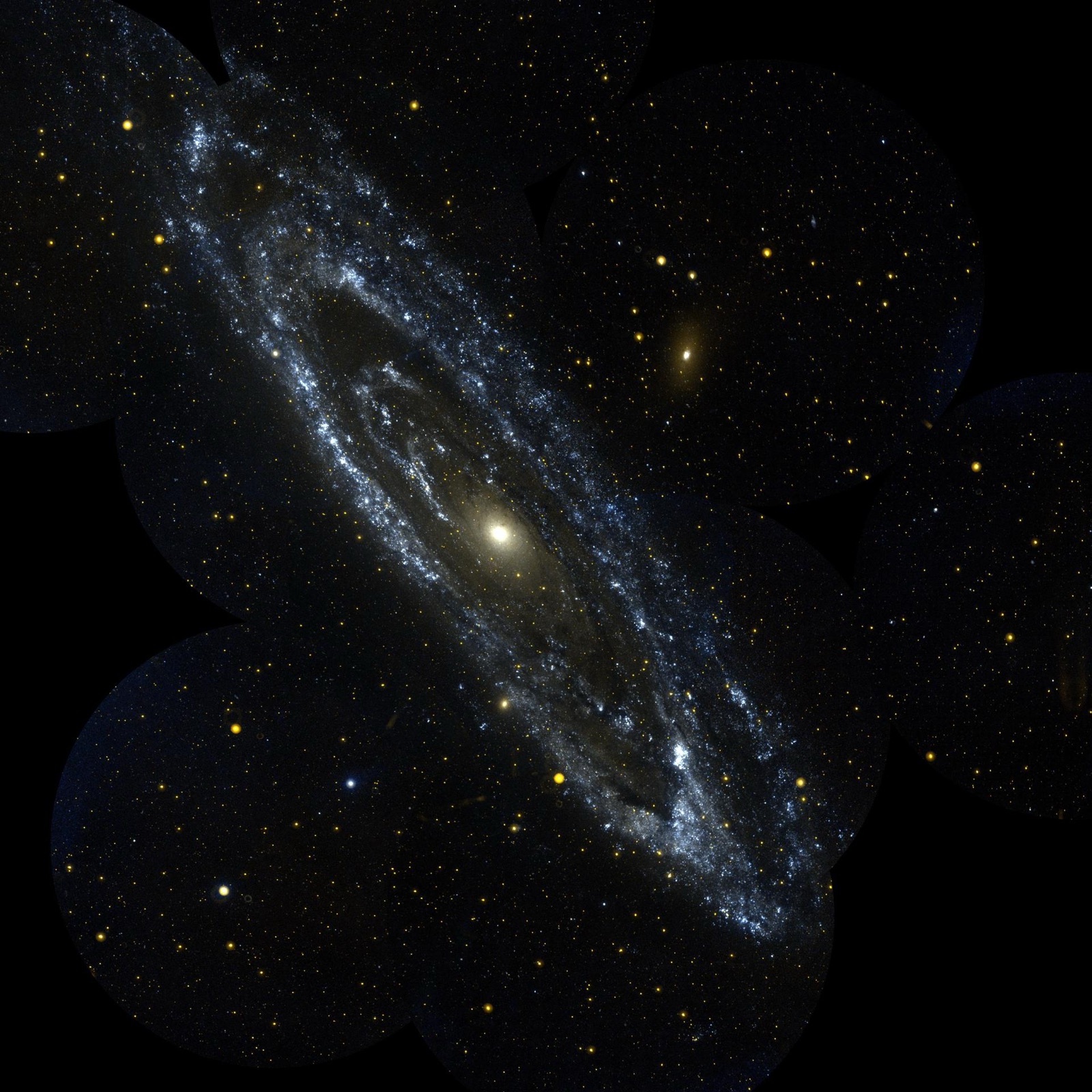
The Andromeda Galaxy, our nearest large galactic neighbor, presented an irresistible target for Hubble's cameras: close enough that individual stars are resolvable, yet vast enough to serve as a stand-in for studying the Milky Way from outside — something impossible from Earth's position inside our own galaxy, where the Milky Way itself blocks observations of 20 percent of the sky. The Panchromatic Hubble Andromeda Treasury program mapped Andromeda's northern half between July 2010 and October 2013, using 828 orbits in near-ultraviolet, visible, and near-infrared wavelengths. Its southern counterpart, the Panchromatic Hubble Andromeda Southern Treasury, mapped the southern half from December 2021 to January 2024 in 195 orbits. Together, the two programs required 1,023 Hubble orbits and produced a photomosaic of at least 2.5 billion pixels — the highest-resolution and most detailed image ever assembled of Andromeda. It reveals 200 million individual stars out of roughly one trillion in the full galaxy; the released image shows each star as something resembling a grain of sand, giving a visceral sense of the scale involved. The northern half results were released in January 2015 and the southern half in January 2025.
14 Mapping dark matter through bent light Deeper
One of Hubble's most powerful tools for probing the invisible universe is gravitational lensing — the bending of light from distant galaxies by the mass of galaxy clusters lying between them and us. The Cluster Lensing and Supernova Survey with Hubble, known as CLASH, ran as a Treasury Program from 2010 to 2013 and used this effect to observe 25 massive galaxy clusters. By analyzing the distorted shapes of background galaxies magnified and stretched by each cluster's gravity, astronomers could map the distribution of dark matter within those clusters — matter that emits no light and cannot be detected directly. CLASH specifically leveraged the new instruments installed during Servicing Mission 4 in 2009, making it one of the first major programs to exploit Hubble's post-final-servicing capabilities. The Frontier Fields program, formally the Hubble Deep Fields Initiative 2012, extended this approach by targeting clusters whose lensing power could magnify background galaxies ten to fifty times fainter than any previously known, seeking galaxies at redshifts of 5 to 10 — some of the first structures to form after the Big Bang. Together these programs illustrate how Hubble uses foreground mass as a natural telescope extension, pushing sensitivity far beyond what the mirror's 2.4-meter diameter would otherwise allow.
15 Citizen scientists and amateurs in orbit
Hubble's first director, Riccardo Giacconi, announced in 1986 that some director's discretionary time would be opened to amateur astronomers — a remarkable policy for the most expensive science instrument ever built at that point. Proposals were rigorously vetted by a committee of amateur astronomers for genuine scientific merit, non-duplication of professional work, and a requirement that only Hubble's unique capabilities could accomplish them. Thirteen amateur astronomers ultimately earned observing time, with programs running from 1990 through 1997. One of the first, a study of posteclipse brightening and albedo changes on Jupiter's moon Io, was published in Icarus. Budget reductions at STScI eventually made sustaining a formal amateur program untenable. Even so, citizen science never really left Hubble. The Galaxy Zoo project, where volunteers classify galaxy images online, led to Hubble observations of Voorwerpjes and Green Pea galaxies. The Great White Spot storm on Saturn in 1990, discovered by amateur astronomer S. Wilber, was observed by HST under a professional proposal. Amateur-discovered objects including the interstellar comet 2I/Borisov have also been followed up with Hubble, and in one pro-am collaboration a planetary mass object called WISE J0830+2837 was observed — and the non-detection by Hubble itself helped classify this unusual object.
 ⤢
⤢
Weird & wonderful
- Hubble's first images were blurry — its mirror was ground perfectly wrong by 1/50th of a hair's width.
- It has no thrusters; it aims by spinning internal wheels and locks on stars to within 0.007 arcseconds.
- Its data has fed over 21,000 scientific papers.
- It travels 8 km every second — yet can hold a target steadier than any tripod on Earth.