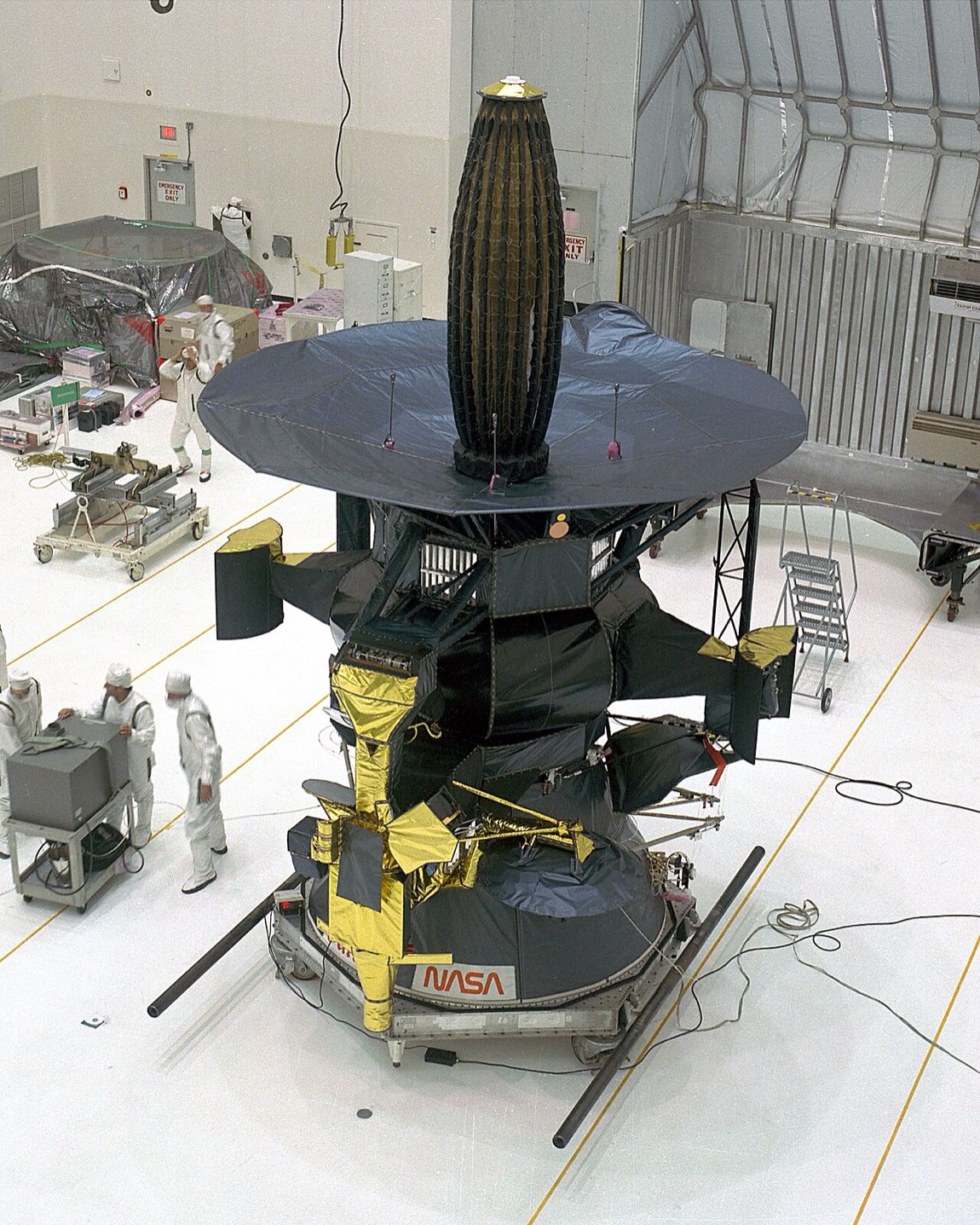
 Photograph · NASA · Public domain
Spacecraft · Deep guide
Galileo (Jupiter orbiter)
Eight years inside Jupiter's system built the case for Europa's ocean.
What is it?
NASA's Galileo, launched 1989, became Jupiter's first orbiter in 1995, dropped a probe into the giant's clouds, and spent eight years touring the moons. Its magnetometer produced the pivotal evidence for a salty ocean inside Europa — arguably its greatest legacy — and it watched comet Shoemaker–Levy 9 slam into Jupiter. In 2003, low on fuel, it was deliberately flown into Jupiter to protect Europa from contamination.
The deep dive
Researched for the Atlas from Wikipedia — Galileo (spacecraft) (22,603 characters read) · updated Sep 20, 2026
01 Why Galileo was named after a stargazer
When project manager John R. Casani — who had previously led the Mariner and Voyager projects — took charge of what was then simply called the Jupiter Orbiter Probe, he asked colleagues to suggest a more inspiring name. The most votes went to Galileo Galilei, the Italian astronomer whose 1610 telescopic discovery of four large moons orbiting Jupiter provided pivotal evidence for the Copernican model of the solar system. That discovery was so consequential because it proved that not every object in the sky revolved around Earth. An added curiosity noted at the time: Galileo was also the name of a spacecraft in the Star Trek television show. The name was officially adopted in February 1978, giving the mission both historical weight and a small pop-culture wink.
02 A dual-spin design unlike any before it
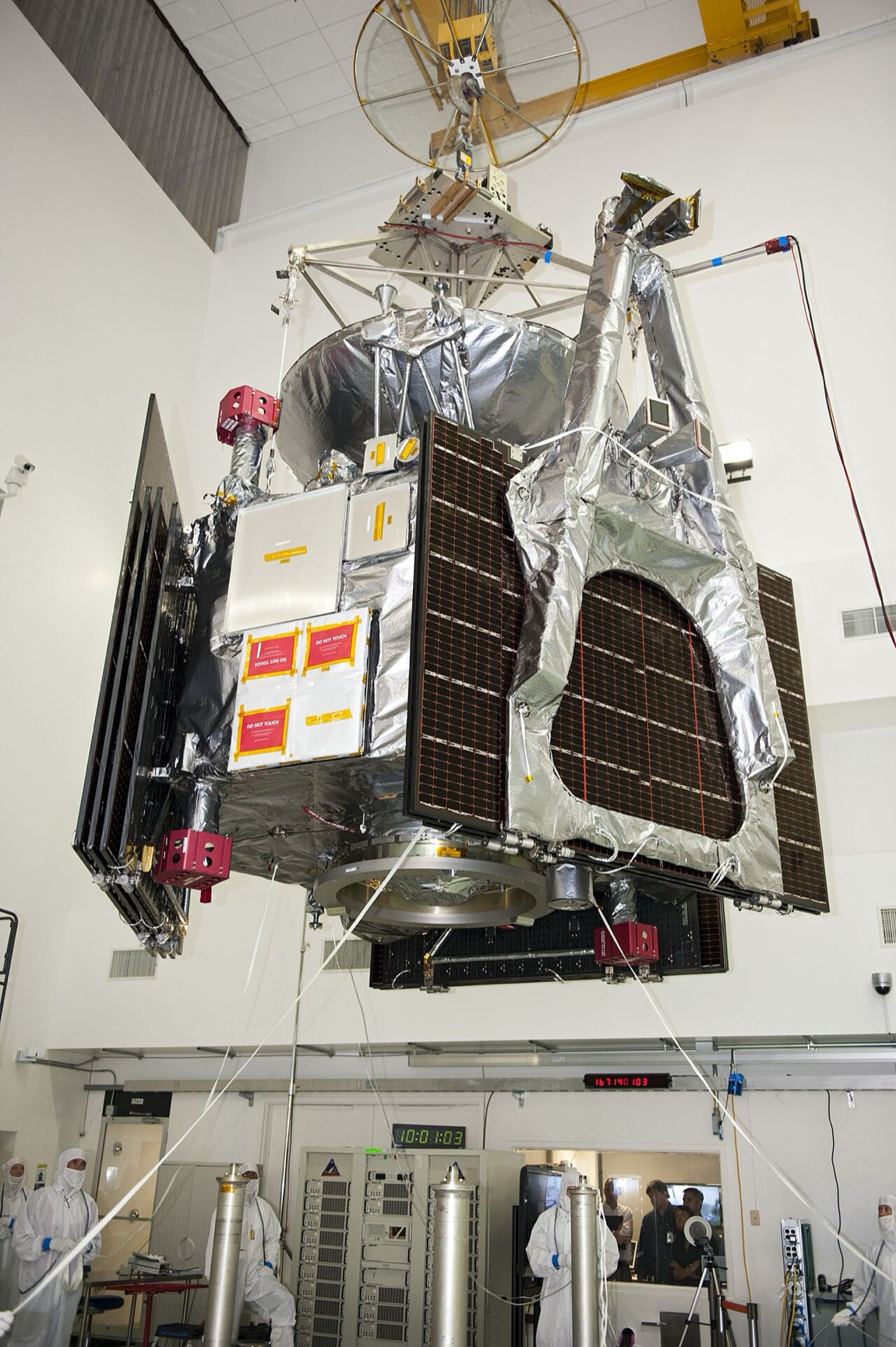
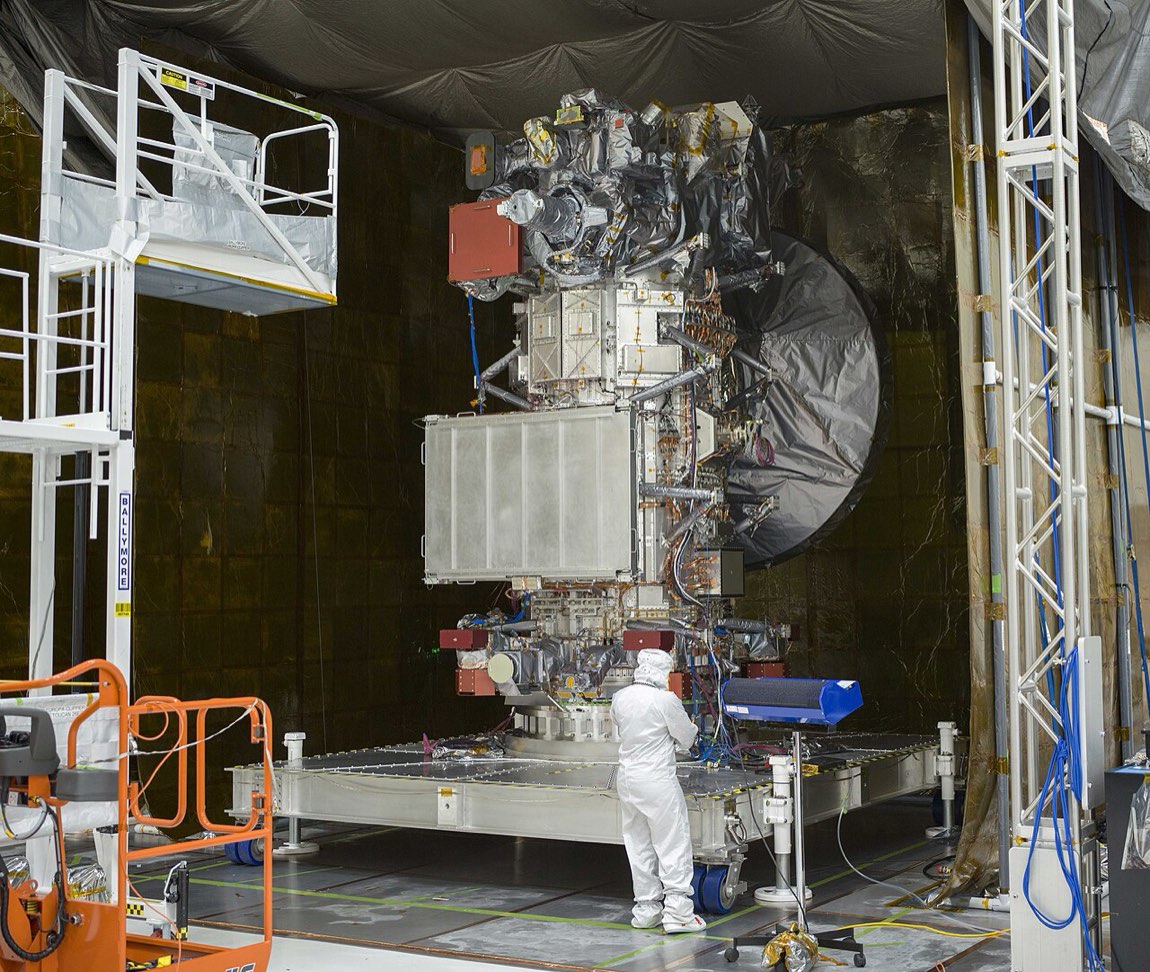
Most spacecraft are stabilized in one of two ways: they either spin continuously like a top, or they hold a fixed orientation locked to the Sun and a reference star. Galileo did both simultaneously, making it a genuinely novel machine. One section of the spacecraft rotated at exactly 3 revolutions per minute, keeping the vehicle gyroscopically stable and sweeping six fields-and-particles instruments through a full circle with every turn. The other section — called the despun platform — was counter-rotated so it remained pointed at a fixed target, allowing the camera, spectrometers, and other imaging instruments to take steady, high-resolution pictures. This dual-spin architecture was the engineering solution to a fundamental conflict: particle detectors need to sweep continuously, while cameras need to hold still.
03 Brains aboard: six 1802 microprocessors Deeper
Galileo's Command and Data Handling subsystem was controlled by six RCA 1802 COSMAC microprocessor CPUs — four on the spinning side of the spacecraft and two on the despun side. Each was clocked at about 1.6 MHz and fabricated on sapphire, a silicon-on-sapphire process that made the chips resistant to radiation and electrostatic discharge, critical properties for surviving Jupiter's ferocious radiation belts. The 1802 was an 8-bit, low-power CMOS chip — the same generation of technology being built into the Apple II desktop computer at the time. The entire CDH subsystem held 176K of RAM in total: 144K on the spinning side and 32K on the despun side. Ground operators supported the spacecraft with software totaling over 2.8 million lines of code across orbit sequencing, telemetry interpretation, and navigation tasks.
04 Power from plutonium, not sunlight
At Jupiter's distance from the Sun, solar panels would have needed a minimum of 65 square meters — about the floor area of a large apartment — to generate enough electricity, making them completely impractical. Instead, Galileo carried two radioisotope thermoelectric generators, each mounted on a 5-meter-long boom. Together they held 15.6 kilograms of plutonium-238, enriched to about 83.5 percent purity, distributed across 18 heat-source modules per RTG, each module containing four ceramic pellets of plutonium(IV) oxide. Radioactive decay generated heat, which was converted to electricity through the solid-state Seebeck effect. At launch the RTGs produced about 570 watts; power declined at roughly 0.6 watts per month, so by the time Galileo reached Jupiter it was producing 493 watts — still enough to run every instrument.
05 The antenna that never opened
Galileo carried a large high-gain antenna intended to beam data back to Earth at high speed. It failed to deploy during the mission, a crippling setback that forced the entire science team to fall back on the spacecraft's low-gain antennas for the remainder of the mission. Low-gain antennas transmit at far slower bit rates, which meant that scientists received a fraction of the data originally planned. Despite this limitation, the mission was still considered a major scientific success, demonstrating how carefully designed ground software and creative data-compression techniques could partially compensate for a hardware failure hundreds of millions of kilometers from any repair crew.
06 Sixteen instruments, 118 kilograms of science Deeper
Galileo carried sixteen scientific instruments with a combined mass of 118 kg. The camera — a solid-state imager using an 800-by-800-pixel CCD — was designed to return images of Jupiter's moons at resolutions 20 to 1,000 times better than Voyager's best, partly because Galileo flew closer to the inner moons, and partly because the CCD sensor was more sensitive across a broader color band than the vidicon tubes Voyager used. The near-infrared mapping spectrometer sampled wavelengths from 0.7 to 5.2 micrometers for chemical analysis of atmospheres and moon surfaces. The magnetometer sensors rode on an 11-meter boom to minimize interference from the spacecraft itself, capable of measuring fields ranging from ±32 nT out to ±16,384 nT. A dust detector could register particles as small as 10⁻¹⁶ grams traveling anywhere from 1 to 70 kilometers per second.
07 The probe's scorching plunge into Jupiter
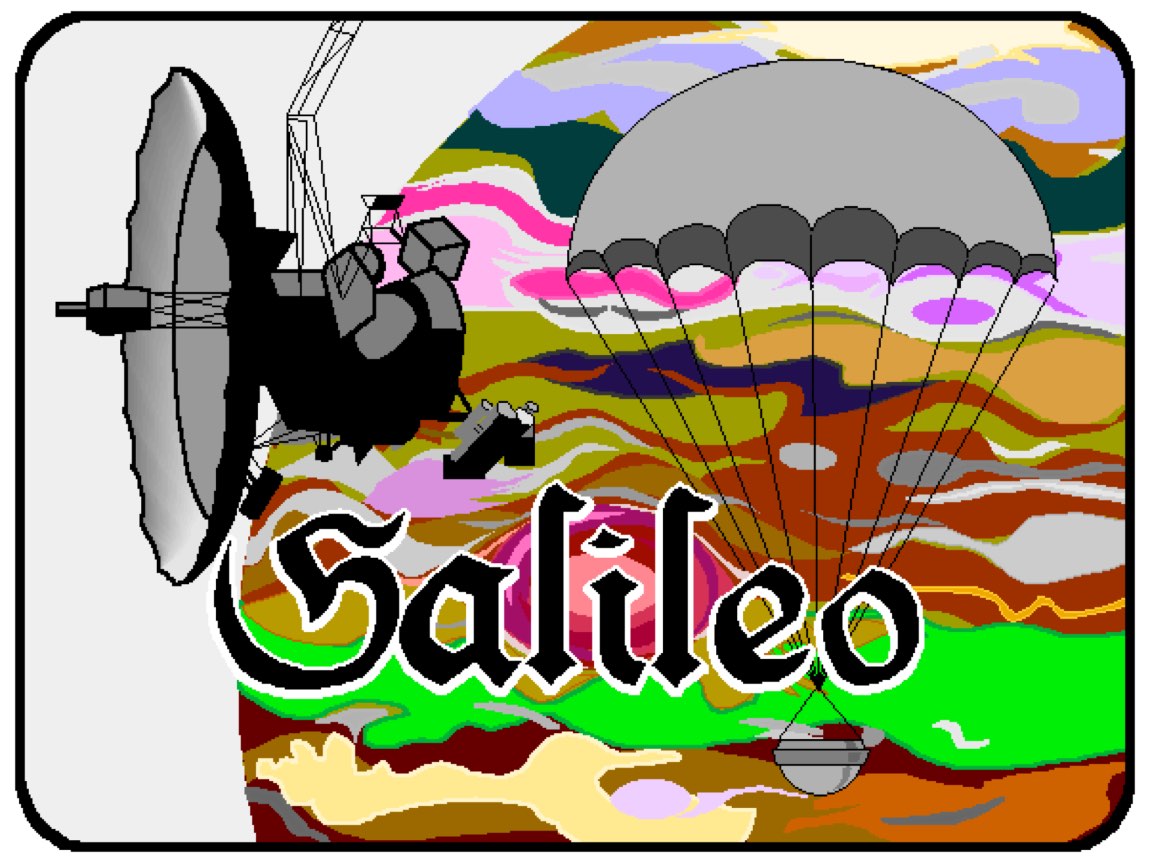
The cone-shaped atmospheric probe, built by Hughes Aircraft Company and managed by NASA's Ames Research Center, weighed 339 kilograms and stood 86 centimeters tall. When it slammed into Jupiter's atmosphere it was traveling at 48 kilometers per second — about 110,000 mph — generating surface temperatures around 16,000 °C, roughly three times hotter than the surface of the Sun. Its ablative heat shield, made of carbon phenolic, protected the seven scientific instruments inside. To develop and test the shield, NASA built a dedicated facility called the Giant Planet Facility, which simulated the extreme convective and radiative heating the probe would experience — heating comparable, the article notes, to what an ICBM warhead endures during atmospheric reentry. Power came from 13 lithium sulfur dioxide batteries, each the size of a standard D cell.
 ⤢
⤢
08 A road trip before the rocket ride
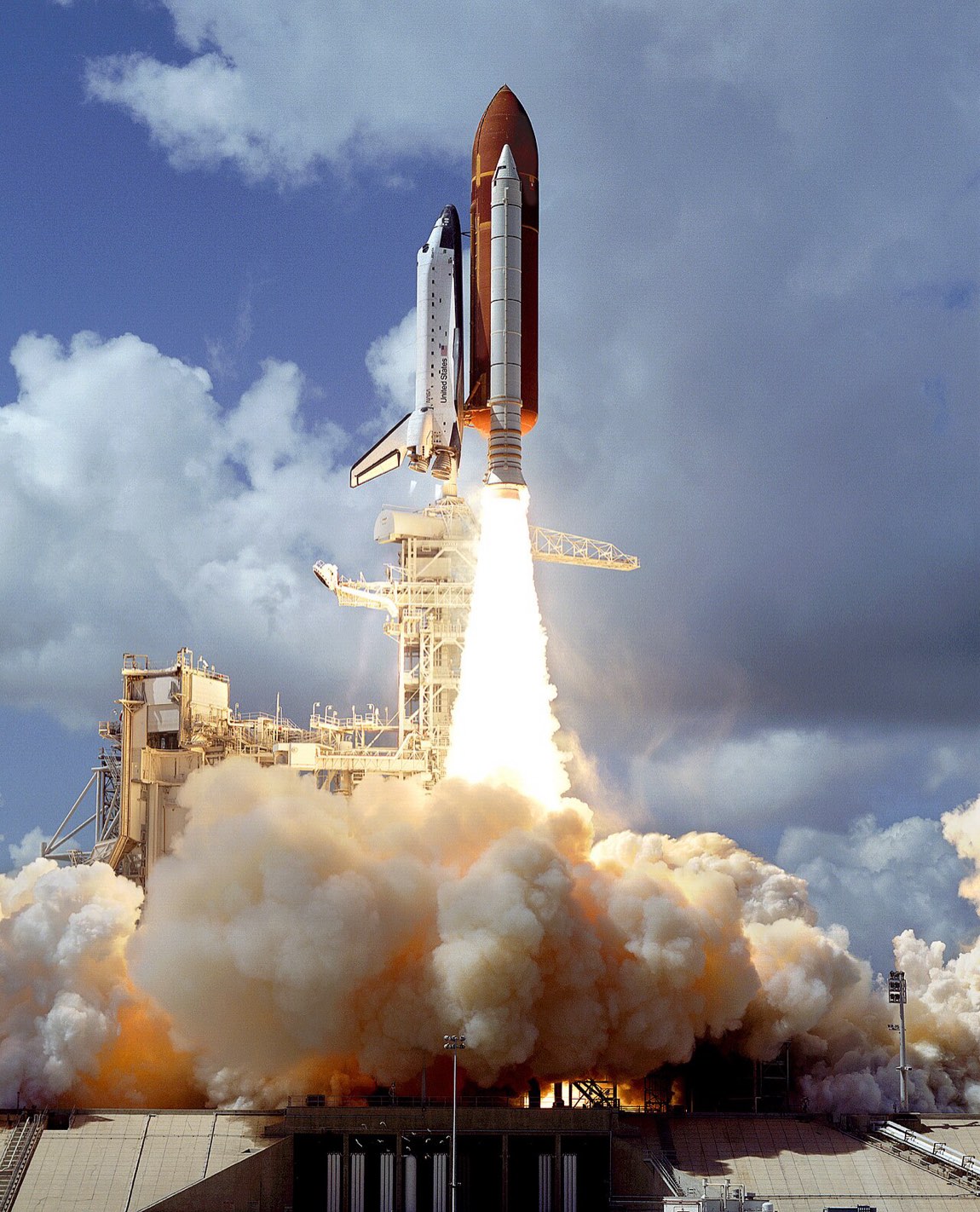
Long before Galileo left Earth's gravity, it took a decidedly terrestrial journey. On December 19, 1985, the spacecraft departed the Jet Propulsion Laboratory in Pasadena, California, on a road trip to the Kennedy Space Center in Florida. Its launch was then delayed twice — first by the Space Shuttle Challenger disaster, which pushed the original May launch back to October 12, 1989, and then by a faulty main engine controller and inclement weather, which pushed it to October 18. Space Shuttle Atlantis finally lifted off at 16:53:40 UTC that day, reaching a 343-kilometer orbit. Galileo was deployed at 00:15 UTC on October 19 and, after the IUS solid-rocket burn, separated from the upper stage at 01:06:53 UTC. It was already headed toward Venus at over 14,000 km/h.
09 Gravity assists: the long road to Jupiter
Galileo did not fly directly to Jupiter. Instead, mission planners routed it on a trajectory that used gravitational assist flybys of Venus and Earth to build up the speed needed to reach the outer Solar System. These planetary slingshots were essential because no rocket of that era could deliver enough energy in a single launch to send a 2,562-kilogram spacecraft all the way to Jupiter. The strategy added years to the journey, but it worked: Galileo arrived at Jupiter on December 7, 1995, more than six years after launch. On arrival it became the first spacecraft ever to orbit an outer planet — a milestone for planetary exploration. Its journey demonstrated that gravitational assists were not a workaround but a fundamental tool of deep-space mission design.
10 Propulsion: one big engine, twelve small ones Deeper
Galileo's propulsion system, developed and built entirely by West Germany's Messerschmitt-Bölkow-Blohm, centered on a 400-newton main engine used for major maneuvers such as Jupiter orbit insertion. Twelve smaller 10-newton thrusters, grouped in sets of six on two 2-meter booms, handled fine attitude control and smaller velocity changes. The propellant — 925 kilograms of monomethylhydrazine and nitrogen tetroxide — made up more than a third of the spacecraft's total launch mass of 2,562 kilograms. Two separate tanks held an additional 7 kilograms of helium pressurant. When all usable propellant was exhausted after years of orbital maneuvers around Jupiter, there was no way to steer the spacecraft away from the planet's moons, which drove the decision to end the mission deliberately.
11 A deliberate death to protect Europa
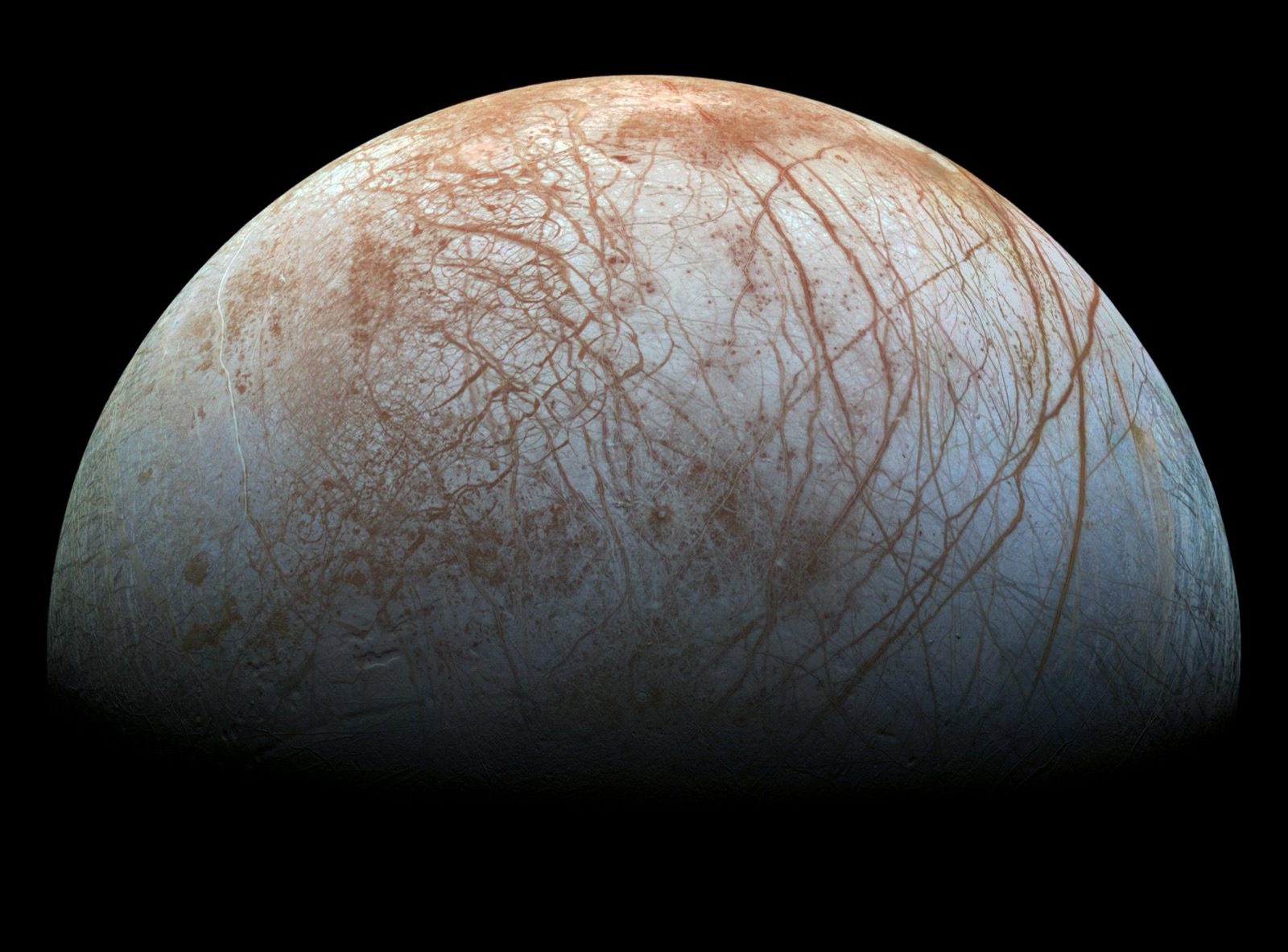
Galileo was not simply switched off when its mission ended. On September 21, 2003, mission controllers deliberately commanded it to plunge into Jupiter's atmosphere, where it was destroyed. The reason was planetary protection: scientists were concerned that if the spacecraft drifted uncontrolled, it could eventually crash into Europa, one of Jupiter's moons that Galileo itself had revealed as a strong candidate for harboring liquid water beneath its icy surface. Even after years in the radiation-heavy Jovian environment, engineers could not rule out that Earth microbes might have survived aboard the spacecraft. Contaminating Europa with biological material could compromise any future search for indigenous life there. The next spacecraft to orbit Jupiter, Juno, would not arrive until July 5, 2016 — more than twelve years later.
12 How ground teams managed 2.8 million lines of code Deeper
Operating Galileo from Earth required a software infrastructure of staggering complexity. The mission operations team relied on programs containing 650,000 lines of code for orbit sequence design — planning exactly what the spacecraft would do and when. Interpreting the telemetry streaming back required 1,615,000 lines of code, while navigation alone demanded another 550,000 lines. Together, that is more than 2.8 million lines of software guiding a single robotic mission. Every hardware component and spare part on the spacecraft also underwent a minimum of 2,000 hours of testing before launch. The spacecraft was designed to last at least five years — just long enough to complete the transit to Jupiter and carry out its primary mission — but it ultimately operated for nearly fourteen years from the time it left JPL.
13 A particle detector that could find cosmic dust Deeper
Among Galileo's most specialized instruments was the dust-detector subsystem, which measured the mass, electric charge, and velocity of individual particles striking it in space. The range of masses it could sense spanned nine orders of magnitude — from 10⁻¹⁶ grams up to 10⁻⁷ grams, covering dust grains far too small to see with any microscope. Impact speeds could be measured anywhere from 1 to 70 kilometers per second. The detector could register impact rates from as slow as one particle per 115 days — about one hit every 10 megaseconds — up to 100 particles per second during denser dust populations. Data from this instrument helped scientists trace the origin and movement of dust within Jupiter's magnetosphere, contributing to the understanding of how material cycles through the Jovian system.
 ⤢
⤢