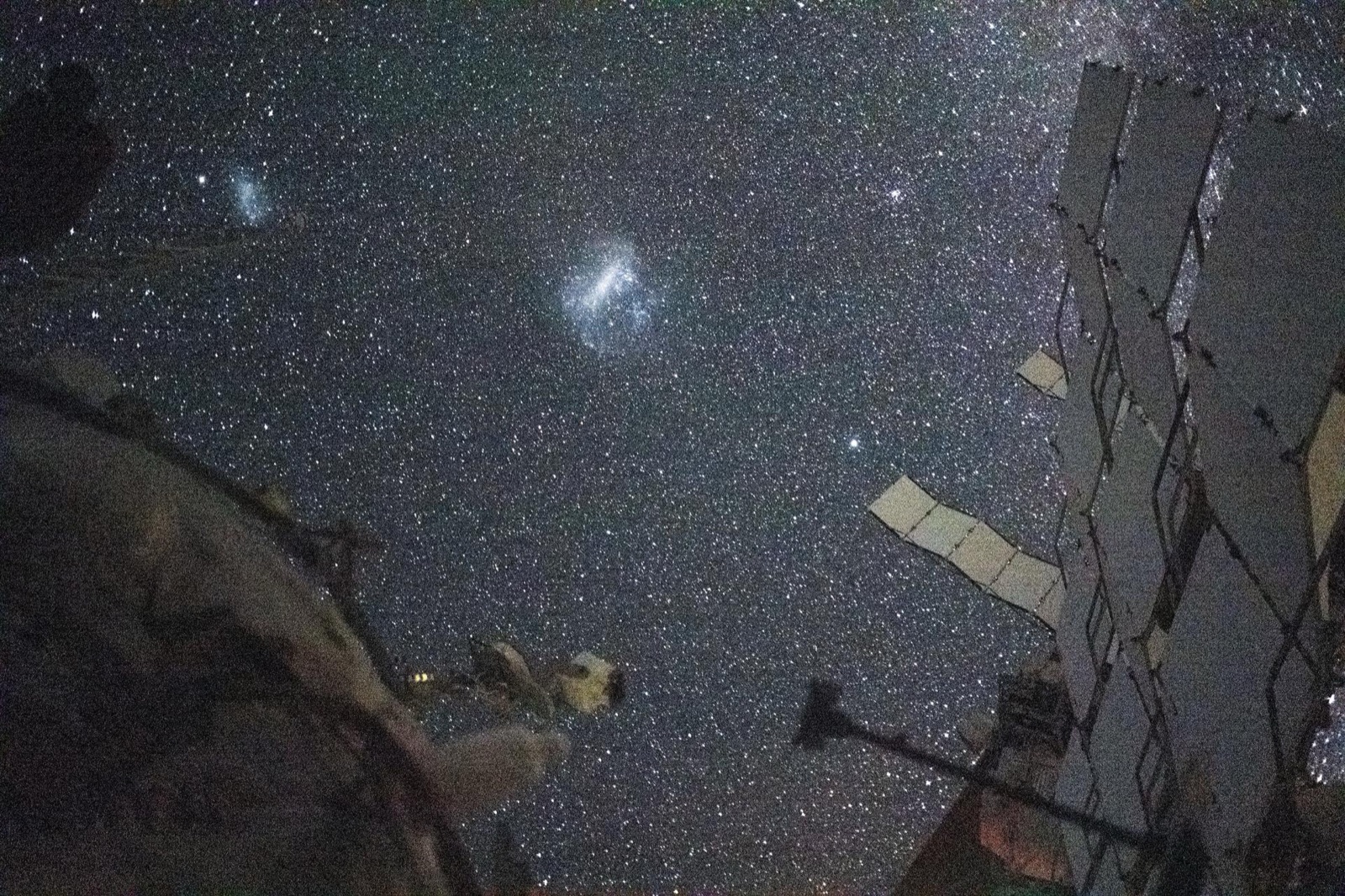
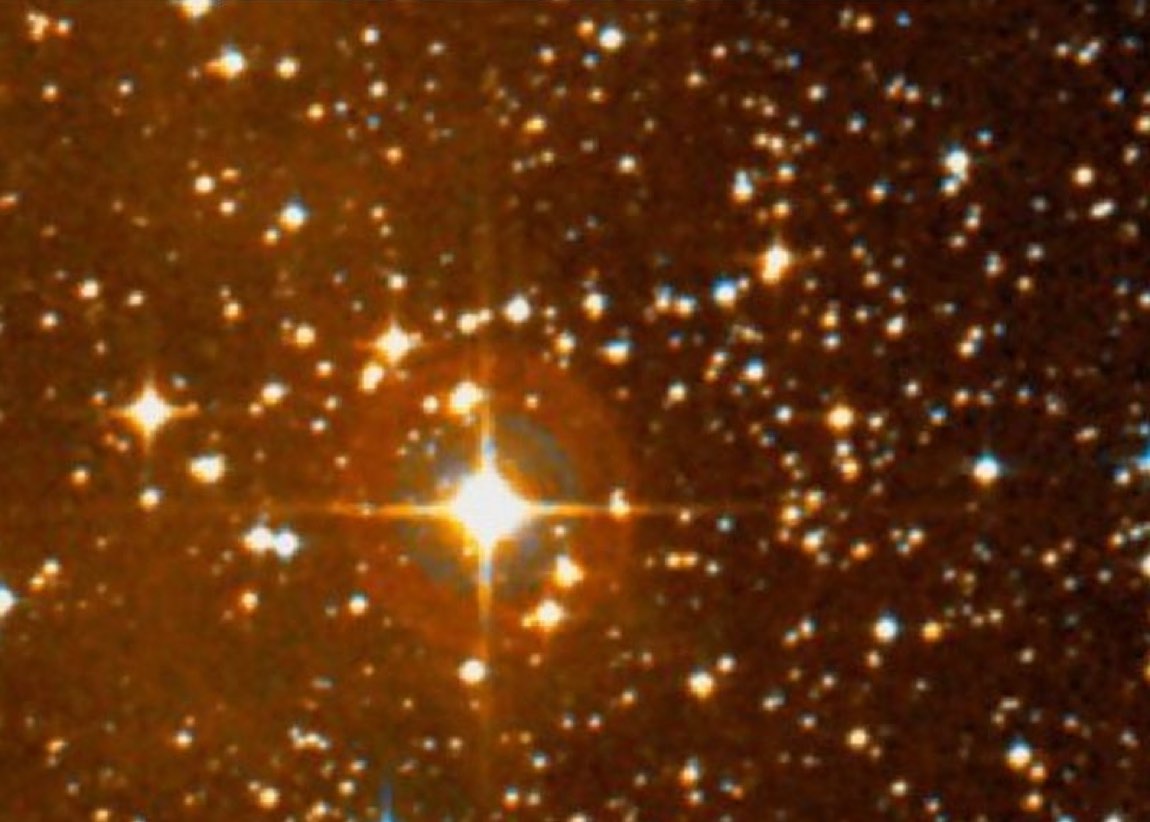
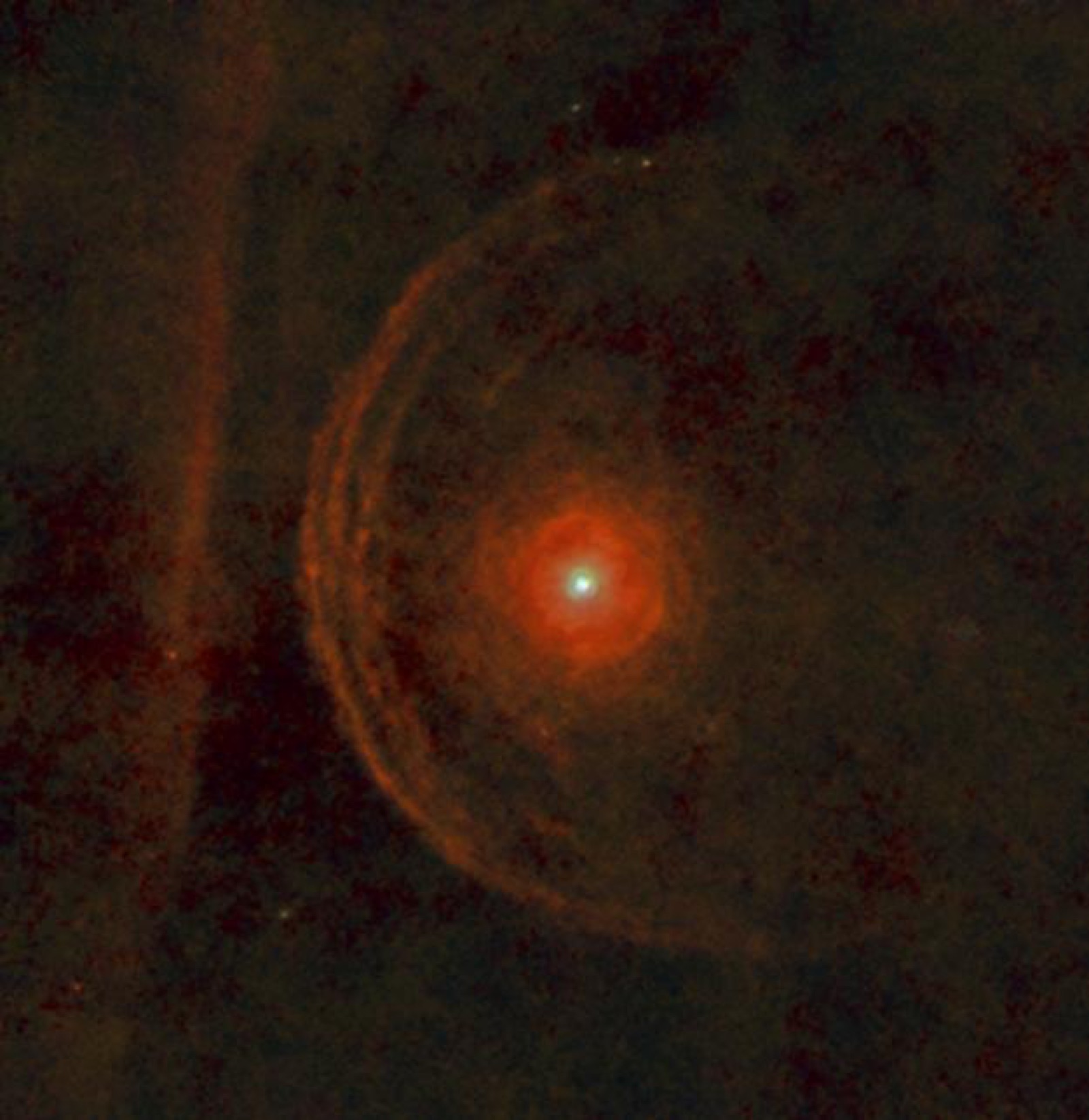
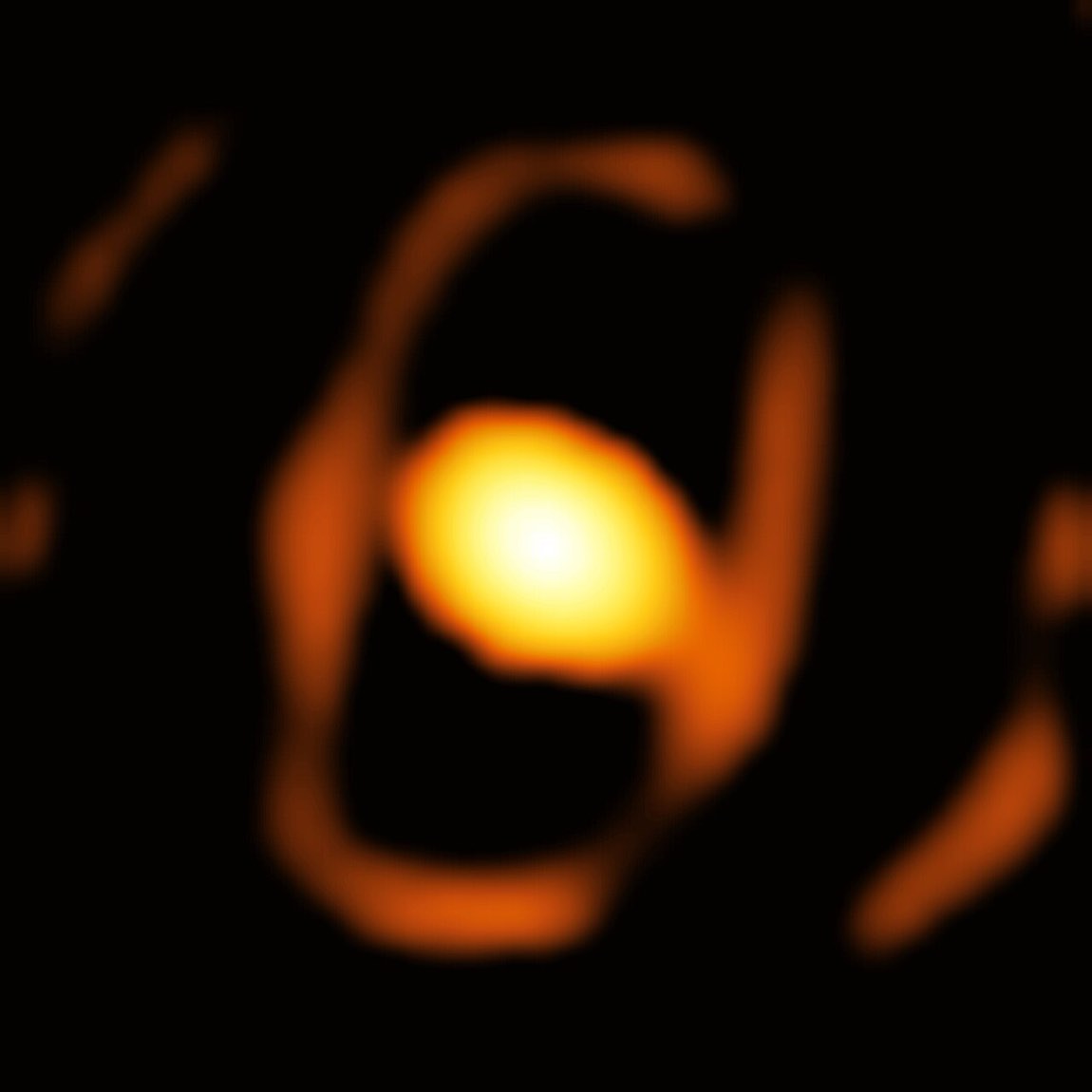
 Photograph · ESO/K. Ohnaka et al. · CC BY 4.0
Star · Deep guide
WOH G64
A dying giant in another galaxy became the first star outside the Milky Way seen up close.
What is it?
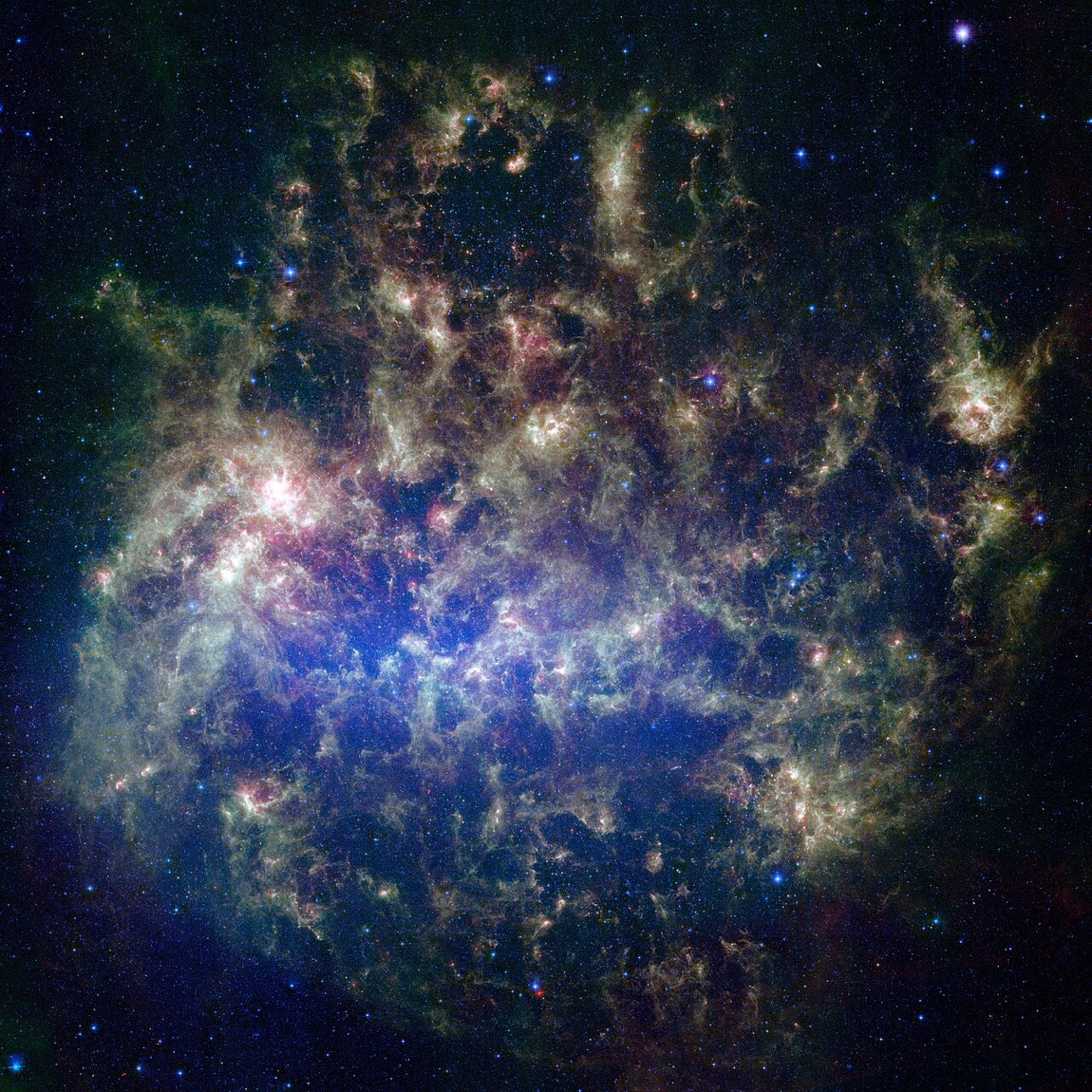
WOH G64 is a red supergiant in the Large Magellanic Cloud, 160,000 light-years away, roughly 1,500 times the Sun's width and cocooned in a thick torus of its own shed dust. In 2024 the VLT's GRAVITY interferometer captured a zoomed-in image of it — the first close-up of any star beyond our galaxy — showing it dimming and changing shape as it approaches its end.
The deep dive
Researched for the Atlas from Wikipedia — WOH G64 (8,866 characters read) · updated Sep 20, 2026
01 Discovery and the Minds Behind the Name
WOH G64 was discovered in the 1970s by three astronomers: Bengt Westerlund, Nils Olander, and B. Hedin. The "WOH" in the star's name is simply the initials of their surnames, following the same convention used for NML Cygni, which was named after its own trio of discoverers. Rather than naming just this one star, the team compiled an entire catalogue of giant and supergiant stars in the Large Magellanic Cloud, and WOH G64 is one entry in that broader survey. Westerlund himself was a remarkably productive observer — he also discovered four red supergiants in the massive super star cluster now bearing his name, Westerlund 1, in the constellation Ara, including the notable star W26. The early importance of WOH G64 became clearer in 1986, when infrared observations revealed it to be a highly luminous supergiant wrapped in gas and dust so thick that the surrounding material was absorbing roughly three-quarters of the star's total radiation output — a dramatic clue that something extraordinary was hiding inside.
02 A Dust Torus and a Milestone for Imaging Deeper
For decades, the cloud surrounding WOH G64 was assumed to be a roughly spherical shell, and all early estimates of the star's luminosity and radius were calculated on that basis. In 2007, observers using the Very Large Telescope changed that picture entirely, demonstrating that the dust is not a sphere at all but a torus — a doughnut-shaped ring — and that we happen to be viewing it nearly pole-on. This orientation means we are looking straight down through the open cavity of the torus, where radiation escapes most freely. As a result, every earlier luminosity estimate based on the spherical-shell assumption was an overestimate, because the models did not account for radiation preferentially leaking out toward the observer. The corrected luminosity, derived from radiative transfer modelling of the torus geometry, fell to around 280,000 solar luminosities — roughly half of some earlier figures. The torus itself spans roughly a light-year in diameter and contains between 3 and 9 solar masses of expelled material. In 2024, the Very Large Telescope Interferometer directly imaged this dusty torus, capturing the elongated and compact emission around the star in unprecedented detail. Crucially, this was the first interferometric image ever obtained of a star located outside the Milky Way.
03 Why the Star's True Size Is Hard to Pin Down Deeper
Measuring WOH G64's radius has been a moving target precisely because the answer depends on assumptions about the dust geometry and the star's temperature. Early spectroscopic measurements assuming spherical shells placed the luminosity between 490,000 and 600,000 solar luminosities, implying a radius of 2,575 to 3,000 solar radii and an initial mass of at least 40 solar masses. A 2018 optical and infrared photometry study, still assuming spherically symmetric radiation, arrived at 432,000 solar luminosities, an effective temperature of 3,500 K, and a radius of 1,788 solar radii. Once the torus geometry was properly accounted for, radiative transfer modelling settled on a luminosity near 280,000 solar luminosities and a radius around 1,730 solar radii at an effective temperature of 3,200 K. The most widely cited modern figure, from Levesque et al. in 2009, derives an effective temperature of 3,400 ± 25 K through spectral fitting, yielding a luminosity of 282,000 solar luminosities and a radius of 1,540 ± 77 solar radii. These parameters place WOH G64 at the upper right corner of the Hertzsprung–Russell diagram, consistent with the largest known galactic red supergiants and with theoretical limits such as the Hayashi limit and the Humphreys–Davidson limit.
04 Its Spectral Type Is Surprisingly Cool
On paper, WOH G64 carries a spectral classification of M5, but observations consistently find it behaving much more like an M7.5 star — a significantly cooler designation. That distinction matters enormously, because an M7.5 temperature is highly unusual for a supergiant star of this class. The star's atmosphere produces a strong silicate absorption band at mid-infrared wavelengths and also shows line emission from highly excited carbon monoxide, hinting at the complex layered structure of its outer layers. WOH G64 also emits masers — natural microwave amplification — in three molecular species: hydroxyl (OH), water (H2O), and silicon monoxide (SiO). This combination is a classic signature of what astronomers call an OH/IR supergiant star. On top of this, the star displays an unusual spectrum of nebular emission in which the surrounding hot gas is unusually rich in nitrogen. Strikingly, the radial velocity of that nebular gas is considerably more positive than the velocity of the star itself — a 50 km/s discrepancy that puzzled researchers for years and ultimately became an important clue pointing toward an unseen companion.
05 The Mass It Is Shedding at a Staggering Rate
One of the most extreme things about WOH G64 is how rapidly it is losing mass. The star's average mass loss rate is estimated between 3.1 and 7.4 × 10⁻⁴ solar masses per year — among the highest mass loss rates known for any star and described as unusually high even by the already extravagant standards of red supergiants. To put that in concrete terms, at the lower end of that range, the star is shedding roughly 620 Earth masses every year through its stellar wind. It is this relentless outflow that has built the surrounding torus, which now holds between 3 and 9 solar masses of expelled material spread across a diameter of roughly a light-year. The wind has been powerful enough not just to sculpt a massive circumstellar envelope but to absorb roughly three-quarters of the star's own radiation within that envelope. This level of mass loss is important for understanding how the most massive stars end their lives, because the amount of mass a star retains going into its final stages directly determines what kind of explosion or collapse it will produce.
06 How Its Brightness Changes Over Time
WOH G64 is a variable star, but pinning down exactly what kind has proven genuinely difficult. Historically, it varied regularly in brightness by more than a magnitude at visual wavelengths, with a primary period of around 800 days. That behavior led some researchers to describe it as a carbon-rich Mira variable or long-period variable — a classification that would make it an asymptotic-giant-branch star rather than a true supergiant, a meaningful distinction. The variation at infrared wavelengths is much smaller than at visual wavelengths, partly because the star suffers from over six magnitudes of extinction at visual wavelengths — meaning the surrounding dust swallows an enormous fraction of its visible light. Brightness variability has been confirmed by multiple research groups in some spectral bands, but the true variable type remains contested. No significant spectral variation has been found alongside the brightness changes. Around 2014, the character of the variability shifted noticeably, transitioning from semi-regular pulsations to irregular behavior — a change that became a key piece of evidence in a subsequent debate about whether the star itself had fundamentally changed.
07 The Great Yellow Hypergiant Debate Deeper
The shift to irregular variability around 2014, combined with the appearance or disappearance of certain spectral lines inconsistent with a red supergiant, led Muñoz-Sanchez et al. in 2024 to propose a striking conclusion: WOH G64's primary star had transitioned from a red supergiant into a yellow hypergiant. In this interpretation, the star would have shrunk to roughly 800 solar radii — about half its previously measured size — while heating to an effective temperature of 4,700 K and shifting its spectral class to early K or late G. The authors argued that the transition's smoothness, without any violent outburst, was explained by the stabilizing influence of a binary companion. However, this interpretation was directly challenged by Van Loon and Ohnaka in 2026, who reported detecting molecular absorption bands of titanium oxide in spectroscopic data taken between 2024 and 2025 — bands that can only form in a cool red supergiant atmosphere. Their alternative explanation attributed the earlier anomalies to the companion passing close to the primary at periastron: tidal forces stretched the outer atmospheric layers, shifting the optical-depth-1 surface inward to a hotter layer, which altered the observed spectral features and variability. After the periastron passage ended, the star reportedly returned to its original state.
08 The Companion Star That Took Decades to Find
For most of its observational history, WOH G64 was treated as a solitary red supergiant with no known companion. That changed in 2016, when its spectrum began showing features characteristic of B[e] stars — a class of hot stars with unusual emission-line characteristics. Astronomers interpreted these features as the spectral signature of a massive symbiotic binary, in which the red supergiant is losing material that is being accreted by a companion B-type star. Several independent lines of evidence now support this picture: the persistent presence of hot dust close to the system, the elongated emission seen in interferometric imaging, and the decline in optical brightness observed during the 2010s. The orbital period of the companion must be at least a century — a lower limit, not a precise measurement. The possibility of a hot companion had actually been floated much earlier: Levesque et al. in 2009 suggested that a late O-type main-sequence star with a bolometric magnitude of −7.5 and a luminosity of roughly 100,000 solar luminosities could be ionizing the surrounding nebula, which would explain why the nebular emission lines are shifted by 50 km/s relative to the primary star's own spectral features.
09 Measuring Distance Across 163,000 Light-Years Deeper
WOH G64's distance of approximately 50 kiloparsecs — about 163,000 light-years — is not measured directly but inferred from its apparent membership in the Large Magellanic Cloud, whose distance is independently established. Direct distance measurement via parallax has not been reliable: the Gaia Data Release 3 parallax for WOH G64 is −0.2477 ± 0.0430 milliarcseconds, and a negative parallax value is a sign of measurement noise rather than a physically meaningful result, providing no reliable geometric distance. This means the entire physical characterization of the star — its luminosity, radius, and mass — rests on the assumption that it truly belongs to the Large Magellanic Cloud and shares the cloud's well-determined distance. If that assumption held any significant error, all the derived parameters would shift accordingly. This is a fundamental limitation in studying extragalactic stars: even a star as extreme as WOH G64 is too far away for current astrometric instruments to measure its parallax cleanly, making its host galaxy membership the linchpin of our understanding of its true nature.
10 Where It Sits on the HR Diagram and Why That Matters Deeper
The Hertzsprung–Russell diagram maps stars by luminosity against temperature, and WOH G64 sits in one of its most extreme and sparsely populated corners: the upper right, where temperatures are cool and luminosities are immense. The revised physical parameters from Levesque et al. — a temperature of 3,400 K and a luminosity of 282,000 solar luminosities — place the star consistent with the largest galactic red supergiants and hypergiants such as VY Canis Majoris, and also consistent with theoretical upper boundaries on what cool, luminous stars can look like. Those boundaries are defined by the Hayashi limit, which constrains how cool and extended a star in hydrostatic equilibrium can become, and the Humphreys–Davidson limit, which describes the empirically observed upper boundary of the HR diagram above which stars are rarely if ever found in their cool, luminous state. WOH G64's position right at these limits makes it a useful observational test case for stellar physics. It also shares its position on the diagram with other heavily mass-losing hypergiants known to have circumstellar disks or tori, including VY Canis Majoris, Mu Cephei, and the post-red supergiant IRC +10420.
11 What the Star's Extreme Scale Looks Like in Practice
Abstract size ratios become more vivid with concrete comparisons. WOH G64's radius of 1,540 solar radii means that if it replaced the Sun at the center of our Solar System, its visible surface — its photosphere — would extend outward past the orbit of Jupiter, swallowing Mercury, Venus, Earth, Mars, and the asteroid belt entirely. A beam of light would need more than six hours to travel once around the star's circumference, compared to just 14.5 seconds to circle the Sun. Even at this scale, it is worth noting that the 1,540 solar radii figure is the most carefully derived modern estimate; other measurement methods and assumptions have produced figures ranging from around 1,730 to as high as 3,000 solar radii, depending on how the surrounding dust is modeled. The surrounding torus of expelled gas and dust stretches to roughly a light-year in diameter — meaning the cloud of material the star has shed is itself a structure spanning distances comparable to the spacing between nearby stars in our own galactic neighborhood.
12 Open Questions Still Surrounding This Star Deeper
Despite being studied for decades, WOH G64 leaves several fundamental questions unresolved. The star's true variable type remains contested: researchers cannot firmly agree whether it is a Mira variable, a long-period variable, or a genuine supergiant pulsator, and the shift from semi-regular to irregular variability around 2014 has not been definitively explained. The claim that the primary transitioned to a yellow hypergiant stage — advanced in 2024 and rebutted in 2026 — is an active scientific dispute, and the community has not reached consensus. The companion's orbital period is constrained only to be at least a century, with no precise orbital solution yet available. The star's initial mass is uncertain across a wide range: early spherical-shell models implied at least 40 solar masses, while torus-corrected modelling suggests 25 ± 5 solar masses. Whether WOH G64 is the largest known star with a well-defined radius, as stated in recent literature, also depends on which measurement and which comparison stars are accepted as reliable. It stands as one of the most extreme stellar objects accessible to telescopes, yet many of its basic properties remain genuinely open.
 ⤢
⤢