- Surface temperature
- 5,510 K
- Radius
- 0.75 × the Sun
- Luminosity
- 0.466 × the Sun
- Spectral type
- G8V
Star · Deep guide
Tau Ceti
Science fiction's favorite address is the nearest lone Sun-like star.
What is it?
Tau Ceti, 11.9 light-years away in Cetus, is the closest single star genuinely similar to the Sun — no blinding companion, no violent flares, just a slightly smaller, calmer G-type star. It hosts a debris disk about ten times denser than our Kuiper Belt and at least four planet candidates from radial-velocity data, two skirting the habitable zone — promising but not yet confirmed, and labeled accordingly.
The deep dive
Researched for the Atlas from Wikipedia — Tau Ceti (22,786 characters read) · updated Sep 20, 2026
01 A Star You Can See Tonight
You do not need a telescope to find Tau Ceti. It shines at an apparent magnitude of 3.5, comfortably visible to the naked eye on a clear night in the constellation Cetus, the Sea Monster. That brightness puts it among the few thousand stars a person with average eyesight can pick out from a dark site. Because it sits just under 12 light-years away, the light entering your eye right now left the star around the time a child born in 2013 started primary school. The view works in reverse, too: anyone looking back at our Sun from Tau Ceti would find it glowing at magnitude 2.6 in the northern constellation Boötes — slightly brighter than Tau Ceti appears to us, simply because the Sun is the more luminous of the two. That near-symmetry is part of what makes Tau Ceti feel so neighborly: it is close enough, and similar enough, that the comparison runs both ways.
02 Its Ancient Arabic and Chinese Names
Long before Johann Bayer assigned the Greek letter tau to this star in his 1603 atlas Uranometria, other traditions had already named it. In the Calendarium of Al Achsasi al Mouakket, compiled in Cairo around 1650, it was called Thālith al Naʽāmāt, meaning "the third of the ostriches." The star belonged to a group of five stars in Cetus that Arabic astronomers collectively called Al Naʽāmāt, the Hen Ostriches, alongside η Cet, θ Cet, ζ Cet, and υ Cet. In the Latin translation of that catalogue the name became Tertia Struthionum. Chinese sky-watchers placed it in a completely different picture: Tau Ceti was the fifth star in an asterism called the Square Celestial Granary, Tiān Cāng, a storehouse of six stars including ι Ceti, η Ceti, ζ Ceti, θ Ceti, and 57 Ceti. Its formal Chinese designation is Tiān Cāng wǔ. The Bayer label we use today, established in 1603, simply records it as the twentieth letter of the Greek alphabet within the constellation Cetus.
03 How Tau Ceti Moves Across Our Sky Deeper
Tau Ceti is classified as a high-proper-motion star, sliding across the celestial sphere at 1.9 arcseconds per year — a pace that means it takes 1,900 years to drift one degree, roughly twice the apparent width of the full Moon. That swift crawl (swift by stellar standards) is itself a clue to proximity: nearby stars arc across the background of distant ones far more noticeably than remote stars do, which is why high proper motion has long been used to flag candidates for parallax measurements. Those parallax measurements confirm the distance of 11.9 light-years. Tau Ceti is also approaching us: its radial velocity is about −17 km/s, the negative sign indicating inbound motion. Combining proper motion, radial velocity, and distance gives a total space velocity of 37.2 km/s relative to the Sun. Following that trajectory forward in time, Tau Ceti will reach its closest point to the Solar System in roughly 43,000 years, passing within 10.6 light-years (3.25 parsecs). Its orbit through the Milky Way has a mean galactocentric distance of 9.7 kiloparsecs and an eccentricity of 0.22.
04 A Star Measured to Half a Percent Deeper
Most stellar properties are inferred indirectly by fitting the observed spectrum to theoretical models of stellar evolution. Tau Ceti has been measured more directly than most stars its size. Using astronomical interferometry — a technique that combines signals from multiple telescopes to achieve extremely fine angular resolution — astronomers measured Tau Ceti's radius to an accuracy of 0.5%, finding it to be 79.3% ± 0.4% of the solar radius. That precision rivals the measurement of some objects much closer to Earth. The star's surface gravity, expressed as log g, is approximately 4.4, barely different from the Sun's value of 4.44, suggesting a nearly identical gravitational environment at the surface despite the lower mass and radius. Its luminosity is 55% of the Sun's, meaning Tau Ceti puts out barely more than half the energy output per second. A habitable-zone planet would therefore need to huddle in at roughly 0.7 AU — about the distance of Venus from our Sun — to receive the same warmth Earth enjoys.
05 Metal-Poor: What That Reveals About Age Deeper
Astronomers use the word "metallicity" for any element heavier than helium, and they measure it by comparing a star's iron-to-hydrogen ratio against the Sun's on a logarithmic scale. Tau Ceti's metallicity is approximately −0.50 dex, equivalent to roughly one third of the Sun's iron abundance, though measurements across different studies have ranged from −0.13 to −0.60. A low metallicity is a strong indicator of age: as generations of stars live and die they seed the interstellar medium with progressively more heavy elements, so older stars formed when that enrichment was less advanced and carry a lower metallic fingerprint. Tau Ceti's iron poverty points to an age now estimated at around 9 billion years, more than twice the Sun's 4.57 billion years, though models give a wide range of 4.4 to 12 billion years. That antiquity has real consequences: low metallicity also correlates statistically with a reduced likelihood of planet formation, since the raw solid material available to build rocky or giant worlds is scarcer when a protoplanetary disk is iron-poor.
06 A Sluggish Spin and What It Hides Deeper
Tau Ceti's rotation period was originally estimated at 34 days by tracking periodic variations in the H and K absorption lines of singly ionized calcium — spectral features sensitive to surface magnetic activity that rise and fall as active regions spin into and out of view. A 2023 study revised that figure upward to 46 ± 4 days and measured a projected equatorial velocity of only 0.1 ± 0.1 km/s, compared with a typical value of about 2.5 km/s for a similar G8-type star. The dramatic difference is most likely not because Tau Ceti is an unusually slow rotator, but because Earth lies almost directly above one of its poles: the star is probably inclined at just 7° ± 7° from pole-on as seen from here. When a star is viewed pole-on, the Doppler broadening of its spectral lines nearly vanishes, making the star appear to spin far slower than it actually does. This geometry also has implications for planet masses: any planets sharing that near-face-on alignment would appear lighter in radial-velocity data than they truly are, potentially making Neptune-scale worlds masquerade as super-Earths.
07 The Quiet Chromosphere and Its Puzzles
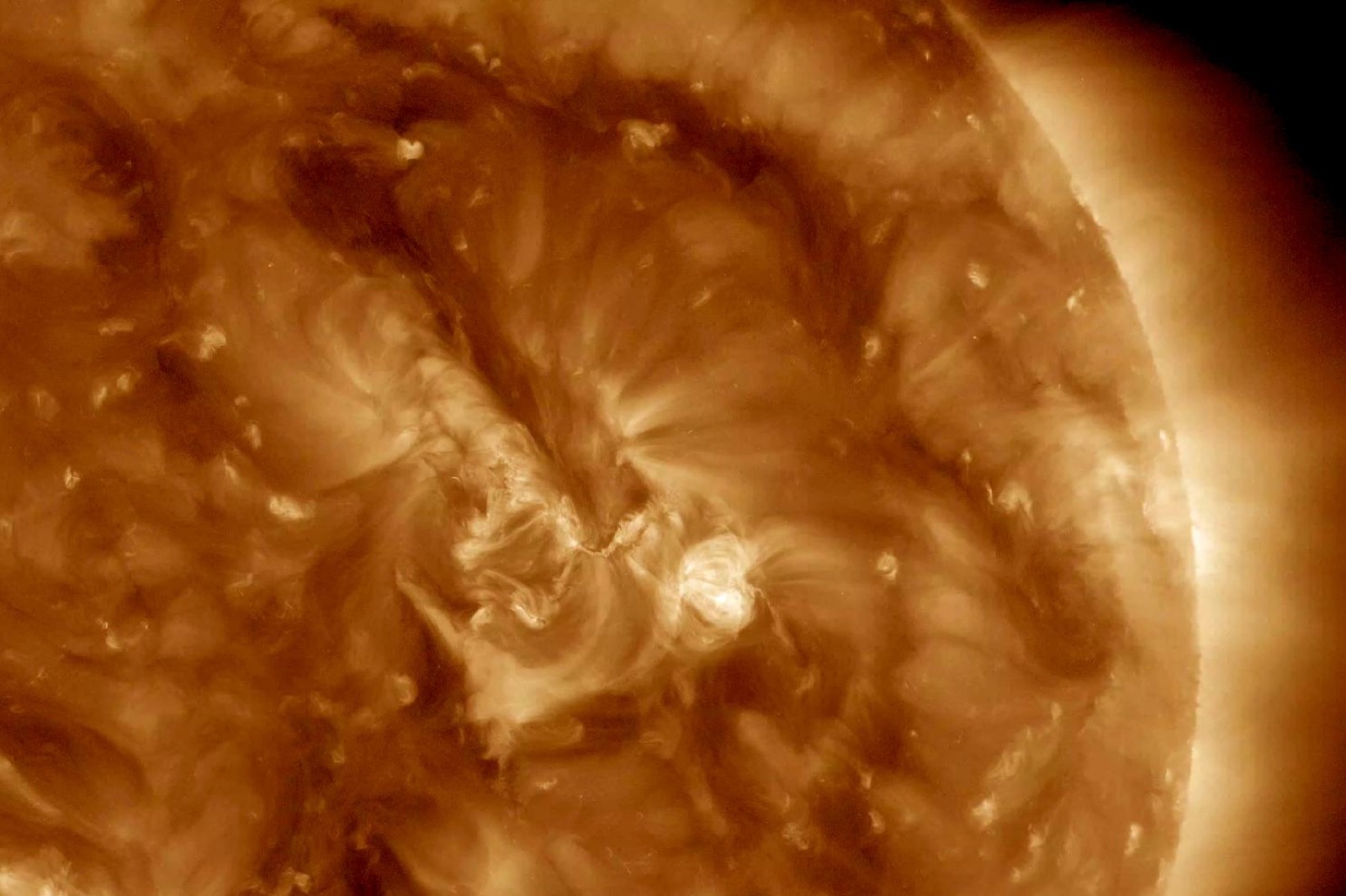
The chromosphere is the thin shell of gas sitting just above a star's visible surface, and its activity level tells astronomers how magnetically restless the star is. Tau Ceti's chromosphere is remarkably calm. A nine-year study of its temperature, granulation, and chromospheric emissions found no systematic variations at all. Calcium H and K infrared emissions hint at a possible 11-year cycle, similar to the Sun's sunspot cycle, but the signal is weak relative to the Sun's. One explanation is that Tau Ceti may be passing through an extended magnetic minimum analogous to the Sun's Maunder Minimum — a period between roughly 1645 and 1715 when sunspots nearly vanished from the Sun, contributing to the Little Ice Age in Europe. The star's spectral lines are extremely narrow, consistent with low turbulence and slow observed rotation. Its asteroseismological oscillations — the tiny rhythmic pulsations driven by internal sound waves — have amplitudes about half those of the Sun and shorter mode lifetimes, reinforcing the picture of a placid, well-behaved star.
08 The Enormous Debris Disk Around It
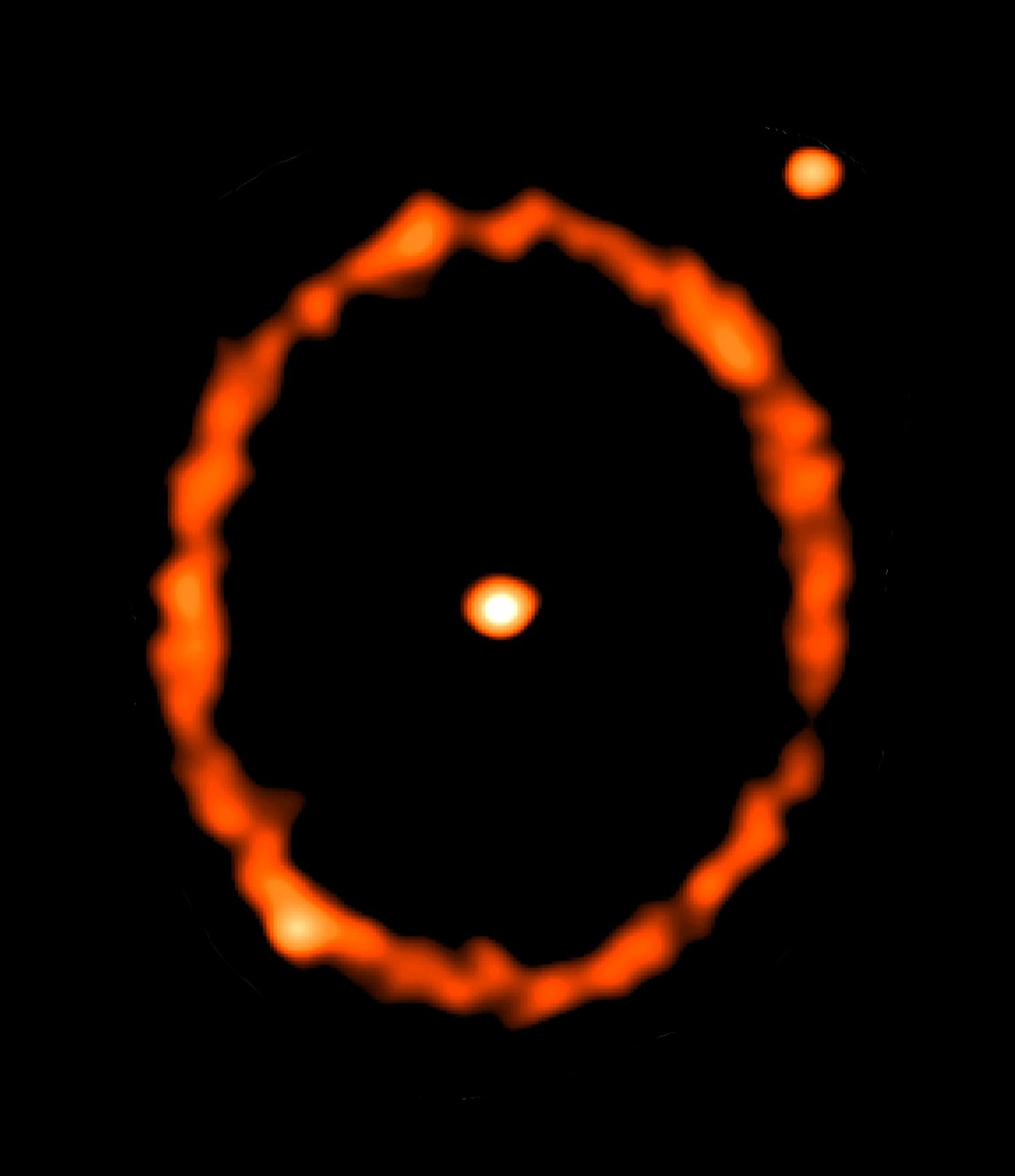
In 2004, a team of UK astronomers led by Jane Greaves discovered that Tau Ceti is surrounded by more than ten times the amount of cometary and asteroidal debris found in our own Solar System. The discovery came from measuring far-infrared radiation — heat emitted by cold dust produced when small bodies collide. The disk is symmetric around the star and extends outward with an outer radius averaging 55 AU; warmer material appears to be absent inside 10 AU, suggesting an inner cleared zone. The densest part of the disk lies between 35 and 50 AU, a range reminiscent of the Solar System's Kuiper belt (which stretches from 30 to 50 AU). Maintaining so much dust over billions of years requires a constant supply from collisions among larger parent bodies. Despite Tau Ceti's age, it retains this massive belt — though it is only 1/20 as dense as the disk around the much younger nearby star Epsilon Eridani. Greaves noted that any planets in the system would likely experience bombardment events "of the kind believed to have wiped out the dinosaurs" at roughly ten times the current frequency Earth endures.
09 Planet Candidates: A Long, Contested Search
Astronomers have chased planets around Tau Ceti for decades. As early as 1988, radial-velocity surveys ruled out massive planets in Jupiter-like orbits. By December 2012, a team announced five candidate planets with minimum masses between 2 and 6 Earth masses and orbital periods ranging from 14 to 640 days; the velocity precision at that time reached about 11 m/s over five years. Updated analysis in August 2017 confirmed two of those candidates, designated e and f, and added two new ones, g and h, with signals as faint as 30 cm/s in radial velocity — slower than a leisurely walking pace. A 2025 study using the ESPRESSO spectrograph, sensitive enough to detect a 1.7 Earth-mass planet with periods up to 100 days, found no confirmed planets at all. Tau Ceti e was subsequently listed as a false positive by the NASA Exoplanet Archive in April 2026. Candidate g shows a weak 20-day signal that is not statistically significant, f falls below the detection limit, and as of 2025 no planet around Tau Ceti has been unambiguously confirmed.
10 Frank Drake's First SETI Target
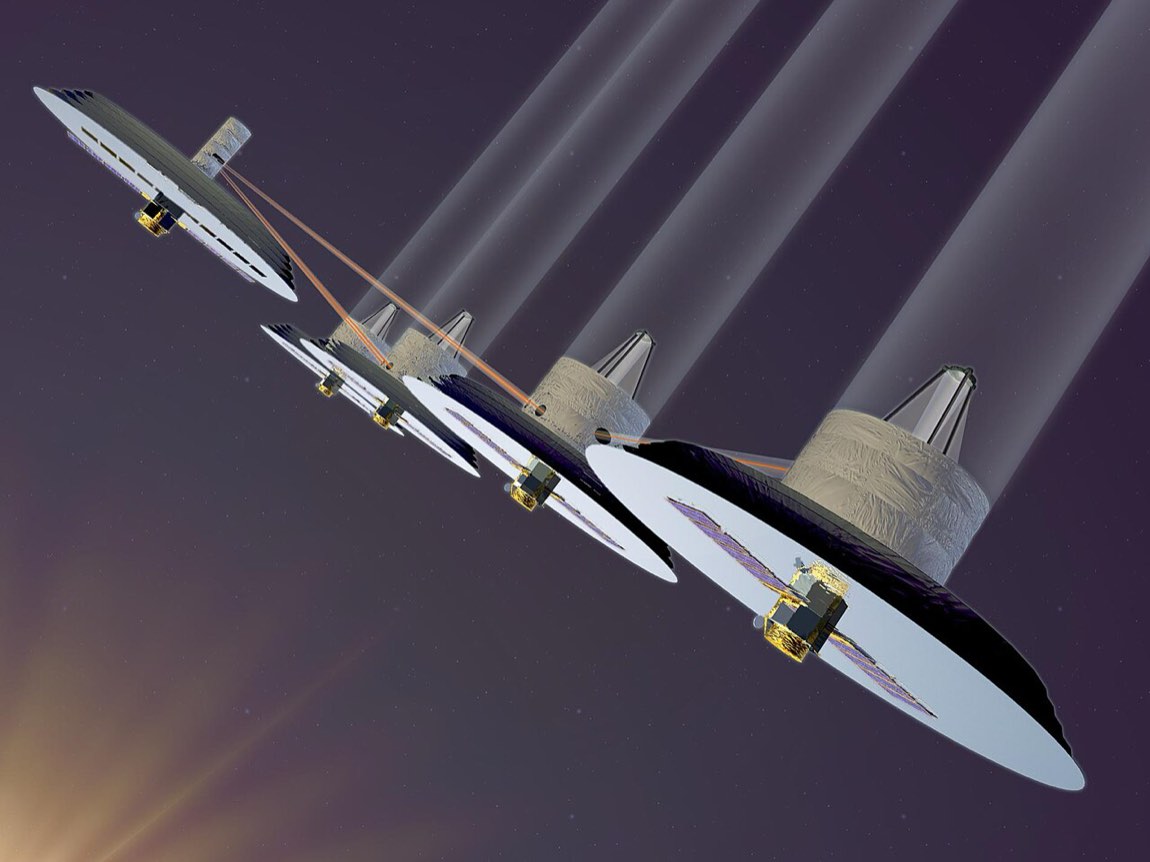
Tau Ceti holds a landmark place in the history of the search for extraterrestrial intelligence. In Project Ozma — the first modern SETI experiment — astronomer Frank Drake deliberately chose just two stars to monitor for artificial radio signals: Tau Ceti and Epsilon Eridani. Both were selected for being close to the Solar System and physically similar to the Sun. The project logged 200 hours of observations and found nothing artificial. That negative result did not end the story. In 2002, astronomers Margaret Turnbull and Jill Tarter built the Catalog of Nearby Habitable Systems under Project Phoenix, whittling a sample of stars down to more than 17,000 theoretically habitable systems. Turnbull later narrowed that list further to 30 of the most promising systems within 100 light-years, with Tau Ceti among them, as a foundation for searches with the Allen Telescope Array. She also chose it for a final shortlist of just five stars she considered suitable for the (now cancelled) Terrestrial Planet Finder telescope, remarking that "these are places I'd want to live if God were to put our planet around another star."
11 How the Debris Disk Shapes Planet Chances Deeper
The sheer mass of material in Tau Ceti's debris disk complicates every habitability calculation. The disk's inner edge sits at roughly 10 AU, well outside any plausible habitable zone (which spans 0.55–1.16 AU), so the disk itself is not in the zone where life might arise. But the constant grinding of large bodies at 35–50 AU injects a steady rain of smaller fragments across the entire system. A 2015 study concluded that any planet candidate in the habitable zone may have spent less than one billion years inside the temperate zone, potentially too short a window for biosignatures to accumulate to detectable levels. Greaves's team calculated that rocky planets would suffer impact events roughly ten times more frequently than present-day Earth, a bombardment rate that could repeatedly sterilize or disrupt surface environments between impact events. Paradoxically, astronomers note that debris-disk stars appear to form planets more readily than disk-free stars — it is the remaining leftover material, not the planets themselves, that is the hazard.
12 The Closest Solitary Sun-Like Star
Alpha Centauri A is the only G-type star closer to us than Tau Ceti, but Alpha Centauri A is part of a triple-star system, locked gravitationally to Alpha Centauri B and Proxima Centauri. Tau Ceti is something rarer at cosmic scales: a completely solitary G-type star. A dim object with magnitude 13.1 was spotted 137 arcseconds away as of 2000, but astronomers consider it more likely a chance alignment of a background star than a true companion. The combination of being the nearest single G-type star, having a temperature and radius closely matching the Sun, and sitting just under 12 light-years away makes Tau Ceti an unusually clean comparison point for studying how a Sun-like star ages in isolation. Its extreme age of around 9 billion years also gives astronomers a preview of what our own Sun's activity level might eventually resemble, since Tau Ceti's chromosphere is already far quieter than the present-day Sun's.
 ⤢
⤢