 Photograph · ESO VLT MUSE; Melina Thévenot · CC BY-SA 4.0
Star · Deep guide
Luhman 16
The brown dwarfs next door: failed stars with mapped weather.
What is it?
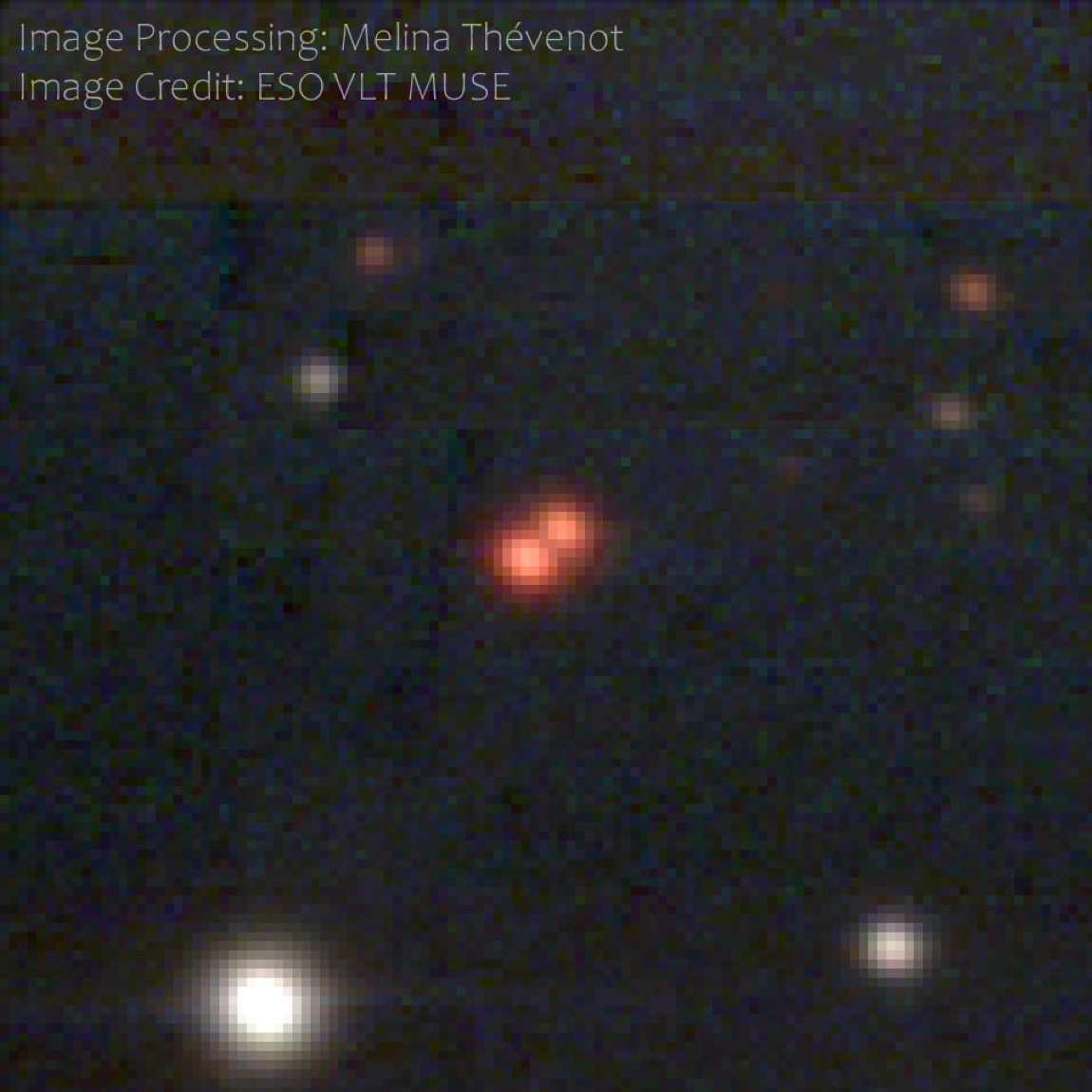
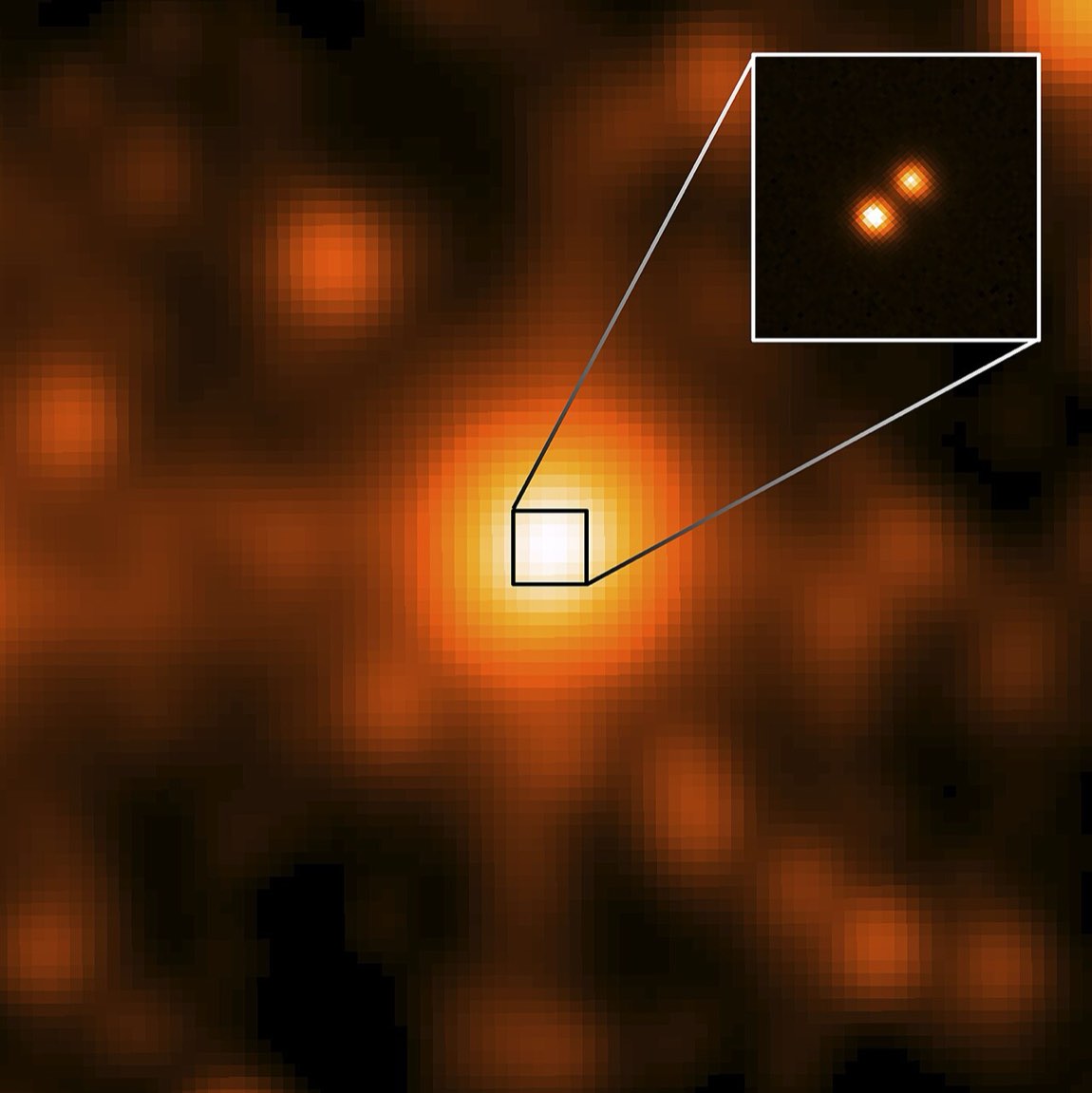
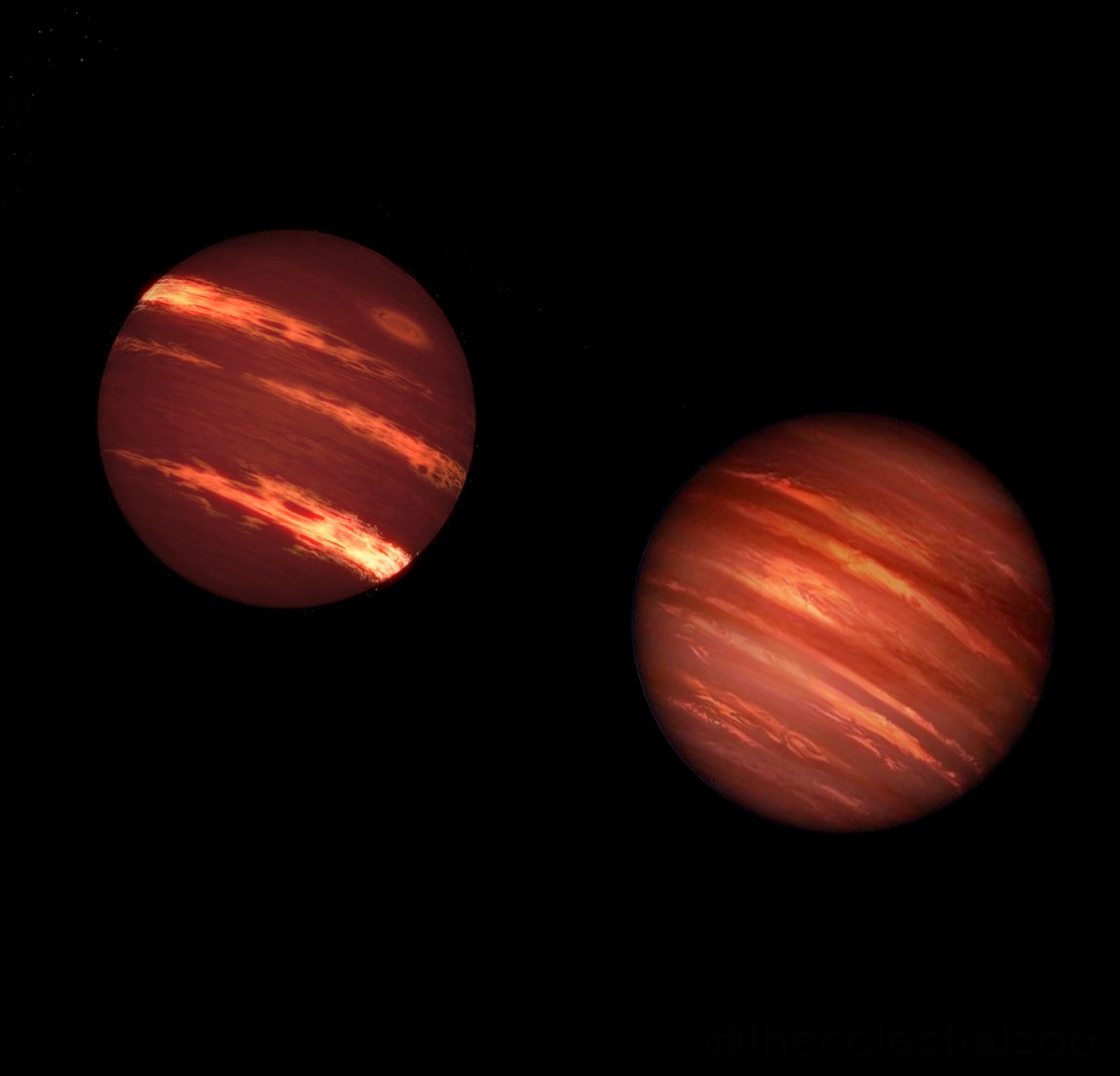
Luhman 16, discovered only in 2013, is the third-closest system to the Sun at 6.5 light-years: a pair of brown dwarfs — 'failed stars' too light to sustain fusion — orbiting each other. Astronomers have mapped patchy silicate clouds rotating across one of them: the first weather map of any world outside the Solar System.
The deep dive
Researched for the Atlas from Wikipedia — Luhman 16 (15,540 characters read) · updated Sep 20, 2026
01 How Kevin Luhman Found It — and Why Nobody Did Before
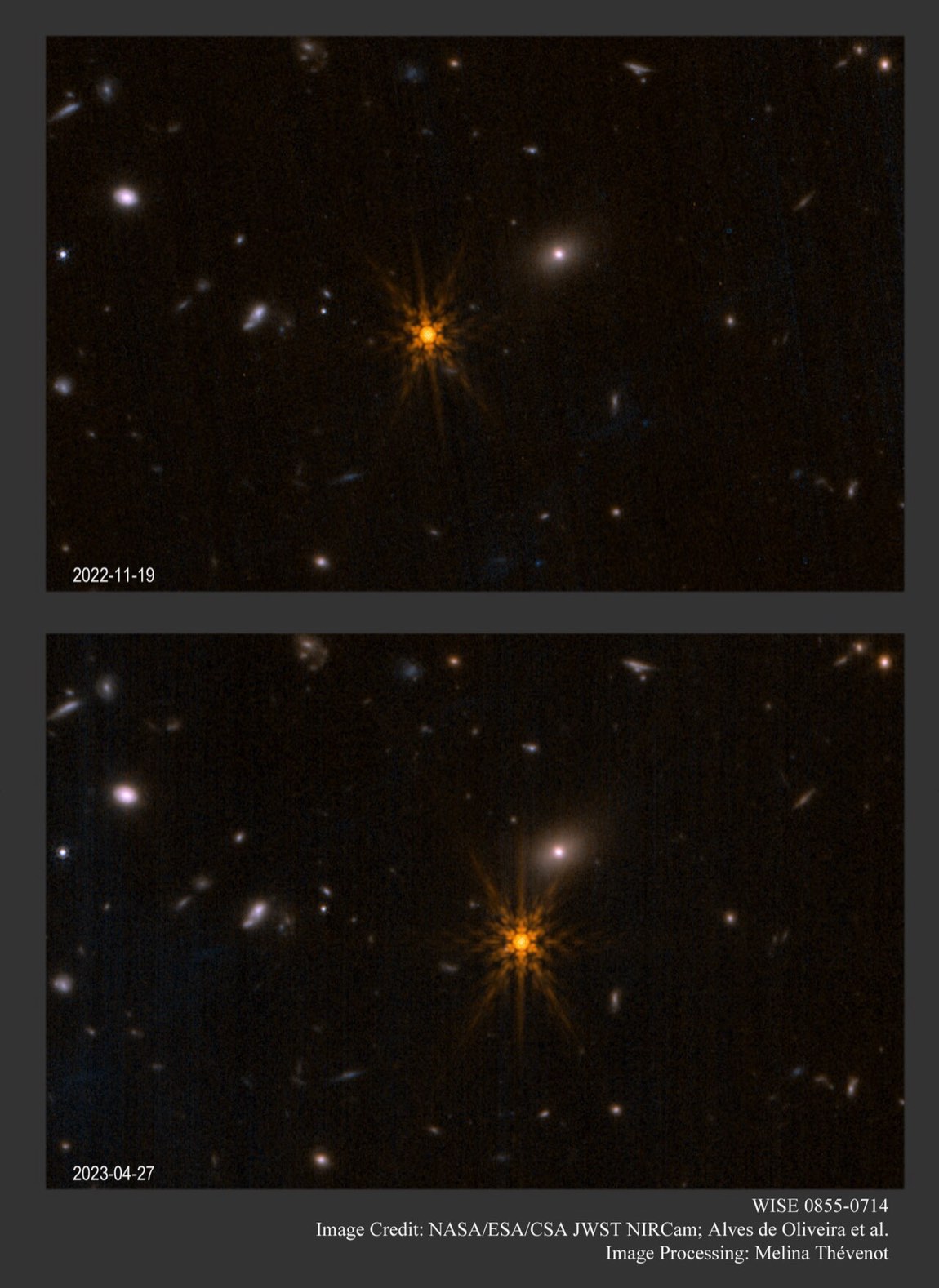
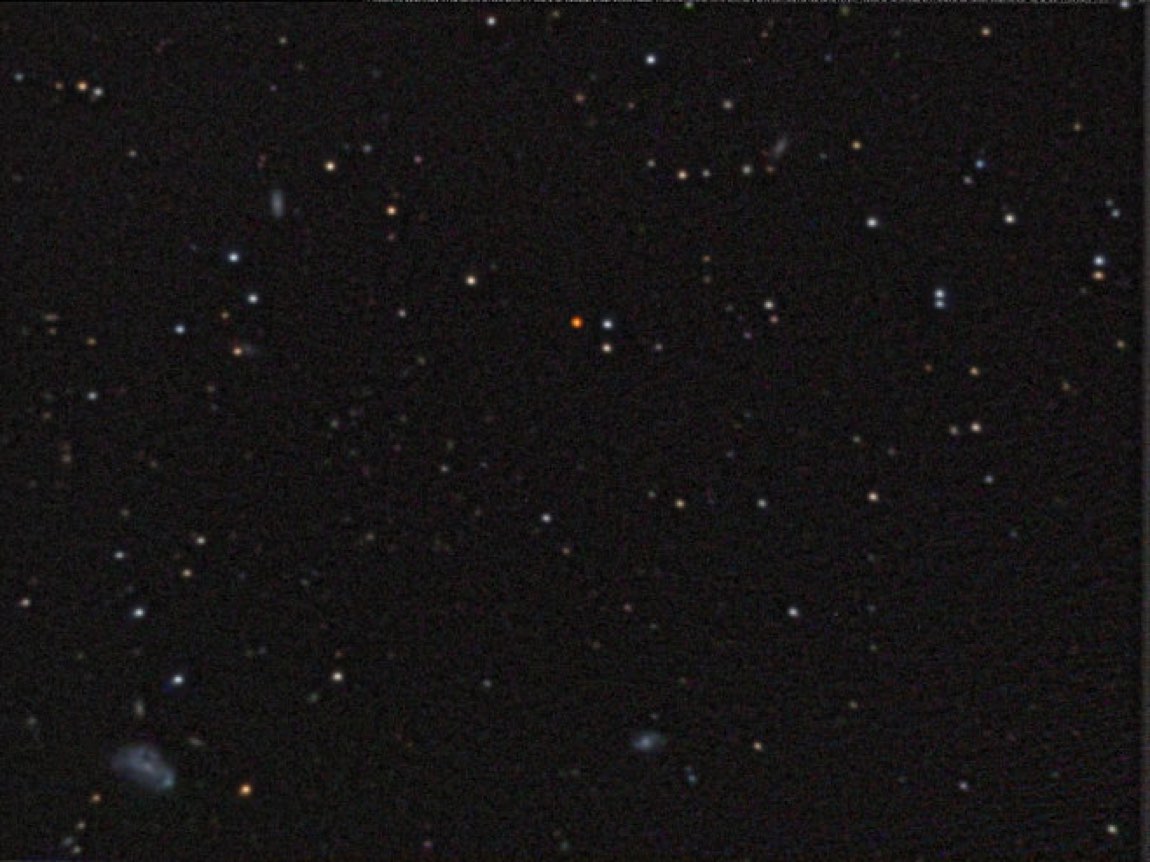
Kevin Luhman, an astronomer at Pennsylvania State University's Center for Exoplanets and Habitable Worlds, found Luhman 16 not by pointing a telescope at a suspicious spot, but by comparing images taken at different times. The Wide-field Infrared Survey Explorer (WISE) — a NASA infrared satellite with a modest 40 cm (16 in) mirror — operated from December 2009 to February 2011, and its discovery images spanned January 2010 to January 2011. Luhman's method was to look for anything that moved noticeably between frames, a telltale sign of a nearby object. The reason no one had spotted this system before is straightforward: Luhman 16 sits close to the galactic plane, where stars are so densely packed that faint objects are easily buried in the crowd. The pair was announced in 2013, the only two objects in Luhman's discovery paper. Almost immediately afterward, researchers traced the system back through decades of archival images, finding it in data from as far back as the Infrared Astronomical Satellite survey of 1983 — hiding in plain sight for thirty years.
02 A Name Chosen to Beat a 24-Character Mouthful
The system's official WISE designation is WISE J104915.57−531906.1, which its own advocates admitted was a 24-character name (space included) that nobody wanted to say aloud. Astronomer Eric E. Mamajek proposed the name Luhman 16, drawing on the Washington Double Star Catalog (WDS), where Kevin Luhman's binary-star discoveries are compiled under the discoverer code "LUH." The catalog lists the system as 10493−5319 with the designation LUH 16. Mamajek argued that "Luhman 16" was simply easier to remember, and the name stuck. The individual brown dwarfs became Luhman 16A (the primary) and Luhman 16B (the secondary), with the whole system sometimes called Luhman 16AB. Shorter nicknames like WISE 1049−5319 and WISE J1049−5319 also circulate in the literature, and the alternative "Luhman–WISE 1" was briefly floated before the simpler version won out. It is a small illustration of a recurring problem in modern sky surveys: automated discovery pipelines generate technically precise but humanly unworkable labels, and someone eventually has to clean up the naming.
03 Decades of Precovery: It Was There All Along Deeper
Once Luhman 16 was announced in 2013, astronomers went back through archival data and found it in at least eight separate datasets predating the WISE discovery. These precovery detections span from the Infrared Astronomical Satellite (IRAS) in 1983 through the AKARI satellite in 2007 and include the Digitized Sky Survey plates from 1978 and 1992, the ESO Schmidt telescope image of 1984, the Guide Star Catalog of 1995, DENIS in 1999, and 2MASS also in 1999. One of the most telling clues came from the ESO Schmidt image taken in 1984: the source appeared elongated at a position angle of 138°, strikingly similar to the position angle of the resolved binary pair seen in Gemini South images taken in 2013. That 29-year gap between 1984 and 2013 is tantalizingly close to the system's orbital period of roughly 26 to 27 years, which would explain why the elongation looked the same — the two brown dwarfs were oriented similarly relative to Earth at both epochs. This accidental consistency between a blurry archival smear and a precisely resolved orbit is a neat piece of astronomical detective work.
04 The Orbit: Tilted, Elliptical, and Slowly Closing Deeper
Luhman 16A and 16B travel around their shared center of mass in an orbit that is moderately stretched and steeply tilted. The most refined measurements, combining archival data spanning 31 years with Gaia's precise astrometry, pin the semi-major axis at 3.52 AU — roughly the distance from the Sun to the asteroid belt — with an eccentricity of 0.344, meaning the separation between the two brown dwarfs varies noticeably over their roughly 27-year circuit. The orbital inclination has been a source of mild controversy: a 2017 study found 79.5° while an analysis using Gaia DR2 data in 2018 found 100.26°, implying the orbit faces the opposite direction; a 2024 refinement settled back near 79.92°, broadly consistent with the earlier ground-based result. The two dwarfs appear to spin on axes that are roughly aligned with their orbit — both are seen nearly equator-on — suggesting their rotation and orbital angular momentum are well matched, a configuration that hints at a relatively undisturbed formation history. The secondary's mass is 83.05% ± 0.06% that of the primary, a precision that reflects just how far astrometric techniques have advanced.
05 Cloud Maps on Another World: The VLT Breakthrough
On 5 May 2013, astronomer Crossfield and colleagues used the European Southern Observatory's Very Large Telescope (VLT) to watch Luhman 16B continuously for five hours — one complete rotation of the brown dwarf. What they produced was effectively a weather map of another world. The data revealed a large, dark region at middle latitudes, a comparatively bright area near the upper pole, and mottled illumination scattered across the rest of the surface. The bright patches are thought to be gaps in the cloud deck where light from the hot interior leaks out, while darker regions correspond to thick, opaque clouds blocking that glow. This interpretation had already been suggested by earlier photometric work by Gillon et al. (2013), who noticed that Luhman 16B's brightness changed unevenly as it rotated. What makes Luhman 16B especially remarkable is how fast its cloud patterns evolve: the illumination map changes on a day-to-day basis, and the object is among the most photometrically variable brown dwarfs known, with brightness swings sometimes exceeding 20% — only 2MASS J21392676+0220226 is known to vary more dramatically.
06 Layers of Atmosphere Revealed by JWST Deeper
The James Webb Space Telescope has given researchers their deepest look yet into the atmospheres of Luhman 16A and B. Biller et al. (2024) observed both brown dwarfs for eight hours with MIRI's Low Resolution Spectrometer, immediately followed by seven hours with NIRSpec. Both objects show water vapor, carbon monoxide, and methane absorption — typical for brown dwarfs straddling the L and T spectral classes. Luhman 16A displays a flat spectral plateau beyond 8.5 μm that points to small-grain silicate particles at high altitudes, though this layer is probably not a patchy cloud deck. Luhman 16B lacks this fine-grained silicate signature but may harbour larger silicate grains deeper down. The research team identified three distinct atmospheric pressure levels by tracking where the brightness variability changes character: a deep layer between 1–2.5 μm where patchy clouds likely dominate, an intermediate level between 2.5–3.6 μm and 4.3–8.5 μm associated with carbon monoxide and methane hot spots driven by vertical mixing, and an upper layer in Luhman 16A between 8.5–11 μm marked by small silicate grains. Standard general circulation models and simple hot-spot scenarios both fell short of reproducing the full complexity of the observed light curves.
 ⤢
⤢
07 Molecules in the Mix: From Ammonia to Iron Rain Deeper
A 70-night spectroscopic campaign at Gemini South, reported by Ishikawa et al. (2025), mapped the chemical inventories of both brown dwarfs in the H and K infrared bands. Both Luhman 16A and 16B contain water vapor (H2O), carbon monoxide (CO), molecular hydrogen (H2), hydrogen sulfide (H2S), and hydrogen fluoride (HF), with methane (CH4) making a small but detectable contribution. Most strikingly, ammonia (NH3) was detected in both objects, making Luhman 16A the warmest brown dwarf in which ammonia has ever been confirmed. One significant absence also carries meaning: iron hydride (FeH) was not detected in either dwarf, which implies that iron is raining out of the upper atmosphere more efficiently than theoretical models had predicted — a process sometimes called "iron rainout," where metallic iron condenses into droplets and falls to deeper layers, stripping it from the observable spectrum. Separately, WISE variability observations analyzed by Heinze et al. (2021) found fluctuations in the spectral lines of alkali metals such as potassium and sodium, interpreted as cloud-cover changes that shift the local chemical balance with chlorides.
08 Jupiter-Like Wind Stripes Across a Failed Star
One of the more visually intuitive discoveries about Luhman 16 came from data collected by NASA's Transiting Exoplanet Survey Satellite (TESS). A research team led by Dániel Apai, Domenico Nardiello, and Luigi R. Bedin found that both Luhman 16A and Luhman 16B behave more like Jupiter than like a star in one important respect: their high-speed winds organize themselves into stripes running parallel to the equator. On Jupiter these banded jet streams are visible to any backyard telescope as alternating light and dark belts; on Luhman 16 the evidence is photometric rather than visual, inferred from how brightness varies as different atmospheric bands rotate into view. Luhman 16B shows clear signs of differential rotation — the equatorial region spins with a period of about 5.28 hours while mid-latitude regions rotate at a different rate, a pattern also seen in gas giants. Luhman 16A's rotation period is estimated at about 6.94 hours. The comparison to Jupiter matters because it places these two objects in the same atmospheric physics framework as solar system giants, suggesting that banded circulation may be a universal feature of rapidly rotating, convective atmospheres regardless of whether the body is a planet or a brown dwarf.
09 The Planet Hunt: Many Ruled Out, Some Still Possible Deeper
Shortly after discovery, perturbations in the system's astrometry hinted at a third body — a potential exoplanet with an orbital period of just a few months and odds of a false positive estimated at only 0.002%. Had it been confirmed, it would have been the first exoplanet detected purely by astrometry. Instead, subsequent monitoring demolished the candidate one instrument at a time. The Very Large Telescope ruled out any object more massive than 2 Jupiter masses orbiting either brown dwarf with periods between 20 and 300 days. Hubble observations from 2014 to 2016 excluded additional brown dwarfs and Neptune-mass (17 Earth-mass) objects with orbital periods of one to two years. Further Hubble work ruled out planets exceeding 1.5 Neptune masses with periods from 400 to 5,000 days. A 70-day radial velocity campaign at Gemini South set its own limits: for Luhman 16A, planets with periods under one day and masses above 0.2 Jupiter masses are excluded, as are those under ten days above 0.4 Jupiter masses. Eight hours of JWST/MIRI observations searched for sub-Io-sized moons via transits, detecting nothing down to lunar size. Small, short-period planets below roughly three Neptune masses remain within the realm of possibility.
10 Silence in Radio and X-rays
Many brown dwarfs are surprisingly active in radio waves and X-rays, sometimes flaring violently. Luhman 16 is not among them — at least not detectably. A study by Osten et al. (2015) observed the system simultaneously with the Australia Telescope Compact Array in radio wavelengths and with the Chandra X-ray Observatory. Neither instrument found any signal from either brown dwarf. The researchers described the resulting upper limits as the strongest constraints obtained so far on the radio and X-ray luminosity of any ultracool dwarf. This silence is significant: it suggests that Luhman 16A and B are magnetically quieter than many of their peers, which has implications for understanding how magnetic dynamos operate in objects that sit at the boundary between stars and giant planets. The lack of detected emission also matters for any hypothetical environment around the system, since intense high-energy radiation can erode atmospheres and damage complex chemistry — a topic the site's habitability section addresses separately.
11 A Close Encounter 36,000 Years Ago
The radial velocity of Luhman 16A was measured in March 2013 at 23.1 ± 1.1 km/s, and that of Luhman 16B at 19.5 ± 1.2 km/s. Both values are positive, meaning the system is currently drifting away from the Sun. Working backward using these velocities and a mass ratio of 0.78 between the components, astronomers calculated that the system's center of mass is moving away from us at about 21.5 km/s. Tracing the trajectory into the past, Luhman 16 made its closest approach to the Solar System around 36,000 years ago, passing within roughly 5.05 light-years (1.55 parsecs). At that moment, Luhman 16 would have been slightly closer to Earth than Barnard's Star is today, bright enough as an infrared source that our early modern human ancestors, had they possessed the right detectors, would have had a slightly different nearest stellar neighbor overhead. The proper motion of the system today is about 2.79 arcseconds per year — fast by stellar standards and a direct consequence of how nearby it is.
12 Age, Moving Groups, and a Cloud-Cooling Puzzle Deeper
Pinning down the age of a brown dwarf is harder than for a Sun-like star because brown dwarfs cool steadily without fusing hydrogen, so temperature and luminosity reflect both mass and age simultaneously. Early estimates for Luhman 16 relied on lithium absorption lines, which set a maximum age of about 3 to 4.5 billion years, while VLT observations established a lower bound of 120 million years and suggested roughly 1 billion years as the most likely figure. A significant refinement came in 2022, when Luhman 16 was identified as a member of the Oceanus moving group — a loosely gravitationally associated stream of stars sharing a common origin — whose age is well constrained at 510 ± 95 million years. A 2024 analysis settled on 400 to 800 million years, consistent with Oceanus membership. One lingering curiosity is that standard age-dating techniques give mismatched results for the two components, even though they almost certainly formed together. Researchers suggest this discrepancy may arise from different cloud coverages on each dwarf affecting how efficiently each radiates heat, which would make one appear older or younger than it really is — or the problem may lie in the accuracy of current evolutionary models themselves.
 ⤢
⤢