 Photograph · ТАСС · CC BY 4.0
Spacecraft · Deep guide
Vostok 1
108 minutes that made Yuri Gagarin the first human in space.
What is it?
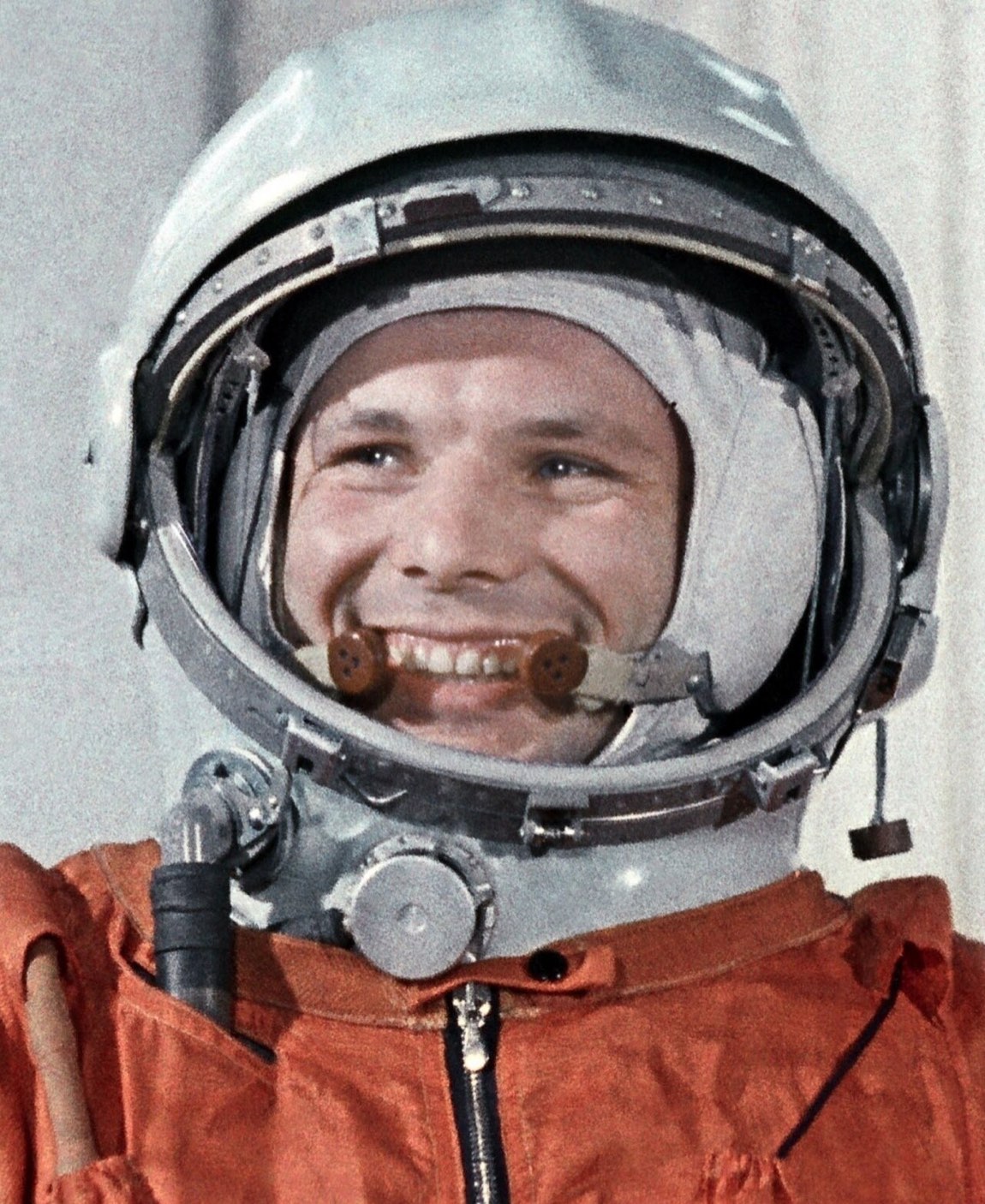
On April 12, 1961, 27-year-old Yuri Gagarin rode Vostok 1 into orbit, circled Earth once, and parachuted onto a Russian field 108 minutes after launch — the first human being to leave the planet. 'The Earth is blue,' he radioed. 'How wonderful. It is amazing.' April 12 is still celebrated worldwide as the anniversary of human spaceflight.
The deep dive
Researched for the Atlas from Wikipedia — Vostok 1 (27,829 characters read) · updated Sep 20, 2026
01 The Space Race That Made Vostok 1 Happen
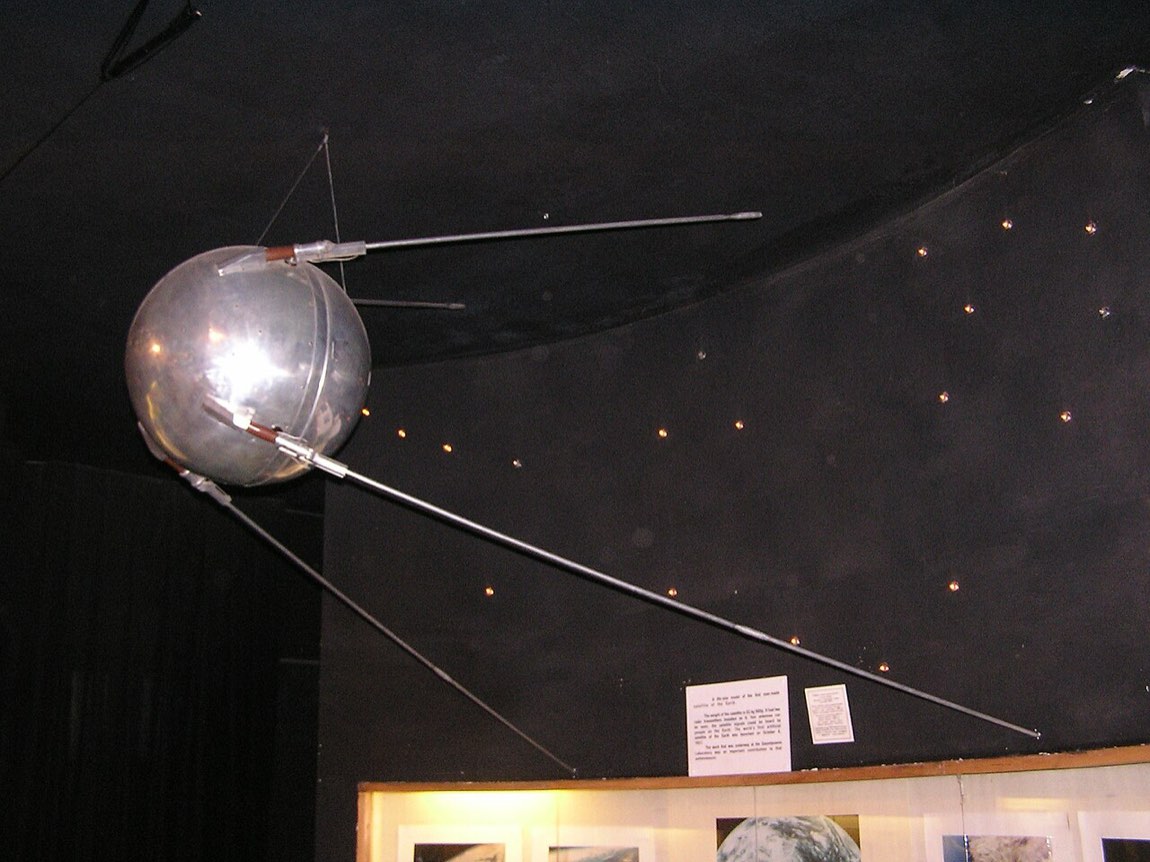
Vostok 1 did not emerge from a vacuum — it was the product of an intense Cold War rivalry between the Soviet Union and the United States. Both superpowers wanted to be first to put a human being in orbit, and the competition had been building since the Soviet Union launched Sputnik 1 in 1957, the world's first artificial satellite. The Soviet programme pursuing this goal was called Vostok, and it ran in direct secrecy against the American Project Mercury. Before risking a cosmonaut's life, Soviet engineers sent a series of uncrewed test missions between May 1960 and March 1961 to prove out the rocket and capsule. These had mixed results — some failed outright — but the final two, Korabl-Sputnik 4 and Korabl-Sputnik 5, were complete successes. Those back-to-back wins cleared the way for Gagarin's flight. At the time of launch, the Soviet space launch success rate stood at only 50 percent: 12 of 24 launches had failed, a sobering statistic that was reportedly causing Chief Designer Sergei Korolev chest pains and severe anxiety on the morning of April 12.
02 How Gagarin Was Chosen Over Titov
The decision about who would fly Vostok 1 was far from straightforward. Yuri Gagarin was ultimately selected as the prime pilot, with Gherman Titov and Grigori Nelyubov as backups, but this was only formally confirmed on April 8 — just four days before launch. The head of cosmonaut training, Nikolai Kamanin, was writing in his diary as late as April 5 that he was still undecided between Gagarin and Titov. His reasoning was telling: he wanted to save the stronger candidate for the longer, more demanding Vostok 2 mission. When the two men were told of the decision on April 9, Gagarin was elated and Titov was visibly disappointed. The secrecy surrounding the programme was so tight that fellow cosmonaut candidate Alexei Leonov later recalled he did not even know who had been chosen until after the spaceflight had already begun. On April 10, the announcement meeting was staged again in front of television cameras to create official footage — including a formal acceptance speech from Gagarin, though historian Asif Siddiqi has argued that the speech was recorded earlier in Moscow and largely written by anonymous speechwriters.
03 A Locked Cockpit and a Hidden Code Deeper
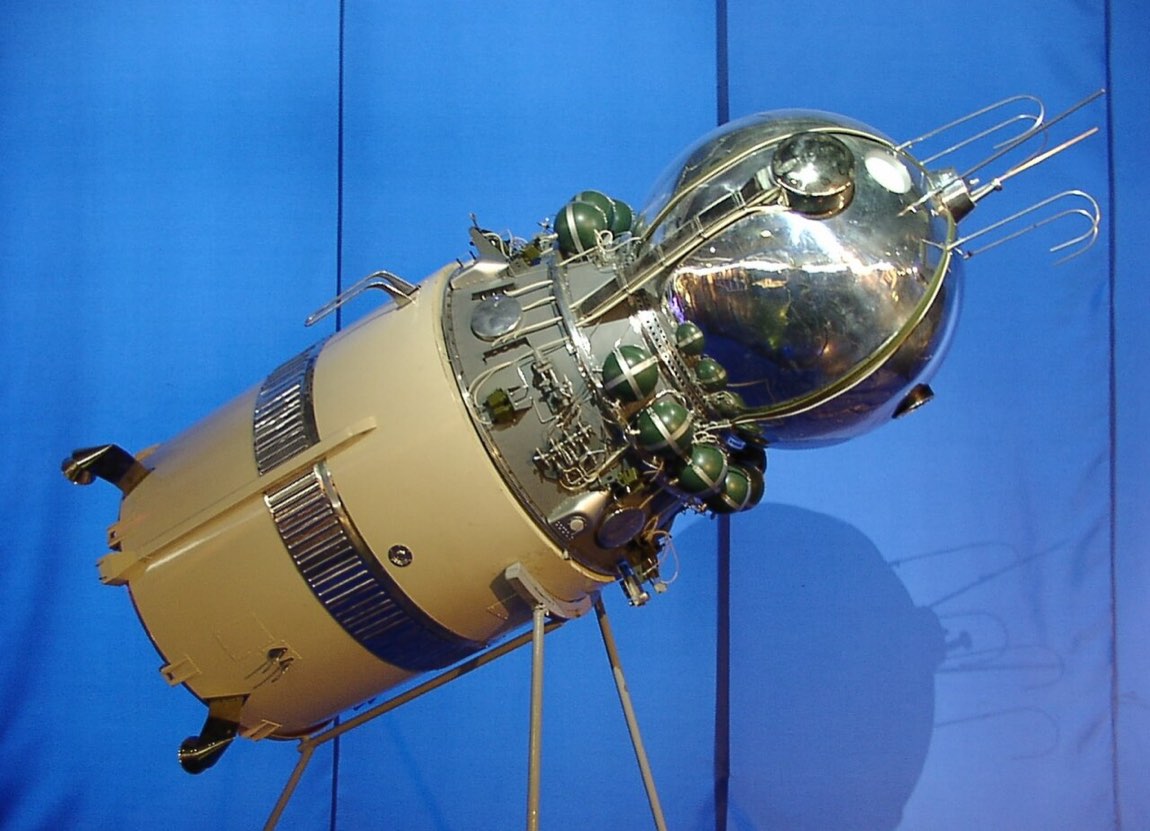
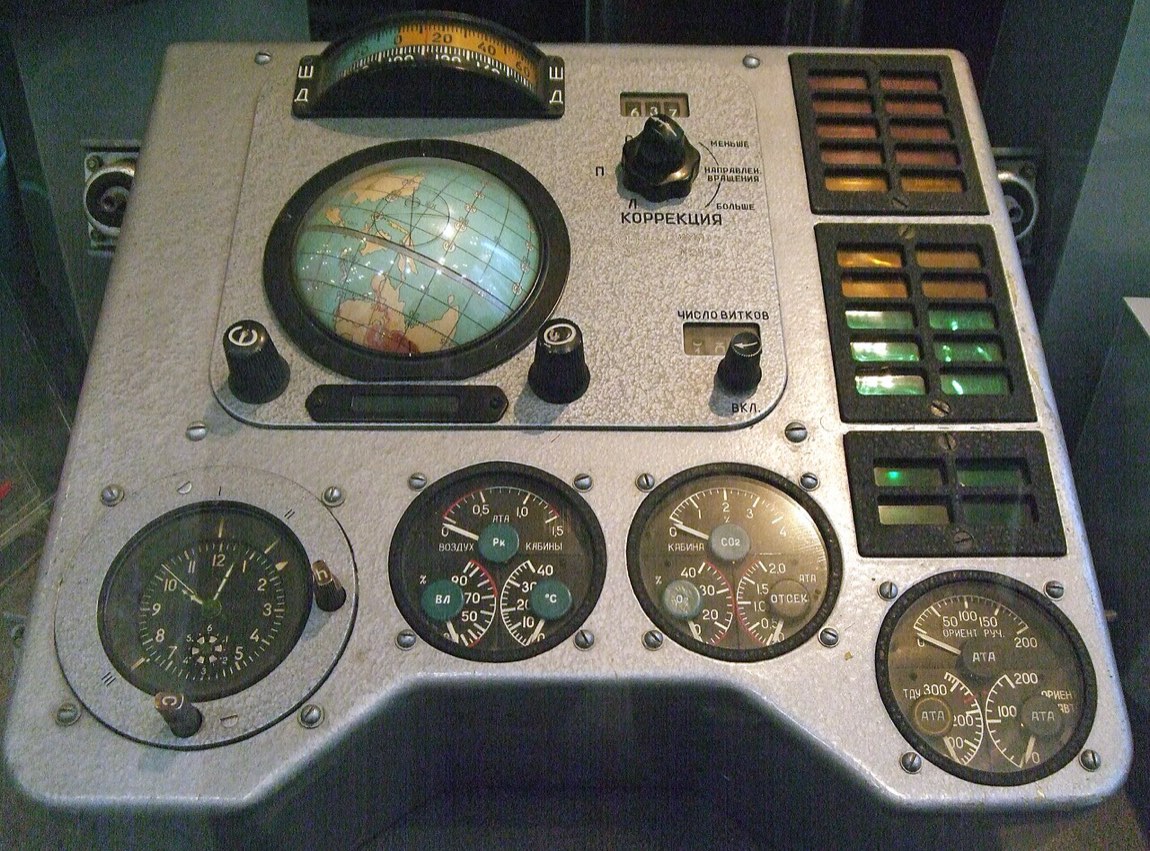
One of the most revealing details about early human spaceflight anxieties is what was done — and not done — with Gagarin's cockpit controls. Medical staff and spacecraft engineers were genuinely uncertain how a human being would respond to weightlessness, and so the decision was made to keep the pilot's manual controls locked. The entire mission would be run either by automatic systems or by ground control. However, in an unusual compromise, a sealed envelope containing the override code was placed onboard so Gagarin could unlock the controls in a genuine emergency. In practice, the precaution was made somewhat redundant when Kamanin and others told Gagarin the code — 1-2-5 — before the flight anyway. The spacecraft also carried no backup retrorocket engine due to weight constraints. Instead, it was stocked with 13 days' worth of provisions, including food packed in metal toothpaste-style tubes, on the assumption that if the retrorockets failed, Gagarin could survive until the orbit naturally decayed and the capsule reentered on its own. As it turned out, the actual orbit achieved differed enough from the planned one that natural decay would not have occurred for 20 days, three days beyond the life support limit.
04 The Hatch Scare and the Calm Cosmonaut
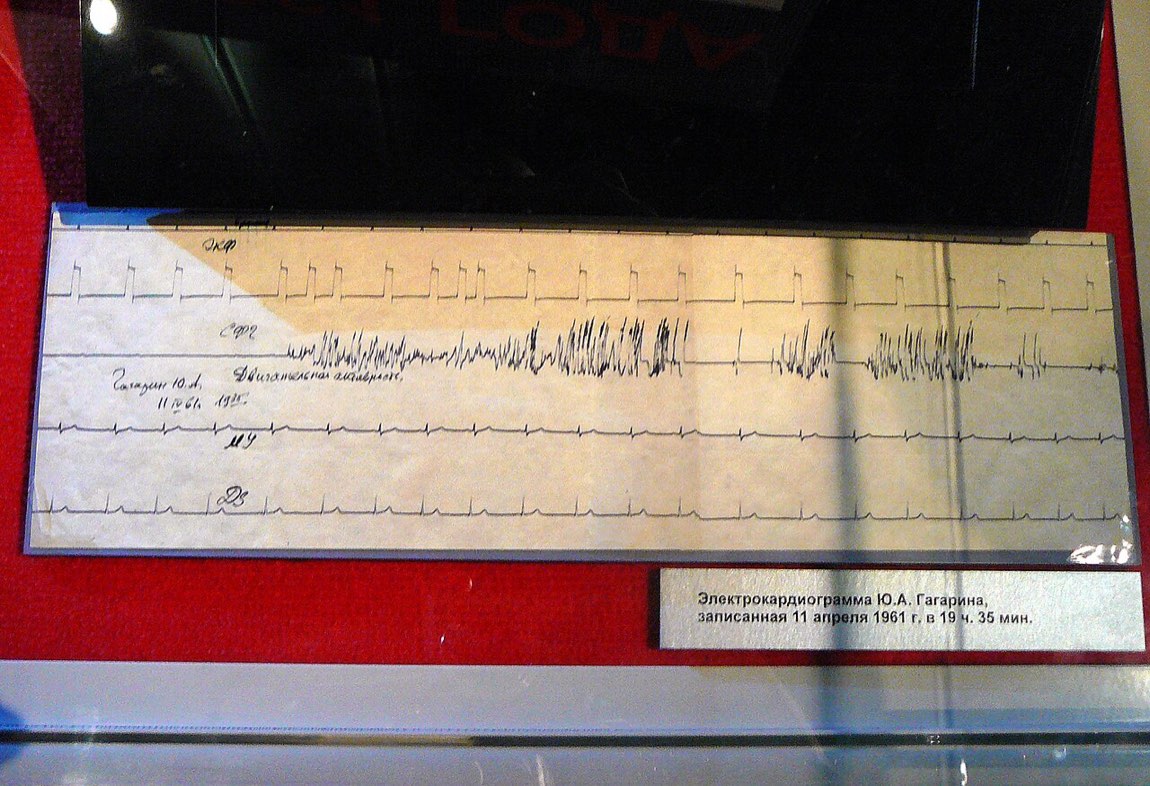
The launch morning of April 12 was not without its anxious moments. After Gagarin was sealed inside the Vostok 1 capsule, he reported that the hatch was not properly sealed. Technicians spent roughly 15 minutes removing all the screws and resealing it — a nerve-wracking delay. According to a 2014 obituary, Vostok's chief designer Oleg Ivanovsky personally helped re-bolt the hatch. A more recent account has disputed whether the seal was actually faulty, suggesting the instrument indication was false. While all this was happening, Gagarin requested that music be played over the radio. His pulse was measured at 64 beats per minute about half an hour before launch — an almost implausibly calm reading for someone sitting atop a rocket with a 50 percent historical success rate. Korolev, by contrast, had to be given a pill to calm him down. Once the rocket lifted off, Gagarin's now-famous reply to Korolev's launch call was a single colloquial phrase: "Poyekhali!" — "Let's go!" — which would go on to become one of the defining utterances of the Space Age.
 ⤢
⤢
05 Minute by Minute Through a Single Orbit Deeper
The flight of Vostok 1 lasted 108 minutes and covered a single orbit of Earth, but the detailed timeline reveals just how much happened in that short window. Launch occurred at 06:07 UTC from Baikonur Cosmodrome Site No. 1. The four strap-on boosters exhausted their propellant and fell away 119 seconds into flight. The payload shroud covering the capsule released at 156 seconds, exposing a window at Gagarin's feet fitted with the Vzor optical orientation device. Gagarin reached orbit at 06:17 UTC when the final rocket stage shut down; he marked the moment by exclaiming "Kosberg has worked!" — a tribute to the chief designer of that stage's engine. Ground control did not confirm a stable orbit until 25 minutes after launch. Communications were intermittent throughout; several of Gagarin's status messages over the South Atlantic and South Pacific were never received by ground stations at all. The automatic orientation system aligned Vostok 1 for retrofire about one hour into the flight, and the retrorocket engine fired for approximately 42 seconds at 07:25 UTC over the west coast of Africa near Angola, roughly 8,000 kilometers uprange of the landing point.
06 A Dangerous Reentry Nobody Admitted to at the Time Deeper
The reentry sequence produced a serious and unexpected problem that Gagarin handled with remarkable composure. Ten seconds after the retrorocket fired, the service module was supposed to separate cleanly from the reentry module — nicknamed "little ball" (sharik) — but a bundle of wires kept the two sections attached. The conjoined spacecraft began tumbling through violent gyrations as it approached Egypt at around 07:35 UTC. Gagarin sent a message saying "Everything is OK" even as the spinning continued, reasoning correctly that the gyrations, apparently caused by the spherical shape of the descent module, did not actually threaten the mission. He later admitted he chose not to "make noise" about it. Eventually the wire bundle burned through, the two modules separated, and the descent module stabilized into the correct reentry attitude. Gagarin remained conscious throughout, experiencing deceleration forces of about 8 g — though his own report states "over 10 g." At 07:55 UTC, at 7 km altitude, the hatch released and Gagarin was ejected two seconds later. His parachute deployed almost immediately, and he landed at 08:05 UTC, approximately ten minutes after ejection, coming down 26 km southwest of Engels in the Saratov region.
07 The FAI Records and the Official Lie Deeper
Vostok 1 set three FAI-recognized world records: orbital flight duration of 108 minutes, greatest altitude in Earth orbital flight at 327 kilometres, and greatest mass lifted in Earth orbital flight at 4,725 kilograms. However, the certification process carried a significant footnote. FAI rules in 1961 required that a pilot land with the spacecraft to be credited with an official spaceflight. Gagarin had not — he ejected at 7 km altitude and parachuted down separately, while the capsule descended on its own parachute. The Soviet government officially insisted he had landed inside the Vostok and forced Gagarin to repeat this claim at press conferences. The FAI certified the records on this basis. The Soviet Union did not publicly admit that Gagarin had ejected and landed separately until 1971 — a full decade after the flight. After this admission, the FAI revised its rules and reaffirmed Gagarin's records, acknowledging that the critical achievements of safely launching, orbiting, and returning the pilot had all genuinely been accomplished. Gagarin's standing as the first human in space and the first to orbit Earth has never been seriously challenged.
08 Why the "USSR" Letters Were Painted on Last
One small but striking detail from the launch preparations concerns the letters "СССР" — Cyrillic for "USSR" — that appeared on Gagarin's helmet. They were not part of the original spacesuit design. Engineer Gherman Lebedev hand-painted them on during the transfer to the launch site, motivated by a specific Cold War worry: it had been less than a year since American U-2 pilot Francis Gary Powers was shot down over Soviet territory. Lebedev reasoned that if the mission went wrong and Gagarin came down in an unexpected location, there was a small but real chance that a figure descending by parachute in a strange suit, with no country markings, could be mistaken for a foreign spy. The improvised labeling was a pragmatic insurance policy. As it happened, when Gagarin did land — near the town of Engels in the Saratov region — he encountered a kolkhoz woman named Annihayat Nurskanova and her granddaughter Rita. They backed away in fear from the figure in the bright orange suit. Gagarin reportedly told them: "Don't be afraid, I am a Soviet citizen like you, who has descended from space and I must find a telephone to call Moscow."
 ⤢
⤢
09 Global Reactions From Nehru to Chaplin
The international reaction to Vostok 1 was immediate and sweeping, ranging from political calculation to genuine wonder. In the Soviet Union, mass demonstrations erupted in Moscow and other cities on a scale comparable to World War II Victory Parades, and April 12 was declared Cosmonautics Day — a date the United Nations later formalized in 2011 as the International Day of Human Space Flight. American astronaut Alan Shepard, who had been scheduled to be first in space but suffered six mission delays, was reportedly so furious he slammed his fist on a table. Indian Prime Minister Jawaharlal Nehru called it "a great victory of man over the forces of nature." Charles de Gaulle stated the achievement "does honor to Europe and humanity." Charlie Chaplin and children's author Gianni Rodari were among those who sent congratulatory telegrams to Komsomolskaya Pravda. Even the Chinese Academy of Sciences president Guo Moruo wrote a poem titled "Hymn to the Vostok Spacecraft," published in Pravda. The Economist raised a more unsettling note, worrying that orbital platforms might be used for surprise nuclear attacks — a reminder that the wonder was always shadowed by Cold War strategic anxiety.
10 The Landing Site and What Survives Today
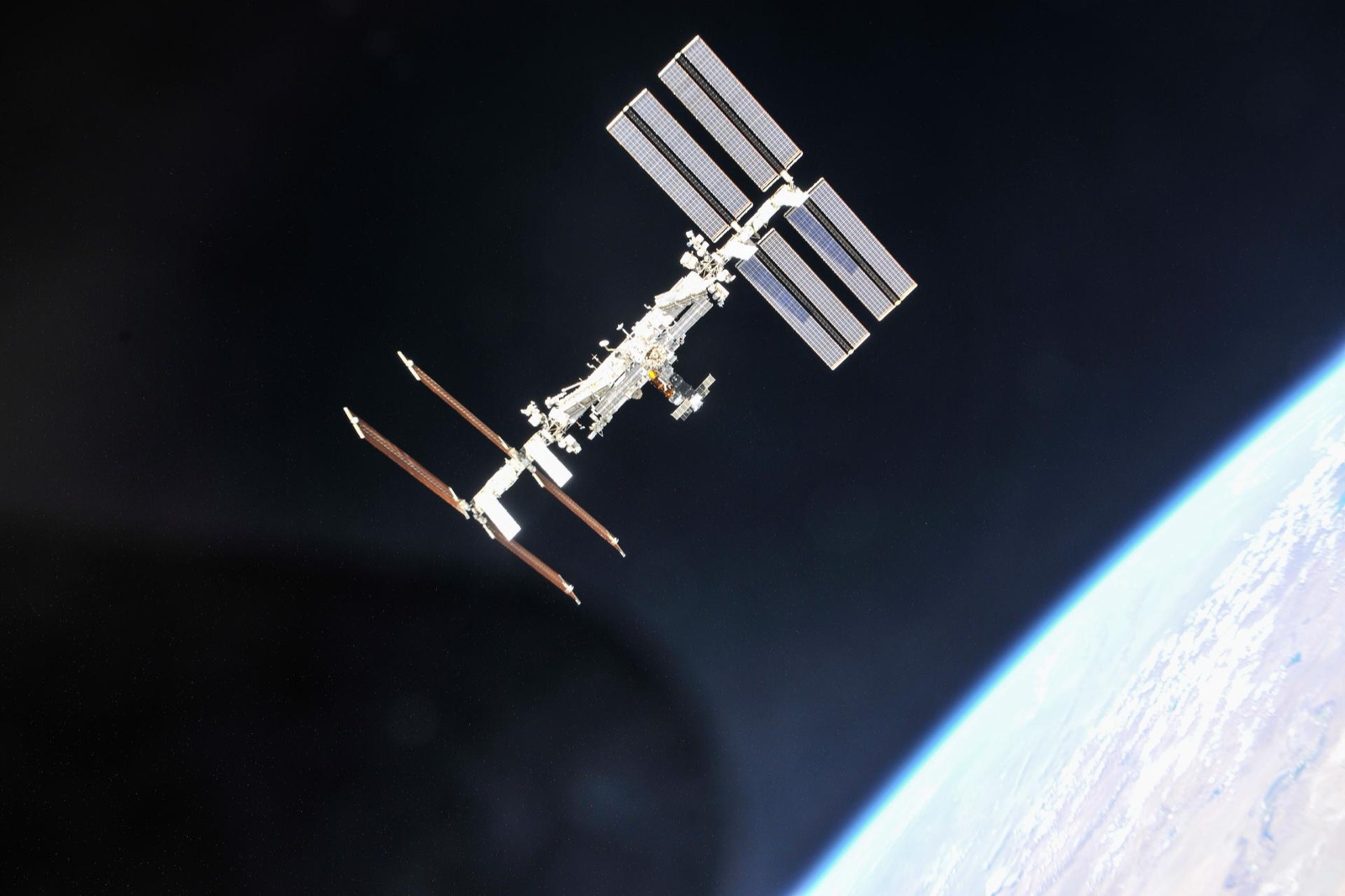
The field near Engels where Gagarin touched down has been transformed into a monument park that preserves the memory of the flight in concrete and metal. The centerpiece is a 25-metre-tall monument — roughly the height of an eight-story building — consisting of a silver metallic rocketship rising on a curved metallic column of flame from a wedge-shaped white stone base. In front of this stands a 3-metre-tall white stone statue of Gagarin in a spacesuit, one arm raised in greeting and the other holding a space helmet. The actual Vostok 1 reentry capsule is held by the S. P. Korolev RSC Energia Museum in Korolev City. In 2018 it was temporarily loaned to the Space Pavilion at VDNKh in Moscow, making it briefly accessible to a wider public. In 2011, to mark the 50th anniversary of the flight, documentary filmmaker Christopher Riley partnered with European Space Agency astronaut Paolo Nespoli to record footage from the International Space Station following the exact ground path of Vostok 1, synchronizing it with Gagarin's historical audio transmissions. The resulting film, First Orbit, was released online and offered the closest visual approximation yet of what Gagarin saw during those 108 minutes.
11 What the Tracking Network Could and Couldn't Do Deeper
The communications and tracking infrastructure supporting Vostok 1 was considerably more limited than what later missions would rely on. Unlike subsequent Vostok flights, no dedicated tracking ships were deployed to extend coverage over the oceans. The mission depended entirely on a network of ground stations — called Command Points — all of which were located within the Soviet Union. This created significant gaps: large stretches of Gagarin's single orbit, particularly over the Pacific and Atlantic Oceans, were beyond the reach of any station. Several of the status messages Gagarin transmitted during those segments were never received. Ground control did not even confirm that a stable orbit had been achieved until 25 minutes after launch. Over the North Pacific, Gagarin was asking repeatedly for his orbital parameters and receiving no useful answer — the Khabarovsk station simply did not have the data yet. Communication shifted between VHF radio, which offered clearer sound but only worked within line-of-sight range, and HF radio, which could propagate over greater distances but with less reliability. The mission was in many respects a leap into a communications void, with Gagarin relaying spacecraft instrument readings into the silence and hoping they were being recorded somewhere.
 ⤢
⤢