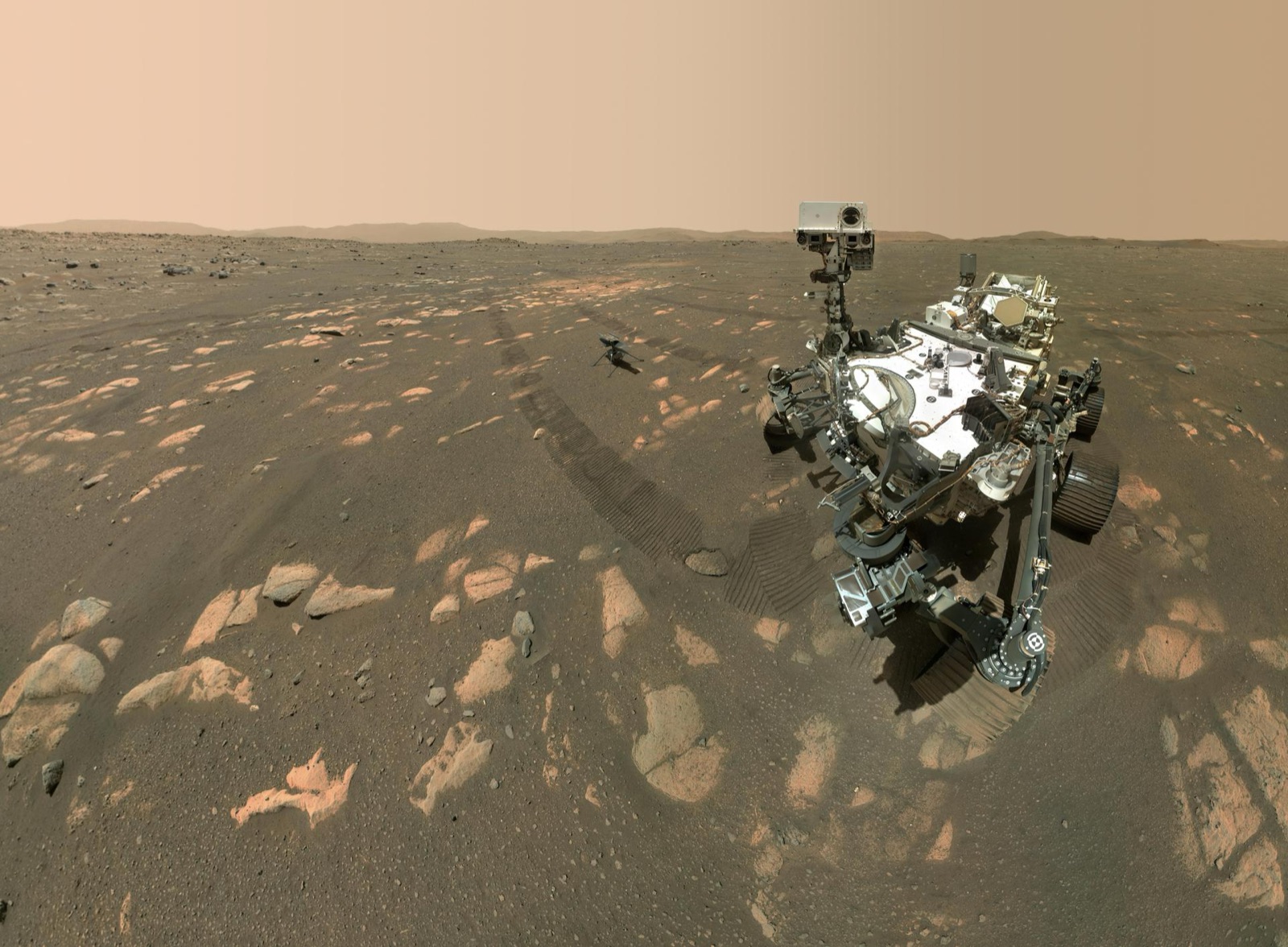
 Photograph · NASA/JPL-Caltech/MSSS
Spacecraft · Deep guide
Perseverance
Also called: Percy · Mars 2020
NASA's newest Mars rover is caching the samples that may answer the life question.
What is it?
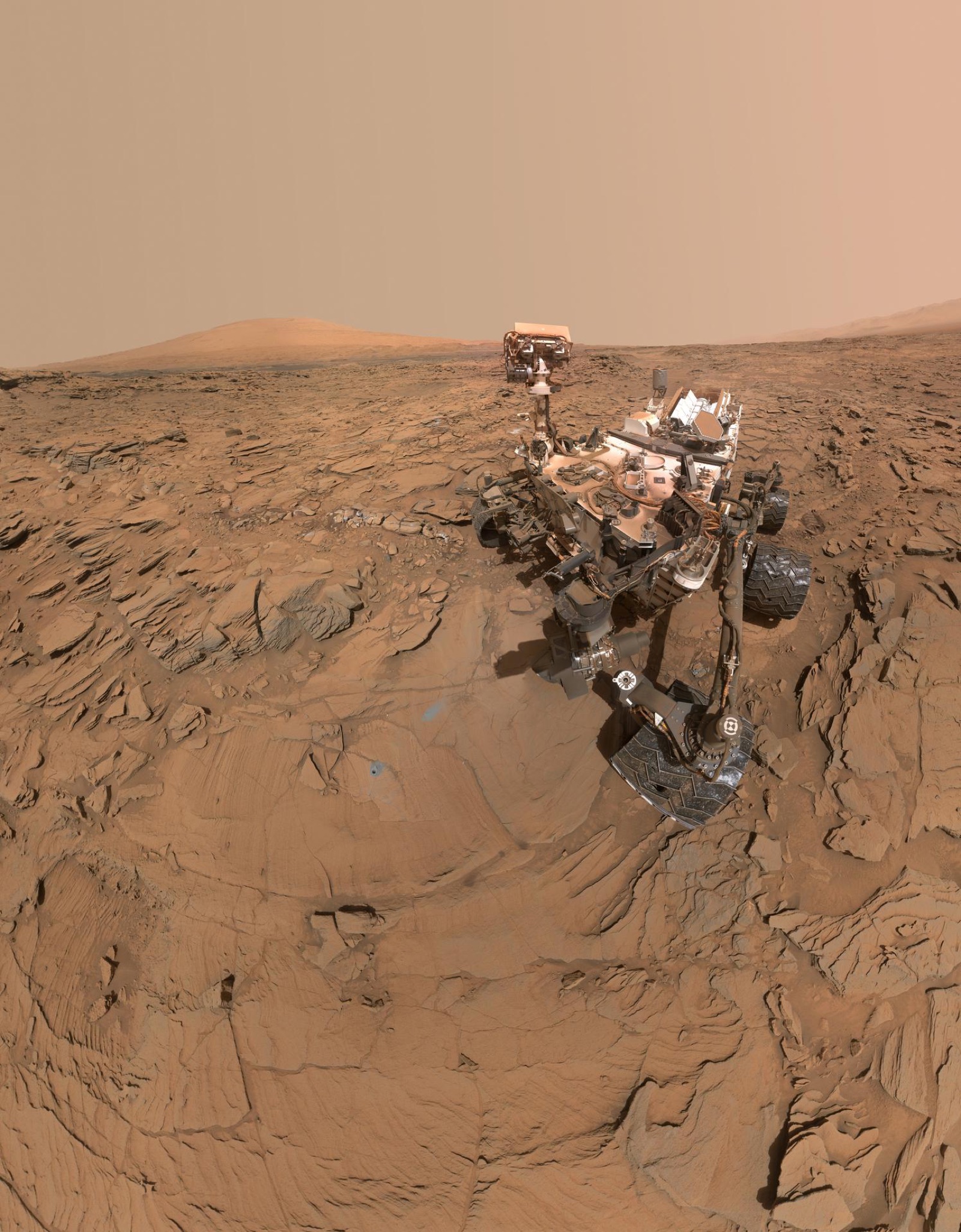
Perseverance is a car-sized nuclear-powered rover that landed in Mars's Jezero Crater in February 2021 — an ancient lake bed with a preserved river delta. Its job is the most ambitious in Mars history: drill rock cores from environments that could have hosted life, seal them in titanium tubes, and cache them for a future mission to fly home to Earth's laboratories.
Go deeper
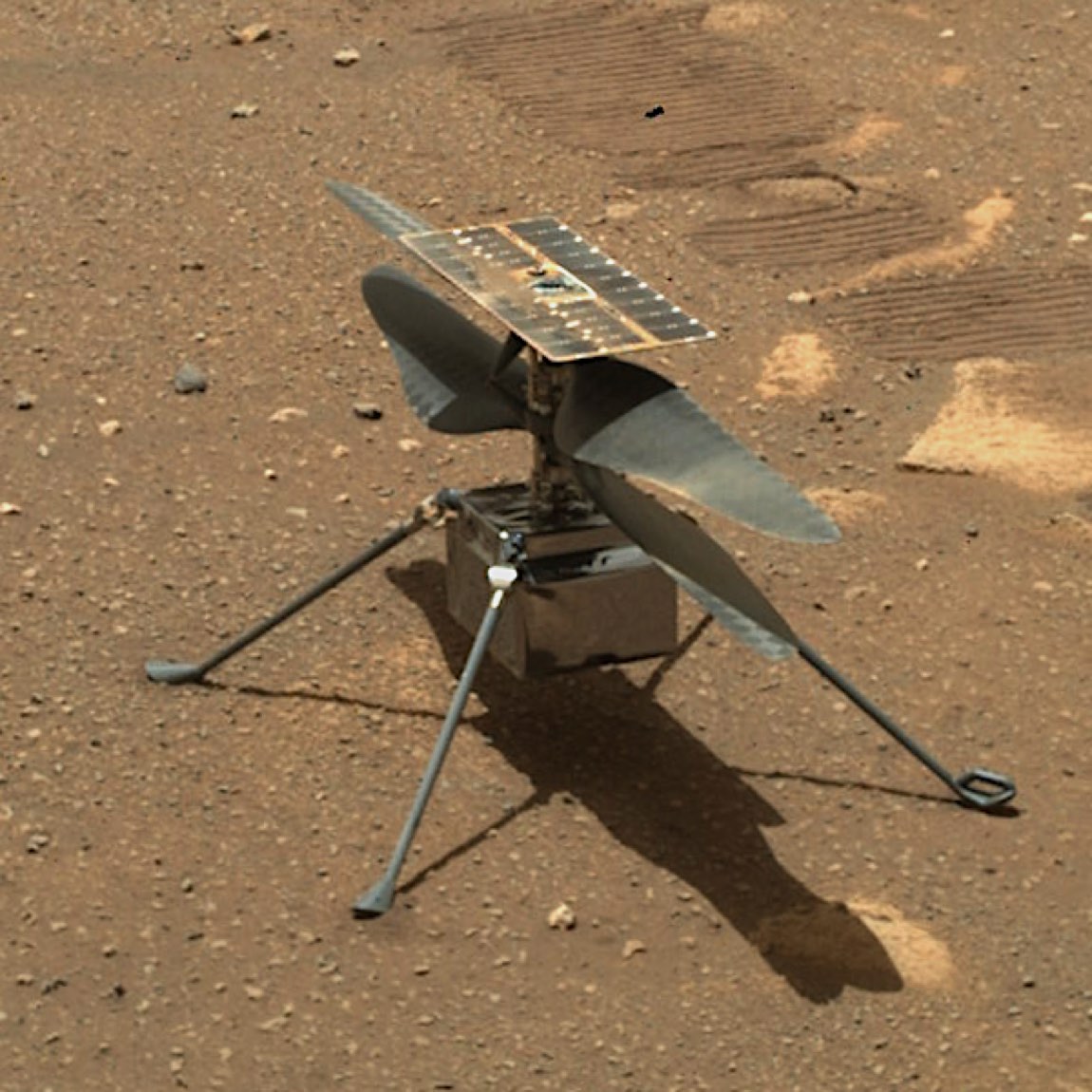
Perseverance rode the 'sky crane' descent system with terrain-relative navigation to hit a hazard-strewn delta. It carried Ingenuity, the 1.8-kg helicopter that made 72 flights (2021–24) — the first powered flight on another world — and MOXIE, which proved oxygen production from CO₂ air. Its 2025 headline: a potential biosignature in 'Cheyava Falls,' an arrowhead-shaped rock with 'leopard-spot' redox patterns that on Earth often involve microbial chemistry — carefully labeled a POTENTIAL biosignature awaiting Earth-lab analysis. Mars Sample Return's architecture and budget remain in flux; the cached tubes wait either way.
01 Why bring rocks home?
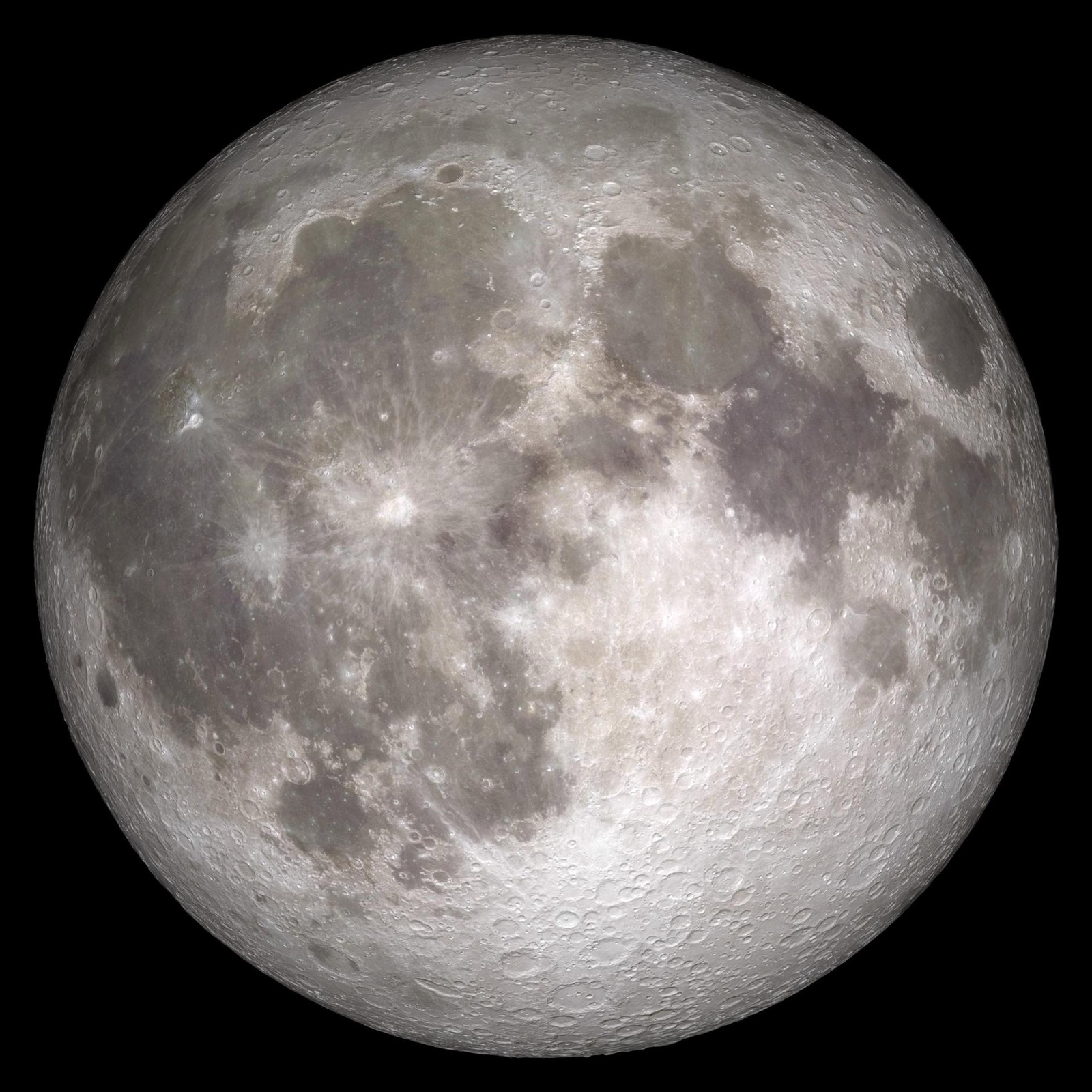
A rover carries a backpack of instruments; Earth has cathedral-sized ones. Questions like 'did microbes make this pattern?' need electron microscopes, mass spectrometers, and decades of re-testing as techniques improve — the Moon rocks are still yielding discoveries 55 years on. That is why Perseverance's titanium tubes matter more than any single photo it takes.
02 The seven minutes of terror, precision edition Deeper
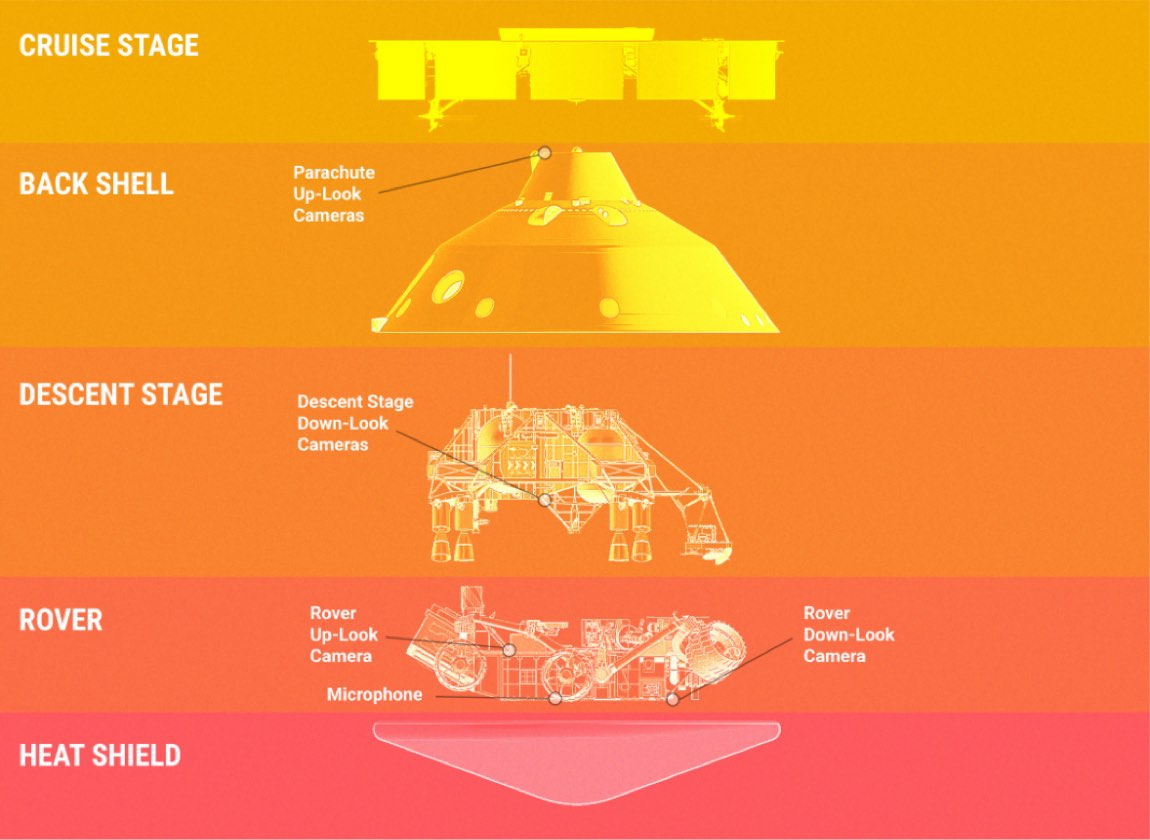
Mars entry compresses into seven radio-silent minutes: heat shield at 1,300 °C, supersonic parachute, then the sky crane — a rocket platform lowering the rover on cables before flying off to crash politely elsewhere. Perseverance added cameras everywhere, so humanity finally WATCHED a Mars landing from the inside: the footage of the dust-blasted touchdown is one of the great space films.
The deep dive
Researched for the Atlas from Wikipedia — Perseverance (rover) (27,633 characters read) · updated Sep 20, 2026
03 A crater chosen for its ancient shoreline
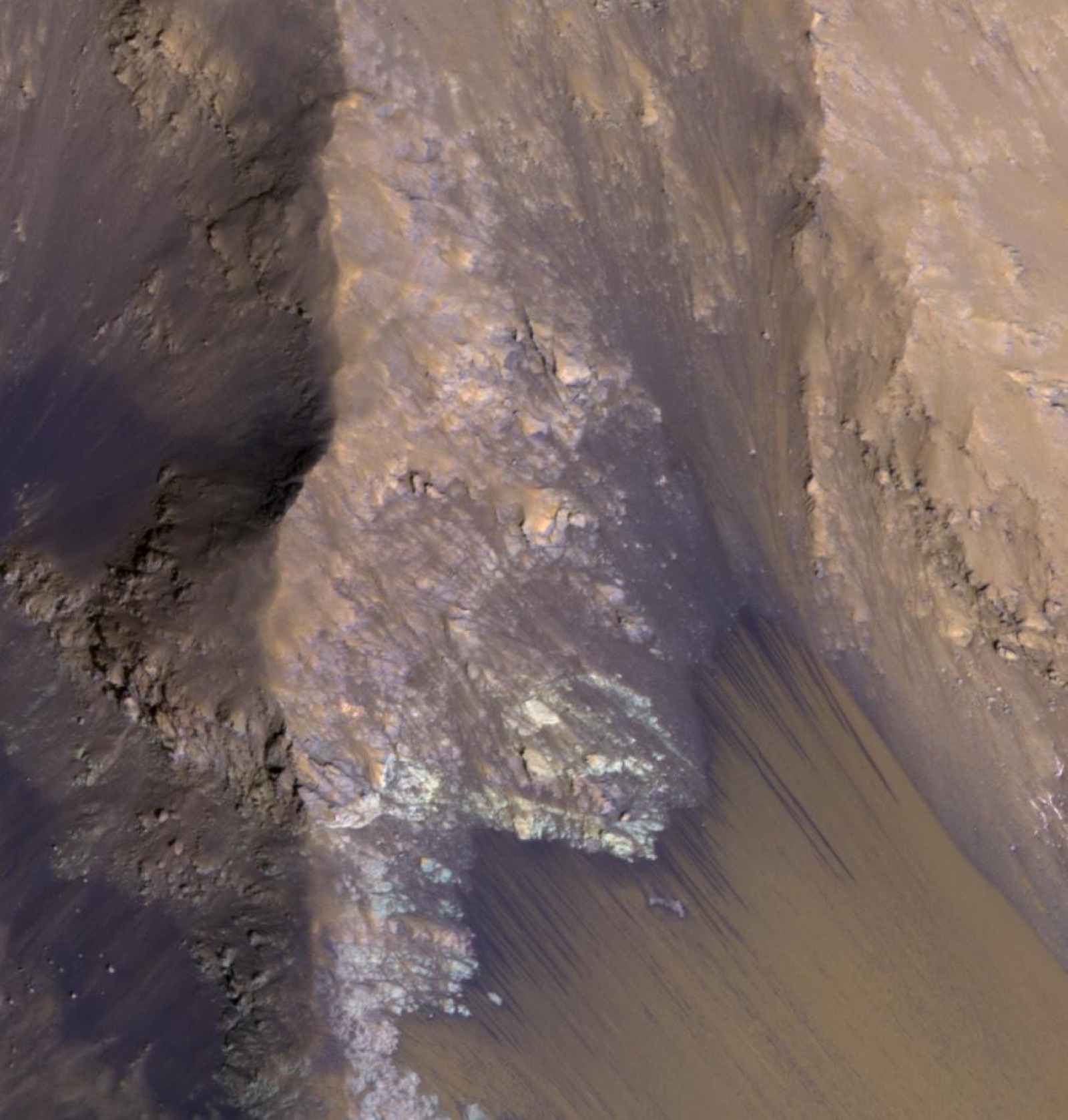
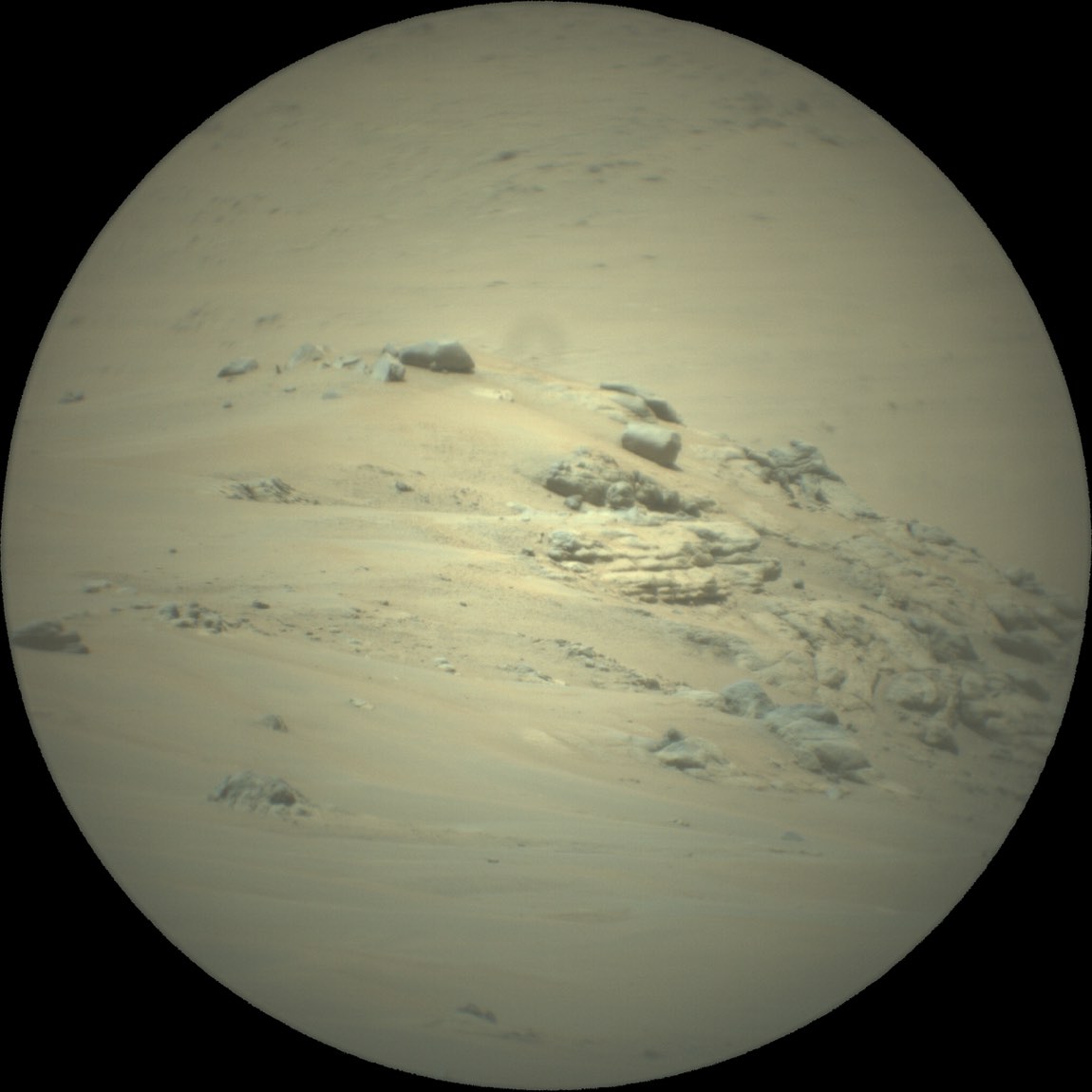
Jezero Crater was not picked at random. Scientists identified it as a paleolake basin, meaning it once held a standing body of water fed by the Neretva river, whose delta is 3.4 to 3.8 billion years old. That ancient delta turned out to be even more scientifically rewarding than hoped. Perseverance found evidence that sediments entering the lake were deposited in the delta, and later experienced high-energy flooding that carried large boulders into the crater. One specific location, a rock named Wildcat Ridge within the well-preserved sedimentary fan, preserved evidence that sediments were laid down in standing water and then continued to interact with water long after they were first formed. The crater floor itself was not purely sedimentary, as mission scientists had initially expected — several types of igneous rock were also discovered, and those rocks show clear signs of having interacted with water. The variety of rock types, from volcanic to lake-deposited to impact-related, makes Jezero one of the most geologically layered sites ever visited on Mars.
04 The radar that sees beneath the surface Deeper
One of Perseverance's less-publicized instruments is RIMFAX, the Radar Imager for Mars' subsurface experiment, contributed by Norway's Defence Research Establishment. Unlike cameras or spectrometers that examine what is visible on the surface, RIMFAX sends radar pulses downward and reads the reflections from different subsurface layers, buried rocks, and density changes — down to a depth of 10 meters (33 feet). Its findings at Jezero have been striking. The radar cross-sections revealed that the basal delta sediments are regular and horizontal, which scientists interpret as evidence they were laid down in a calm, low-energy lake environment — exactly the kind of tranquil setting where fine organic material might be preserved. RIMFAX also showed that before the delta was deposited, the crater floor went through a period of erosion. Below the delta strata, the subsurface appears dominated by solid rock and mafic material. Together, these radar layers tell a stratigraphic story of erosion, then flooding, then quiet lake deposition — a sequence that geologists can now read without ever drilling into it.
 ⤢
⤢
05 What PIXL and SHERLOC found in the rocks Deeper
Perseverance carries two instruments specifically designed to hunt for chemistry that life might leave behind. PIXL, the Planetary Instrument for X-Ray Lithochemistry, determines the fine-scale elemental composition of surface materials. At the Seitah formation and at a rock called Otis Peak, PIXL detected a remarkable mineral inventory: olivine, phosphates, sulfates, clays, carbonate minerals, silicate minerals, augite pyroxene, feldspathic mesostasis, various iron-chromium-titanium spinels, merrillite, perchlorate, feldspar, magnesite, siderite, and oxides, as well as compounds containing magnesium, iron, chlorine, and sodium. SHERLOC, an ultraviolet Raman spectrometer, adds a different capability by detecting organic compounds. At both the Cheyava Falls rock and the nearby Apollo Temple rock, SHERLOC revealed high concentrations of carbon-rich macromolecules. The critical caveat, honestly stated by the mission team, is that SHERLOC cannot determine whether those carbon compounds are of biological origin or formed through purely chemical processes. The instruments can find the molecules; they cannot yet settle the question of where those molecules came from.
06 The oxygen machine that could fuel a return trip
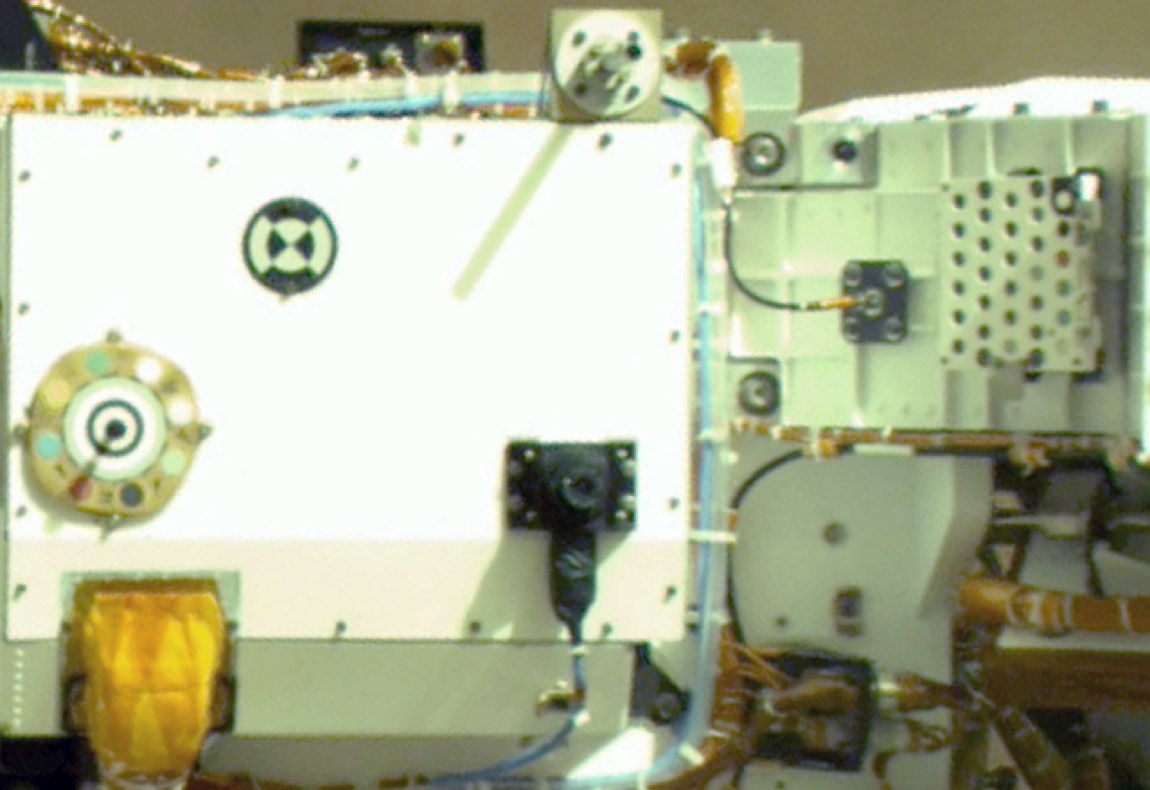
Mars's atmosphere is about 95 percent carbon dioxide and is so thin that a human standing unprotected on the surface would need a spacesuit both for pressure and for breathable air. Perseverance carries an instrument called MOXIE — the Mars Oxygen In-Situ Resource Utilization Experiment — designed to test whether oxygen can be extracted from that carbon dioxide. On April 20, 2021, MOXIE produced 5.37 grams of oxygen in a single hour. By the time results were tallied, the instrument had produced a cumulative total of 122 grams across multiple extractions. That is a tiny quantity — roughly what a small dog breathes in an hour — but the point is proof of concept. Scaled up to the size needed for a crewed mission, the same technology could supply astronauts with breathable air and, critically, could manufacture the liquid oxygen needed as rocket propellant for a return vehicle. Carrying that propellant all the way from Earth would be enormously costly; producing it on Mars from local resources changes the economics of human exploration entirely.
07 Listening to Mars: what the microphones heard
For the first time in the history of planetary exploration, Perseverance arrived with working microphones. A few days after landing in February 2021, the rover released the first audio ever recorded on the Martian surface, capturing the sound of Martian wind. Beyond the novelty, the recordings yielded a concrete scientific result: sound travels more slowly through the Martian atmosphere than through Earth's, and sounds transmitted through that thin air are lower in volume than they would be on Earth. These findings are consistent with the planet's extremely low atmospheric pressure. The microphones also serve engineering roles, helping teams monitor the rover's hardware during landing, driving, and sample collection. The combination of lower sound speed and reduced volume tells researchers something fundamental about the density and composition of the atmosphere that numbers alone do not convey as vividly — standing on Mars, you would hear a quieter, slightly slower-paced world, one where even a strong gust would sound muffled compared with a breeze on Earth.
08 How the rover's wheels were redesigned Deeper
When the Curiosity rover traversed the sharp rocks of Gale Crater, its aluminum wheels sustained punctures and tears that engineers had not fully anticipated. Perseverance inherited much of Curiosity's overall design but its wheels were substantially rethought. The new wheels are thicker and more durable, but also narrower and larger in diameter — 52.5 centimeters (20.7 inches) compared to Curiosity's 50-centimeter (20-inch) wheels. They are covered with cleats for traction and use curved titanium spokes that act like springs, absorbing shocks from the rugged terrain rather than transmitting them rigidly to the rover body. These changes, combined with the new sampling system and larger instruments, contributed to Perseverance being noticeably heavier than its predecessor: 1,025 kilograms (2,260 pounds) versus Curiosity's 899 kilograms (1,982 pounds), a 14 percent increase. Despite that added mass, engineers were able to use spare hardware and pre-existing build-to-print designs from the Curiosity program, which mission managers estimated saved tens of millions — possibly as much as 100 million — dollars in development costs.
 ⤢
⤢
09 Inside Perseverance's computing brain Deeper
Operating a rover on Mars means coping with a communication delay that can stretch to many minutes, so Perseverance must make a great many decisions autonomously. Its main computer is a BAE Systems RAD750, a radiation-hardened single-board computer built around a ruggedized PowerPC G3 processor running at 133 MHz — modest by the standards of a smartphone but chosen because it can withstand the intense ionizing radiation of deep space without corrupting its data. The system carries 128 megabytes of volatile DRAM for working memory and can access 4 gigabytes of NAND non-volatile memory stored on a separate card. The flight software is written in C and runs on the VxWorks operating system. For communications back to Earth, Perseverance relies on three antennas, all of which relay data through orbiters currently circling Mars. The primary UHF antenna achieves a maximum downlink rate of 2 megabits per second. Having multiple antennas ensures that no single hardware failure cuts off communication — a straightforward redundancy principle that takes on life-or-death importance when your nearest repair technician is tens of millions of kilometers away.
10 Ingenuity's 72-flight life and sudden end
When Ingenuity was tucked under Perseverance's belly for the journey to Mars, its official test plan called for three flights in 45 days. It was an experiment, not a mission, and its 1.8-kilogram (4.0-pound) frame carried two cameras but no scientific instruments. It communicated with Earth through a base station aboard Perseverance. The first flight took place on April 19, 2021, at 07:15 UTC — the first powered and controlled flight by any aircraft on another planet. After the initial cautious hops proved the concept, Ingenuity began making progressively longer and more ambitious sorties, several of which Perseverance itself photographed. The helicopter far outlasted its test plan, completing 72 flights over nearly three years. Its end came abruptly on January 18, 2024, during its 72nd and final flight, when a rotor blade broke off. Perseverance's cameras imaged the broken blade lying on the sand roughly 15 meters (49 feet) from Ingenuity's upright body. With a damaged rotor, controlled flight was no longer possible, and NASA formally retired the helicopter — a vehicle that had transformed aerial reconnaissance from science fiction into established Mars practice.
11 The sample tubes and the uncertain return
Perseverance carries 43 sample tubes. As of July 2025, it had filled 33 of them with an inventory that includes 8 igneous rock samples, 13 sedimentary rock sample tubes, 3 igneous or impactite rock sample tubes, a serpentinite rock sample tube, a silica-cemented carbonate rock sample tube, two regolith sample tubes, an atmosphere sample tube, and three witness tubes. Five tubes were designated witness tubes before launch and filled with materials designed to capture ambient Martian particulates. Ten filled tubes have been deposited at the Three Forks Sample Depot as backups in case the rover itself cannot deliver them. The plan to return these samples has hit a serious obstacle: in November 2023, NASA paused the Mars Sample Return project after a review found it critically over budget, with costs estimated at $11 billion. NASA Administrator Bill Nelson reaffirmed the commitment to retrieval in April 2024, and the agency turned to industry and JPL to develop a more affordable mission architecture. For now, the tubes sit waiting — arguably the most scientifically valuable collection of extraterrestrial material ever assembled, with no confirmed ride home.
12 A hidden message in the landing parachute
The 21-meter-wide (70-foot) parachute that slowed Perseverance during its descent was orange and white, and its color pattern looked random — but it was not. NASA systems engineer Ian Clark embedded a message using binary code in the arrangement of the parachute's 80 fabric strips, each divided into four pieces, giving him 320 segments to work with. The message spelled out "dare mighty things," the unofficial motto of the Jet Propulsion Laboratory, a phrase attributed to U.S. president Theodore Roosevelt that is displayed on many of JPL's walls. Clark also encoded the GPS coordinates of JPL's headquarters in Pasadena, California. Only six people knew about the hidden message before the landing. After NASA shared the parachute image, Twitter users decoded it within a few hours. The parachute was itself photographed during the descent by the HiRISE high-resolution camera aboard the Mars Reconnaissance Orbiter — a spacecraft photographing another spacecraft as it fell through the Martian sky — making the hidden message recoverable for anyone who looked closely enough.
 ⤢
⤢
13 Who named the rover and the helicopter
Perseverance owes its name to a seventh-grade student. NASA's Associate Administrator for the Science Mission Directorate, Thomas Zurbuchen, selected the name after a nationwide K-12 contest drew more than 28,000 proposals. The winner was Alexander Mather, a student at Lake Braddock Secondary School in Burke, Virginia, who argued in his essay that all previous Mars rover names — Curiosity, InSight, Spirit, Opportunity — reflected human qualities, but that the most essential quality had been overlooked: perseverance. As a prize, Mather and his family were invited to watch the July 2020 launch at Cape Canaveral. The helicopter's name came from a separate submission: Vaneeza Rupani, an 11th-grade student from Tuscaloosa County High School in Northport, Alabama, proposed the name Ingenuity, and she too attended the launch. Two student names, chosen from tens of thousands of entries, now appear in the scientific literature as the official designations for two spacecraft that made history on another planet.
14 The fifth campaign: rocks from deep inside Mars Deeper
Perseverance has organized its science work into sequential campaigns, each targeting a different geological zone of Jezero Crater. The first four — Crater Floor, Fan Front, Upper Fan, and Margin Unit — systematically worked inward from the landing site toward and up the ancient delta. The fifth campaign, called Northern Rim and in progress as of December 2024, ventures into new scientific territory. The objective is the northern part of the southwestern section of Jezero's rim, a region where the rocks are not lake sediments or volcanic flows but material that was excavated from deep within Mars and thrown outward by the asteroid or comet impact that formed the crater approximately 3.9 billion years ago. These impactite rocks represent material from depth — the Martian crust from well below the surface — that would otherwise be inaccessible to a surface rover. Studying them gives geologists a window into what Mars was made of at its deeper levels, and how the violent impact event itself altered those materials through the extreme pressures and temperatures of the collision.
15 A twin rover that might go to the Moon
Before launching any Mars rover, JPL builds a near-identical copy that stays on Earth for testing. Perseverance's twin is called OPTIMISM — Operational Perseverance Twin for Integration of Mechanisms and Instruments Sent to Mars — and it lives at the JPL Mars Yard in California, where engineers use it to rehearse operational procedures and troubleshoot any problems that arise with the real rover on Mars. The existence of a physical twin means that before commanding Perseverance to attempt a tricky maneuver across unfamiliar terrain, teams can run the same maneuver on the Earth-bound copy and watch what happens. In June 2026, NASA reported that it is considering a new mission that would send this spare rover not to Mars but to the Moon. The proposed mission is called PROMISE — Polar Rover for Observation, Mapping and In-Situ Exploration — and would target the lunar poles. If it proceeds, a vehicle built as a Mars rover stand-in could become the first wheeled explorer to study the permanently shadowed regions of the Moon.
 ⤢
⤢
Weird & wonderful
- Perseverance carries a piece of Martian meteorite — returned home as a calibration target.
- Its wheels drive over rocks a billion years older than any surface on Earth.
- Ingenuity's parts included off-the-shelf phone processors — and it flew 72 times in air 1% as thick as ours.
- You can hear Mars: its microphones recorded wind, laser zaps, and its own wheels crunching.