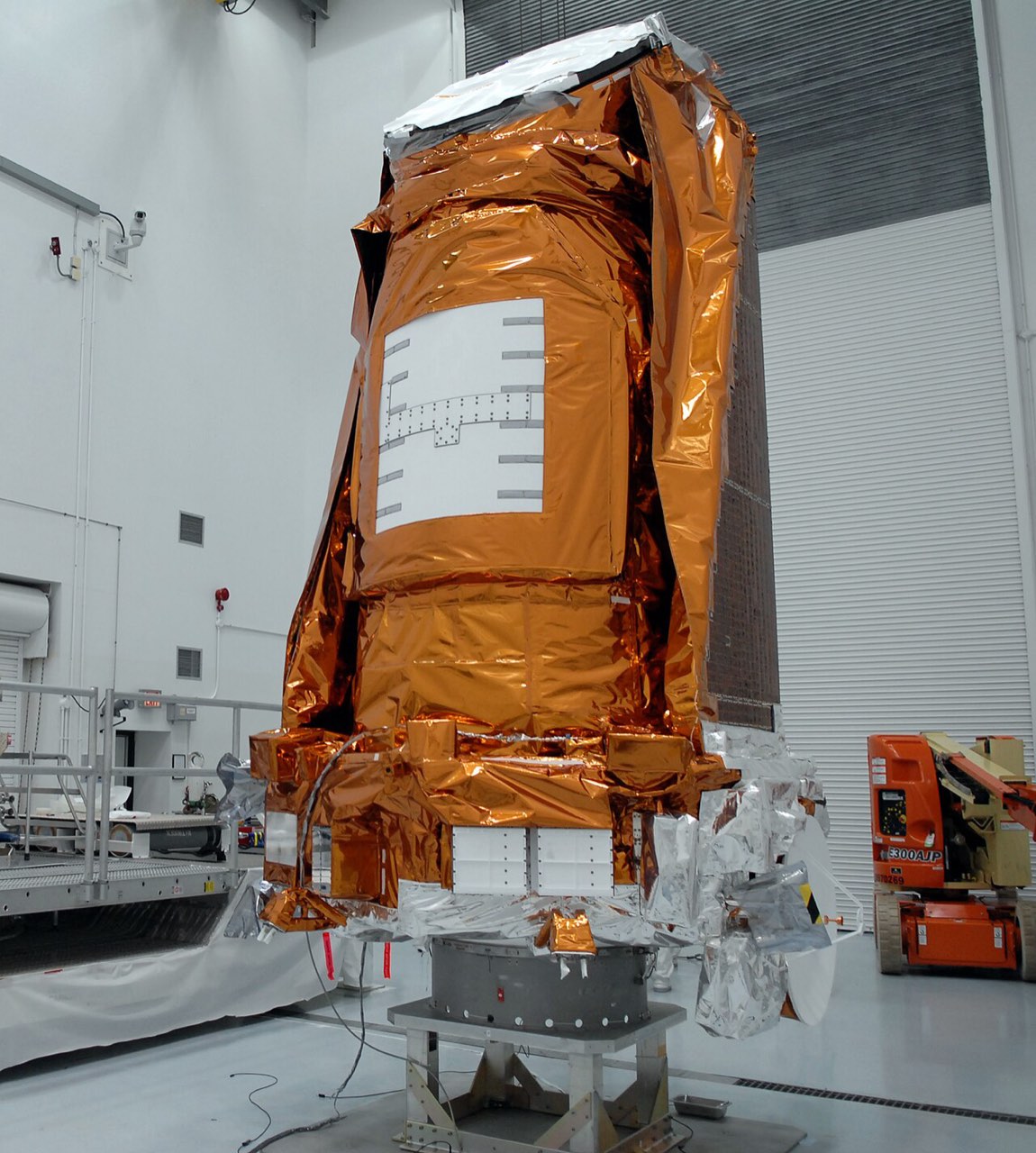
 Photograph · NASA/Troy Cryder · Public domain
Spacecraft · Deep guide
Kepler Space Telescope
The census-taker of worlds, whose count proved that planets outnumber stars.
What is it?
NASA's Kepler stared at one patch of sky from 2009 to 2013 (then improvised on as 'K2'), watching 150,000 stars for the wink of transiting planets. It found over 2,600 confirmed worlds and revealed the deepest truth of modern astronomy: planets are the rule, not the exception — small planets especially. Every exoplanet statistic on this site stands on Kepler's shoulders.
The deep dive
Researched for the Atlas from Wikipedia — Kepler space telescope (57,999 characters read) · updated Sep 20, 2026
01 A Spacecraft Born From Budget Battles
Kepler's path to the launchpad was anything but smooth. As part of NASA's Discovery Program — a line of relatively low-cost science missions — the telescope was built and initially managed by NASA's Jet Propulsion Laboratory, with Ball Aerospace developing the flight system. Budget cuts in January 2006 pushed the launch back eight months, then fiscal problems in March 2006 delayed it a further four months. One cost-saving decision left a lasting mark on operations: engineers replaced the originally planned gimballed high-gain antenna with one fixed rigidly to the spacecraft's frame. This saved money and reduced complexity, but it meant the entire spacecraft had to be reoriented toward Earth for communications, costing one science observation day every month. After surviving these setbacks, Kepler finally lifted off on March 7, 2009, at 03:49:57 UTC aboard a Delta II rocket from Cape Canaveral Air Force Station, Florida. All three rocket stages completed successfully by 04:55 UTC. The telescope cover was jettisoned on April 7, 2009, and first-light images were taken the very next day.
02 How the Camera Actually Worked Deeper
Kepler's sole scientific instrument was a photometer built around an extraordinary focal plane: forty-two charge-coupled devices (CCDs), each 50 × 25 mm and 2,200 × 1,024 pixels, giving a total resolution of 94.6 megapixels — at launch, the largest camera system ever sent into space. To prevent saturation, the CCDs were read out every 6.5 seconds, then co-added on board. Short-cadence targets were summed over 58.89 seconds, while long-cadence targets accumulated over 1,765.5 seconds (29.4 minutes). Because bandwidth was limited, short-cadence mode was restricted to 512 targets, compared to 170,000 for long cadence. Even so, the 29-minute pixel sums from all 95 million pixels produced more data than could be stored or transmitted, so the science team pre-selected only the pixels around each star of interest — about 6 percent of the total, or roughly 5.4 megapixels. That compressed data was stored in an on-board 16-gigabyte solid-state recorder and downloaded at roughly 550 kilobytes per second via a Ka-band link, once per month. The photometer was deliberately given a soft focus to maximize photometric precision rather than sharp imaging.
03 The Mirror Built to Weigh Almost Nothing
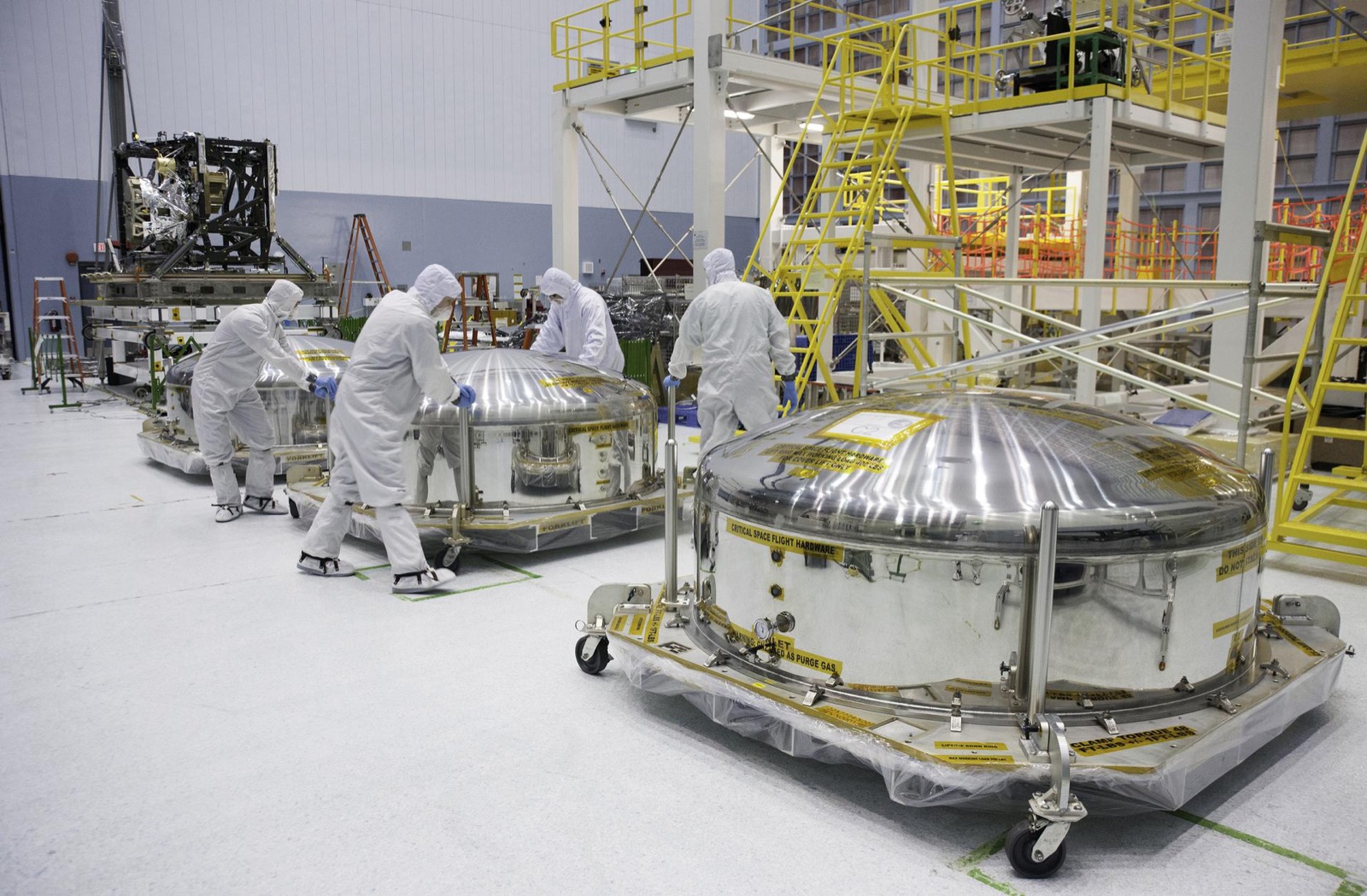
Kepler's primary mirror is 1.4 meters (4.6 feet) in diameter, and at the time of launch it was the largest mirror on any telescope outside Earth orbit — a record held only briefly, until the Herschel Space Observatory launched a few months later and claimed the title. To make it practical to launch, glassmaker Corning manufactured the mirror from ultra-low expansion (ULE) glass engineered to have a mass just 14 percent of what a solid mirror of the same diameter would weigh. Getting starlight to the detectors with minimal loss required an exceptionally reflective surface. Surface Optics Corp. applied a nine-layer silver coating using ion-assisted evaporation, then added a dielectric interference coating to minimize the formation of color centers and reduce absorption of atmospheric moisture — important for maintaining performance over a multi-year mission. A 0.95-meter (37.4-inch) front corrector plate fed light onto this primary mirror in a Schmidt camera configuration, giving the telescope its wide, well-corrected field of view.
04 Why Noise Was the Mission's Biggest Enemy Deeper
Detecting an Earth-sized planet crossing a Sun-like star causes that star's brightness to dim by only about 80 parts per million (ppm) — a change of 0.008 percent. Kepler's design goal was a combined differential photometric precision (CDPP) of 20 ppm for a magnitude-12 Sun-like star over a 6.5-hour integration, with 10 ppm allocated to natural stellar variability — roughly the Sun's own variation. In practice, the median achieved precision was 29 ppm, and the actual stellar variability turned out to be 19.5 ppm rather than the assumed 10 ppm. The consequence was significant: each individual transit of an Earth-sized planet registered as only a 2.7-sigma event instead of the intended 4-sigma, meaning many more transits had to be stacked to confirm a detection. Scientists recalculated that a mission lasting 7 to 8 years — rather than the original 3.5 years — would be needed to find all transiting Earth-sized planets. That expanded timeline made the subsequent reaction wheel failures, which cut short the primary mission in 2013, especially costly for the planet-hunting program.
05 An Orbit Designed to See Without Interruption
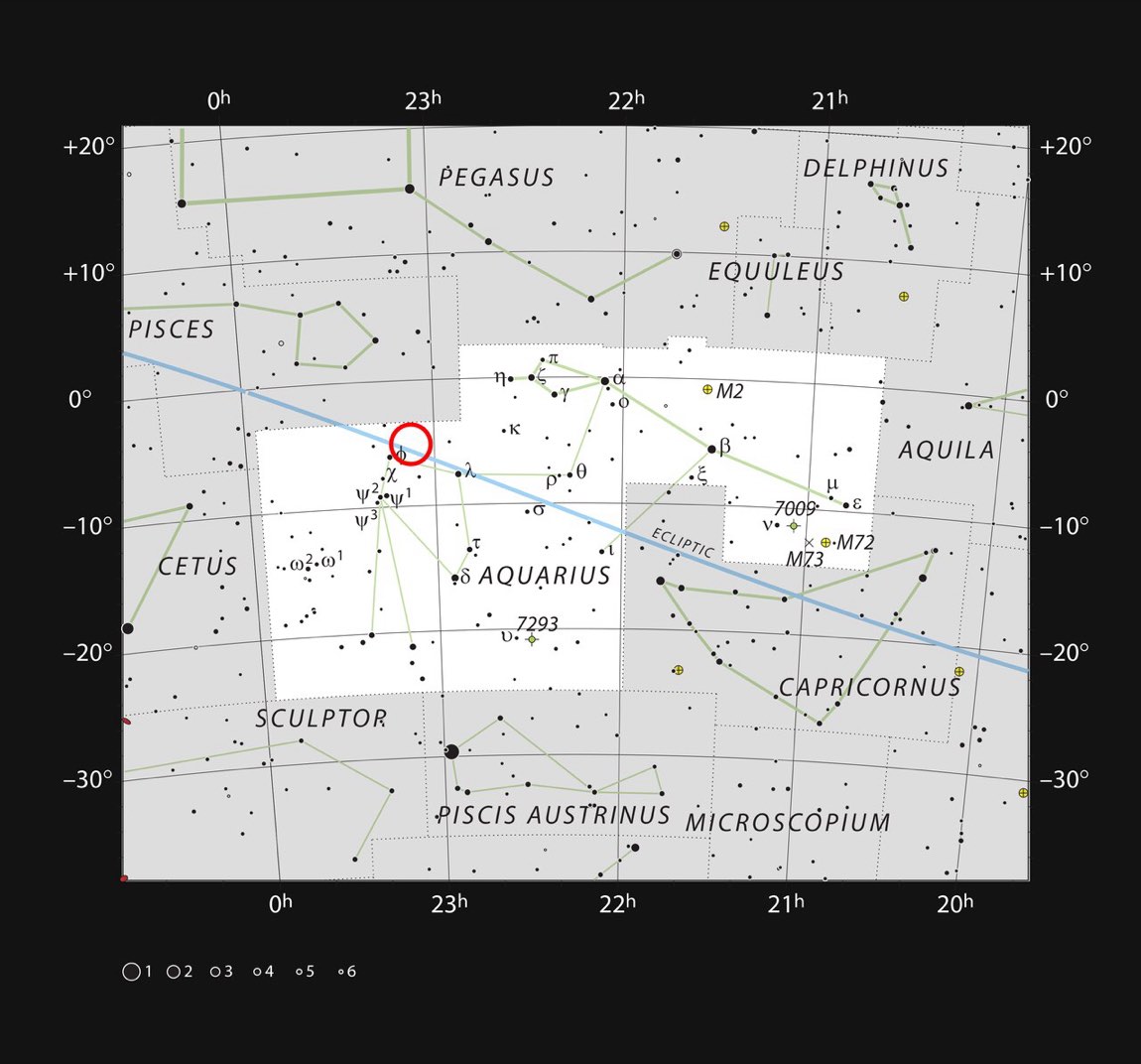
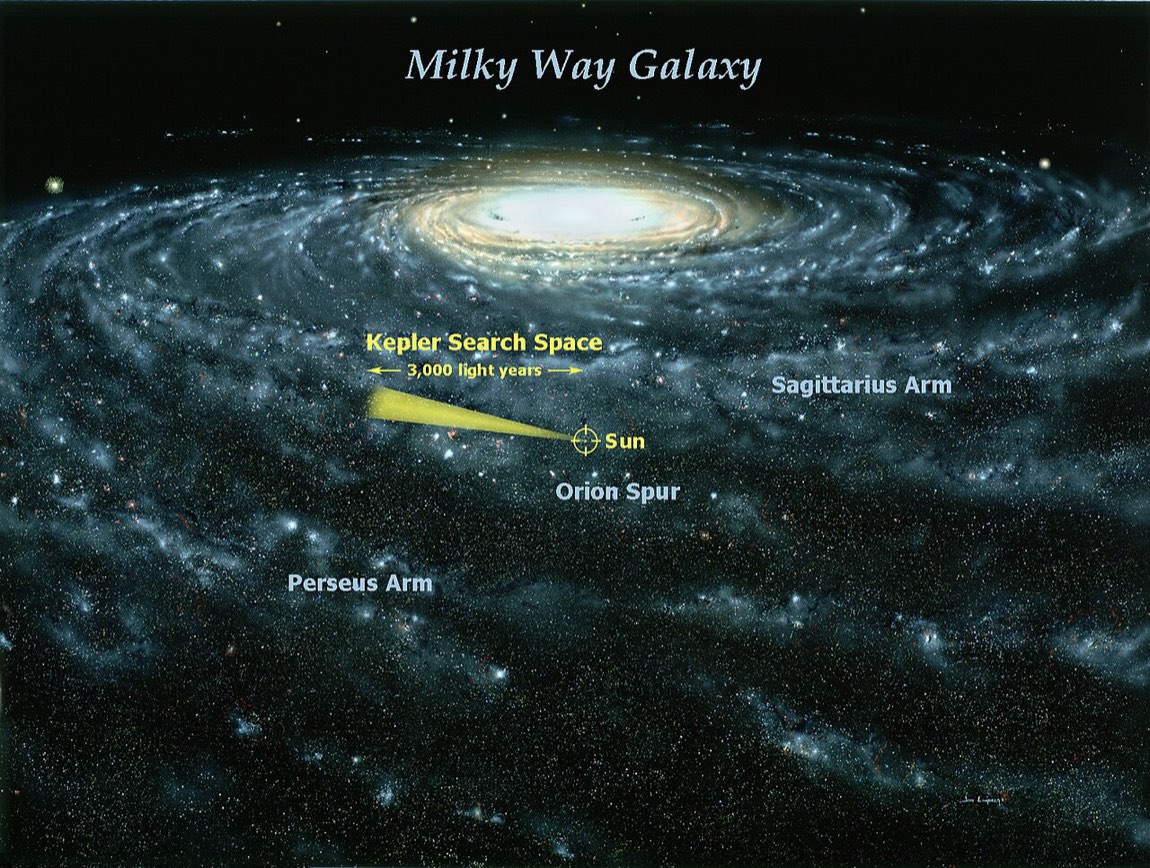
Rather than circling Earth, Kepler was placed in an Earth-trailing heliocentric orbit — meaning it orbits the Sun, slowly falling behind our planet at about 16 million miles per year. With an orbital period of 372.5 days, it gradually drifts further away; as of May 1, 2018, it was about 0.917 AU (137 million kilometers) from Earth. NASA estimated Kepler will reach the far side of the Sun after roughly 26 years and drift back near Earth after about 51 years. This solar orbit was a deliberate engineering choice: it eliminates Earth occultations, avoids stray light from Earth and the Moon, and removes the gravitational perturbations that would affect pointing in Earth orbit. From 2009 to 2013, Kepler's photometer was locked onto a single field spanning parts of the constellations Cygnus, Lyra, and Draco — a direction well out of the ecliptic plane so sunlight never entered the instrument. Importantly, that direction also happens to point along the Solar System's path around the galactic center, meaning the stars Kepler monitored sit at roughly the same galactic radius as our own Sun.
06 The Reaction Wheels That Ended an Era
Kepler's ability to stare at the same patch of sky with microscopic precision depended on four reaction wheels — spinning gyroscopic devices that controlled the spacecraft's orientation. On July 14, 2012, wheel 2 stopped turning. The spacecraft could still function with three wheels, but there was no redundancy. Then, on May 11, 2013, wheel 4 failed, ending the primary mission. Engineers ran tests between June and August 2013: wheel 4 initially could only rotate in one direction, wheel 2 ran in both directions but with significantly elevated friction. A further test coaxed wheel 4 into bidirectional rotation, but both exhibited too much friction for scientific use. On August 15, 2013, NASA officially abandoned efforts to restore them. The root cause traced back to pitting caused by electrical arcing between the steel ball bearings inside the wheels — arcing triggered by coronal mass ejections (CMEs) from the Sun. Kepler's position far from Earth was actually useful in diagnosing this, since the significant delay between a CME arriving at Kepler versus at Earth helped engineers identify the correlation.
 ⤢
⤢
07 K2: Reinventing a Crippled Telescope
Losing two of four reaction wheels could have ended Kepler entirely, but engineers devised an ingenious workaround. With only two functional wheels, precise pointing required an additional stabilizing force. The solution was to orient the telescope so that pressure from sunlight itself — photon pressure — acted as a virtual third wheel, balancing the spacecraft along the ecliptic plane. This required shifting observation fields roughly every 83 days as Kepler's geometry relative to the Sun changed. The resulting K2 "Second Light" mission was formally approved on May 16, 2014, after a test data collection run from March to May 2014 called Field 0. K2's photometric precision dropped to around 300 ppm compared to the primary mission's roughly 20 ppm, though engineering measurements in February 2014 showed the spacecraft could achieve 44 ppm on magnitude-12 stars for a 6.5-hour integration — closer to primary-mission performance than expected. K2 searched a much wider range of sky near the ecliptic, observing fields from Leo-Virgo to the region of Scorpius, and its discoveries were catalogued under the EPIC (Ecliptic Plane Input Catalog) designation.
08 The Statistics That Rewrote Planet Science
Kepler's cumulative findings transformed how astronomers think about planetary abundance. In November 2013, astronomers using Kepler data estimated that the Milky Way could contain as many as 40 billion rocky, Earth-sized planets orbiting in the habitable zones of Sun-like stars and red dwarfs, with about 11 billion of those orbiting Sun-like stars specifically. The nearest such planet may lie as close as 3.7 parsecs (12 light-years) away. A January 2013 Caltech study based on planets orbiting the star Kepler-32 concluded the Milky Way contains at least as many planets as stars — implying 100 to 400 billion exoplanets galaxy-wide. In January 2012, an international team reported that each Milky Way star hosts on average at least 1.6 planets, suggesting over 160 billion star-bound planets in our galaxy alone. By 2011, the Kepler team estimated at least 50 billion planets exist in the Milky Way, of which at least 500 million reside in habitable zones. JPL astronomers calculated that 1.4 to 2.7 percent of all Sun-like stars have Earth-sized planets in their habitable zones — corresponding to roughly two billion Earth analogs in the Milky Way alone.
09 Landmark Planets That Made History
Among Kepler's thousands of confirmed planets, several stand out as firsts. On December 20, 2011, the mission announced the discovery of Kepler-20e and Kepler-20f — the first Earth-sized planets ever found orbiting a Sun-like star, Kepler-20. On January 6, 2015, NASA confirmed the 1,000th Kepler exoplanet; four of the newly confirmed planets orbited in habitable zones, including Kepler-438b, Kepler-442b, and Kepler-452b, described as almost Earth-sized and likely rocky, plus Kepler-440b, a super-Earth. On April 17, 2014, the team announced Kepler-186f — the first nearly Earth-sized planet found in a habitable zone, orbiting a red dwarf. On May 10, 2016, NASA verified 1,284 new exoplanets simultaneously, the single largest planetary announcement in history; of those, about 550 were estimated to be rocky and nine orbited in stellar habitable zones. The K2 mission contributed its own landmark when, on December 18, 2014, it confirmed HIP 116454 b — a super-Earth and K2's first confirmed exoplanet — discovered in engineering test data before the mission formally began.
10 When Citizens Found Planets Computers Missed
Kepler generated far more data than professional astronomers could process alone, opening an unexpected chapter in participatory science. Since December 2010, the Planet Hunters project invited volunteers to scan Kepler light curves for transit signals that automated algorithms overlooked. By June 2011, users had already flagged 69 previously unrecognized planet candidates. A January 2012 BBC Stargazing Live appeal led two amateur astronomers — one based in Peterborough, England — to discover a Neptune-sized exoplanet subsequently named Threapleton Holmes B, while approximately 100,000 volunteers analyzed over one million Kepler images by early 2012. Citizen scientists also discovered PH1b (Kepler-64b) in 2012 and PH2b (Kepler-86b) in 2013. In April 2017, Australia's ABC Stargazing Live launched the Zooniverse project "Exoplanet Explorers" using live K2 data. On the project's first day alone, volunteers identified 184 transit candidates passing initial tests; on the second day, researchers identified the multi-planet system K2-138 — a Sun-like star with four super-Earths in tight orbits. In total, volunteers helped identify 90 exoplanet candidates, and the citizen scientists involved in K2-138's discovery were promised co-authorship on the resulting research paper.
11 Beyond Planets: Supernovae and Stellar Science Deeper
Kepler's relentless, high-cadence photometry turned out to be a powerful tool for stellar astrophysics well beyond planet hunting. Because the spacecraft measured stellar brightness every thirty minutes — and in short-cadence mode every 58.89 seconds — it captured the rising and falling light curves of transient events in extraordinary detail. Scientists used these measurements to study supernovae, with the densely sampled light curves proving especially valuable for understanding how these explosions evolve. In May 2015, Kepler observed the supernova KSN 2011b (a Type Ia event) before, during, and after its explosion; details from those pre-explosion moments were expected to help scientists better understand dark energy. In 2012, Kepler recorded distant stellar super-flares, some reaching 10,000 times the energy of the 1859 Carrington Event, and analysis suggested these may be triggered by close-orbiting Jupiter-sized planets. The mission's data also enabled asteroseismology — the study of oscillations inside stars — particularly on stars showing solar-like pulsations, giving astronomers a window into stellar interiors that ground-based observatories could never provide.
12 The Irony Written Into the Name
The telescope was named after Johannes Kepler, the seventeenth-century astronomer whose three laws of planetary motion became the mathematical backbone of the entire transit detection method — Kepler's third law in particular allows scientists to calculate a planet's orbital semi-major axis from the observed interval between transits. There is a notable irony embedded in this tribute: Johannes Kepler was personally convinced that planetary systems did not exist around any other stars. The mission he inadvertently inspired went on to prove, on an almost incomprehensible scale, how wrong that belief was. The connection between name and retirement date adds another layer of historical coincidence: NASA sent Kepler its final "goodnight" command on November 15, 2018, but the official retirement announcement on October 30, 2018, coincided almost exactly with the 388th anniversary of Johannes Kepler's death in 1630. The principal investigator who shepherded the mission from proposal to science operations was William J. Borucki, whose decades-long advocacy for a space-based transit survey eventually became one of the most productive planet-finding enterprises in the history of astronomy.
 ⤢
⤢