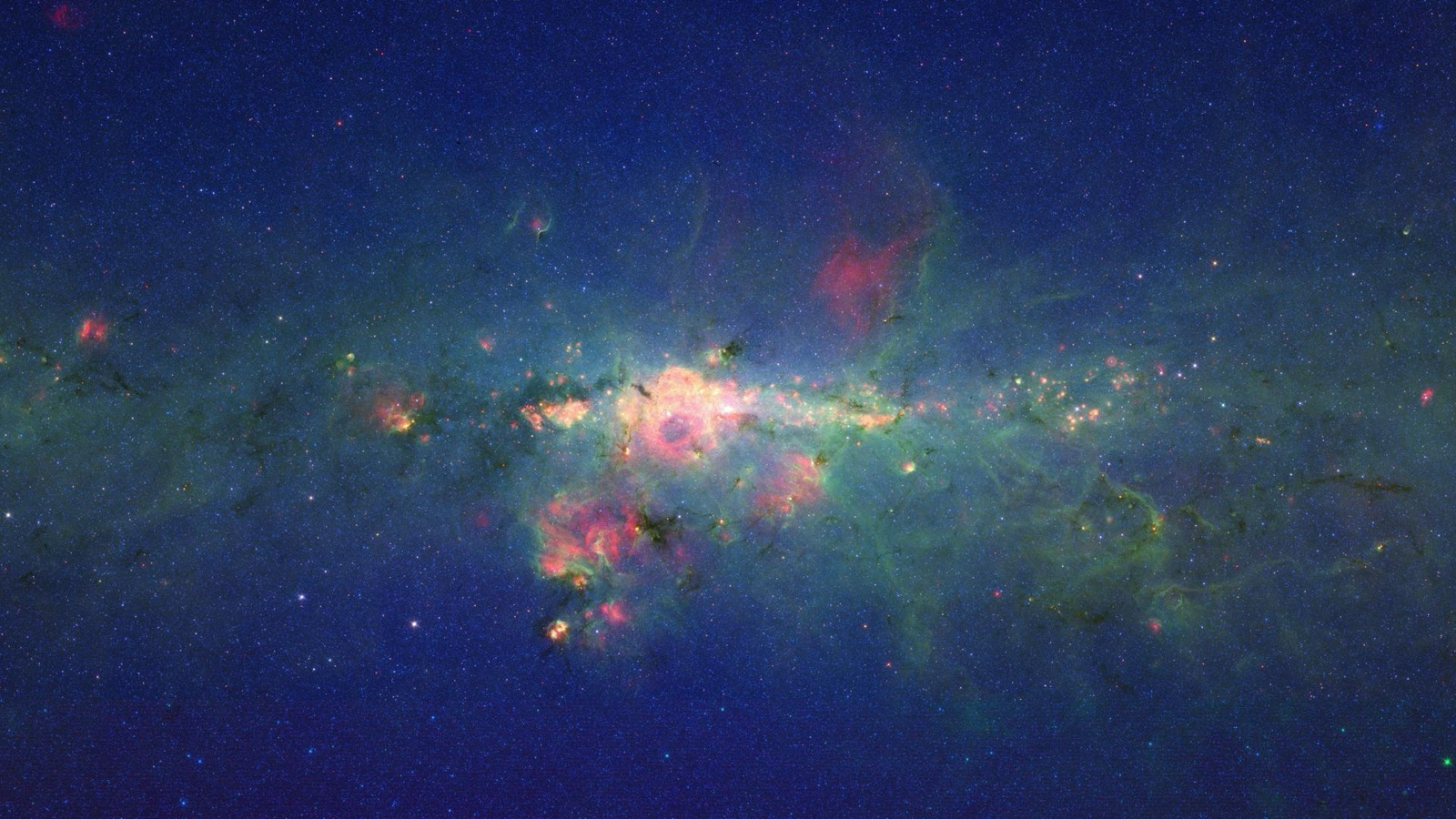
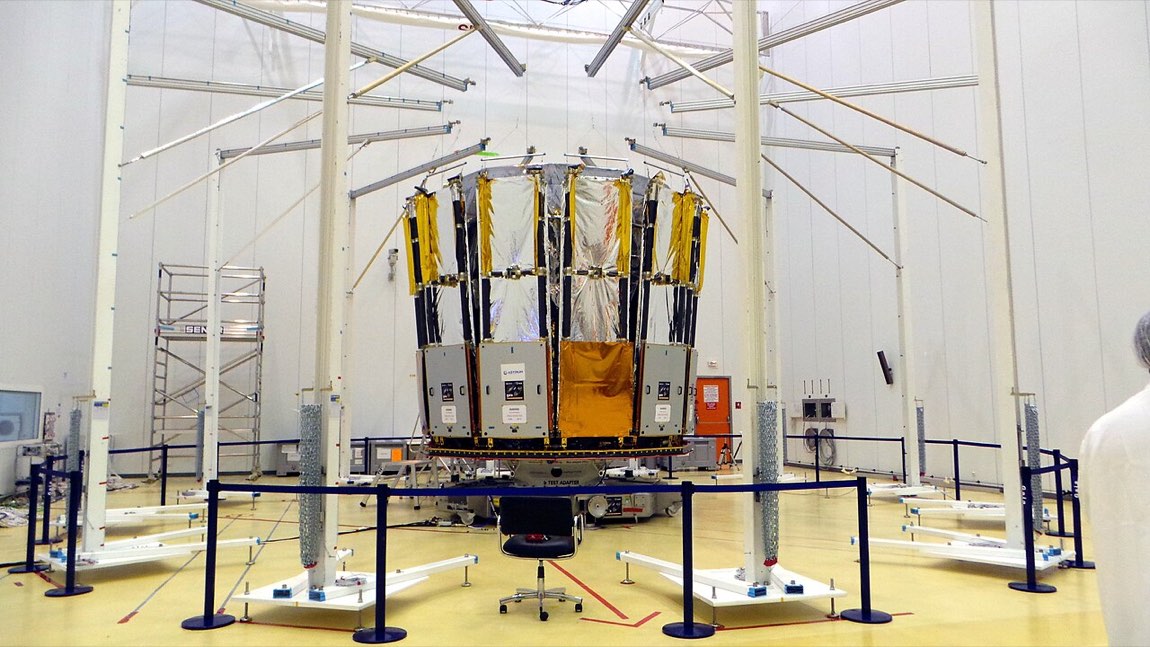
 Photograph · Montserrat Boix · CC BY-SA 4.0
Spacecraft · Deep guide
Gaia
The mission that mapped the Milky Way in 3D: the billion-star surveyor.
What is it?
ESA's Gaia spent 2014–2025 measuring the positions, distances and motions of nearly two billion stars with microarcsecond precision — the sharpest census of our galaxy ever made. Gaia's maps rewired astronomy: they exposed the Milky Way's warped disk, fossil streams of devoured galaxies, dormant black holes, and the precise distance ladder every other measurement leans on. Its observations ended in January 2025; its final catalogs will fuel discoveries for decades.
The deep dive
Researched for the Atlas from Wikipedia — Gaia (spacecraft) (30,586 characters read) · updated Sep 20, 2026
01 From Hipparcos to Gaia: A 20-Year Leap
Gaia did not emerge from nowhere. Its intellectual lineage runs directly to ESA's Hipparcos mission, which operated from 1989 to 1993 and set the first modern standard for precise star positioning from space. Just weeks after Hipparcos ended, in October 1993, astronomers Lennart Lindegren of Lund University and Michael Perryman of ESA responded to a call for long-term mission proposals and sketched out what would become Gaia. The name began as an acronym — Global Astrometric Interferometer for Astrophysics — reflecting an original plan to use interferometry, a technique that combines light from multiple apertures to achieve fine angular resolution. That approach was eventually abandoned in favour of a different optical design, but the name stuck. ESA's Science Programme Committee formally adopted the project as cornerstone mission number 6 on 13 October 2000, and hardware development was authorised in February 2006, with EADS Astrium responsible for building the spacecraft. The total cost reached approximately €740 million, roughly one billion US dollars, covering manufacture, launch and ground operations. Construction ran two years behind schedule and came in 16% over initial budget, largely because of the extraordinary difficulty of polishing Gaia's ten silicon carbide mirrors to the required perfection.
02 An Observatory Parked at L2
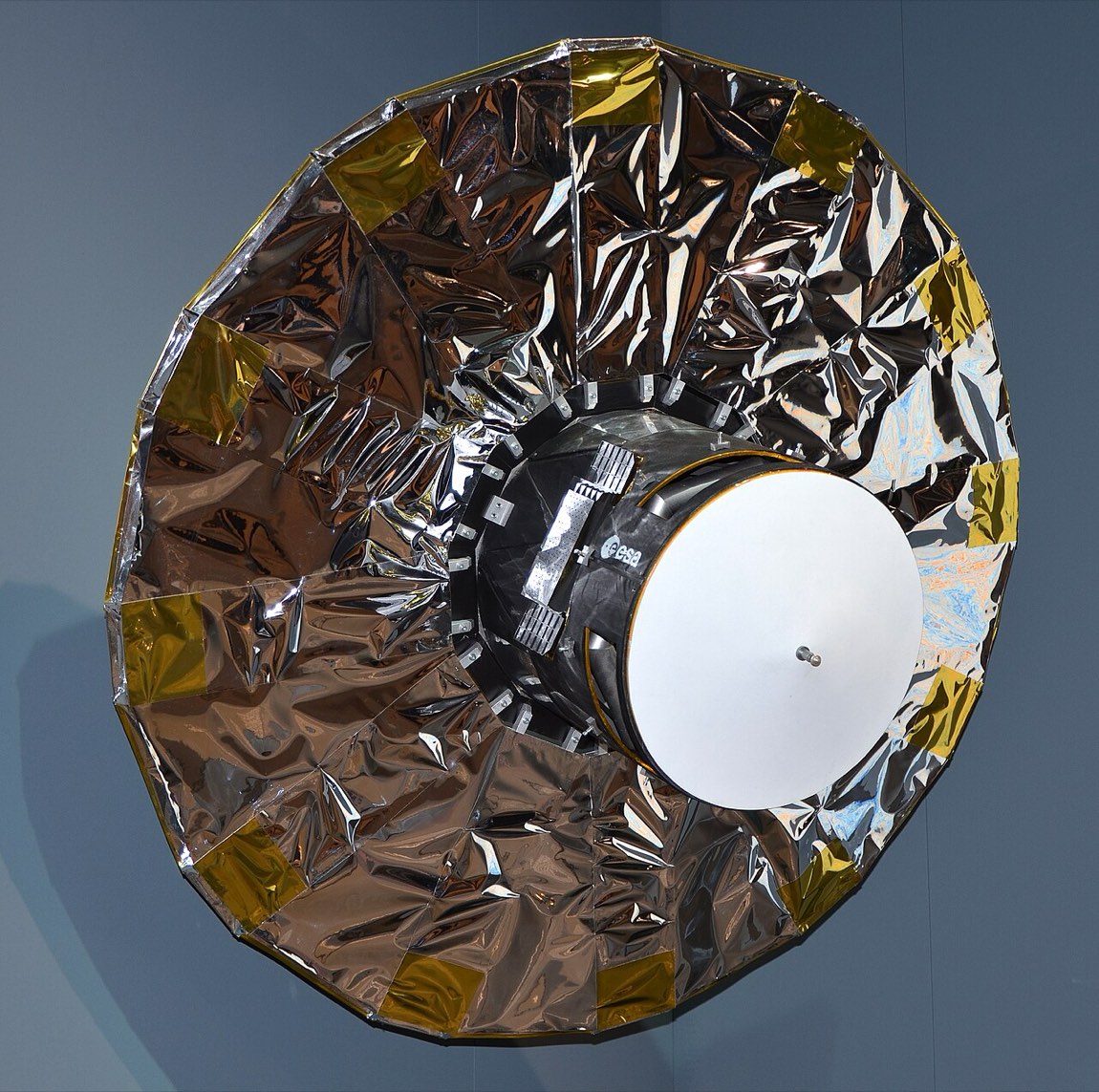
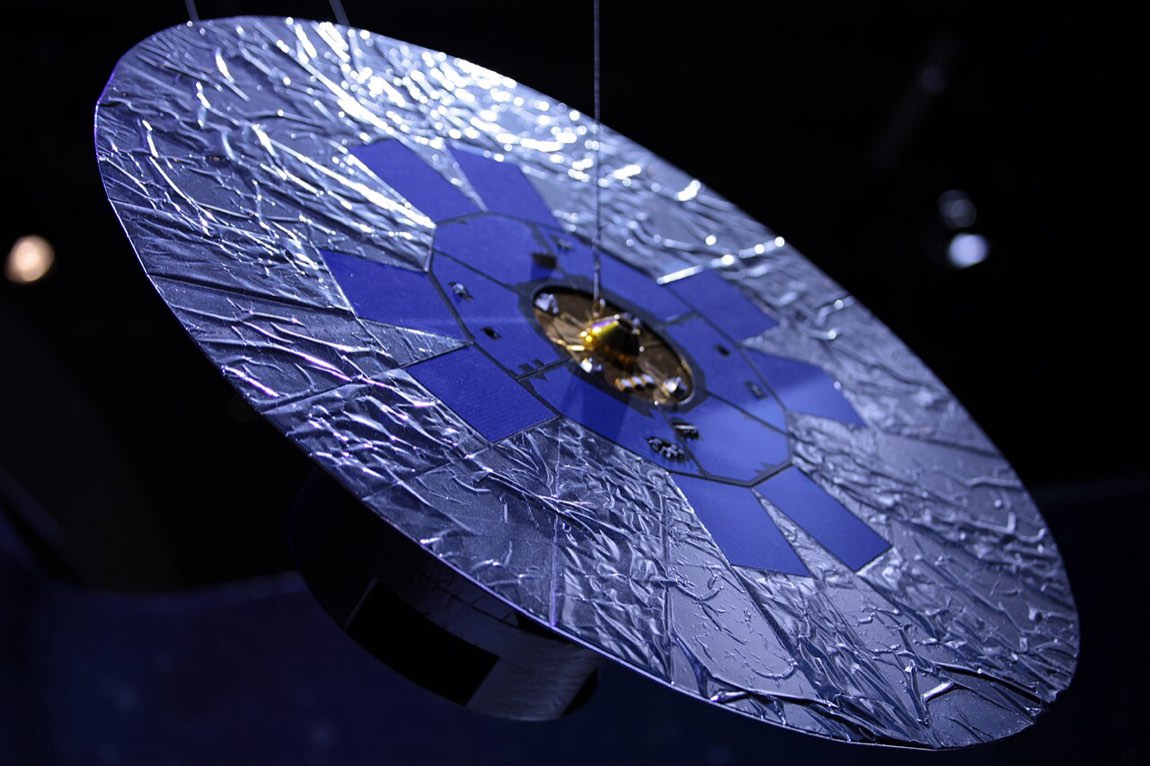
Gaia lifted off on 19 December 2013 at 09:12 UTC aboard a Soyuz ST-B rocket fitted with a Fregat-MT upper stage, launching from the Ensemble de Lancement Soyouz at Kourou in French Guiana. The satellite separated from its upper stage just 43 minutes after liftoff. Its destination was the Sun–Earth Lagrange point L2, a gravitational sweet spot roughly 1.5 million kilometres from Earth, on the opposite side of the planet from the Sun. Gaia arrived there on 8 January 2014, three weeks after launch. At L2, the spacecraft settled into a Lissajous orbit — a looping, quasi-periodic path that kept the Sun from being periodically blocked by Earth, which would otherwise have starved the solar panels and disturbed the thermal balance. A 10-metre-diameter sunshade deployed after launch and was always held at a fixed 45-degree angle to the Sun, shielding the telescope optics and keeping component temperatures within the operating range of −170°C to 70°C. The stability of L2 was not merely convenient: the mission's microarcsecond-level precision demanded an environment where vibration, thermal shock, and gravitational disturbances were reduced to an absolute minimum.
03 Three Instruments, One Billion Targets Deeper
Gaia carried three tightly integrated science instruments. The astrometry instrument, Astro, measured the precise angular positions of every star brighter than magnitude 20, enabling calculation of parallax distances and proper motions across the sky. The photometric instrument, designated BP/RP, used two fused-silica prisms — a Blue Photometer covering 330–680 nm and a Red Photometer covering 640–1050 nm — to disperse starlight and extract temperatures, masses, ages and chemical compositions for the same billion-object sample. Together they covered a broad 320–1000 nm spectral band. The third instrument, the Radial-Velocity Spectrometer (RVS), acquired high-resolution spectra in the narrow 847–874 nm band centred on calcium ion absorption lines, measuring how fast stars move toward or away from the spacecraft via the Doppler shift. The RVS worked for objects up to magnitude 17, delivering radial velocity precision ranging from 1 km/s for bright stars at magnitude 11.5 to 30 km/s at magnitude 17.5. Combining all three instruments gave Gaia a complete six-dimensional picture of stellar motion: two dimensions of position on the sky, two of transverse velocity, distance from parallax, and line-of-sight velocity from Doppler measurements.
04 A Camera Bigger Than a Billion Pixels
At the heart of Gaia sat one of the largest digital cameras ever flown in space. The focal plane array, measuring 1.0 by 0.5 metres, received light from both of the spacecraft's two telescopes simultaneously. It was tiled with 106 individual CCDs, each containing 4,500 by 1,966 pixels, producing a combined total of 937.8 megapixels — commonly described as a gigapixel-class imaging system. Each primary mirror measured 1.45 by 0.5 metres. The two telescope lines of sight were separated by a fixed angle of 106.5 degrees, meaning that as the spacecraft rotated, pairs of stars widely separated on the sky crossed the same detectors minutes apart, allowing their positions to be compared with extraordinary precision. The spacecraft rotated once every 6 hours, sweeping a great-circle strip roughly 0.7 degrees wide, while its spin axis itself slowly precessed around a cone every 63 days, tracing a cycloid-like pattern that guaranteed every part of the sky was visited repeatedly. Because the data streaming off all 106 CCDs at full resolution would have overwhelmed the roughly 3 Mbit/s average telemetry link, only a few dozen pixels around each detected object were transmitted to Earth.
05 Timekeeping at the Billionth of a Second Deeper
Achieving microarcsecond positional accuracy demanded more than a stable orbit and precise optics — it required knowing exactly when each photon was detected. Gaia rotated at 60 arcseconds per second, meaning the spacecraft moved by 0.6 microarcseconds in just 10 nanoseconds. To meet its positioning goals, timestamps had to be accurate to within nanoseconds. Moreover, no systematic errors could be allowed to accumulate over the spacecraft's 6-hour rotation period of 21,600 seconds, which meant the onboard clock's frequency stability needed to be better than one part in 10 to the power of 12. The rubidium atomic clock installed aboard Gaia achieved a stability of approximately 10 to the power of −13 over each rotational period — ten times better than the minimum requirement. This precision timekeeping fed directly into maintaining the Barycentric Celestial Reference System, a fully relativistic coordinate framework that accounted for the gravitational bending of light by the Sun, major planets and the Moon. Every observation Gaia made had to be expressed in terms of this reference system, regardless of where the spacecraft physically happened to be in its orbit.
06 Stray Light and a Damaged Cover
Gaia's operational life was not without setbacks. Shortly after launch, ESA discovered unexpected stray light entering the telescope apertures. Engineers initially suspected ice deposits on the sunshield were reflecting diffracted light inward, but the true culprit turned out to be microscopic fibers from the sunshield itself, protruding just beyond the shield's edges and scattering sunlight into the optics. The problem was worst for the Radial-Velocity Spectrometer, because it spread each star's light across many more detector pixels than the astrometry instrument did, so each pixel collected a proportionally larger share of background noise. Mitigation schemes were put in place and ESA concluded that the impact on science would be "relatively modest and mostly restricted to the faintest" stars. Then in April 2024, near the end of the mission, a micrometeoroid struck Gaia's protective cover, creating a small gap that allowed stray sunlight — about one billionth the intensity felt on Earth's surface — to occasionally disrupt the sensitive sensors. The following month, electronics on one CCD failed, producing a high rate of false detections. Engineers responded by refocusing Gaia's optics for the last time, and observations continued until the formally declared end of science operations on 15 January 2025.
07 Cold Gas: The Hidden Mission Limit
What ultimately set the clock ticking on Gaia's observing life was not its electronics, its mirrors, or the degradation of its CCDs — it was a supply of cold gas. Gaia had no reaction wheels or gyroscopes. Instead, attitude control depended entirely on tiny cold gas thrusters that expelled nitrogen at a rate of just 1.5 micrograms per second. Without this precise micro-propulsion, the spacecraft could no longer be pointed at the microarcsecond scale required for science. The chemical propulsion system carried dinitrogen tetroxide and monomethylhydrazine in quantities that might have stabilised the spacecraft at L2 for several decades, but it could not substitute for the cold gas in fine pointing. The mission was extended in 2018 to 2020, again in 2020 to 2022, and again in 2023 through the second quarter of 2025. In March 2025, as the nitrogen supply ran dry, Gaia was steered out of its L2 orbit and placed into a heliocentric orbit away from Earth's sphere of influence. After downlinking all remaining stored data, it was decommissioned and passivated on 27 March 2025.
 ⤢
⤢
08 Galaxies Swallowed and Stars Set Free
Some of Gaia's most dramatic discoveries came from reading the motion of stars as fossils of ancient collisions. In late October 2018, analysis of Gaia data revealed the galactic population now called Gaia-Enceladus, the debris of a major merger with a now-destroyed dwarf galaxy. This event, which occurred roughly 10 billion years ago, is associated with at least 13 globular clusters and is thought to have built the Milky Way's thick disk. In the same month, Leiden University astronomers examined 20 hyperrunaway star candidates in the DR2 dataset. Expecting perhaps one star escaping the galaxy, they found seven genuinely exiting — and 13 more apparently approaching the Milky Way from outside, possibly ejected by unknown extragalactic sources. In November 2018, Gaia data led to the discovery of the galaxy Antlia 2, comparable in size to the Large Magellanic Cloud yet 10,000 times fainter, giving it the lowest surface brightness of any galaxy ever found. And in March 2024, two ancient stellar streams named Shakti and Shiva were identified, both formed more than 12 billion years ago, adding further evidence that the early Milky Way was built through repeated mergers.
09 Black Holes, Exoplanets, and a Radcliffe Wave Deeper
The breadth of Gaia's discoveries extended well beyond stellar positions. In 2022, analysis of DR3 data revealed a Sun-like star — catalogued as Gaia DR3 4373465352415301632 — orbiting a black hole at a distance of roughly 1,600 light-years, making it the closest known black hole to Earth, designated Gaia BH1. A second system, Gaia BH2, showed a red giant orbiting another black hole. On the exoplanet front, ESA announced in March 2021 that Gaia had detected a transiting exoplanet for the first time, orbiting the solar-type star Gaia EDR3 3026325426682637824; confirmation came in May 2022 when the planet was formally designated Gaia-1b, with a second planet Gaia-2b announced simultaneously. In September 2023, HIP 66074 b, also known as Gaia-3b, became the first exoplanet confirmed through astrometry from Gaia DR3 data. In November 2020, Gaia measured the acceleration of the entire Solar System toward the Galactic Center as 0.23 nanometres per second squared. The Radcliffe wave — a giant, undulating structure of gas in the Milky Way — was discovered in January 2020 using Gaia measurements. Twelve Einstein crosses were also identified in April 2021, and Gaia's Hertzsprung–Russell diagram of the Milky Way is considered one of the most accurate ever produced.
10 60 Terabytes and a Consortium to Read It Deeper
Over its nominal five-year mission, Gaia transmitted data to Earth for about eight hours every day at roughly 5 Mbit/s, received by three 35-metre-diameter radio dishes belonging to ESA's ESTRACK network, located in Cebreros, Spain; Malargüe, Argentina; and New Norcia, Australia. The total compressed data volume retrieved during the nominal mission was approximately 60 terabytes, expanding to about 200 terabytes of usable uncompressed data stored on the ground in an InterSystems Caché database. Making scientific sense of this archive falls to the Data Processing and Analysis Consortium, known as DPAC, a European collaboration selected after ESA's November 2006 open call. DPAC's funding, provided by participating countries and partly by ESA, has been secured through production of the final catalogue. Data releases have been staged: DR1 in September 2016 covered 14 months of observation; DR2 in April 2018 covered 22 months; Early DR3 arrived in December 2020; and full DR3 was published in June 2022. Between DR3 and DR4, a Focused Product Release added new data on the Omega Centauri cluster using a novel observing technique. DR4 is expected no earlier than December 2026 and will deliver proper motions 4.5 times more precise than DR2. The final catalogue, DR5, covering the full mission lifespan, is not expected before the end of 2030.
11 Measuring the Sculptor Dwarf's Path
One vivid illustration of Gaia's precision came in November 2017, when scientists led by Davide Massari of the Kapteyn Astronomical Institute at the University of Groningen combined Gaia and Hubble Space Telescope data to map the three-dimensional motion of stars inside the Sculptor Dwarf Galaxy. Massari described the achievement strikingly: the team was measuring the yearly motion of a star on the sky equivalent to less than the size of a pinhead on the Moon as seen from Earth. The data revealed that Sculptor follows a highly elliptical orbit around the Milky Way. It is currently near its closest approach, at a distance of about 83.4 kiloparsecs — approximately 272,000 light-years — but its orbit can carry it out to around 222 kiloparsecs, or about 720,000 light-years, before it swings back. This kind of orbital characterisation, applied across dozens of satellite galaxies and star clusters, is central to reconstructing how the Milky Way assembled over cosmic time and continues to grow by cannibalising its smaller neighbours.
12 How Precise Is "Precise"? Deeper
To appreciate what Gaia achieved, it helps to anchor the numbers. The best parallax measurements from the reanalysed Hipparcos catalogue, published in 2007, carried errors no better than 100 microarcseconds, with typical errors several times larger. Gaia's expected final catalogue accuracy, based on in-orbit testing and accounting for stray light and basic angle instability, is 6.7 microarcseconds or better in parallax, position and proper motion for stars in the apparent magnitude range 3 to 12 — roughly fifteen times more precise than Hipparcos at its best. For 15th-magnitude stars the parallax error rises to 26.6 microarcseconds, and for the faintest targets near magnitude 20 it reaches several hundred microarcseconds. To translate: one microarcsecond is the angle subtended by a human hair seen from about 2,000 kilometres away. The proper motion improvement is equally striking — DR4 proper motions will be 4.5 times more precise than those in DR2, and the final DR5 catalogue will be 1.4 times more precise than DR4. These improvements compound, because more precise parallaxes yield more precise distances, which yield more precise luminosities, which constrain stellar ages, masses and the distance ladder that underpins the measurement of the universe's expansion rate.
13 What Comes After Gaia: GaiaNIR
Even before Gaia finished its mission, astronomers were planning its successor. GaiaNIR — Gaia Near Infra-Red — would extend the catalogue into the near-infrared wavelength range, capturing stars and other objects hidden from Gaia by dust, particularly in the crowded plane of the Milky Way. The trade-off is angular resolution: longer wavelengths produce broader diffraction patterns, so GaiaNIR's measurements would be somewhat less precise than an equivalent visible-light mission. However, revisiting Gaia sources in the infrared would substantially improve proper motion accuracy by extending the time baseline. The main engineering hurdle is the low technology readiness of near-infrared time-delay-and-integration detectors, though recent progress with avalanche photodiode detectors is helping close that gap. A 2017 ESA report outlined two alternative concepts using conventional near-infrared detectors combined with de-spin mirrors, but the technological demands may push costs above what an ESA medium-class mission budget can accommodate. Collaboration with US or other space agencies has been discussed. Significantly, ESA's long-range Voyage 2050 science programme has selected "Galactic Ecosystem with Astrometry in the Near-infrared" as one of two potential large-class mission themes, lending meaningful institutional momentum to a GaiaNIR concept.
 ⤢
⤢