 Photograph · DLR German Aerospace Center · CC BY 2.0
Spacecraft · Deep guide
Hayabusa2
Japan's asteroid raider: two landings, one crater, and samples on Earth.
What is it?
JAXA's Hayabusa2 turned asteroid exploration into an action film: at asteroid Ryugu it deployed hopping rovers, fired a copper impactor to blast a fresh crater, touched down twice to collect material, and in December 2020 parachuted 5.4 grams of asteroid into the Australian outback. Those grams held amino acids and RNA's letter uracil. The spacecraft flew on — its encore is asteroid 1998 KY26 in 2031.
The deep dive
Researched for the Atlas from Wikipedia — Hayabusa2 (21,683 characters read) · updated Sep 20, 2026
01 From Peregrine Falcon to Asteroid Hunter
The name Hayabusa means "peregrine falcon" in Japanese, and the mission earned that predatory reputation by pursuing one of the most primitive objects in the Solar System. JAXA began studying a successor to the original Hayabusa mission as early as 2007, just one year after that spacecraft's troubled journey concluded. Formal government approval came in August 2010, with a project cost estimated at 16.4 billion yen — roughly US$149 million. The chosen target, asteroid 162173 Ryugu (originally designated 1999 JU3), is a carbonaceous near-Earth asteroid thought to preserve some of the most pristine, unaltered materials in the entire Solar System. Scientists believed that studying it could illuminate the origin of water and organic compounds on Earth itself. The spacecraft launched on 3 December 2014 aboard an H-IIA rocket, sharing its ride with the PROCYON asteroid flyby probe — whose mission ultimately failed. Hayabusa2, by contrast, would go on to exceed nearly every expectation set for it, conducting a textbook sample-return and then continuing outward to new targets.
02 A Spacecraft Built for Extreme Precision Deeper
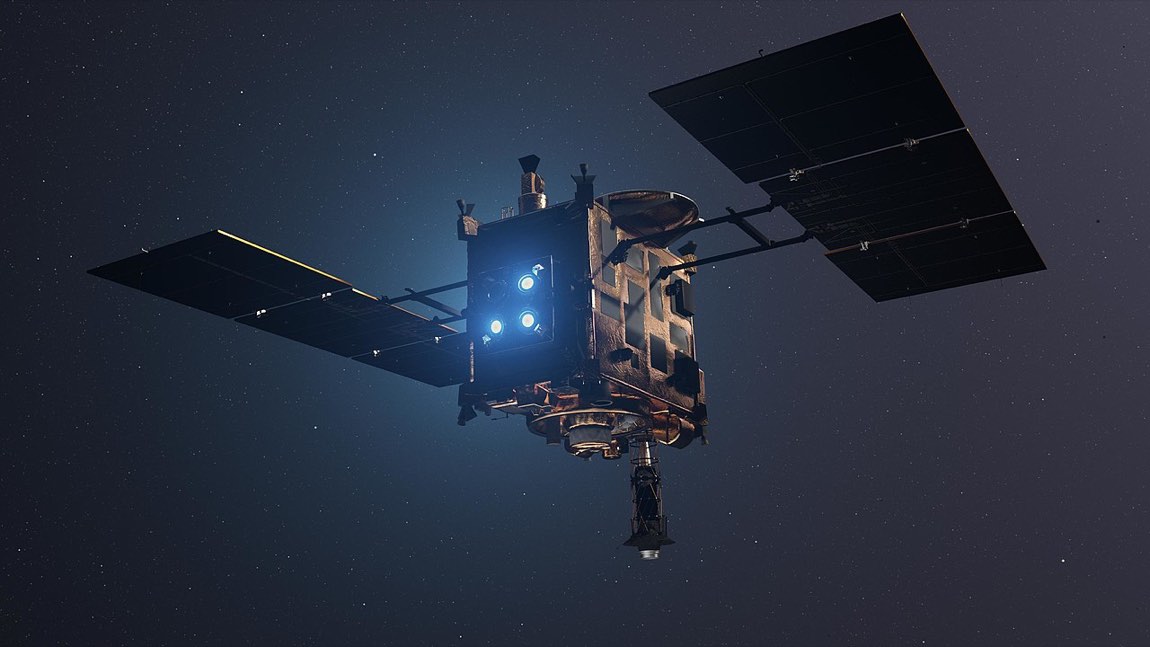
Hayabusa2 has a total mass of 600 kilograms including fuel — roughly the weight of a grand piano. Its electrical power comes from two sets of solar arrays producing 2.6 kW at 1 AU from the Sun, dropping to 1.4 kW at 1.4 AU as it moves farther out. Eleven lithium-ion batteries, each rated at 13.2 Ah and mounted inline, store that energy. For propulsion, four solar-electric ion thrusters designated μ10 use microwaves to convert xenon gas into plasma, which solar-panel voltage then accelerates and ejects. Running three simultaneously generates up to 28 mN of thrust — about the weight of three paperclips pressing on your palm — yet the 66 kg of xenon aboard could change the spacecraft's speed by up to 2 km/s across the mission. Attitude control is handled by four redundant reaction wheels and twelve chemical thrusters burning hydrazine and MON-3, totaling 48 kg of chemical propellant. Communications travel on both X-band and Ka-band through two high-gain directional antennas, reaching ground stations as far-flung as JAXA's Usuda and Uchinoura centers, NASA's Deep Space Network, and ESA's Malargüe Station in Argentina, at bit rates ranging from a trickle of 8 bit/s up to 32 kbit/s.
03 How the Spacecraft Found Its Way Down
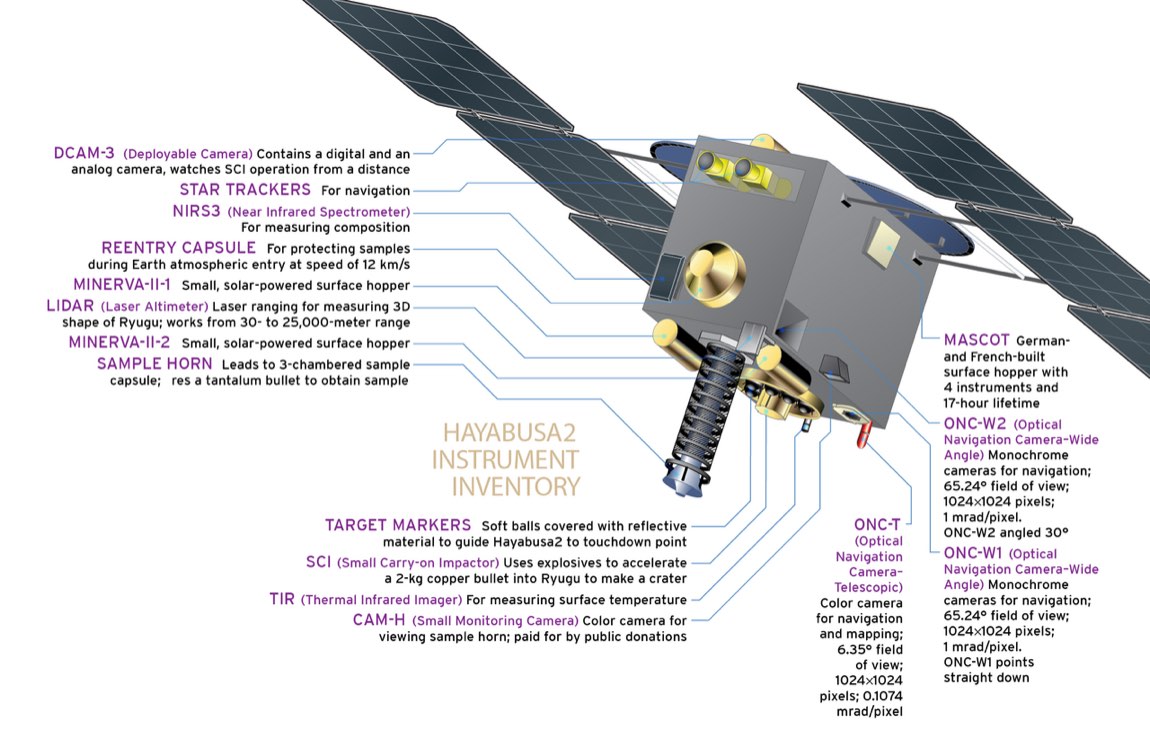
Landing precisely on a boulder-strewn asteroid less than 900 meters across demanded extraordinary navigation tools. The optical navigation camera telescope (ONC-T) is a seven-color telescopic framing camera that worked in tandem with the wide-field ONC-W2 and two star trackers to keep the spacecraft oriented. Closer to the surface, a laser altimeter and ranging system (LIDAR) measured altitude anywhere between 30 m and 25 km. Below 30 m, dedicated Laser Range Finders took over — two to measure distance and spacecraft attitude relative to the terrain, and a third specifically to monitor the sampling horn and trigger the projectile at the right instant. To guide the final descent visually, the team deployed one of five target markers, small spheres coated in highly reflective material that a strobe light on the spacecraft could pick up against the dark asteroid surface. A first attempt to drop a marker on 14 May 2019 failed, but on 4 June 2019 the team succeeded in placing one from an altitude of just 9 m. Ground Control Point Navigation (GCP-NAV) sensors rounded out this layered approach, making Hayabusa2's touchdowns among the most precisely guided in spaceflight history.
04 Two Kinds of Sample, Two Kinds of Science Deeper
The sampling strategy was deliberately tiered to capture different geological histories in one mission. The first surface sample, collected on 21 February 2019, used a 5 g tantalum projectile fired at 300 m/s into the asteroid surface; ejecta traveled up a horn and into a catcher under microgravity momentum alone. That single collection yielded enough topsoil that the second planned surface sample was eventually cancelled to reduce mission risk. The far more ambitious sub-surface sample required blasting open the asteroid. On 5 April 2019, Hayabusa2 released the Small Carry-on Impactor (SCI) — a free-flying gun carrying a 2.5 kg copper projectile driven by a 4.5 kg shaped charge of plasticized HMX explosive. The spacecraft retreated behind the asteroid to avoid debris, leaving a deployable camera, DCAM3, behind to watch. Fired from roughly 500 m altitude, the copper impactor excavated a crater about 10 m in diameter, exposing material that had never been touched by solar radiation or space weathering. Post-impact images also revealed something unexpected: almost no seismic shaking occurred, suggesting Ryugu was far less cohesive than models had predicted. Sub-surface sampling itself took place on 11 July 2019, and all samples were sealed in separate containers inside the return capsule.
 ⤢
⤢
05 The Long Journey Home and the Fiery Return
After departing Ryugu on 13 November 2019, Hayabusa2 spent about a year coasting back toward Earth on its ion engines. Hours before the flyby, on 5 December 2020 at 05:30 UTC, it released the sample-return capsule spinning at one revolution every three seconds. The capsule plunged into Earth's atmosphere at 12 km/s — that is about 35 times the speed of sound — and deployed a radar-reflective parachute at roughly 10 km altitude, ejecting its heat shield while transmitting a beacon signal. It landed safely at the Woomera Test Range in southern Australia and was retrieved the same day for transport to JAXA's Extraterrestrial Sample Curation Center in Japan. The capsule itself measured 40 cm in external diameter, 20 cm tall, and had a mass of about 16 kg. The total distance Hayabusa2 traveled across its primary mission was 5.24×10⁹ km — equivalent to 35.0 AU, or roughly the distance to Neptune and back. Volatile substances were to be collected before the sealed containers were even opened, ensuring the most fragile chemistry remained intact for analysis.
06 What the Samples Revealed — and the Contamination Puzzle Deeper
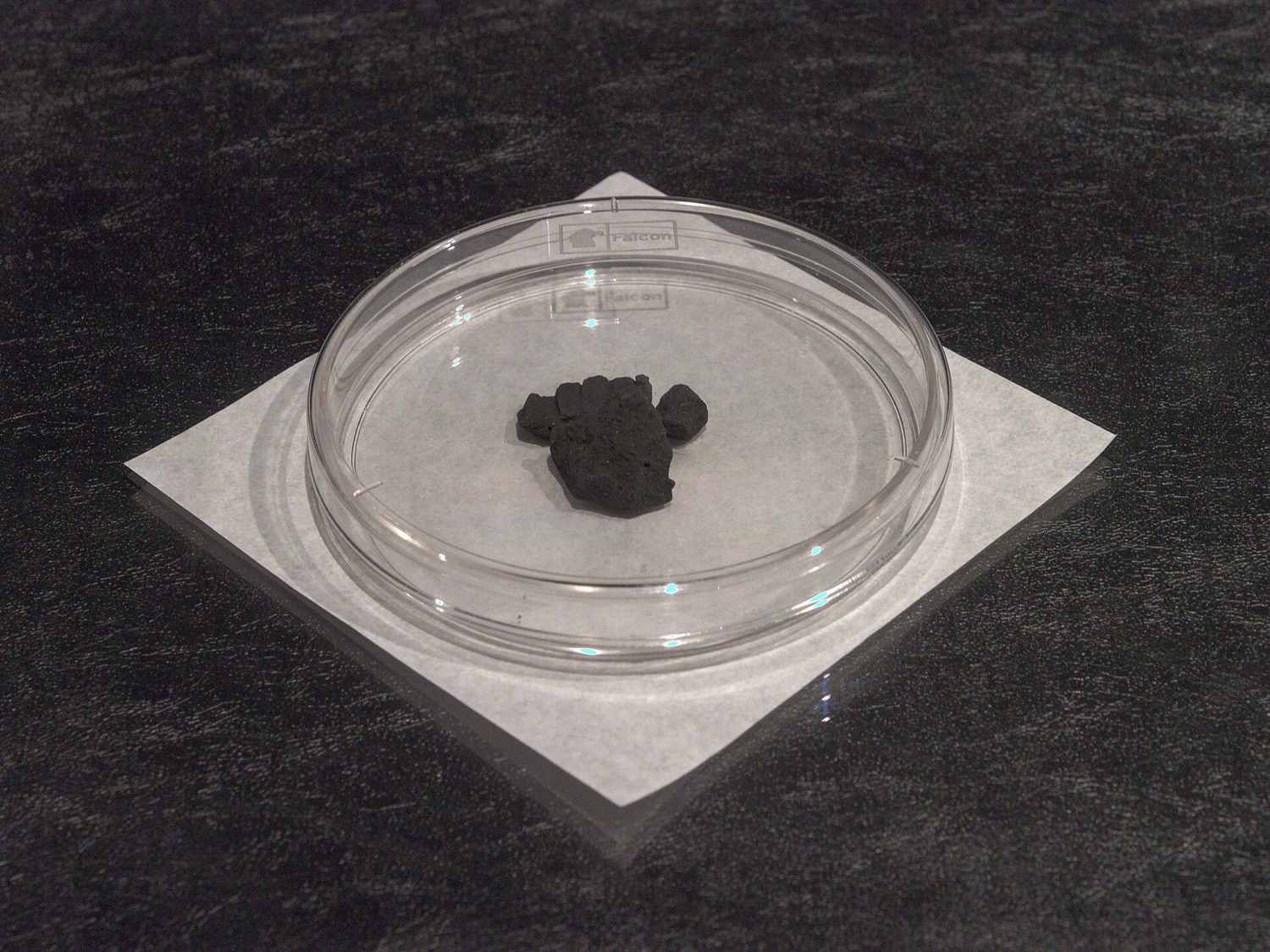
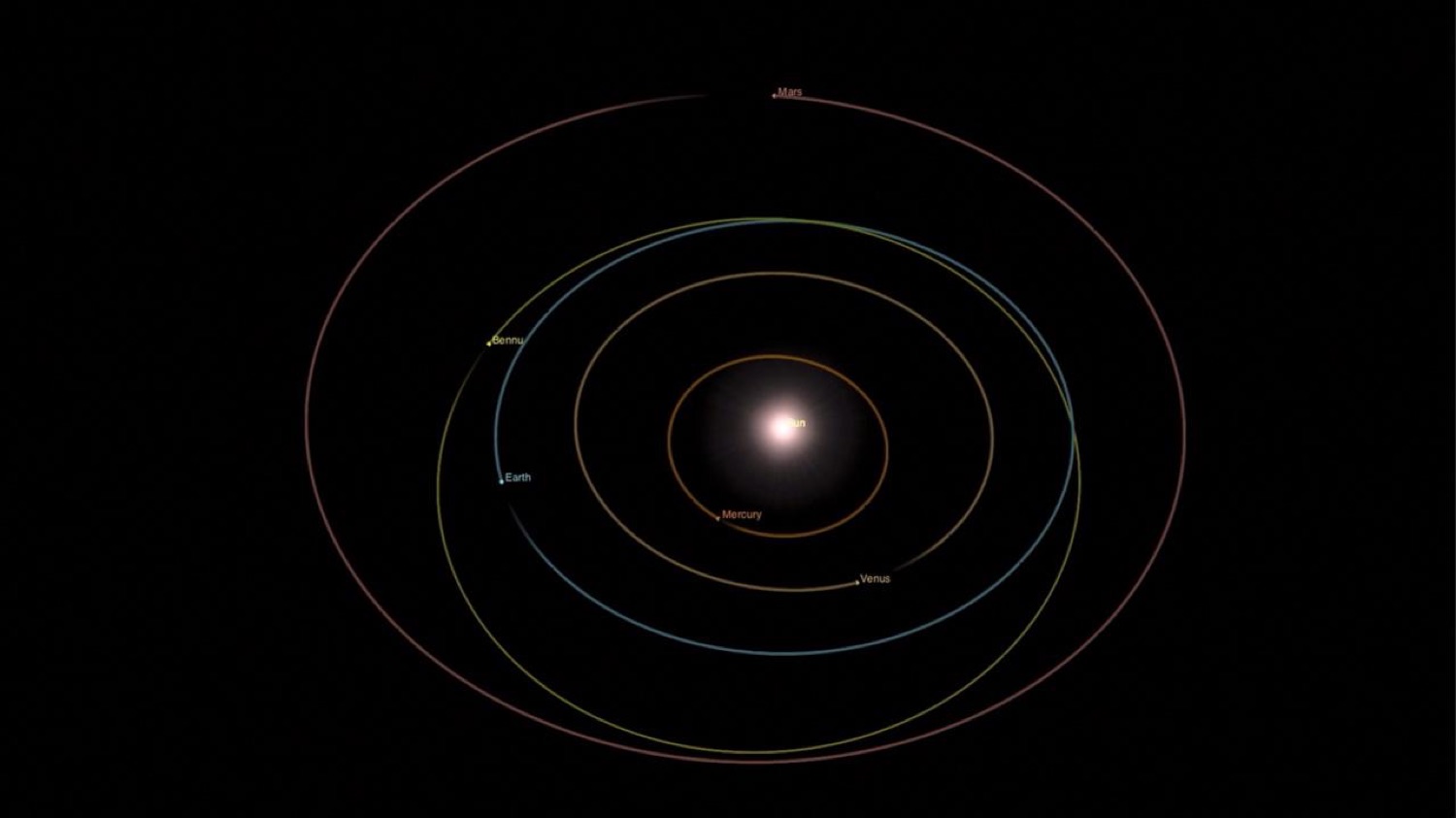
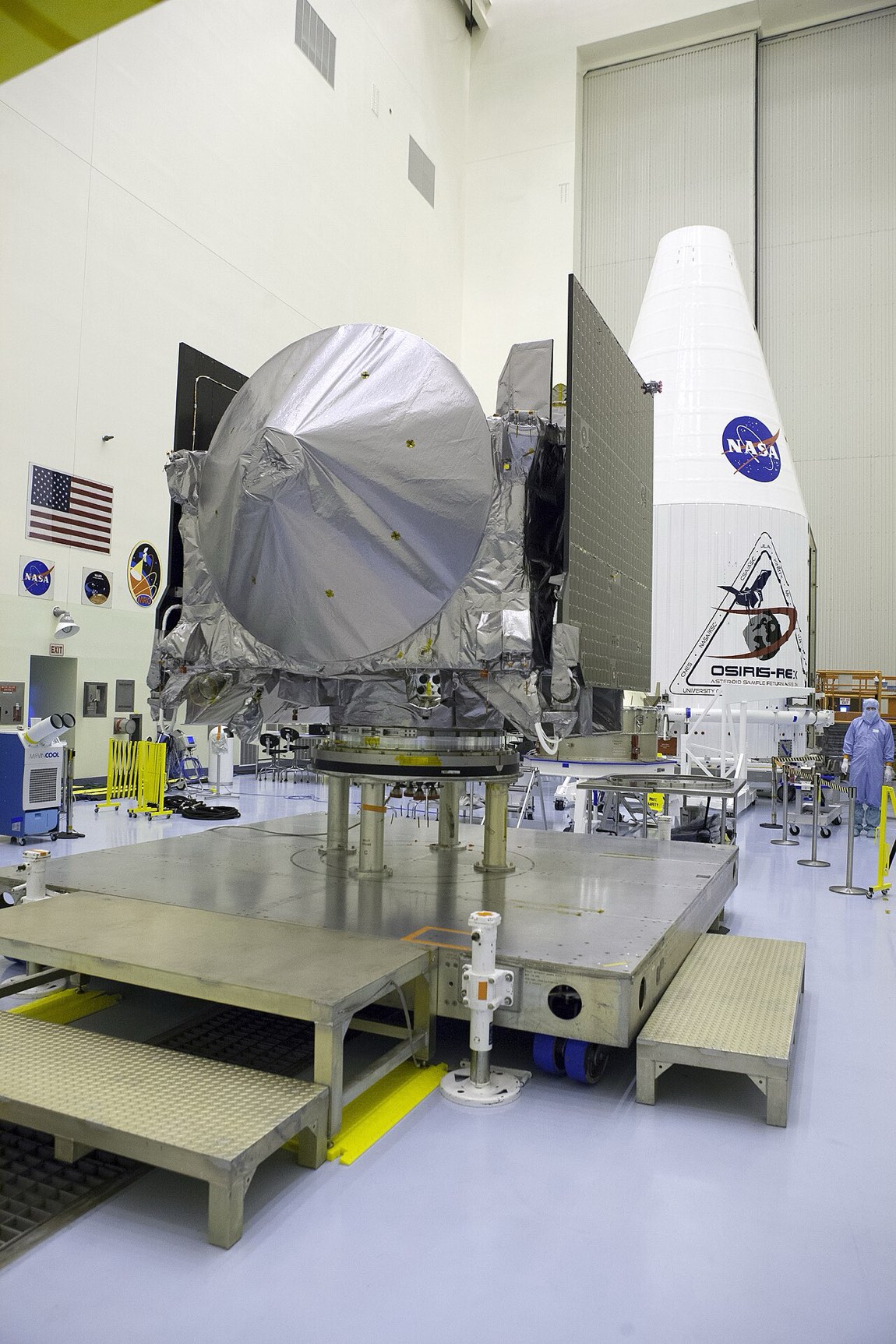
The returned capsule contained carbon-rich fragments that scientists believe hold clues about the ancient delivery of water and organic molecules to Earth. JAXA agreed to share portions of the Ryugu samples with NASA, and in exchange NASA will provide JAXA a percentage of its sample from asteroid Bennu, collected by the OSIRIS-REx spacecraft, which returned to Earth on 24 September 2023. Scientific analysis has not been without complications. A November 2024 study published in Meteoritics & Planetary Science reported that despite stringent contamination control measures, terrestrial microorganisms rapidly colonized the Ryugu sample during preparation. Researchers concluded the microbial growth originated from Earthly contamination rather than from the asteroid itself — an important distinction that also serves as a cautionary lesson for future planetary protection protocols. The episode underscores just how difficult it is to keep extraterrestrial samples truly pristine once they re-enter a biosphere teeming with Earth life. This debate about contamination control will shape how the scientific community handles similar returns from Bennu and future missions.
07 Four Tiny Rovers, One Alien Surface
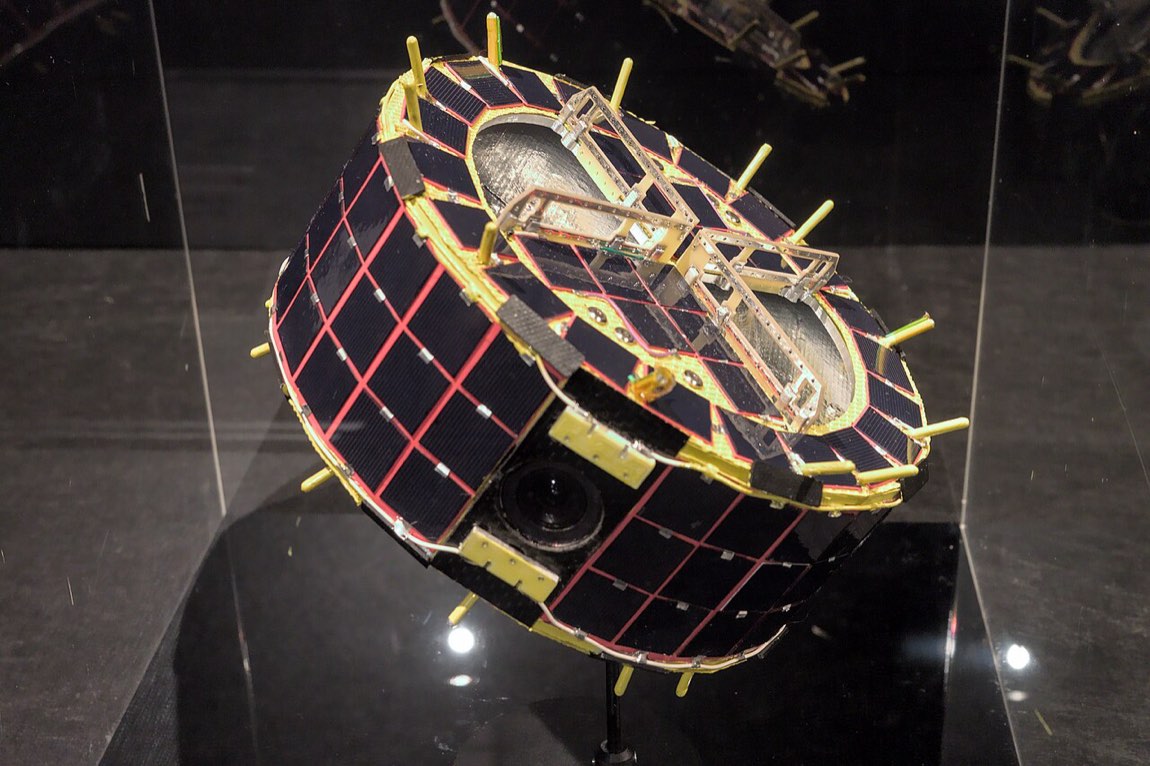
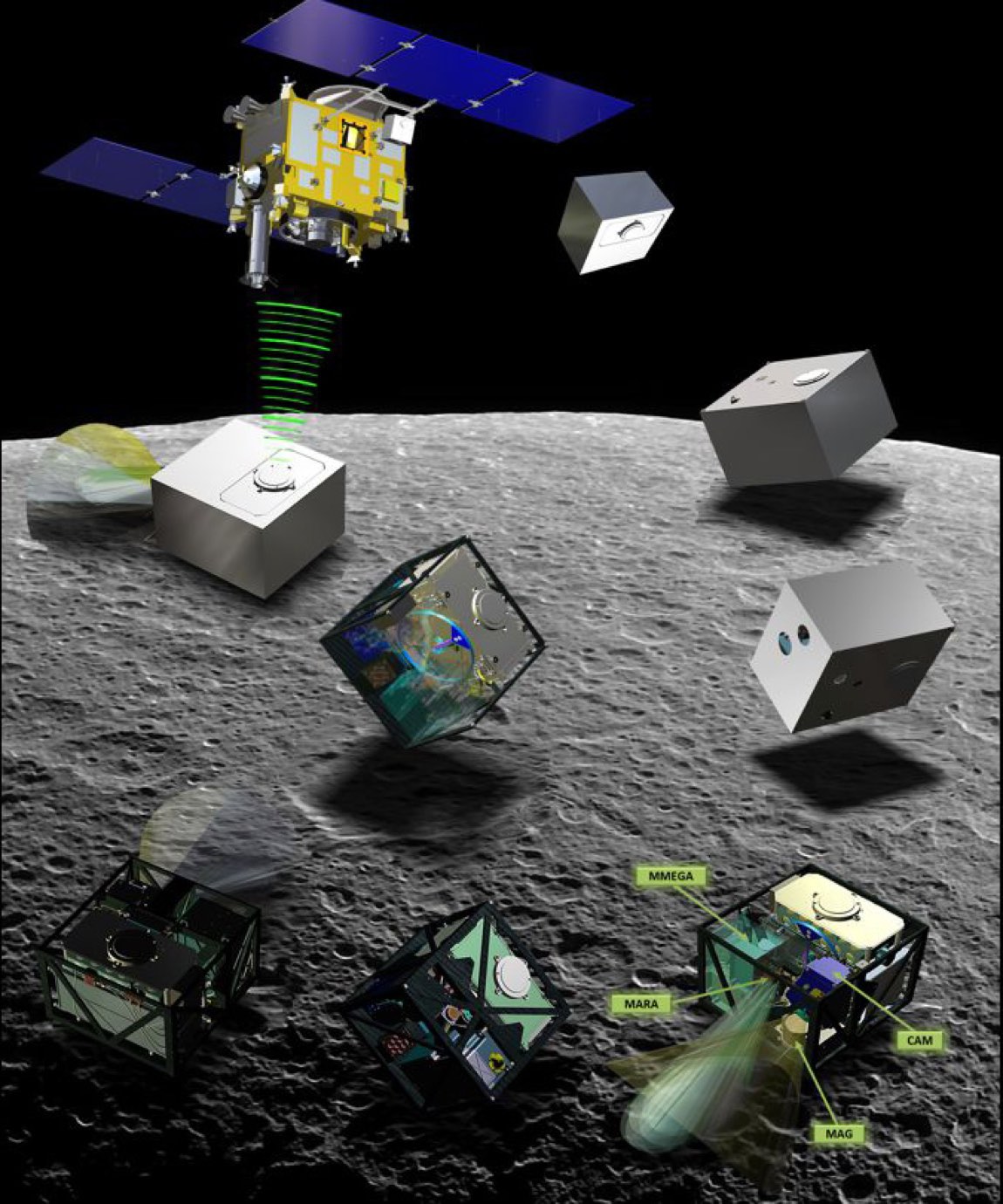
Because Ryugu's gravity is so feeble, conventional wheeled rovers would have floated away rather than rolled across the surface. All four of Hayabusa2's rovers were instead engineered to move by hopping, using rotating internal masses to generate torques that bounced them gently between boulders. The first two, HIBOU (Rover-1A) and OWL (Rover-1B), were deployed on 21 September 2018 from about 55 m altitude. Each is a cylinder 18 cm in diameter, 7 cm tall, and 1.1 kg in mass — roughly the size and weight of a large tin can. HIBOU operated for 113 asteroid days (36 Earth days) and returned 609 surface images; OWL operated for 10 asteroid days (3 Earth days) and returned 39 images. The MASCOT lander, a European contribution from DLR and CNES, was deployed on 3 October 2018, measured 29.5 × 27.5 × 19.5 cm, weighed 9.6 kg, and ran on a non-rechargeable battery for approximately 16 hours before going silent — exactly as planned. A fourth rover, MINERVA-II-2, developed by a Tohoku University-led consortium, experienced problems and was ultimately released on 2 October 2019 to orbit and measure the gravitational field before being intentionally crashed onto the surface on 8 October 2019.
08 MASCOT's Scientific Discoveries on Ryugu Deeper
Despite operating for only about 16 hours, MASCOT's four instruments — an infrared spectrometer (MicrOmega), magnetometer (MASMAG), radiometer (MARA), and camera (MASCAM) — produced findings that reshaped understanding of carbonaceous asteroids. Two papers were published in Nature Astronomy and Science, with a third appearing in the Journal of Geophysical Research. One of the most striking results was that C-type asteroids are composed of more porous material than previously thought, which neatly explains a long-standing puzzle: meteorites of this type are almost never recovered on Earth because they are too porous to survive atmospheric entry intact. Another finding described Ryugu's surface as consisting of two distinct types of nearly black rock with little internal cohesion, yet no loose dust was detected anywhere MASCOT inspected — a result that surprised mission scientists expecting a dusty regolith. The magnetic study showed that Ryugu has no measurable magnetic field even at the scale of individual boulders, ruling out certain formation scenarios that required magnetic processes. MASCOT's radiometer design also proved influential: the identical instrument was later adapted for the InSight Mars lander launched in 2018, giving the technology a second life on a completely different world.
 ⤢
⤢
09 A Mission Extended Across the Solar System
After delivering its sample capsule in December 2020, Hayabusa2 was far from finished. With roughly 30 kg of xenon propellant remaining from the original 66 kg supply, JAXA approved an extended mission titled the Small Hazardous Asteroid Reconnaissance Probe — officially Hayabusa2♯ (pronounced "sharp"). The spacecraft was directed onto a trajectory labeled EAEEA: Earth, then Asteroid, then two Earth swing-bys, then a final Asteroid rendezvous. The two new targets were selected partly because they demanded less than 1.6 km/s of velocity change to reach within ten years. JAXA initially presented a choice in July 2020 between asteroids 1998 KY26 and 2001 AV43, and selected 1998 KY26 in September 2020. The extended mission trajectory includes a December 2027 Earth swing-by followed by a second swing-by in June 2028, using Earth's gravity to bend the path toward the final target. This gravitational billiards approach conserves precious propellant while threading the spacecraft through a precise sequence of orbital opportunities that only opened up because Hayabusa2 completed its primary mission so successfully.
10 The Torifune Flyby: A Rubble Pile Revealed
In July 2026, Hayabusa2 successfully flew past the S-type asteroid 98943 Torifune at a relative speed of 5 km/s — fast enough that a car traveling that speed would cross the continental United States in under fifteen minutes. Even at that blistering encounter velocity, the probe's cameras captured detailed images of the asteroid. Those images revealed Torifune to be a rubble pile and contact binary: two loosely bound lobes of material strewn with boulders of varying sizes, held together more by gentle gravitational attraction than by solid rock. S-type asteroids are compositionally different from the carbonaceous Ryugu, being silicate-rich, so Torifune represents an entirely new class of object in Hayabusa2's growing portfolio. The flyby was observational only — no sampling or rover deployment was possible at that speed — but it demonstrated that an aging spacecraft with limited propellant reserves can still produce meaningful science by exploiting a trajectory that happened to pass close enough for high-resolution imaging.
11 A Rendezvous with the Smallest Visited Asteroid Deeper
When Hayabusa2 arrives at 1998 KY26 in July 2031, it will become the smallest asteroid ever visited by a spacecraft. The scientific value is tied directly to the asteroid's size: decameter-scale objects in this category are thought to be the immediate impactors most likely to reach Earth's surface, making their physical properties — strength, porosity, rotation — critical data for planetary defense planning. 1998 KY26 poses a particular operational challenge because of its rapid rotation; the centrifugal forces at its equator would make landing there extremely difficult, and mission planners have identified the poles, where centrifugal forces are minimal, as the safest candidate landing zones. The spacecraft will attempt to enter orbit, create an impact crater using its final remaining target marker and projectile, and then actually land on the surface — a feat that would be unprecedented for an object this small. The extended mission thus attempts to compress what took over a year at Ryugu into a final operational act for a spacecraft already a decade and a half into its journey, running on the last reserves of a propellant load that once seemed barely enough.
 ⤢
⤢