Black Hole · Deep guide
Gaia BH1
The nearest known black hole was found not by light, but by a wobbling star.
What is it?
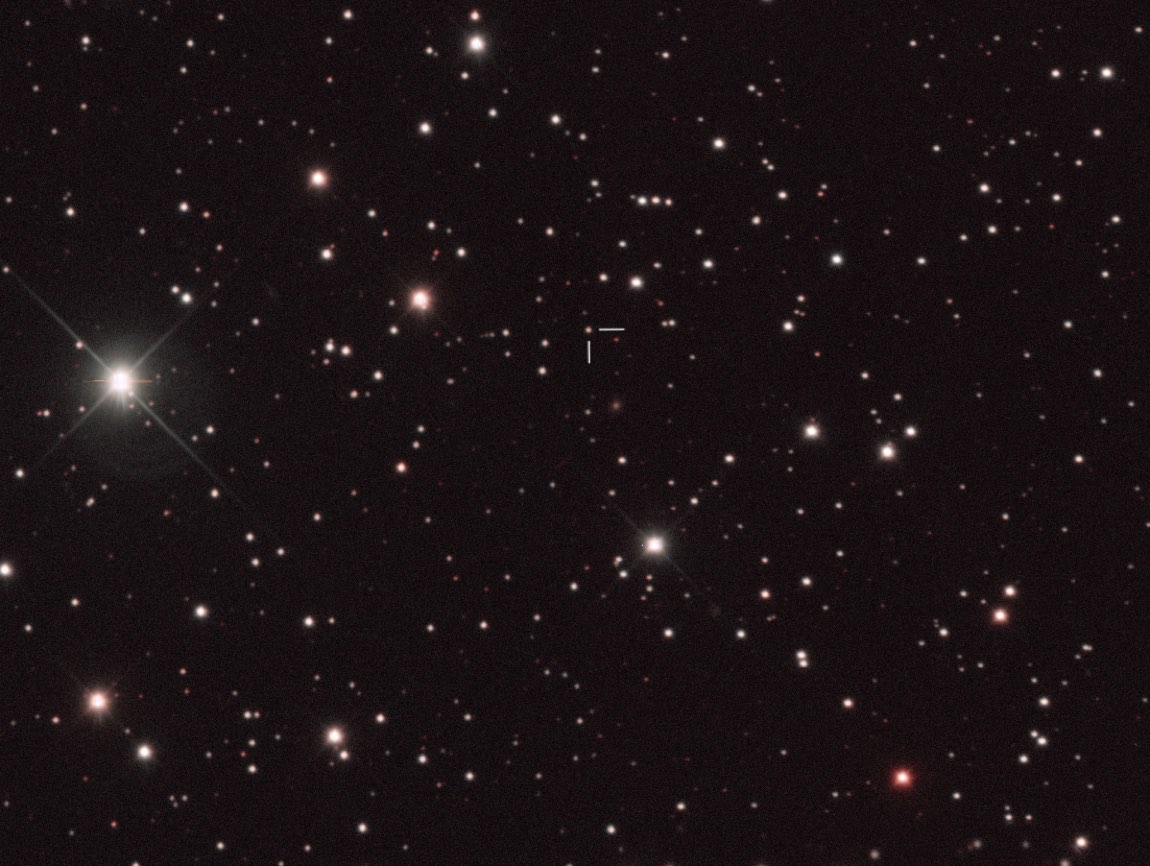
Gaia BH1, just 1,560 light-years away in Ophiuchus, is the closest black hole yet confirmed — and it emits nothing at all. ESA's Gaia mission noticed a Sun-like star swinging around an invisible ten-solar-mass companion every 186 days. Dormant black holes like this, revealed purely by gravity, hint that the galaxy hides millions more.
The deep dive
Researched for the Atlas from Wikipedia — Gaia BH1 (1,561 characters read) · updated Sep 20, 2026
01 An Orbit That Gave the Black Hole Away
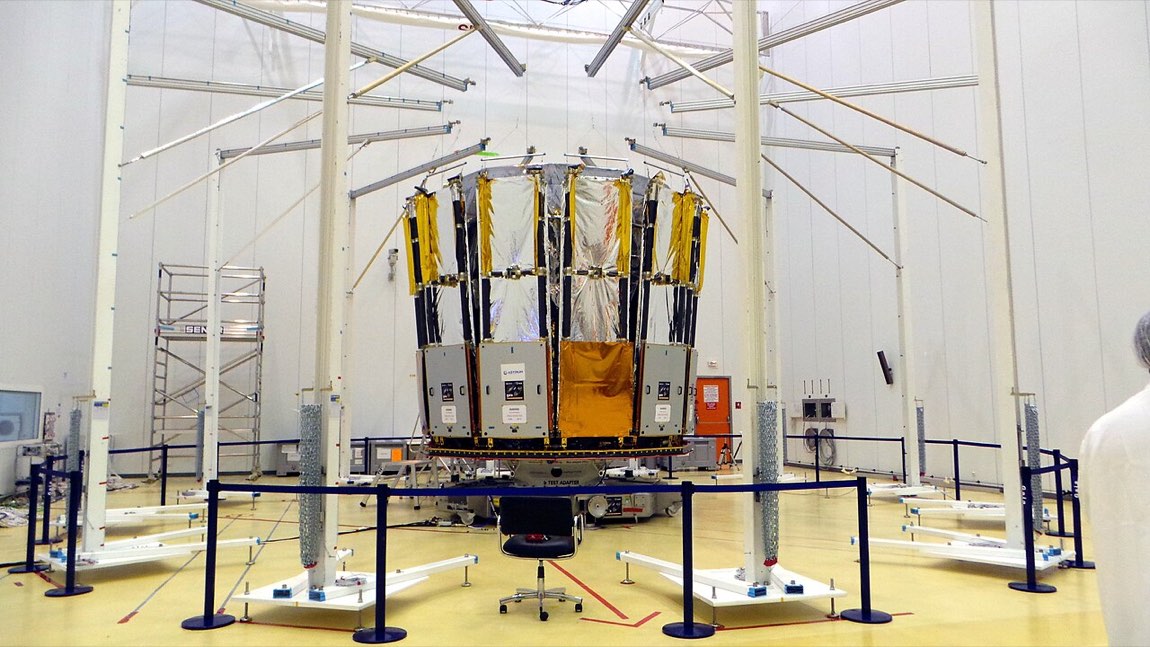
Gaia BH1 was not spotted by catching light from the black hole itself — black holes emit none — but by watching a perfectly ordinary Sun-like star move in a way that made no sense unless something massive and invisible was pulling it around. The discovery came in 2022 through astrometric observations with the Gaia space observatory, meaning scientists tracked the star's position on the sky with extraordinary precision and noticed it was wobbling. Radial velocity measurements confirmed the wobble was real. The discovery team worked through every alternative explanation and found no astrophysical scenario that could account for the star's motion other than a black hole companion. That process of elimination is central to why astronomers feel confident about this system: the conclusion does not lean on tricky assumptions about the star's own mass or the exact angle at which we view the orbit.
02 Why This Black Hole Is Hard to Dismiss Deeper
The astronomy community has been burned before. Systems nicknamed "black hole impostors" — including LB-1 and HR 6819 — were announced as black hole binaries but later reinterpreted as ordinary stellar systems seen at misleading orbital inclinations, or systems where the mass of the companion star was misjudged. Gaia BH1 is explicitly distinguished from those cases in the discovery paper. The evidence for a black hole in Gaia BH1 does not depend on what mass you assign the visible star, and it does not depend on the inclination of the orbit — two of the exact loopholes that unraveled the earlier claims. There is also no detected mass transfer between the star and the black hole, which removes another layer of ambiguity. A second, independent team separately analyzed the system and detected the same black hole, arriving at slightly different parameters, which itself lends credibility to both detections.
03 The Numbers Behind the Black Hole
The black hole in Gaia BH1 carries a mass of about 9.62 times the mass of the Sun, placing it firmly in the stellar-mass category — the kind formed when a massive star exhausts its fuel and collapses. At that mass, the black hole's Schwarzschild radius, the size of its event horizon, works out to about 28 kilometres, roughly 17 miles. For comparison, that is smaller than many large cities. The entire gravitational point of no return for an object nearly ten times the mass of the Sun fits within a sphere you could drive across in under half an hour. The visible star, by contrast, is almost exactly Sun-sized: 0.93 solar masses, 0.99 solar radii, and a surface temperature of about 5,850 Kelvin — just 100 degrees warmer than the Sun's photosphere.
04 A Surprisingly Wide and Eccentric Orbit Deeper
The two objects — star and black hole — complete one orbit around their shared centre of mass every 185.387 days, just over half an Earth year. That orbital period is notably longer than those of many known black hole X-ray binary systems, which often have periods of hours to days because their stars are packed tightly enough that material spills onto the black hole and produces brilliant X-ray flares. Gaia BH1's orbit is also distinctly non-circular: its eccentricity is 0.4323, meaning the separation between the star and black hole changes substantially over the course of each orbit, swinging between a closer approach and a more distant point. A circular orbit has an eccentricity of zero; Gaia BH1's value is closer to that of some comets in our own solar system than to the nearly circular orbits of most planets.
05 No X-rays, No Fireworks — Just Silence
Most black holes discovered before 2022 were found because they were actively feeding — ripping gas from a companion star, heating that gas to millions of degrees, and broadcasting X-rays across the galaxy. Gaia BH1's black hole does none of that. The system shows no evidence of mass transfer from the star to the black hole, which means the black hole is starving and therefore quiet. This is actually a more realistic picture of how most stellar-mass black holes in the Milky Way probably spend their time: dormant, dark, and detectable only by the gravitational tug they exert on whatever is nearby. The discovery of Gaia BH1 demonstrated that astrometric surveys can find this silent majority of black holes, opening a new census method for the galaxy's true black hole population.
06 Where It Sits in the Sky
Gaia BH1 lies in the constellation Ophiuchus, the serpent-bearer, at a distance of about 1,560 light-years — roughly 478 parsecs — from the Solar System. To put that distance in perspective, light leaving the system today will not reach Earth until the year 3584. Ophiuchus is a large, sprawling constellation that straddles the celestial equator, sitting between Scorpius and Aquila. It is not one of the twelve zodiac constellations despite the Sun passing through it briefly each year. The region is dense with stars and is part of the broader zone toward the inner galaxy, which is why Gaia's all-sky astrometric survey, designed to map over a billion stars, was well positioned to stumble upon this system.
07 The Nearest Known Black Hole — For Now
As of 2026, Gaia BH1 holds the title of the nearest known system that astronomers are reasonably confident contains a black hole. The runner-up list includes Gaia BH3, then Gaia BH2, and then A0620-00. The qualifier "reasonably confident" is doing real scientific work in that statement — it reflects genuine care about the lessons learned from past false alarms. What is striking about the rankings is that the top three nearest candidates all share the Gaia designation, meaning they were all found by the same space observatory using the same astrometric technique. That clustering suggests the method is working well, and also raises the question of how many more dormant black holes are hiding in Gaia's enormous catalog of stellar motions, waiting to be identified.
08 From One Discovery, a Second Candidate Emerged Deeper
The team that discovered Gaia BH1 did not stop there. In the same discovery paper, they reported finding a second system that appeared to be a candidate for containing a black hole. Remarkably, a separate, independent team of astronomers also reported this same candidate system around the same time. That convergence — two groups independently zeroing in on the same target — is considered strong evidence that the detection is real rather than a statistical artifact. The candidate was subsequently confirmed in 2023 as Gaia BH2. The fact that the Gaia BH1 discovery effectively led to two confirmed black hole systems simultaneously illustrates how productive a single well-executed astrometric survey can be, and how many candidates may still be waiting in the data for detailed follow-up analysis.
09 Two Teams, Slightly Different Answers Deeper
One detail worth noting is that a second team independently detected the black hole in Gaia BH1 and arrived at slightly different orbital and physical parameters than the discovery team. This is not unusual in frontier astronomy: measurements of faint or indirect signals depend on modeling choices, the specific data windows used, and how uncertainties are handled. The existence of two independent analyses with results that agree broadly but differ in detail is actually healthy — it means the community is not simply accepting one team's word, and the small discrepancies give future observers specific things to resolve with better data. As Gaia releases more astrometric epochs and ground-based follow-up campaigns gather more radial velocity points, the orbital parameters will sharpen and the debate over the precise numbers will settle.
10 What the Star Tells Us About the Black Hole's Past Deeper
The visible star in Gaia BH1 is a G-type main-sequence star, essentially a near-twin of the Sun, with 0.93 solar masses and 0.99 solar radii. Its continued existence raises a profound puzzle about the system's history. The black hole, at 9.62 solar masses, almost certainly formed from a progenitor star far more massive than that — likely dozens of solar masses — which would have ended its life in a supernova or other violent collapse. That explosion should have been powerful enough to disrupt the binary system or dramatically alter the orbit. The fact that the G-type star is still there, calmly orbiting the remnant, means either the explosion was unusually gentle, or the system's early history was unusual in some other way. The article does not resolve this tension, and it represents one of the genuine open scientific questions the system poses.
11 A New Window for Black Hole Counting
Theoretical models predict that the Milky Way should contain somewhere between tens of millions and a billion stellar-mass black holes, most of them formed from the deaths of massive stars over the galaxy's lifetime. Yet before Gaia BH1, only a few dozen had been identified, nearly all through X-ray emissions from active feeding. The discovery of a dormant black hole through astrometry alone — tracking stellar wobbles rather than waiting for flares — validated an entirely new detection channel. Because Gaia is systematically measuring the motions of over a billion stars, it has the potential to dramatically increase the census of known black holes, particularly the quiet ones that make up the vast majority. Gaia BH1 was therefore not just a single discovery; it was proof of concept for a technique that could reshape our understanding of how many black holes actually populate the galaxy around us.