 Photograph · JSC / NASA Image Library
Spacecraft · Deep guide
Artemis Program
The return to the Moon. This time, to stay.
What is it?
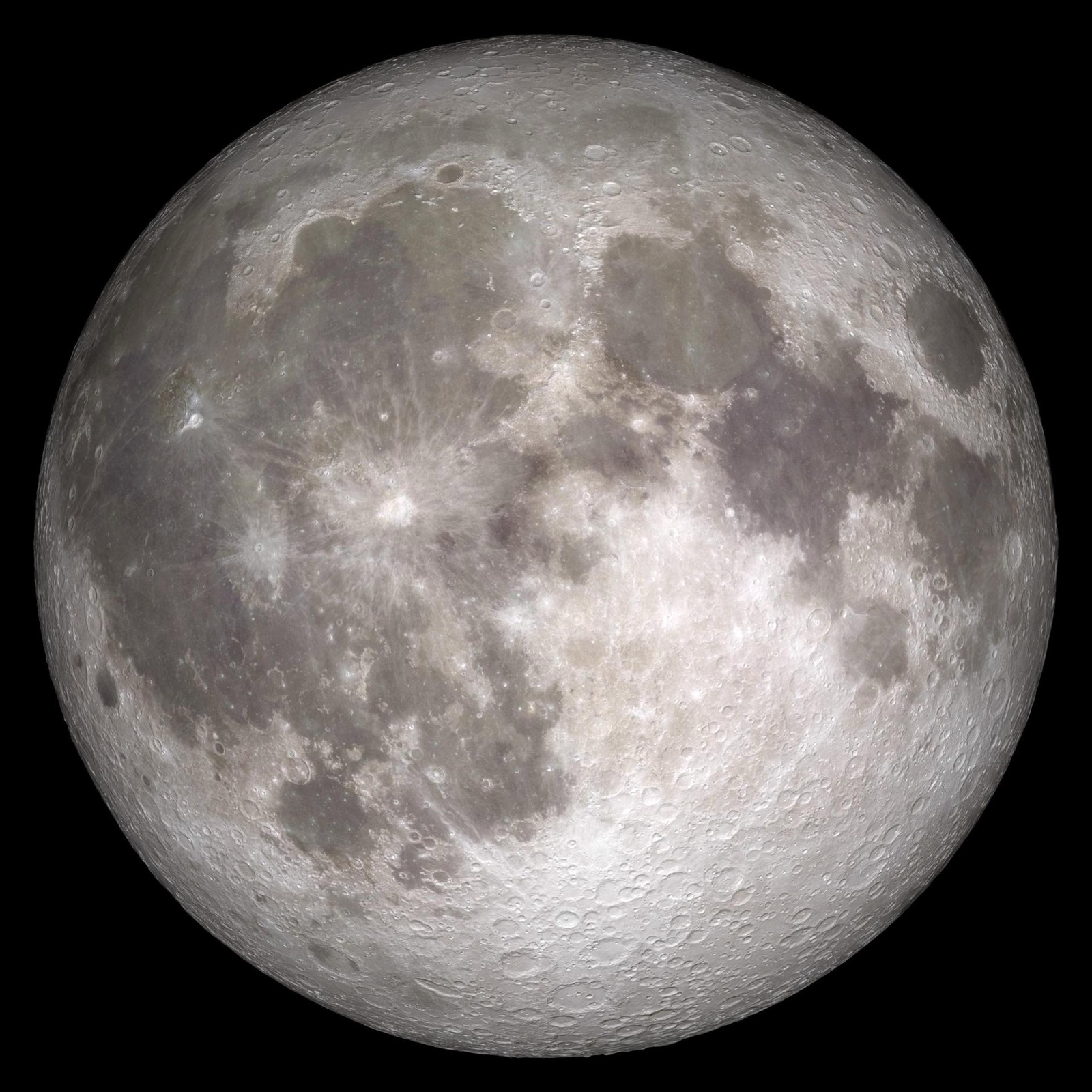
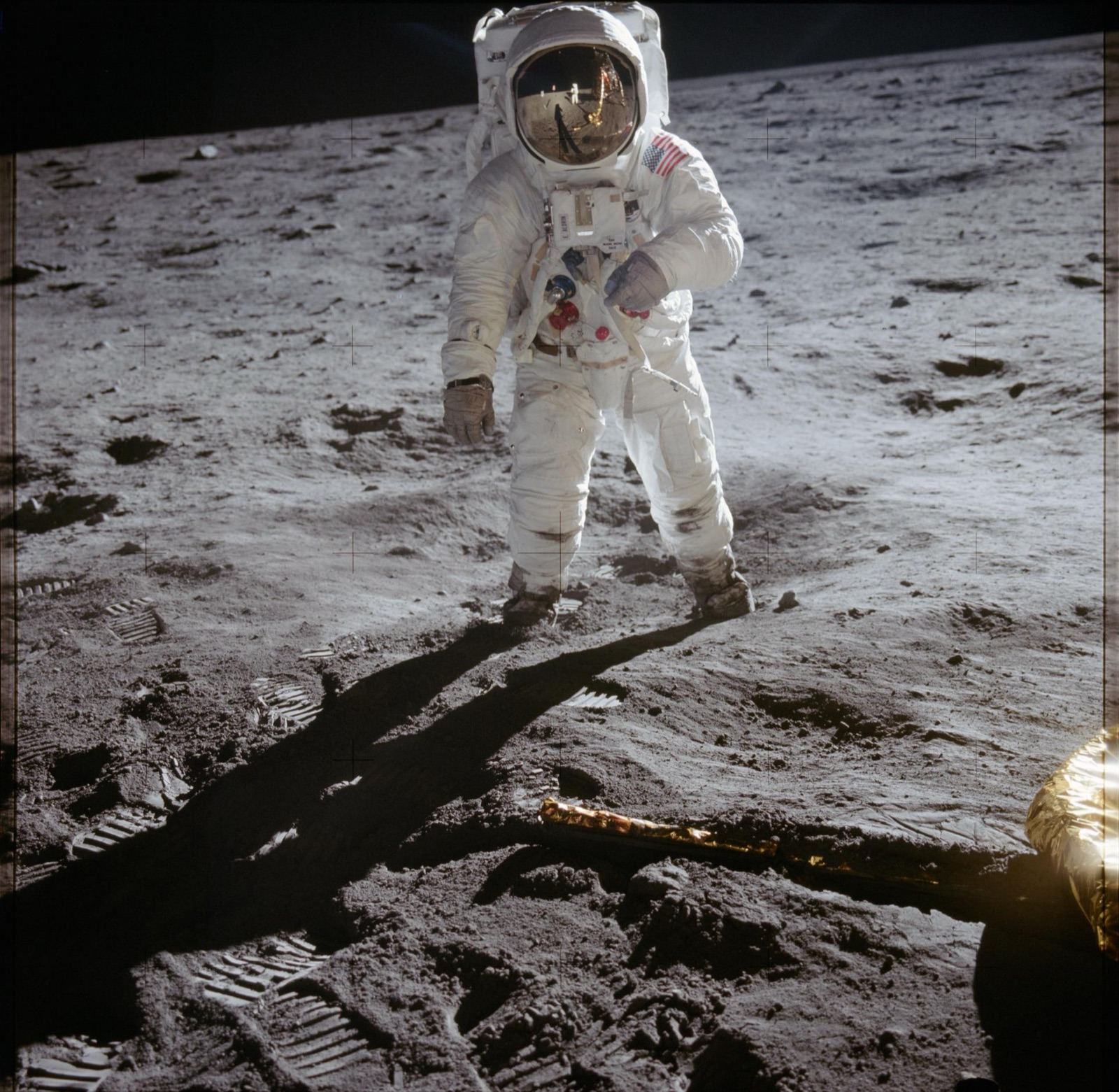
Artemis is NASA's program (with international and commercial partners) to return humans to the Moon and build toward a sustained presence — the first crewed lunar landings since 1972, targeting the ice-rich south pole. Artemis I flew a successful uncrewed Orion capsule around the Moon in late 2022; Artemis II, the first crewed flight, was scheduled for 2026, with the Artemis III landing to follow.
Go deeper
Architecture: SLS launches Orion; crews transfer to a Starship-derived lander (HLS) for the surface; the Gateway station accretes in lunar orbit; commercial CLPS landers deliver cargo (Firefly's Blue Ghost landed successfully in March 2025; Intuitive Machines managed partial successes). The pole is the prize: permanently shadowed craters hold water ice — drinking water, oxygen, and hydrogen propellant for anyone who can mine it. Schedules have moved repeatedly (heat-shield findings, lander readiness); the Artemis Accords now bind 50+ nations to peaceful-use norms. For current flight status, see the News tab — this page avoids pretending to know post-2026 events.
01 Why the south pole?
Two words: ice and light. Some polar crater floors haven't seen the Sun in billions of years and hold frozen water — future drinking water, breathable oxygen, and rocket fuel. Next to them, some crater rims sit in near-perpetual sunshine for solar power. Resources plus energy is the recipe for staying, and Apollo never had either.
02 Apollo vs Artemis Deeper
Apollo was a sprint flown by one agency with disposable hardware. Artemis is built as infrastructure: reusable-ish elements, a lunar-orbit station, commercial cargo competition, allied partners — slower and messier by design, because the goal is a permanent foothold, not a flag. Whether the architecture survives budgets and politics is the genuine open question.
The deep dive
Researched for the Atlas from Wikipedia — Artemis program (29,542 characters read) · updated Sep 20, 2026
03 A program built from canceled programs
Artemis is less a fresh design than a careful reassembly of hardware that nearly never flew. The Space Launch System's core stage shares its diameter and RS-25 engines with the retired Space Shuttle, while its solid rocket boosters are direct descendants of Shuttle's own strap-ons. The Orion spacecraft traces its lineage to the Constellation program, which was authorized by the NASA Authorization Act of 2005 and then canceled in 2010 when an independent Augustine Committee concluded it was massively underfunded and that a 2020 Moon landing was impossible. Even SLS's booster upgrade technology was initially developed for Constellation's Ares V rocket. Rather than starting from scratch, NASA folded in the workforce, assets, and existing contracts from the Shuttle era and Constellation, a political and practical decision that shaped nearly every technical choice that followed.
04 The long road to a first launch
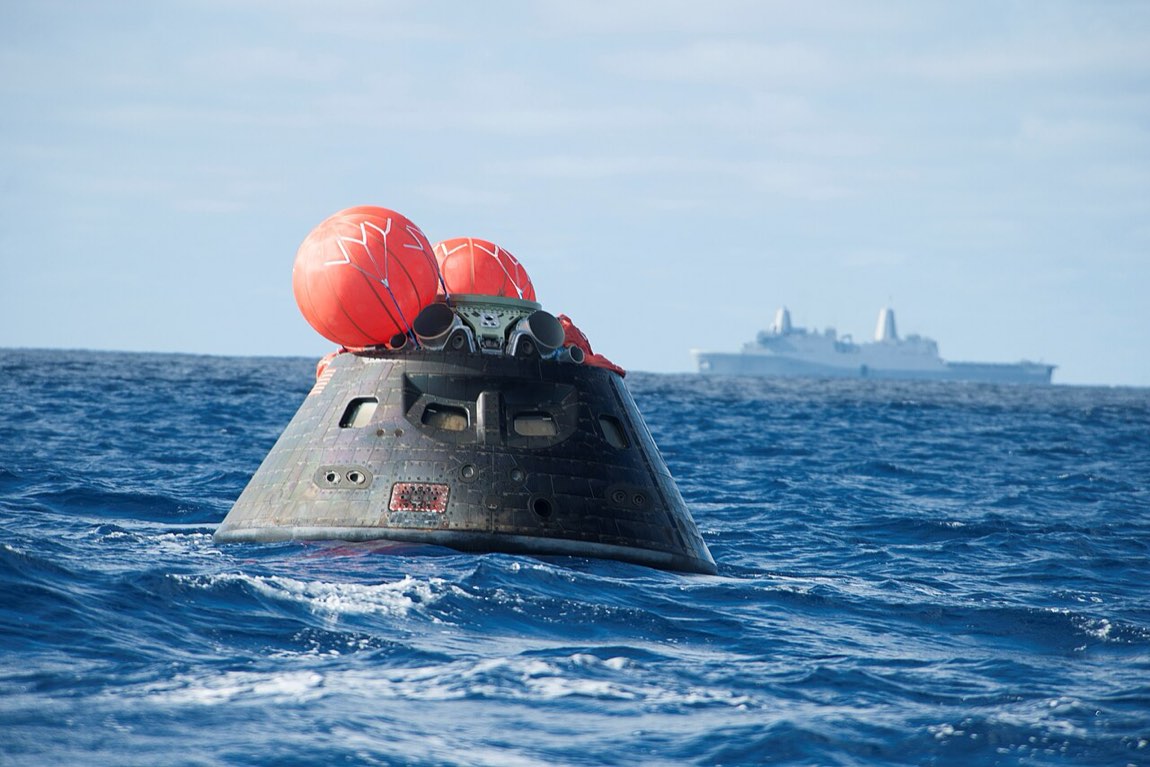
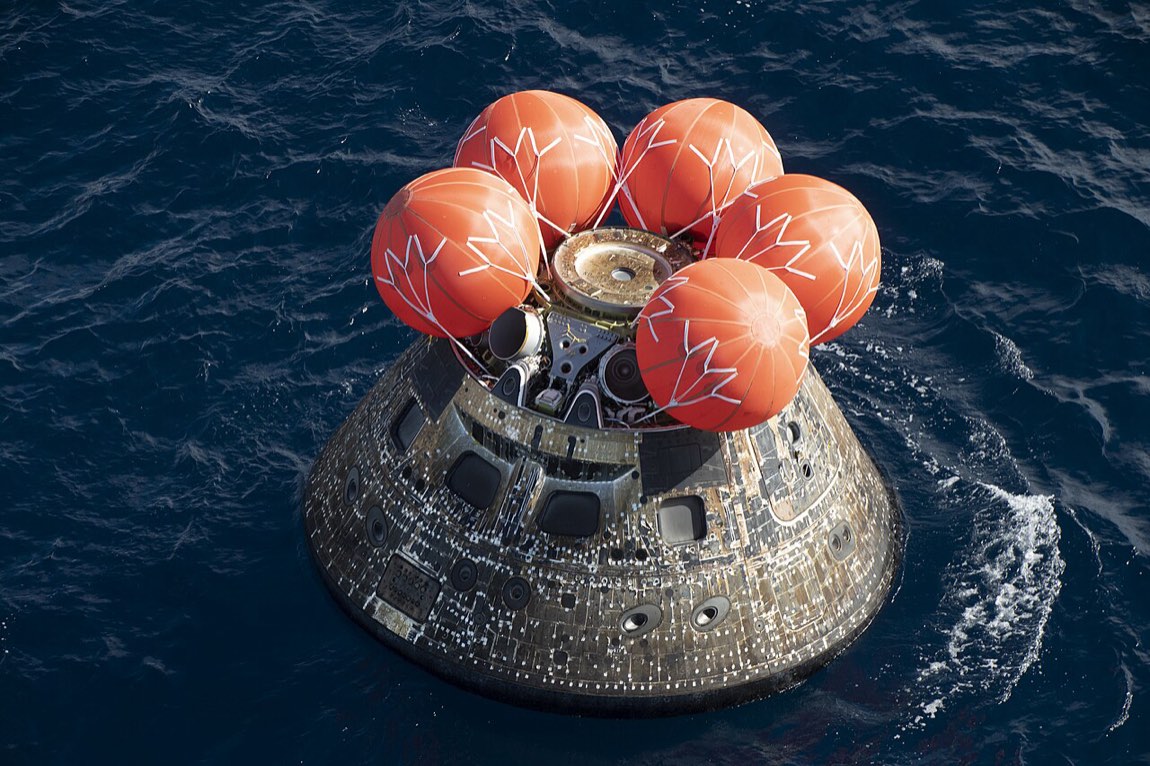
Orion's first flight on the Space Launch System was originally planned for 2016 — six years before it actually happened. The NASA Authorization Act of 2010 formally called for the SLS and Orion to be ready for missions beyond low Earth orbit starting that year. As technical challenges and budget pressures mounted, the target date slipped repeatedly, landing first on late 2021, then August 29, 2022, and finally November 16, 2022, when Artemis I lifted off at 01:47:44 EST from Kennedy Space Center. Infrastructure repairs, weather holds, and final preparation delays all played a part. By the time the Orion capsule splashed down in the Pacific Ocean on December 11, 2022 — west of Baja California — the mission had covered more than 2.3 million kilometers and lasted long enough to close a striking historical circle: splashdown fell exactly 50 years to the day after Apollo 17 touched down on the Moon.
05 Exploration Flight Test-1: the dress rehearsal Deeper
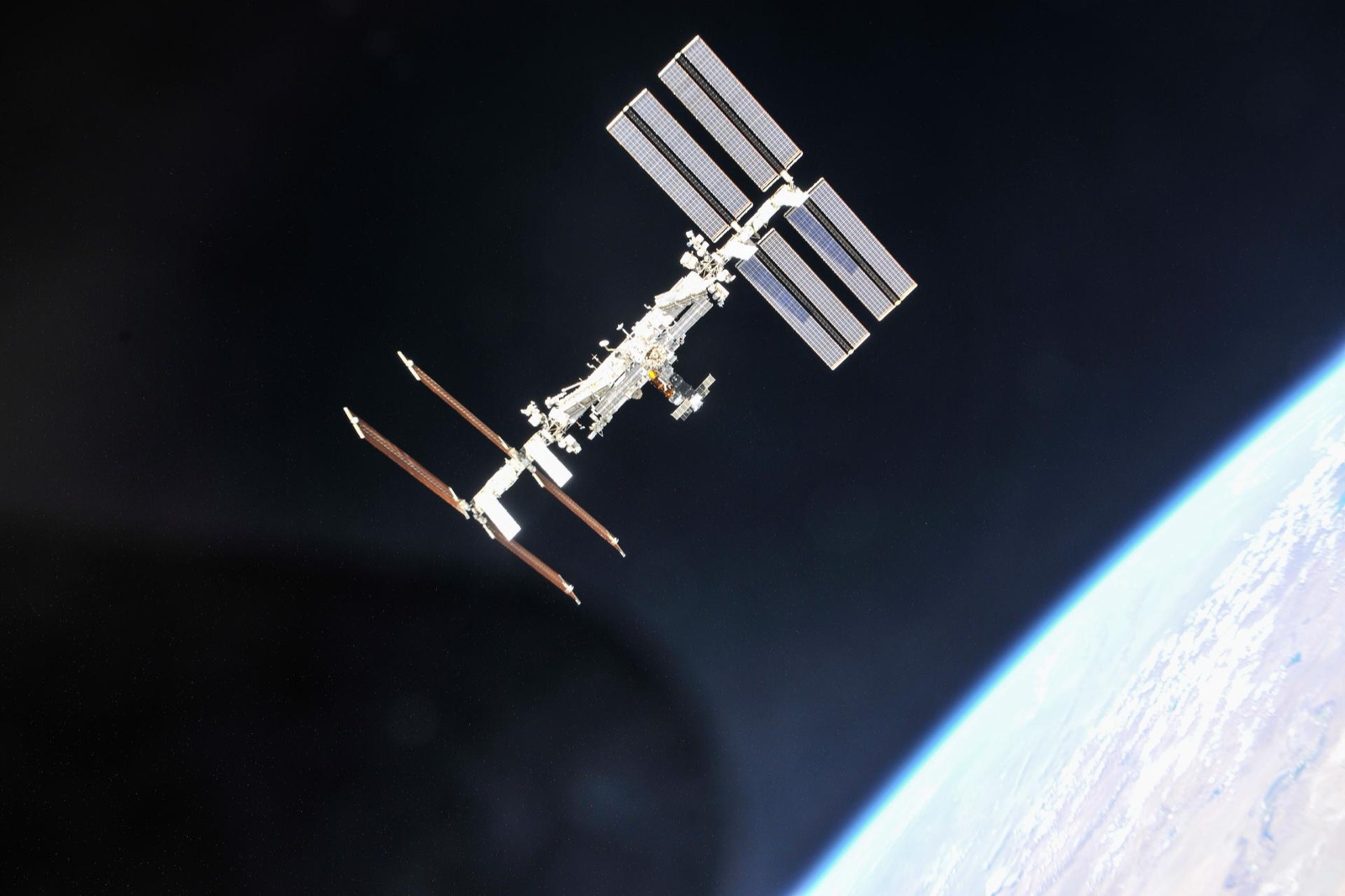
Before Artemis I ever flew, a prototype Orion crew module made a critical early voyage on December 5, 2014, launched atop a Delta IV Heavy rocket during the mission called Exploration Flight Test-1. The capsule completed two medium Earth orbits, climbing to an apogee of 5,800 km — roughly fifteen times the altitude of the International Space Station — which carried it directly through the Van Allen radiation belts. Engineers needed to know how electronics and materials would hold up inside that intense particle environment before trusting the design to a crew. Orion then re-entered the atmosphere at 32,000 km/h, stressing the heat shield and parachute system under high-energy conditions. The reaction control system and other components were evaluated throughout. The test gave NASA confidence in the basic capsule design, though the Artemis I mission later revealed that the ablative heat shield still experienced greater-than-expected erosion during its own reentry — a reminder that no single test captures every operational condition.
 ⤢
⤢
06 The Orion spacecraft up close
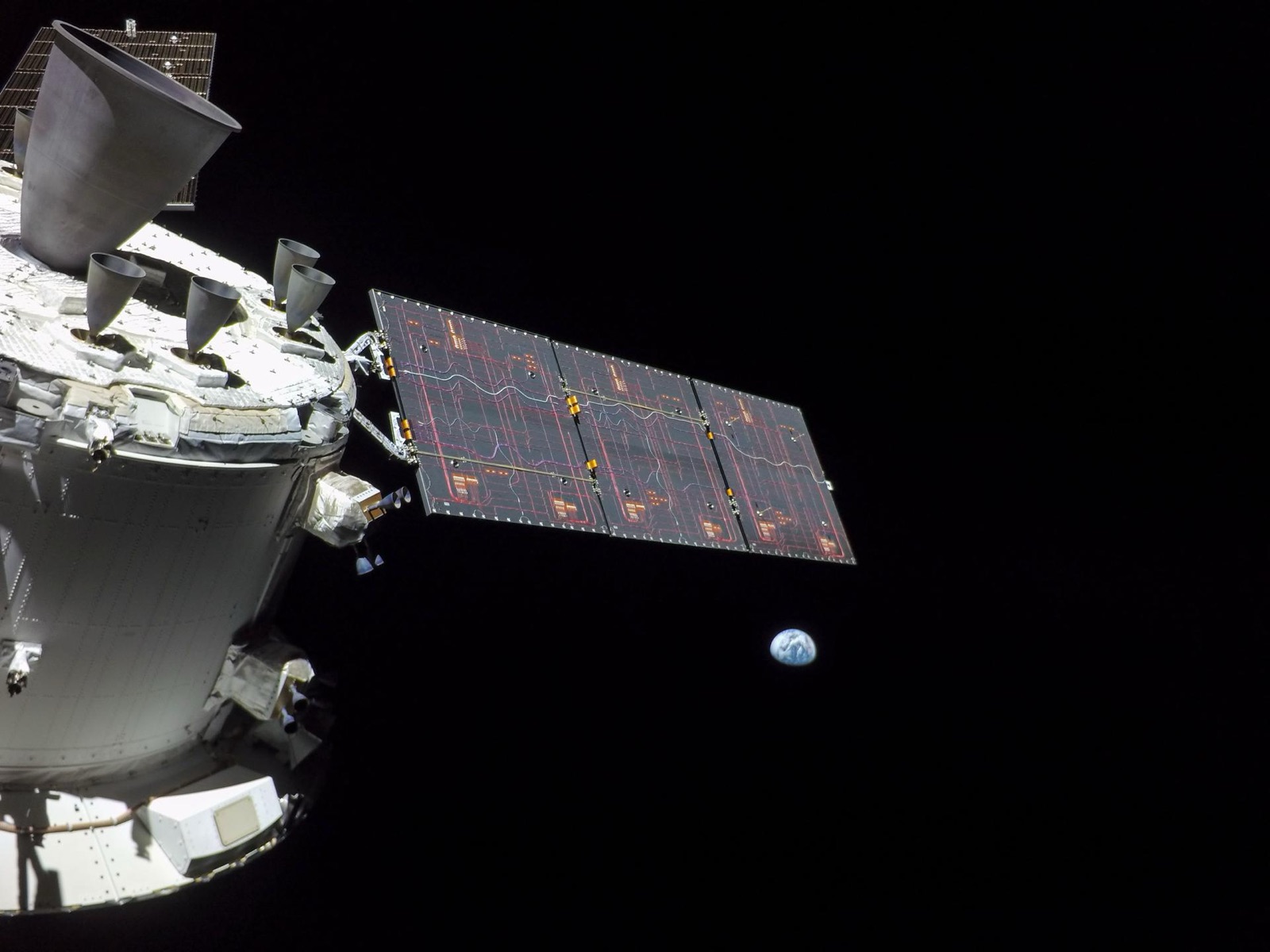
Orion is a partially reusable spacecraft made up of two main pieces: a Crew Module capsule designed by Lockheed Martin and a European Service Module manufactured by Airbus Defence and Space. Together they can support a crew of six beyond low Earth orbit. Power comes from solar panels, and the crew interacts with the spacecraft through glass cockpit interfaces modeled after those in the Boeing 787 Dreamliner — a deliberate choice to use familiar, well-tested display technology. For primary propulsion, Orion relies on a single AJ10 engine, supplemented by reaction control system engines for maneuvering. The spacecraft was originally conceived under Constellation as the Crew Exploration Vehicle, then heavily redesigned after that program's cancellation. Its service module design is based on the European Space Agency's Automated Transfer Vehicle. By 2022, three flight-worthy Orion crew modules had been built, with a fourth on order, and the spacecraft is designed to be compatible with launch vehicles other than the SLS, though SLS remains its primary ride.
07 Suiting up for a new era on the Moon
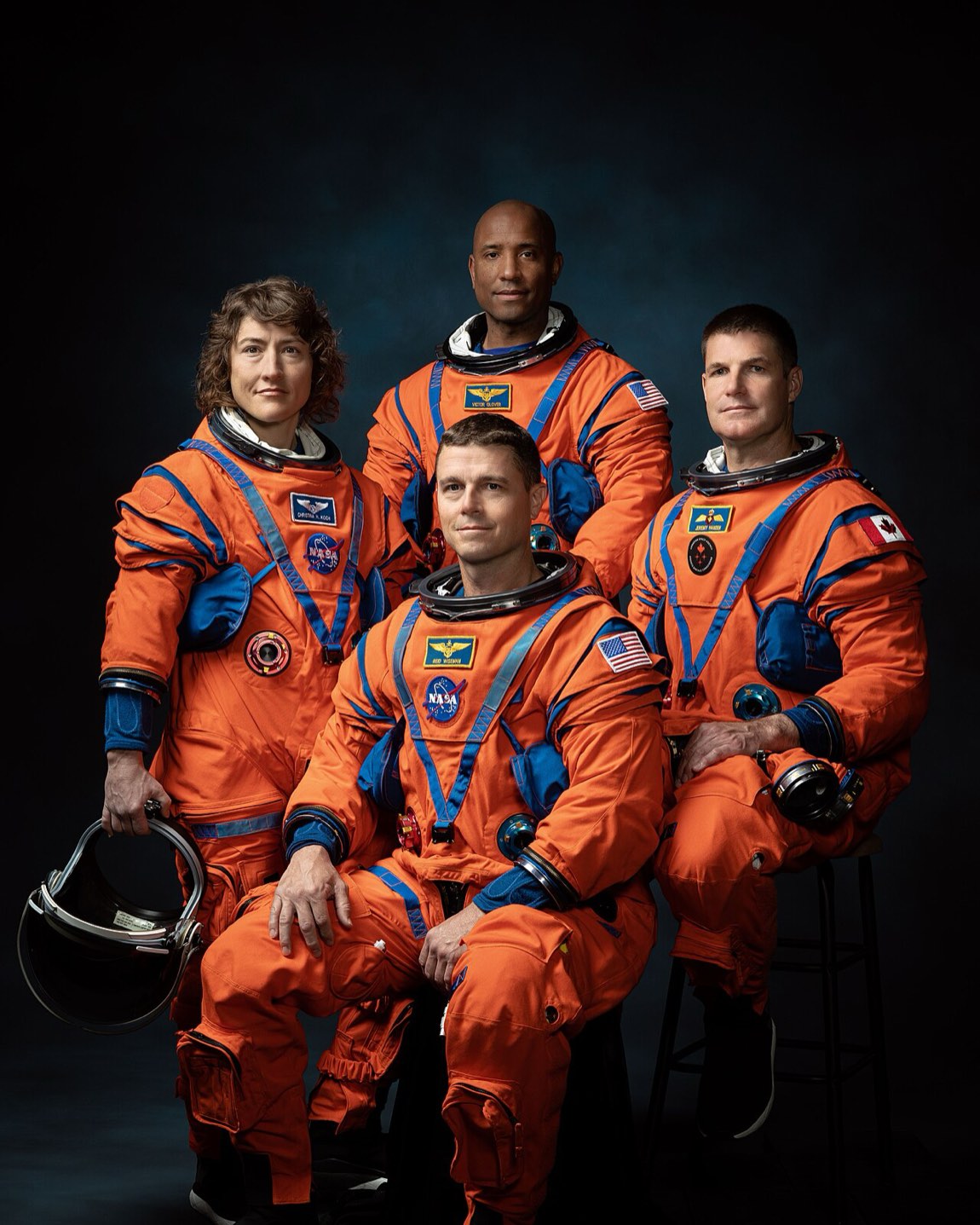
Artemis astronauts will wear two distinct suits depending on where they are in the mission. Inside Orion during launch and reentry, they wear the Orion Crew Survival System, developed by the David Clark Company, which is colored international orange — a shade chosen specifically to make crew members visible against ocean and sky during recovery operations. In a depressurization emergency the suit can maintain life support for up to 144 hours. Each suit is custom-fitted and includes built-in flotation devices for post-splashdown survival. On the lunar surface, astronauts will wear the Axiom Extravehicular Mobility Unit, or AxEMU, developed by Axiom Space after NASA's original in-house xEMU design was found in a 2021 audit unlikely to be ready before 2025. As of February 2026, the AxEMU had passed internal reviews, with assembly of the first flight unit underway after pressurized and underwater mobility testing at the Neutral Buoyancy Laboratory. NASA plans an in-space demonstration aboard the International Space Station in 2027.
08 Japan's deal: a rover for two Moon seats
One of Artemis's most striking international agreements involves not a science instrument or a communication relay, but a vehicle the size of a small recreational vehicle. In April 2024, NASA and JAXA signed an agreement under which Japan will design, develop, and operate a pressurized rover for crewed and uncrewed lunar exploration. In exchange, NASA will launch and deliver the rover to the Moon and provide seats for two Japanese astronaut missions to the lunar surface — with the explicit goal that those astronauts would become the first non-Americans to travel to the Moon's surface. The pressurized rover is planned to accommodate two astronauts for up to 30 days of independent surface operations, extending exploration far beyond what a short EVA allows. NASA plans to begin using it from Artemis VII onward, over an approximate 10-year operational lifespan. An earlier NASA pressurized rover concept, developed under Constellation and nicknamed the Space Exploration Vehicle, was built and tested but never flew — a fact that senior lunar scientist Clive Neal called "pretty sad."
09 The refueling challenge no one can ignore Deeper
Perhaps the sharpest technical debate surrounding Artemis concerns the number of rocket launches needed before a single astronaut sets foot on the Moon. SpaceX's Starship Human Landing System cannot carry enough propellant to make the journey on a single launch — it must be refueled in orbit by a series of tanker flights before it can descend to the lunar surface. Critics have noted that at least 15 launches could be required to refuel HLS per crewed mission, though SpaceX's Jennifer Jensen stated in a 2024 call that the company's own estimate is ten launches. Either figure represents a logistical challenge unlike anything in the Apollo era, where each mission required a single Saturn V. Apollo 11 astronaut Buzz Aldrin has questioned the broader architecture, objecting to the step of sending a crew to an intermediate orbital point to pick up a lander rather than flying more directly. Robert Zubrin, founder of the Mars Society, went further, proposing a "Moon Direct" alternative that would phase out SLS and Orion entirely in favor of SpaceX vehicles and Dragon 2, with lander refueling performed on the lunar surface itself using in situ resources.
10 A seven-day stay, minute by minute Deeper
NASA has sketched out a detailed notional timeline for what a Phase 1 Artemis surface stay would look like. The crew touches down on Day 1 but conducts no EVA, instead spending the day on what the agency calls "The Road to EVA" — preparing equipment and procedures for the work ahead. Day 2 brings the first six-hour EVA: collecting a contingency sample, deploying an experiment package, and staying close to the lander. On Day 3, astronauts venture up to 2 kilometres from the landing site and up and down slopes as steep as 20 degrees, characterizing and collecting samples from permanently shadowed regions. Day 4 is a rest day; Day 5 includes a third EVA, potentially collecting samples from an ejecta blanket. Day 6 is devoted to deploying a geotechnical instrument alongside an environmental monitoring station for in situ resource utilization research. The final EVA on Day 7 lasts only one hour — mostly jettisoning hardware in preparation for lunar ascent. In total, the plan envisions five EVAs across a seven-day surface stay, a rhythm designed to balance scientific return with crew safety.
 ⤢
⤢
11 The true cost and who controls the money Deeper
Funding has been a persistent fault line running through every phase of Artemis. A November 2021 audit by NASA's Office of Inspector General estimated the true total cost of the Artemis program at approximately $93 billion through 2025. The White House's fiscal year 2021 budget request proposed a 12% funding increase, bringing NASA's total to $25.2 billion per year, with $3.7 billion dedicated specifically to the Human Landing System. Congress did not cooperate: in July 2020, the House Appropriations Committee rejected the increase and proposed only $700 million for HLS — $3 billion, or 81%, short of the requested amount. In mid-2019, the Senate Appropriations Committee had already asked NASA for a five-year budget profile before it would evaluate the program. NASA's chief financial officer said at the time he thought the agency had "a very good shot" at securing the funding, but the political reality proved more complicated, with Democratic concerns about the compressed 2024 deadline shaping nearly every budget negotiation that followed.
12 The lander competition and its legal battles
Choosing who would build the lunar lander became one of Artemis's most contentious decisions. In April 2020, NASA awarded 10-month preliminary design study contracts to three companies: Blue Origin, Dynetics, and SpaceX. In April 2021, NASA selected only SpaceX and its Starship HLS, citing budget constraints that prevented funding multiple full development contracts. Blue Origin and Dynetics both protested to the Government Accountability Office on April 26. After the GAO rejected the protests, Blue Origin escalated by suing NASA directly. NASA agreed to pause work on the SpaceX contract until November 1 while the lawsuit proceeded. On November 4, the court dismissed the suit and work resumed. A second competition followed: NASA later awarded contracts for alternative HLS designs to encourage redundancy and competition, partly in response to congressional criticism about the lack of options. By early 2022, NASA was developing new sustainability rules and simultaneously pursuing both a Starship HLS upgrade and competing alternative designs — the most significant of which became Blue Origin's Blue Moon lander, later included in Artemis III planning.
13 The lunar terrain vehicle specifications Deeper
Artemis planners want an electric rover capable of far more demanding performance than the Apollo Lunar Roving Vehicle of the 1970s. NASA's published requirements for the Lunar Terrain Vehicle call for a cargo capacity of 800 kg, the ability to travel up to 20 km without battery recharging, continuous operations for 8 hours within any 24-hour period, the ability to survive the lunar night — a two-week period of temperatures that plunge to around minus 170 degrees Celsius — and the ability to traverse grades as steep as plus or minus 20 degrees. The vehicle would be prepositioned on the surface by a Commercial Lunar Payload Services mission before astronauts arrive. In February 2020, NASA issued initial requests for information, and in April 2024, it announced three companies advancing to a 12-month feasibility and demonstration phase: Intuitive Machines with a proposal of $1.692 billion, Lunar Outpost at $1.727 billion, and Venturi Astrolab at $1.928 billion. A Johnson Space Center program office, established in July 2020, is overseeing the development.
14 A base camp near Shackleton Crater
The proposed Artemis Base Camp is planned to sit in the south pole region near two adjacent craters, Shackleton and de Gerlache, chosen for their varied lunar geography and the water ice believed to exist in the permanently shadowed floors of those craters. The base is conceived in three layers of mobility and shelter. A Surface Habitat module, to be commercially built and launched in the early 2030s, would serve as the initial dwelling. The unpressurized Lunar Terrain Vehicle would handle short-range transport of suited astronauts and cargo around the immediate area. For longer journeys — potentially tens of kilometres from the base — a pressurized rover would provide a mobile environment where crew members can live for multiple days without wearing a spacesuit. The Italian Space Agency signed a contract with Thales Alenia Space in late 2023 for a Multi Purpose Habitation module that may become the base camp's second module. The entire complex is designed to support missions of up to two months and to eventually operate continuously, used by both government and commercial programs for decades.
15 Artemis beyond the Moon: Mars and the Codex
From the beginning, Artemis was framed as a stepping stone rather than a destination. Space Policy Directive 1, signed December 11, 2017, explicitly called for a human return to the Moon followed by missions to Mars and beyond, with Mars missions still intended as of May 2019 and crewed Mars orbit targeted for the mid-2030s. Beginning with Artemis V, scheduled for no earlier than late 2028, NASA intends to conduct roughly annual lunar landings, using each mission to mature the technologies — life support, in situ resource utilization, surface power systems — that a Mars journey would require. The program also carries an unexpected cultural dimension: Artemis planners have contemplated sending to the Moon an archive of cultural works from creators around the world, a collection called the Lunar Codex, effectively placing human artistic expression in permanent orbit or storage beyond Earth. It is an unusual detail in an otherwise engineering-heavy program, but one that signals how much broader the ambition of Artemis is compared to Apollo's narrowly defined race to plant a flag.
 ⤢
⤢
Weird & wonderful
- Orion's Artemis I flight went farther from Earth than any crew-capable spacecraft ever — 432,000 km.
- Artemis is Apollo's twin sister in Greek myth — goddess of the Moon.
- The program's snoopy zero-g indicator from Artemis I now belongs to a museum.