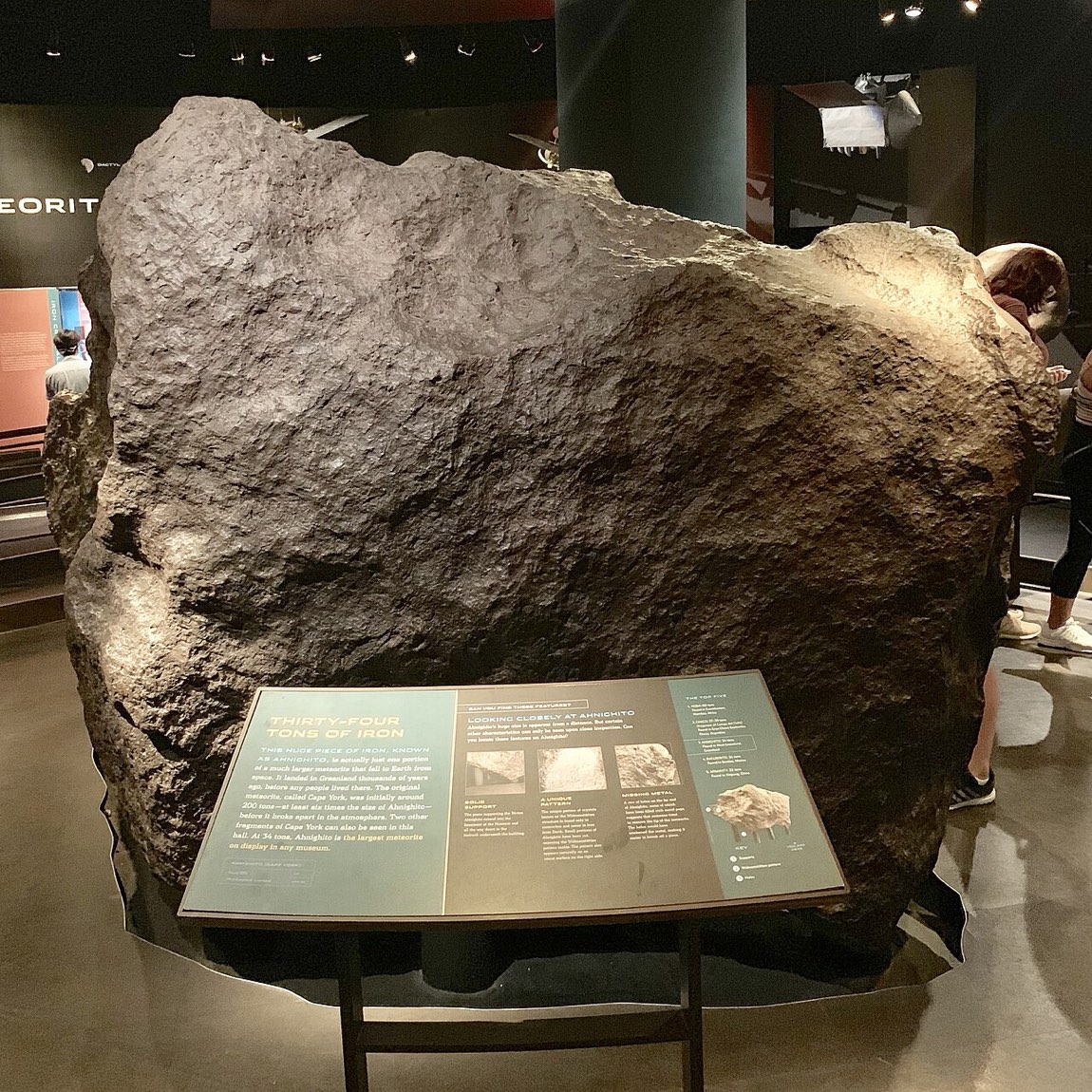
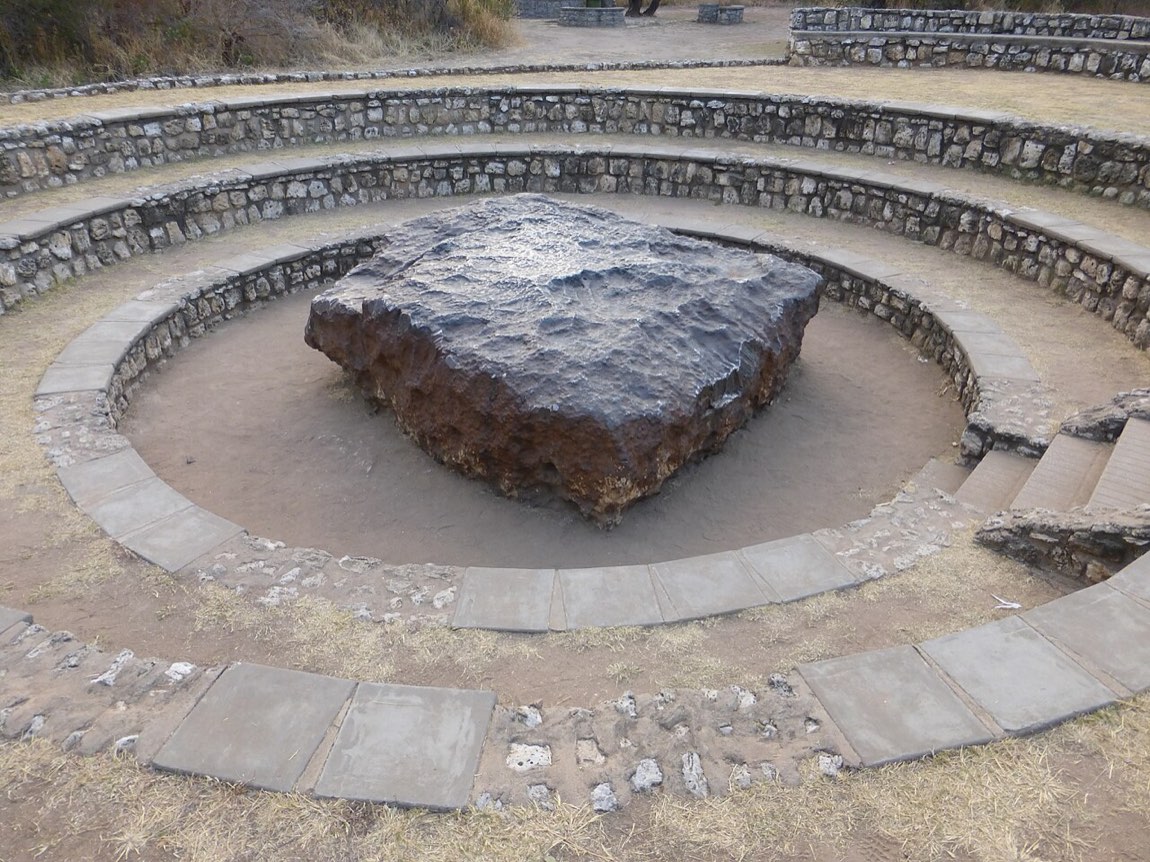
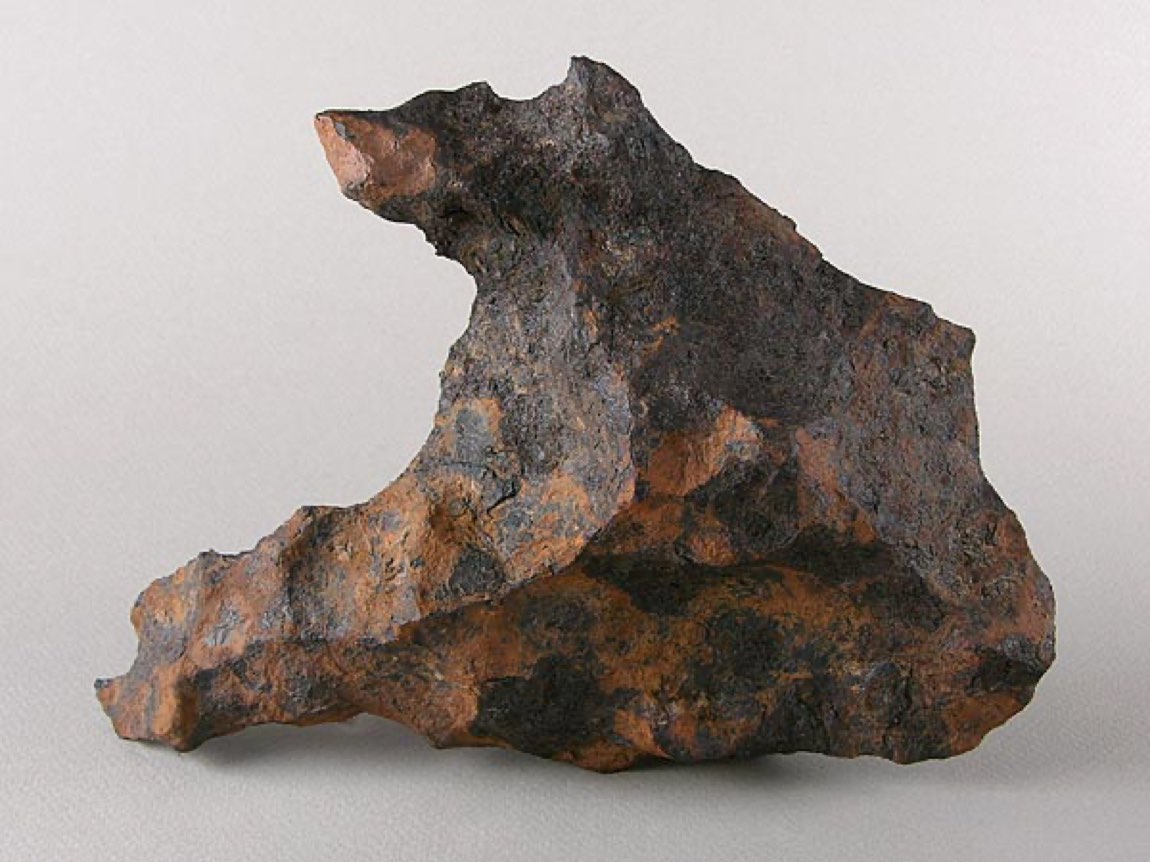
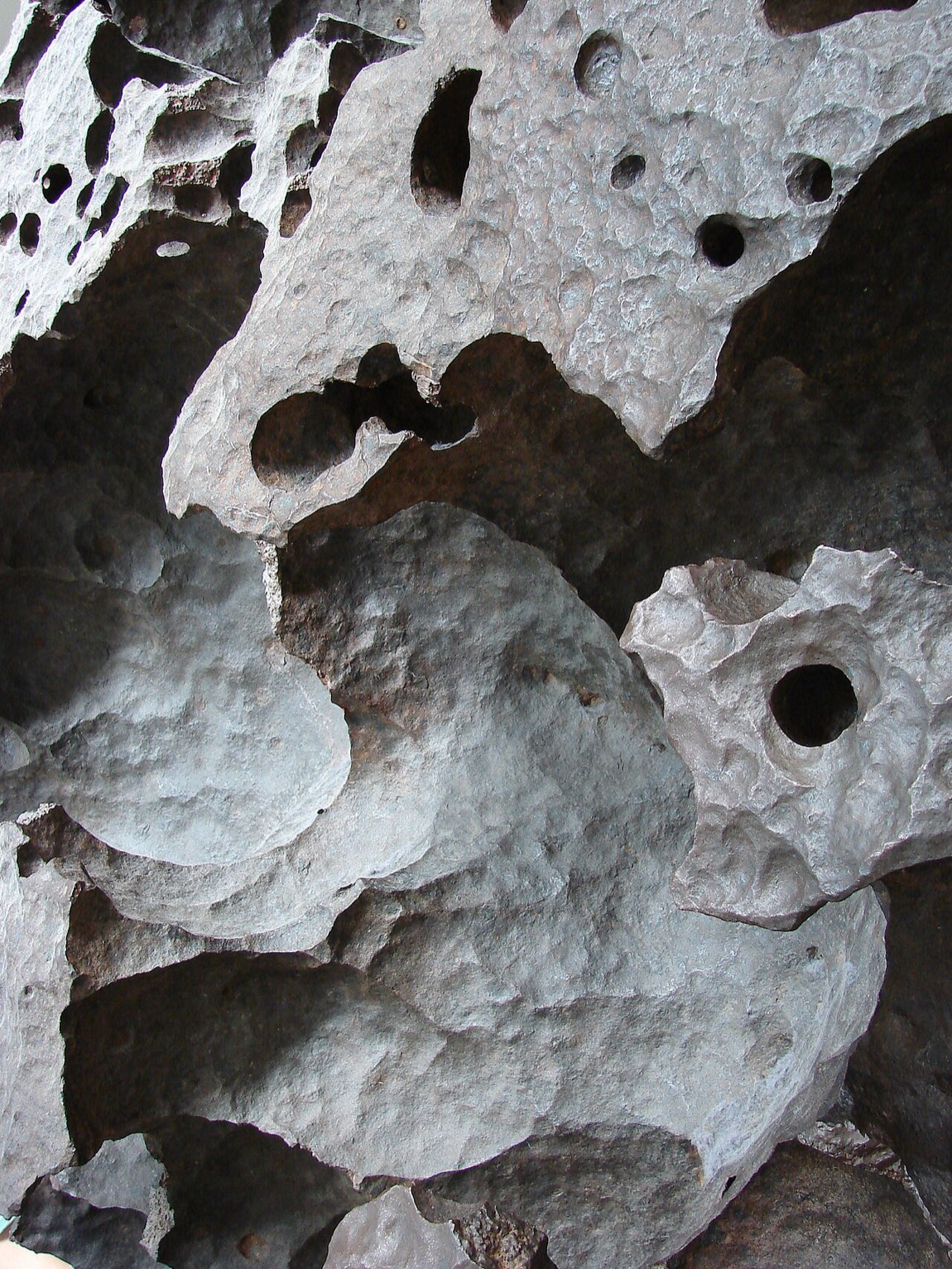
 Photograph · Loadmaster (David R. Tribble) This image was made by Loadmaster (David R. Tribbl · CC BY-SA 3.0
Meteorite · Deep guide
Willamette Meteorite
Also called: Tomanowos · Willamette
A 15-tonne iron carried by Ice Age floods into Oregon, and sacred to the people who first knew it.
What is it?
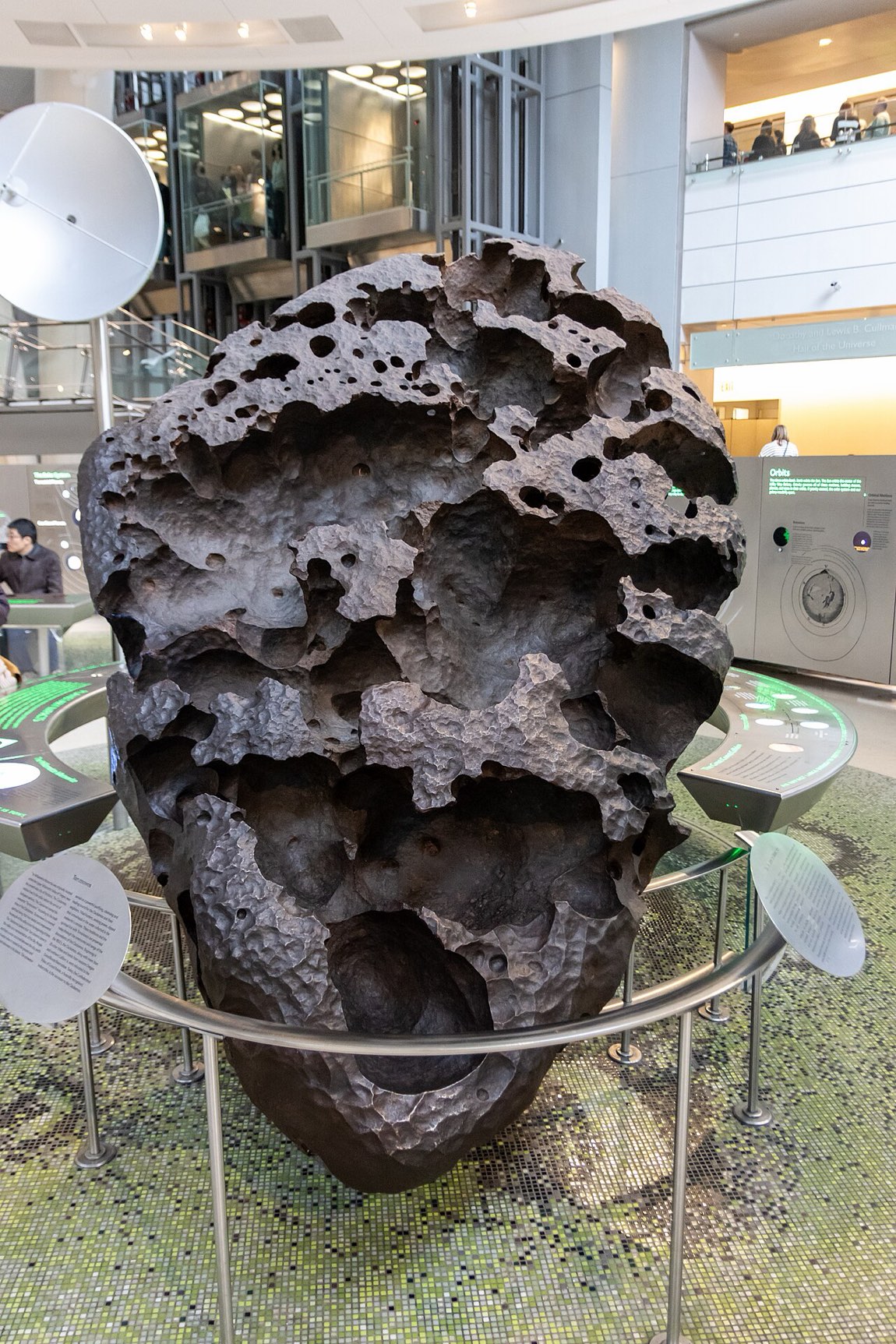
The Willamette Meteorite is the largest meteorite found in the United States. It is a mass of iron and nickel discovered near Oregon City, Oregon, and became widely known in 1902. There was no crater where it lay, so researchers think it landed farther north, perhaps in Canada or Montana, and was carried south by the huge Missoula Floods at the end of the last Ice Age. The Clackamas Chinook people called it Tomanowos and still regard it as sacred. It has been displayed at the American Museum of Natural History since 1906.
The deep dive
Researched for the Atlas from Wikipedia — Willamette Meteorite (9,047 characters read) · updated Nov 15, 2026
01 A Giant Born in a Shattered Planet's Core
The Willamette Meteorite did not fall from some undifferentiated cloud of primordial rock. It originated deep inside a planetesimal or asteroid that had grown large enough to separate into layers, just as Earth did, with heavy metals sinking to form a distinct core. At some point that parent body was shattered by a catastrophic collision, flinging its metallic guts into space. What eventually reached Oregon was a piece of that core — over 91% iron and 7.62% nickel, with traces of cobalt and phosphorus. The meteorite's internal structure still carries the fingerprint of its violent past: a recrystallized texture with only faint remnants of the classic Widmanstätten crystal pattern that most iron meteorites display. Scientists read that near-erasure as evidence of a severe impact-heating event on the parent body, one powerful enough to scramble and re-fuse the metal's crystalline architecture before the fragment ever left its home world.
02 Rare Metals Packed in an Iron Fist Deeper
Because the Willamette Meteorite crystallized from the core of a differentiated body, it carries concentrations of elements that are vanishingly rare in Earth's crust. Iridium is a striking example: one of the least abundant elements on Earth's surface, yet the Willamette holds it at a concentration of 4.7 parts per million — thousands of times more concentrated than in the terrestrial crust. This enrichment is a direct consequence of how rocky planets work: when a body melts, dense, iron-loving elements like iridium sink with the iron toward the center, leaving the outer crust nearly depleted. The meteorite thus acts as a time capsule, preserving elemental ratios from the early solar system that Earth's own geological processes have long since buried beyond reach. Studying those ratios helps scientists reconstruct what the building blocks of the inner solar system looked like before planets finished forming.
03 Carried Here by a Catastrophic Flood
There is no impact crater anywhere near Oregon City, and for a long time that absence was simply puzzling. The explanation only clicked into place after the 1920s, when geologists came to understand the Missoula Floods — among the largest floods ever documented on Earth. The meteorite is thought to have landed on an ice cap in what is now Montana or western Canada, then rode a glacier slowly toward the Clark Fork River valley. There, an ice dam had backed up the enormous Lake Missoula. When that dam catastrophically failed, it unleashed up to 10 million cubic metres of water per second — a discharge almost impossible to picture — sweeping massive blocks of ice and embedded boulders down the Columbia River and into the Willamette Valley. The Willamette Meteorite, locked inside one of those ice rafts, eventually sank as the floodwaters slowed and settled onto the valley floor roughly 13,000 years ago, where it was found millennia later by Indigenous peoples.
04 How Rainwater Sculpted Those Dramatic Hollows
The deep, cave-like pits that make the Willamette Meteorite so visually striking are not purely the work of its fiery entry through the atmosphere, though that high-speed passage contributed. After the meteorite settled in the Willamette Valley, it sat exposed to Pacific Northwest weather for thousands of years. Rainwater seeped into the iron mass and reacted with a mineral called troilite — an iron sulfide naturally present in many iron meteorites. That reaction produced a form of sulfuric acid, which then slowly ate away at the surrounding metal. Over millennia this acid weathering enlarged small voids into the dramatic bowls and craters visible today. The hollows were deep enough that Indigenous people used them practically: rainwater collecting in the depressions was used by warriors who dipped their arrows into it, a ritual whose meaning was described by Native American witnesses at the 1902 lawsuit over ownership.
05 Ellis Hughes and a 90-Day Secret Move
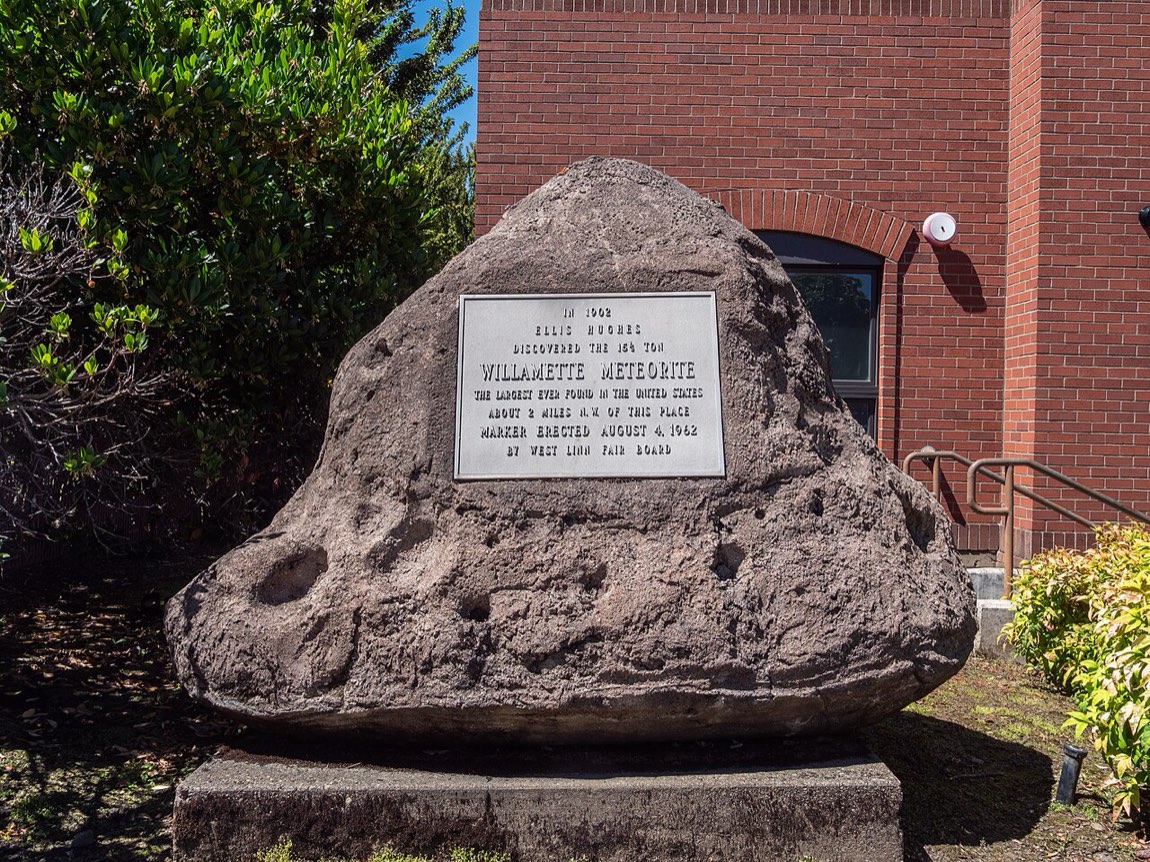
Euro-American awareness of the meteorite begins with Ellis Hughes, who in 1902 recognized its significance. The ground where the meteorite rested belonged to the Oregon Iron and Steel Company, so Hughes devised a clandestine plan: he would move it three-quarters of a mile — about 1,200 metres — onto his own land and claim it as his discovery. The operation took 90 days of hard labor. The move was eventually discovered, and the Oregon Supreme Court ruled firmly that the meteorite belonged to the Oregon Iron and Steel Company as the owner of the land where it had lain. The court proceedings produced a remarkable side detail: Native American witnesses testified that their ancestors had regarded the stone as their own long before Hughes arrived, that visiting it on dark nights had served as a rite of passage for young men, and that warriors sought advantage in battle by dipping arrows into the rainwater pooled in its hollows. These testimonies document an intimate Indigenous relationship with the meteorite that predates any written record.
06 From a Steel Company to a New York Museum
After the court settled ownership in the Oregon Iron and Steel Company's favor, the meteorite passed through one more set of hands before leaving the Pacific Northwest forever. In 1905, Sarah Tappan Hoadley, the wife of William E. Dodge Jr., purchased it for $26,000 — equivalent to roughly $931,667 in 2025. She first put it on public display at the Lewis and Clark Centennial Exposition, then donated it to the American Museum of Natural History in New York City, where it has been on display since 1906. By the museum's own reckoning, an estimated 40 million people have seen it in the decades since. That figure alone — spread across more than a century of visitors — goes some way toward explaining why the Willamette is considered one of the most famous meteorites in the world, even as other finds have surpassed it in size.
 ⤢
07 Sacred Stone: the Name Tomanowos
Long before Ellis Hughes arrived, the Clackamas Chinook had their own name for the meteorite: t'əmanəwas, which translates roughly as 'spirit power.' The name reflects a view of the object as something far more than a rock — a source of ceremonial and spiritual significance embedded in the community's identity. The Confederated Tribes of the Grand Ronde Community of Oregon (CTGR), a federally recognized confederation that includes descendants of the Clackamas Chinook and is considered their legal successor, still uses the name today. When the CTGR entered into their 1999 repatriation action under the Native American Graves Protection and Repatriation Act, they were asserting not just a legal claim but a living cultural relationship with the stone — one documented by those trial witnesses over a century ago and maintained continuously since.
08 The Legal Battle and the Agreement That Followed Deeper
In 1999, the CTGR filed a formal action under the Native American Graves Protection and Repatriation Act, demanding the meteorite be returned. The American Museum of Natural History responded in 2000 by filing a federal lawsuit seeking a declaratory judgment against the tribe. The standoff was resolved later in 2000 through a negotiated agreement with carefully balanced terms: the meteorite remains at the museum, but tribal members may conduct a private ceremony around it once a year. Critically, the agreement stipulates that ownership transfers to the CTGR should the museum ever cease to display the meteorite. A separate piece of the story unfolded in 2006, when a 4.5-ounce (130 g), 7.5-inch (19 cm) fragment was purchased at auction and displayed at the Evergreen Aviation and Space Museum in McMinnville, Oregon. That piece was eventually returned to the CTGR on February 22, 2019 — a quieter resolution than the high-profile federal case, but meaningful to the tribe.
09 Cuts, Trades, and a Martian Swap Deeper
The meteorite's time at the American Museum of Natural History has not been entirely passive. In 1998, museum curators removed a 28-pound (13 kg) section from the crown of the meteorite. In a trade that reflects the peculiar economics of rare space rocks, that large chunk of Willamette iron was exchanged for a piece of a Martian meteorite weighing just one-half ounce — 14 grams. The exchange makes a certain scientific sense: Martian meteorites are extraordinarily rare, and even a tiny fragment carries enormous research value. Nevertheless, the removal became a point of contention. When plans emerged in October 2007 to auction that crown section, the CTGR publicly objected, characterizing the sale as insensitive. Prospective bidders withdrew after a Portland Oregonian editorial suggested the CTGR would sue any new owner, though the tribe disavowed that editorial and stated they had no such intention and no legal means to block a private sale. A subsequent lawsuit against the newspaper in Oregon Circuit Court ultimately failed.
10 Weighing a Meteorite: Why the Numbers Disagree Deeper
Even something as basic as the meteorite's mass turns out to be contested in the literature. Different sources report weights ranging from 15,500 kilograms (34,200 pounds) to 12,700 kilograms (28,000 pounds). Part of the confusion stems from the ambiguity of the word 'ton': a metric ton is 1,000 kilograms, a short ton is 2,000 pounds (about 907 kilograms), and a long ton is 2,240 pounds (about 1,016 kilograms) — three different quantities that writers sometimes use interchangeably. Around 2008, the museum's own website simultaneously cited both '15.5 tons' and '14 tons' on different pages. The museum stated in 1906 that the weight was 'at least 31,200 pounds, or about 15.6 tons,' using American short-ton conventions. As of 2023, the official museum figure stands at '15.5 tons.' The discrepancy is a useful reminder that even authoritative sources can carry hidden ambiguities in units, and that physical samples change over time as pieces are removed.
11 Reproducing a Sacred Object Through Technology
Because the original meteorite sits in New York City, most people in Oregon can only encounter it through reproductions. Two inexact replicas exist in the state: one known as Brown and Black Asteroid outside the University of Oregon Museum of Natural and Cultural History in Eugene, and a one-fifth-size replica in Fields Bridge Park in West Linn. But the most precise reproduction came from an unexpected collaboration. Around 2018, artist and Southern Oregon University assistant professor Garrick Imatani worked with the CTGR and the American Museum of Natural History to create the only exact replica. Using photogrammetry — a technique that builds precise three-dimensional models from overlapping photographs — Imatani digitally captured every contour of the meteorite's surface, then produced a full-scale replica through 3D printing. He also created a separate artistic interpretation of the meteorite now on permanent display at the University of Oregon's Straub Hall, bringing the object home to its region in both scientific fidelity and creative form.
12 From Sixth Largest to Outside the Top Ten
For much of the twentieth century, the Willamette Meteorite held a prestigious ranking: the largest meteorite found in the United States, and for a long time considered the sixth largest in the world. That status has since slipped as new discoveries have been made. Finds such as El Ali and Gancedo have pushed Willamette out of the global top ten entirely. The meteorite remains the American record holder, but its demotion in the world rankings illustrates how incomplete our inventory of large iron meteorites still is. Many of the largest specimens have been found in remote deserts or polar regions where erosion is slow and large masses can survive intact for long periods. Each new discovery reshapes the leaderboard, a reminder that the census of significant space rocks on Earth's surface is a living, changing list rather than a settled fact.
 ⤢