 Photograph · Sergio Conti from Montevecchia (LC), Italia · CC BY-SA 2.0
Meteorite · Deep guide
Hoba Meteorite
Also called: Hoba · Hoba West
The biggest single meteorite ever found, a slab of iron too heavy to move from the Namibian field where it landed.
What is it?
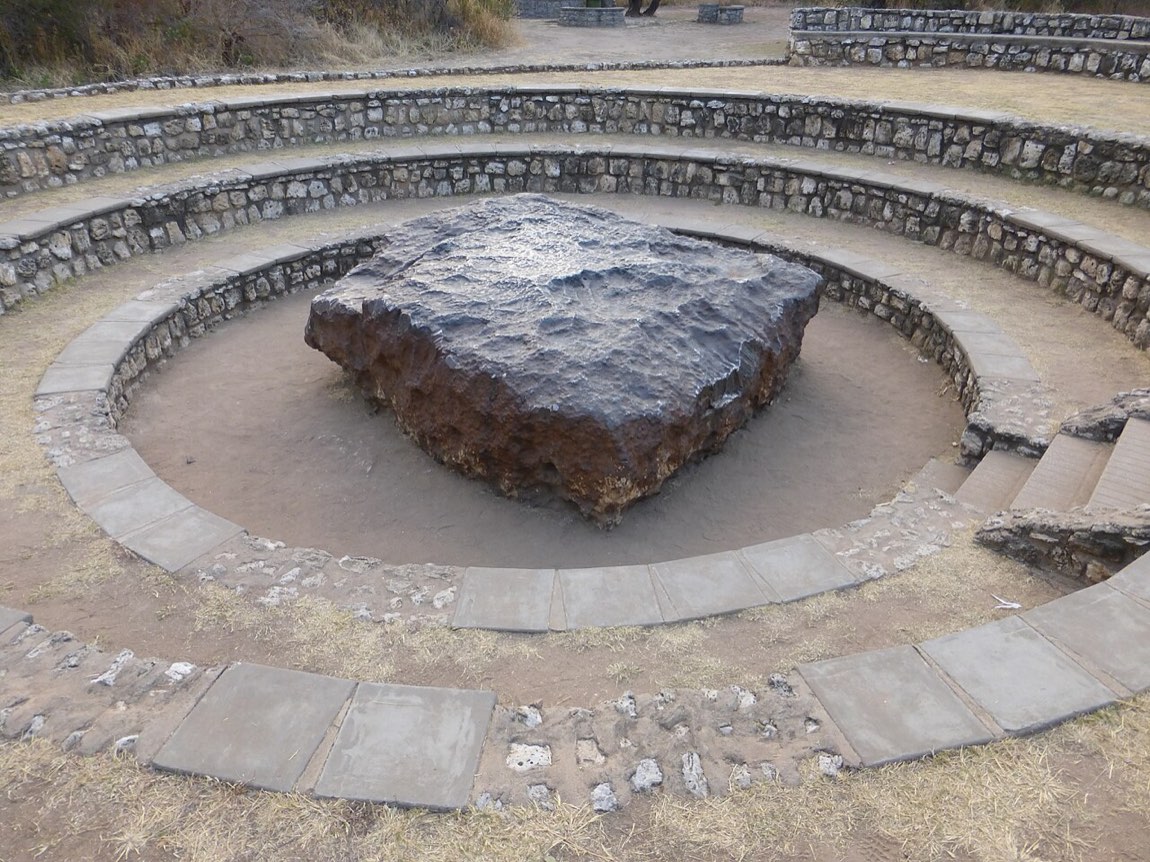
Hoba is a flat block of metal lying on a farm near Grootfontein in Namibia. A farmer's plough struck it in 1920, and because it weighs more than 60 tonnes it has never been moved. It is mostly iron with about 16% nickel, making it the largest known naturally occurring piece of iron on Earth's surface. Scientists think the atmosphere slowed it so much that it landed gently enough to leave no crater. Today it sits in a small visitor area built after it was given to the government in 1987.
The deep dive
Researched for the Atlas from Wikipedia — Hoba meteorite (3,966 characters read) · updated Nov 15, 2026
01 A Name Meaning Gift from the Sky
The word Hoba comes from the Khoekhoegowab language and means 'gift' — a quietly poetic name for an object that arrived from space and embedded itself in the soil of what is now Namibia's Otjozondjupa Region. The meteorite takes its full name from the farm Hoba West, near the town of Grootfontein, where it still rests today. That detail — still rests today — is worth pausing on. Despite being discovered over a century ago, despite being one of the most famous rocks on Earth, it has never been moved from the spot where it landed. Its sheer mass makes relocation essentially impractical, so the mountain, in this case, has always come to the visitor rather than the other way around.
02 How the Atmosphere Slowed a Giant Deeper
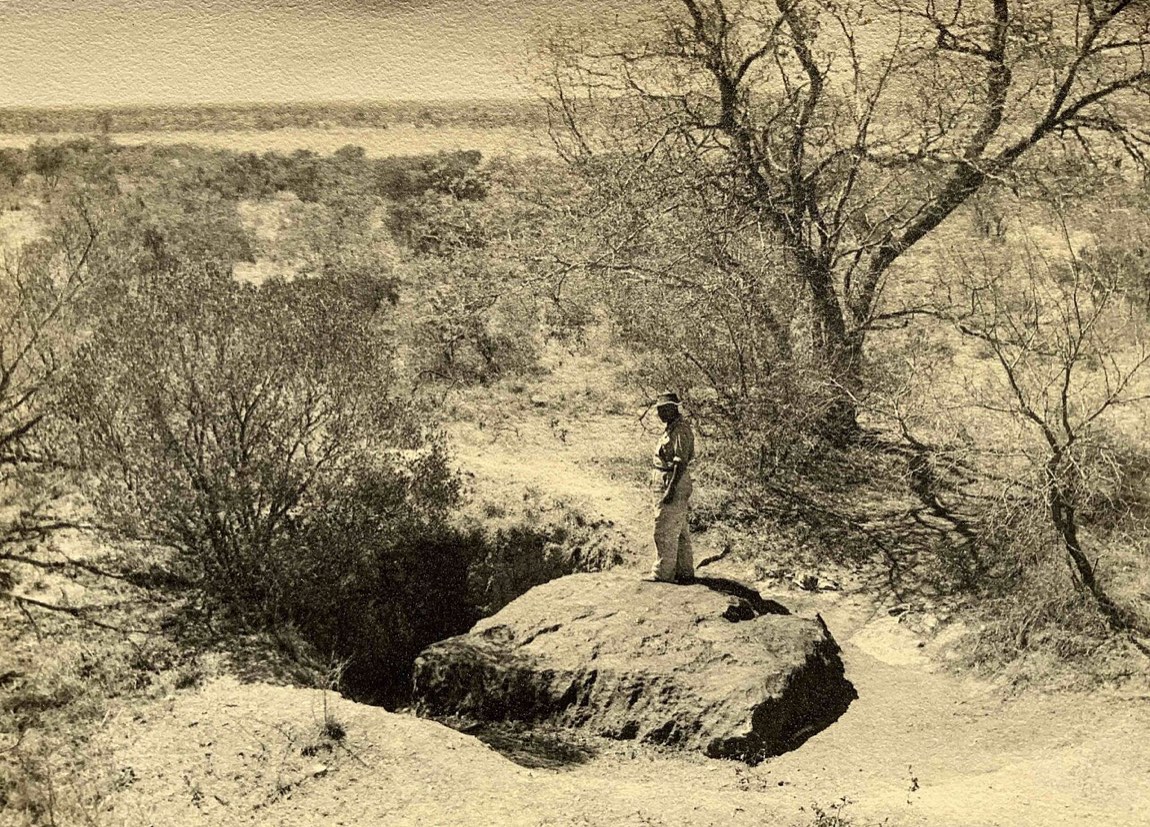
Most large meteoroids strike the ground at velocities that gouge enormous craters, but Hoba tells a different story. Scientists infer that the Earth's atmosphere acted as a brake, slowing the object so dramatically that it hit the surface at terminal velocity. Assuming a drag coefficient of about 1.3, the meteor appears to have decelerated to roughly 2.75 km/s (about 6,200 mph) from an entry speed that would typically exceed 10 km/s (22,000 mph). That is a reduction to less than a third of its incoming speed. The result was an impact gentle enough — in cosmic terms — to leave the mass intact and cause very little excavation of surrounding earth. No preserved crater exists at the site, which is itself a remarkable absence and a direct consequence of that atmospheric braking.
03 The Unusual Flat Shape and What It Means Deeper
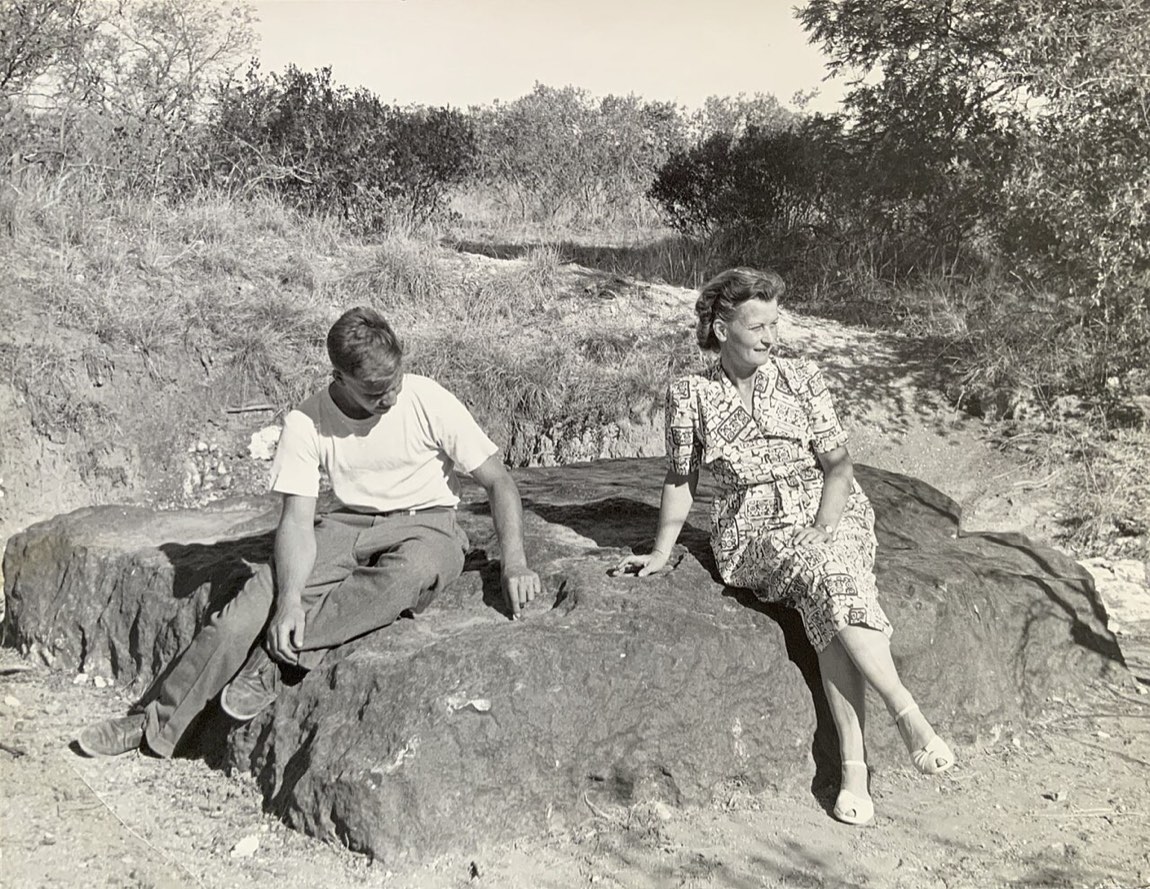
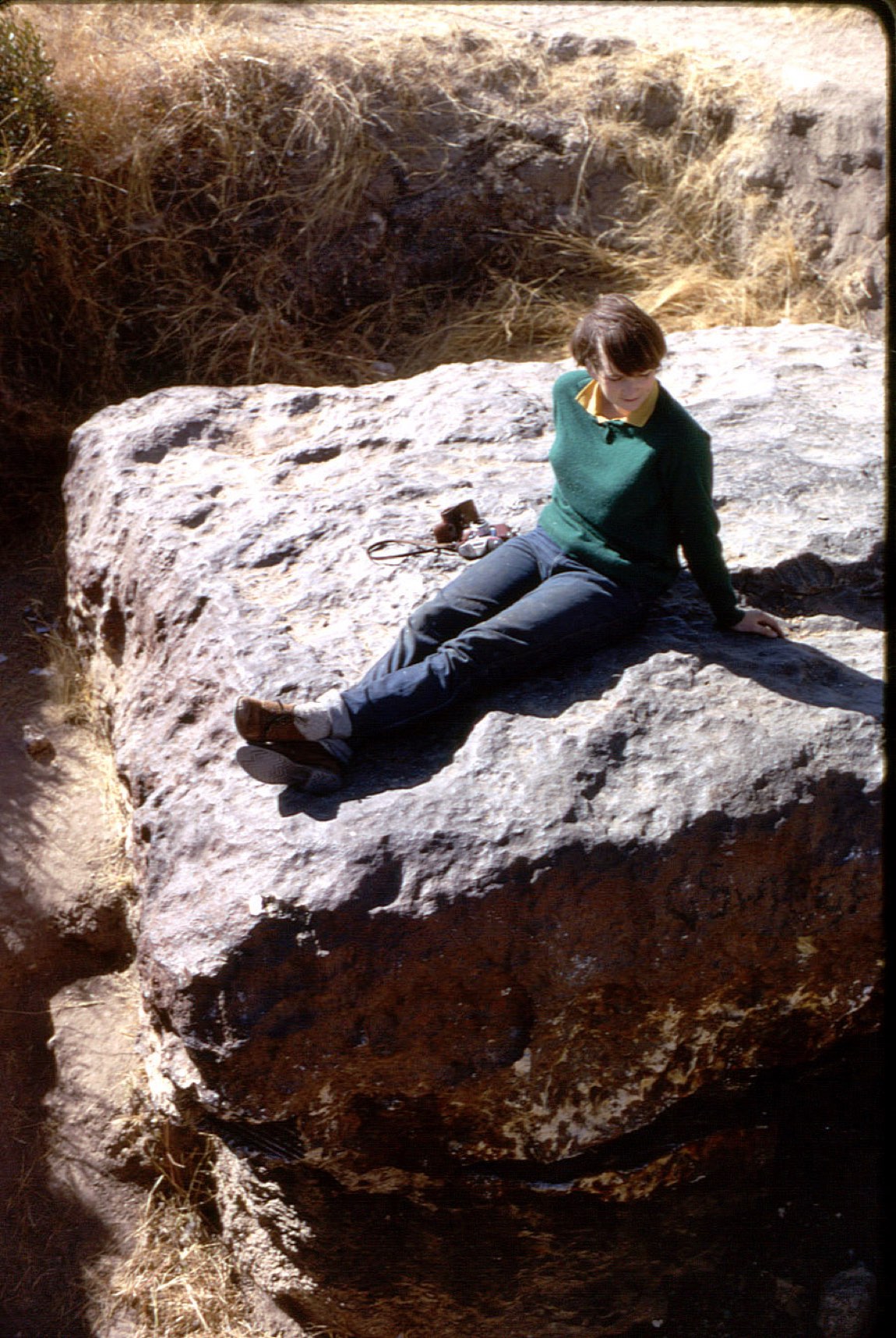
Hoba is a tabular body of metal, measuring 2.7 by 2.7 by 0.9 metres — roughly the footprint of a large garden shed compressed into a slab less than a metre thick. That flat-on-both-major-surfaces geometry is considered unusual for a meteorite and has attracted scientific curiosity. The shape may have influenced how the object oriented itself during atmospheric entry and how drag forces acted across its broad face, potentially contributing to the terminal-velocity scenario that kept it intact. Whatever the aerodynamic history, the result is a meteorite that sits almost like a table in the Namibian soil, its wide flat top exposed to the sky and accessible to anyone who visits the site today.
04 Iron, Nickel, and a Touch of Cobalt
Hoba is composed of approximately 84% iron and 16% nickel, with traces of cobalt also present. This chemical makeup places it in a specific scientific classification: an ataxite iron meteorite belonging to the nickel-rich chemical class IVB. The word ataxite refers to the internal texture, or rather the near-absence of the crystalline patterns — called Widmanstätten figures — that characterize many iron meteorites. The high nickel content suppresses those structures. On the surface, weathering has done its own work: a crust of iron hydroxides has formed through oxidation, giving Hoba a weathered, rusty exterior that contrasts with its dense metallic interior. The article also notes that Hoba is the most massive naturally occurring piece of iron — specifically ferronickel — known on Earth's surface.
 ⤢
05 Discovered by a Plough and an Ox
The discovery of Hoba in 1920 was entirely accidental. The owner of the land, Jacobus Hermanus Brits, was ploughing one of his fields with an ox when the plough came to an abrupt halt accompanied by a loud metallic scratching sound. That jarring interruption to an ordinary farming day turned out to be one of the more significant geological finds of the twentieth century. Brits had the obstruction excavated and correctly identified it as a meteorite. His account was published in 1920 and can still be viewed at the Grootfontein Museum in Namibia. Friedrich Wilhelm Kegel subsequently took the first published photograph of Hoba, giving the wider world its first visual record of the find.
06 Legal Protections and a Turbulent Region
Concern about people attempting to remove or relocate Hoba led the government of South West Africa — now Namibia — to declare it a national monument on 15 March 1955, with permission from the farm's owner at the time, Ora Scheel. Since 1979, the protected area has been extended to cover 425 square metres (4,570 sq ft) around the meteorite. The path toward developing the site for tourism was not straightforward, however. From about the 1970s, progress was hampered by the meteorite's location in the Otavi triangle — the area defined by the towns of Otavi, Tsumeb, and Grootfontein — which was a key arena of the Namibian war of independence, also known as the South African Border War.
07 Donation, Tourism, and a Visitor Centre
In 1987, the farm owner donated both the meteorite and the site where it lies to the state, specifically for educational purposes. Later that same year the government opened a tourist centre at the site. Following the donation, a visitor centre was constructed with a circular stone access and seating area, giving the location a sense of ceremony appropriate to its scientific significance. The article notes that vandalism of Hoba has ceased since these developments and that the site is now visited by thousands of tourists every year. What was once an isolated farm obstruction in a conflict-affected region has become one of Namibia's more distinctive geological attractions.
08 Vandalism, Theft, and an Auction Room
Before legal protections took firm hold and tourism infrastructure arrived, the meteorite suffered years of erosion from more than just the weather. Scientific sampling, vandalism, and outright theft all reduced its bulk over the decades. A striking illustration of how brazen some of that removal was: on 7 December 2021, an unusually large 2.8-kilogram (6.2 lb) specimen was sold for $59,062 at a Bonhams auction in Los Angeles. The sale notice explained that the specimen had been illegally removed in 1968 by the father of the seller, who visited the main mass with friends and used a hand saw to cut a large block from it 'as a souvenir' — a task that reportedly took between three and four hours. Specimens from earlier theft and vandalism continue to be traded to this day.
 ⤢
09 How Hoba Compares to Other Giant Meteorites
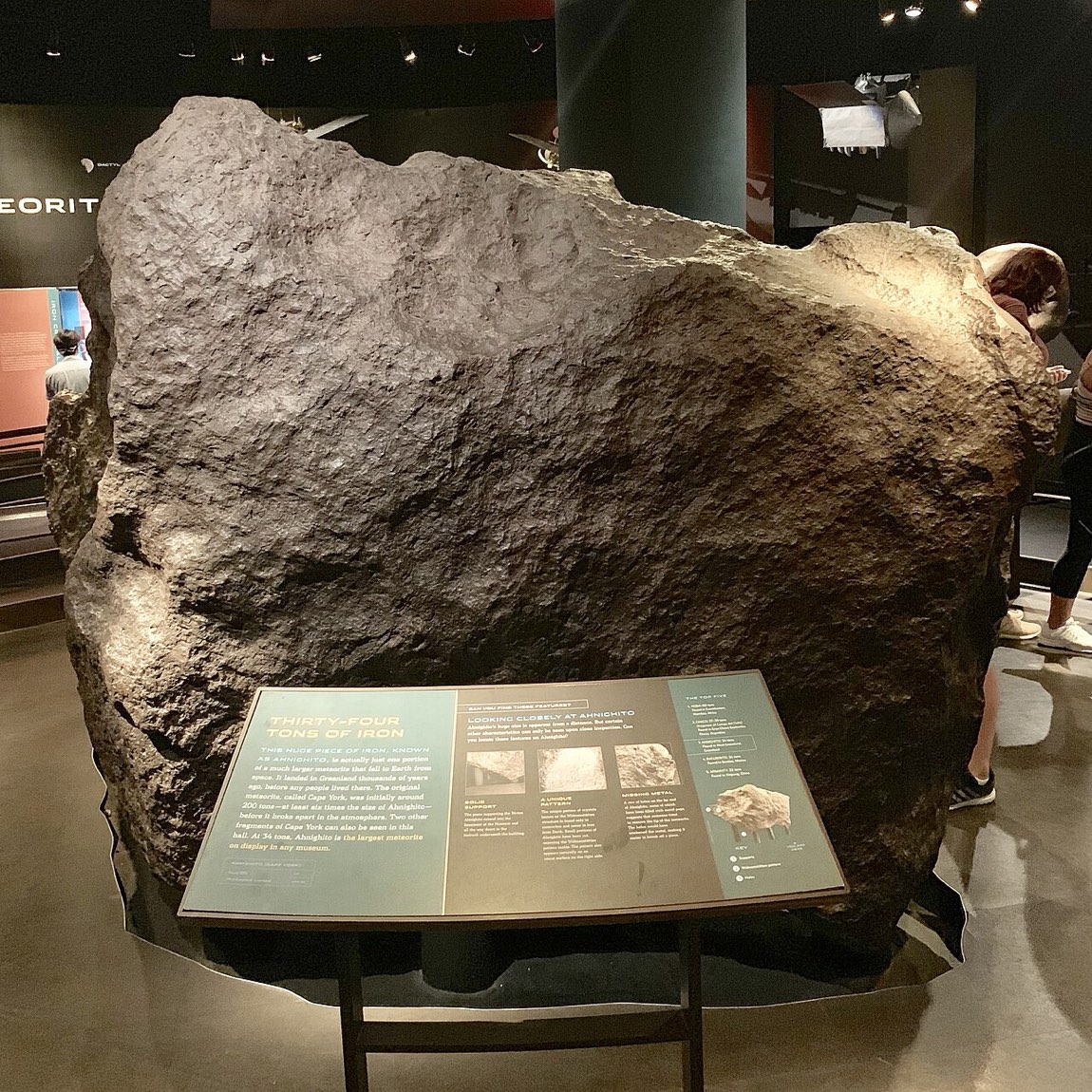
Scale helps clarify just how exceptional Hoba is. The article describes its main mass as estimated at more than 60 tonnes and identifies it as the largest known intact meteorite as a single piece. For comparison, the next largest individual fragments are the Ahnighito, a 31-tonne piece of the Cape York meteorite now kept at the American Museum of Natural History in New York, and Gancedo, a 31-tonne fragment from the Campo del Cielo strewn field. Hoba is described as about twice as massive as either of those. The parenthetical note in the article — that some parts have apparently been chopped off — means the original impacting mass was almost certainly greater still than the 60-plus tonnes that remain today.
10 An 80,000-Year-Old Arrival Still in Place
Hoba is thought to have impacted Earth less than 80,000 years ago — recent on a geological timescale, though ancient compared to any human record. That age estimate places the impact during a period when anatomically modern humans were present in Africa, though there is no known human record of the event. The meteorite lay undisturbed, buried just below the surface of a Namibian farm field, for the entirety of human prehistory and recorded history until an ox dragging a plough caught on it in 1920. The combination of an ancient impact, no crater, an intact mass, and a discovery by pure agricultural accident makes Hoba's story unlike almost any other object in planetary science.
11 Open Questions About Its Journey and Origin Deeper
While Hoba's composition, mass, and approximate impact date are reasonably well established, its deeper history carries real uncertainties. The article notes that the flat shape on both major surfaces is unusual but does not resolve definitively how that shape arose — whether through the original breakup of a parent body in space, through aerodynamic sculpting during atmospheric entry, or some combination of both. The IVB classification tells scientists something about the chemical family of asteroids from which it likely derived, but the article does not specify a named parent body. The drag coefficient assumption of about 1.3 is noted as a basis for the velocity calculation, signaling that the terminal-velocity conclusion rests on a physical model rather than direct measurement — a standard but honest caveat in meteorite science.
 ⤢