Meteorite · Deep guide
Orgueil Meteorite
Also called: Orgueil
A crumbly black stone from 1864 whose chemistry is the closest match we have to the Sun itself.
What is it?
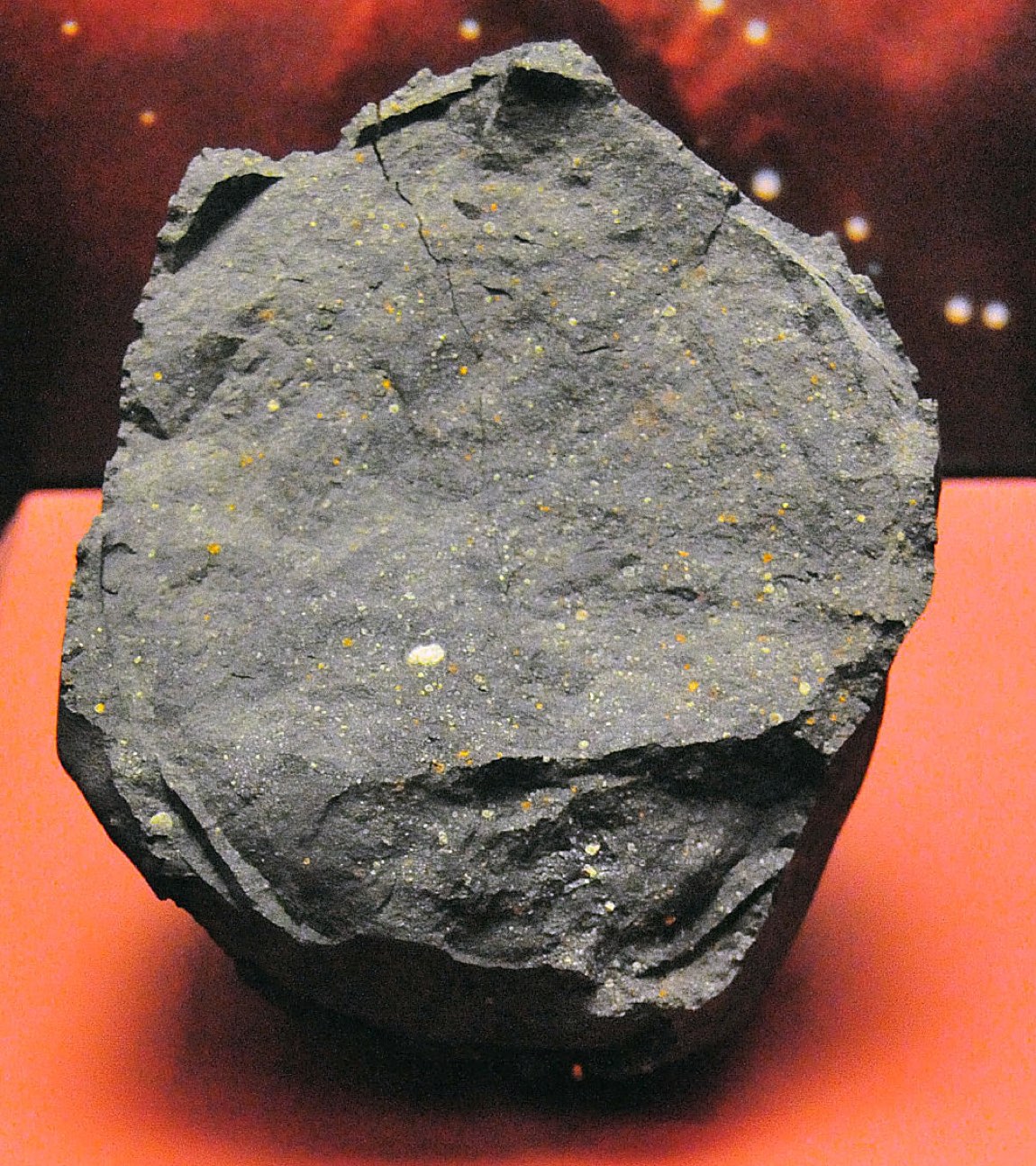
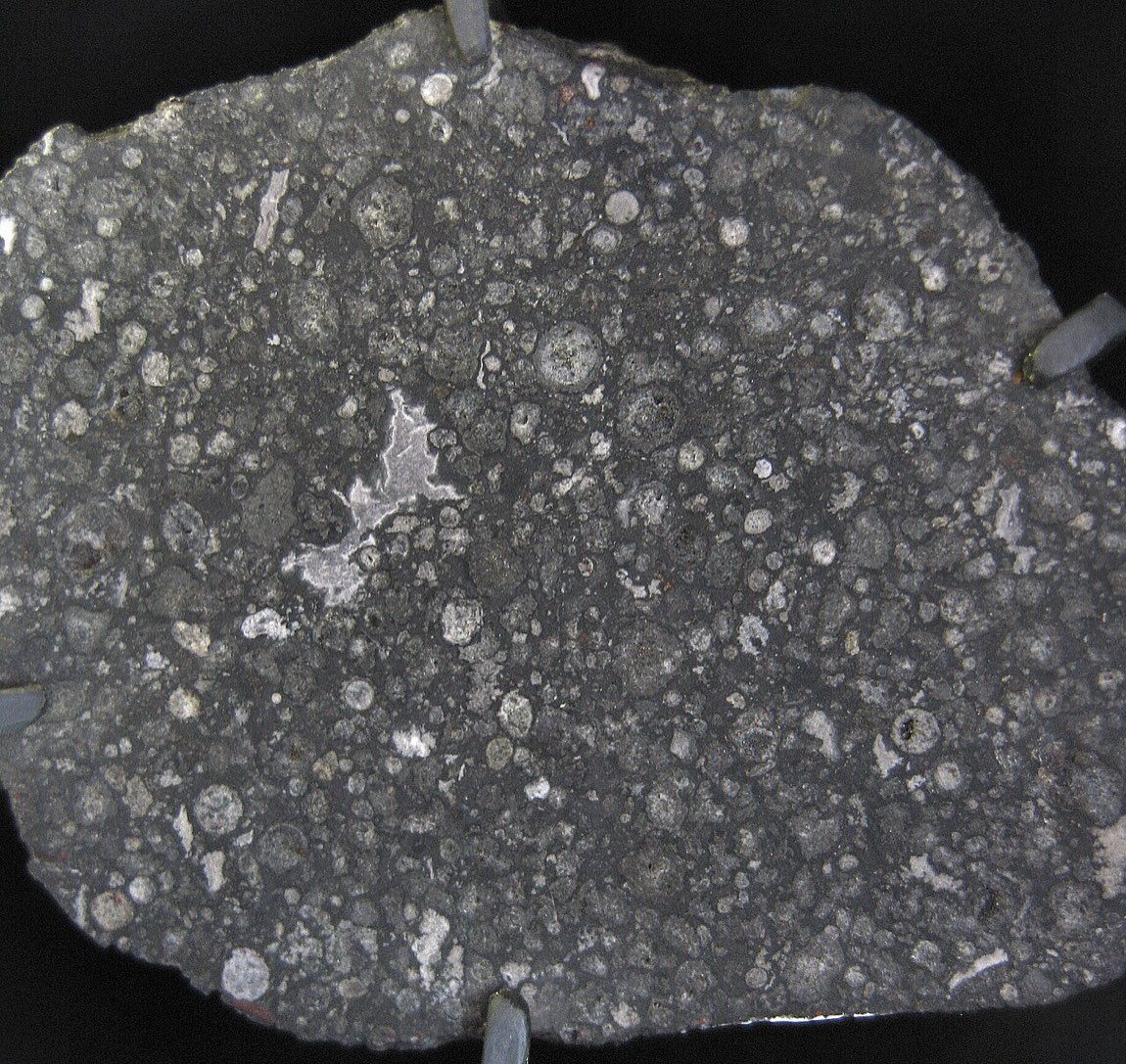
Shortly after 8 p.m. on 14 May 1864, about 20 stones fell near the village of Orgueil in southern France. It is the largest of the rare CI carbonaceous chondrites, a group whose make-up is almost identical to the Sun's, apart from gases such as hydrogen and helium, which makes it a reference for what the Solar System was built from. Chemists found carbon-rich organic matter in it the same year, sparking debate about life from space. In 1965 a seed capsule found glued into one fragment was exposed as a 19th-century hoax.
The deep dive
Researched for the Atlas from Wikipedia — Orgueil (meteorite) (3,480 characters read) · updated Nov 15, 2026
01 The Night Orgueil Fell on France
On the evening of May 14, 1864, just minutes after eight o'clock local time, the sky above southwestern France delivered an extraordinary gift. Around twenty separate stones rained down across an area of roughly five to ten square kilometres near the village of Orgueil in the south of the country. The fall was witnessed and the stones were recovered quickly, which turned out to matter enormously for science — fresh collection meant less terrestrial contamination had a chance to creep in. That same year, François Stanislaus Clöez, a professor of chemistry at the Musée d'Histoire Naturelle, was already bending over a specimen with analytical instruments. Speed of analysis is rare in meteorite science, and in this case it set off a debate about organic matter and its possible biological origin that would echo through the scientific community well into the 1870s.
02 What Makes a CI Chondrite So Special
Orgueil belongs to the CI chondrite group, one of the most chemically primitive categories of meteorite known to science. Only five meteorites in the world carry this classification, and Orgueil is the largest of them, weighing in at fourteen kilograms — roughly the same as two full bags of flour. The defining feature of CI chondrites is their composition, which is essentially identical to that of the Sun itself, once you exclude gaseous elements like hydrogen and helium. That correspondence is not coincidental: these rocks are considered snapshots of the raw solar nebula material from which the entire Solar System coalesced billions of years ago. Studying Orgueil is therefore a little like reading a recipe for a planetary system, one that has been sitting sealed in deep space since before Earth existed.
03 Mercury's Strange Overabundance Deeper
Among the many chemical curiosities locked inside Orgueil, mercury stands out as particularly puzzling. The meteorite is highly enriched in mercury, a volatile element that is undetectable in the solar photosphere. This creates a significant scientific headache known as the "mercury paradox." The paradox arises because mercury abundances in meteorites do not follow the behaviour that its volatile nature and isotopic ratios would predict based on how materials should have behaved within the early solar nebula. If mercury were behaving like other volatiles during the formation and condensation of the solar nebula, it should not appear in such concentrations in a primitive meteorite. Exactly how and why mercury accumulated in CI chondrites at odds with theoretical expectations remains an active area of research, and Orgueil sits at the centre of that unresolved question.
04 Diamond Dust Older Than the Solar System Deeper
One of the most remarkable discoveries made within Orgueil involves an exotic form of xenon gas. Scientists found a high concentration of isotopically anomalous xenon known as xenon-HL locked within the meteorite's matrix. Tracking down the carrier of this unusual gas led researchers to extraordinarily fine-grained particles of diamond dust — particles so ancient they predate the Solar System itself. These are called presolar grains, and their very existence inside a meteorite tells a dramatic story: they are physical fragments of stars that lived and died before our Sun ignited. The fact that Orgueil preserved these nanoscale diamonds intact across billions of years, surviving the formation of the Solar System, the journey through space, and finally entry through Earth's atmosphere, underscores just how scientifically irreplaceable a specimen it is.
05 Clöez and the Organic Chemistry Debate
When François Stanislaus Clöez examined Orgueil in 1864, he found something unexpected and controversial: the meteorite contained carbon, hydrogen, and oxygen in ratios he compared to peat from the Somme valley or lignite from Ringkohl near Kassel. These are organic-like compositions, and the comparison to earthy, once-living materials was immediately provocative. His findings ignited an intense scientific discussion about whether the organic matter inside Orgueil might have a biological origin — in other words, whether it could be evidence of life beyond Earth. That debate continued with considerable heat through the 1870s. At the time, the tools to definitively resolve the question did not exist, and the argument blurred into broader Victorian-era controversies about spontaneous generation and the nature of life itself.
06 Organised Elements and What They Really Were
In 1962, a team led by Nagy and colleagues announced a striking discovery: they believed they had found "organised elements" embedded within Orgueil, structures they described as potentially biological and of extraterrestrial origin. The announcement generated significant excitement in scientific circles. However, subsequent investigation deflated those claims decisively. Fitch and Anders, working in 1963, demonstrated that the structures were in fact pollen — including pollen from ragwort — along with fungal spores that had contaminated the sample after it reached Earth. Some of the other supposed biological structures turned out to be crystals of the mineral olivine. The episode became a cautionary tale in meteoritics about the extreme difficulty of ruling out terrestrial contamination when searching for signs of extraterrestrial biology in a rock that has spent over a century in museums and laboratories.
07 The Seed Capsule Hidden in Plain Sight
In 1965, a fragment of Orgueil that had been stored in a sealed glass jar in Montauban since its recovery was found to conceal a seed capsule embedded inside it. Even more intriguingly, the original glassy outer layer on the fragment appeared undisturbed, suggesting the capsule had always been there. Scientific analysis shattered that impression. The seed capsule was identified as belonging to a European rush plant, and it had been glued into the fragment and carefully camouflaged using coal dust. The apparently pristine outer fusion crust was not genuine fusion crust at all — it was glue. The identity of the hoaxer has never been established, but researchers believe the deception was crafted to influence the heated nineteenth-century debate over spontaneous generation, specifically by appearing to show the transformation of inorganic matter into biological material inside a meteorite.
08 The Fossil Claims That NASA Stepped Away From
More recently, Richard B. Hoover of NASA put forward the claim that Orgueil contains fossils, some of which bear resemblance to known terrestrial species. This was not Hoover's first such assertion — he had previously made similar claims about the Murchison meteorite. The scientific response was largely sceptical, and NASA itself took the notable step of formally distancing the agency from Hoover's claims, citing the absence of expert peer review for his work. The episode illustrates a recurring tension in the study of carbonaceous chondrites: these meteorites genuinely do contain extraordinary chemistry, including organic compounds, which makes them legitimate objects of astrobiological interest. But that same richness makes them magnets for overreaching interpretation, and the burden of proof for biological signatures in any meteorite remains extremely high.
09 How Orgueil Specimens Are Shared Globally
Because Orgueil is irreplaceable, its management after recovery has evolved into a careful international curation system. Specimens are held by institutions around the world, and given the relatively large total recovered mass of fourteen kilograms, samples are made available for study in a structured way. Researchers can access material for nondestructive analysis, and with sufficient scientific justification, permission for destructive testing — which consumes the sample permanently — can also be granted. This tiered access model is documented in the Catalogue of Meteorites, fifth edition, published by Cambridge University Press, compiled by M. M. Grady. The arrangement reflects a broader principle in meteoritics: finite, scientifically extraordinary material must be apportioned wisely so that future researchers with better instruments and new questions are not left with nothing to study.
 ⤢