 Photograph · NASA · Public domain
Meteorite · Deep guide
Nakhla Meteorite
Also called: Nakhla
A shower of Martian stones that fell on Egypt in 1911 and gave the first hints of water on Mars.
What is it?
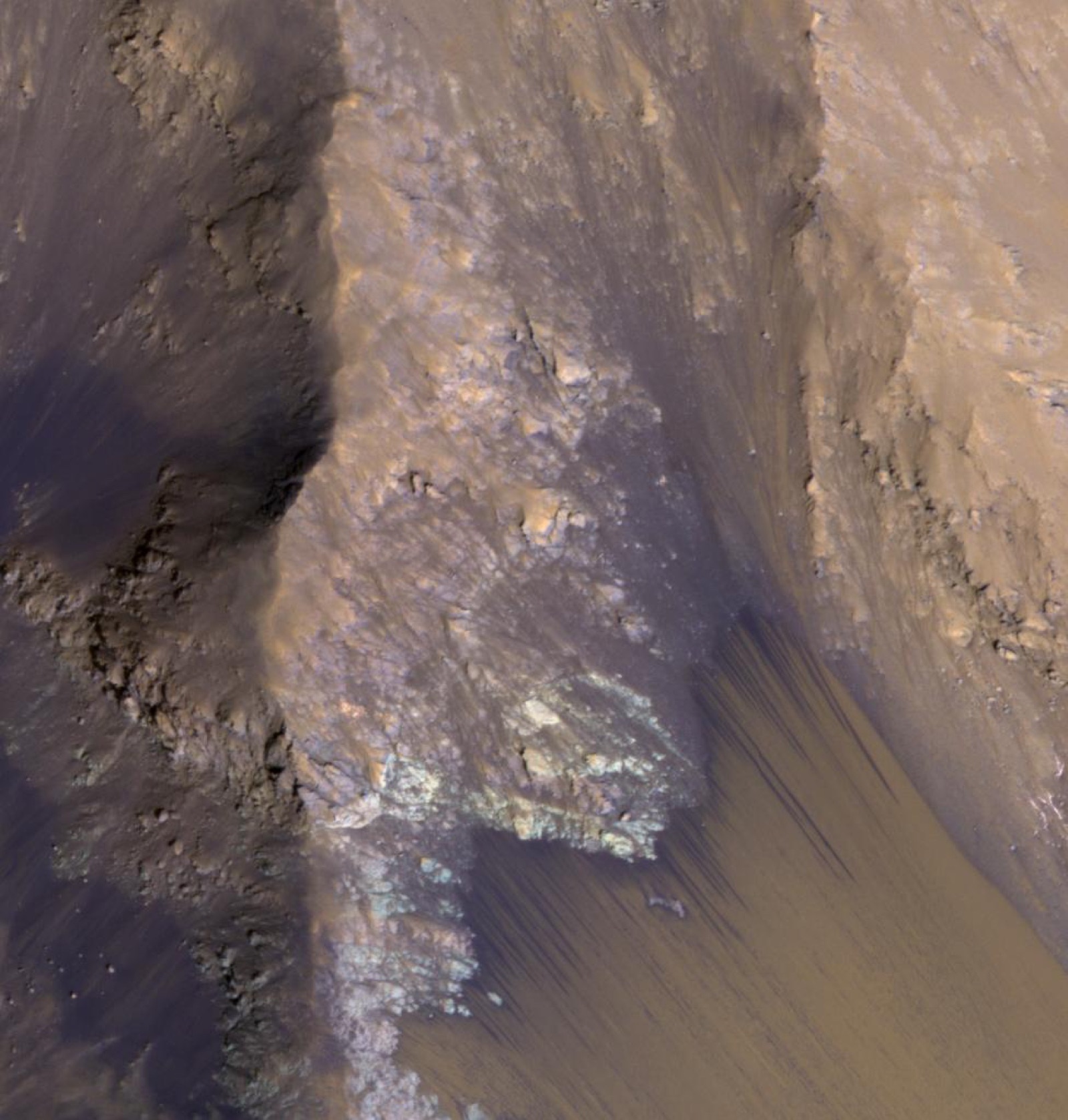
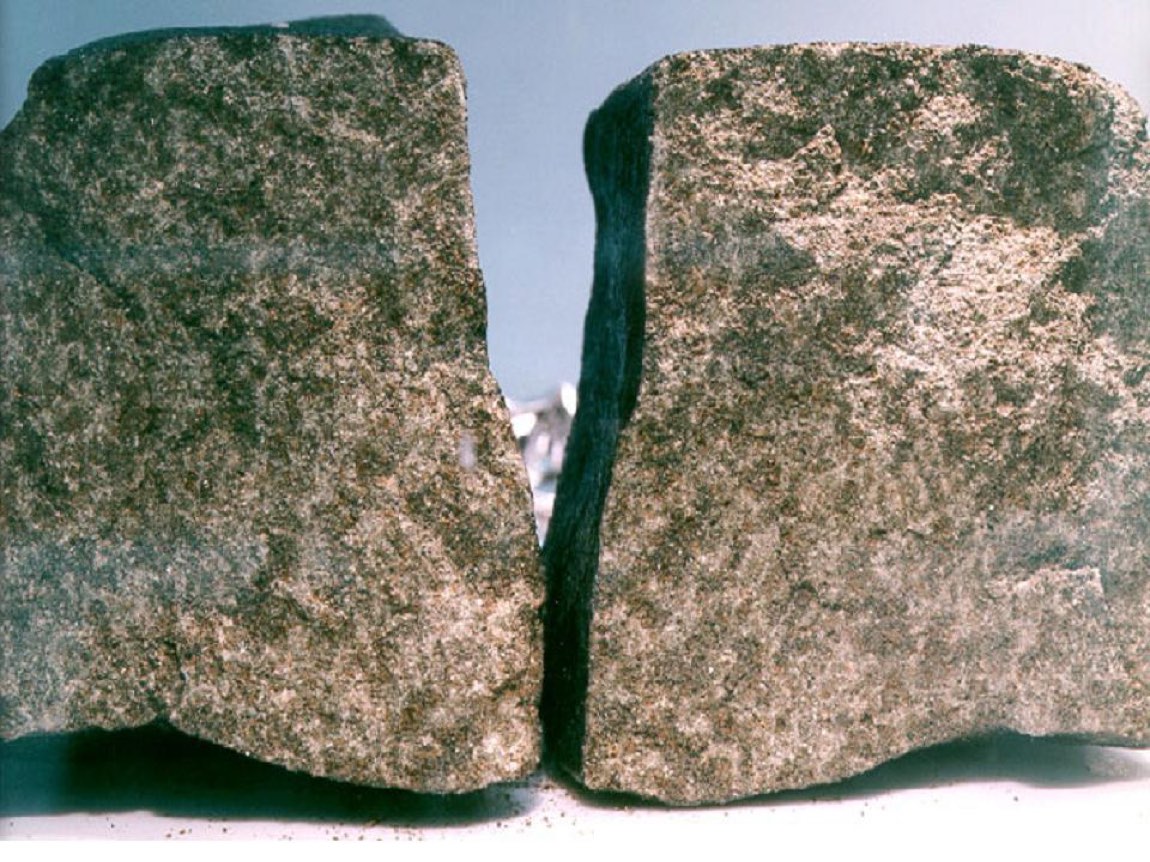
On the morning of 28 June 1911, people near Abu Hummus in northern Egypt watched a smoky fireball and heard explosions before about forty stones rained down. The pieces came from Mars, formed in a volcano there about 1.3 billion years ago. Nakhla became the model for a whole family of Martian meteorites called nakhlites, and it was the first meteorite to show signs that liquid water had altered rocks on Mars. A famous local story says a fragment killed a dog, but no remains or other witnesses were ever found.
The deep dive
Researched for the Atlas from Wikipedia — Nakhla meteorite (4,379 characters read) · updated Nov 15, 2026
01 A Fireball Over the Nile Delta
On the morning of June 28, 1911, at around 09:00, residents of the Abu Hommos district in Egypt's Alexandria Governorate watched something extraordinary streak across the sky from the northwest at an inclination of about 30 degrees. The object left a column of white smoke in its wake and detonated in a series of explosions before its fragments struck the ground. The debris field covered an area approximately 4.5 kilometres in diameter — roughly the size of a small city center. Fragments buried themselves up to a metre deep in the soil. Local farmers recovered about forty pieces in total, scattered near the hamlets of Ezbet Abdalla Zeid, Ezbet Abdel Malek, Ezbet el Askar, and Ezbet Saber Mahdi, in the area of the village of El Nakhla El Bahariya. It was the first meteorite ever officially reported from Egypt, making it not just a scientific curiosity but a genuine historical milestone for the country.
02 From Pebbles to a Nearly Two-Kilogram Chunk
The original meteorite is estimated to have weighed about 10 kilograms before it broke apart — roughly the weight of a large bag of flour. By the time pieces were gathered from the ground, they ranged dramatically in size: the smallest fragments weighed just 20 grams, little more than a large coin, while the largest single piece tipped the scales at 1,813 grams, close to two kilograms. In total, around forty individual pieces were collected from the impact zone. Two of those fragments, recovered near Ezbet Abdel Malek, were formally presented by the Egyptian Government to the British Museum in London, ensuring that samples of one of science's most significant space rocks would be preserved for future study. Those museum fragments would eventually become the source material for some of the most consequential astrobiological research of the late twentieth century.
03 The Dog That (Maybe) Met a Meteorite
One fragment of the Nakhla fall gave rise to a story that has haunted astronomers ever since. A farmer named Mohammed Ali Effendi Hakim, from the village of Denshal, reportedly witnessed a piece of the meteorite strike and instantly vaporize a dog — leaving no remains whatsoever. Because no physical evidence of the animal was ever found and no second eyewitness came forward to corroborate the account, the story remains officially apocryphal. Nevertheless, the legend of the "Nakhla dog" has taken on a life of its own within the astronomical community, becoming a kind of folklore attached to the meteorite. It is worth noting that if true, it would represent an extraordinarily rare — perhaps unique — documented case of a meteorite directly killing an animal. The absence of evidence keeps the tale alive more as a cautionary parable about eyewitness accounts than as scientific data.
04 The Prototype of an Entire Meteorite Family Deeper
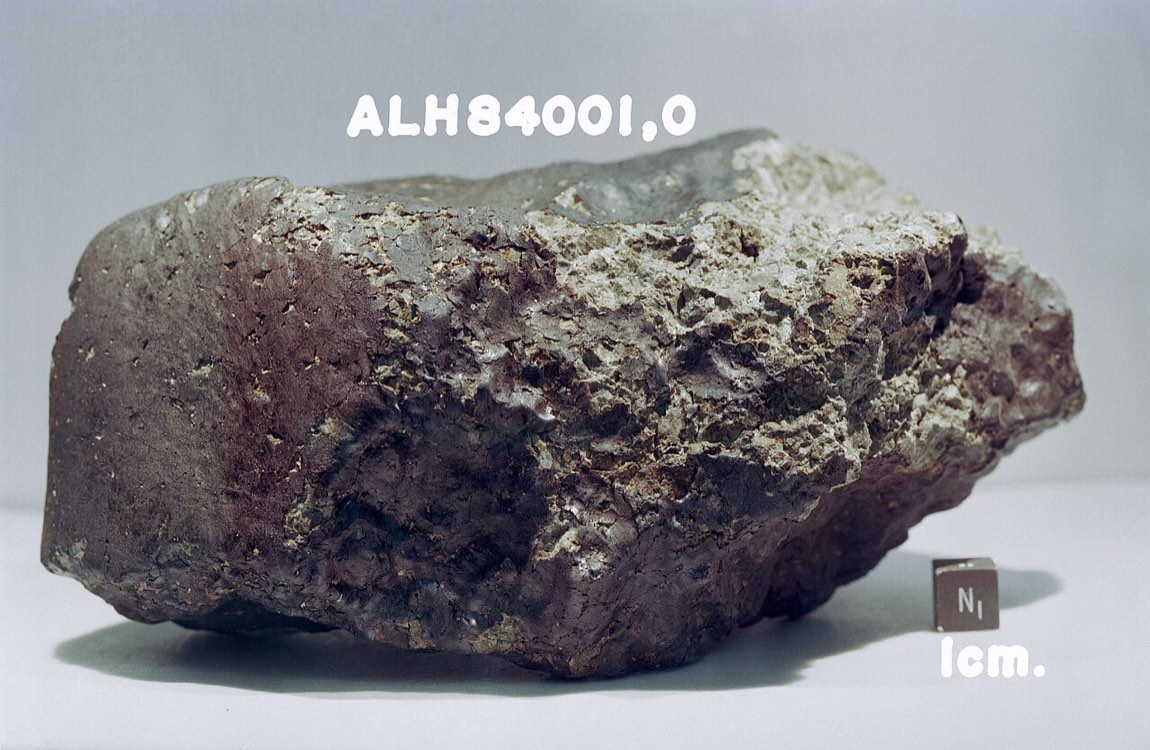
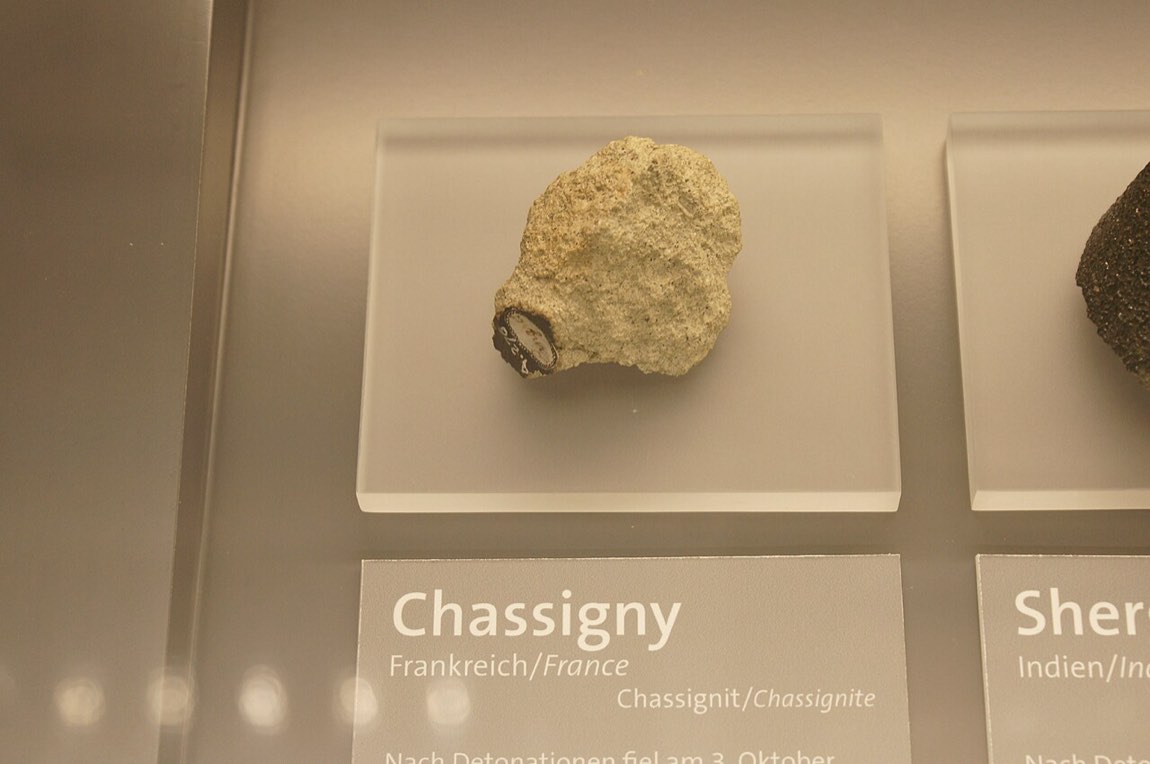
Nakhla is not merely an interesting rock — it is the defining example of an entire classification of meteorites. It gives its name to the Nakhlite group, which belongs to the broader SNC Group of Martian meteorites. The SNC designation encompasses several distinct Martian meteorite types, all thought to have been blasted off the surface of Mars when another large body collided with the planet. After ejection, these rocks drifted through the Solar System for an unknown period before eventually intersecting Earth's orbit and falling through the atmosphere. What makes Nakhla the prototype is its well-documented fall, its relatively large recovered mass, and the richness of mineralogical data it has provided. The meteorite formed approximately 1.3 billion years ago at a Martian volcano, meaning it is a piece of genuine igneous Martian crust — an ancient solidified lava that hardened long before complex animal life even evolved on Earth.
05 Water Written in Stone Deeper
Nakhla holds a remarkable distinction: it was the first Martian meteorite recognized to carry chemical signatures of past water activity. The rock contains both carbonates and hydrous minerals — compounds that form only through chemical reactions involving liquid water. Beyond the minerals present at the time of formation, the rock was also exposed to water after it originally solidified, triggering secondary mineral accumulations that overprinted the original volcanic texture. One of the most compelling lines of evidence for Martian rather than terrestrial origin comes from the carbon isotope ratios within those carbonates. The carbonates in Nakhla contain more carbon-13 than carbonate rocks formed on Earth, a chemical fingerprint that points unmistakably back to Mars. Together, these features made Nakhla the first tangible, hand-held evidence that liquid water once interacted with Martian rock — a discovery with enormous implications for understanding the planet's ancient habitability.
06 Microscopes, Pores, and Possible Biomorphs Deeper
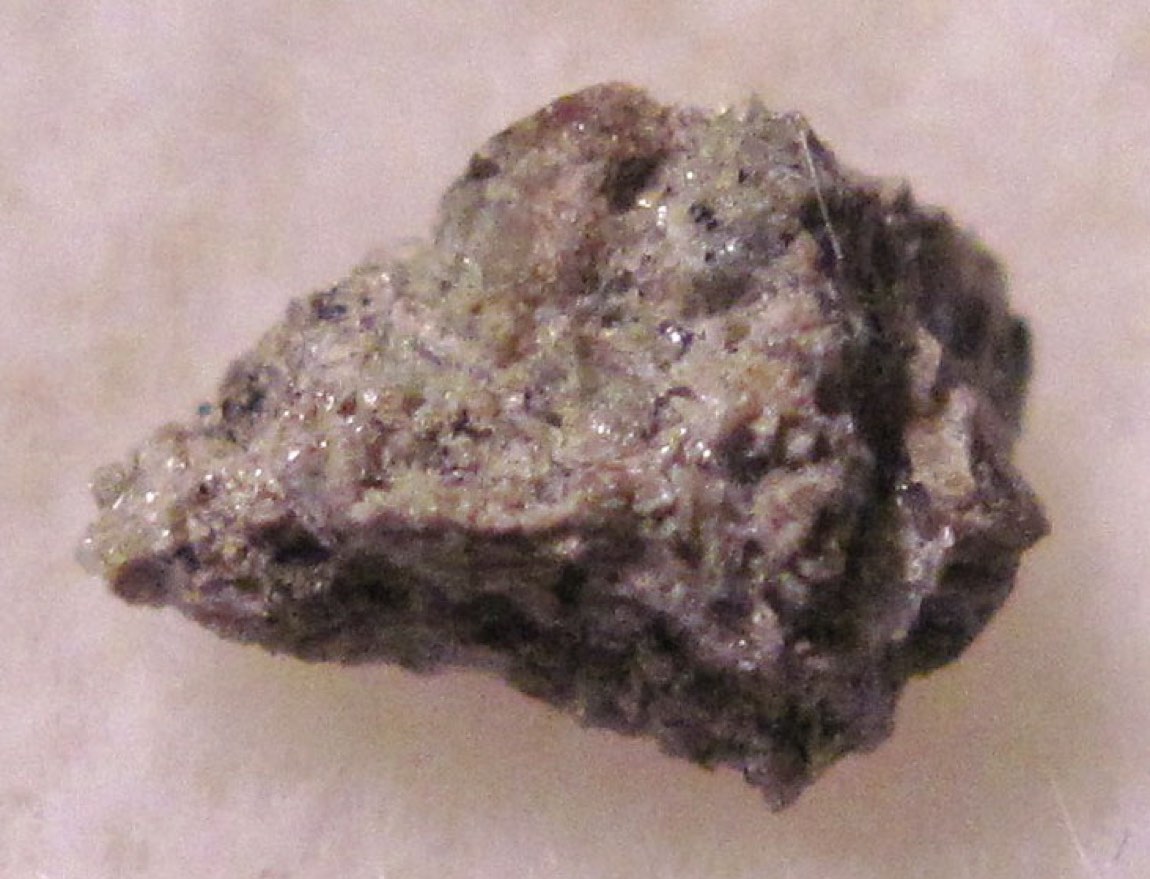
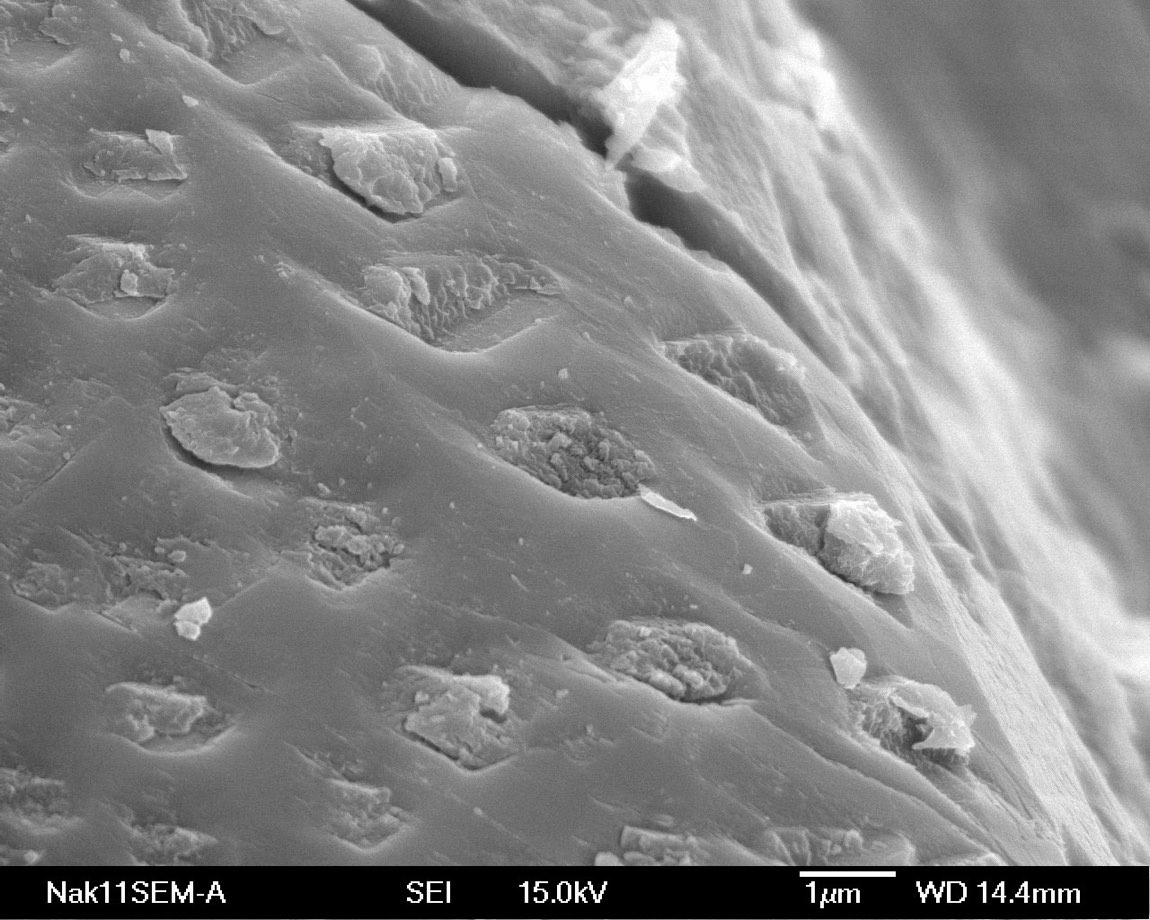
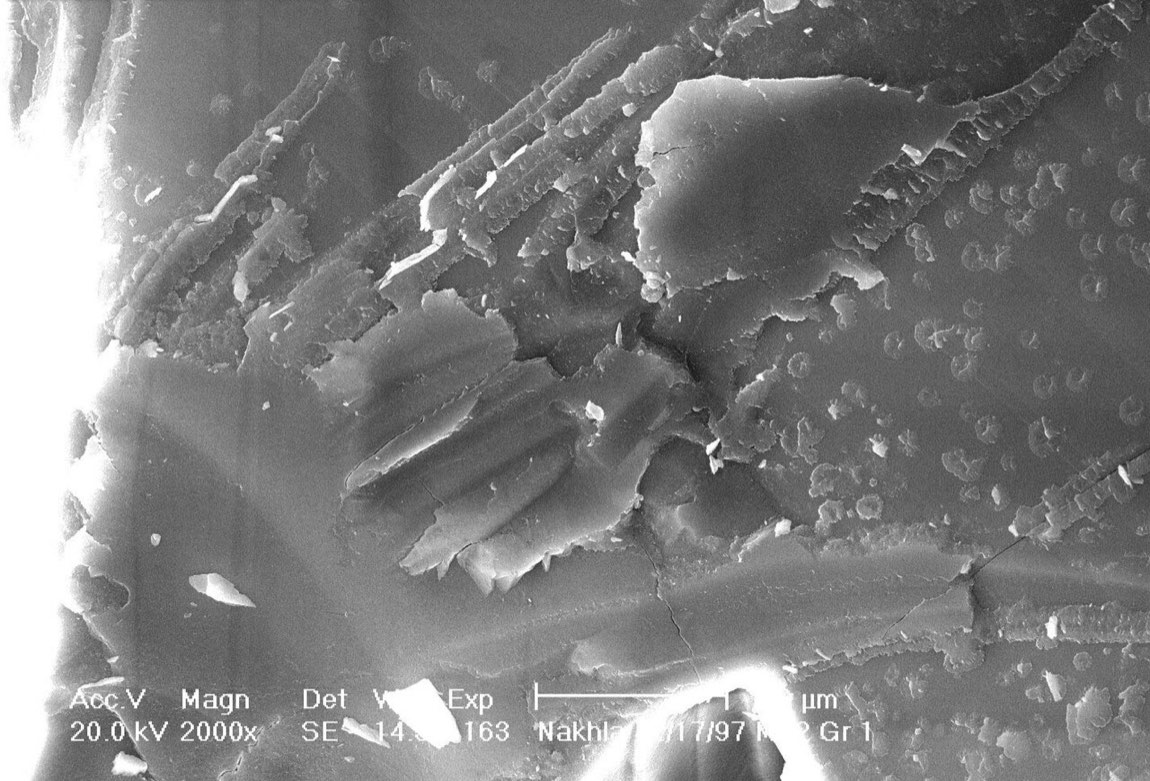
In March 1999, a NASA Johnson Space Center team examined a portion of the Nakhla meteorite that had been obtained from the British Museum the previous year. Using both an optical microscope and a powerful scanning electron microscope, the researchers identified what they described as possibly biomorphic forms — shapes consistent with biological structures — within a limited size range, alongside other unusual features. The debate intensified in 2006 when London's Natural History Museum allowed NASA scientists to crack open an intact fragment, yielding fresh interior surfaces relatively free of contamination from Earth's environment. Those fresh surfaces revealed an abundance of complex carbonaceous material filling dendritic pores and channels throughout the rock — branching networks that resembled patterns created by bacterial activity in terrestrial rocks. The findings were striking enough to prompt a formal debate at the 37th Lunar and Planetary Science Conference in Houston in March 2006, though most attendees stopped short of endorsing a biological explanation.
 ⤢
07 Why Carbon Alone Doesn't Prove Life
The presence of carbon-rich material in Nakhla's pores sparked intense scientific debate, but the Houston conference in March 2006 illustrated why caution is warranted. Carbon is the fourth most abundant element in the universe, ranking behind only hydrogen, helium, and oxygen. Its widespread cosmic availability means that carbon-based shapes, by themselves, cannot serve as proof that bacteria once lived on Mars. Even shapes that closely resemble biological structures can be produced by purely chemical and physical processes. By 2014, a research team formally concluded that the non-biological scenario remained the most reasonable explanation for the shapes observed inside the meteorite. However, that same team acknowledged something genuinely significant: the data make it clear that the Martian subsurface contains niche environments where life could potentially develop. The meteorite thus sits in a tantalizing scientific middle ground — not proof of life, but not proof of its impossibility either.
08 Amino Acids: Martian or Earthly Contamination? Deeper
In 1999, scientists at NASA's Johnson Space Center isolated several amino acids from a Nakhla fragment, adding another layer of complexity to the life debate. The amino acids identified included aspartic acid, glutamic acid, glycine, alanine, and gamma-aminobutyric acid — compounds that are fundamental building blocks of proteins and are associated with biological chemistry on Earth. Finding them inside a Martian meteorite was immediately provocative. The critical problem, however, is contamination. Nakhla fell in 1911, decades before it was collected under any controlled scientific protocols, and amino acids are present throughout Earth's environment. Researchers have been unable to determine conclusively whether the amino acids detected in 1999 originated on Mars inside the rock or were introduced after the meteorite landed on Earth. This ambiguity is not unique to Nakhla — it is a persistent challenge across the field of meteorite astrobiology, where distinguishing genuine extraterrestrial organic chemistry from terrestrial overprinting remains one of the hardest methodological problems.
09 How Fresh Samples Changed the Investigation
One of the most significant logistical challenges in studying Nakhla is contamination. The meteorite fell in 1911 and was handled and stored for decades before modern astrobiological techniques existed. Any material on or near the outer surface of the fragments has had nearly a century to absorb earthly microbes, water, and organic compounds. That is why the decision by London's Natural History Museum in 2006 to allow NASA researchers to physically break open an intact, never-before-opened fragment was so important. The freshly exposed interior surfaces offered material that had been sealed since the rock left Mars, dramatically reducing the risk that any features observed were the product of terrestrial contamination rather than Martian processes. This approach — cracking open museum-held specimens under controlled conditions — has become a model for how to extract maximum scientific value from rare and irreplaceable meteoritic material without sacrificing the integrity of the remaining collection.
10 An Ancient Volcano's Calling Card
To appreciate Nakhla's scientific weight, it helps to place its age in context. The meteorite crystallized from volcanic magma on Mars approximately 1.3 billion years ago. At that point in Earth's history, the most complex life forms here were single-celled organisms; multicellular animals were still hundreds of millions of years in the future. The rock then sat on or near the Martian surface until a large impactor struck the planet with enough force to blast chunks of crust into space — the precise timing of that ejection is unknown. Those fragments then traveled through the Solar System for an unspecified period before Earth's gravity captured them. When Nakhla finally fell in 1911, it carried within it a physical record of Martian volcanic geology, hydrological history, and possibly chemical evolution spanning more than a billion years. No human mission has yet returned a sample from Mars; Nakhla remains one of the most direct windows scientists have into what the Martian crust is actually made of.
11 Open Questions That Nakhla Still Poses Deeper
Even after more than a century of study, Nakhla continues to generate unresolved scientific questions. The transit time between Mars and Earth — the period the fragments spent drifting through the Solar System — remains unknown, which makes it difficult to model the radiation exposure history of the rock and assess whether any organic compounds it carried could have survived the journey intact. The contamination problem surrounding the 1999 amino acid discovery has never been definitively resolved, leaving open the question of whether genuine Martian organic chemistry is preserved within the meteorite. The nature of the carbonaceous material filling the rock's dendritic channels is contested: is it the chemical residue of ancient microbial life, the product of purely abiotic hydrothermal chemistry, or terrestrial contamination? And the 2014 conclusion that Martian subsurface niches could support life raises a follow-on question: were conditions in those niches ever met, and if so, when? Nakhla offers clues but, so far, no final answers.
 ⤢