 Photograph · NASA · Public domain
Meteorite · Deep guide
Allan Hills 84001 (ALH84001)
Also called: ALH 84001 · Allan Hills 84001
A Martian rock found on Antarctic ice that sparked a worldwide debate about fossil life on Mars.
What is it?
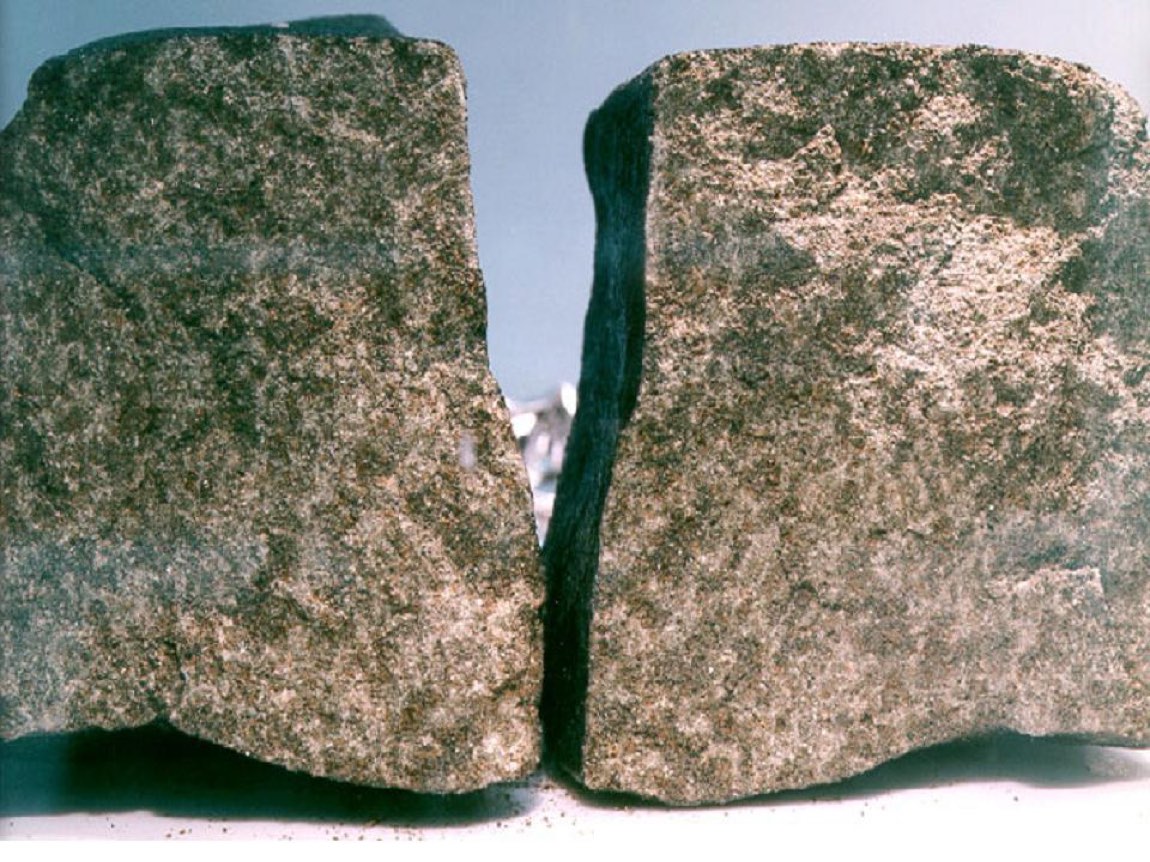
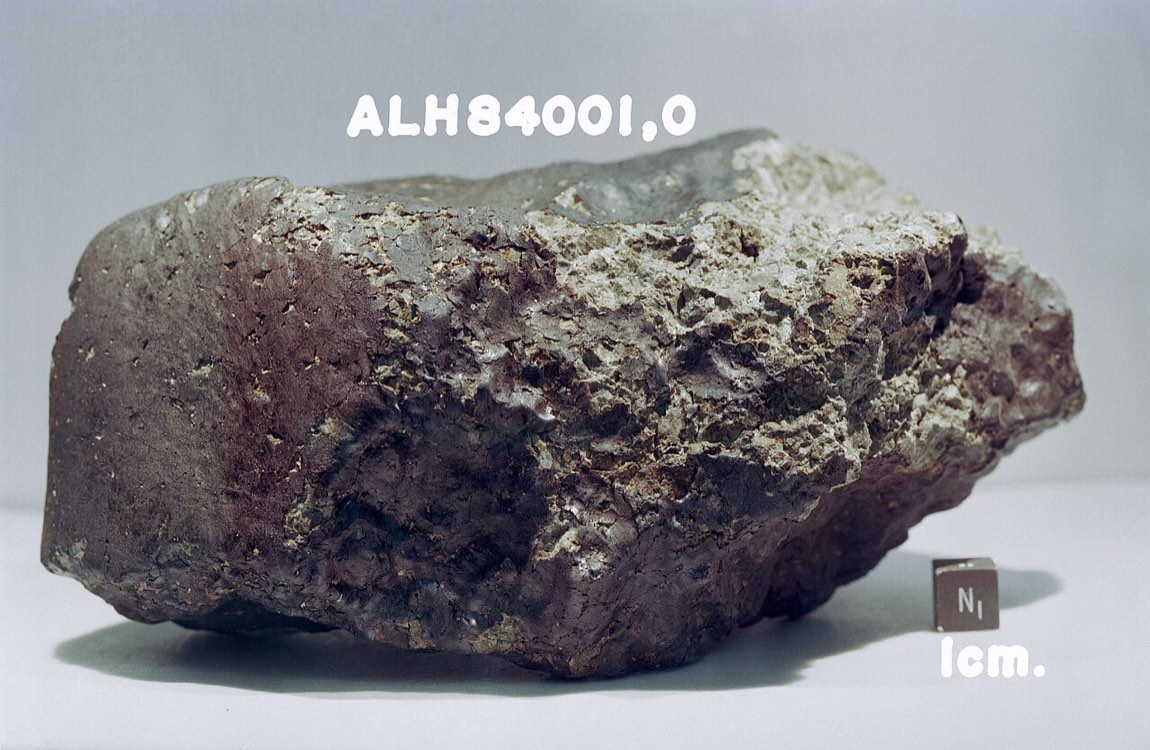
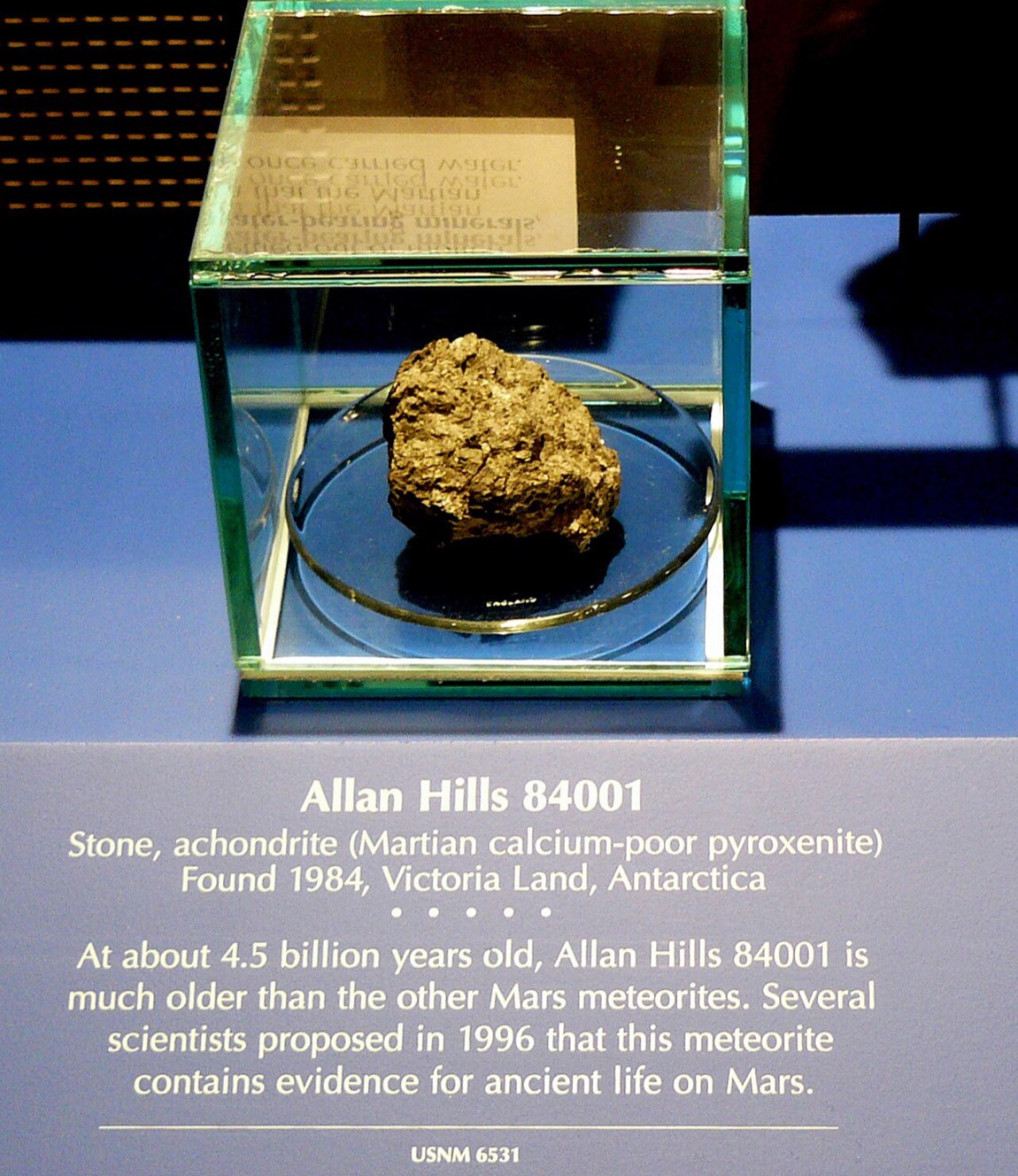
ALH84001 is a 1.93 kg stone picked up in the Allan Hills of Antarctica on 27 December 1984. Chemical clues show it came from Mars, where it crystallised from molten rock about 4.09 billion years ago, making it one of the oldest Martian meteorites. An impact blasted it off Mars about 17 million years ago, and it landed in Antarctica roughly 13,000 years ago. In 1996 a team reported tiny shapes inside it that looked like fossil bacteria. Most scientists later concluded that non-living processes explain those features, but the debate helped launch modern astrobiology.
The deep dive
Researched for the Atlas from Wikipedia — Allan Hills 84001 (9,176 characters read) · updated Nov 15, 2026
01 A Rock Older Than Earth's Oceans
ALH84001 crystallized from molten rock approximately 4.091 billion years ago, making it one of the oldest Martian meteorites ever identified. To put that in perspective, that age predates the oldest known ocean sediments on Earth and reaches back to the solar system's earliest geological activity. The rock formed at a time when Mars is thought to have had liquid water on its surface — a detail that sets ALH84001 apart from every other Martian meteorite found so far, all of which originate from a drier, later Mars. That ancient wet environment is precisely why scientists have scrutinized this particular specimen so intensely. It is, as of now, the only meteorite we possess that carries rock from an era when Mars may have been genuinely hospitable to life as we understand it.
02 How a Martian Rock Reached Antarctica
About 17 million years ago, a meteor struck Mars with enough violence to blast ALH84001 clean off the planet's surface. The fragment then spent roughly 17 million years drifting through interplanetary space before Earth's gravity captured it. It landed on our planet approximately 13,000 years ago — roughly the same era that early humans were settling the Americas — and was preserved in Antarctic ice until its discovery on December 27, 1984. Scientists pinned down these timescales using multiple independent radiometric dating methods: samarium–neodymium, rubidium–strontium, and potassium–argon dating all converged on consistent answers. The Antarctic ice sheet acted as a deep freezer, keeping the meteorite in excellent condition for millennia before Roberta Score, Laboratory Manager of the Antarctic Meteorite Laboratory at Johnson Space Center, spotted it on the Allan Hills Far Western Icefield during an ANSMET expedition.
03 Tracing the Meteorite Back to Valles Marineris Deeper
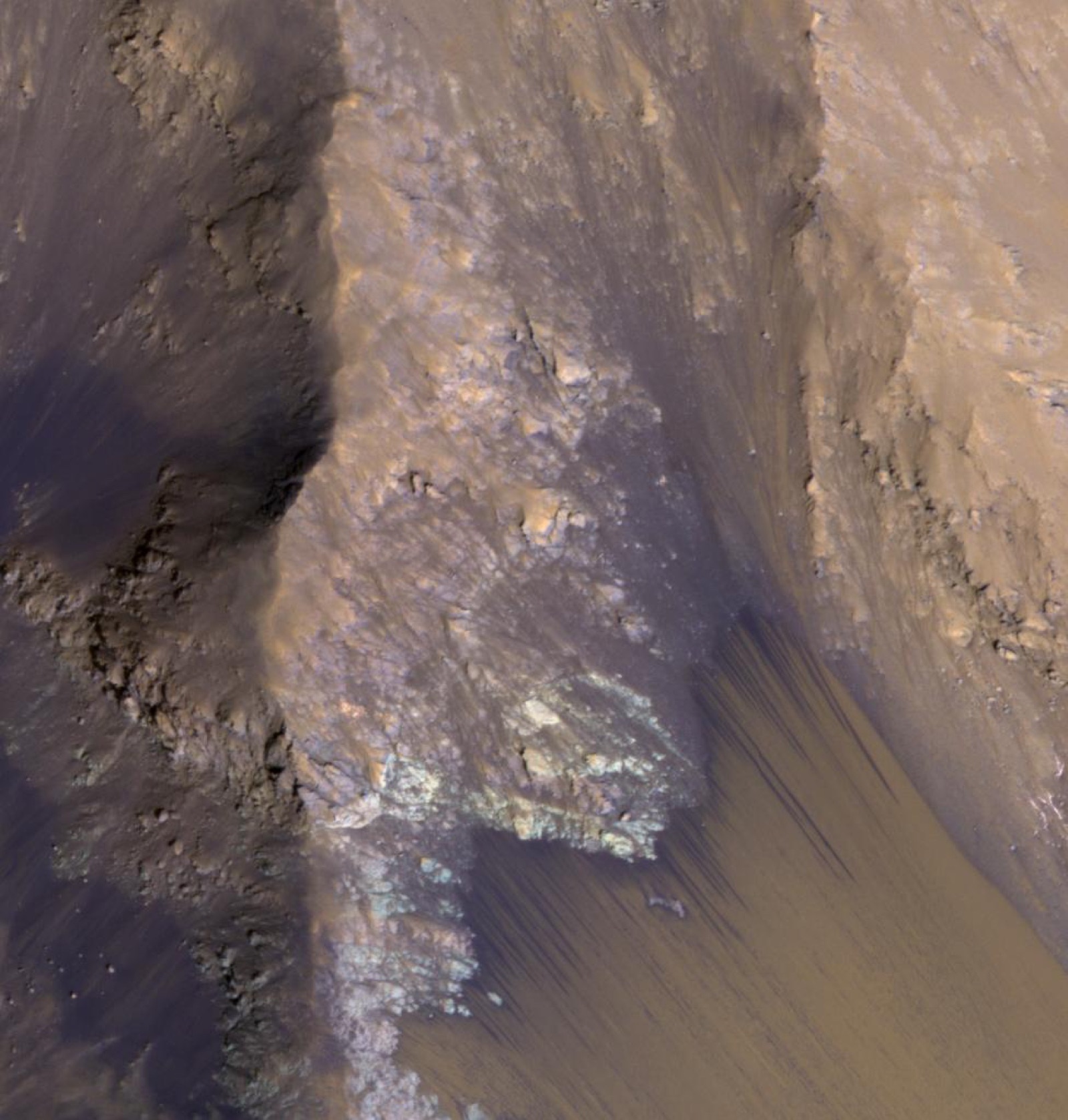
In September 2005, Vicky Hamilton of the University of Hawaii at Manoa published an analysis attempting to pinpoint exactly where on Mars ALH84001 originated. Using spectral data gathered by two orbiting spacecraft — Mars Global Surveyor and 2001 Mars Odyssey — she identified Eos Chasma, a branch of the enormous Valles Marineris canyon system, as the most likely source region. The match was based on comparing the mineralogy of ALH84001 with surface compositions detected from orbit. However, the analysis was explicitly non-conclusive. A key limitation was that large portions of Mars remain hidden beneath dust, making it impossible to compare the meteorite's signature against the full range of Martian surfaces. The question of exactly which Martian crater or region launched this rock into space therefore remains open.
04 Carbonates and a 18 °C Ancient Aquifer Deeper
Among the most telling chemical clues locked inside ALH84001 are carbonate minerals deposited long before the meteorite ever left Mars. In October 2011, isotopic analysis revealed that these carbonates precipitated at a temperature of 18 °C — roughly the same as a mild spring day — in the presence of water and carbon dioxide drawn from the ancient Martian atmosphere. The carbon and oxygen isotope ratios within those carbonates paint a specific picture: a gradually evaporating body of subsurface water, most likely a shallow aquifer sitting meters or tens of meters beneath the Martian surface. This is not a hot hydrothermal system but a relatively gentle, cool, wet environment — conditions that many astrobiologists regard as more, not less, permissive for life. These carbonates are the same mineral globules at the center of the later fossil controversy.
05 Nitrogen Organics Found in 2020 Deeper
The chemical story of ALH84001 continues to develop decades after its discovery. In April 2020, researchers reported the detection of nitrogen-bearing organic compounds within the meteorite — a finding that added yet another layer of complexity to the ongoing analysis of this specimen. Nitrogen-bearing organics are considered significant because nitrogen is a fundamental building block of amino acids and nucleic acids, the molecules that underpin all known life. The article does not specify whether these particular compounds are considered biogenic or abiotic in origin, but their presence demonstrates that ALH84001 continues to yield new data well into the twenty-first century, long after the initial 1996 controversy appeared to have settled. Each new analytical technique applied to this single 1.93-kilogram rock has the potential to reopen or refine fundamental questions about early Mars.
06 The August 1996 Announcement That Changed Everything
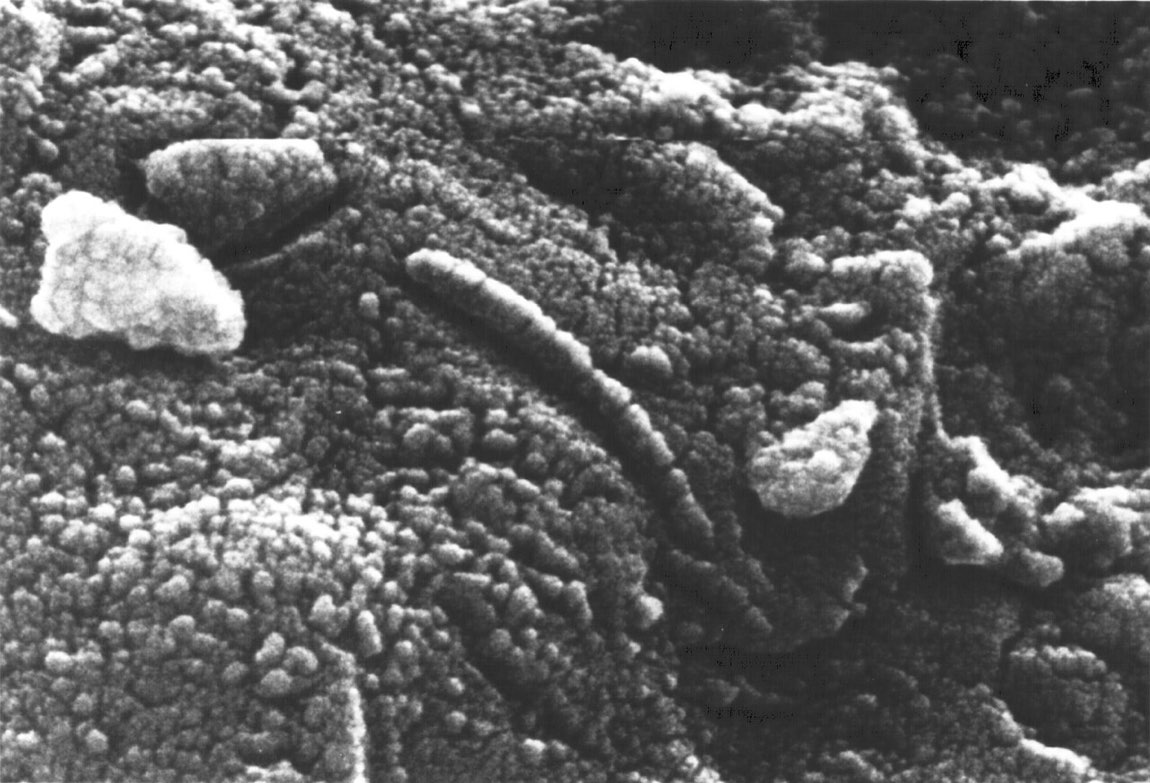
On August 6, 1996, lead author David S. McKay and a team of NASA scientists formally announced that ALH84001 might contain trace evidence of past Martian life. The findings were published in the journal Science within days. Under scanning electron microscopy, the team identified structures 20 to 100 nanometres in diameter that some researchers interpreted as fossilized bacteria-like organisms. For comparison, the most common bacterium on Earth, Pelagibacter ubique, ranges from 120 to 200 nanometres — meaning the smallest ALH84001 structures were even tinier than the tiniest known living cells. The announcement ricocheted around the world almost instantly, culminating in President Bill Clinton delivering a formal televised address about the potential discovery. It was one of the rare moments when a single scientific paper commanded the full attention of the global public.
 ⤢
07 Four Lines of Evidence — and Their Weaknesses Deeper
McKay's team identified four interlocking lines of evidence for the biogenic hypothesis. First, some structures resembled known bacteria and biofilms, though the smallest were too tiny to contain the full molecular machinery that modern cells require. Second, the meteorite contains magnetite crystals of an unusual rectangular prism type, organized into same-sized domains indistinguishable from biologically produced magnetite on Earth — a potentially strong biosignature. However, in 2001, scientists demonstrated that similar magnetite grains could form through inorganic processes matching conditions ALH84001 likely experienced on Mars. Third, polycyclic aromatic hydrocarbons concentrated in the carbonate regions were shown to be indigenous to the meteorite, though PAHs also appear abundantly in asteroids, comets, and deep space without any biological involvement. Fourth, later work in January 2022 concluded that the organic molecules were most plausibly produced by serpentinization and carbonation reactions driven by hydrothermal fluids acting on basalt rock roughly 4 billion years ago — entirely abiotic chemistry.
08 Why Morphology Alone Cannot Settle the Debate Deeper
One of the core methodological criticisms leveled at the biogenic interpretation is the reliance on morphology — the shape of structures — as the primary evidence for life. Many scientists have pointed out that morphology alone cannot be used unambiguously as a tool for primitive life detection, because interpreting shapes is notoriously subjective and has historically produced numerous errors. A team led by D.C. Golden demonstrated that features similar to those in ALH84001 could be recreated in a laboratory setting without any biological inputs whatsoever. McKay countered that Golden's team used unrealistically pure raw materials and that any valid inorganic model must simultaneously explain all of the properties identified as potentially biogenic — not just some of them. This back-and-forth illustrates a fundamental challenge in astrobiology: the absence of a universally agreed biosignature that rules out all abiotic mimics.
09 The Biogenic Case Grows — Then Recedes Deeper
In January 2010, McKay's team at Johnson Space Center reported that in the years since their original 1996 paper, additional evidence had accumulated. They claimed to have found three times the original quantity of fossil-like structures, including more biomorphs, inside two additional Martian meteorites as well as in further sections of ALH84001 itself. Despite this, the broader scientific community remained unconvinced, citing the morphology problem as a fundamental obstacle. The definitive blow to the biogenic hypothesis came in January 2022, when a study concluded that the organic molecules in ALH84001 were associated with abiotic processes — specifically serpentinization and carbonation reactions that occurred during aqueous alteration of basalt rock by hydrothermal fluids on very early Mars, roughly 4 billion years ago. The meteorite thus appears to record remarkable early Martian geochemistry, but not biology.
10 A Meteorite That Doesn't Fit Neatly Anywhere
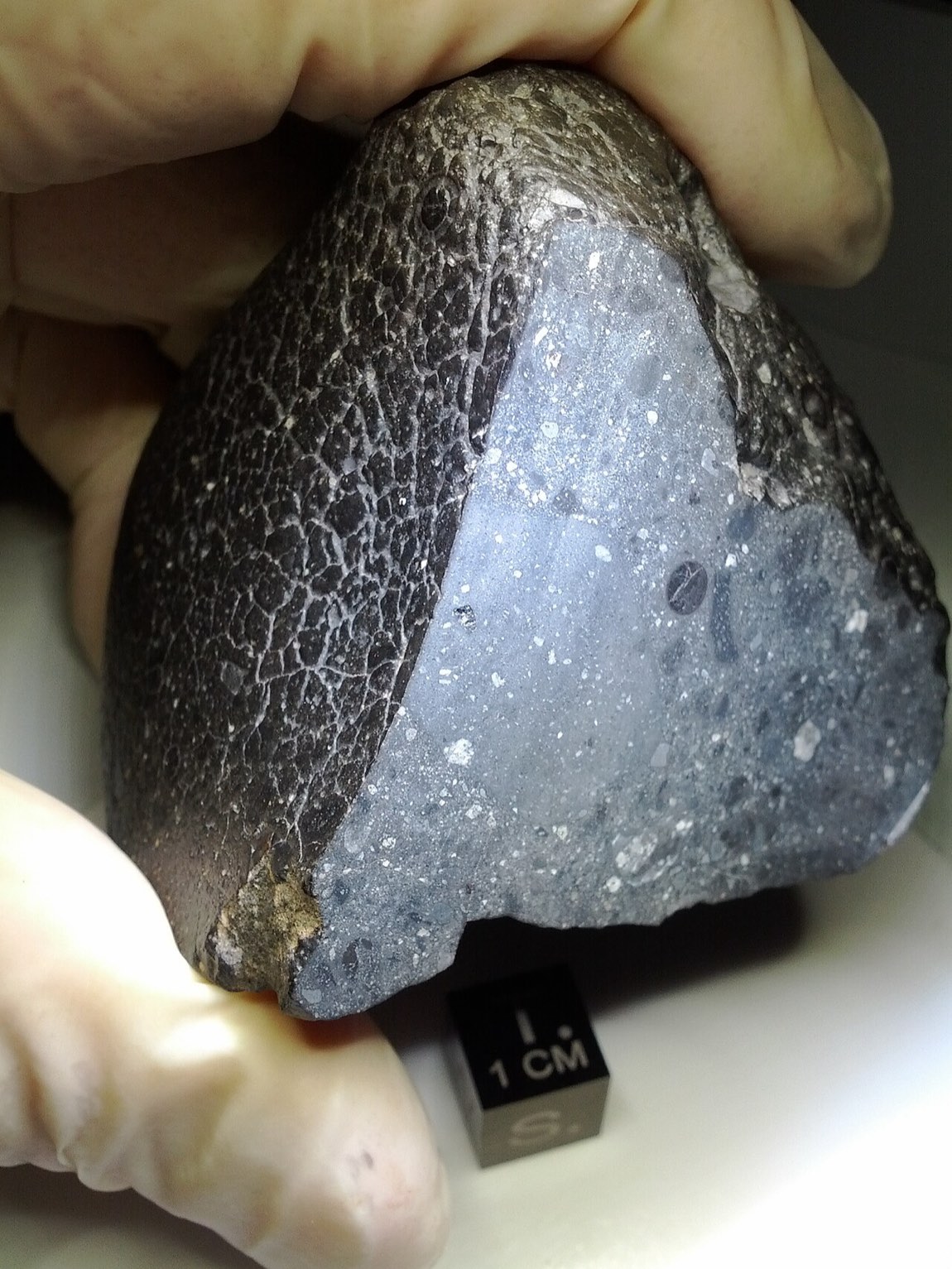
Most Martian meteorites fall into one of three recognized chemical groupings: shergottites, nakhlites, or chassignites — collectively abbreviated SNC. ALH84001 is classified as a Martian meteorite and is linked to the SNC group by its chemical fingerprints, but it does not fit into any of the three established subgroups. Its mineralogy and extreme age set it apart from all other known Martian samples, making it a category of one. This uniqueness is part of what made it so scientifically valuable in the first place: it offers a window into a geological period on Mars that no other specimen in our collection covers. It was also the first Martian meteorite found to contain carbonate minerals deposited in the presence of liquid water, reinforcing its status as an outlier unlike any other rock in human hands.
11 ALH84001 and the Birth of Astrobiology
Even though the scientific community largely rejected the claim that ALH84001 contains evidence of Martian life, the meteorite's legacy in the history of science is considered genuinely significant. The 1996 paper and the enormous wave of public and scientific attention it generated are widely regarded as turning points in the development of astrobiology as a formal discipline. Before 1996, the systematic scientific study of life's potential in the universe was scattered across several fields without a cohesive identity. The controversy surrounding ALH84001 helped catalyze funding, institutional support, and academic focus for a field that now has dedicated journals, NASA programs, and international collaborations. In this sense, a rock that probably does not contain Martian fossils nonetheless helped create the science best equipped to find them someday.
12 ALH84001 in Fiction and Popular Culture
The cultural shockwave from the 1996 announcement rippled immediately into fiction and film. The same year, a 1996 episode of The X-Files titled "Tunguska" drew direct inspiration from the ALH84001 news. In 1997, the film Contact used actual footage of Bill Clinton's televised remarks about the meteorite, edited to sound as though he was commenting on an extraterrestrial radio signal rather than a Martian rock. The edit was contentious enough that White House Counsel Charles Ruff sent a formal letter of protest over the digitally composited use of the president's image. Dan Brown later cited ALH84001 as the inspiration for his 2001 mystery-thriller novel Deception Point, in which a meteorite appears to prove the existence of extraterrestrial life. Few individual scientific specimens have so directly shaped popular storytelling.
 ⤢