 Photograph · Wikimedia Commons · Public domain
Meteorite · Deep guide
Hraschina Meteorite
Also called: Agram · Zagreb meteorite · Hrašćina
An iron that fell before crowds in Croatia in 1751 and helped convince scientists that rocks fall from the sky.
What is it?
At 6 p.m. on 26 May 1751, people out for a Sunday evening walk near the village of Hrašćina, in Croatia's Zagorje region, saw a fireball and heard explosions that carried for many kilometres. Two iron masses, of 39.8 kg and 9 kg, were recovered; the larger had driven 1.4 metres into the ground, and villagers turned part of the smaller one into nails. Church officials sent the irons and a written report to Empress Maria Theresa in Vienna. In 1794 Ernst Chladni used this well-documented fall to argue that meteorites come from outer space.
The deep dive
Researched for the Atlas from Wikipedia — Hraschina meteorite (3,343 characters read) · updated Nov 15, 2026
01 A Sunday Evening That Changed Science
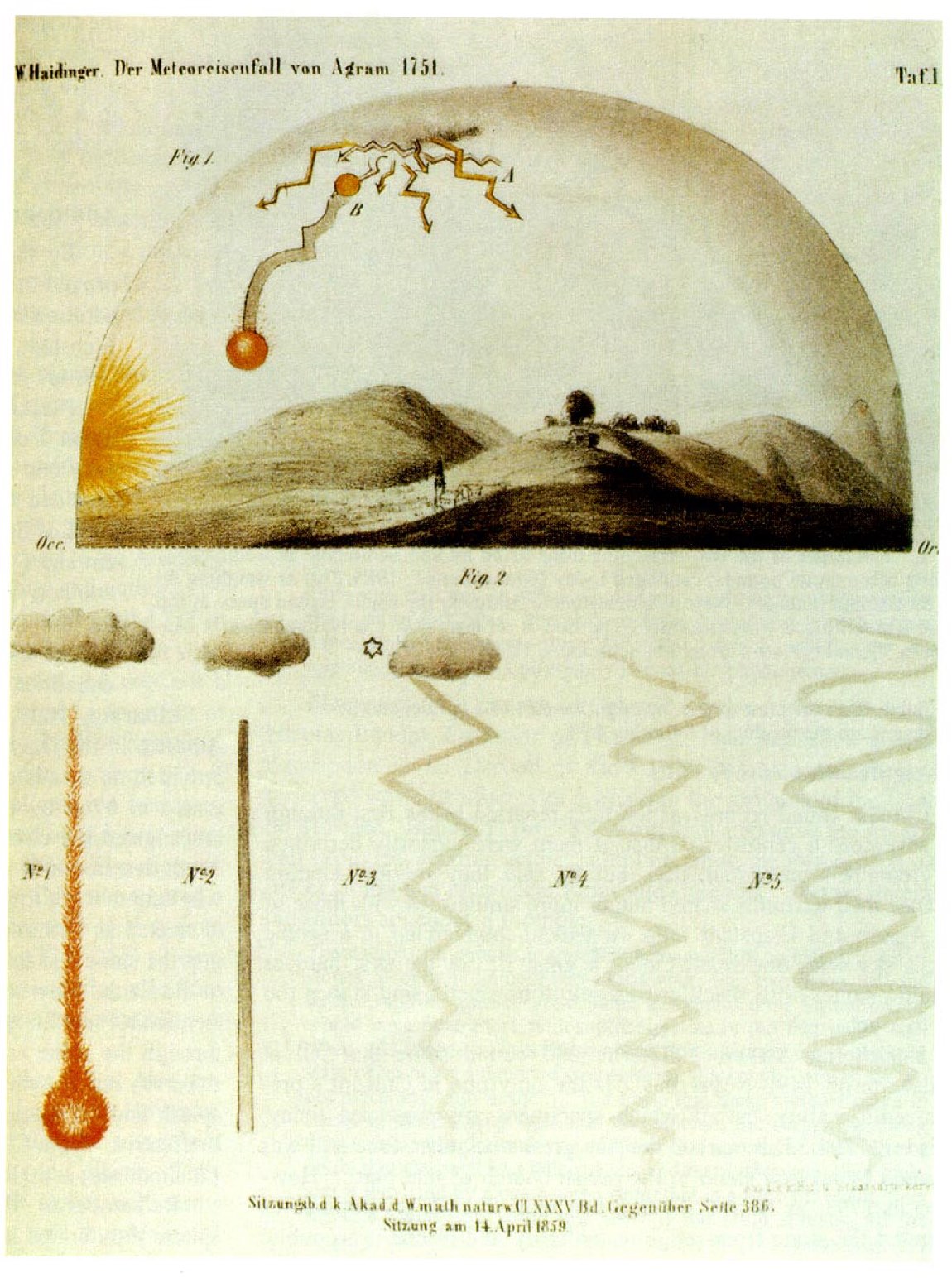
The timing of the Hraschina fall could hardly have been more fortuitous for science. At 18:00 on 26 May 1751, a fireball blazed over the village of Hrašćina in what is now Croatia — a Sunday evening when many people were out taking their customary walk. The result was an unusually large pool of credible eyewitnesses at a moment when the very idea that rocks could arrive from space was considered absurd. Baltazar Adam Krčelić, a clergyman, historian, and noted chronicler, was staying nearby in the village of Biškupec and wrote one of the most vivid accounts. He described seeing something that looked like a small cloud — though he was careful to note it was not a cloud — which grew steadily paler, produced an explosive detonation, and then dispersed. The common people, he recorded, believed the heavens themselves had opened. That blend of careful observation and popular wonder captures exactly why this event mattered: it was witnessed at scale, reported by a literate observer, and left behind physical evidence that investigators could actually study.
02 How Far the Thunder Rolled
One striking measure of the Hraschina fall's violence is the sheer area over which its sounds were audible. Detonations were heard as far away as Varaždin, and estimates based on that reach put the audible zone at nearly 1,000 square miles — approximately 2,600 square kilometres. To put that in perspective, that is an area larger than the entire country of Luxembourg. The sounds were described as being like detonations rather than a single crack, suggesting the bolide broke apart or produced multiple shock waves during its descent through the atmosphere. This kind of sonic footprint is consistent with a substantial iron mass travelling at high velocity and shedding energy explosively as it decelerated. The wide geographic spread of the sound reports also helped investigators reconstruct the event after the fact, since multiple independent witnesses in different locations could be cross-referenced against one another and against the Protocol that was later sent to Empress Maria Theresa.
03 Two Masses, Two Very Different Fates
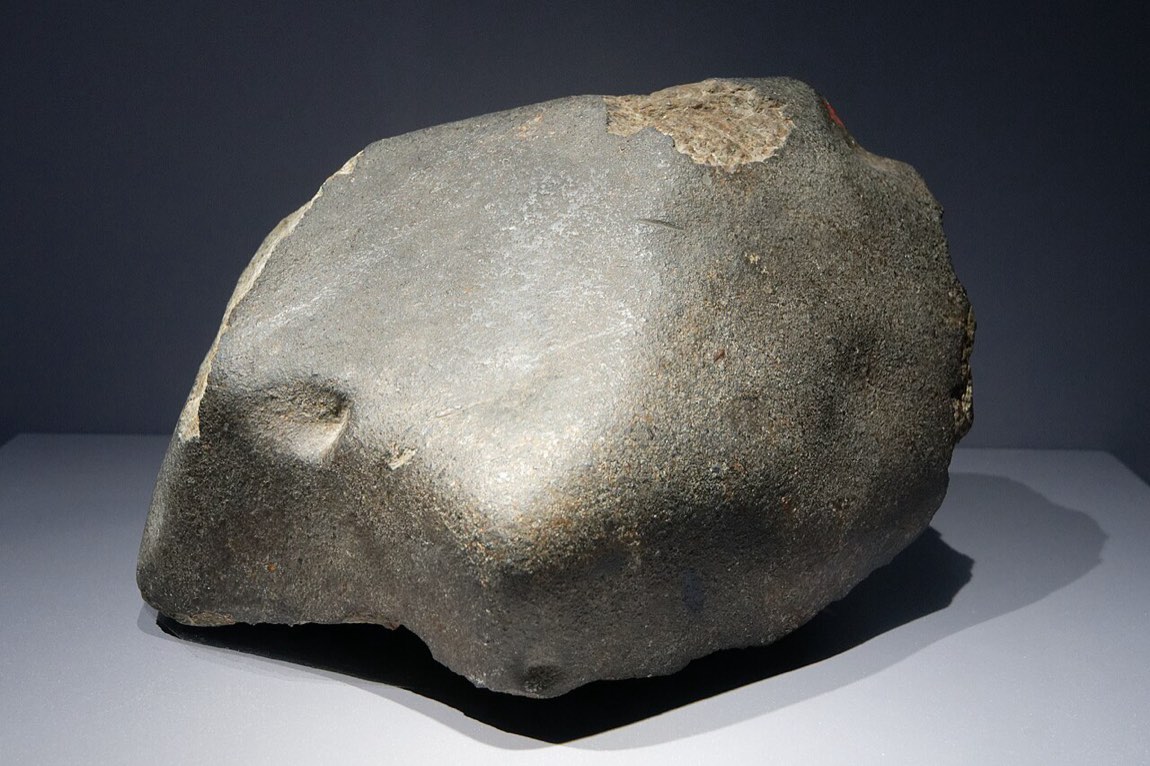
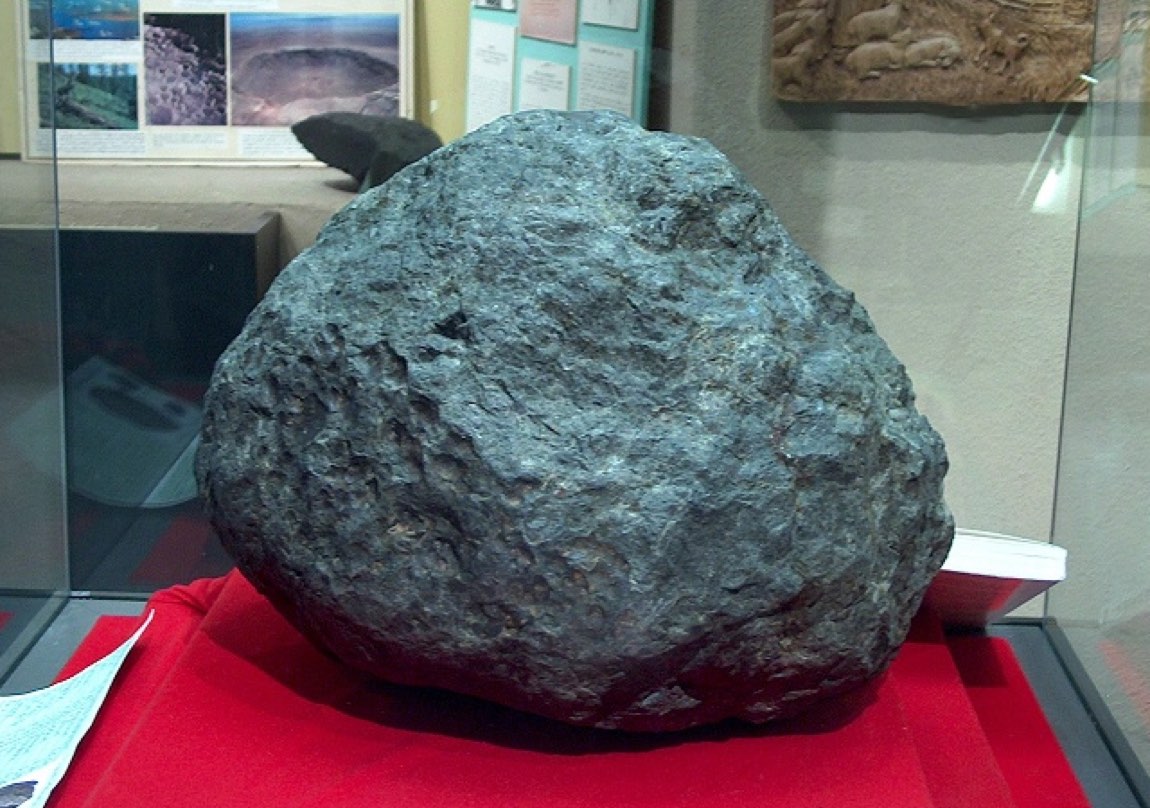
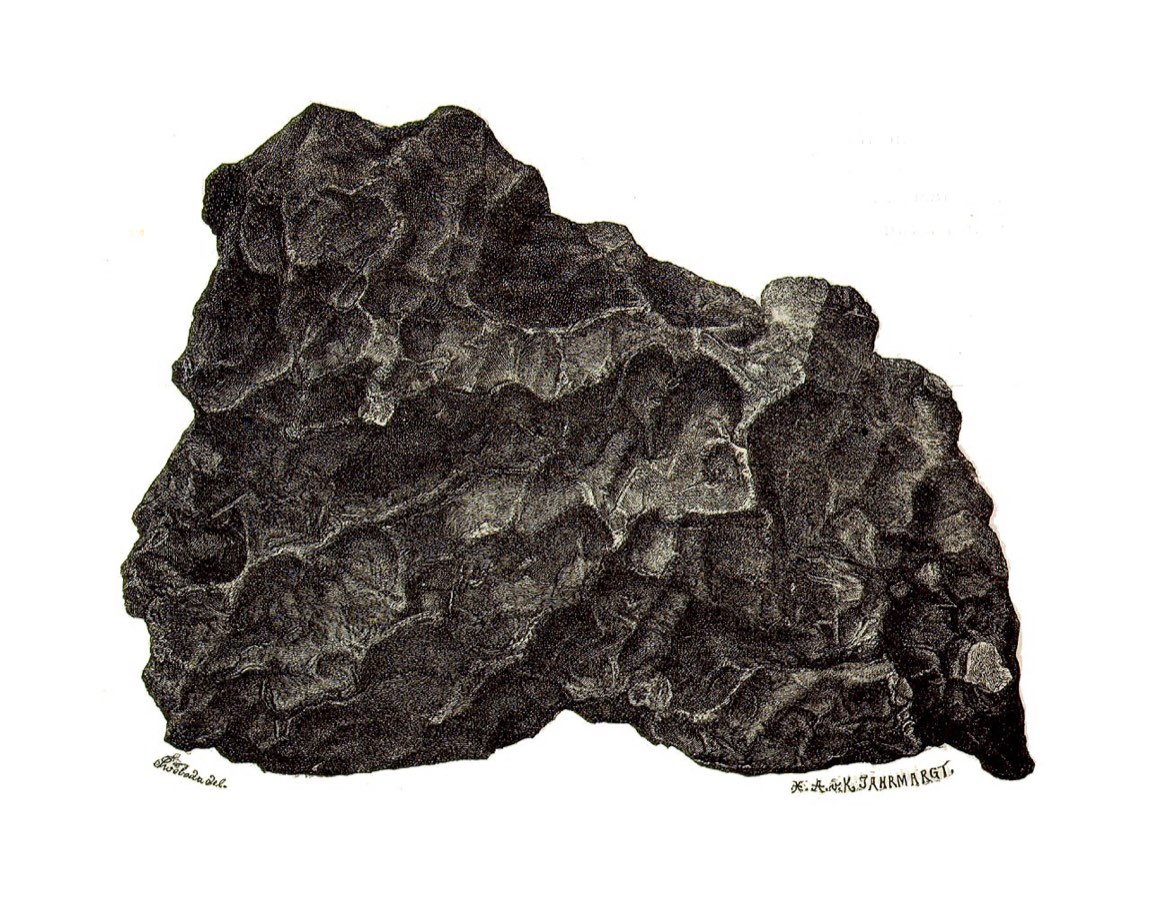
Hraschina fell as at least two separate pieces. The larger mass weighed 39.8 kilograms — roughly 88 pounds, comparable to a large dog — and struck to the east of the village with enough force to penetrate 1.40 metres into the ground, though some reports claimed it went considerably deeper. The smaller mass weighed 9 kilograms and met a far less dignified end. It broke apart at the point of impact, and local villagers helped themselves to fragments, using the iron to make nails — a vivid reminder that extraterrestrial iron was simply useful metal to a rural community. What remained of the smaller mass was transported to Bratislava, where it was broken up further, and then lost entirely. The larger mass fared better: it was collected by the Zagreb Catholic chapter, sent to Empress Maria Theresa in Vienna along with an official report, and deposited first in the Treasury and later in the Court museum, which eventually became the Naturhistorisches Museum Wien.
 ⤢
04 Chladni's Radical Reading of a Rock Deeper
The Hraschina meteorite played a pivotal role in one of the most important arguments in the history of planetary science. In 1794, the German physicist Ernst Chladni drew on the Protocol of Bishop Baron Klobuczezky — the official eyewitness report compiled after the 1751 fall — along with the fact that the freshly recovered masses displayed a molten metal crust, to argue that meteorites originate in outer space. This was a genuinely radical claim. The prevailing view at the time held that meteorites were of volcanic origin, a terrestrial phenomenon dressed up in dramatic appearance. Chladni's extraterrestrial hypothesis was therefore considered highly controversial when he published it. It took nearly a decade for the scientific community to come around. In 1803, Jean Baptiste Biot investigated a witnessed fall in France and produced evidence that confirmed Chladni's framework, after which the extraterrestrial origin of meteorites was broadly accepted. Hraschina, through its documented fall and preserved witnesses account, was the foundational case that made Chladni's argument possible.
05 The Pattern That Bears Widmanstätten's Name Deeper
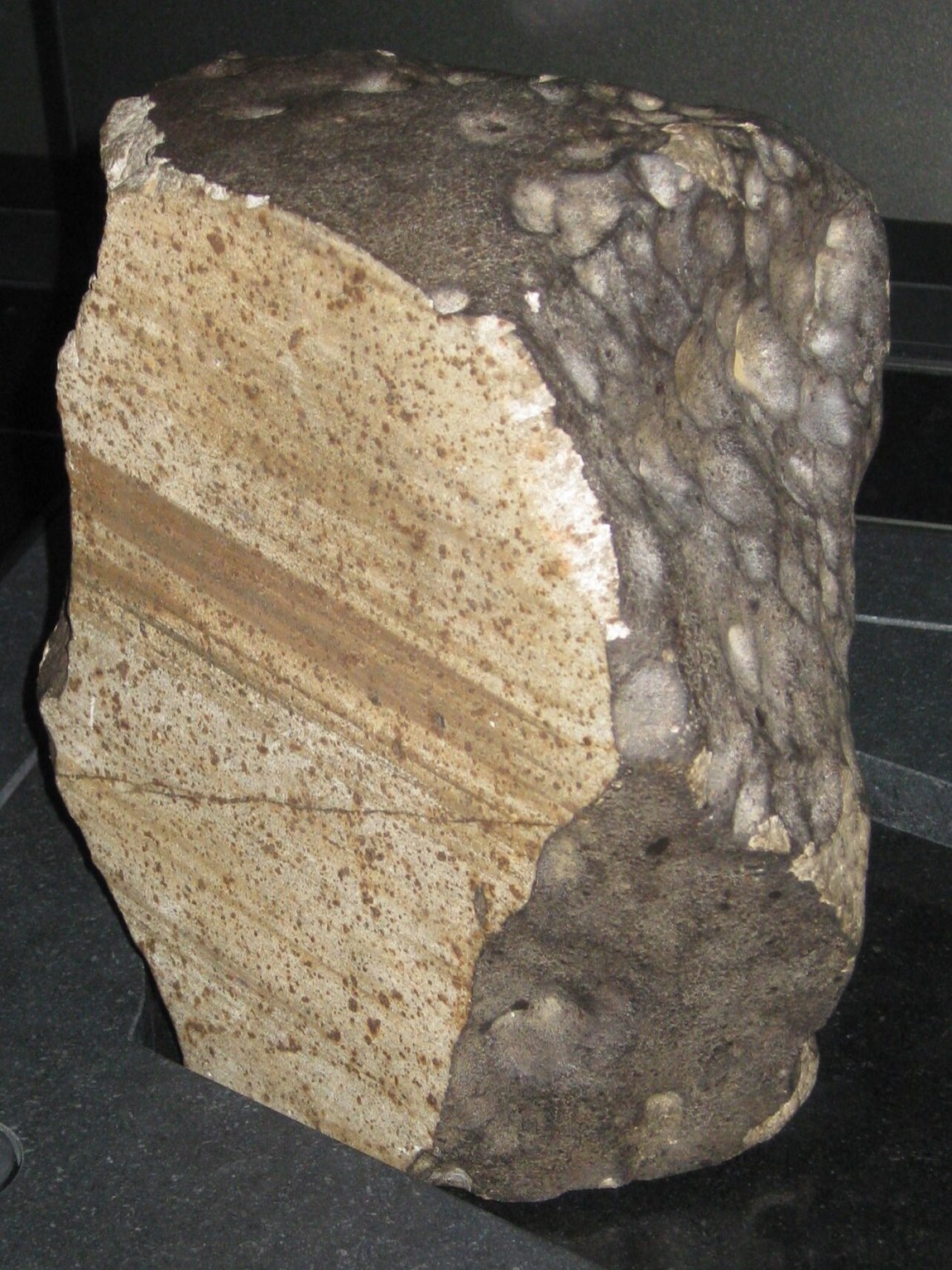
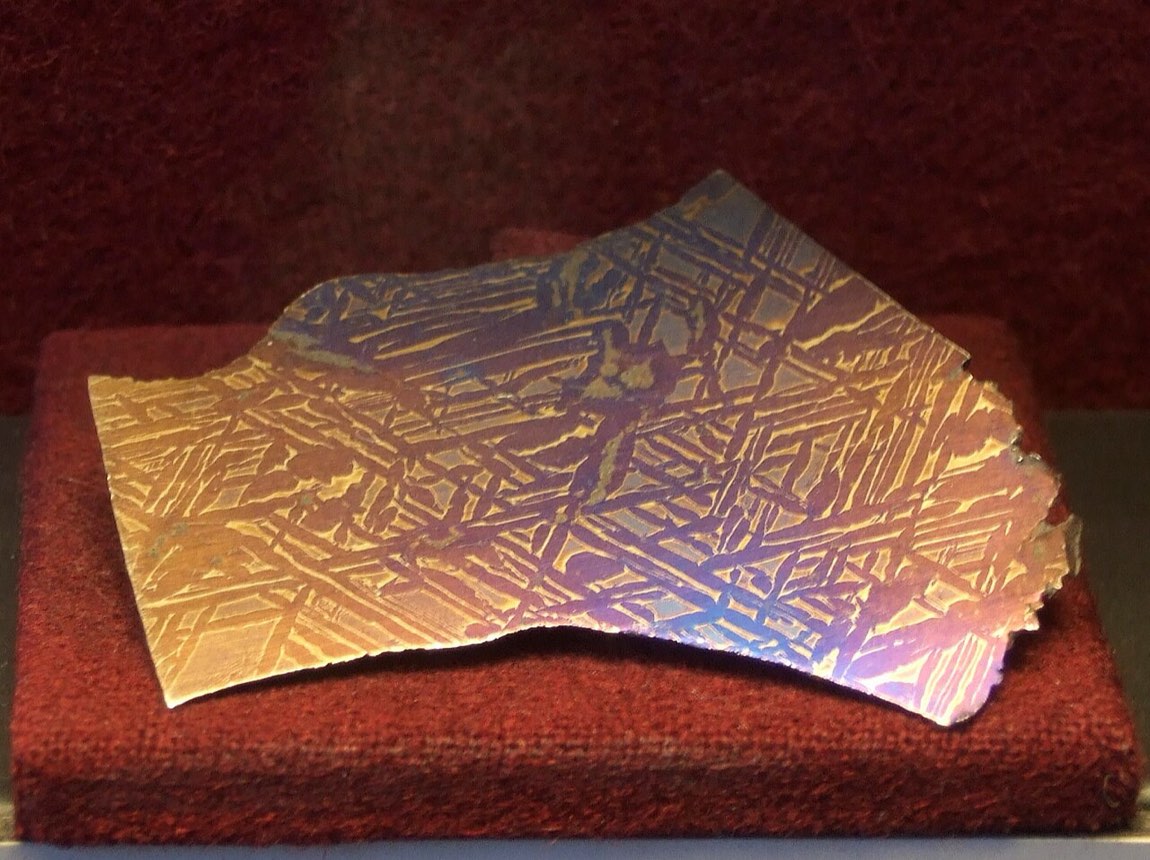
In 1808, Count Alois von Beckh Widmanstätten heated a polished slab of the Hraschina meteorite and revealed a geometric interlocking pattern of iron-nickel crystals that had never been described before. These are now called Widmanstätten patterns, and they are one of the most recognisable features of iron meteorites worldwide. Hraschina's classification as a medium octahedrite means it has the intermediate bandwidth of these crystal bands — a direct structural consequence of its composition and its extraordinarily slow cooling history inside a parent body. It is worth noting that the article acknowledges another scientist, G. Thomson, also independently discovered the texture. However, it was Carl von Schreibers, then Director of the Vienna Natural History Cabinet, who recognised and promoted Widmanstätten's work, and the name has stuck ever since. Hraschina thus gave science not only the concept of extraterrestrial origin for meteorites but also the vocabulary and reference specimen for one of the defining microstructural features of iron meteorites.
06 Iron, Nickel, and Traces of Rarer Metals Deeper
Hraschina's chemical makeup places it in a specific and relatively rare category. It is classified as chemical type IID and structurally as a medium octahedrite. The bulk of the meteorite is iron at 89 percent, with nickel making up 10.5 percent — a proportion that is far higher than in terrestrial iron and one reason the Widmanstätten structure forms at all, since the kamacite and taenite crystals that create those bands have different nickel concentrations. Beyond the dominant metals, the meteorite contains germanium at 89.4 parts per million and gallium at 74.5 parts per million, both of which are trace siderophile elements used by researchers to chemically fingerprint and group iron meteorites into families. Iridium is present at 13 parts per million. The IID classification is based on these trace element ratios and groups Hraschina with a small cluster of meteorites thought to share a common parent body — likely a metallic asteroid core that was shattered by an ancient collision in the early solar system.
 ⤢
07 What Survives and Where It Lives Now
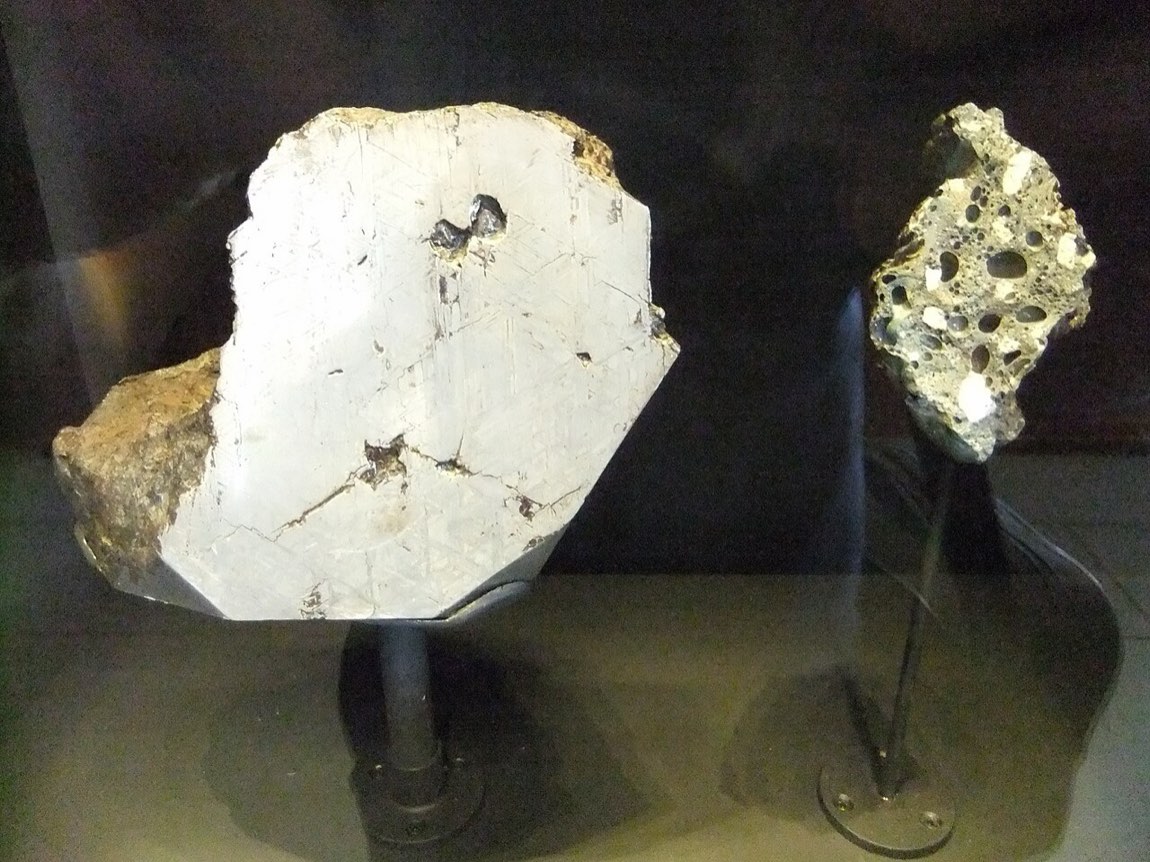
Given that locals used part of Hraschina to make nails and the smaller mass was subsequently lost in Bratislava, the surviving sample is remarkably modest. The main mass, now recorded as 39 kilograms, is held at the Naturhistorisches Museum Wien — the same institution that received it from the Imperial Treasury centuries ago. The second largest known piece is only 44 grams and was recently discovered within an old collection, suggesting that fragments may yet surface in unexpected places. Beyond Vienna, 20 grams reside at the Museum für Naturkunde in Berlin, and 9.8 grams are held at the Natural History Museum in London. A few smaller pieces are distributed among other institutions. The total known weight is therefore quite small relative to the original fall masses, making each surviving gram scientifically precious. Adding a note of human drama, the largest surviving mass shows clear evidence of what the record describes as a spirited attack with a hammer-like object — physical scars left by someone, at some point, trying to break pieces off.
08 Why Witnesses Made All the Difference
Before Hraschina, iron had been found on the ground and sometimes attributed to the sky, but no iron meteorite fall had been simultaneously observed by a significant number of people and properly documented. That combination — many witnesses, a literate chronicler's written account, an official protocol submitted to imperial authority, and the physical specimens themselves — created an evidentiary package that could withstand serious scrutiny. This is why the article describes Hraschina as the first fall of an iron meteorite viewed and reported by a significant number of witnesses. Stony meteorites had been witnessed falling before, but iron meteorites were even more implausible to contemporary natural philosophers, who associated them with terrestrial volcanic activity. The sheer number of Sunday evening walkers who saw the fireball over Hrašćina made denial difficult and provided Chladni with the social proof he needed to argue his case forty-three years later. The meteorite's scientific legacy is thus inseparable from the accident of its timing.
09 From Treasury to Museum: Institutional Journey
The bureaucratic path Hraschina travelled after its fall is itself historically interesting. The Zagreb Catholic chapter — a formal ecclesiastical body — took responsibility for collecting the meteorites and compiled the official Protocol signed by Bishop Baron Klobuczezky and Curate-General Wolfgang Kukuljevic. That document and the meteorites were sent directly to Empress Maria Theresa, placing them at the highest level of Habsburg imperial attention. They were first stored in the Treasury in Vienna, a repository for objects of exceptional value and curiosity, before being transferred to the Court museum. That institution eventually evolved into the Naturhistorisches Museum Wien, one of Europe's great natural history collections, where the main mass remains today. This unbroken institutional chain from 1751 to the present day means the provenance of the main mass is exceptionally well documented — a rare asset in meteoritics, where chain of custody is often murky or entirely absent.
 ⤢
10 Open Questions About the Smaller Fragments Deeper
The story of Hraschina's missing mass is an ongoing puzzle. The 9-kilogram secondary mass was broken at the fall site, used partly for nails, transported to Bratislava, broken further, and then lost — a trail that goes cold in the historical record. The recent discovery of a 44-gram piece within an old collection hints that other fragments may be sitting unrecognised in private or institutional holdings across Europe. Because the meteorite is historically significant and chemically fingerprinted — with its distinctive IID classification and known trace element ratios — any newly surfaced piece could in principle be authenticated by comparison with the material already in Vienna, Berlin, and London. The hammer damage visible on the main mass also raises questions about when and why someone attempted to break it, and whether those attempts produced fragments that subsequently entered circulation. The low total known weight relative to the original fall masses means that accounting for where the iron went remains genuinely unresolved.