 Photograph · CherryX · CC BY-SA 3.0
Meteorite · Deep guide
Campo del Cielo
Also called: El Chaco · Gancedo · Field of the Sky
A 'Field of the Sky' in Argentina where an iron shower dug a chain of craters and left about 100 tonnes of metal.
What is it?
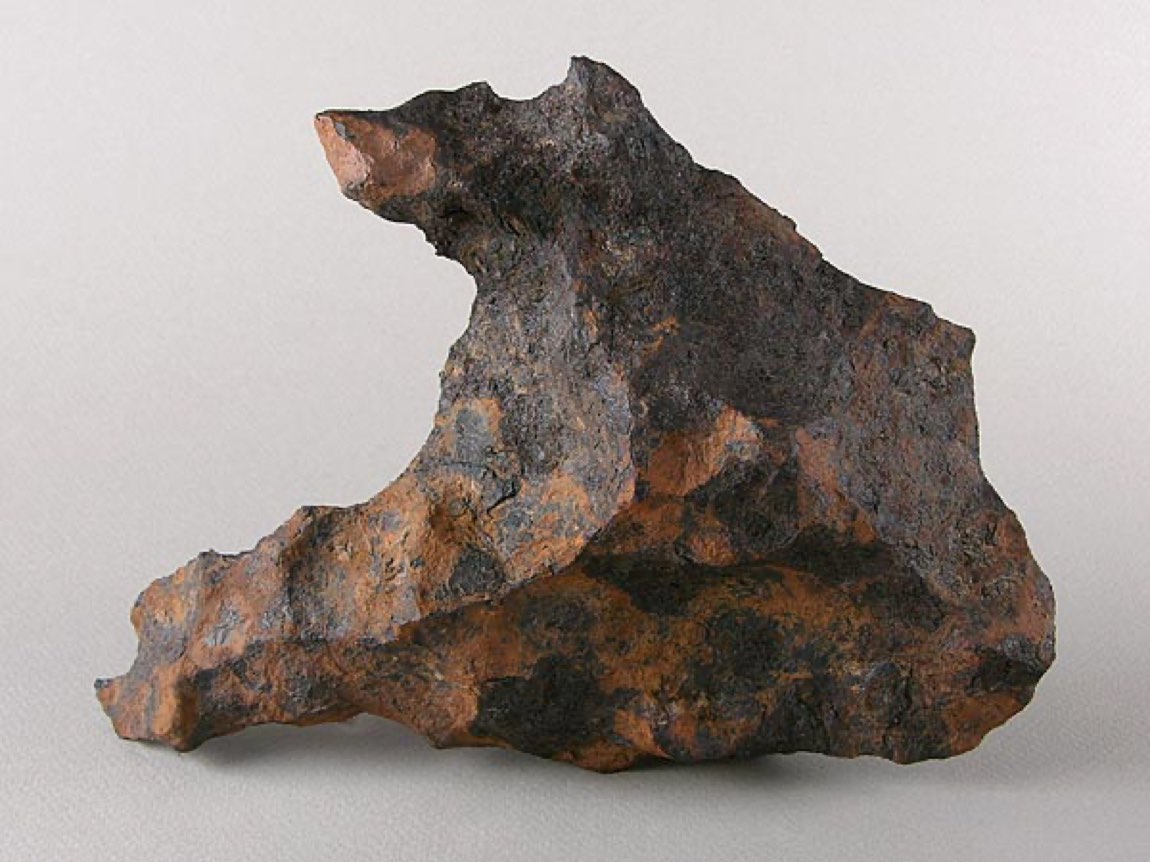
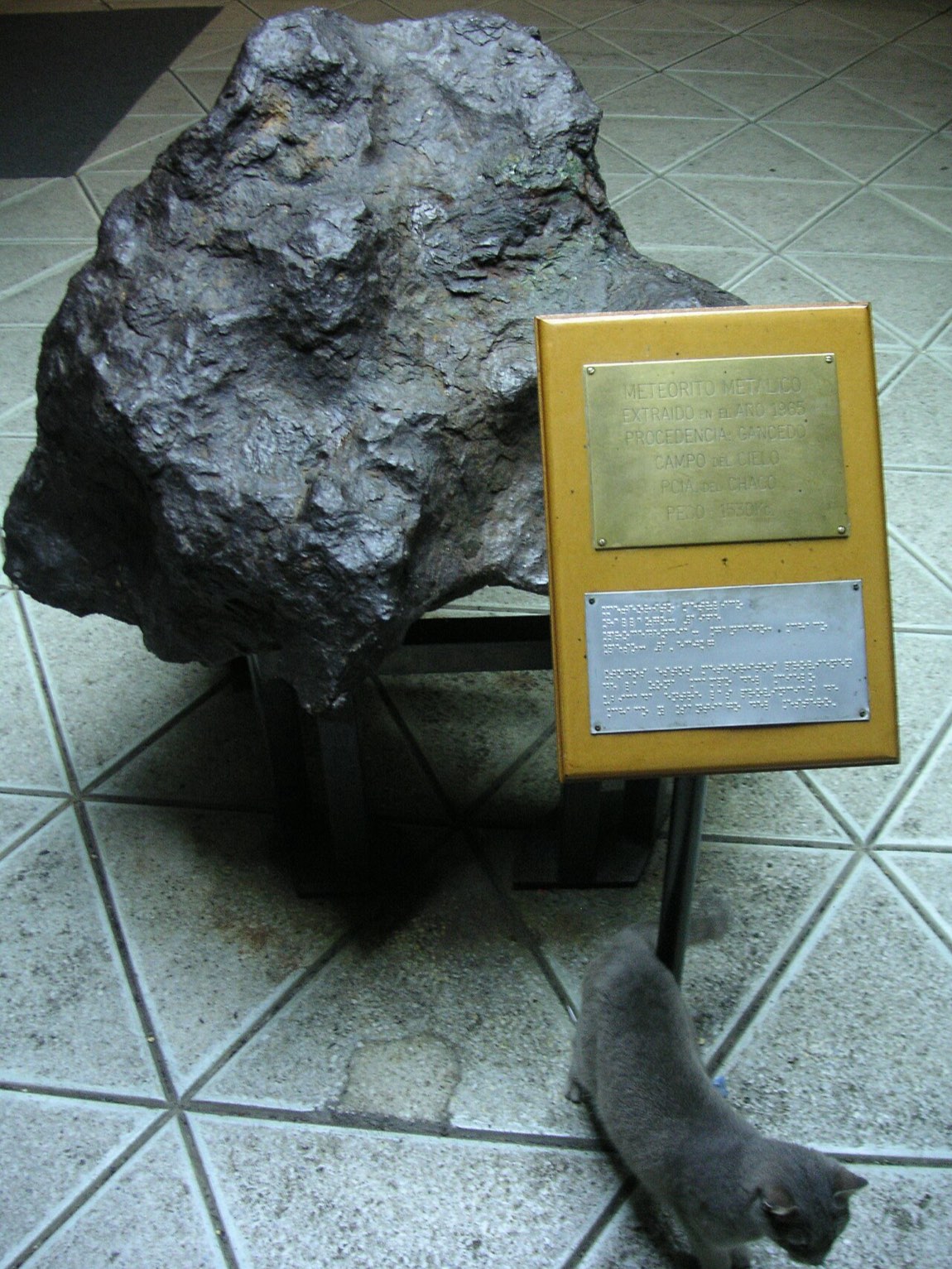
Campo del Cielo is both a group of iron meteorites and the stretch of land in northern Argentina where they lie. Some 4,200 to 4,700 years ago, a falling iron body broke up and carved at least 26 craters across an area about 18.5 km long. Indigenous peoples knew the site long before Spanish reports reached the public in 1576. In total about 100 tonnes of fragments have been recovered, more than from any other meteorite. Its two biggest pieces, Gancedo (30.8 tonnes) and El Chaco (28.8 tonnes), are among the heaviest single meteorites known.
The deep dive
Researched for the Atlas from Wikipedia — Campo del Cielo (5,758 characters read) · updated Nov 15, 2026
01 A Name Born from Indigenous Memory
Long before Spanish colonizers arrived, the indigenous peoples of what is now northern Argentina already knew about the iron masses scattered across this stretch of land. They called the place Piguem Nonralta, a name the Spanish translated as Campo del Cielo — Field of Heaven, or Field of the Sky. The natives also knew the iron had a practical use: they fashioned it into weapons. When the governor of a northern Argentine province heard these stories in 1576, he dispatched a military expedition to find the source. The soldiers located a large mass of metal protruding from the soil and collected samples described as being of unusual purity. The governor dutifully filed his report with the General Archive of the Indies in Seville, Spain — and then it was essentially forgotten. For nearly two centuries, later accounts simply recycled the native legends rather than building on the original investigation. The story of Campo del Cielo is therefore as much a story of knowledge preserved by oral tradition as it is one of scientific discovery.
02 Rediscovery, Explosives, and a Wrong Theory
The iron mass that had been reported in 1576 was effectively lost to European knowledge until 1774, when Don Bartolomé Francisco de Maguna tracked it down and named it el Mesón de Fierro — the Table of Iron. Maguna assumed he was looking at the tip of a buried iron vein, a reasonable guess at the time. The next serious expedition, led by Rubin de Celis in 1783, took a more aggressive approach and used explosives to clear the ground around the mass. After all that effort, Celis concluded it was probably a single stone, estimated its mass at 15 tonnes, and abandoned it as commercially worthless. He also got the origin badly wrong, attributing it to a volcanic eruption rather than a meteorite impact. But Celis did one crucial thing right: he sent samples to the Royal Society in London and published his findings in the Philosophical Transactions of the Royal Society. When those samples were eventually analyzed, they were found to contain 90% iron and 10% nickel — a composition that pointed unmistakably to a meteoritic origin, overturning Celis's volcanic hypothesis entirely.
03 How Carbon-14 Dated a 4,000-Year-Old Impact Deeper
Pinning down exactly when Campo del Cielo fell required a clever use of radiocarbon dating. Researchers collected samples of charred wood found beneath the meteorite fragments — wood that would have been scorched and buried at the moment of impact, cutting it off from any further exchange of carbon with the atmosphere. By measuring how much carbon-14 remained in those samples, scientists calculated that the fall occurred approximately 4,200 to 4,700 years ago, placing it somewhere between 2,200 and 2,700 BC. That date range means the impact happened during a period when early Bronze Age civilizations were already flourishing in the Middle East — the craters are genuinely ancient on a human timescale. The meteorite material itself, however, is far older: it is estimated to be about 4.5 billion years old, meaning it formed during the earliest stages of Solar System development and spent almost the entirety of Earth's geological history traveling through space before finally arriving.
 ⤢
04 A Broken Giant: What Caused 26 Craters
A single meteorite does not ordinarily produce 26 craters. The pattern at Campo del Cielo tells the story of a body that entered Earth's atmosphere and was torn apart before it reached the ground. The original object is estimated to have been larger than 4 metres (13 ft) in diameter. As it descended, aerodynamic stresses and possibly the high density of internal inclusions — an unusual feature of these iron meteorites — caused it to fragment into many pieces. Those pieces then struck the surface across an elongated field measuring 3 by 18.5 kilometres (1.9 by 11.5 mi), with an associated strewn area of smaller meteorites extending an additional 60 kilometres (37 mi) beyond that. At least two of the craters were found to contain thousands of small iron pieces, evidence of the violent dispersal. The largest crater measures 115 by 91 metres (377 by 299 ft) — roughly the footprint of a large sports stadium. The high inclusion density in the fragments is specifically cited as a possible reason the parent body broke apart so thoroughly during atmospheric entry.
05 The Unusual Chemistry of an Iron Meteorite Deeper
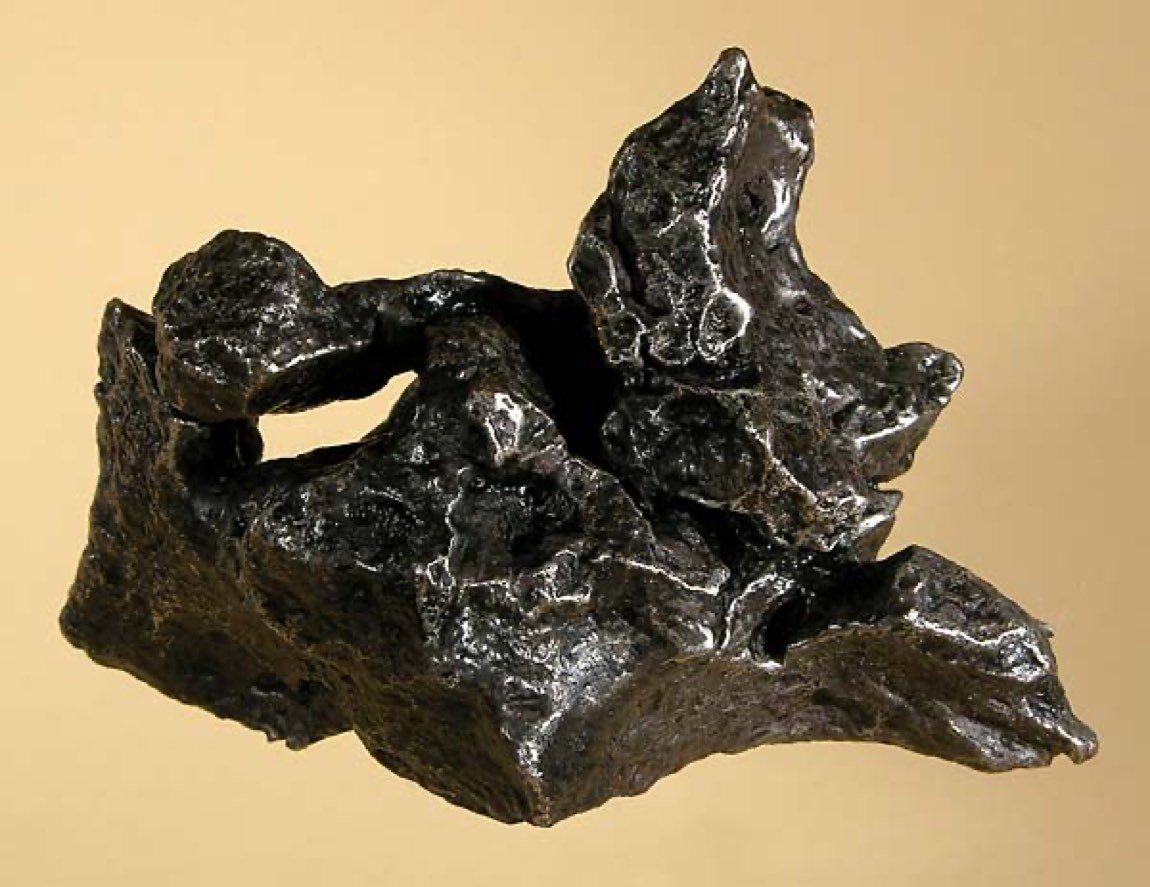
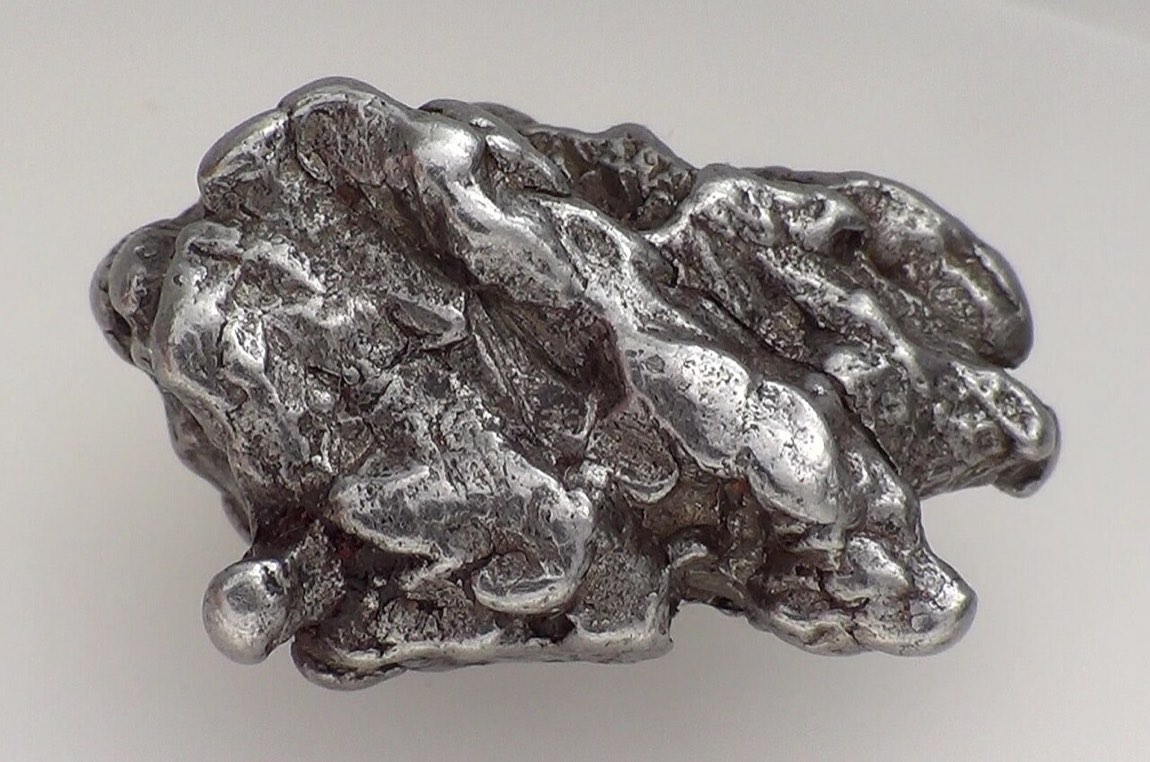
Iron meteorites are not pure iron, and the Campo del Cielo fragments have a precisely measured average composition that reveals their deep Solar System origins. The bulk of the material — 92.6% — is iron, with 6.67% nickel making up most of the rest. Beyond those dominant elements, the meteorites carry trace quantities that are scientifically telling: 0.43% cobalt, 0.25% phosphorus, 407 parts per million germanium, 87 parts per million gallium, and 3.6 parts per million iridium. Iridium is famously rare in Earth's crust but relatively enriched in meteoritic and deep mantle material, which is part of why its presence in the geological record was used to identify the mass extinction event at the end of the Cretaceous period. Germanium and gallium concentrations are used by meteoriticists to classify iron meteorites into chemical groups, allowing researchers to trace different fragments back to their parent bodies. The fragments also contain an unusually high density of inclusions for an iron meteorite — a structural characteristic that likely played a direct role in breaking the original body apart as it plunged through the atmosphere.
06 Weighing the Giants: Gancedo and El Chaco
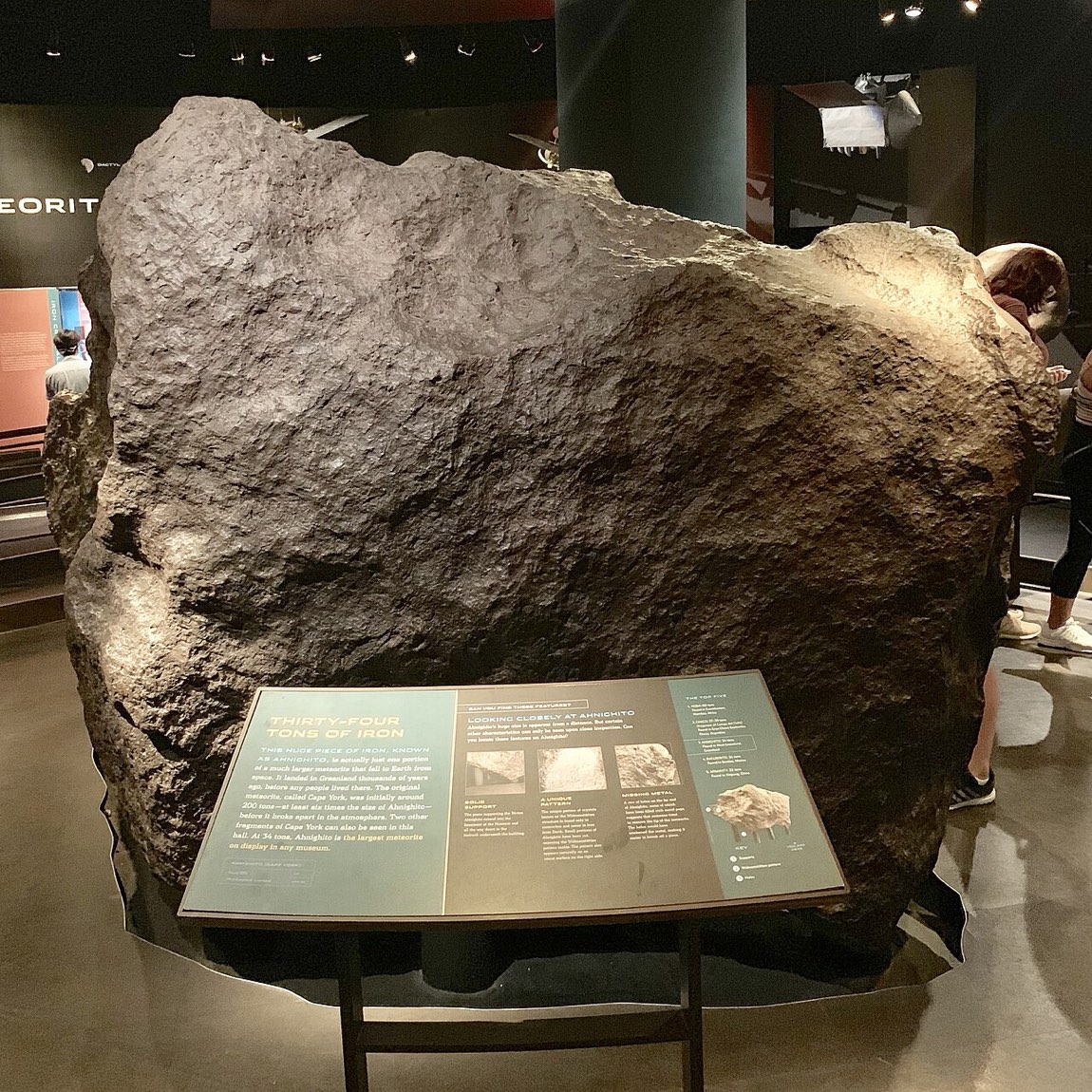
The two largest fragments recovered from Campo del Cielo have a complicated history of measurement and rivalry. El Chaco was discovered in 1969, found 5 metres (16 ft) underground using a metal detector — a remarkable depth that explains why it survived centuries of searching. When it was finally extracted in 1980, it was estimated to weigh about 37 tonnes, briefly making it the second-heaviest known meteorite on Earth after Namibia's Hoba, which weighs approximately 60 tonnes. Then in 2016 the Gancedo meteorite was unearthed, named after the nearby town of Gancedo whose equipment helped with extraction. It was found to weigh 30,800 kilograms (67,900 lb). That discovery prompted scientists to re-weigh El Chaco with the same instruments, and the result was sobering: it came in at only 28,840 kilograms (63,580 lb), far less than the 1980 figure, suggesting the original weighing lacked precision. Gancedo therefore claimed the title of the largest Campo del Cielo fragment recovered. Both masses rank among the heaviest single-piece meteorite finds on Earth, behind only the Hoba meteorite and a 31-tonne fragment of the Cape York meteorite.
 ⤢
07 A Theft, a Rescue, and Provincial Law
The enormous value of Campo del Cielo's fragments — scientific, cultural, and commercial — has made them targets for theft on more than one occasion. The most dramatic episode came in 1990, when an Argentine highway police officer foiled a plot by American meteorite dealer Robert Haag to steal El Chaco. The 28.8-tonne mass was recovered and returned to the site. The incident apparently served as a wake-up call for local authorities: El Chaco is now protected by provincial law, recognizing it as a cultural and natural heritage asset that cannot be removed. The protections, however, have not eliminated all criminal interest. In 2015, police arrested four alleged smugglers who were caught attempting to steal more than 907 kilograms (2,000 lb) of protected meteorite material. The repeated attempts at theft underscore the tension between the site's status as a protected natural monument and the global appetite for large, well-characterized iron meteorites, which can command significant prices on the collector market.
08 A Century of Incremental Recovery Deeper
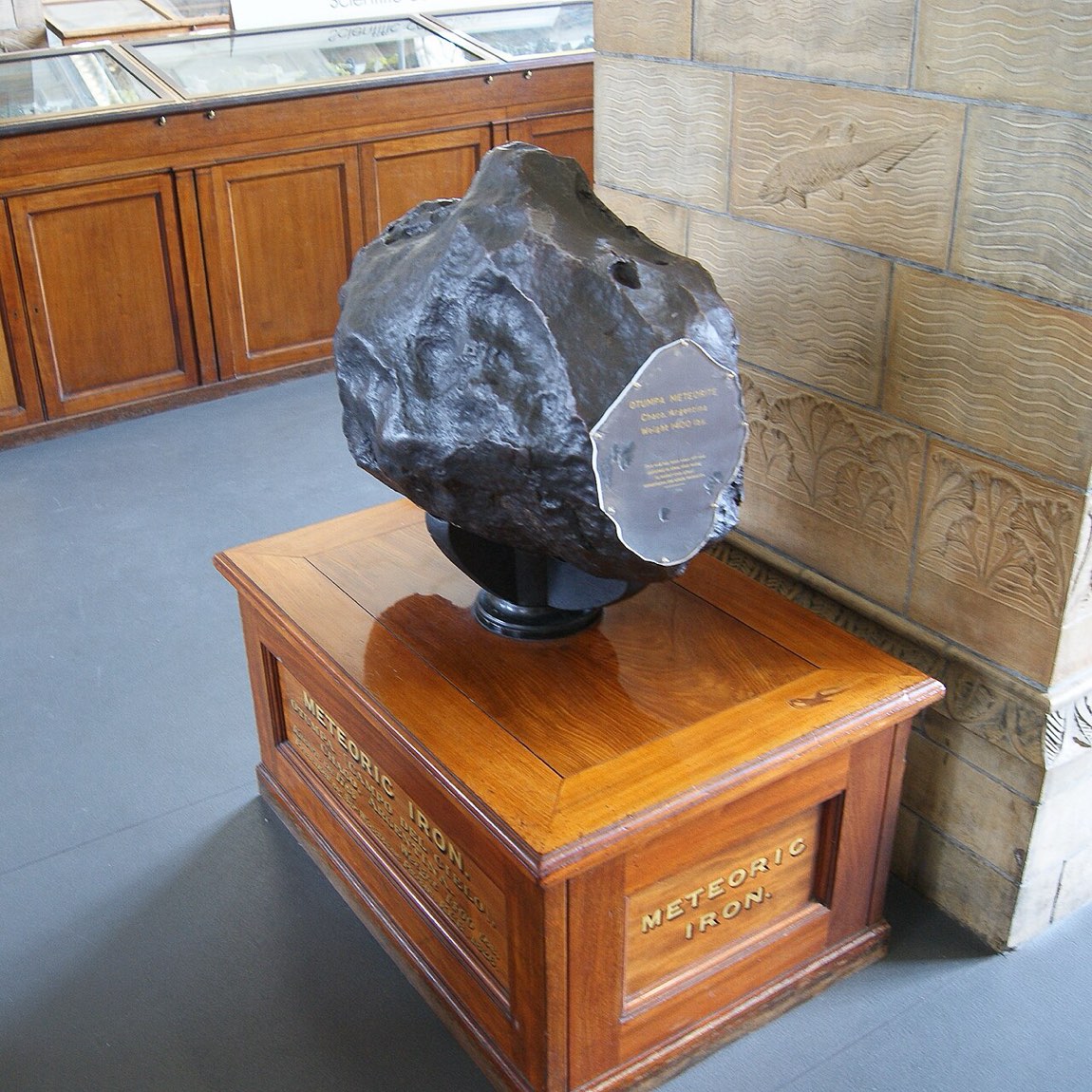
The recovery of Campo del Cielo material has unfolded slowly across more than two centuries of documented effort. One of the earlier named finds was Otumpa, a mass of approximately 1 tonne discovered in 1803. A 634-kilogram (1,398 lb) portion of Otumpa was transported to Buenos Aires in 1813 and later donated to the British Museum, where it remains an accessible specimen for researchers. Another notable fragment, El Taco, originally weighed 3,090 kilograms (6,810 lb), though the largest remaining piece now comes in at 1,998 kilograms (4,405 lb), suggesting some of it has been distributed or sampled over time. The cumulative total of recovered material now exceeds 100 tonnes, earned over the entire period since systematic searches began. That figure makes Campo del Cielo the heaviest set of meteorite finds from a single event anywhere on Earth. Individual pieces span an enormous size range — from fragments weighing just a few milligrams to the 30.8-tonne Gancedo — which itself reflects how thoroughly the original impactor was shattered both during atmospheric entry and by the kinetic energy of multiple impacts.
09 How the Site Sits in the World Rankings
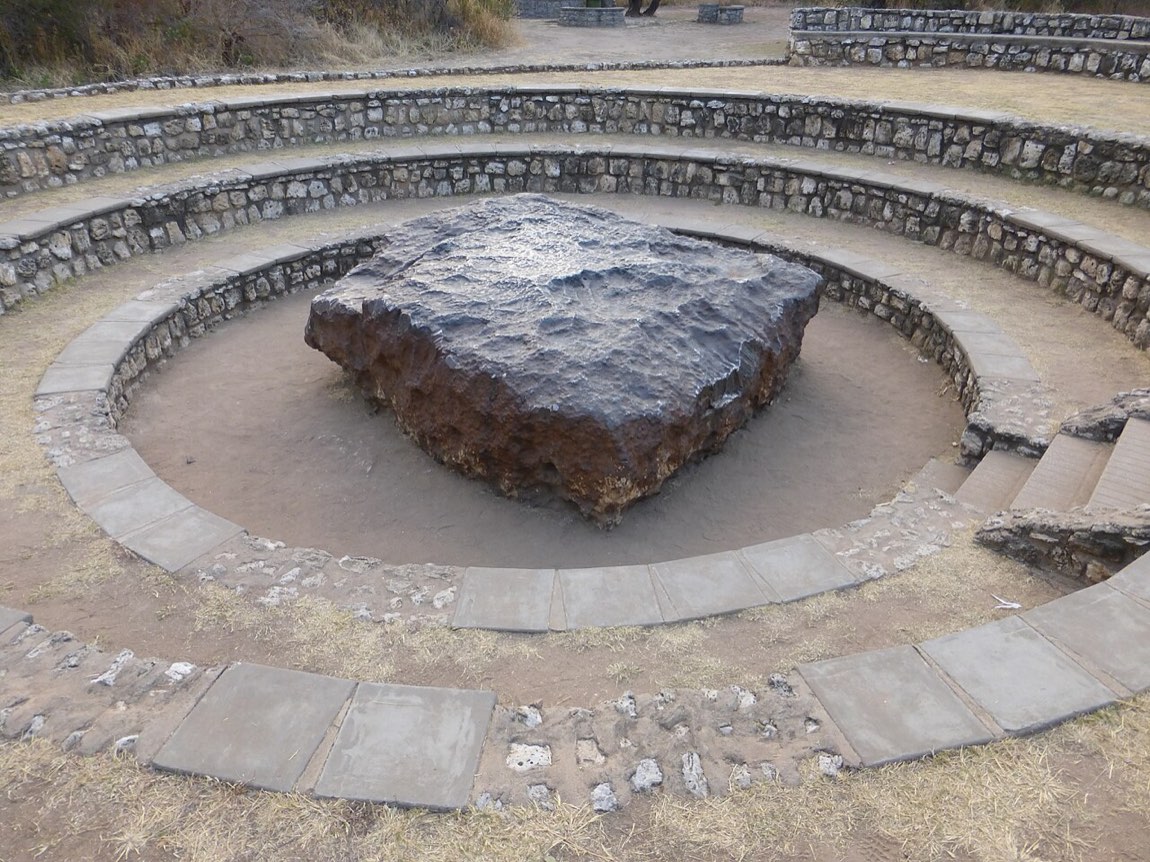
Context helps make the numbers at Campo del Cielo feel real. Among individual meteorite masses, the global leaderboard places the Hoba meteorite in Namibia first at approximately 60 tonnes, followed by a 31-tonne fragment of the Cape York meteorite in Greenland, then Gancedo at 30,800 kilograms (67,900 lb) and El Chaco at 28,840 kilograms (63,580 lb). By the measure of total recovered mass from a single event, however, Campo del Cielo stands alone: more than 100 tonnes of fragments have been collected, the most of any meteorite finding on record. The crater field's location straddles the provinces of Chaco and Santiago del Estero in Argentina, sitting about 1,000 kilometres (620 mi) north-northwest of Buenos Aires and approximately 500 kilometres (310 mi) southwest of Asunción, Paraguay. The field's elongated footprint — 18.5 by 3 kilometres (11.5 by 1.9 mi) — reflects the shallow, oblique angle at which the fragmenting body likely struck, spreading debris across a narrow corridor rather than concentrating it in a single circular basin.
 ⤢