 Photograph · Moongateclimber · Public domain
Meteorite · Deep guide
Gibeon Meteorite
Also called: Gibeon
A prehistoric iron shower in Namibia whose pieces became spear tips, museum treasures and a city fountain.
What is it?
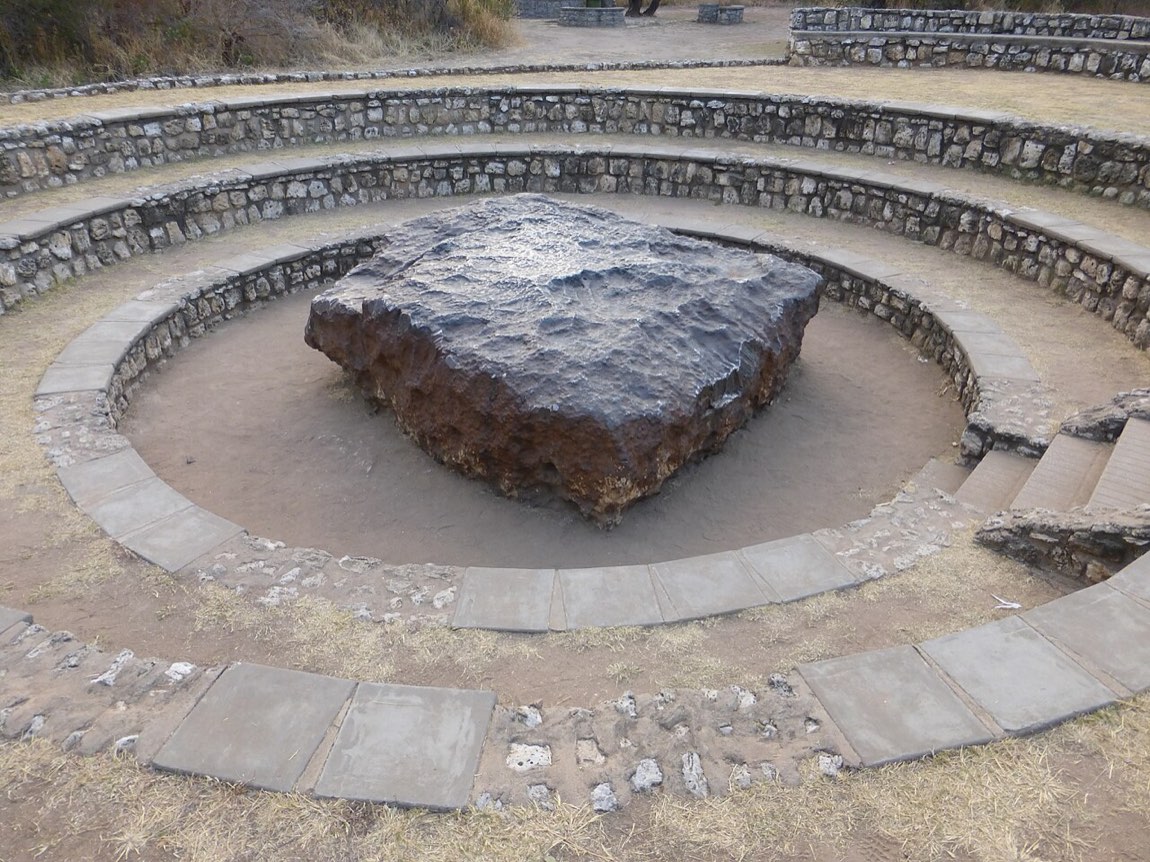
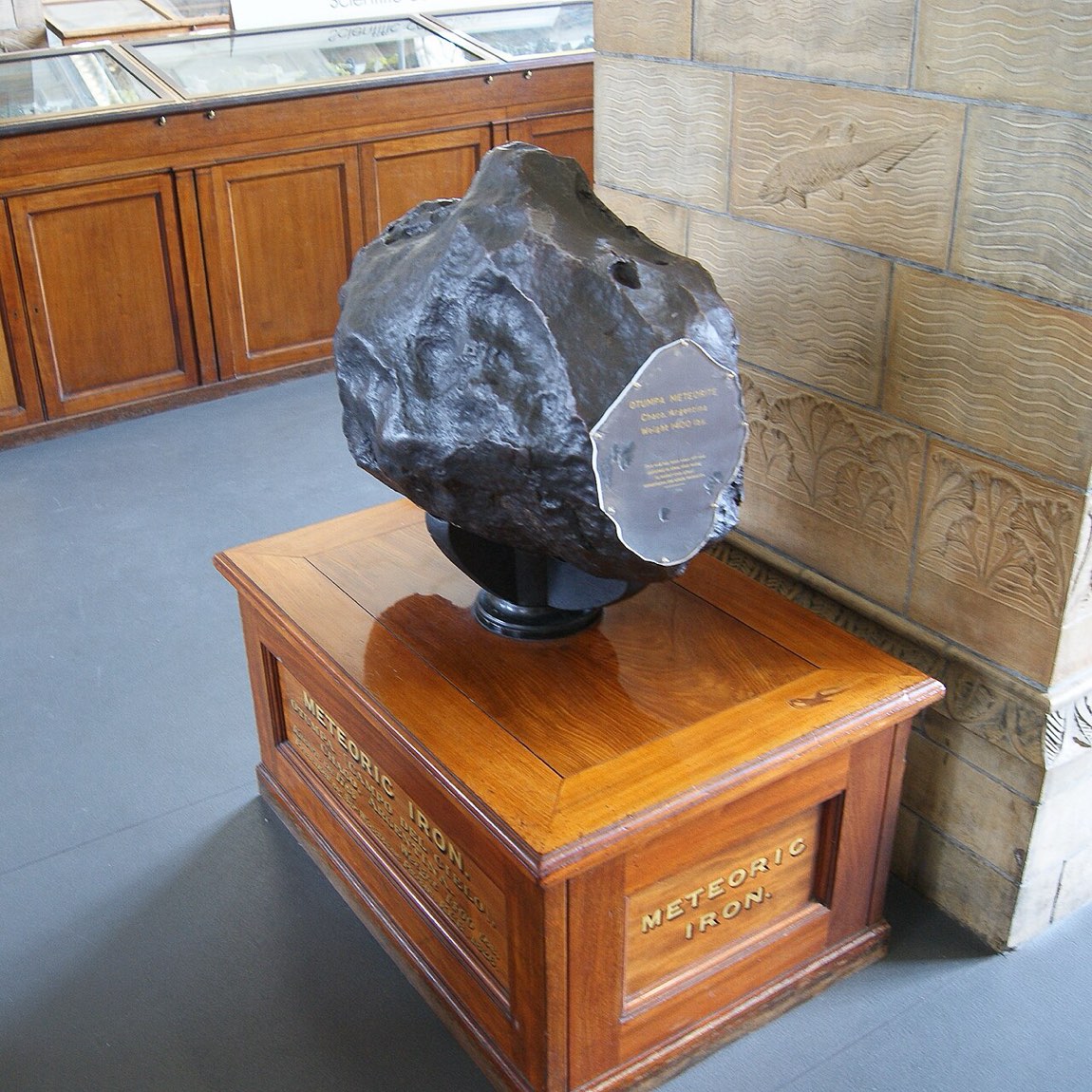
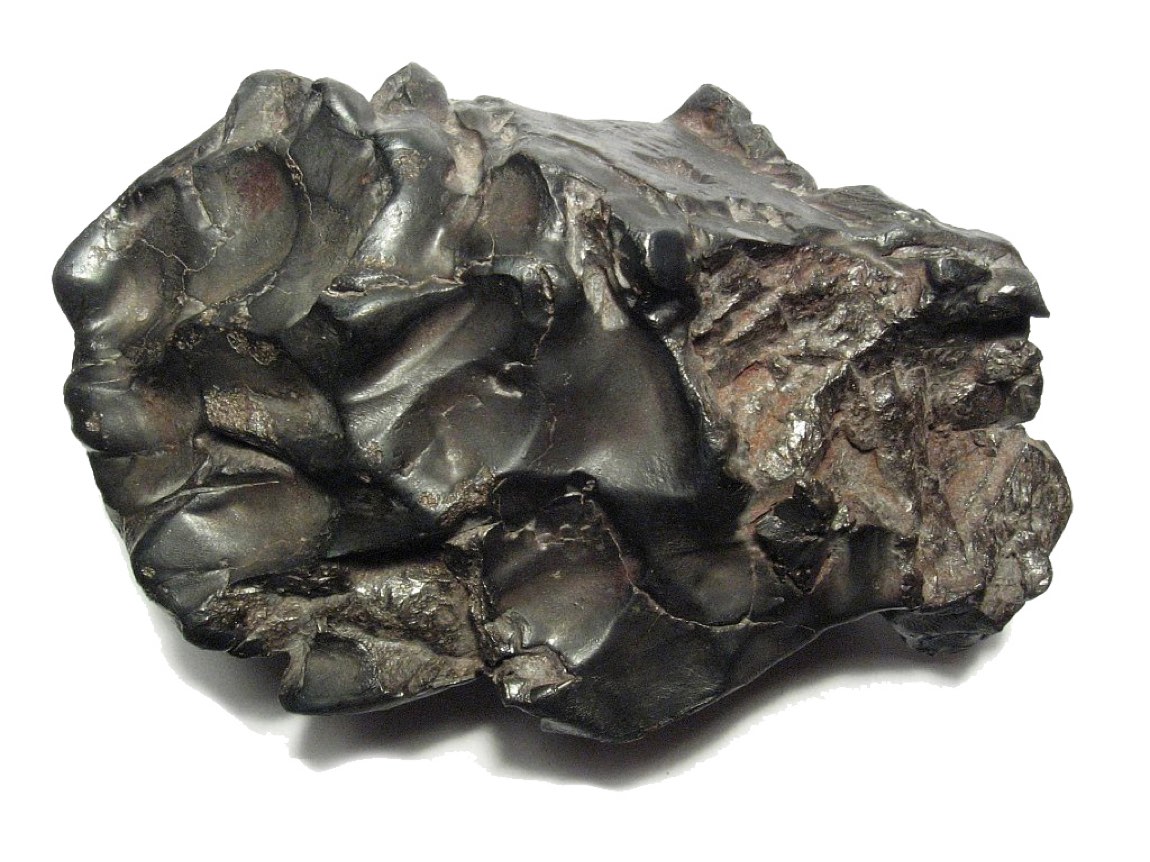
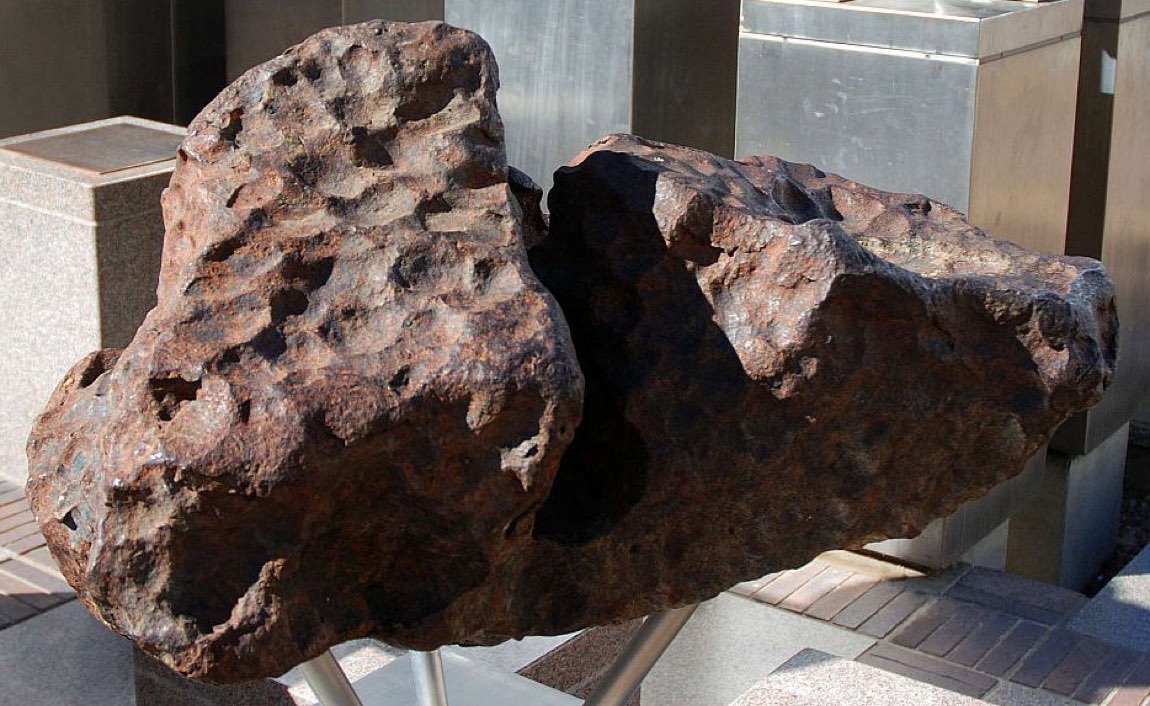
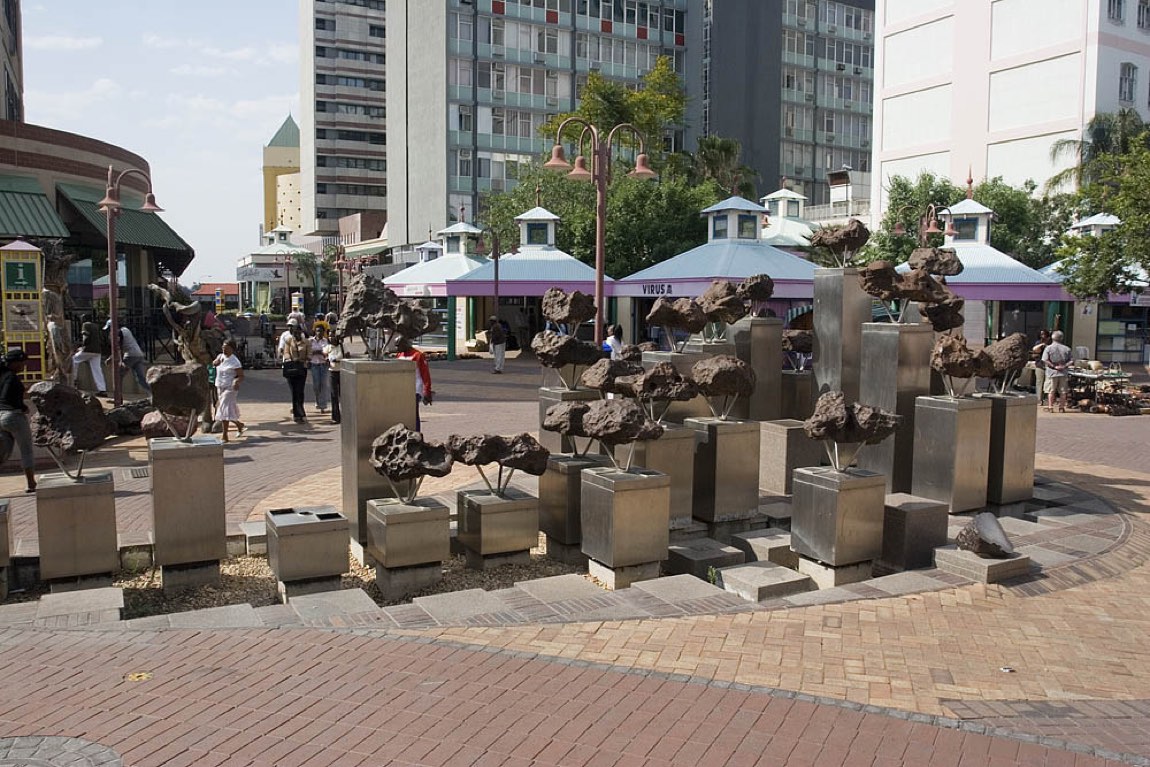
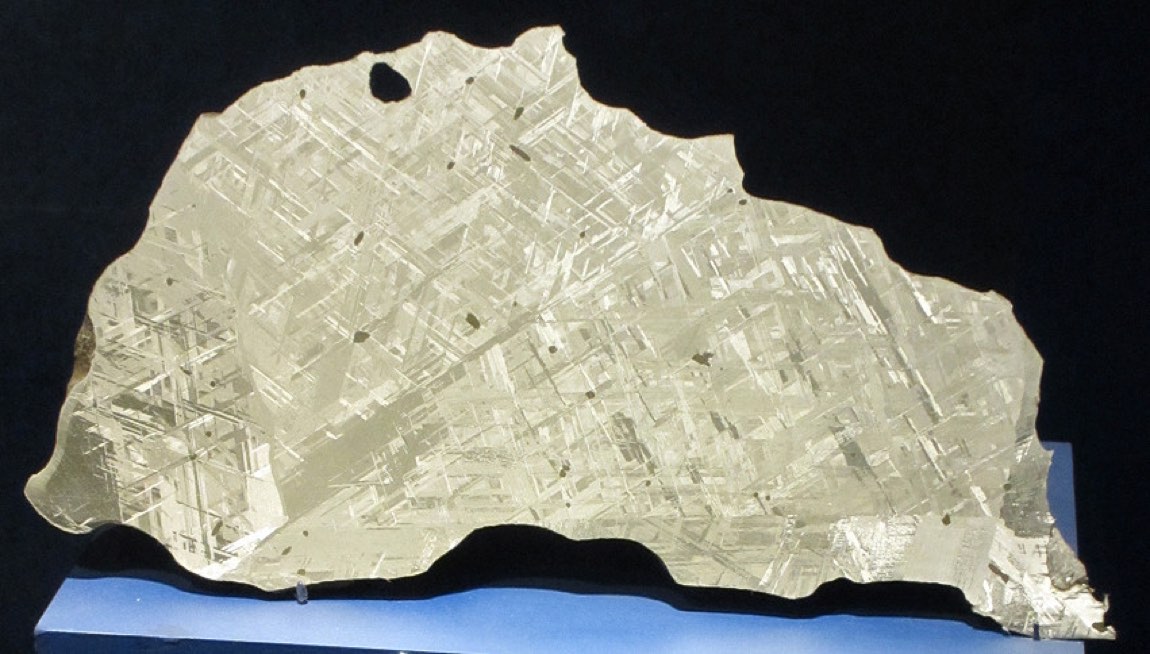
The Gibeon meteorite fell over what is now southern Namibia in prehistoric times and is named after the nearby town of Gibeon. The Nama people found its iron pieces long ago and shaped them into tools and spearheads. Samples collected in 1836 were analysed in London by John Herschel, who confirmed they came from space. Between 1911 and 1913, 33 large fragments were brought to Windhoek, and many are now displayed in a fountain sculpture in the city centre. Cut and etched Gibeon slices show a striking crisscross Widmanstätten pattern.
The deep dive
Researched for the Atlas from Wikipedia — Gibeon (meteorite) (2,463 characters read) · updated Nov 15, 2026
01 A Prehistoric Fall Across the Namibian Desert
Gibeon did not fall during recorded human history — it arrived in prehistoric times, long before any written account could capture the event. Yet the evidence of its arrival is spread unmistakably across the landscape of what is now Namibia. The fragments scattered across an elliptical strewn field 390 kilometres long and 120 kilometres wide, an area roughly the size of Switzerland. That vast footprint tells scientists that the original body was traveling at a shallow angle when it broke apart in the atmosphere, sending pieces raining down across the southern African interior. The core of the dispersal zone sits near the village of Gibeon in Namibia's Hardap Region, the town that eventually lent the meteorite its name. Somewhere between 100 and 150 distinct fragments have been collected over time, and fieldworkers still turn up new pieces occasionally, a reminder that the desert keeps its secrets well.
02 The Second-Largest Strewn Field on Earth Deeper
Among all known meteorite falls, Gibeon's strewn field ranks second in size globally, surpassed only by the Aletai meteorite strewn field in Northwestern China. The elliptical scatter zone stretching 390 kilometres by 120 kilometres reflects the dynamics of a high-velocity atmospheric entry in which the parent mass fragmented under aerodynamic stress before reaching the ground. The elongated shape of a strewn field encodes the direction of travel: the longest axis aligns with the trajectory, and the heaviest pieces tend to land farthest along that axis because their greater momentum carries them further before gravity wins. For Gibeon, this geometry implies a relatively low entry angle and a substantial original mass, though the article does not specify that original mass precisely. The sheer number of recoverable pieces — still growing — makes Gibeon one of the most scientifically sampled iron meteorite falls in the world, giving researchers a rich population of specimens from a single parent event.
03 Iron, Nickel, Cobalt, and a Touch of Phosphorus
Gibeon belongs to chemical group IVA among iron meteorites, a classification that fingerprints both its origin and its chemical recipe. The material is an iron-nickel alloy, the same pairing found at Earth's own core, but Gibeon adds meaningful quantities of cobalt and phosphorus to the mix. Cobalt is a hard, lustrous metal that sits next to nickel on the periodic table and tends to concentrate in planetary metallic cores alongside iron and nickel. Phosphorus, by contrast, is a lighter element that behaves differently during the solidification of molten metal, often segregating into distinct mineral grains within the iron matrix. Together these four elements — iron, nickel, cobalt, and phosphorus — define Gibeon's bulk chemistry and distinguish it from the dozens of other iron meteorite chemical groups catalogued by researchers. That precise chemical signature is what allows scientists to link widely separated fragments back to a single original body.
04 Widmanstätten Patterns: Crystal Art from Space
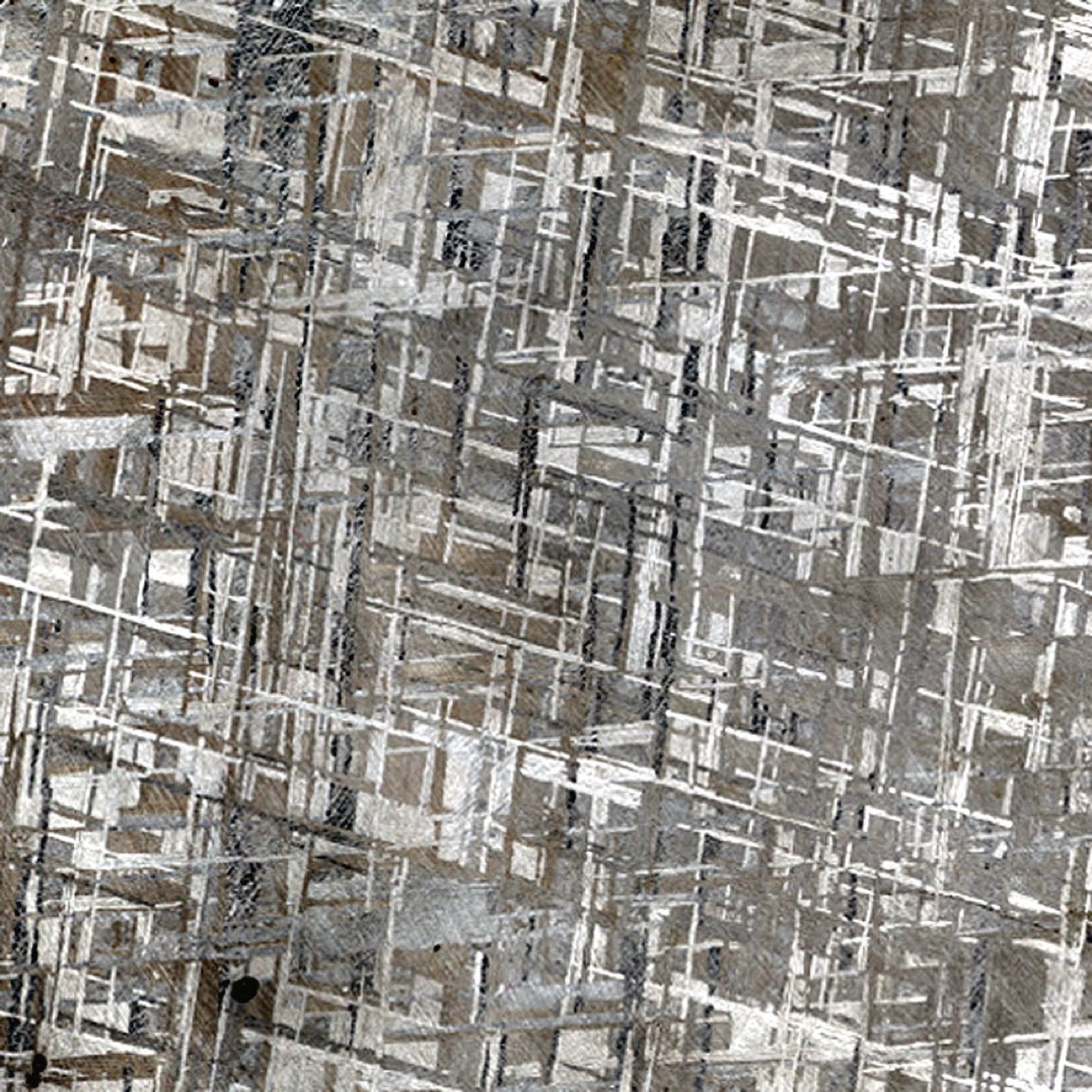
Cut a slice of Gibeon, polish it, and wash it with a mild acid, and something extraordinary appears: a geometric lattice of intersecting bands called the Widmanstätten pattern. This texture is a classic example of what meteorite scientists call fine octahedrite, referring to the octahedral crystal system in which the iron-nickel mineral kamacite grows in plates oriented along specific crystallographic planes. The pattern could only have formed through extraordinarily slow cooling — rates estimated for similar meteorites are on the order of a few degrees per million years — which means Gibeon's parent asteroid had to be large enough to insulate its core against rapid heat loss for hundreds of millions of years. No furnace on Earth can replicate that cooling rate, which is why the Widmanstätten pattern is an unmistakable hallmark of a metallic meteorite rather than any manufactured alloy. Gibeon specimens are prized by collectors worldwide partly because the pattern is so sharply defined.
 ⤢
05 How the Nama People Used a Space Rock
Long before any European scientist gave Gibeon its name or its chemical classification, the Nama people of southern Africa had already put the metal to practical use. They fashioned the iron-nickel fragments into tools and weapons, including heads for their assegais — the slender throwing spears central to the material culture of many southern African peoples. This was not unusual behavior: pre-industrial communities around the world recognized meteoritic iron as a superior raw material precisely because it arrived already smelted by nature, free of the slag and impurities that plagued ore-based iron working. For a society without blast furnaces, a meteorite fragment was a ready-made source of tough, workable metal. The Nama's use of Gibeon is therefore both a chapter in African technological history and a reminder that the boundary between astronomy and everyday human life has always been porous.
06 John Herschel and the First Scientific Confirmation
The story of Gibeon's scientific recognition begins in 1836, when English captain J. E. Alexander collected samples from the vicinity of the Fish River and shipped them to London. There they landed in the hands of John Herschel, one of the most versatile scientists of the nineteenth century. Herschel analyzed the material and confirmed for the first time that it was extraterrestrial in origin — a significant determination at a time when the scientific community was still building its frameworks for understanding meteorites. The confirmation was not trivial: distinguishing a genuinely meteoritic iron from terrestrial iron ore required careful chemical comparison and an understanding of what compositions were consistent with known meteorite falls. Herschel's conclusion placed Gibeon on the map of science and initiated the chain of inquiry that would eventually yield the full chemical classification we use today. Alexander's role as the field collector who sent the samples is equally worth remembering; without that logistical link, the discovery would have waited longer.
07 Collecting Fragments: 1911 to 1913 Deeper
The first systematic effort to gather Gibeon fragments took place between 1911 and 1913, when 33 pieces were collected near the town of Gibeon and transported to the colonial capital, Windhoek. The recovered fragments were not small curiosities: individual pieces weighed between 195 and 506 kilograms, the heaviest specimen tipping the scale at more than half a metric ton — roughly the mass of a grand piano. Initially the collection was simply stored, then arranged and displayed at the Zoo Park as a single heap. This rather informal presentation reflected the early twentieth century's still-developing sense of how to treat such objects as public heritage. The eventual move toward a formal monument would take decades, illustrating how institutional attitudes toward meteorites shifted from viewing them as geological curiosities to recognizing them as irreplaceable scientific and cultural artifacts deserving legal protection.
08 A Fountain, a Monument, and Missing Stones
In 1975, planners conceived an ambitious public display: a fountain in Windhoek's Post Street Mall that would incorporate the Gibeon fragments as its centerpiece. Before the fountain could be built, the pieces were moved to the Alte Feste for storage, and during that period two fragments were stolen — losses that left two empty pillars in the finished fountain, permanent reminders of what disappeared. The fountain was eventually erected in Windhoek's Central Business District, displaying the remaining pieces. Since its installation, two more fragments have been removed from the fountain, reducing the visible collection from the original 33 gathered in 1911–1913 to just 29 pieces today. The collection had already been proclaimed a National Monument under the category of geology on 15 February 1950. That designation was reinforced by a broader rule: all meteorites found in Namibia are automatically protected as National Monuments and may neither be removed from where they are found nor damaged in any way.
 ⤢
09 Why IVA Iron Meteorites Matter to Planetary Science Deeper
Chemical group IVA is one of the more extensively studied iron meteorite groups precisely because specimens like Gibeon are plentiful and well-characterized. Iron meteorites in general are thought to be fragments of the metallic cores of differentiated asteroids — bodies that grew large enough and hot enough early in solar system history to melt internally, allowing dense metals to sink to the center and lighter silicates to float to the surface, much as happened with Earth. Group IVA members are linked by overlapping ranges of trace element concentrations, implying they all came from the same parent body or at least the same type of parent body. Studying the precise ratios of nickel, cobalt, phosphorus, and other trace elements in IVA irons helps scientists reconstruct the size, cooling history, and eventual breakup of that ancient asteroid. Gibeon's fine octahedrite texture — requiring that slow, deep-interior cooling — is consistent with formation well inside such a body.
10 Namibia's Sweeping Meteorite Protection Law
The legal framework that grew out of Gibeon's story is unusually broad. Rather than simply protecting one famous collection, Namibian authorities extended heritage status to every meteorite found anywhere in the country. Under this rule, any fragment discovered on Namibian soil is automatically a National Monument, cannot be moved from its find location, and cannot be damaged. This kind of blanket territorial protection is relatively rare in the world of meteorite law, where most jurisdictions treat meteorites as the property of the landowner or leave them in a legal gray zone. For scientists, the law has mixed implications: it preserves context and prevents the black-market export of specimens, but it can also complicate legitimate research collection. The rule reflects a national recognition that Namibia sits atop one of the world's great meteorite archives, and that the Gibeon fall in particular demonstrated how much scientific and cultural value can be lost when fragments are removed and scattered.
11 How Gibeon Compares to the Aletai Field Deeper
Ranking strewn fields by size is not a simple exercise, because the boundaries of a field depend on how thoroughly an area has been surveyed and how many fragments have actually been found rather than merely predicted by trajectory models. With that caveat, Gibeon's 390-by-120-kilometre ellipse is the largest confirmed strewn field yet mapped outside of China, where the Aletai field in Xinjiang's Northwestern region holds the global record. Both fields are associated with iron meteorites, which is consistent with the ability of dense metallic bodies to survive atmospheric entry as multiple large pieces rather than ablating away entirely. The comparison also highlights how geographically concentrated meteorite discovery records are: two of the largest strewn fields in the world sit in arid, sparsely vegetated regions where dark metal fragments stand out against pale soil and erosion rates are low enough to preserve surface finds for millennia. Desert environments are, in effect, natural meteorite museums.
 ⤢