 Photograph · Doug Bowman · CC BY 2.0
Meteorite · Deep guide
Esquel Meteorite
Also called: Esquel
A Patagonian pallasite dug up while making a water-tank hole, prized for its glowing olivine crystals.
What is it?
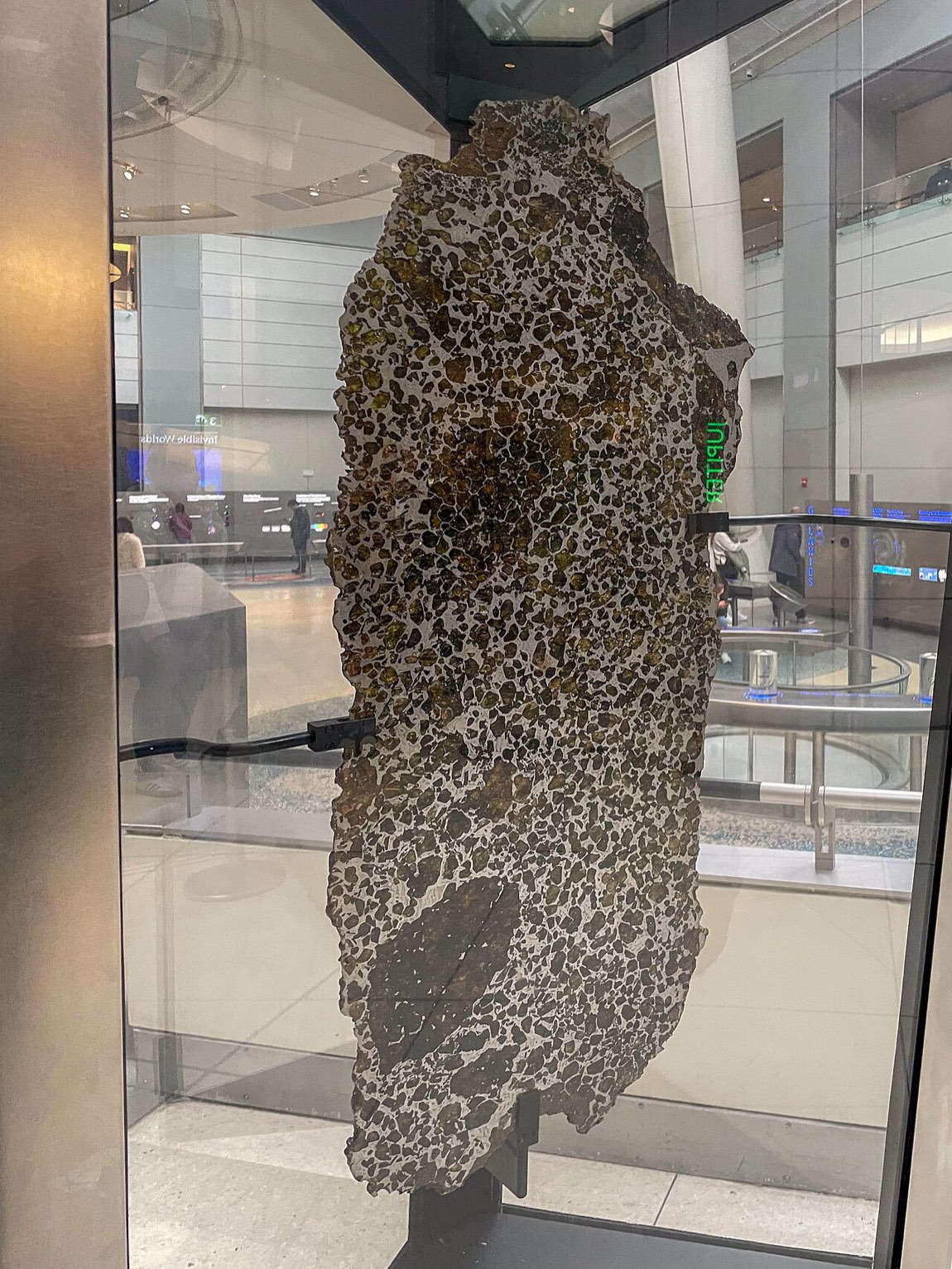
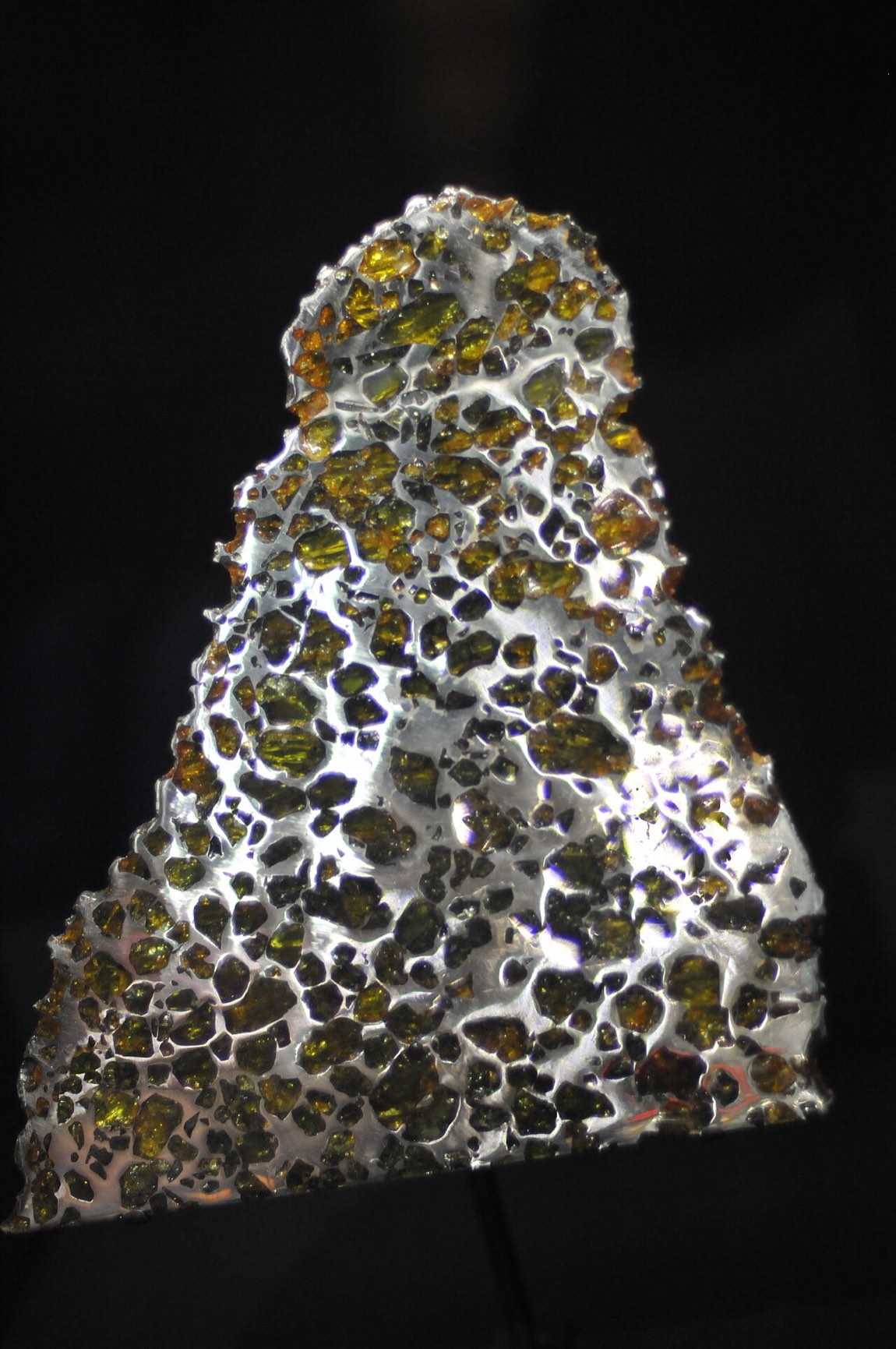
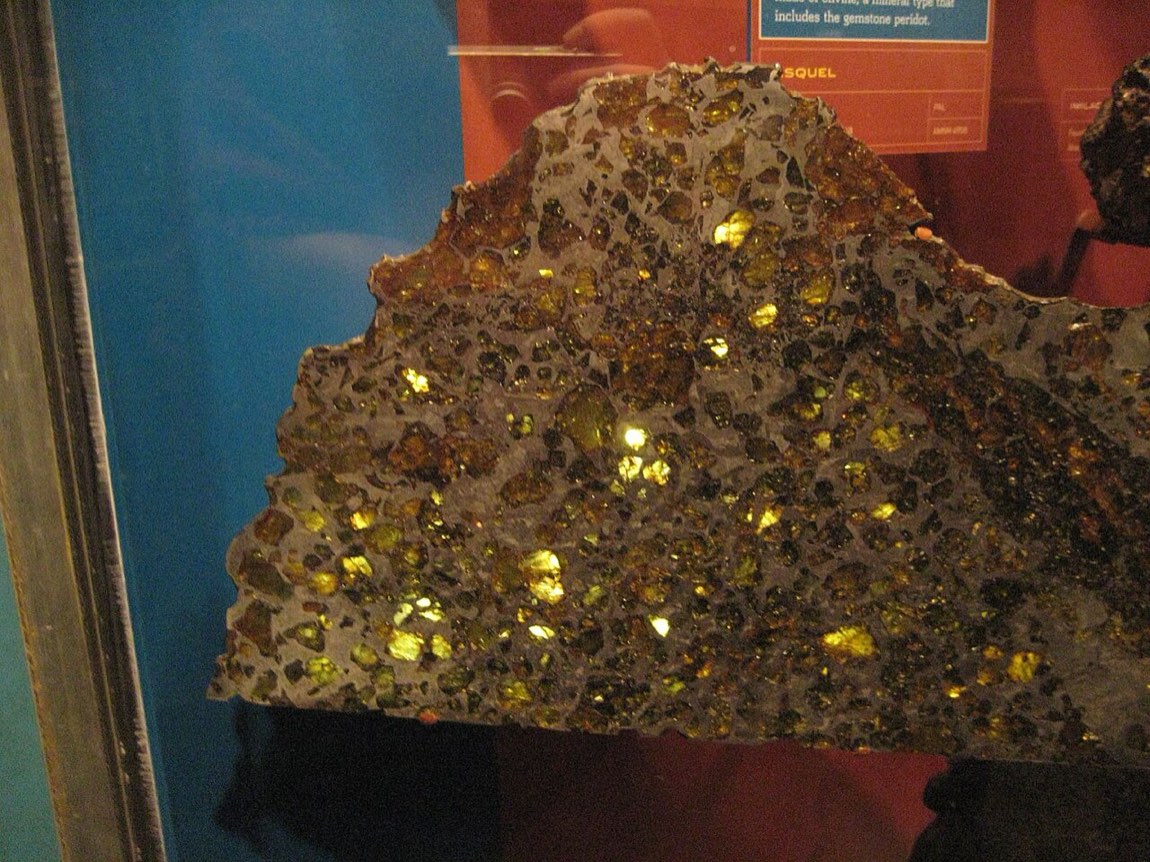
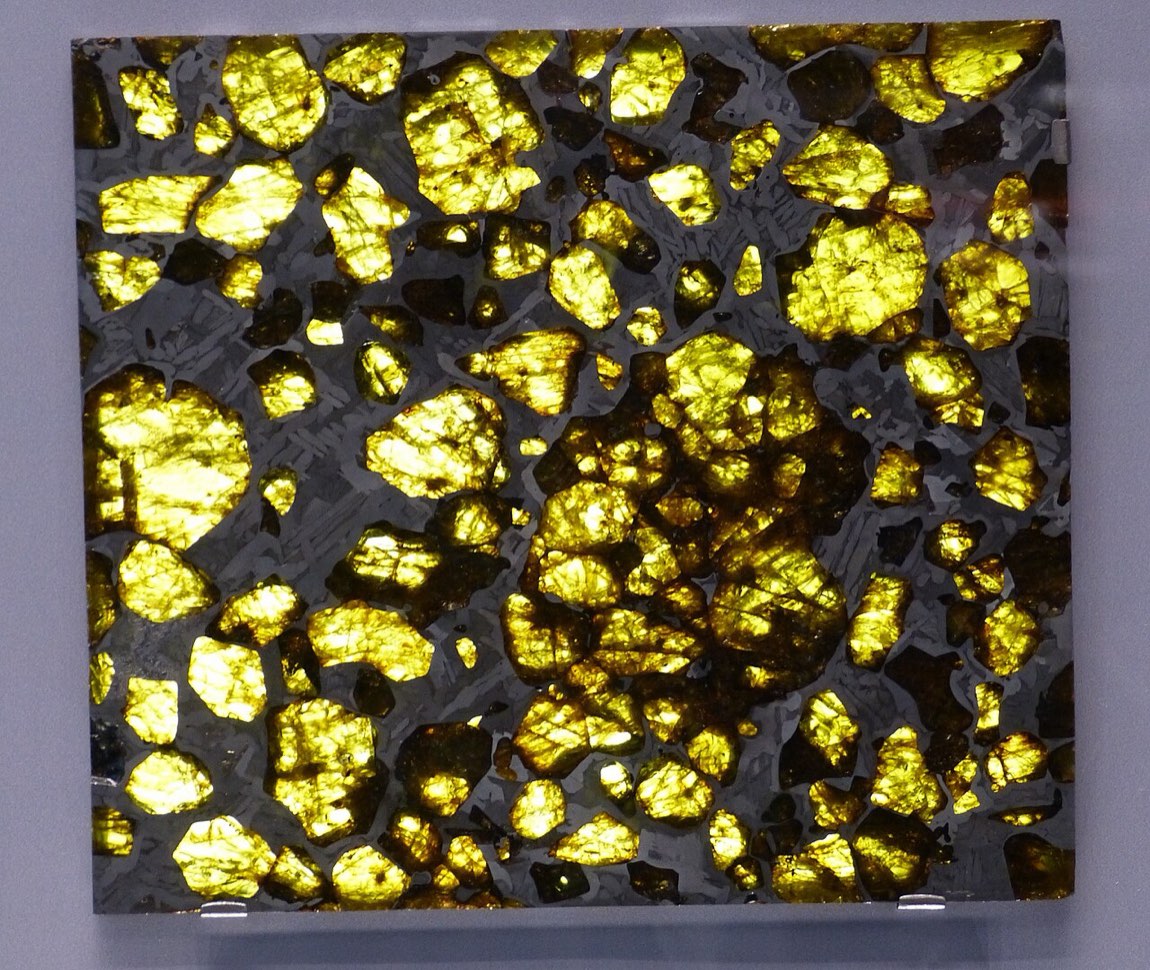
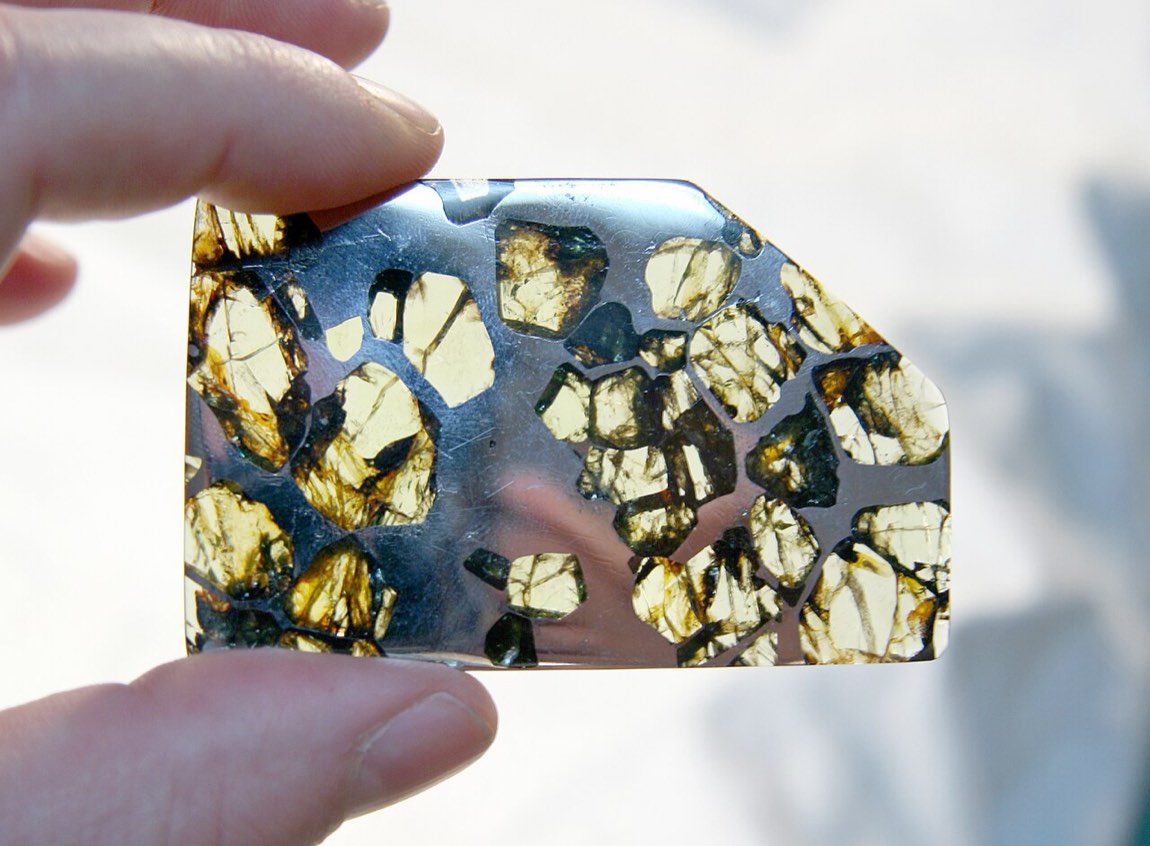
In 1951 a farmer digging a hole for a water tank near Esquel, in Argentina's Chubut province, struck a heavy metallic rock. It turned out to be a pallasite, a stony-iron meteorite in which yellowish olivine crystals sit inside a nickel-iron framework. The main mass was bought and taken to the United States in 1992, and almost all Esquel specimens on the market were cut from it. Reports of its original weight vary widely. It is widely regarded as one of the most beautiful meteorites ever found.
More real images of Esquel Meteorite
Genuine spacecraft and telescope imagery, every frame credited and licensed. Tap any photo to enlarge.