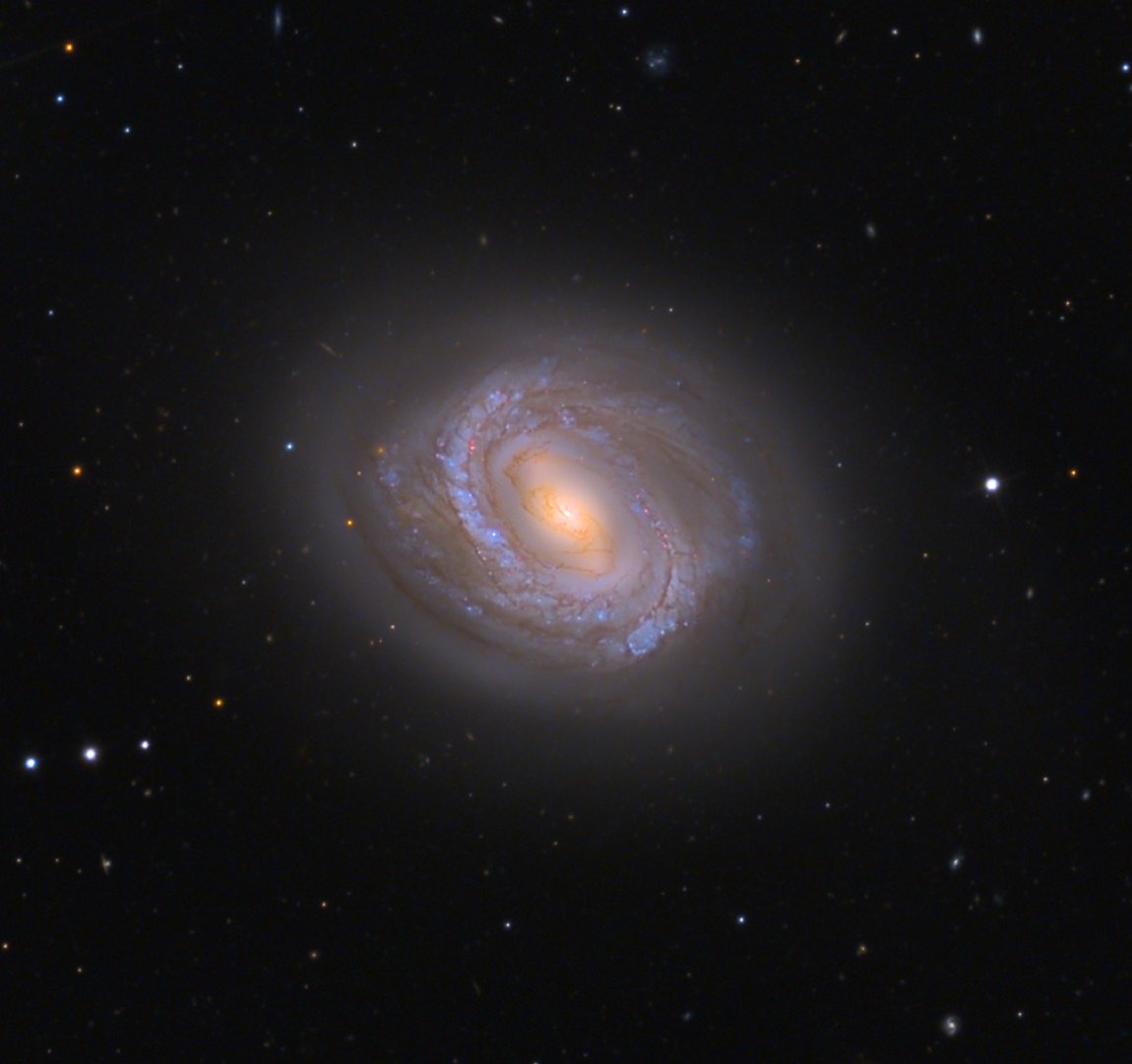
 Photograph · Credit Line and Copyright Adam Block/Mount Lemmon SkyCenter/University of Arizon · CC BY-SA 3.0 us
Galaxy · Deep guide
Messier 58
Also called: M58 · NGC 4579 · UGC 7796 · PGC 42168
A barred spiral in the Virgo Cluster that was, unknowingly, among the most distant things seen in 1779.
What is it?
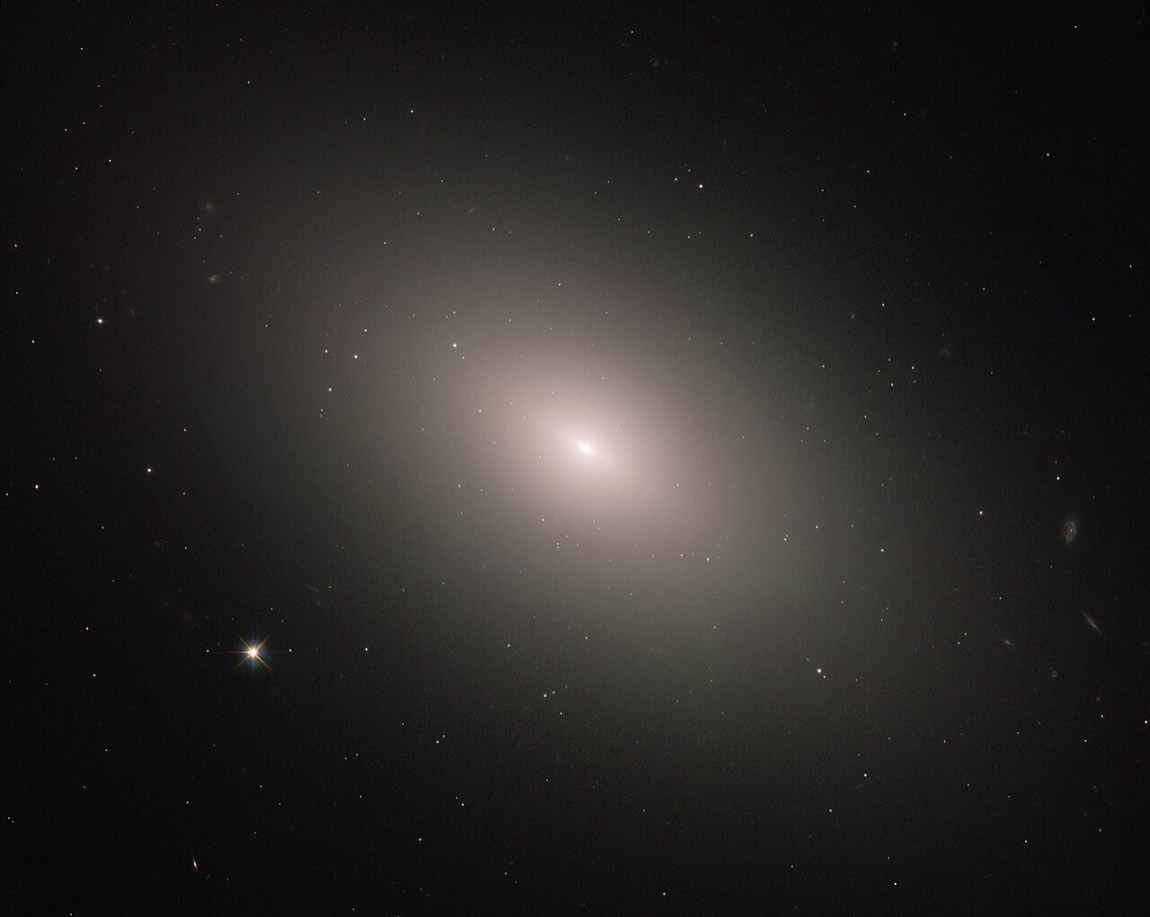
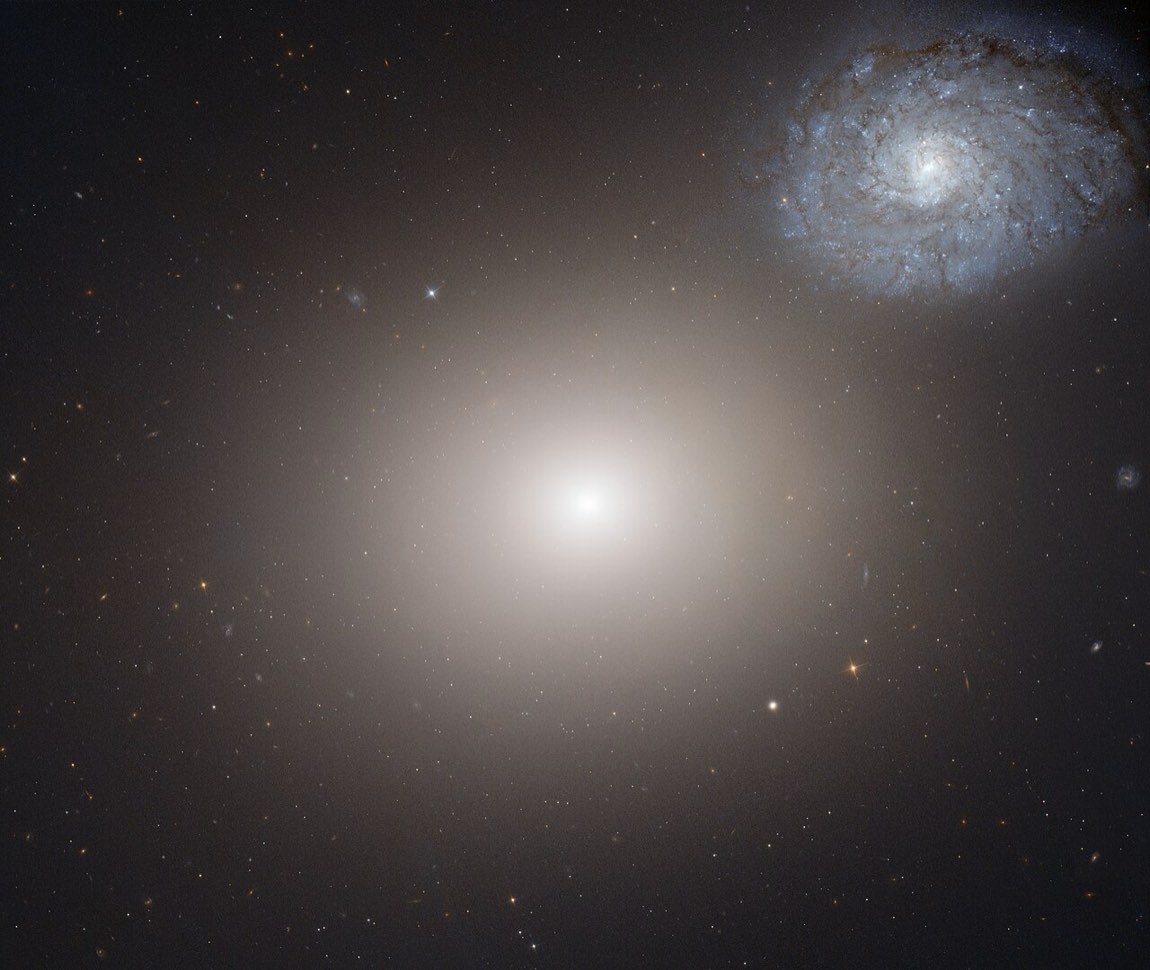
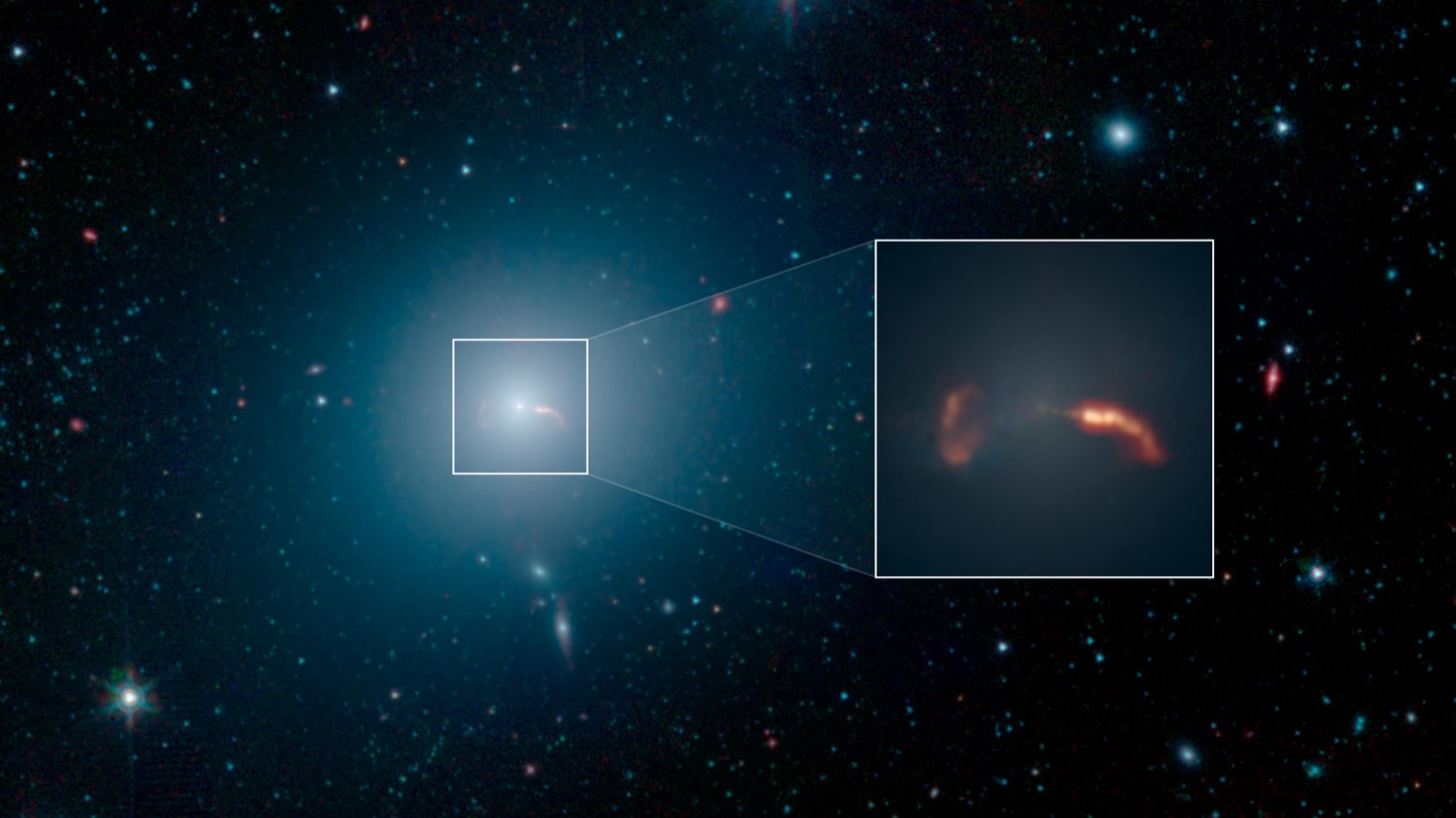
Messier 58 is a barred spiral galaxy in Virgo and one of the brightest members of the Virgo Cluster. Messier discovered it in April 1779, the same night he found M59 and M60. It is one of only four barred spirals in his catalogue. Like several spirals in the crowded Virgo Cluster, it is short of gas, probably stripped by the cluster's hot gas, so it forms relatively few new stars. At roughly 68 million light-years, it was one of the farthest objects anyone had seen at the time, although nobody then knew how far away it was.
The deep dive
Researched for the Atlas from Wikipedia — Messier 58 (2,772 characters read) · updated Nov 15, 2026
01 A Galaxy Hiding an Unusual Ring
Among the thousands of galaxies astronomers have catalogued, Messier 58 belongs to a tiny, privileged group that possesses something called a UCNR — an ultra-compact nuclear ring. This is a tightly packed series of star-forming regions arranged in a very small ring encircling the galaxy's core, sitting far closer to the center than the grand spiral arms extending outward. The structure is so unusual that the popular astronomy YouTube channel Deep Sky Videos nicknamed M58 the "ring bearer galaxy." Most spiral galaxies simply do not have this feature at all, making M58 a valuable laboratory for understanding how star formation can be triggered and organized right at the heart of a galaxy. The ring sits alongside an active galactic nucleus — suggesting that processes at the very center of M58 are more complex, and more energetic, than a casual glance at its soft oval glow in a telescope eyepiece would ever hint.
02 The Supermassive Beast at the Core Deeper
Buried at the center of M58 is a supermassive black hole estimated to have a mass of around 70 million solar masses. To put that in perspective, our own Milky Way's central black hole, Sagittarius A*, has a mass of roughly 4 million solar masses — M58's black hole is more than seventeen times heavier. The black hole is associated with a low-luminosity active galactic nucleus, meaning it is actively consuming surrounding material and radiating energy, but at a relatively modest level compared to the most powerful quasars in the universe. Astronomers suspect a starburst — a period of unusually rapid star formation — may also be present alongside the nucleus, which would mean the innermost region of M58 is simultaneously feeding a black hole and giving birth to new stars. Disentangling those two processes from one another is one of the ongoing challenges of studying this galaxy.
03 Why M58 Is Starving for Gas
Messier 58 is classified as an anemic galaxy, a label that captures something genuinely strange about it: it has far less neutral hydrogen gas than other spiral galaxies of similar shape and size. Neutral hydrogen is the raw fuel from which new stars are made, so a shortage of it directly explains why M58 shows only low star formation activity. What little gas remains is concentrated inside the galaxy's optical disk, clumped in irregular pockets rather than spread smoothly across it. The leading explanation for this gas deficiency points to the environment M58 lives in. As the galaxy moves through the Virgo Cluster, it plows through the intracluster medium — a diffuse, hot gas that fills the space between cluster galaxies. This interaction essentially strips and suppresses M58's hydrogen supply, a process astronomers call ram-pressure stripping. M58 shares this fate with other Virgo spirals, including Messier 90, suggesting the cluster itself is slowly starving its own members.
04 Two Supernovae in Thirty-Six Years
Messier 58 has hosted two observed supernovae in relatively quick succession. The first, SN 1988A, was a Type II supernova — the explosive death of a massive star that runs out of nuclear fuel — discovered on January 18, 1988 by four independent observers: Kaoru Ikeya, Robert Evans, Christian Pollas, and Shingo Horiguchi. It reached a magnitude of 13.5 and was found 40 arcseconds south of the galaxy's center. The second event, SN 1989M, arrived barely a year and a half later. Discovered on June 28, 1989 by Givi N. Kimeridze, it was a Type Ia supernova — a thermonuclear explosion of a white dwarf that has accumulated too much mass from a companion star. SN 1989M was noticeably brighter, reaching magnitude 12.2, and was located 33 arcseconds north and 44 arcseconds west of the galaxy's nucleus. Having two supernovae recorded from a single galaxy within such a short window gave astronomers a rare opportunity to study both flavors of stellar death in the same galactic environment.
05 One of the Sky's Brightest Cluster Galaxies
The Virgo Cluster contains well over a thousand galaxies, yet Messier 58 stands out as one of the brightest among them. Its apparent magnitude means it is accessible to amateur astronomers with modest telescopes, making it one of the more rewarding deep-sky targets in the spring sky. It sits within the constellation Virgo, close to the same celestial parallel as the star Epsilon Virginis — a positional coincidence that is exactly why Charles Messier noticed it in the first place, since the comet he was tracking in 1779 was sweeping past that region. M58 is also one of only four barred spiral galaxies included in Messier's entire catalogue, a detail that gives it a small but specific distinction among the 110 objects Messier documented. Observers throughout history have noted how dramatically its brightness increases toward the center, a characteristic that makes it unmistakable compared to the more uniformly lit background haze around it.
06 The Farthest Known Object — Without Knowing It Deeper
When Charles Messier catalogued M58 on April 15, 1779, neither he nor anyone else understood what galaxies actually were. They appeared as faint smudges — nebulae, astronomers called them — and there was no reliable way to gauge their distance. Yet in hindsight, M58, sitting approximately 68 million light-years from Earth, was arguably the most distant object that any human had ever recorded in a systematic astronomical catalogue. That distinction held, by one reading of the evidence, from 1779 until the publication of the New General Catalogue in the 1880s, and even more so until the 1920s, when Edwin Hubble and others began measuring galaxy redshifts and the true scale of the universe became apparent. It is a quietly remarkable historical fact: for over a century, an object 68 million light-years away sat in a catalogue as nothing more than a "very faint nebula in Virgo," its extraordinary distance completely invisible to those who recorded it.
07 From "Very Faint" to "Very Bright": A History of Disagreement
The observational history of M58 offers an intriguing small mystery in the annals of astronomy. Charles Messier, who discovered it in 1779, described the galaxy as so faint that it would vanish whenever he used even a slight amount of light to illuminate his micrometer wires — instruments he used to measure positions precisely. His description paints a picture of an elusive, ghostly object. Yet when John Herschel turned his telescope toward the same patch of sky in 1833, his account could hardly have been more different: he described M58 as very bright, particularly toward the middle. John Dreyer and William Henry Smyth, two other respected observers, agreed with Herschel, characterizing it as bright, mottled, irregularly round, and very much brighter toward the center. The discrepancy likely reflects differences in telescope aperture, atmospheric conditions, and the light-pollution environment of eighteenth-century Paris versus nineteenth-century English observing sites — but it is a good reminder that early observational astronomy was far from a uniform enterprise.
08 Bars, Spirals, and a Weak Inner Ring Deeper
Messier 58's official classification — intermediate barred spiral galaxy with a weak inner ring structure — packs considerable meaning into a compact phrase. The word "intermediate" signals that M58 sits between a pure barred spiral, where a strong bar of stars cuts clearly across the galactic center, and an ordinary unbarred spiral. The bar is present and real, but not especially dominant. Beyond the bar, spiral arms wind outward, studded with star-forming regions. And surrounding the bar, there is a weak inner ring structure — a broader, more diffuse ring of material that encircles the central bar before giving way to the outer disk. This layered architecture — a compact nuclear ring closest to the center, then a bar, then a weak inner ring, then extended spiral arms — gives M58 a nested, almost concentric appearance. Each structural zone represents a different balance of gravitational forces and gas dynamics, and together they make M58 a geometrically rich object for astronomers studying how galactic structure shapes star formation.
09 How to Find and Observe M58
Messier 58 is located in the constellation Virgo and is best observed during spring evenings in the Northern Hemisphere. Its position near the celestial parallel of Epsilon Virginis — the same alignment that led Messier to notice it while tracking a comet in 1779 — provides a useful navigational anchor for modern observers. As one of the brightest members of the Virgo Cluster, it rewards even modest amateur telescopes; small instruments will reveal its oval glow and the pronounced brightening toward the center that so impressed John Herschel in 1833. Larger apertures and darker skies begin to show hints of the mottled texture that Dreyer and Smyth described, the subtle unevenness of the disk that reflects the clumped neutral hydrogen and the patchy star formation concentrated within it. M58 is also worth comparing directly with its neighbors: Messier 59 and Messier 60, both elliptical galaxies, were discovered by Messier on the very same night, and all three appear in a relatively compact region of the sky.