Speculative Physics
Wormholes
TheoreticalThe idea
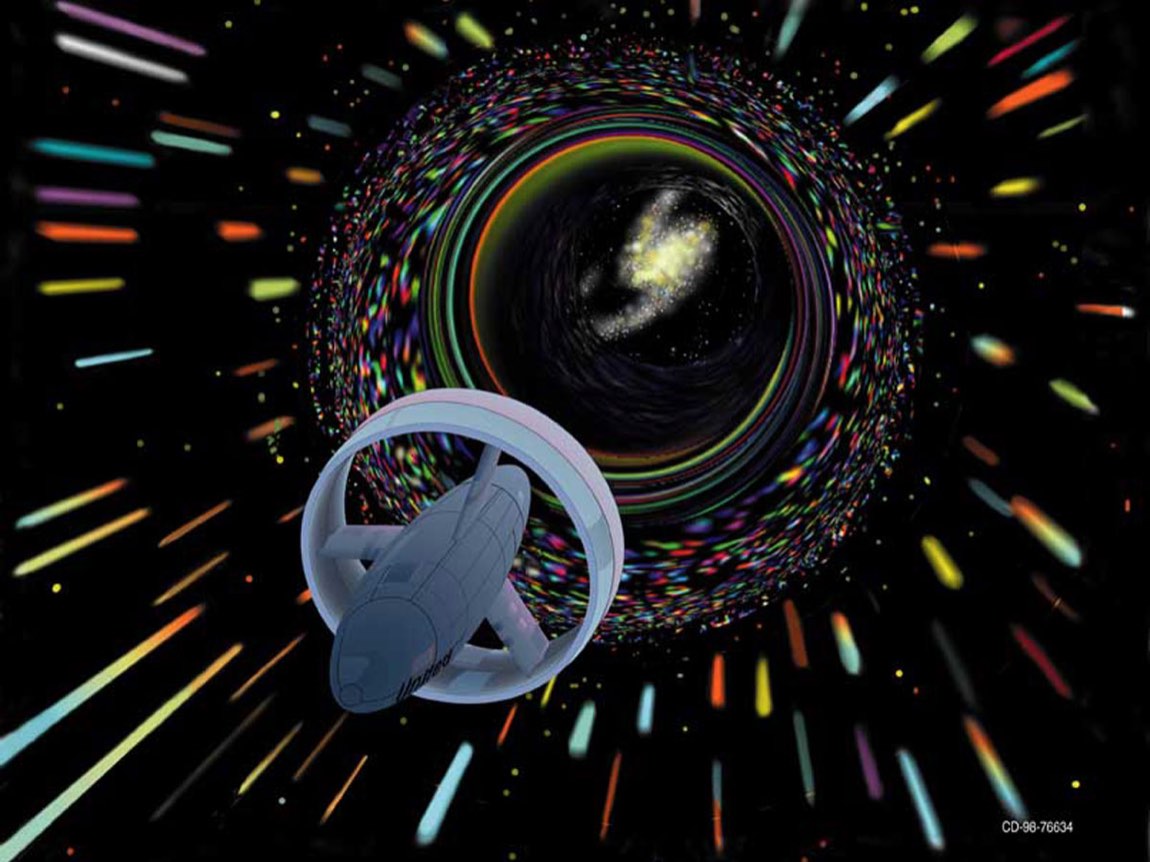
A wormhole is a shortcut: a tunnel connecting two distant points of space-time, so you might cross the galaxy without crossing the space between. They are legitimate solutions of Einstein's equations — and there is zero evidence any exist. Keeping one open would require 'exotic matter' with negative energy, something never observed in usable form.
Go deeper Advanced
The Einstein–Rosen bridge (1935) collapses too fast to traverse; Morris–Thorne traversable versions (1988) formalized the exotic-matter requirement. Quantum effects (Casimir energy) show negative energies exist microscopically — nowhere near wormhole scales. Current research treats them mostly as thought experiments probing quantum gravity (ER=EPR). Label: Theoretical, honestly.
The deep dive
Researched for the Atlas from Wikipedia — Wormhole (24,177 characters read) · updated Sep 20, 2026
01 How the word 'wormhole' was coined
The path from mathematical curiosity to household word is surprisingly tangled. In 1928, German mathematician Hermann Weyl proposed what he called 'one-dimensional tubes' while analysing the mass of electromagnetic field energy — he never used the word wormhole. That same year, British astronomer Arthur Eddington used the phrase 'worm-holes' in his popular book The Nature of the Physical World, but he meant it as a metaphor for material particles crossing the grain of spacetime, not a tunnel between distant places. The coinage we use today came from American theoretical physicist John Archibald Wheeler, inspired by Weyl's work. In a 1957 paper co-authored with Charles W. Misner, Wheeler described a net flux of field lines passing through what topologists call 'a handle' of a multiply-connected space, and proposed that physicists might be 'excused for more vividly terming' it a wormhole. That single parenthetical flourish stuck, and the name has anchored the concept ever since — even though the structure Wheeler was describing was not yet shown to be traversable.
02 Flamm's forgotten bridge, found in 1916
Within months of Karl Schwarzschild publishing his famous metric solution to Einstein's field equations in late 1915, Austrian physicist Ludwig Flamm noticed something strange embedded in the mathematics: a geometric bridge connecting two separate sheets of spacetime. Flamm described this in 1916, making it the first discovery of what we now call an Einstein–Rosen bridge, though almost no one noticed at the time. Nearly two decades later, Albert Einstein and his colleague Nathan Rosen independently rediscovered the same structure and published their result in July 1935. Their paper described four-dimensional space as two congruent 'sheets' joined at a hyperplane where the metric component g vanishes — they called that connection a 'bridge'. For the combined gravity-and-electricity case they derived a solution incorporating electric charge ε. In 1962, John Archibald Wheeler and Robert W. Fuller showed mathematically that this bridge is unstable: it pinches off too quickly for light, or anything slower than light, to cross from one exterior region to the other.
03 Why Schwarzschild wormholes slam shut
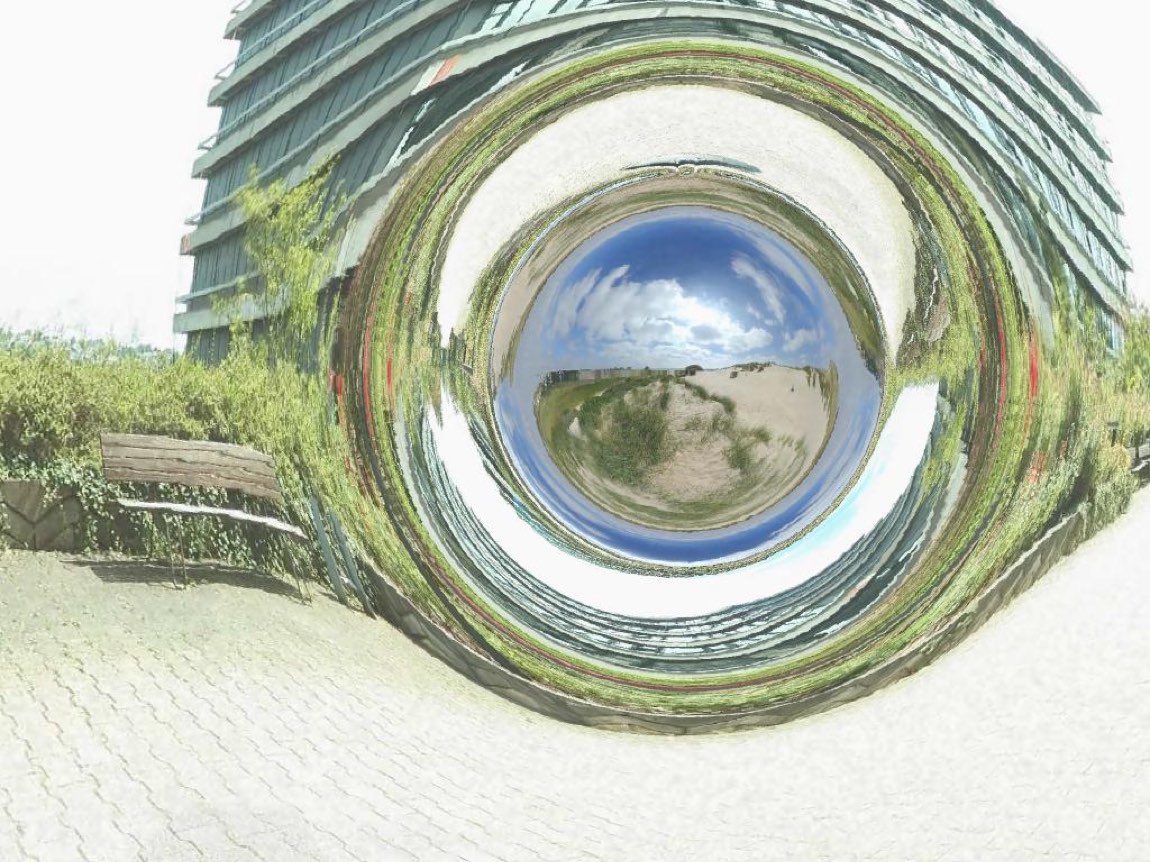
The Einstein–Rosen bridge looks, in an embedding diagram, like a smooth tube connecting two separate universes. But looks deceive. Wheeler and Fuller's 1962 analysis proved that if such a bridge links two parts of the same universe, it collapses before any signal — even a light beam — can make the crossing. The reason lies in the maximally extended Schwarzschild solution, which describes an eternal black hole with no charge and no rotation. That solution contains not just the familiar black hole interior but also a 'white hole' interior region and a second exterior universe. When you add the realistic ingredient of infalling stellar matter — as you must for any black hole that actually formed from a collapsing star — the white hole region and the second universe are erased from the diagram entirely. What remains is a one-way door: particles fall in from one exterior, but no bridge persists long enough to connect the two sides. This is why Schwarzschild wormholes, though genuine solutions to Einstein's equations, are classified as non-traversable.
04 Exotic matter: the price of keeping a tunnel open Deeper
Holding a wormhole throat open against gravitational collapse requires something deeply strange: matter with negative energy density, often called exotic matter. The reason is rooted in the optical form of Raychaudhuri's theorem. Imagine an incoming sheet of light traveling along geodesics, passing through the wormhole neck, and re-expanding on the far side. That expansion must change sign — from negative to positive — at the throat. For this to happen without the formation of caustics, the averaged null energy condition must be violated. Ordinary matter always satisfies that condition; violating it requires energy densities that dip below the vacuum. The Casimir effect, a quantum phenomenon, does produce negative energy densities in certain geometries, so the violation is not forbidden in principle. Early calculations suggested enormous quantities of negative energy would be needed, but later work showed the required amount can in theory be made arbitrarily small. The averaged null energy condition also cannot be violated in flat spacetime by quantum effects, but semiclassical gravity calculations suggest violations may be possible in curved spacetime — leaving the door open, just barely.
 ⤢
⤢
05 Homer Ellis and the drainhole no one noticed Deeper
The first rigorous proof that traversable wormholes are consistent with general relativity came not from a famous name but from a relatively obscure 1973 paper by Homer Ellis. Working independently, K. A. Bronnikov published the same result the same year. Ellis studied what he called the 'drainhole,' a solution to Einstein's field equations for a vacuum spacetime modified by a scalar field minimally coupled to the Ricci tensor with what he termed 'antiorthodox polarity' — meaning negative rather than positive coupling. Ellis deliberately avoided calling this field exotic, finding arguments for that label unpersuasive. The drainhole depends on two parameters: m, which sets the strength of its gravitational field, and n, which determines the curvature of its spatial cross sections. Setting m equal to zero removes gravity entirely, leaving the Ellis wormhole: a purely geometric, non-gravitating, completely traversable tunnel. Kip Thorne and his graduate student Mike Morris rediscovered this solution independently in 1988 and argued for using it to teach general relativity. The version they proposed, held open by a spherical shell of exotic matter, became known as the Morris–Thorne wormhole.
06 Converting a space tunnel into a time machine
In 1988, Morris, Thorne, and Yurtsever worked out a concrete mechanism by which a wormhole connecting two regions of space could be converted into a time machine. The key ingredient is relativistic time dilation. Take one mouth of a traversable wormhole and accelerate it to a significant fraction of the speed of light, then bring it back to near the other mouth. Because the accelerated mouth travels at relativistic speed, it ages less than the stationary mouth — it becomes 'younger.' Alternatively, place one mouth in a region of stronger gravity, where clocks run slower, and later retrieve it. In either case, clocks at the two mouths, measured by someone passing through the wormhole, remain synchronised. But to an outside observer they now show different times. An observer entering the younger mouth exits the older mouth at the moment when it was the same age as the younger one — effectively arriving in the past. One hard limit applies: you cannot travel back to a time before the wormhole was first set up as a time machine.
07 Matt Visser's 1993 causality argument Deeper
Even granting that a traversable wormhole could be built and converted into a time machine, using it to violate causality faces a further obstacle identified by Matt Visser in 1993. Visser argued that bringing the two mouths of a clock-shifted wormhole close together would trigger quantum field and gravitational backreaction effects severe enough to either collapse the wormhole entirely or cause its mouths to repel each other, preventing information from passing through. Because the mouths could never be brought close enough, causality violation would be self-prevented. Visser did not stop there: in a 1997 paper he described a 'Roman ring' — a symmetric polygon of N wormholes named after physicist Tom Roman — that might in principle still function as a time machine even accounting for these effects. However, Visser himself concluded the Roman ring result was more likely a flaw in classical quantum gravity theory than evidence that causality violation is genuinely achievable. The debate remains unresolved.
08 Cosmic strings and naturally made wormholes
Most wormhole discussions focus on hypothetical engineered structures, but in 1995 Matt Visser raised the possibility that the universe might already contain many wormholes formed naturally. His argument depended on cosmic strings — hypothetical one-dimensional defects in spacetime that some models of the early universe predict were produced as it cooled after the Big Bang. If cosmic strings with negative mass were generated in that early period, Visser suggested they could hold open wormhole throats without any need for artificially assembled exotic matter. Separately, Visser collaborated with Cramer and others to propose that a tiny wormhole held open by a negative-mass cosmic string could have appeared around the time of the Big Bang and subsequently been stretched to macroscopic size by cosmic inflation, in the same way that quantum fluctuations were inflated into the large-scale structure of the universe. This speculative but testable-in-principle scenario links wormhole physics directly to early-universe cosmology.
 ⤢
⤢
09 The ER = EPR conjecture Deeper
The only known natural process theoretically predicted to form a wormhole within the joint framework of general relativity and quantum mechanics comes from a conjecture advanced by Juan Maldacena and Leonard Susskind. Their proposal, abbreviated ER = EPR, asserts that an Einstein–Rosen bridge (ER) and quantum entanglement (EPR, named after the Einstein–Podolsky–Rosen thought experiment) are not merely analogous but are the same phenomenon described in different languages. Under this view, two entangled particles are connected by a microscopic wormhole. The conjecture emerged from thinking about black hole information paradoxes and the structure of entangled black hole pairs in the context of the AdS/CFT correspondence. If correct, it would mean wormholes are not exotic rarities but are woven into the fabric of quantum entanglement everywhere in the universe. The conjecture is not yet proven and remains one of the most actively debated ideas at the intersection of quantum information theory and quantum gravity.
10 Wormholes as dark matter candidates
The quantum foam hypothesis proposes that at the Planck scale — the smallest meaningful length in quantum gravity, roughly 1.6 × 10⁻³⁵ metres — spacetime itself is not smooth but seething with transient fluctuations. Tiny wormholes might flicker in and out of existence in this foam spontaneously. The article notes that stable versions of such microscopic wormholes have been proposed as candidates for dark matter, the invisible substance that accounts for the majority of matter in the universe by mass. The idea is speculative: no direct evidence links wormholes to dark matter, and no observational signature has been identified that would distinguish a wormhole-based dark matter particle from other candidates. Nevertheless the proposal illustrates how wormhole physics, usually discussed in the context of exotic interstellar travel, connects to one of the central unsolved problems in modern astrophysics.
11 When exotic matter might not be needed Deeper
The requirement for exotic matter, long seen as the most serious obstacle to real wormholes, may not be universal. Several lines of research suggest exceptions. Matt Visser showed in a 1989 paper that wormhole geometries exist in which the path through the tunnel never passes through a region containing exotic matter, even though some negative energy is present elsewhere in the structure. More strikingly, in pure Gauss–Bonnet gravity — a modification of general relativity involving extra spatial dimensions sometimes studied in brane cosmology — wormholes can exist with no matter at all, exotic or otherwise. At a more microscopic level, physicists have reported that traversable wormholes may be possible using only electrically charged fermionic matter with a mass small enough that it cannot collapse into a charged black hole, with no exotic matter required. Such wormholes might, however, be limited to transferring information rather than people. Finally, in R² gravity, a form of f(R) modified gravity, wormholes can exist without collapsing and without exotic matter, relying instead on higher-order curvature terms in the gravitational action.
12 Interuniversal travel and many worlds
Wormhole time machines raise uncomfortable paradoxes — most famously, what happens if you travel back and prevent your own birth. One proposed resolution invokes the many-worlds interpretation of quantum mechanics. In 1991, David Deutsch showed that quantum theory can remain self-consistent, in the sense that the density matrix is free of discontinuities, in spacetimes containing closed timelike curves. Under this picture, a particle that travels back through a wormhole does not return to its own universe of origin but emerges into a parallel universe, sidestepping the paradox. A wormhole with an exceedingly short time-jump would then act as a bridge between contemporaneous parallel universes rather than as a grandfather-paradox machine. This connection was further elaborated through the concept of an 'Everett phone,' named after Hugh Everett, in the context of Joseph Polchinski's proposal within Steven Weinberg's formulation of nonlinear quantum mechanics. The broader possibility of such communication between parallel universes has been called interuniversal travel, though it remains entirely theoretical.
13 Open questions that keep physicists up at night
Despite decades of work, wormhole physics is riddled with unresolved problems. Whether exotic matter with negative energy density can exist in the quantities and configurations a traversable wormhole requires is still unknown. The averaged null energy condition appears to be violated in curved spacetime according to semiclassical gravity, and an achronal version of that condition was once hoped to be inviolable — but violations have since been found, leaving the theoretical door open. Whether quantum backreaction would always destroy a wormhole throat before it could be used for time travel, as Visser's 1993 argument suggested, or whether configurations like the Roman ring evade this, is unresolved. The ER = EPR conjecture, if true, would fundamentally rewrite the relationship between gravity and quantum mechanics, but it has not been proved. And at the most fundamental level, no wormhole of any kind has ever been observed; every result discussed above is purely mathematical. Whether wormholes are physical or merely elegant solutions to equations remains the deepest open question of all.
✦ Keep exploring