Astrophysics
Quantum Mechanics (for Stargazers)
ConfirmedThe idea
The rulebook of the very small, where particles behave like waves, exist in blends of states until measured, and tunnel through barriers they 'shouldn't' cross. Astronomy runs on it: fusion in the Sun requires quantum tunneling; white dwarfs are held up by quantum crowding rules; the colors in every nebula are quantum jumps between fixed energy rungs.
Go deeper Advanced
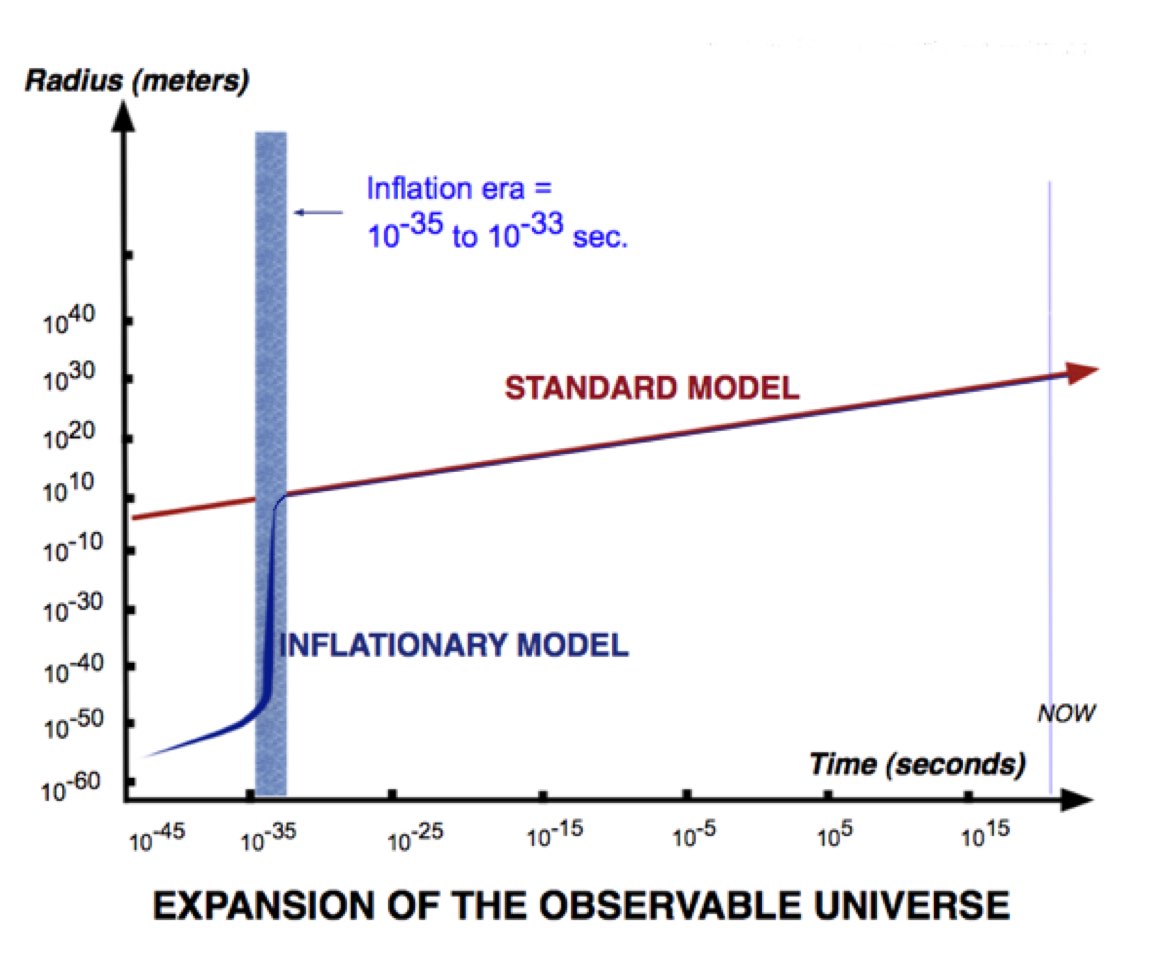
Degeneracy pressure (Pauli exclusion) sets white-dwarf and neutron-star structure; tunneling sets stellar burning rates; quantized transitions make every emission line — the 21-cm hydrogen line maps the galaxy. Quantum fluctuations during inflation seeded galaxies: the largest structures in existence began as the smallest uncertainties. Gravity's quantum theory remains unfinished — physics' deepest open seam.
The deep dive
Researched for the Atlas from Wikipedia — Quantum mechanics (58,000 characters read) · updated Sep 20, 2026
01 How Planck and Einstein cracked open the quantum world
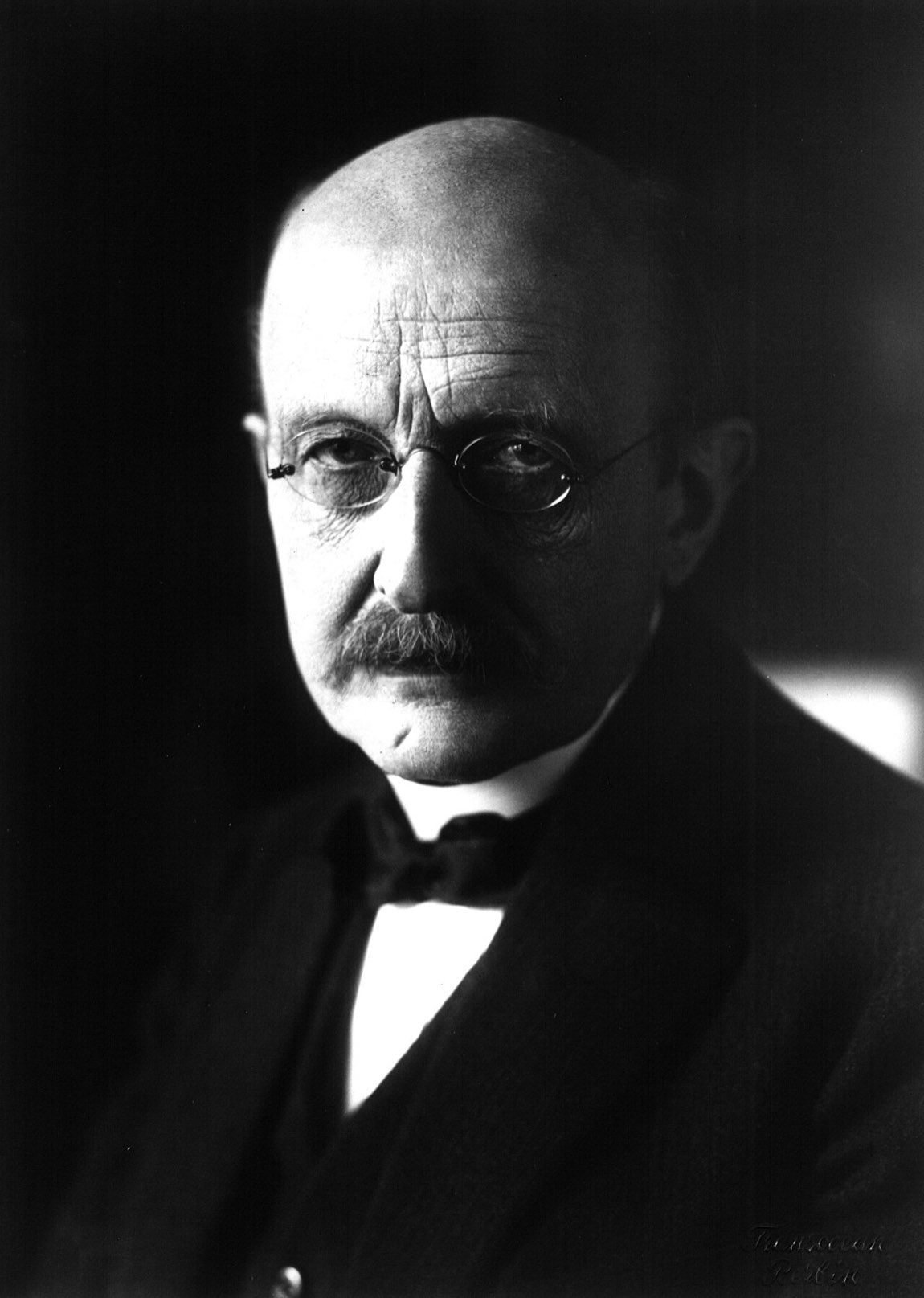
The story of quantum mechanics begins not with a grand theory but with an embarrassing failure. In 1900, Max Planck was struggling to explain black-body radiation — the glow of heated objects — which classical physics predicted would release infinite energy at high frequencies, a disaster known as the ultraviolet catastrophe. Planck's solution was to assume that energy could only be emitted in discrete packets, or quanta, rather than in a continuous stream. Five years later, in 1905, Albert Einstein took the idea further. In a paper explaining the photoelectric effect — the way light knocks electrons off metal surfaces — Einstein argued that light itself travels in discrete energy packets, later called photons, with each packet's energy directly proportional to its frequency. These two papers, separated by just five years, shattered the assumption that nature was fundamentally smooth and continuous. The period between these early breakthroughs and the full theory is called the 'old quantum theory,' a patchwork of brilliant guesses that pointed toward something deeper but could not yet explain it.
02 The founders who built the full theory in the 1920s
The leap from promising guesses to a rigorous theory happened with remarkable speed in the mid-1920s. Niels Bohr, Erwin Schrödinger, Werner Heisenberg, Max Born, Paul Dirac, and others all contributed essential pieces in quick succession. Heisenberg developed matrix mechanics, treating physical quantities as arrays of numbers obeying strict rules. Schrödinger, independently, arrived at wave mechanics, describing quantum states through a wave function that evolves according to his now-famous equation. Paul Dirac then showed that these two formulations — which looked completely different — were mathematically equivalent, unifying them in what he called transformation theory. Max Born supplied the crucial interpretive step: the wave function's squared amplitude gives the probability of finding a particle at a given location, a rule now carrying his name. This extraordinary collaborative burst produced, in just a few years, the mathematical skeleton that physicists still use today to calculate everything from atomic spectra to the behavior of semiconductors.
03 What the wave function actually tells you
The wave function is quantum mechanics' central object, and understanding what it does — and does not — say is essential. For a particle like an electron, the wave function assigns a complex number called a probability amplitude to every point in space. To find the actual probability of detecting the electron at a particular location, you apply the Born rule: square the absolute value of that amplitude. The wave function itself is not directly observable; only these squared probabilities connect to experiment. The Schrödinger equation governs how the wave function changes over time, and that evolution is completely deterministic — given the wave function at one moment, the equation predicts it exactly at any later moment. The apparent randomness of quantum mechanics enters only at the moment of measurement, when the wave function is said to collapse to a definite outcome. This tension between deterministic evolution and probabilistic measurement remains one of the most debated aspects of the theory, with different interpretations giving radically different answers about what collapse actually means physically.
 ⤢
⤢
04 The uncertainty principle is not about clumsy measurements
A common misconception frames the uncertainty principle as a technological limitation — if only we had more delicate instruments, we could measure both position and momentum precisely at once. This is wrong. The uncertainty principle is baked into the mathematical structure of quantum mechanics: the position and momentum operators do not commute, meaning the order in which you apply them matters, and this non-commutativity directly produces the inequality stating that the product of the standard deviations of position and momentum must be at least ℏ/2, where ℏ is the reduced Planck constant. The constraint applies to any quantum particle regardless of how carefully experiments are arranged. A vivid illustration comes from the Gaussian wave packet example: making the packet narrower in position space simultaneously spreads it wider in momentum space, and vice versa. This is not a measurement disturbance — it reflects the fact that a quantum state simply does not possess simultaneously sharp values of both quantities. The same general principle applies to any pair of observables whose operators do not commute.
05 Wave–particle duality through the double slit
The double-slit experiment remains the clearest demonstration of wave–particle duality, the quantum property where systems show characteristics of both waves and particles depending on how you look at them. In the basic setup, a coherent light source such as a laser illuminates a plate with two parallel slits, and the light is detected on a screen behind. Wave interference creates bright and dark bands — a pattern impossible if light were simply a stream of classical particles traveling through one slit or the other. Yet the light always arrives at the screen as discrete hits at individual points, exactly as particles would. The interference pattern emerges only from the statistical distribution of many such hits. Crucially, if detectors are placed at the slits to reveal which path each photon took, the interference pattern vanishes entirely. This is not just true of light: electrons, atoms, and molecules all exhibit the same dual behavior when directed toward a double slit. The experiment neatly encapsulates why quantum mechanics cannot be reduced to a simple picture of either waves or particles alone.
06 Quantum tunnelling: crossing barriers without the energy
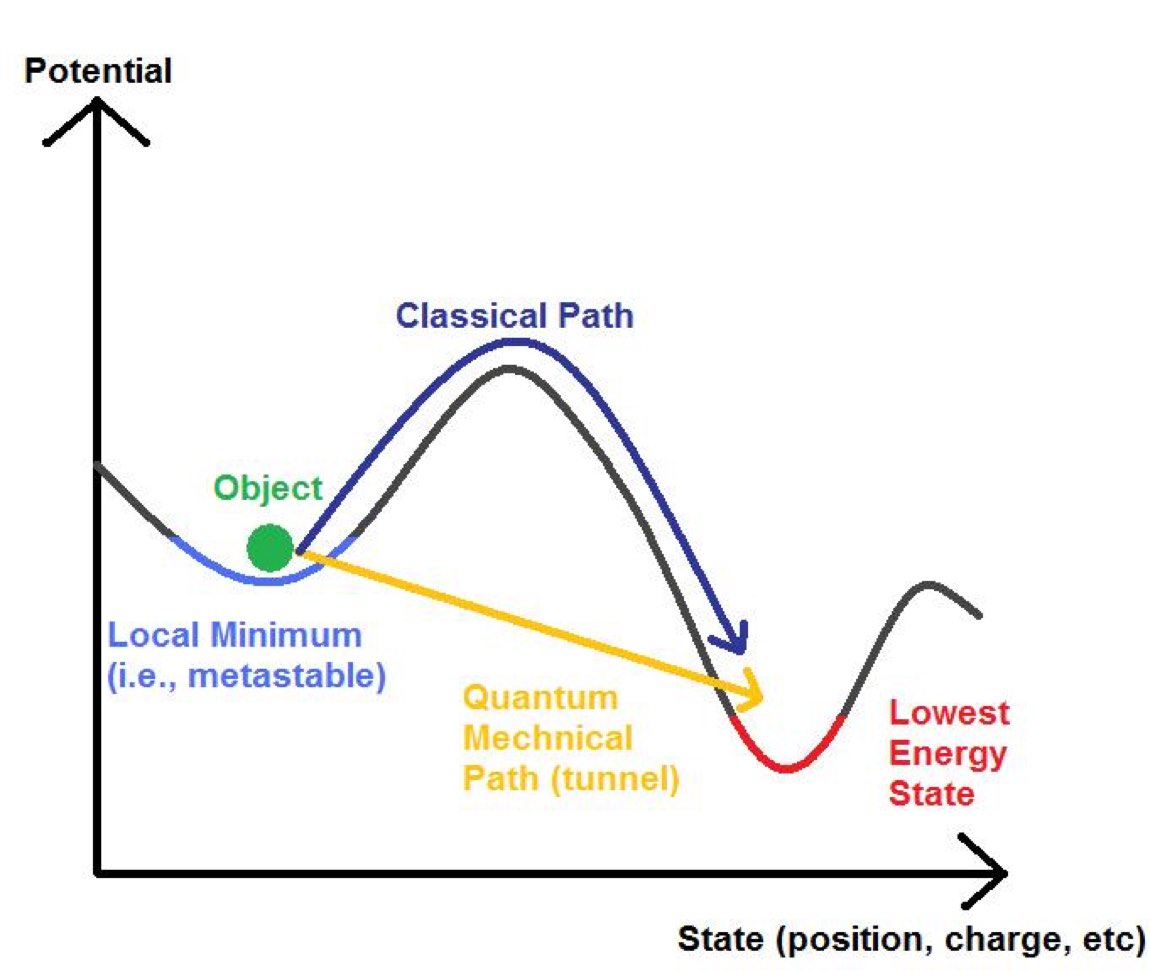
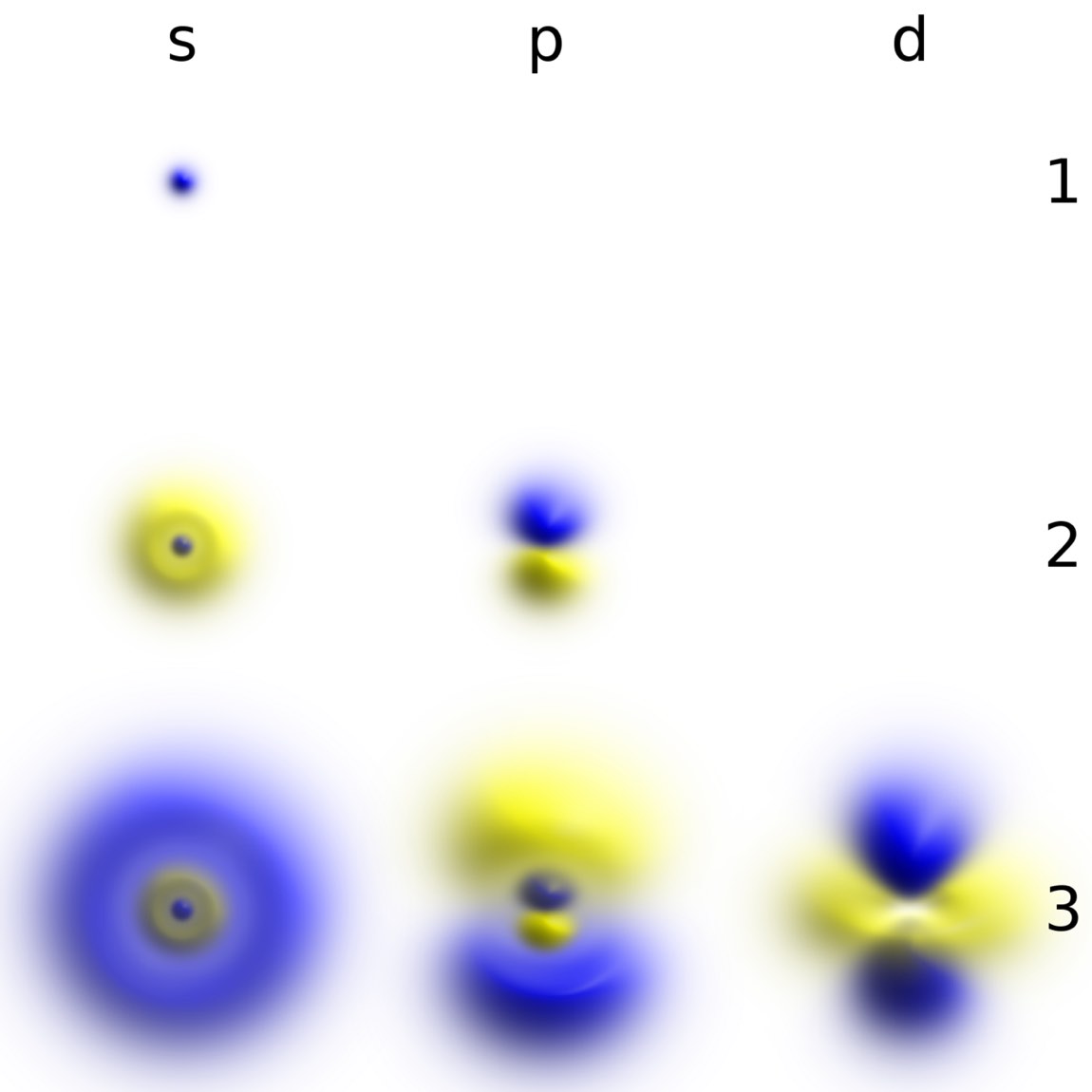
Classical physics is strict about energy barriers: a ball rolling toward a hill it lacks the energy to crest will always roll back. Quantum mechanics breaks this rule through tunnelling. Because a particle's state is described by a wave function with nonzero amplitude even inside and beyond a classically forbidden barrier, there is a real probability that the particle will appear on the other side despite having kinetic energy smaller than the barrier's maximum potential. Tunnelling is not a curiosity — it drives consequential real-world phenomena. Radioactive decay relies on particles tunnelling out of atomic nuclei. Nuclear fusion in stars proceeds at temperatures far lower than classical physics would require, because protons can tunnel through the electrostatic repulsion separating them. In technology, the same effect underlies scanning tunnelling microscopy, the tunnel diode, and the tunnel field-effect transistor. The rectangular potential barrier, a simplified model of this situation, is a standard solved problem in quantum mechanics and provides the theoretical foundation for understanding all these applications.
 ⤢
⤢
07 Entanglement: when parts cannot describe the whole Deeper
When two quantum systems interact, the combined system lives in a Hilbert space that is the tensor product of the two individual Hilbert spaces. Most states in this combined space cannot be written as a simple product of one state for system A and one state for system B. These non-separable states are entangled, and Erwin Schrödinger described entanglement as 'the characteristic trait of quantum mechanics, the one that enforces its entire departure from classical lines of thought.' In an entangled pair, measuring one particle instantly constrains what you can know about the other, no matter how far apart they are. It is tempting to imagine this as faster-than-light signaling, but the no-communication theorem rules this out — the correlations are real, but you cannot use them to transmit information. Entanglement enables quantum computing and underpins quantum communication protocols including quantum key distribution and superdense coding. When a quantum system interacts with its environment and becomes entangled with it, a process called quantum decoherence occurs, which helps explain why large everyday objects do not display obvious quantum behavior.
08 Bell's theorem and the death of hidden variables Deeper
After quantum mechanics was established, a natural question arose: could the theory's apparent randomness be just ignorance — might there be deeper, hidden variables that, if known, would restore deterministic predictions? Bell's theorem answered this with a decisive mathematical argument. If nature operates according to any theory of local hidden variables, then the statistical results of certain experiments — Bell tests — must fall within specific quantifiable limits. Experimenters have performed many Bell tests, and the results have consistently fallen outside those limits, incompatible with local hidden variables. The article notes that a collection of results, most significantly Bell's theorem, have demonstrated that broad classes of hidden-variable theories are in fact incompatible with quantum physics. This is one of the most profound experimental results in the history of science: not merely confirming a prediction, but ruling out an entire category of possible deeper theories. The debate over what this means for the nature of reality continues, but the experimental verdict against local hidden variables is clear.
09 How accurate is quantum mechanics, really?
Quantum mechanics is not just conceptually striking — it is the most precisely verified theory in all of science. The benchmark example comes from quantum electrodynamics, or QED, which refines quantum mechanics to handle the interactions of light and matter. QED predictions for the magnetic properties of the electron have been confirmed by experiment to within 1 part in 10¹², a degree of agreement comparable to measuring the distance from Earth to the Moon with an error smaller than the width of a human hair. The theory has also been tested on systems of startling complexity: quantum mechanics has been demonstrated to hold for complex molecules containing thousands of atoms. Its predictive success extends across quantum chemistry, quantum biology, quantum field theory, quantum technology, and quantum information science. This breadth and precision make quantum mechanics uniquely powerful, yet also make the remaining interpretational puzzles — what measurement really means, how classical behavior emerges from quantum rules — all the more pressing, since the formalism clearly works even when its physical meaning is disputed.
 ⤢
⤢
10 Energy quantization: the particle in a box Deeper
One of the simplest systems that shows how quantum confinement forces energy to take only discrete values is the particle in a one-dimensional box. Imagine a particle trapped between two impenetrable walls separated by a distance L, with zero potential energy inside and infinite potential outside. Solving the time-independent Schrödinger equation with the requirement that the wave function vanish at both walls forces the allowed wave vectors to be integer multiples of π/L. This constraint directly determines the allowed energies, given by Eₙ = n²h²/(8mL²), where n is any positive integer, h is Planck's constant, and m is the particle's mass. The integer n, called a quantum number, can only take values 1, 2, 3, and so on — never zero and never fractional. Energy cannot vary continuously; it must jump between these discrete rungs. Real physical systems — electrons in atoms, vibrations in molecules — are more complicated, but this box model captures the essential mechanism: spatial confinement by boundary conditions forces quantization, turning what classical physics treats as a continuous spectrum into a ladder of distinct allowed states.
11 The harmonic oscillator and its zero-point energy Deeper
The quantum harmonic oscillator — a particle subject to a restoring force proportional to its displacement — is one of the most important exactly solvable models in all of physics, because almost any system near a stable equilibrium behaves like one. The allowed energy levels are Eₙ = ℏω(n + 1/2), where ω is the oscillator's angular frequency, ℏ is the reduced Planck constant, and n is a non-negative integer (0, 1, 2, ...). The levels are evenly spaced, each separated by ℏω. Most striking is the ground-state energy when n = 0: it equals ℏω/2, not zero. This irreducible zero-point energy has no classical counterpart — classically a harmonic oscillator at rest has zero energy. The zero-point energy is a direct consequence of the uncertainty principle: a perfectly stationary particle would have both definite position and definite momentum, which is forbidden. Paul Dirac developed an elegant algebraic approach to this problem using ladder operators, sometimes called the creation and annihilation operators, which raise or lower the quantum number n by one step and have become indispensable tools throughout quantum field theory.
12 Why decoherence keeps the quantum world hidden from us
A natural puzzle is why, if everything is made of quantum particles, we never see chairs or planets in superpositions. The answer quantum mechanics offers is decoherence. Any real quantum system is not perfectly isolated; it constantly interacts with its surrounding environment — air molecules, photons, vibrations in a crystal. Each interaction entangles the system with one more environmental degree of freedom. As entanglement with the environment grows, the system's quantum superpositions become effectively scrambled across an astronomically large number of environmental states. Recovering any observable quantum interference then requires tracking all those environmental degrees of freedom simultaneously, which is practically impossible. The result is that the system behaves, for all measurable purposes, as though it had a definite classical state. Decoherence does not solve every interpretational question — it does not by itself explain why one outcome rather than another is observed — but it does explain why quantum effects are difficult to observe in systems larger than microscopic and why quantum computers must be extraordinarily well isolated from their environments to function.
13 Open questions: what quantum mechanics still cannot tell us
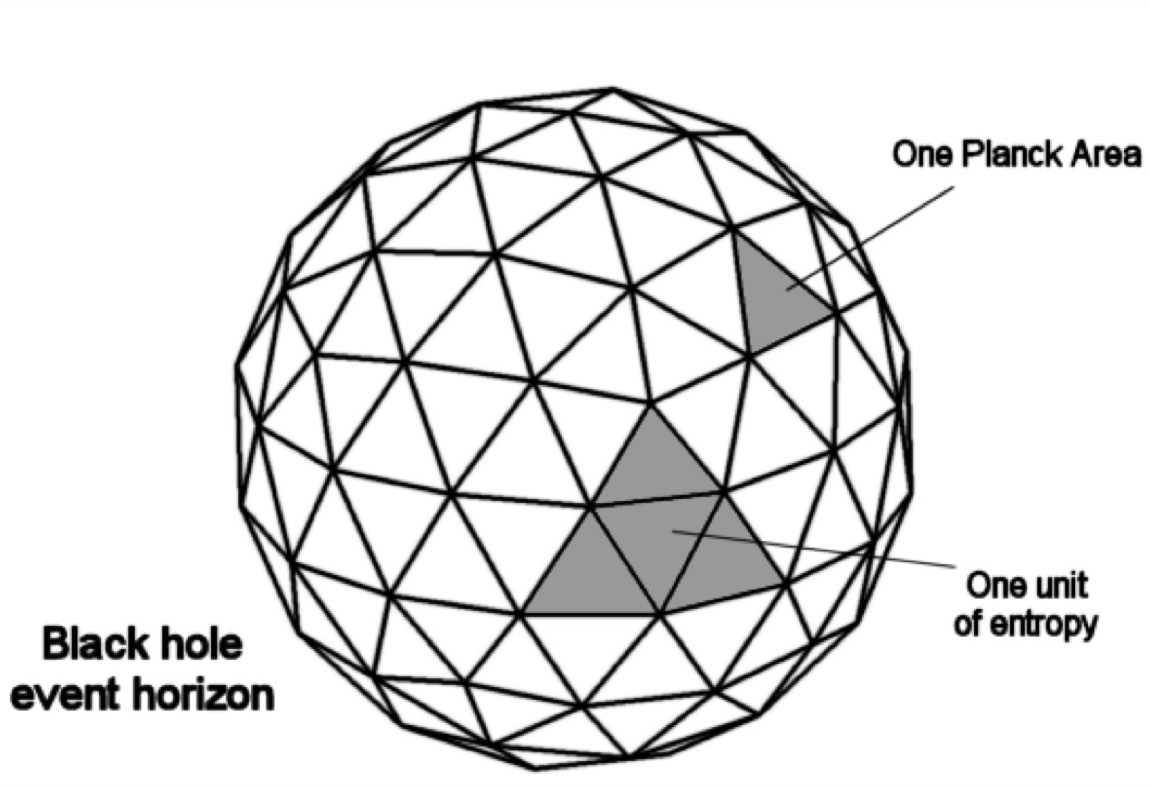
Despite its extraordinary precision, quantum mechanics leaves several deep questions unanswered. The measurement problem — what exactly happens when a wave function collapses and why one outcome is selected — has generated competing interpretations including Copenhagen, many-worlds, pilot-wave, and others, none yet decisively confirmed by experiment. The application of quantum mechanics to human beings raises philosophical problems such as the Wigner's friend thought experiment, and its application to the universe as a whole remains speculative. The theory also does not yet merge seamlessly with general relativity into a unified theory of quantum gravity; the behavior of spacetime at the Planck scale lies beyond current quantum mechanics. Bell test experiments have closed the door on broad classes of local hidden-variable theories, but nonlocal hidden-variable theories remain an active area of investigation. Even the helium atom — with just two electrons — defies a fully analytic treatment, admitting no solution in closed form, reminding us that exact solvability is rare and that approximate methods remain essential tools for understanding even modestly complex quantum systems.
✦ Keep exploring