Astrophysics
Nuclear Fusion: Why Stars Shine
ConfirmedThe idea
Stars shine by welding atoms. In the Sun's core, crushing pressure and 15-million-degree heat slam hydrogen nuclei together into helium — and the helium weighs slightly less than the ingredients. The missing mass leaves as energy (E=mc² again): sunshine is the exhaust of 600 million tonnes of hydrogen fusing every second, for 10 billion years.
Go deeper Advanced
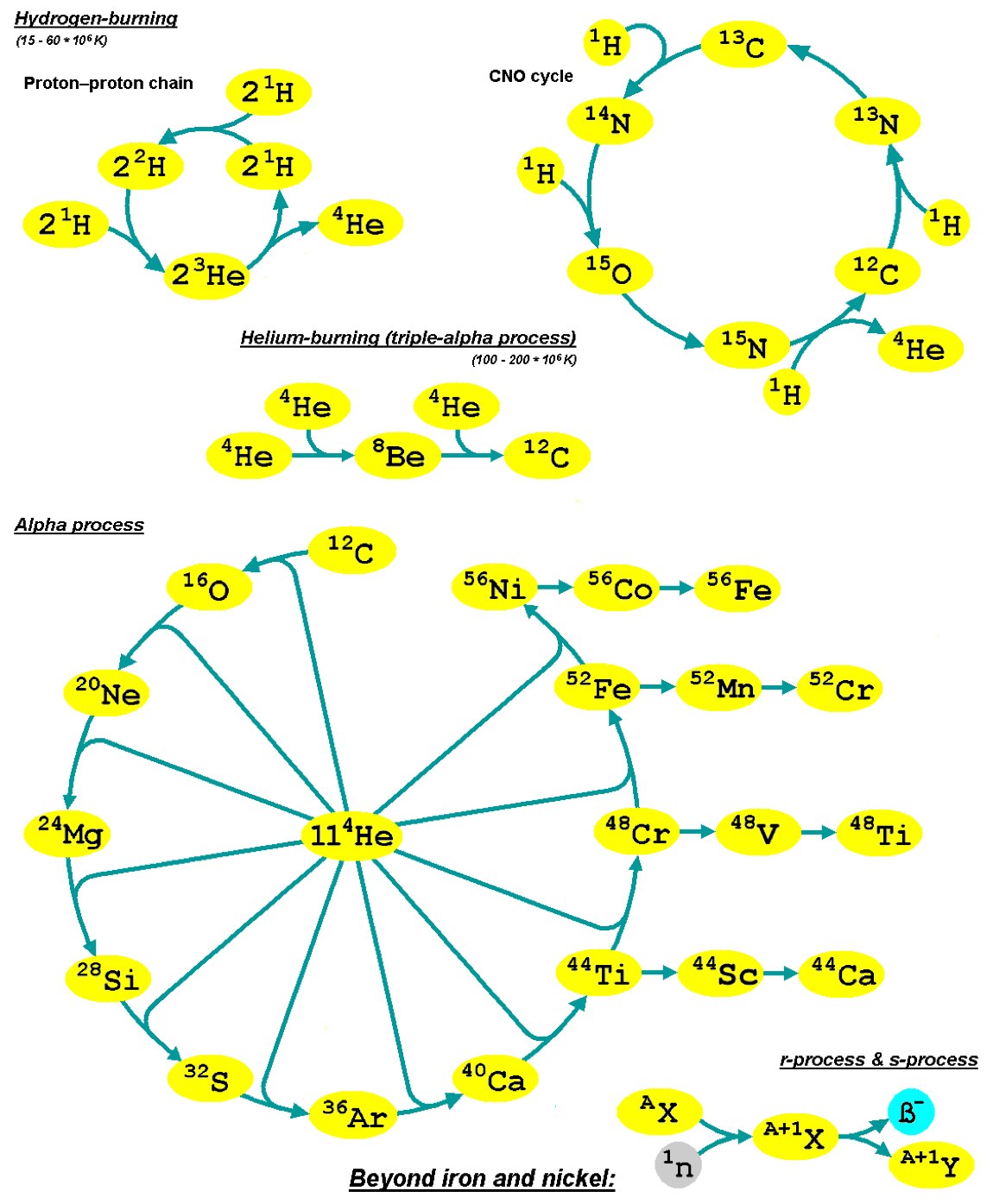
Protons repel electrically; stars win via pressure plus quantum tunneling. The proton-proton chain powers Sun-like stars, the CNO cycle heavier ones. Fusion ladders up to iron — beyond iron it costs energy, which is why iron cores collapse and supernovae (and neutron-star mergers) forge the heavier elements. Fusion power on Earth: net-gain shots achieved (NIF 2022), commercial plants still decades of engineering away.
The deep dive
Researched for the Atlas from Wikipedia — Nuclear fusion (58,000 characters read) · updated Sep 20, 2026
01 The man who first proposed fusion
The idea that atomic nuclei could merge and release energy did not spring from a single eureka moment — it took decades of overlapping insights. American chemist William Draper Harkins was the first to formally propose the concept of nuclear fusion, in 1915, well before anyone had the tools to test it. The crucial experimental nudge came in 1919, when Francis William Aston invented the mass spectrometer and discovered something startling: four hydrogen atoms are measurably heavier than one helium atom. That tiny mass difference implied a hidden reservoir of energy. Armed with that fact, Arthur Eddington in 1920 correctly predicted that the fusion of hydrogen into helium was the primary source of stellar energy, invoking Einstein's mass–energy equivalence. What makes Eddington's leap remarkable is that, at the time, it was not yet even established that stars are largely composed of hydrogen. He was reasoning from a mass discrepancy toward an entirely unknown physical mechanism — and he was right.
02 Quantum tunneling: the key that unlocks stars Deeper
For years, fusion theory faced an embarrassing problem: the temperatures inside stars seemed far too low to force positively charged nuclei close enough together to fuse. The Coulomb barrier — the electrostatic repulsion between protons — appeared insurmountable at stellar conditions. The resolution came from quantum mechanics. Friedrich Hund discovered quantum tunneling in 1927, initially in the context of electron energy levels. In 1928, George Gamow was the first to apply tunneling to atomic nuclei, first explaining alpha decay and then recognizing that fusion was essentially the inverse process — nuclei could borrow their way through the Coulomb barrier rather than having to climb over it. From this foundation, Robert Atkinson and Fritz Houtermans made the first quantitative estimates of stellar fusion rates in 1929. For deuterium–tritium fuel, for instance, the energy barrier is about 0.1 MeV, which would classically require temperatures exceeding 1.2 billion kelvin, yet tunneling allows fusion to proceed at far lower temperatures because nuclei in the high-energy tail of the velocity distribution can tunnel through the remaining barrier.
03 Two reaction chains power the cosmos
Not all stars burn their hydrogen the same way. In 1938, Hans Bethe worked with Charles Critchfield to enumerate the proton–proton chain, the reaction sequence that dominates in Sun-like stars and runs at a solar-core temperature of about 15 million kelvin. The net result is the fusion of four protons into one alpha particle, releasing two positrons, two neutrinos, and energy. Then in 1939, Bethe published the discovery of the CNO cycle — a separate chain using carbon, nitrogen, and oxygen as catalysts — which is more important in higher-mass, hotter stars. The Sun converts an almost incomprehensible 620 million metric tons of hydrogen into 616 million metric tons of helium every single second; the missing 4 million metric tons of mass emerges as energy. In the fusion of two hydrogen nuclei to form helium, 0.645% of the mass is carried away as kinetic energy of the alpha particle or electromagnetic radiation. That fraction sounds tiny, but scaled to stellar quantities, it explains why stars can shine for billions of years.
04 The first fusion reactions made in a laboratory
The experimental history of fusion is surprisingly tangled, with multiple teams claiming firsts. In April 1932, John Cockcroft and Ernest Walton at the Cavendish Laboratory published results showing that a proton striking lithium-7 produced two helium-4 nuclei, via a fleeting intermediary later confirmed to be extremely short-lived beryllium-8. This has a claim to being the first artificial fusion reaction. Then in 1933, Ernest Lawrence and colleagues at the University of California Radiation Laboratory accidentally produced deuterium–deuterium fusion during early cyclotron experiments — but they misinterpreted the results, believing they were seeing an exothermic disintegration of deuterons, which is now known to be impossible. The experiment most widely accepted as the first intentional demonstration of fusion came in May 1934: Mark Oliphant, Paul Harteck, and Ernest Rutherford, also at the Cavendish, deliberately fused deuterium and in doing so discovered both tritium and helium-3. Four years later, in 1938, Arthur Ruhlig at the University of Michigan made the first observation of deuterium–tritium fusion and its characteristic 14 MeV neutrons — the reaction now considered the most favorable of all.
05 Why iron marks the end of stellar fusion Deeper
Fusion releases energy only when the product nucleus is more tightly bound than its ingredients — which is true for light nuclei but not for heavy ones. The four most tightly bound nuclei, in decreasing order of binding energy per nucleon, are nickel-62, iron-58, iron-56, and nickel-60. Beyond this peak on the binding energy curve, fusing nuclei would actually consume energy rather than release it, because the short-range nuclear force cannot reach across the full diameter of a large nucleus while the long-range Coulomb repulsion keeps growing. In massive stars of at least 8 to 11 solar masses, silicon burning is the final nuclear burning stage, piling up iron and nickel in the core. Once that iron core forms, fusion can no longer generate the outward pressure needed to support the star's weight, and collapse follows. Interestingly, even though nickel-62 is the most stable nucleus, iron-56 is an order of magnitude more common in the universe — because there is no easy pathway for stars to produce nickel-62 through the alpha process that builds up heavier elements step by step.
06 The DT reaction and the discovery of its power Deeper
The deuterium–tritium reaction is the easiest fusion reaction to ignite on Earth, releasing 17.6 MeV of energy per event — a number that illustrates the gulf between nuclear and chemical energy scales, since adding an electron to a hydrogen atom releases only 13.6 eV, less than one-millionth as much. The reaction proceeds via an unstable helium-5 intermediate that immediately ejects a neutron carrying 14.1 MeV, while the remaining helium-4 nucleus recoils with 3.5 MeV. The energy barrier for this reaction is about 0.1 MeV. What makes the DT reaction especially powerful was not fully appreciated until 1946, when Egon Bretscher discovered a resonance enhancement giving it a reaction cross-section roughly 100 times larger than previously assumed from theoretical calculations that had treated it as similar to deuterium–deuterium fusion. This single discovery fundamentally changed weapons design priorities and, later, the direction of fusion energy research, because a larger cross-section means a far higher probability of fusion occurring at any given temperature and density.
 ⤢
⤢
07 The energy scoreboard: fusion versus other sources
One way to appreciate fusion's power is to compare it with competing energy sources using the same mass of fuel. Via mass–energy equivalence, fusion of hydrogen into helium converts about 0.7% of the reactant mass into energy. That sounds modest, but consider what sits above and below it on the efficiency ladder. Chemical reactions — burning coal, gas, or oil — convert far less than a millionth of a percent of mass into energy. Individual fission reactions release more energy per event than individual fusion reactions, yet fusion still achieves a higher energy yield per unit of mass overall, because fusion reactions are themselves millions of times more energetic than chemical ones. The only processes that exceed fusion's 0.7% mass-to-energy efficiency are accretion onto neutron stars or black holes, which can approach 40%, and matter–antimatter annihilation, which achieves 100%. To put that in concrete terms: the complete conversion of just one gram of matter would release 9×10¹³ joules of energy — enough to supply a typical household for roughly a million years.
08 Controlled fusion milestones in the laboratory
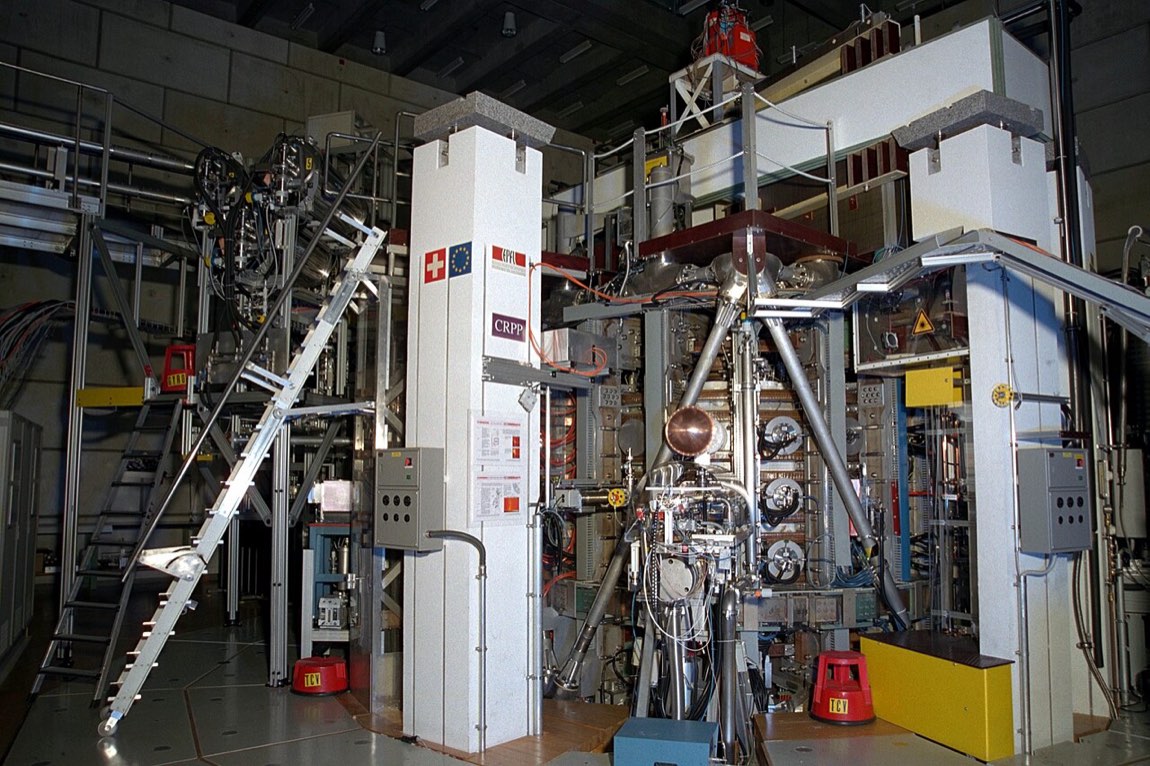
Harnessing fusion as a controlled energy source has been a decades-long project of incremental records. Los Alamos National Laboratory's Scylla I device produced the first laboratory thermonuclear fusion in 1958. The real breakthrough in controlled power came with tokamak experiments using deuterium–tritium mixtures: the TFTR device at Princeton University, running between 1993 and 1996, produced 1.6 GJ of fusion energy in total, with a peak fusion power of 10.3 MW from 3.7×10¹⁸ reactions per second, and a peak energy of 7.6 MJ in a single discharge. The JET tokamak in 1997 pushed the peak power record to 16 MW at 5.8×10¹⁸ reactions per second, achieving a local energy gain factor of 1.3. Then in 2023, JET produced 69 MJ of fusion energy using about 0.2 mg of deuterium and tritium combined — a result announced in February 2024. On 5 December 2022, the US National Ignition Facility achieved break-even using laser-driven inertial confinement, delivering 2.05 MJ to a target and receiving 3.15 MJ of fusion energy output, though the total power supplied to the experimental cell was hundreds of times larger than what reached the target.
09 Fusion in extreme astrophysical settings Deeper
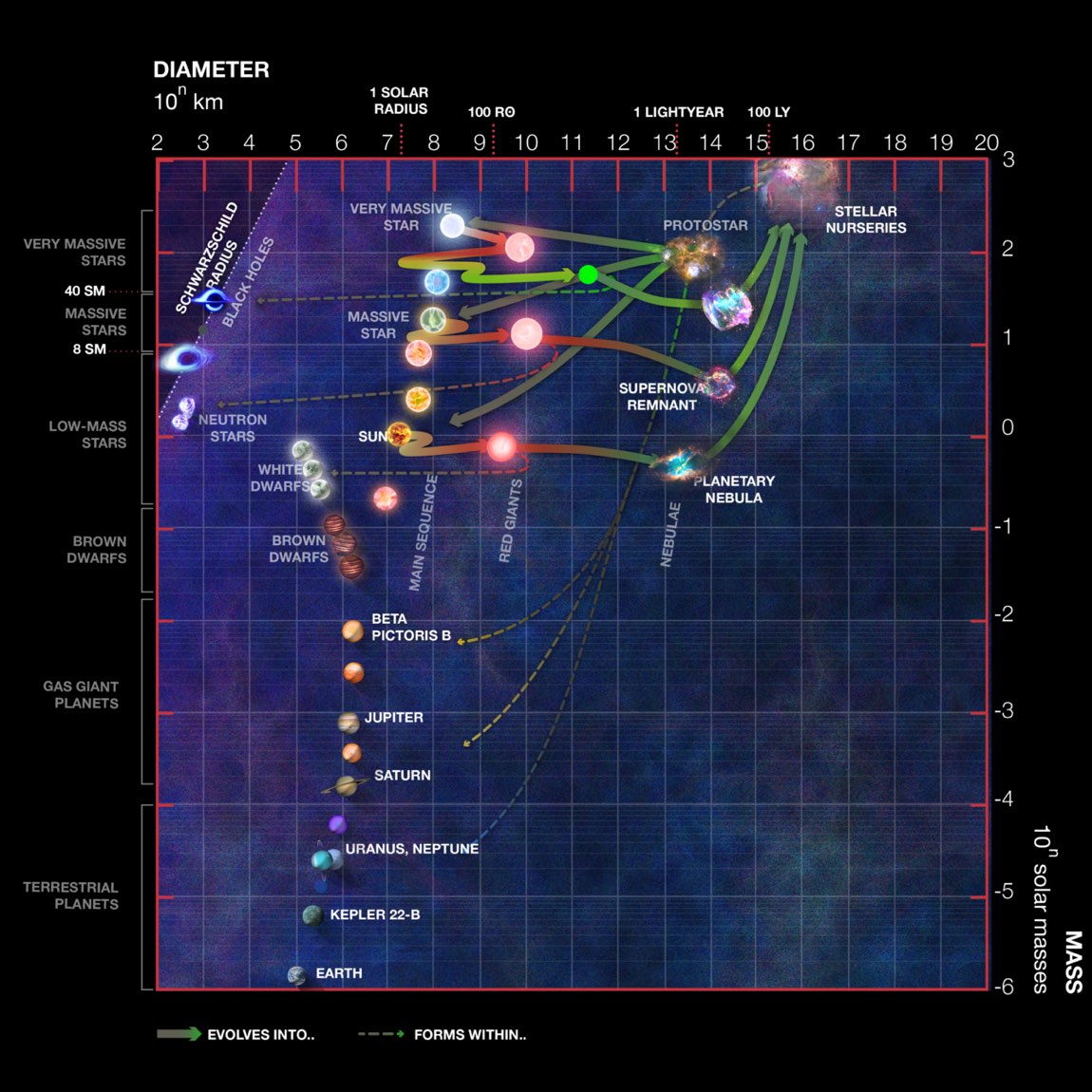
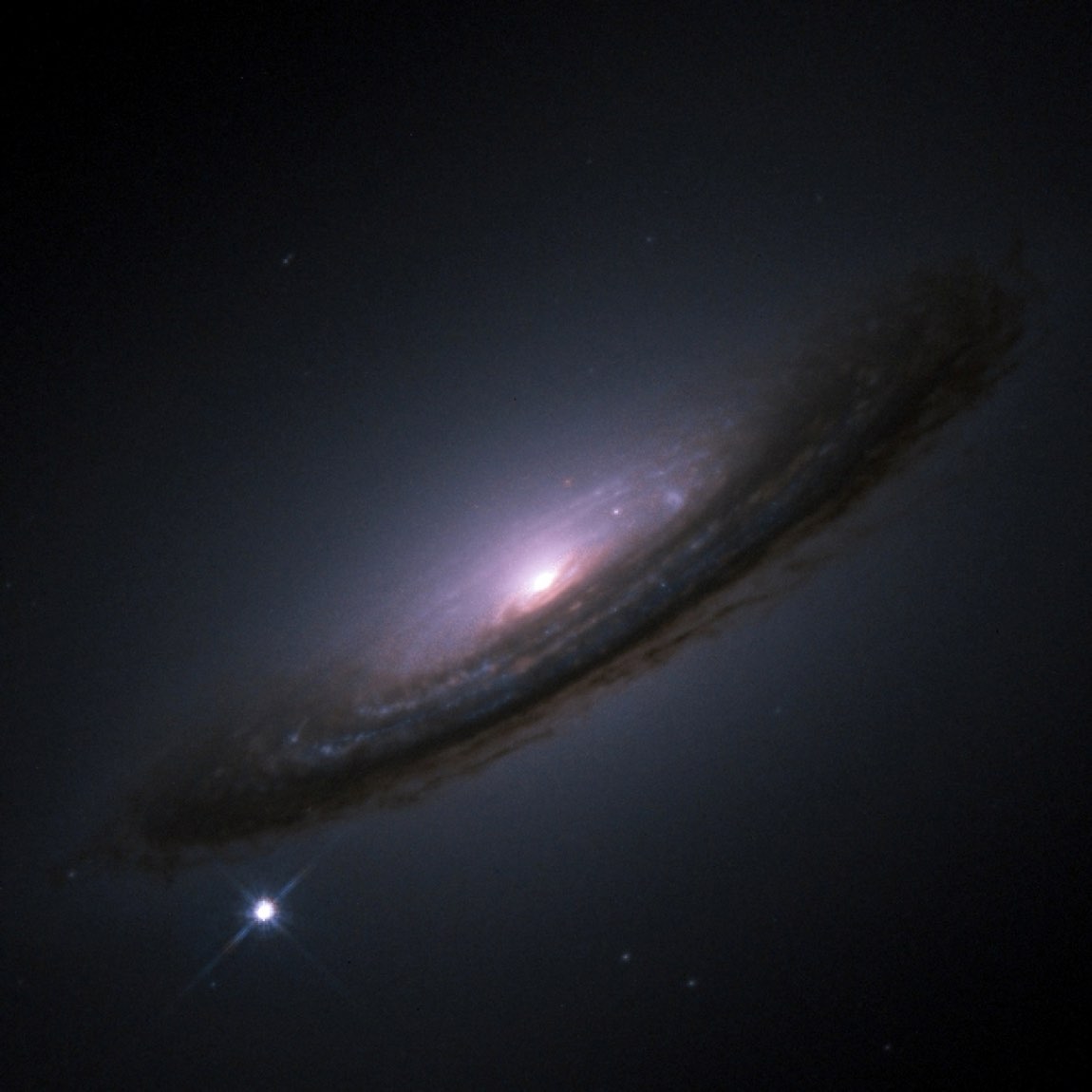
Fusion does not only occur in the cores of normal stars. Brown dwarfs — objects too small to sustain hydrogen fusion — can fuse deuterium, and the most massive brown dwarfs can also fuse lithium. Carbon–oxygen white dwarfs that accrete matter from a companion star can approach the Chandrasekhar limit of 1.44 solar masses, at which point carbon burning fusion begins and destroys the Earth-sized dwarf within one second in a Type Ia supernova. Neutron stars with active stellar companions periodically accumulate accreted hydrogen and helium until the helium layer reaches a critical density, at which point a thermonuclear burn wave propagates across the entire surface on a timescale of about one second. Even black hole accretion disks host fusion reactions: calculations show that beyond five Schwarzschild radii, carbon-burning and helium-3 fusion dominate, while closer to lower-mass black holes — those below 10 solar masses — fusion of nitrogen, oxygen, neon, and magnesium can occur, and in extreme conditions the silicon-burning process can begin.
10 Why stellar fusion runs so slowly Deeper
A star's core might seem like the ultimate fusion reactor, but its energy output per cubic centimetre is surprisingly feeble. At the solar core temperature of approximately 15 million kelvin and a density of 160 g/cm³, the energy release rate from fusion is only 276 microwatts per cubic centimetre — about one-quarter of the rate at which a resting human body generates heat per equivalent volume. The Sun shines so brightly only because it is so enormously large. This has a direct and counterintuitive consequence for fusion power research: reproducing stellar core conditions in a laboratory reactor is completely impractical as an energy strategy. Instead, because nuclear reaction rates depend on both density and temperature, and because terrestrial fusion devices operate at far lower densities than stellar cores, they must compensate by running at temperatures 10 to 100 times hotter — roughly 0.1 to 1.0 × 10⁹ kelvin. This is why fusion reactors need to be hotter than the Sun's core, not colder.
11 Big Bang nucleosynthesis and the first atoms
The universe's first fusion reactions happened in the moments after the Big Bang. From approximately 10 seconds to 20 minutes after the Big Bang, the universe cooled from over 100 keV down to 1 keV. During that brief window, protons and neutrons combined into deuterium nuclei, which then rapidly fused into tritium and helium-3, ending predominantly as helium-4 with only minimal fractions of lithium, beryllium, and boron nuclei. This Big Bang nucleosynthesis, along with later stellar fusion, is responsible for creating all elements lighter than nickel (atomic number 28). Elements heavier than iron are produced not by fusion but by the s-process and r-process, which occur in neutron star mergers and supernovae. Observational evidence shows that pockets of gas in the early universe eventually became dense enough to collapse under their own gravity, activating nuclear fusion and forming the first stars around 13.6 billion years ago — making stellar fusion nearly as old as the universe itself.
12 Open questions and the road to fusion power
Despite dramatic progress, controlled fusion power remains in its developmental phase and carries significant unresolved challenges. The ITER facility — a tokamak designed to produce ten times more fusion energy than the heating power it consumes — is currently expected to begin plasma experiments in 2034 but will not start full deuterium–tritium fusion until 2039. A key ongoing problem is that any terrestrial fusion reactor is optically thin to the x-rays produced when electrons collide with fuel ions, a process called Bremsstrahlung; those x-rays carry energy out of the plasma and cool it, representing a loss that reactor designs must overcome. The relationship between energy confinement and the accumulation of fusion product helium ions in the plasma is also unresolved: schemes that confine energy well tend to retain helium ash that dilutes and cools the fuel, while schemes that eject helium efficiently tend to lose energy too. Private investment in fusion reached $2.6 billion in 2021 alone, suggesting broad confidence that these engineering challenges are solvable — but the physics and materials science involved remain genuinely difficult open problems.