Astrophysics
Light & the Electromagnetic Spectrum
ConfirmedThe idea
Light is a traveling wave of electric and magnetic fields, and visible light is one octave in a vast piano. Radio, microwaves, infrared heat, visible colors, ultraviolet, X-rays and gamma rays are all the same phenomenon at different wavelengths. Telescopes tuned to each band see different universes: dust clouds glow in infrared, black-hole feeding screams in X-rays.
Go deeper Advanced
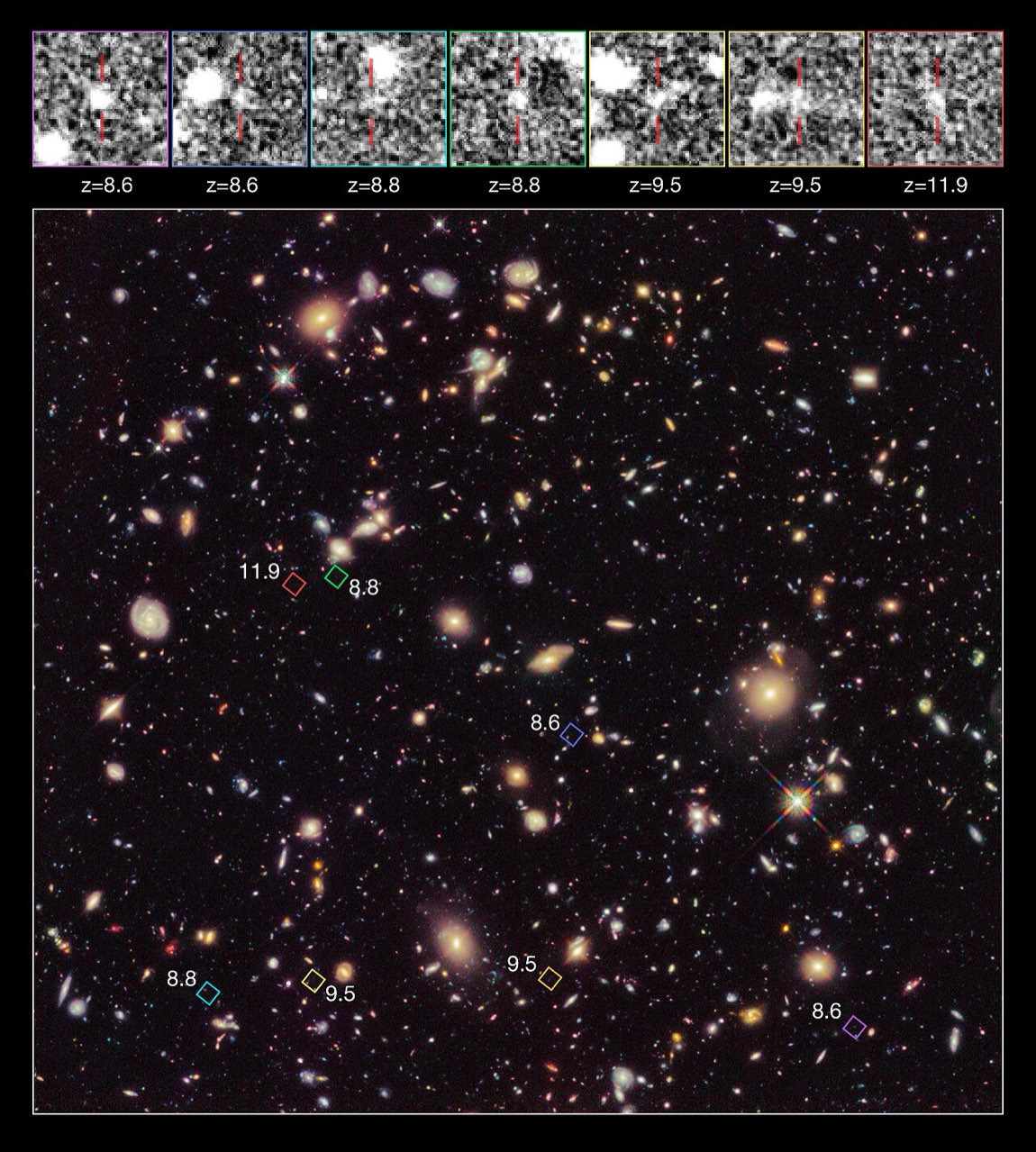
Light is quantized into photons whose energy scales inversely with wavelength. Atmospheric windows (visible, radio) dictated astronomy's history; space telescopes opened the rest. Because light's speed is finite, every observation is time travel — and because expanding space stretches wavelengths, distance, age and redshift are three readings of one dial.
The deep dive
Researched for the Atlas from Wikipedia — Light (32,465 characters read) · updated Sep 20, 2026
01 How scientists first measured light's speed
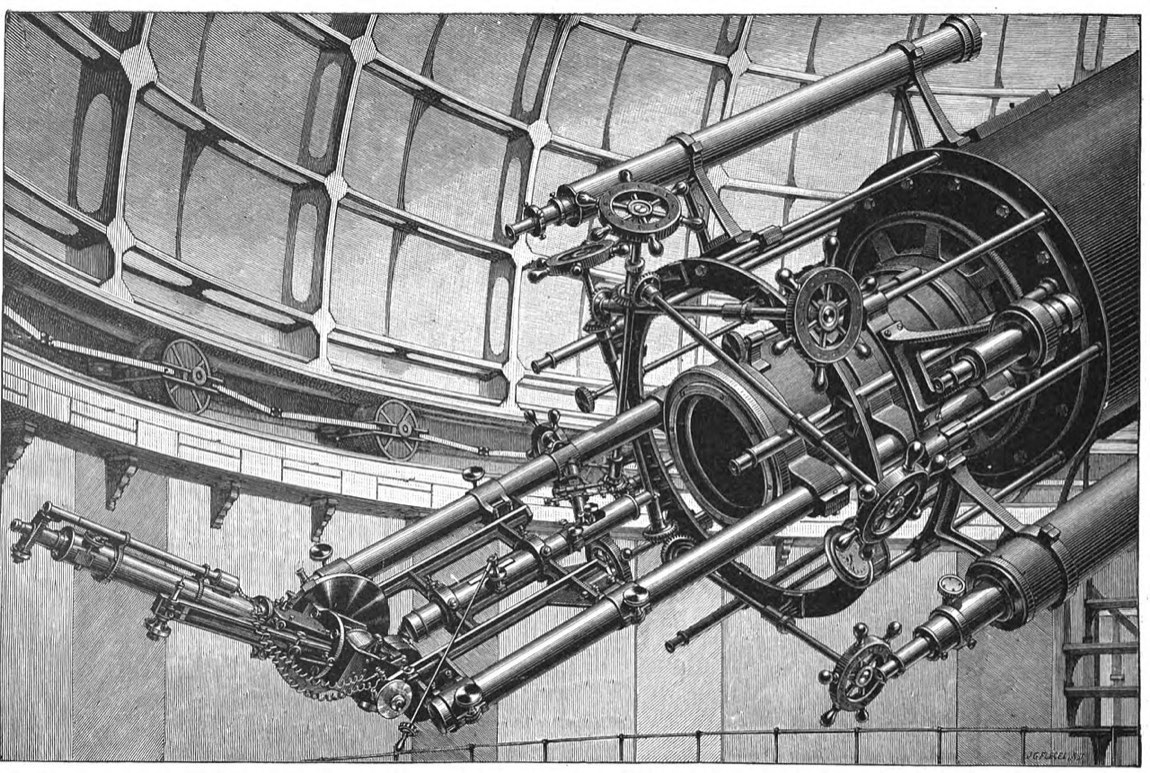
The quest to pin down light's speed stretched across nearly three centuries and required ever more ingenious machinery. Ole Rømer kicked things off in 1676 by watching Jupiter's moon Io through a telescope and noticing that Io's orbital period appeared to shift depending on where Earth sat in its own orbit. He concluded that light takes about 22 minutes to cross the full diameter of Earth's orbit — a reasonable deduction, though the diameter itself was poorly known at the time. Had he used the correct value, he would have arrived at 227,000,000 m/s. Hippolyte Fizeau refined the hunt in 1849 using a rotating cog wheel and a mirror several kilometers away, calculating 313,000,000 m/s. Léon Foucault's rotating-mirror apparatus yielded 298,000,000 m/s in 1862 — and crucially, that same year Foucault showed light slows down in water, demolishing Newton's particle theory. Albert Michelson then spent decades on the problem, measuring a round-trip between Mount Wilson and Mount San Antonio in California and arriving at 299,796,000 m/s in 1926, extraordinarily close to the now-defined exact value of 299,792,458 m/s.
02 Why light slows inside matter
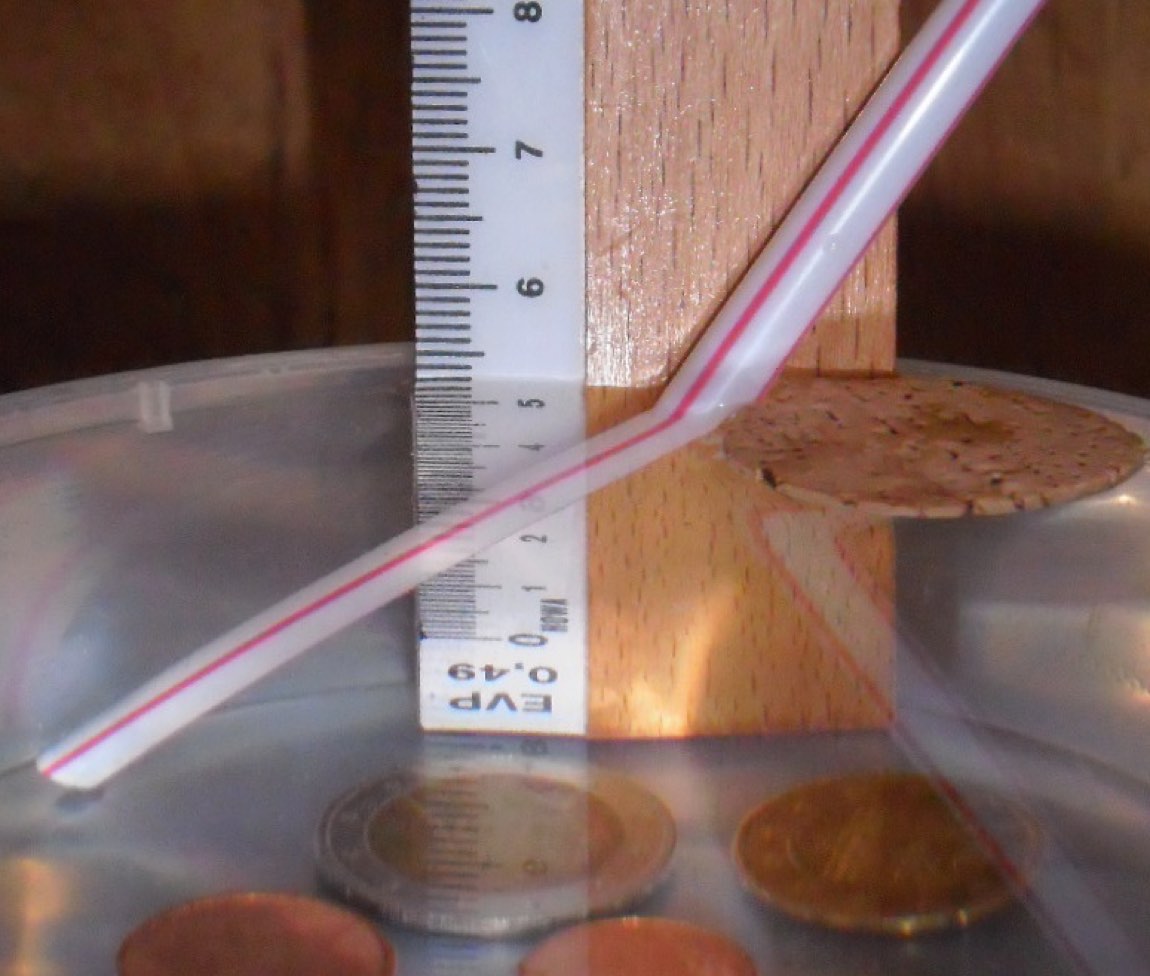
Light travels at its full speed of 299,792,458 m/s only in a perfect vacuum. Inside any transparent material — glass, water, even air — it moves more slowly, because the electromagnetic wave continuously interacts with the atoms it passes through. The ratio of vacuum speed to the speed inside a given medium is that material's refractive index, denoted n. In a vacuum, n equals exactly 1; in any transparent substance, n is greater than 1. Water, for instance, slows light to roughly three-quarters of its vacuum speed — an n of about 4/3. This slowing is what causes refraction: when a beam crosses the boundary between two media at any angle other than perfectly straight on, the change in speed bends the beam's direction, a relationship captured precisely by Snell's Law. The phenomenon has enormous practical consequences. Every magnifying glass, spectacle lens, contact lens, microscope, and refracting telescope exploits refraction to bend light and control image size. When light crosses the boundary, its wavelength changes but its frequency stays constant — a subtle but important distinction that helps explain why different colors bend by different amounts.
03 The particle-versus-wave war and its truce Deeper
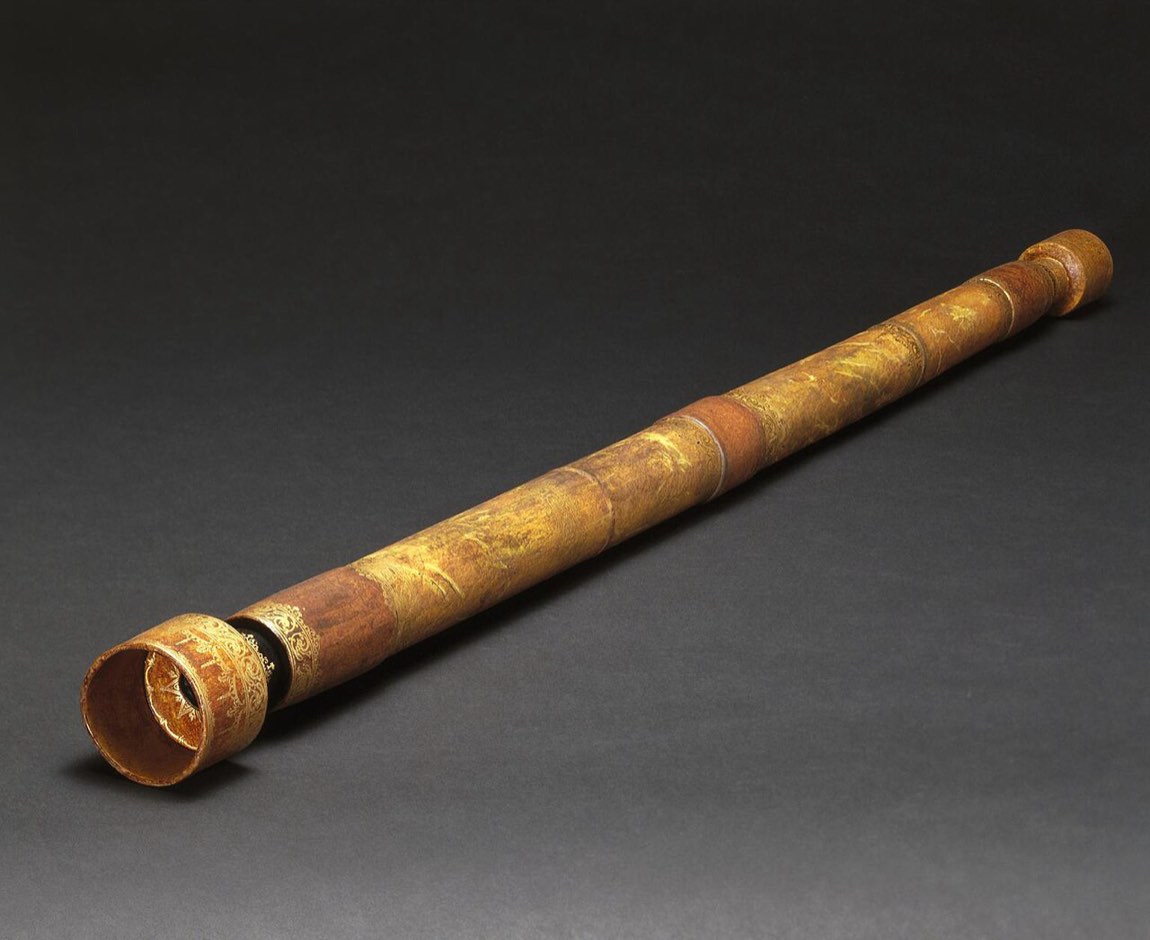
For roughly two centuries, physicists fought bitterly over whether light was a stream of particles or a travelling wave. Isaac Newton championed particles — he called them corpuscles — in his Hypothesis of Light of 1675 and published his full account in Opticks in 1704. His prestige kept the corpuscular camp dominant through the eighteenth century. On the other side, Christiaan Huygens worked out a mathematical wave theory in 1678 and published it in 1690, and Thomas Young publicly stated his general law of interference in January 1802, showing through diffraction experiments that light behaved like waves. The decisive blow came from Léon Foucault in 1850, whose speed measurement proved light slows in denser media — exactly what wave theory predicted and corpuscular theory denied. Yet the truce was uneasy. Max Planck in 1900 showed that light energy comes in discrete lumps tied to frequency, and Einstein in 1905 used that idea to explain the photoelectric effect. Arthur Holly Compton confirmed particle behaviour in 1923 through X-ray scattering, and Gilbert N. Lewis named these particles photons in 1926. Modern quantum mechanics holds that light is neither classical particle nor classical wave but something that can be usefully described by either metaphor depending on the experiment being run.
 ⤢
⤢
04 Faraday, Maxwell, and the electromagnetic revelation Deeper
The identification of light as an electromagnetic phenomenon came in stages separated by decades of careful experiment and bold theoretical leaps. Michael Faraday provided the first experimental hint in 1845 when he discovered that a magnetic field rotates the plane of polarisation of a light beam passing through a transparent dielectric — the Faraday rotation effect — which showed for the first time that light and electromagnetism are related. By 1847 he speculated that light might be a high-frequency electromagnetic vibration capable of propagating without any medium. James Clerk Maxwell took that inspiration and in 1862, in his paper On Physical Lines of Force, first stated mathematically that self-propagating electromagnetic waves would travel at a speed equal to the already-measured speed of light. His 1873 Treatise on Electricity and Magnetism gave the world the complete set of equations still bearing his name. The proof arrived from Heinrich Hertz, who generated and detected radio waves in the laboratory and showed they shared every optical property — reflection, refraction, diffraction, and interference — with visible light. Maxwell's theory and Hertz's experiments together directly seeded modern radio, radar, television, and wireless communications.
05 When light was frozen — almost
In a striking series of experiments, two independent teams of physicists reported slowing light to a near standstill by passing it through a Bose–Einstein condensate of rubidium atoms. One team worked at Harvard University and the Rowland Institute for Science in Cambridge, Massachusetts; the other at the Harvard–Smithsonian Center for Astrophysics, also in Cambridge. Headlines declared that light had been "stopped" entirely, but the reality is more nuanced. What actually happened is that the light's energy was stored in the excited quantum states of the rubidium atoms and then re-emitted later when triggered by a second laser pulse. During the interval between absorption and re-emission, the light had — strictly speaking — ceased to exist as light. The popular description of light being "stopped" therefore refers to a kind of quantum storage rather than a literal freezing of a photon in place. The experiment is nonetheless genuinely remarkable and has implications for quantum memory and quantum information transfer.
06 Light pressure: tiny force, cosmic consequences
Light carries momentum, and when photons strike an object they transfer that momentum as a tiny push. The pressure equals the power of the light beam divided by c, the speed of light. Because c is so large, the force is vanishingly small in everyday life: a one-milliwatt laser pointer exerts only about 3.3 piconewtons on whatever it illuminates. To lift a single US penny using such laser pointers would require roughly 30 billion of them. At nanometre scales, however, light pressure becomes significant — researchers are actively investigating its use to drive nanoelectromechanical systems (NEMS) and to flip nanometre-scale switches in integrated circuits. On astronomical scales the effect is real and measurable: light pressure can cause irregularly shaped asteroids to spin faster, acting on their surfaces like wind on a windmill's vanes. Solar sails exploiting this pressure for spacecraft propulsion are also under active investigation. Einstein in 1909 predicted a related effect he called "radiation friction," by which a moving object reflects more light from its leading face than its trailing face, creating a net backward force proportional to velocity.
 ⤢
⤢
07 The human eye's hidden limits and hidden reach
The commonly cited visible range of 400–700 nm is a useful engineering approximation, but the eye's actual boundaries are blurrier and more surprising. Under ideal laboratory conditions, people can see infrared light out to at least 1,050 nm. Children and young adults can sometimes perceive ultraviolet wavelengths as short as 310–313 nm. The upper ultraviolet cutoff exists partly because the cornea absorbs wavelengths shorter than 360 nm and the eye's internal lens absorbs those shorter than 400 nm, while the rod and cone cells themselves are actually damaged by very short ultraviolet. At the infrared end, the cutoff is chemical: photons at those wavelengths simply lack enough individual energy to trigger the conformational change in the retinal molecule that initiates the visual signal. Interestingly, snakes can detect infrared, but not by any quantum absorption process — instead, pit organs sense the tiny temperature rise that infrared radiation causes in cellular water, a form of biological thermal imaging. Many insects and shrimp detect ultraviolet by quantum photon-absorption, the same fundamental mechanism humans use for visible light. The eye's peak photometric sensitivity falls at around 555 nm, which is why photometry units are weighted differently from raw power measurements.
08 Emission lines: nature's atomic fingerprints Deeper
Every chemical element emits and absorbs light only at its own characteristic set of energies, producing a unique pattern of bright lines in a spectrum. This is not an arbitrary quirk but a direct consequence of the discrete energy levels that electrons can occupy within an atom: a photon is emitted when an electron drops to a lower level, and absorbed when it jumps to a higher one. The practical manifestations surround everyday life — sodium in a gas flame emits its characteristic yellow light, neon lamps glow red-orange through gas discharge, and mercury-vapour lamps produce their distinctive bluish output. At temperatures high enough for thermal emission, the colour shifts systematically: cool objects like humans emit mostly in the deep infrared around 10 micrometres. As temperature rises, the peak shifts toward shorter wavelengths, passing through red, then white, and eventually blue-white as it moves into the ultraviolet. The blue colour seen in gas flames or a welder's torch is not true thermal emission at all — it comes from molecular emission by CH radicals radiating around 425 nm — and such blue-white emission is not seen in stars. Solar radiation peaks in the visible region, and roughly 44% of the sunlight reaching the ground is visible light.
09 Exotic light: Cherenkov, bioluminescence, and beyond
Not all light comes from hot objects or excited atoms. When a charged particle such as an electron moves through a transparent medium faster than light itself can travel through that medium, it produces a cone of bluish Cherenkov radiation — the optical equivalent of a sonic boom. This is the eerie blue glow seen around reactor cores submerged in water. Synchrotron radiation and bremsstrahlung, produced by decelerating free electrons, are other particle-driven light sources exploited in scientific instruments worldwide. Living organisms have evolved their own light-making chemistry called bioluminescence, which the article classifies as a form of chemoluminescence — light produced by chemical reactions rather than heat. Fireflies use it to locate mates; vampire squid use it to hide from prey. Disturbed marine plankton can produce a glowing wake behind a moving boat. Fluorescence and phosphorescence are related but distinct: fluorescent materials re-emit light almost instantly when excited by higher-energy radiation, while phosphorescent ones store the energy and release it slowly. Cathode-ray tube televisions and computer monitors exploited phosphorescence through a process called cathodoluminescence, bombarding phosphorescent coatings with electrons. At the highest energies, particle-antiparticle annihilation and radioactive decay can also generate photons.
 ⤢
⤢
10 Bose, Einstein, and the quantum identity of light Deeper
Among the less-celebrated revelations of quantum theory is the discovery that photons are not merely particles that happen to carry light — they belong to a fundamentally distinct class of particle defined by their statistical behaviour. In 1924–1925, Satyendra Nath Bose showed that light follows different statistics from those of classical particles. Working with Einstein, they generalised the result to an entire family of integer-spin particles now called bosons, whose collective statistical rules are called Bose–Einstein statistics. The photon is a massless boson of spin 1. This statistical identity has deep consequences: it means photons do not obey the Pauli exclusion principle, so any number of them can occupy the same quantum state simultaneously — a property that makes lasers and Bose–Einstein condensates possible. Paul Dirac took the next step in 1927 by quantising the electromagnetic field itself. Pascual Jordan and Vladimir Fock extended the framework to many-body systems through the process sometimes called second quantisation. By the late 1940s, Julian Schwinger, Richard Feynman, Freeman Dyson, and Shinichiro Tomonaga had assembled a complete theory of quantum electrodynamics — the most precisely tested physical theory in existence.
11 From Maxwell to Wi-Fi: light's technological legacy
James Clerk Maxwell's conclusion in 1862 that light is electromagnetic radiation, confirmed experimentally by Heinrich Hertz's generation and detection of radio waves, set off a chain of technological consequences that reshaped civilisation. Hertz demonstrated that radio waves share every optical property with visible light — reflection, refraction, diffraction, and interference — establishing that they are simply the same phenomenon at a much longer wavelength. Maxwell's equations and Hertz's experiments, the article states directly, led to the development of modern radio, radar, television, electromagnetic imaging, and wireless communications. The thread runs from Hertz's laboratory bench to the smartphone in a reader's pocket. In parallel, the quantum understanding of light opened different frontiers. The 1950s and 1960s work of Roy Glauber, George Sudarshan, Leonard Mandel, and John Klauder on quantum optics led to the coherent-state framework that distinguishes laser light from thermal light and exotic squeezed states. Demonstrations of quantum entanglement, quantum teleportation, and quantum logic gates followed, with implications for quantum information technology still being explored today.
12 Pierre-Simon Laplace's accidental black hole
One of the stranger footnotes in the history of light is that the first published argument for what we now call a black hole came directly from Newton's corpuscular theory of light. If light consists of tiny particles of matter, then an extremely massive body ought to exert enough gravitational pull to prevent those particles from escaping — exactly the concept Pierre-Simon Laplace developed from Newton's particle framework in the late eighteenth century. Laplace argued that a sufficiently massive body could trap light entirely. The idea was reasonable within its theoretical context, but Laplace later withdrew it, because as the wave theory of light became firmly established, a gravitational argument against wave propagation seemed untenable — waves were not thought to carry mass that gravity could act upon. The concept of an object from which light cannot escape was therefore temporarily shelved. The article notes, with appropriate nuance, that neither the pure particle theory nor the pure wave theory is fully correct, and it was only with general relativity and quantum theory that the modern concept of a black hole could be properly grounded.