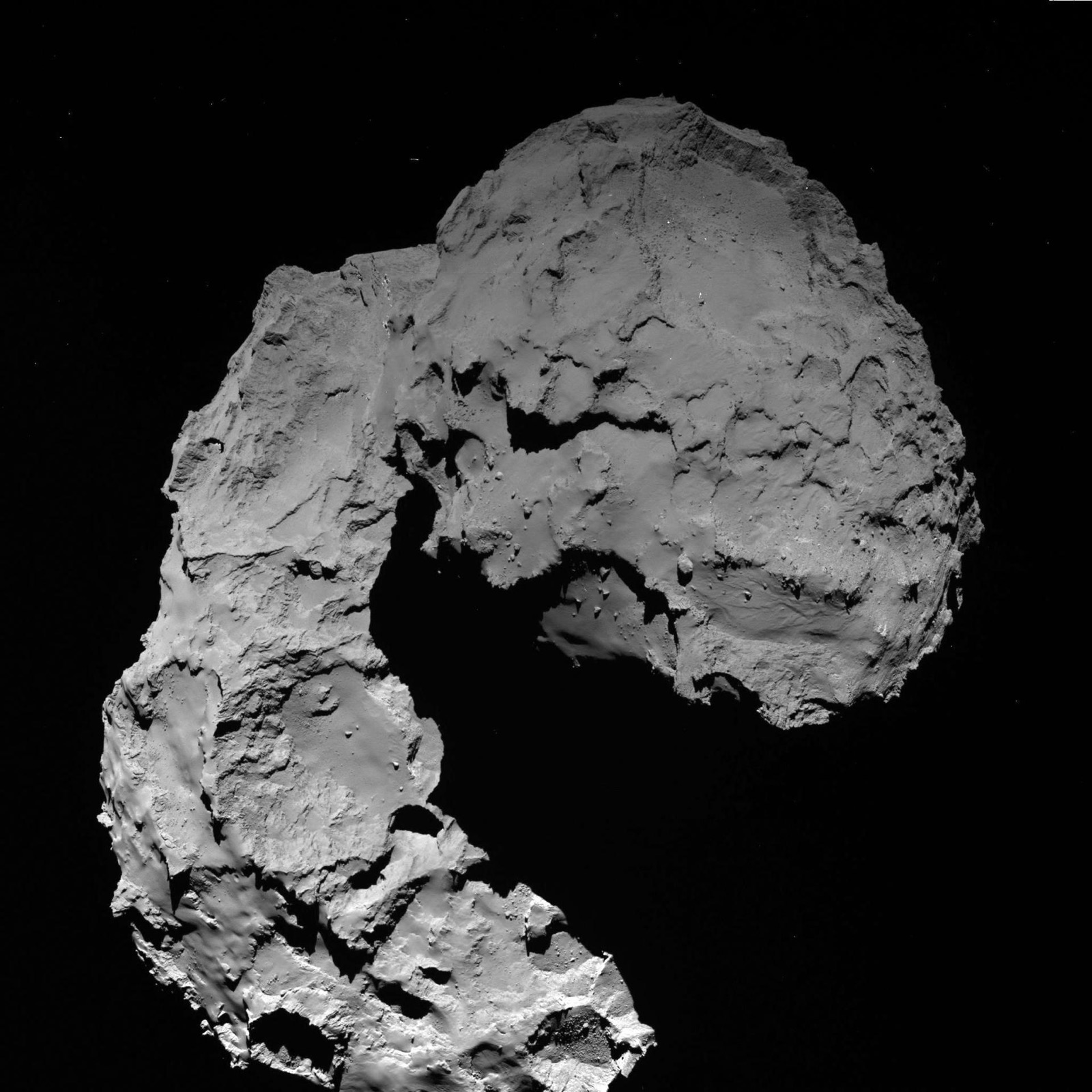
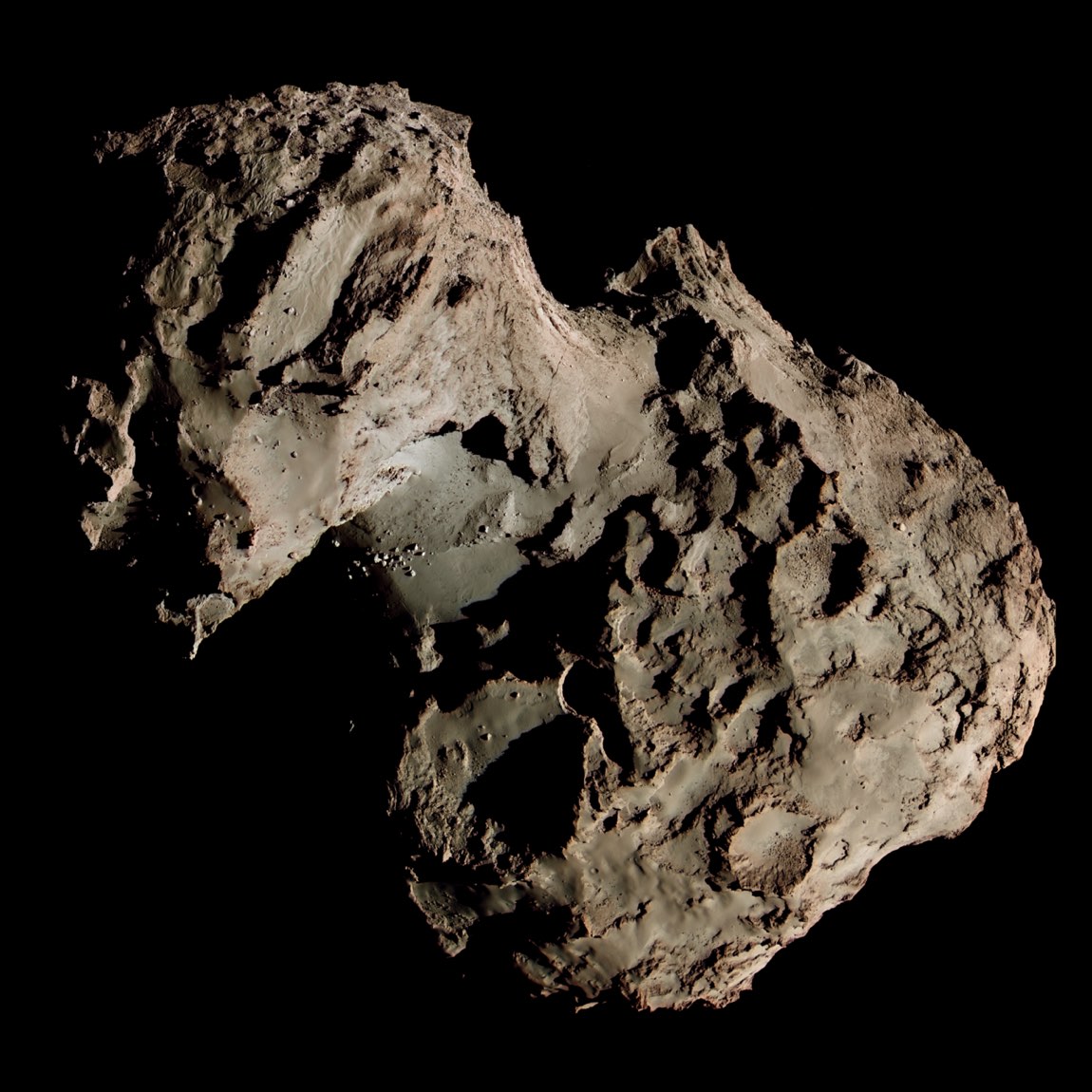
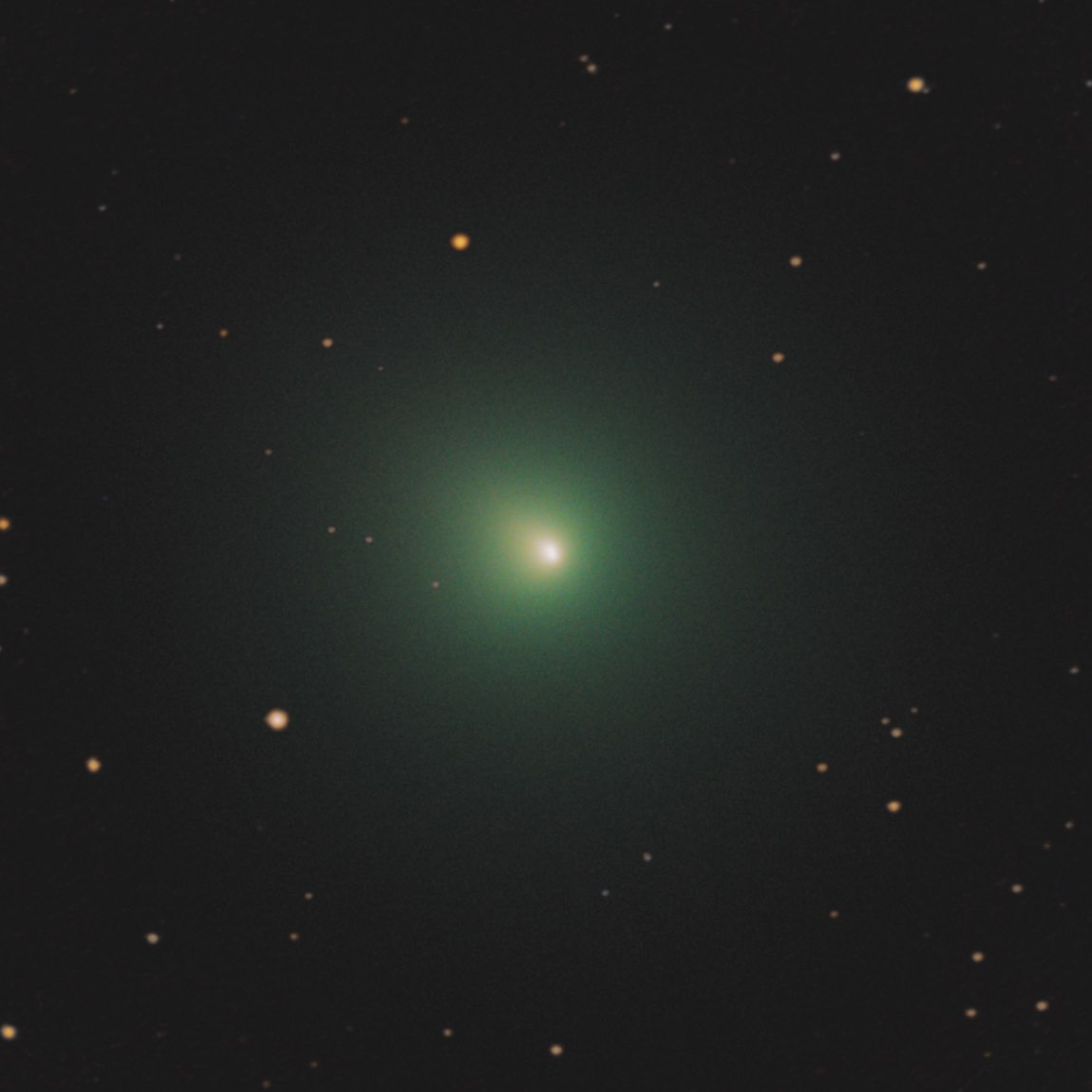
 Photograph · Stub Mandrel · CC BY-SA 4.0
Comet · Deep guide
Comet Wirtanen (46P)
Also called: 46P/Wirtanen · Comet Wirtanen
The original target of the Rosetta mission, and a close visitor to Earth in December 2018.
What is it?
46P/Wirtanen is a small Jupiter-family comet discovered by Carl Wirtanen at Lick Observatory in January 1948. The European Space Agency first planned to send Rosetta to it, but a launch delay forced a switch to comet 67P. On 16 December 2018 Wirtanen passed about 0.077 AU from Earth, one of the closest comet flybys in decades, letting astronomers study it in detail. Its nucleus is only about 1.2 km wide.
The deep dive
Researched for the Atlas from Wikipedia — 46P/Wirtanen (4,598 characters read) · updated Nov 14, 2026
01 A Discovery Hidden in a Star Survey
Carl A. Wirtanen did not set out to find a comet. On January 15, 1948, he was exposing photographic plates at Lick Observatory as part of a routine stellar proper motion survey — a program designed to track the slow drift of stars across the sky, not to hunt for solar system wanderers. The comet showed up uninvited in the images. Even after the plates were examined, the object's true nature was elusive: because only a limited number of initial observations were made, it took more than a year for astronomers to recognize 46P as a short-period comet rather than some other transient phenomenon. The formal discovery date is recorded as January 17, 1948, two days after the plate was taken. That delay between exposure and recognition is a reminder of how painstaking pre-digital comet identification really was, requiring observers to track an object across multiple nights before its orbit could be pinned down with enough confidence to announce a new periodic comet.
02 How Jupiter Shaped This Comet's Path Deeper
46P/Wirtanen belongs to the Jupiter-family comets, a class whose orbits have been gravitationally sculpted by close encounters with the solar system's largest planet. The article records two specific encounters that had lasting consequences: close approaches to Jupiter in 1972 and 1984. Those flybys gradually nudged the comet's orbit inward, closer to Earth's own path around the Sun. By the epoch of 2018, the comet's Earth Minimum Orbit Intersection Distance — the closest its orbit can geometrically come to Earth's orbit — had been reduced to just 0.071 AU, or about 10.6 million kilometers. That is a relatively small buffer in cosmic terms. The current orbital period stands at 5.4 years, meaning Wirtanen laps the inner solar system frequently compared with long-period comets. This combination of a short period and a Jupiter-thinned orbital separation is precisely what makes 46P both a scientifically attractive target and a comet capable of delivering spectacular close approaches, as it did in December 2018.
03 The Record-Setting 2018 Close Approach
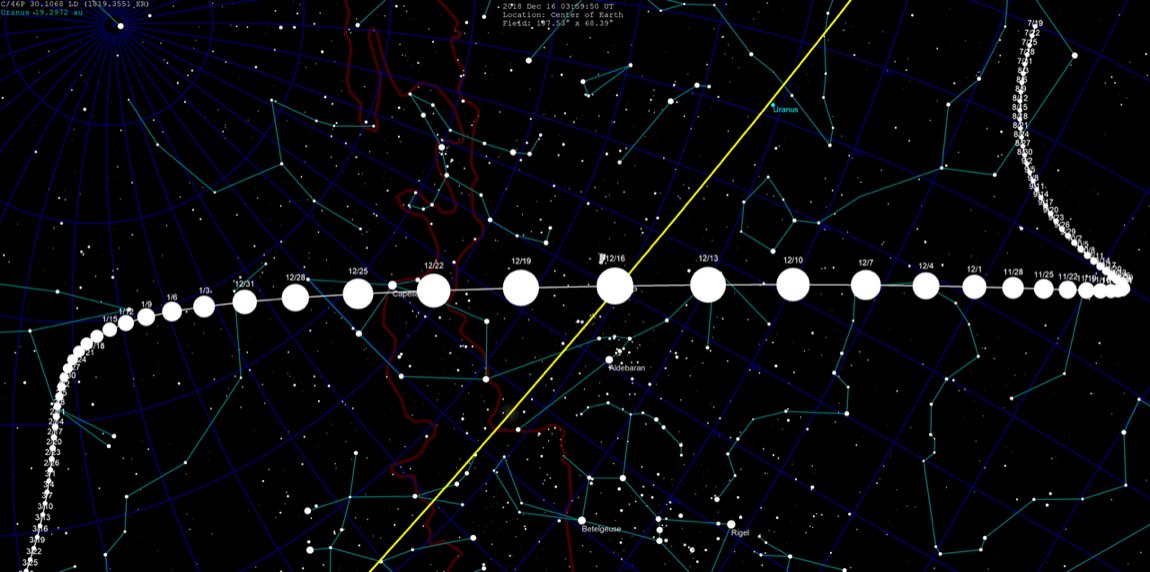
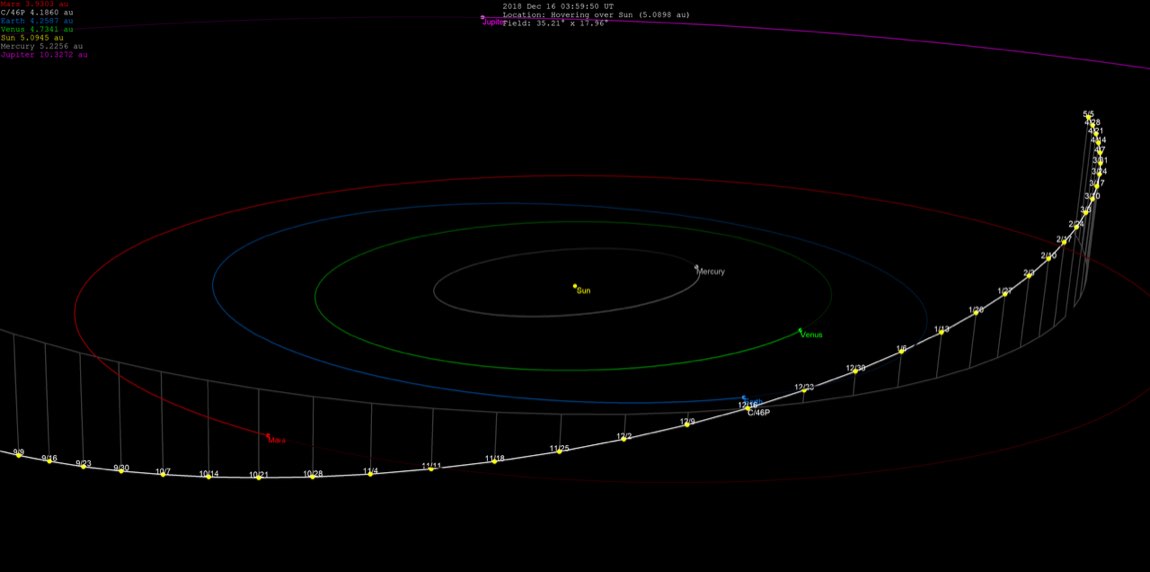
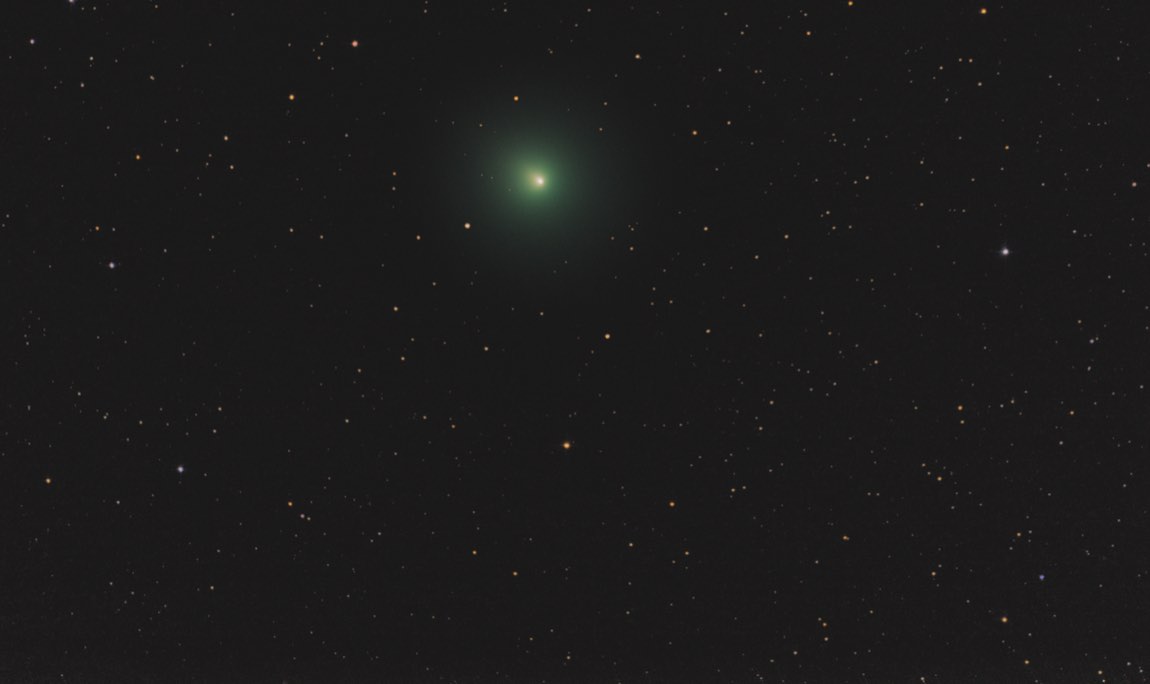
On December 16, 2018, Comet Wirtanen passed just 0.07746 AU from Earth — that is 11.6 million kilometers, or roughly 30.1 lunar distances, close enough to rank among the ten nearest comet flybys of Earth in the previous 70 years. The comet brightened to an estimated magnitude of 3.9, making it the brightest Wirtanen apparition on record and the brightest predicted close approach for the next 20 years. For context, magnitude 3.9 sits comfortably within naked-eye range under reasonably dark skies. The event was not merely a visual spectacle: astronomers organized a worldwide observing campaign specifically to exploit the favorable geometry. The 2018 encounter was explicitly framed as an opportunity to study a potential future spacecraft mission target in substantial detail, using ground-based and space-based assets in a coordinated way that would have been impossible during more distant apparitions. During the approach the comet also experienced six distinct outbursts, with the nucleus brightening by between −0.2 and −1.6 magnitudes during each event.
04 Outbursts Caught in Unprecedented Detail Deeper
Cometary outbursts — sudden, brief episodes of dramatically increased dust and gas production — are notoriously difficult to catch in progress. In December 2019, astronomers reported that the TESS observatory had captured an outburst from Comet Wirtanen in substantial detail, an achievement highlighted as scientifically significant in the article. TESS, primarily designed to hunt for exoplanets by staring at patches of sky continuously for weeks at a time, turns out to be extraordinarily well suited for monitoring cometary activity because of that same unblinking observing cadence. The six outbursts documented during the 2018 apparition, with brightness jumps ranging from −0.2 to −1.6 magnitudes, also added to the growing dataset on Wirtanen's eruptive behavior. Each outburst magnitude range represents a physically real and sometimes dramatic release of material from the nucleus. Understanding what triggers outbursts — whether impacts, sublimation cliffs collapsing, or pressure buildup beneath a dust mantle — remains one of the open questions in comet science that observations like these are designed to address.
 ⤢
05 The Mission That Almost Was: Rosetta
Before 67P/Churyumov–Gerasimenko became the most famous comet of the twenty-first century, 46P/Wirtanen held that destiny. The European Space Agency originally designated Wirtanen as the target for its ambitious Rosetta spacecraft mission, which was designed to rendezvous with a comet, deploy a lander, and study it in unprecedented detail over an extended period. The plan fell apart when launch delays made Wirtanen no longer easily reachable within an acceptable mission profile. ESA pivoted to 67P, which ultimately became the site of humanity's first soft comet landing in November 2014. Wirtanen's loss of the Rosetta mission is one of astronomy's great near-misses: had the original schedule held, all of the iconic images of a rubber-duck-shaped nucleus, the Philae lander's bouncing touchdown, and the torrent of discoveries about cometary composition would have come from a completely different comet — and 46P would today be a household name among space enthusiasts.
06 Comet Hopper: Hopping Across a Live Nucleus Deeper
Even after losing the Rosetta assignment, Wirtanen attracted serious spacecraft attention again through the proposed Comet Hopper mission, which reached the finalist stage in NASA's Discovery program — one of only three missions in that selection round to earn a more detailed study. The concept was genuinely novel: rather than a single stationary lander, the spacecraft would physically hop across the nucleus surface, relocating itself to study multiple sites as the comet evolved. At roughly 4.5 AU from the Sun — about 670 million kilometers out — the spacecraft would rendezvous with Wirtanen and begin mapping the spatial variation in surface solids, gas emissions, and dust within the coma. As the comet drew closer to the Sun and grew more active, the craft would continue landing and hopping, with a final touchdown planned at 1.5 AU. The mission's nominal lifetime was 7.3 years. Power would have come from the Advanced Stirling Radioisotope Generator, the ASRG. The selection process ultimately went to InSight, a Mars lander, in 2012, and Comet Hopper was retired.
07 A Comet That Spawns Meteor Showers
Like all active comets, Wirtanen leaves a trail of debris along its orbit — dusty breadcrumbs shed during each perihelion passage. When Earth crosses one of those debris streams, the result is a meteor shower. In 2023, Earth passed through a denser section of the 1974 meteoroid stream than it had encountered during a previous crossing in 2007. The shower that resulted had its radiant in the southern constellation of Sculptor and was formally named the λ-Sculptorids. Its zenithal hourly rate was measured at 0.65, with uncertainties of +0.24 and −0.20 — a modest but real shower. What makes the λ-Sculptorids physically interesting is the meteoroids' slow atmospheric entry velocity of just 15 km/s, compared with many showers where particles streak in at 60 or 70 km/s. That gentle entry speed means the meteoroids survive longer before ablating, and the mean mass of the observed particles was approximately 0.5 grams — roughly ten times heavier than the meteoroids typical of other showers.
08 The 2012 Shower Prediction and What Happened
In late 2012, Russian meteor forecaster Mikhail Maslov predicted that Earth's orbit would intersect Wirtanen's debris stream as many as four separate times between December 10 and December 14. The prediction came with an honest caveat: because there had been no previous confirmed encounter with this particular stream, there was no observational baseline to verify whether the debris was actually dense enough to produce a visible shower. Speculation placed the potential rate at as many as 30 meteors per hour. What observers actually recorded was more modest. On the night of December 14, 2012, observers in Australia reported as many as a dozen meteors emanating from the predicted radiant in the constellation of Pisces. That is far below the speculative 30-per-hour figure, but it confirmed that the stream does contain real material capable of producing meteors. The 2012 event and the more formally measured 2023 λ-Sculptorids together document a comet progressively building a detectable debris environment around Earth's neighborhood.
 ⤢
09 An Unfavorable Perihelion and What It Tells Us Deeper
Not every perihelion is created equal. The July 2013 perihelion passage of Wirtanen was geometrically unfavorable, and the comet reached only a visual magnitude of 14.7 — far too faint for the naked eye and challenging even for modest telescopes. Part of the problem was orbital geometry: between January 23 and September 26 of 2013, the comet had an elongation of less than 20 degrees from the Sun as seen from Earth, meaning it was perpetually lost in solar glare for the better part of eight months. Elongation is the angular separation between a solar system object and the Sun in the sky; anything below about 20 to 30 degrees is effectively unobservable from the ground. The contrast between the unremarkable 2013 apparition, peaking at magnitude 14.7, and the spectacular 2018 passage, reaching magnitude 3.9, illustrates a fundamental truth about comet observing: the same object can swing between invisibility and naked-eye prominence depending entirely on the geometry of where Earth and the comet happen to be in their respective orbits during perihelion.
10 How and When to Observe Wirtanen
With an orbital period of 5.4 years, Wirtanen returns to the inner solar system on a schedule that is relatively predictable by comet standards. The comet was last observed in 2023 and will next reach perihelion in 2029. Whether that apparition will be favorable depends on the geometry at the time — as the 2013 and 2018 passages demonstrated, the difference between a magnitude 14.7 ghost and a magnitude 3.9 naked-eye object comes down almost entirely to orbital alignment. During the 2018 close approach, the comet was visible from dark sites without optical aid, appearing as a large, diffuse glow rather than a sharp star-like point, because cometary comas scatter light across a wide area. The worldwide observing campaign organized around the 2018 apparition showed that coordinated multi-site observation can extract far more scientific value from a favorable passage than isolated observations alone. Amateur astronomers with modest equipment can contribute meaningfully to outburst monitoring between now and 2029.
11 Open Questions Wirtanen Leaves Unanswered Deeper
Despite multiple observing campaigns and serious spacecraft proposals, significant questions about 46P/Wirtanen remain unresolved. The article notes that the 2018 close approach provided an opportunity to study a potential future mission target, implying that detailed surface characterization has not yet been achieved. The nucleus mean radius is small, but surface geology, the distribution of active versus inactive regions, and the mechanisms driving outbursts are all still being worked out through remote sensing rather than in situ measurement. The TESS outburst detection in December 2019 added granular temporal data, yet the physical trigger of those outbursts remains a matter of inference rather than direct observation. The debris stream geometry is also not fully mapped: the 2012 shower was uncertain enough that forecasters could not confidently predict whether any meteors would appear at all. Each perihelion passage deposits new material and potentially reshapes the nucleus surface, but without a landed spacecraft, those changes can only be inferred indirectly. The 2029 perihelion offers the next major window for observational progress.
 ⤢