 Photograph · Exoplanetaryscience · CC BY 4.0
Comet · Deep guide
Comet Siding Spring (C/2013 A1)
Also called: C/2013 A1
Brushed past Mars at about 140,000 km in 2014 while a fleet of orbiters watched.
What is it?
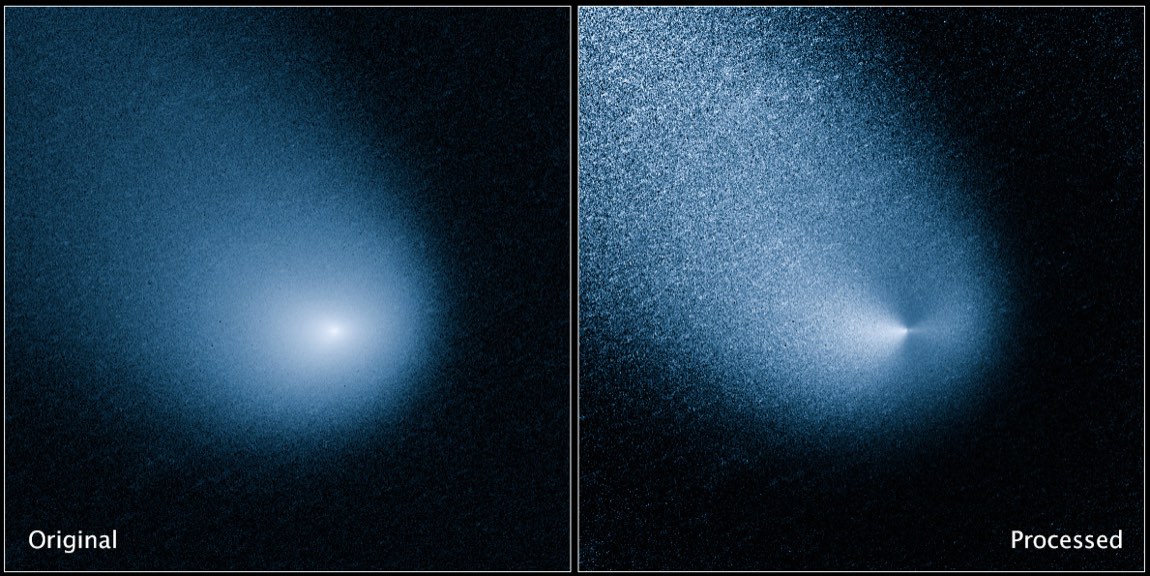
Comet Siding Spring is an Oort cloud comet discovered in January 2013 by Robert McNaught at Siding Spring Observatory, Australia. On 19 October 2014 it passed only about 140,000 km from Mars. Orbiters from NASA, ESA and India all survived the encounter and detected thousands of kilograms per hour of comet dust rich in metals such as magnesium, iron and sodium entering the Martian atmosphere. The flyby showed its nucleus was only 400–700 m across.
The deep dive
Researched for the Atlas from Wikipedia — C/2013 A1 (Siding Spring) (9,053 characters read) · updated Nov 14, 2026
01 How Robert McNaught Found It in Three Frames
Professional astronomer Robert McNaught spotted Comet Siding Spring on 3 January 2013 at Siding Spring Observatory near Coonabarabran, New South Wales, Australia. He used the Uppsala Southern Schmidt Telescope — a 0.5-meter instrument with a spherical mirror — fitted with a CCD camera, capturing just three images before the comet received its official designation C/2013 A1. At that moment the comet was already 7.2 AU from the Sun, roughly 1.08 billion kilometres away, and glowing at a faint apparent magnitude between 18.4 and 18.6, far too dim for the naked eye. The name Siding Spring follows a long-standing tradition of tagging a comet after the observatory that first identified it. Within weeks, archival hunting paid off: precovery images taken by the Catalina Sky Survey on 8 December 2012 immediately extended the observation arc to 29 days, and Pan-STARRS images from 4 October 2012 were announced on 3 March 2013, stretching the arc to 148 days — a jump that dramatically sharpened early orbit calculations and was the first step toward ruling out a Martian collision.
02 A Journey Measured in Millions of Years
Comet Siding Spring almost certainly originated in the Oort cloud, the vast spherical reservoir of icy bodies that surrounds the Solar System at enormous distances. Getting from that remote birthplace to the inner Solar System probably took millions of years of slow gravitational nudging. The comet's pre-encounter path was already extraordinary, but what happens after the flyby is equally striking: once the comet swings past perihelion and climbs back out of the planetary zone, its post-perihelion orbital period — calculated for the epoch 2050 — is estimated at roughly 1 million years. That means anyone who missed the 2014 close approach at Mars will not get a second chance on any timescale meaningful to human civilization. Unlike periodic comets such as Halley that return on century-scale cycles, Siding Spring belongs to the class of long-period visitors that arrive essentially once from the deep freeze of the outer Solar System and then retreat for geological ages.
03 Shrinking Nucleus: From 50 km Down to 700 m Deeper
Early estimates of the comet's nucleus spanned an enormous range — anywhere from 1 to 50 kilometres in diameter — which made predicting its potential danger both scientifically difficult and publicly dramatic. Had the nucleus truly been 50 kilometres across, a hypothetical direct impact on Mars would have released energy equivalent to 24 billion megatons, and the resulting crater would have been roughly ten times the diameter of the impacting body. At 700 metres, by contrast, the same impact would carve out a crater only 7 to 10 kilometres across. Observations eventually pinned the actual nucleus size to approximately 400 to 700 metres in diameter — comparable in scale to asteroid 2010 XG11, which had made its own close pass by Mars just three months earlier on 29 July 2014. The nucleus also turned out to rotate once every eight hours. Getting the size right was not merely academic: it determined how much gas and dust the comet could shed, which in turn set the real hazard level for every spacecraft then orbiting Mars.
04 How the Collision Odds Evaporated
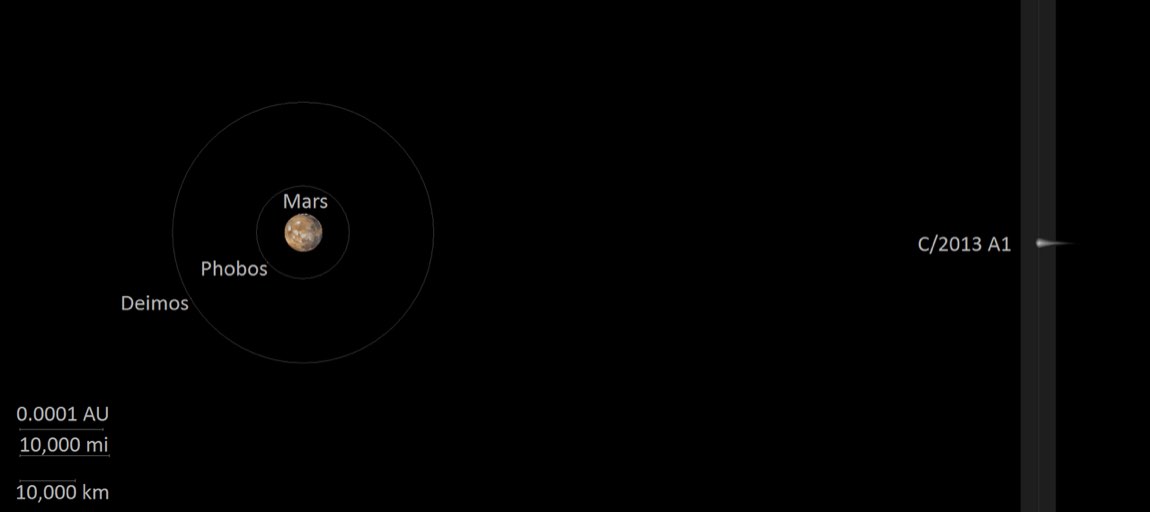
When astronomer Leonid Elenin made the first detailed close-approach calculations on 27 February 2013, the numbers were alarming: the comet might pass as close as 41,300 kilometres from the centre of Mars — well inside the orbit of the outer moon Deimos, which circles at about 24,000 kilometres. Impact could not be ruled out. As more observations accumulated, the odds shifted rapidly and in one direction only. By March 2013 the collision probability stood at 1-in-1,250. By late March it had fallen to 1-in-2,000, then to 1-in-8,000 by April, and to 1-in-120,000 by 8 April 2013. That 8 April solution from JPL's Small-Body Database, based on roughly 200 days of observations, was the first estimate to show definitively that the minimum approach would miss Mars entirely. The final measured flyby distance was 140,496.6 kilometres from the planet's centre — safely outside Deimos's orbit but still, in cosmic terms, a razor-thin miss.
05 What 56 km/s Does to Mars's Ionosphere Deeper
The comet swept past Mars at a relative velocity of 56 kilometres per second — fast enough to cross the width of Earth in under four minutes — and the effects on Mars's atmosphere were immediate and unprecedented. MAVEN detected an intense meteor shower, and 85 tonnes of cometary dust vaporized high in the Martian atmosphere. Orbiters detected thousands of kilograms per hour of incoming dust composed of magnesium, iron, sodium, potassium, manganese, nickel, chromium, and zinc. That vaporized material deposited a temporary but strong layer of ions into Mars's ionosphere — the first time such a cometary ion layer had ever been directly observed on any planet. The comet's coma also projected to more than double the amount of hydrogen in the high atmosphere for several tens of hours and to warm it by about 30 Kelvin for a few hours, increasing atmospheric drag on orbiting spacecraft by a factor estimated between 1.6 and 40 times normal. An observer standing on the Martian surface during the plane crossing would have seen a few tens of meteors streak across the sky.
 ⤢
06 When a Comet's Magnetic Field Overwhelms a Planet's Deeper
Mars has only a weak, patchy remnant magnetic field — nothing like Earth's global dynamo — which made it especially vulnerable to the comet's own field. As Comet Siding Spring's coma washed over Mars during the flyby, the magnetic field generated by the comet's interaction with the solar wind temporarily merged with and overwhelmed Mars's magnetic field, causing what scientists described as violent turmoil that persisted for several hours after the comet had already passed its closest point. The dense inner coma reached or almost reached the planet's surface, an extraordinary depth of penetration for any cometary encounter. This interaction offered planetary scientists a rare natural experiment: a chance to watch, in real time, how a comet's induced magnetosphere engages with the near-absence of a planetary magnetic field. The event was distinct from anything previously documented in Solar System exploration, adding a new chapter to understanding how comets shaped planetary environments in the early Solar System when such encounters may have been far more common.
07 Five Orbiters, Two Rovers, and One Close Call
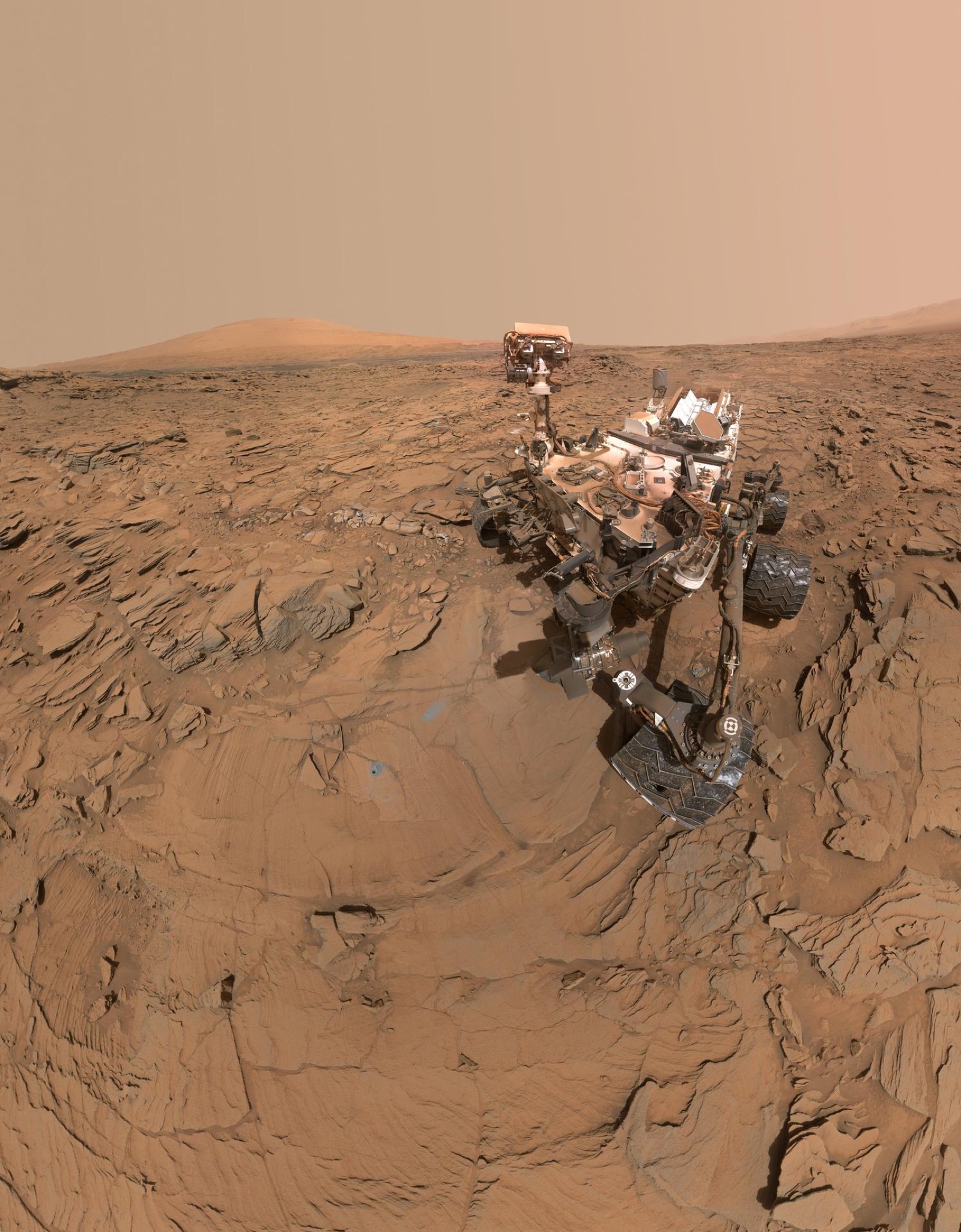
The timing of the flyby was fortunate for science: five spacecraft were already orbiting Mars when Comet Siding Spring arrived. NASA's 2001 Mars Odyssey, Mars Reconnaissance Orbiter, and MAVEN were joined by ESA's Mars Express and ISRO's Mangalyaan — the last two missions having arrived less than one month before closest approach. STEREO-A, orbiting the Sun, also had a view. On the surface, the Curiosity and Opportunity rovers captured images as well. All five orbiters reported healthy status after the flyby. To protect them, NASA executed two key precautionary strategies: repositioning the orbiters on the opposite side of Mars during the period of highest dust risk, and orienting them so their most vulnerable components faced away from the incoming particles. The greatest threat window was calculated to be approximately 100 minutes after closest approach, when Mars itself passed about 27,000 kilometres from the comet's orbit at around 20:10 UT. Scientific results from the entire armada of observers were formally presented at the 2014 AGU Fall Meeting in San Francisco on 18 December 2014.
08 As Bright as It Got from Earth's Sky
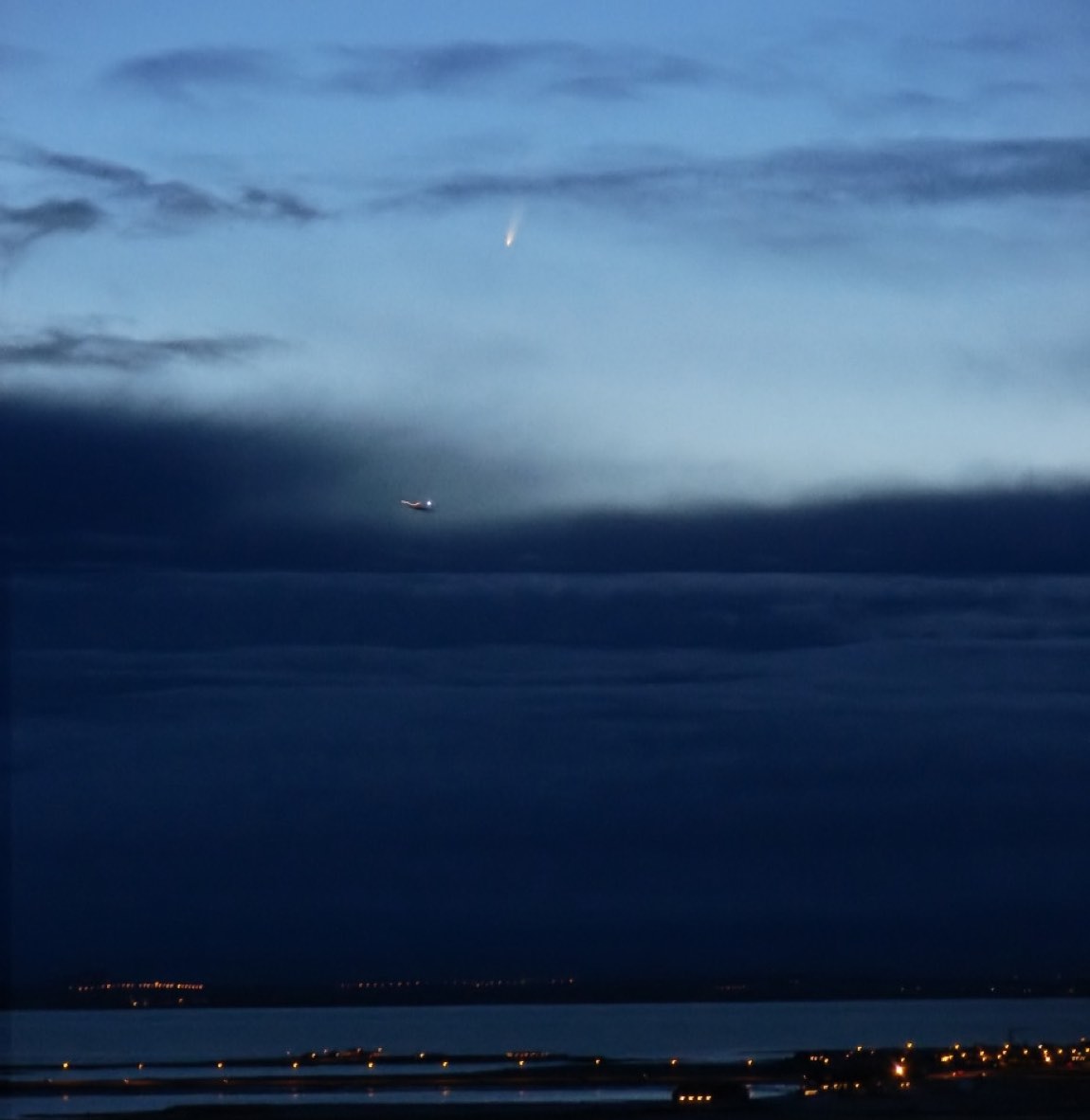
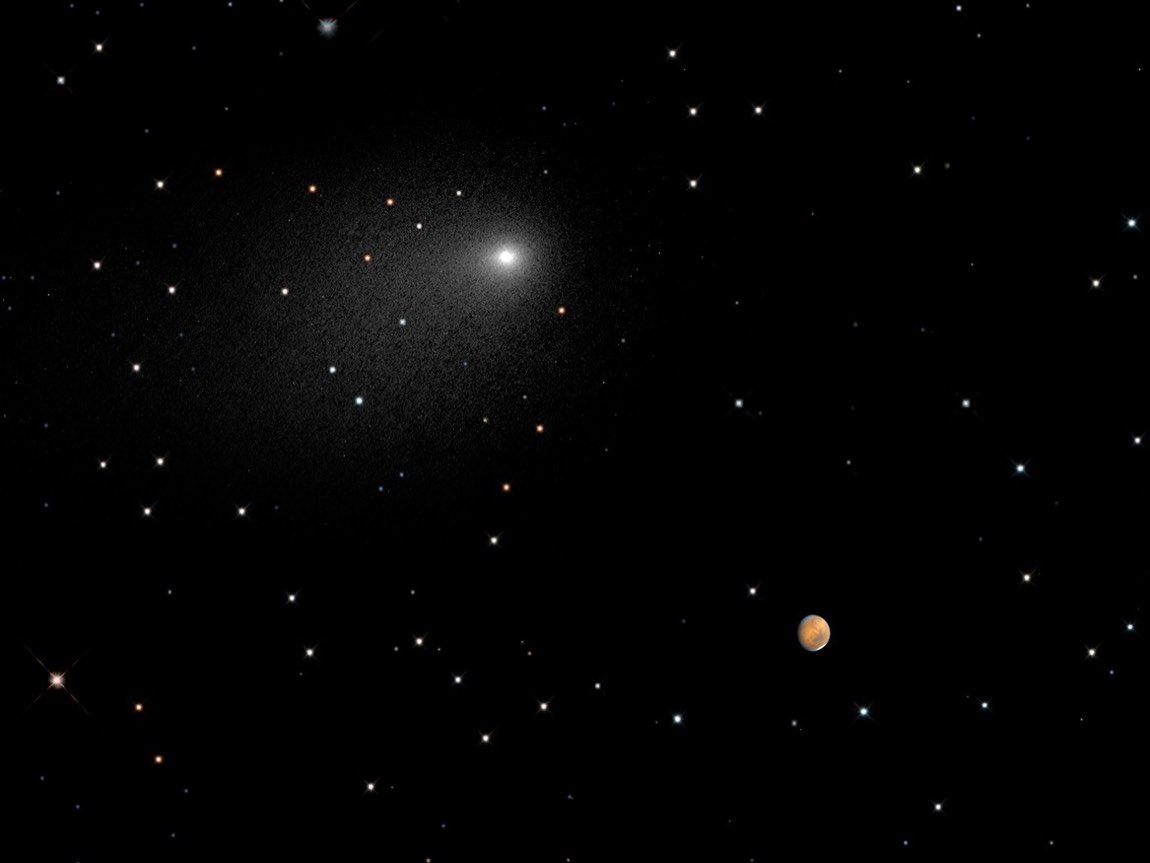
Observers on Earth were watching too, though the view was far less dramatic than from Mars orbit. On 19 October 2014, the comet and Mars were both located in the constellation Ophiuchus, close to globular cluster NGC 6401, and about 60 degrees from the Sun — a reasonable angular separation for evening viewing. The pair lay 1.6 AU, roughly 240 million kilometres, from Earth. At that time Comet Siding Spring had reached an apparent magnitude of about 11, making it the third-brightest comet in the sky. Even so, Mars at magnitude 0.9 was an estimated 11,000 times brighter than the comet's diffuse, low-surface-brightness glow. Visually detecting the comet from Earth required a telescope with an optical mirror at least 0.2 metres in diameter — a modest but dedicated amateur instrument. By November 2014 it had faded to magnitude 11.6, slipping to roughly fifth place among the sky's brightest comets. As seen from Mars itself, however, the comet peaked at an extraordinary apparent magnitude of approximately −6, brighter than any planet appears from Earth.
09 An Ion Layer No Planet Had Ever Shown Before Deeper
Among all the scientific returns from the encounter, one result stood above the rest in terms of sheer novelty: the detection of a temporary, strong layer of ions deposited into Mars's ionosphere by the comet's debris. Scientists explicitly noted this was the first time such a phenomenon had been observed on any planet — not just Mars, but anywhere in the explored Solar System. The ion layer formed because cometary dust particles streaking into the upper Martian atmosphere at 56 kilometres per second ablated almost instantly, releasing metallic ions — magnesium, iron, and others — that became embedded in the ionospheric structure. At the same time, the comet's coma interaction was warming the high atmosphere by roughly 30 Kelvin and flooding it with hydrogen, compounding the perturbation. The combination of a magnetic-field disruption, an ion-layer injection, atmospheric warming, and a metal-ion deposit all happening simultaneously gave planetary scientists a unique multi-instrument dataset that no laboratory or prior mission could have produced.
10 Precovery: Finding the Comet Before It Was Found
One of the quieter but scientifically important stories of Comet Siding Spring is how quickly its known history was extended backwards through precovery — the process of locating a newly discovered object in older archival images taken before anyone knew what to look for. Within a short time of McNaught's 3 January 2013 announcement, researchers found images captured by the Catalina Sky Survey on 8 December 2012, pushing the observation arc from zero to 29 days almost immediately. Then, on 3 March 2013, Pan-STARRS precovery images dating back to 4 October 2012 were announced, stretching the arc to 148 days. These older data points are not mere trivia: each additional day of arc dramatically tightens the mathematical constraints on a comet's orbit. It was the accumulation of that growing arc — eventually reaching 733 days by the time the nominal flyby distance was settled at 139,300 kilometres from Mars's centre — that allowed scientists to transform an alarming 1-in-1,250 impact probability into a confident all-clear.
 ⤢