Comet · Deep guide
Lexell's Comet
Also called: D/1770 L1 · Comet Lexell
In 1770 it passed just six Earth–Moon distances away, the closest comet approach ever recorded.
What is it?
Lexell's Comet was discovered by Charles Messier in June 1770 and named after Anders Johan Lexell, who calculated its orbit. On its 1770 pass it came within 0.015 AU of Earth, about six times the distance to the Moon, still the closest observed comet approach. Lexell calculated a 5.6-year orbit and argued that a close encounter with Jupiter in 1779 moved it onto a path where it could no longer be seen. A near-Earth asteroid found in 2010 may be its remnant.
The deep dive
Researched for the Atlas from Wikipedia — Lexell's Comet (6,517 characters read) · updated Nov 14, 2026
01 How Messier Actually Found It
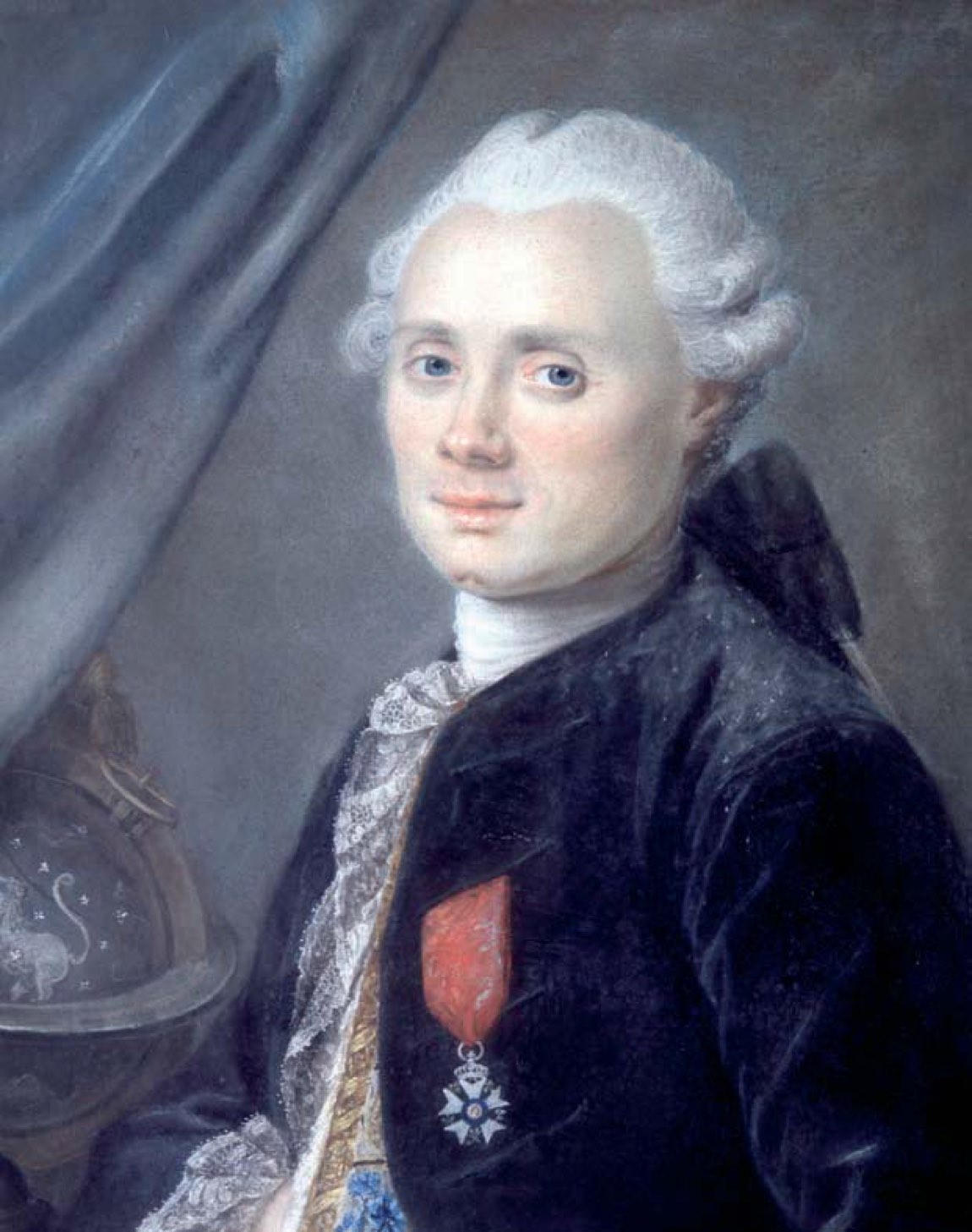
Charles Messier stumbled onto the comet almost by accident. On June 14, 1770, he had just finished watching Jupiter and was methodically sweeping through several nebulae in the constellation Sagittarius when an unfamiliar faint smudge caught his attention. What made it extraordinary was not the first sighting but what followed: over the next ten days the coma — the fuzzy envelope of gas and dust surrounding the nucleus — swelled to 27 arcminutes across, roughly the same angular width as the full Moon. By June 24 the comet had also brightened to magnitude +2, easily visible to the naked eye. Messier was not alone; astronomers elsewhere in Europe recorded it too, as did observers in Japan, where surviving records document it as a notable astronomical and historical event. In the Hejaz it was seen in Safar 1184 AH, and some people there interpreted it as the comet a poet named al-Fasi had predicted, believing it portended future events. A single discovery thus became a genuinely global phenomenon, documented across cultures on opposite sides of the world.
02 The Sky Was Moving: What Observers Saw
During its closest approach on July 1, 1770, Lexell's Comet put on a spectacle that left observers groping for superlatives. Messier measured the coma as 2 degrees 23 arcminutes across — roughly four times the apparent angular diameter of the full Moon painted across the night sky. An English astronomer recorded the comet racing across more than 42 degrees of sky in a single 24-hour period, an angular speed that would have been unmistakable even to a casual watcher. He described the nucleus as appearing as large as Jupiter and said it was "surrounded with a coma of silver light, the brightest part of which was as large as the moon's orb." That vivid description captures just how dominant the comet looked from Earth when it was only 0.015 astronomical units away — about 2,200,000 kilometers, or six times the distance to the Moon. Messier continued tracking the comet as it receded from the Sun, making his final observation on October 3, 1770, after which it faded beyond detection and was never seen again.
03 Why the Orbit Puzzled Everyone at First Deeper
In 1770, the dominant scientific assumption was that comets originated outside the Solar System entirely, arriving from interstellar space on one-way trajectories. That belief shaped the first attempts to fit an orbit to Messier's observations: astronomers tried a parabolic path, which suggested the comet reached perihelion — its closest point to the Sun — around August 9–10. The parabolic solution quickly proved a poor match to the observed positions, and Anders Johan Lexell stepped in with a radical alternative. Working over several years, he demonstrated that the orbit was elliptical, with a perihelion of August 13–14 and an orbital period of just 5.58 years — by far the shortest known for any comet at the time. Such a short period should have meant the comet was a familiar visitor, yet no one had recorded it before. Lexell resolved that contradiction by showing the orbit had been drastically reshaped by a close encounter with Jupiter in March 1767, redirecting the comet onto its Earth-grazing path for essentially the first time. This made it the earliest identified Jupiter family comet and, simultaneously, the first recognised near-Earth object.
04 Jupiter: The Comet's True Ruler
Jupiter did not merely nudge Lexell's Comet — it twice transformed the comet's entire destiny. The first reshaping happened in March 1767, when a close gravitational encounter with the giant planet bent the comet's path into the short-period ellipse that sent it sailing past Earth three years later. Then, in July 1779, Jupiter struck again. Working with Pierre-Simon Laplace, Lexell calculated that this second encounter so thoroughly perturbed the orbit that the comet either retreated to a path that never brings it closer to the Sun than Jupiter's orbit, or was flung out of the Solar System altogether. Johann Karl Burckhardt, who won a Paris Academy of Sciences prize for his 1801 investigation of the orbit, confirmed Lexell's findings and calculated that after the 1779 flyby the comet's perihelion had shifted to 3.33 AU — well beyond the inner Solar System. Urbain Le Verrier carried the analysis further in the 1840s, showing that even at its closest the comet had passed no nearer than three and a half planetary radii from Jupiter's centre, never close enough to be captured as a moon. Le Verrier also demonstrated that many different post-encounter trajectories were mathematically possible, an insight that foreshadowed the modern scientific concept of chaos.
05 Lexell's Legacy: Birth of Orbit Science Deeper
Anders Johan Lexell gave the comet his name not because he found it but because of the mathematical achievement he performed on it. His multi-year effort to determine a reliable elliptical orbit from a limited window of observations — at a time when parabolic solutions were the default and computing was entirely by hand — is now regarded as the beginning of the modern scientific discipline of orbit determination. The comet's orbit was sufficiently unusual and its behaviour sufficiently puzzling that the Paris Academy of Sciences later offered a formal prize to whoever could best explain it. Johann Karl Burckhardt claimed that prize in 1801, essentially validating Lexell's original conclusions. Le Verrier's 1840s follow-up was remarkable not just for its accuracy but for its philosophical implication: he showed that the range of possible orbits after the 1779 Jupiter encounter was so wide that the comet's future was fundamentally unknowable from the observations available. That recognition — that small uncertainties in initial conditions can produce wildly divergent outcomes — is the intellectual ancestor of chaos theory in dynamical systems.
06 A 2018 Recalculation Changes the Picture Deeper
Nearly 250 years after the comet's disappearance, researcher Quan-Zhi Ye and colleagues returned to the original 1770 observations with modern computational tools. Their 2018 paper found Le Verrier's 1844 calculations to be highly accurate, a remarkable vindication of 19th-century mathematics. Simulating the orbit forward to the year 2000, they found that 98 percent of all plausible orbital solutions kept the comet gravitationally bound to the Solar System. More strikingly, 85 percent of those solutions placed the comet's perihelion closer to the Sun than the asteroid belt, and 40 percent of all simulated orbits crossed Earth's orbit entirely. Those figures held steady even when non-gravitational forces — the subtle thrust produced by outgassing jets on a comet's surface — were factored in. Using the comet's apparent brightness in 1770, the team estimated its diameter at between 4 and 50 kilometers, with the most likely value below 30 kilometers. They also noted an absence of associated meteor showers, suggesting the comet may have ceased major activity — the vigorous outgassing that creates a tail — before the year 1800.
07 Searching for the Comet's Rocky Skeleton
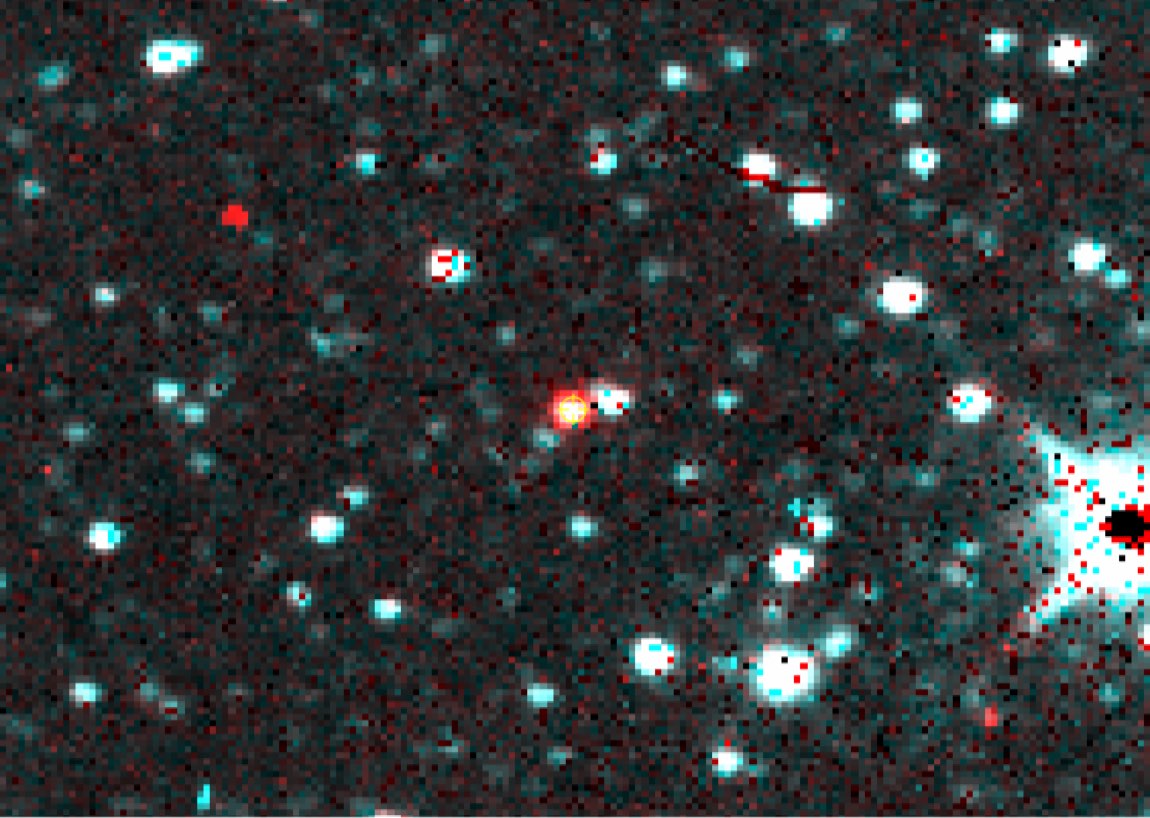
If the comet lost most of its volatile ice before 1800, what might remain? Ye and colleagues tackled exactly that question in 2018, reasoning that a dormant cometary nucleus large enough to have produced the 1770 display — at least 4 kilometers across — would be nearly impossible to miss if it were still wandering through the inner Solar System, given how thoroughly modern sky surveys cover that region. Their search among known objects turned up four candidate asteroids. Asteroid (529668) 2010 JL33 came out as the strongest match, with a 99.2 percent probability of being related. The next candidate, 1999 XK136, carried a 74 percent chance. Two others, 2011 LJ1 and 2001 YV3, had probabilities of only 0.2 percent and essentially zero, respectively. The key diagnostic was the longitude of perihelion, an orbital element that changes only slowly over time: Lexell's Comet had a longitude of perihelion of 359.48 ± 0.24 degrees, while 2010 JL33 sits at 2.32 degrees — a remarkably close match. Nevertheless, multiple close Jupiter approaches and uncertain non-gravitational parameters mean a definitive identification remains impossible.
08 The Record It Holds — and Its One Rival
Lexell's Comet holds the record for the closest confirmed cometary approach to Earth in recorded history, at 0.015 astronomical units — 2,200,000 kilometers, roughly six lunar distances. That record is essentially unchallenged, but one rival deserves mention. A small sungrazing comet catalogued as P/1999 J6 (SOHO) may have passed even closer, at approximately 0.012 AU (1,800,000 kilometers), on June 12, 1999. If those numbers are right, it would edge out Lexell's Comet. The critical caveat is that P/1999 J6's approach was unobserved, meaning the distance is derived purely from orbital calculations carrying uncertainties of around ±1.5 million kilometers. With an error bar that large, the actual closest approach could have been anywhere across a wide range of distances. Lexell's Comet, by contrast, was directly observed by multiple astronomers on multiple continents, giving its distance measurement a robustness that the SOHO comet's figure simply cannot match. The 1770 record therefore stands as the most reliably documented close cometary encounter with Earth.
09 What the Comet's Size Tells Scientists Deeper
Estimating the size of a comet from naked-eye and telescopic brightness measurements made in 1770 is an exercise in careful uncertainty management. The 2018 Ye et al. study placed the nucleus diameter somewhere between 4 and 50 kilometers, flagging less than 30 kilometers as the most probable range. For context, the comet that ended the dinosaurs is thought to have been roughly 10 kilometers across, so even the lower estimate puts Lexell's Comet in a substantial category. The large uncertainty in size matters enormously for the remnant-identification problem. The team reasoned that a body larger than 4 kilometers could not be hiding undetected in the inner Solar System given the completeness of modern asteroid surveys — as of 2018, most newly found asteroids even in the asteroid belt were only 1 to 4 kilometers across. That reasoning set a practical floor: if 2010 JL33 or another known object is not the remnant, the comet has either left the inner Solar System or broken apart. The absence of any associated meteor showers is an independent line of evidence suggesting the comet shed most of its loose, dusty material very early, well before the 20th century.
10 A Future Venus Encounter to Watch
Even if the precise fate of Lexell's Comet cannot be pinned down, the story of its most likely surviving remnant has a concrete future chapter. Asteroid (529668) 2010 JL33, the object identified in 2018 as having a 99.2 percent probability of being a fragment of the original comet, is on a trajectory that will bring it to within approximately 0.0227 AU — about 3.4 million kilometers — of Venus on November 3, 2184. That is roughly 8.8 times the distance from the Earth to the Moon, close enough to be a significant gravitational nudge but not a collision. The encounter is intriguing for two reasons. First, it offers a future observational event when astronomers of the 22nd century could study the object at relatively close range and perhaps finally settle whether it is truly the comet's skeleton. Second, the Venus flyby itself may alter the object's orbit again, reshuffling the dice in the same way Jupiter repeatedly reshuffled Lexell's Comet more than two centuries ago.
11 Cultural Echoes Across Three Continents
The appearance of Lexell's Comet in the summer of 1770 left documentary traces well beyond the notebooks of European astronomers. In Japan, observers recorded it as both an astronomical and historical phenomenon; surviving written records confirm it was taken seriously as an event of significance, though the article does not detail exactly how Japanese scholars interpreted it. In the Hejaz — the region of the Arabian Peninsula that includes the holy cities — the comet appeared in Safar 1184 AH, which corresponds to June 1770 in the Gregorian calendar. Local observers connected the apparition to a prediction by the poet al-Fasi, who was believed to have foreseen a comet that would portend future events. The comet thus entered the oral and written culture of the region as something more than a natural curiosity. These responses from Japan and the Islamic world sit alongside Messier's systematic European records to give Lexell's Comet one of the richer cultural documentation trails of any pre-modern comet, making it a genuinely cross-civilisational scientific and historical episode.
12 Why It Was Named After Lexell, Not Messier
The naming of Lexell's Comet reflects an older astronomical convention that sometimes honoured the mathematician who computed an orbit rather than the observer who first spotted the object. Charles Messier found the comet on June 14, 1770, and tracked it through its entire observable apparition, making the last recorded observation on October 3, 1770 — a dedicated and disciplined observing campaign. Yet it is Anders Johan Lexell whose name the comet carries, because Lexell performed the more theoretically demanding and ultimately more historically consequential work. His demonstration that the orbit was elliptical with a 5.58-year period, his identification of the 1767 Jupiter encounter as the orbit-shaper, and his prediction of the 1779 Jupiter perturbation that sent the comet into obscurity together constituted a package of analytical achievements that re-oriented how astronomers understood the dynamics of the Solar System. That the Paris Academy later offered a formal prize for follow-up work on the orbit — won by Burckhardt in 1801 — underlines just how significant the theoretical problem Lexell cracked was considered to be by his contemporaries.
 ⤢