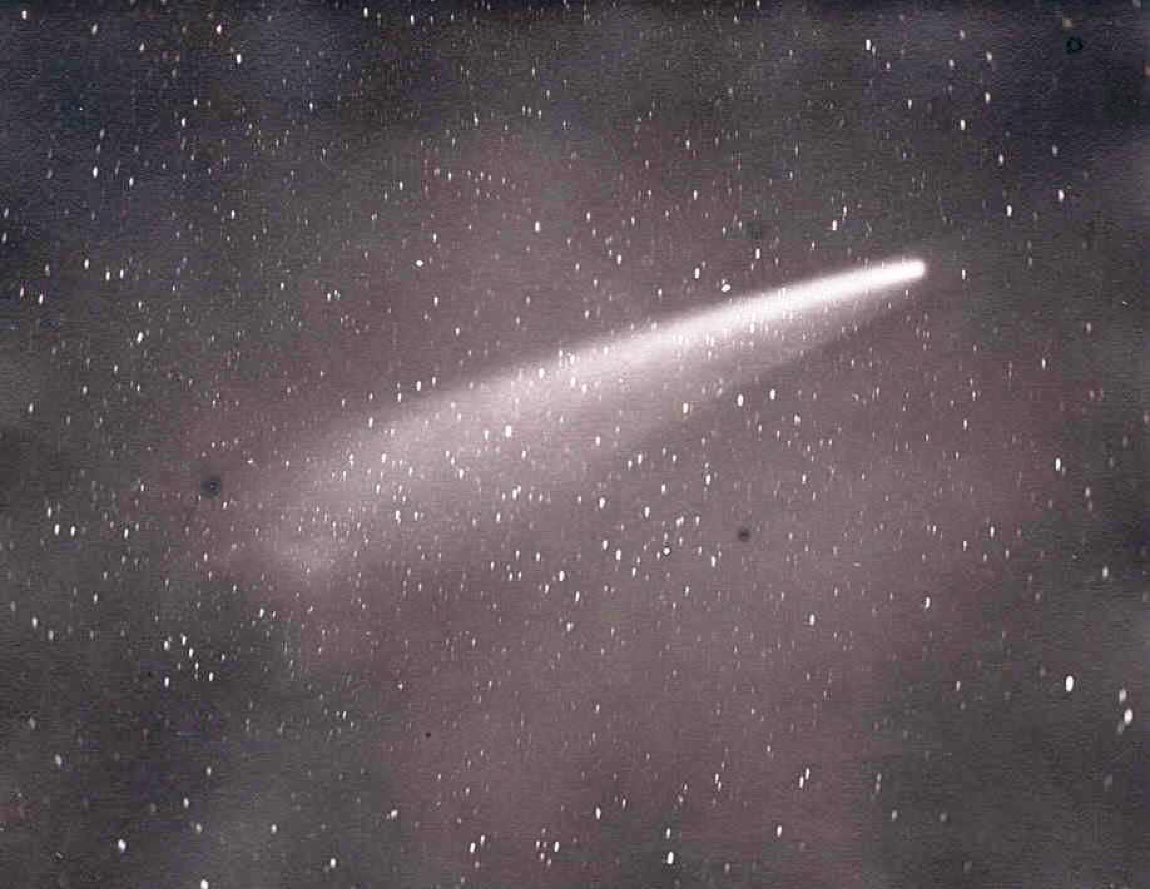
 Photograph · Sir David Gill, 1843-1914 · Public domain
Comet · Deep guide
Great September Comet of 1882
Also called: C/1882 R1 · Great September Comet · 1882 II
Perhaps the brightest comet ever recorded, it was seen next to the Sun in daylight.
What is it?
The Great Comet of 1882 became visible in early September 1882 and reached perihelion on 17 September, skimming just above the Sun's surface. It could be seen in daylight right beside the Sun, and some sources claim it was the brightest comet in recorded history, at around magnitude −17. As it left the Sun its nucleus broke into several pieces that will return centuries apart. It is the best-known member of the Kreutz sungrazers.
The deep dive
Researched for the Atlas from Wikipedia — Great Comet of 1882 (5,575 characters read) · updated Nov 14, 2026
01 How bright was truly brilliant
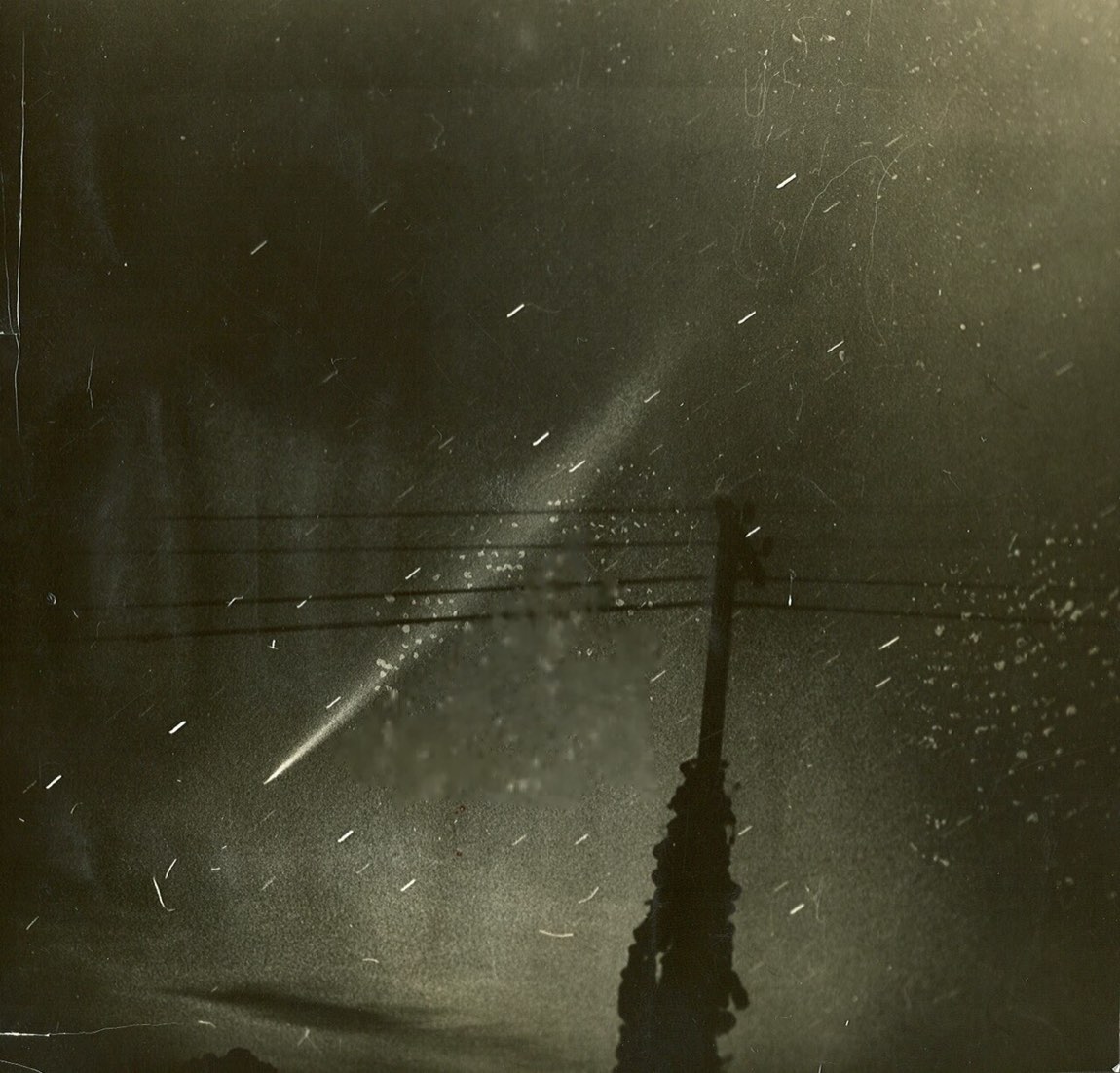
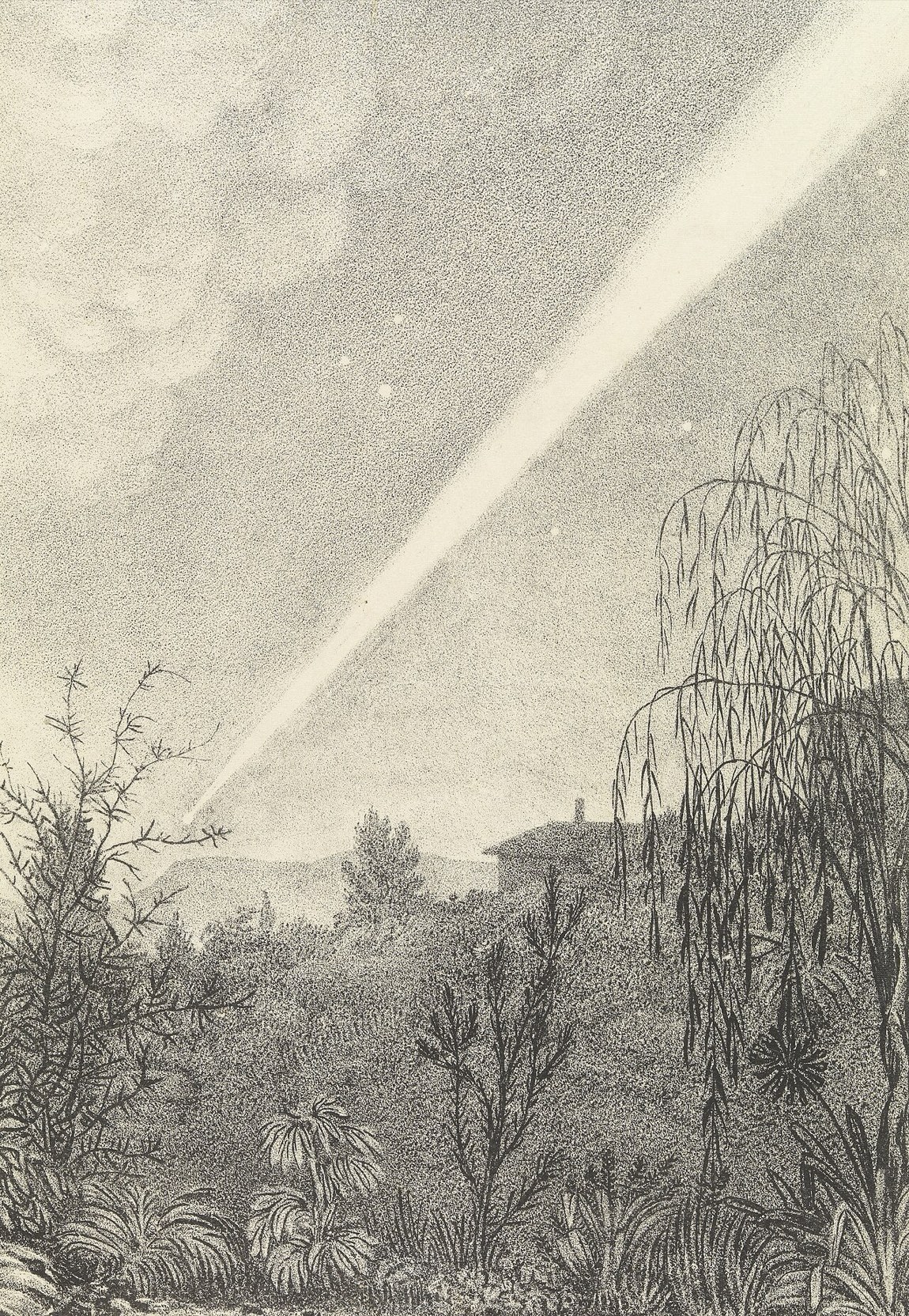
When astronomers assign a magnitude of −17 to the Great Comet of 1882, that number can feel abstract, so consider what it means in context: the full Moon sits around magnitude −13, and the Sun itself reaches roughly −27. A magnitude of −17 placed the comet far outshining anything else ordinarily visible in a daylit sky, and some sources argue C/1882 R1 is the brightest comet ever recorded in human history. David Gill, Her Majesty's Astronomer at the Cape, watched it rise just minutes before the Sun on 18 September and compared its nucleus to "a star of the 1st magnitude seen by daylight" — an understatement, given that most first-magnitude stars are invisible in full sunshine. For many hours on either side of perihelion, any observer who knew where to look could simply glance toward the Sun and see a brilliant intruder hanging beside it in broad daylight.
02 Minutes from the Sun's surface Deeper
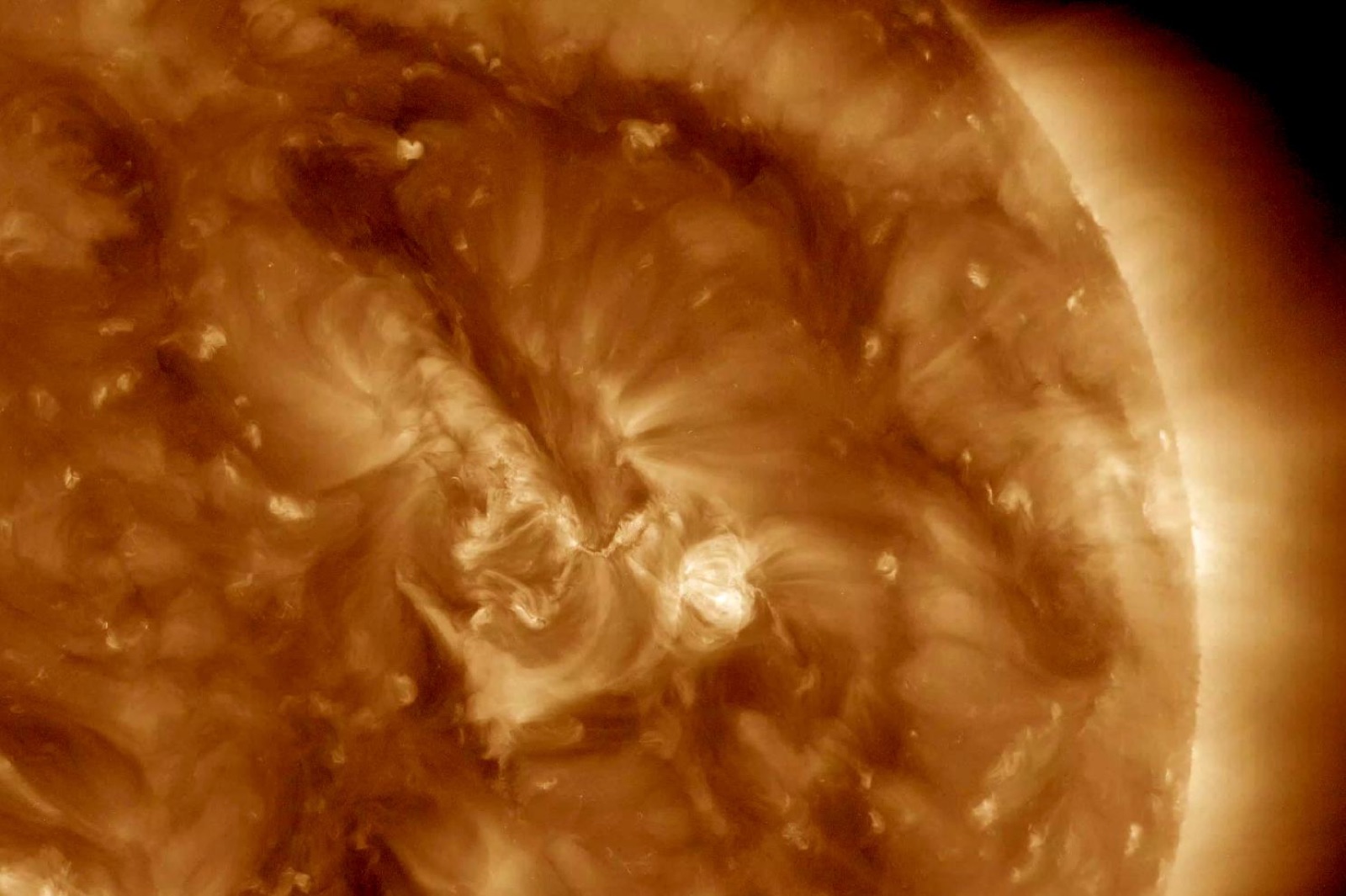
At perihelion on 17 September 1882, the comet skimmed to within an estimated 300,000 miles — 480,000 kilometres, or 0.0032 AU — of the Sun's surface. To put that distance in perspective, it is roughly 1.25 times the distance from Earth to the Moon, yet it separates the comet's nucleus from the roiling photosphere of a star. Kreutz sungrazers by definition pass within 1 solar radius of the Sun's photosphere at perihelion, and C/1882 R1 sat well inside that threshold. W. H. Finlay observed the comet through a neutral density filter right up to the moment it transited the solar disk, reporting that the Sun's limb was "boiling all about it" before the comet vanished abruptly. No trace of it could be detected against the Sun's surface during transit — a disappearing act explained by the overwhelming glare of the photosphere rather than by any destruction at that instant.
03 A nucleus that fell apart in real time
One of the most scientifically dramatic episodes in comet observation history unfolded in the weeks after perihelion. On 30 September 1882, observers including Finlay and the American astronomer E. E. Barnard began noticing that the nucleus appeared elongated — no longer the sharp, singular point it had been. By 17 October it was unmistakable: the nucleus had fractured into at least five distinct fragments, each appearing as a bright ball of light. Observers noted that the relative brightness of these pieces shifted from night to night, suggesting ongoing physical evolution as heat stress and outgassing altered each fragment independently. The fragmented nucleus continued to swell in apparent size, reaching its maximum extent in December 1882. Despite this structural collapse, the comet remained visible to the naked eye all the way until February 1883 — an extraordinary five months after perihelion.
04 Who first spotted it, and when
The comet's discovery story is appropriately dramatic for such a spectacular object. Informal reports indicate the comet was first seen as early as 1 September 1882 by observers at the Cape of Good Hope and in the Gulf of Guinea, with numerous Southern Hemisphere observers independently noticing the new visitor over the following days. The first formal, documented astronomical observation, however, belongs to W. H. Finlay, Chief Assistant at the Royal Observatory in Cape Town, South Africa. His observation on 7 September 1882 at 16:00 GMT recorded the comet at an apparent magnitude of about 3 — already a conspicuous naked-eye object — with a tail approximately one degree in length. That single degree of tail, stretching roughly twice the apparent width of the full Moon across the sky, was just the beginning; the comet would grow far more spectacular within days.
05 Three great comets and one ancestor Deeper
When orbital calculations confirmed that C/1882 R1 was travelling on nearly the same path as the Great Comet of 1843 (C/1843 D1) and the Great Comet of 1880 (C/1880 C1), one tempting explanation was that all three were the same comet looping back on a rapidly shrinking orbit. Careful analysis ruled that out: the orbital period of C/1882 R1 is 772 ± 3 years, far too long for repeat visits within decades. The German astronomer Heinrich Kreutz instead proposed that all three were fragments of a single, much larger progenitor comet that had shattered during an earlier close solar passage. The 1882 comet's own fragmentation into five pieces provided vivid, real-time evidence that such splitting was physically plausible. It is now thought that C/1882 R1's direct parent passed perihelion in the early 12th century, itself a fragment of an even more ancient lineage.
06 The Kreutz family tree runs deep Deeper
Today it is well established that at least seven comets — C/1843 D1, C/1880 C1, C/1882 R1, C/1887 B1, C/1963 R1, C/1965 S1 (Ikeya–Seki), and C/1970 K1 — all belong to the Kreutz sungrazer family, descended from a single ancestral comet. C/1882 R1's sister fragments from their shared 12th-century parent include C/1945 X1 (du Toit) and the famous C/1965 S1 (Ikeya–Seki). Brian G. Marsden suggested the entire group traces back to a comet observed in 372–371 BC, often associated with Aristotle — though Aristotle was only twelve years old at the time, making him no eyewitness, and Callisthenes of Olynthus, who also wrote about that comet, was born a full decade after its appearance. Chinese astronomical records, normally meticulous, contain no mention of that comet either. Current models instead favour either a February 423 or February 467 comet, both with orbital periods of roughly 700 years, as the more likely root of the entire Kreutz sungrazer lineage.
07 When the fragments will return
Because the Great Comet of 1882 broke into at least five fragments, its "return" is not a single event but a spread of arrivals. Orbital calculations predict that the various pieces should come back to the inner solar system sometime between approximately 2487 and 2719 — a window of more than two centuries. Fragment A is expected earliest, around 2487, while Fragment D trails at the far end near 2719. These projections carry real uncertainty: tidal forces from the Sun, outgassing thrust from each fragment's own evaporating ice, and gravitational nudges from planets can all shift predicted return dates by years or decades. When they do arrive, astronomers will have the rare opportunity to watch the aftermath of a fragmentation event that began in 1882 play out across multiple, separately observable objects, each with a subtly different orbital history.
08 How long it stayed in the sky
The persistence of C/1882 R1 as a visible object is as remarkable as its peak brilliance. The comet was already conspicuous enough for naked-eye discovery by 1 September 1882, blazed to daytime visibility at perihelion on 17 September, broke apart through October, expanded to its largest apparent nuclear size in December, and was still detectable without a telescope until February 1883 — roughly six months after first reports and five months after perihelion. Even that was not the end: the last definite recorded sighting was made by B. A. Gould at Córdoba on 1 June 1883, more than eight months after perihelion. The comet's sheer mass and the multiple fragments it produced gave it a longevity in the sky that few comets match, allowing a full generation of astronomers to study its gradual decay.
09 Observing a sungrazer by transit Deeper
On 17 September 1882, C/1882 R1 did something vanishingly rare: it transited across the face of the Sun as seen from Earth. Finlay at the Cape tracked the nucleus right to the solar limb using a neutral density filter, watching until the moment the Sun's edge seemed to boil around the comet before it winked out. No feature of the nucleus could then be detected against the solar surface — a result that speaks to the extreme brightness contrast between even a spectacular comet and a stellar photosphere. This kind of solar transit by a comet is scientifically valuable because in principle it allows the nucleus size to be estimated against the known angular diameter of the Sun. In Finlay's words the nucleus was "certainly rather under than over 4 arc-seconds in diameter" when observed rising near the Sun on 18 September, offering one of the earliest quantitative size estimates for any great comet's nucleus.
10 Barnard's role in tracking the breakup
E. E. Barnard, one of the most gifted visual observers in nineteenth-century astronomy, was among the first to recognize that something dramatic was happening to the nucleus after perihelion. Beginning 30 September 1882, Barnard and Finlay independently began reporting that the nucleus looked elongated rather than star-like — the first observable sign of fragmentation. Barnard's involvement matters historically because he was already building a reputation for meticulous comet observation that would define his career. The fact that two skilled observers at different locations independently noticed the elongation on the same date lends confidence to the timing of the breakup's visible onset. By 17 October the split into at least five pieces was beyond dispute, but Barnard's early reports on 30 September mark the moment the scientific community first glimpsed the comet coming apart before their eyes.
11 An ancient debate about ancient sources Deeper
The question of how far back the Kreutz sungrazer lineage extends touches on one of the trickier problems in historical astronomy: trusting ancient sources. The comet of 372–371 BC has long been a candidate for the group's origin, partly because Aristotle wrote about a spectacular comet around that era. But Aristotle was twelve years old when it appeared, and his account cannot be treated as a first-hand scientific record. Callisthenes of Olynthus wrote about the same comet yet was born ten years after it appeared, making his account even more removed from direct observation. Perhaps most telling, Chinese astronomical records — which are among the most systematic surviving records from antiquity — contain no mention of this comet at all. For these reasons, more recent orbital models have shifted toward comets appearing in February 423 or February 467, each with orbital periods of roughly 700 years, as the more historically and dynamically plausible ancestors of the entire Kreutz family.