 Photograph · S.M. Larson and R.B. Minton · Public domain
Comet · Deep guide
Comet Bennett (Great Comet of 1970)
Also called: C/1969 Y1 · Great Comet of 1970
A bright 1970 comet that the Apollo 13 crew had planned to photograph on the way to the Moon.
What is it?
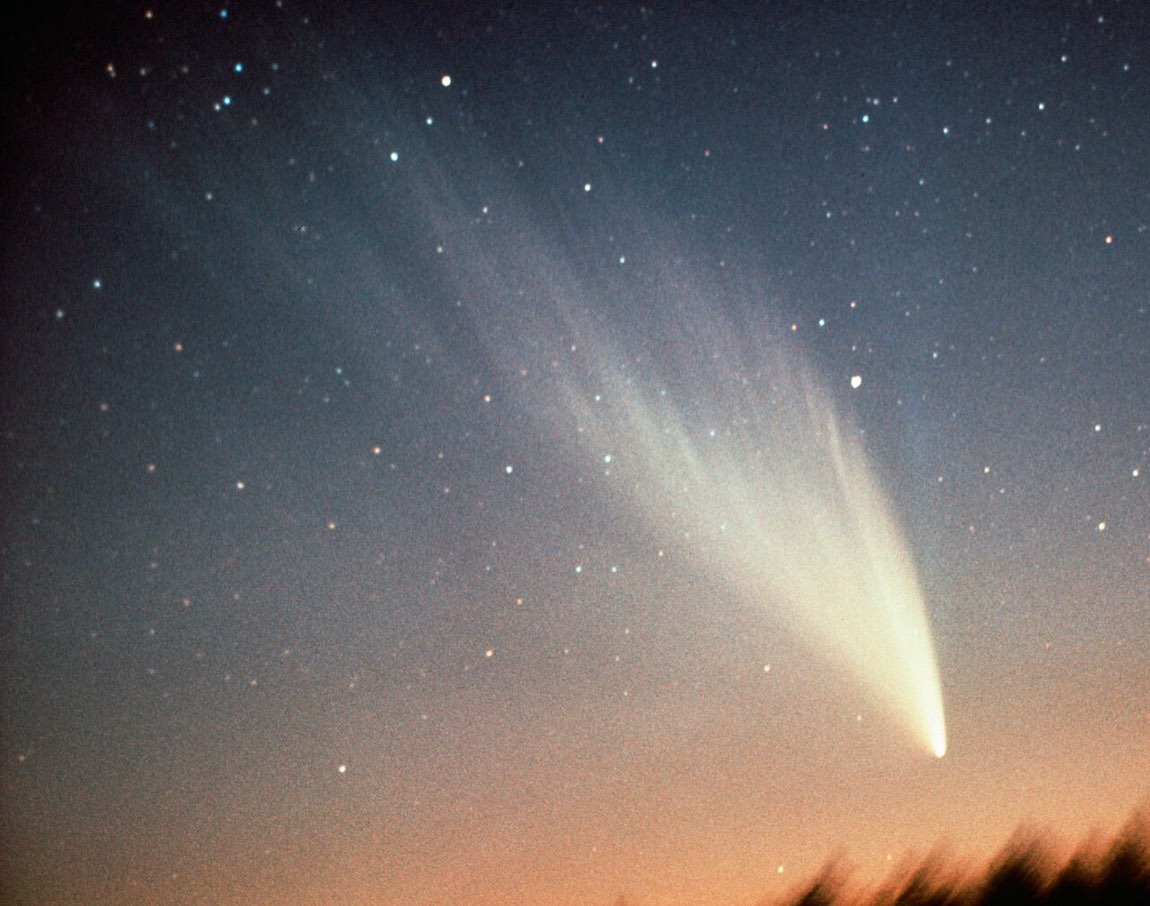
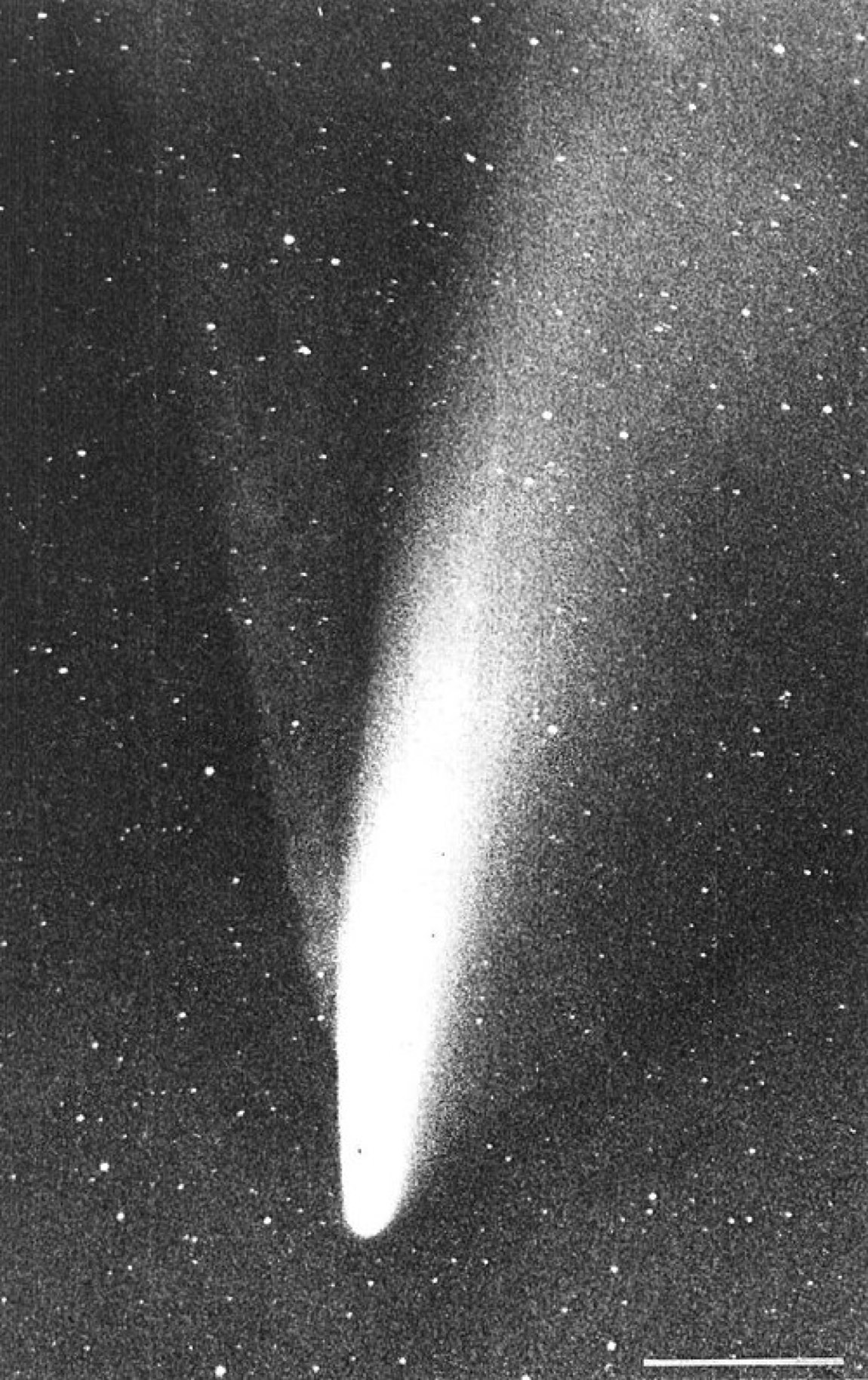
Comet Bennett was discovered by South African amateur John Caister Bennett on 28 December 1969. It brightened through early 1970, reached perihelion on 20 March and peaked around magnitude zero with a curved tail about 10 degrees long. It is counted, along with Comet West, as one of the two great comets of the 1970s. The Apollo 13 astronauts tried to photograph it, but the mission's science plans were dropped after the spacecraft's service module ruptured.
The deep dive
Researched for the Atlas from Wikipedia — Comet Bennett (11,755 characters read) · updated Nov 14, 2026
01 The Amateur Who Found It First
John Caister Bennett was conducting his routine comet-seeking observations from Pretoria, South Africa, on 28 December 1969 when he spotted the comet that would bear his name. At the moment of discovery it sat in the southern constellation Tucana at a declination of 65° south — deep in skies invisible to most of the world's professional observatories — and glowed at an estimated magnitude of 8.5, far too faint for the naked eye. The comet was then roughly 1.7 AU from both the Sun and Earth, meaning it lay about as far from us as the Sun lay from it. Almost immediately, M. P. Candy at the Perth Observatory computed a preliminary orbit and recognized something important: the trajectory would bring the comet to a perihelion of only 0.54 AU from the Sun — just 81 million km — by late March. That close solar passage, combined with high intrinsic brightness and a favorable Earth distance, flagged Bennett as a future spectacle. What started as a faint smudge in a southern-hemisphere amateur's eyepiece was about to become the most photographed and most thoroughly researched comet of its era.
02 A Sky Show That Built for Months
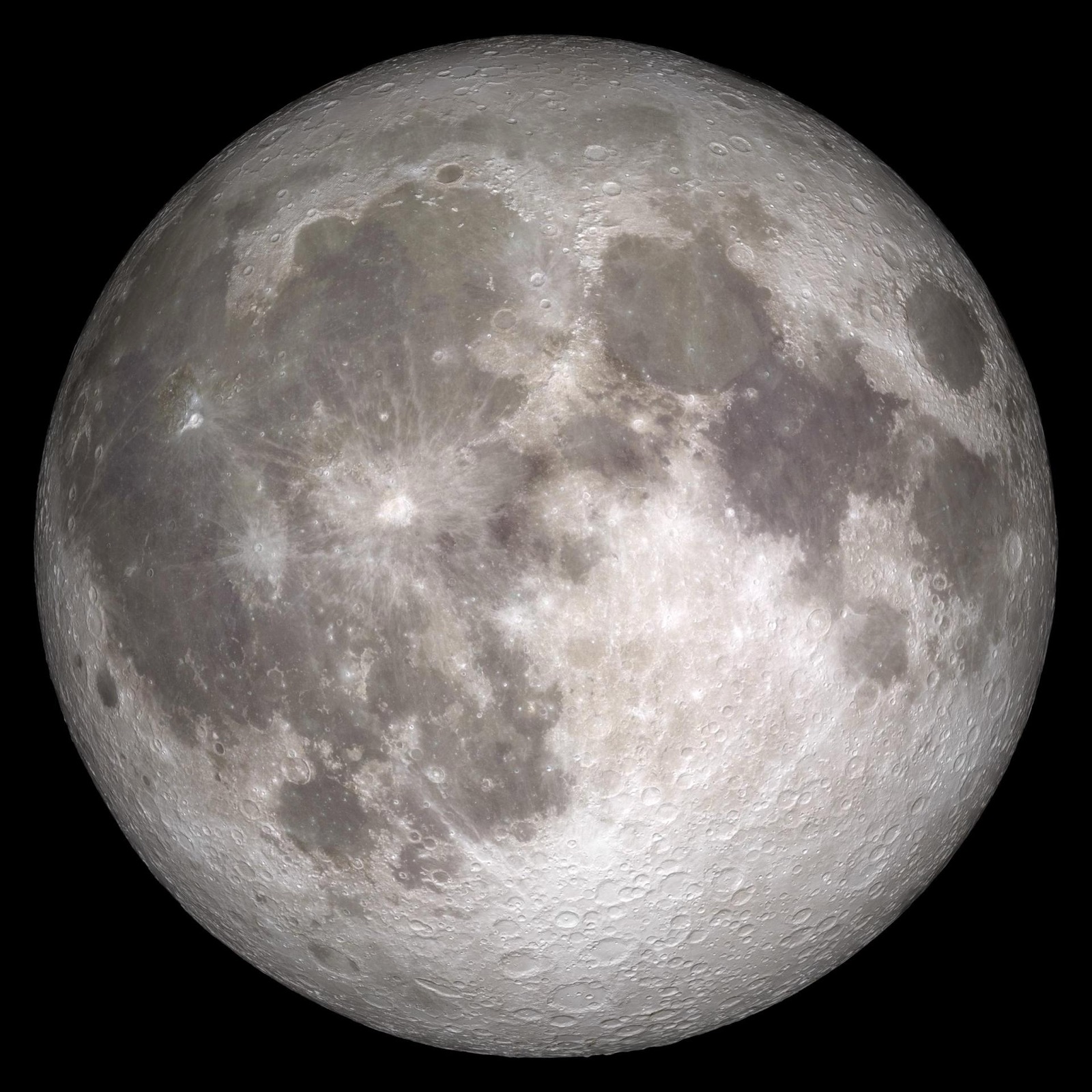
Comet Bennett did not arrive fully formed; it staged a slow, months-long brightening that rewarded patient observers. By the first week of February 1970 it had crossed the naked-eye threshold at magnitude 5, already trailing a tail one degree long — roughly twice the width of the full Moon. By late February it had climbed to magnitude 3.5 with a two-degree tail. The real drama came in March: by mid-month Bennett blazed as a first-magnitude object, rivaling the brightest stars, with a prominent curved tail stretching 10 degrees across the sky. Perihelion arrived on 20 March, and the comet crossed Earth's celestial equator on 25 March, shifting from southern to northern morning skies. Its closest approach to Earth — called perigee — came on 26 March at 0.69 AU, or 103 million km. Through April the tail kept growing even as the head faded; at its grandest the tail spanned 20 to 25 degrees, equal to nearly 50 full Moon widths side by side. By mid-May the naked eye could no longer follow it, but telescopes tracked the dying coma all the way to February 1971.
03 Following Bennett's Path Across the Sky
The comet's journey across the constellations was itself remarkable. Discovery came in Tucana, one of the most southerly constellations. After crossing the equator in late March, it was placed in the Square of Pegasus, then swept steadily northward through the spring and summer of 1970. By August it had reached a maximum northern declination of 83°, placing it in the constellation Camelopardalis, almost directly above the north celestial pole and therefore circumpolar for all northern-hemisphere observers. During April it passed through Cassiopeia, where it was visible all night long without setting. This extreme northward drift meant that southern observers who made the initial discovery gradually lost access to Bennett while northern observers, who had missed its peak brilliance, could follow the fading coma into late winter. The comet's elongation from the Sun remained greater than 32 degrees after perihelion, keeping it accessible in the morning sky rather than lost in solar glare — a geometry that contributed to its long observational window.
04 Detecting a Giant Hydrogen Bubble Deeper
One of the most consequential scientific payoffs from Comet Bennett came not from ground-based telescopes but from two Earth-orbiting satellites. Scientists had theorized that comets should be wrapped in a vast shell of hydrogen gas detectable via the Lyman-alpha emission line at 121.5 nm in the ultraviolet — a wavelength Earth's atmosphere absorbs completely, making space-based observation mandatory. The Orbiting Astronomical Observatory 2 (OAO-2) had already confirmed this hydrogen envelope around comet C/1969 T1 (Tago-Sato-Kosaka) in January 1970, providing the template. Bennett was then systematically observed by both OAO-2 and OGO-5 from mid-March to mid-April 1970. OGO-5's more sensitive photometer detected hydrogen atoms at distances of several million kilometres from the nucleus. On 1 April, when Bennett was about 0.6 AU from the Sun, the hydrogen envelope measured an extraordinary 20 million km by 15 million km — wider than 15 times the diameter of the Sun. The mass of that hydrogen was estimated at about 2 million tonnes. Twelve successive intensity maps tracked how this envelope shrank as the comet receded, and the production rates of hydroxyl (OH) and hydrogen derived from OAO-2 photometry confirmed that water-ice evaporation from the nucleus drives gas output at small solar distances.
05 Water Lost to Space: Staggering Numbers Deeper
The ultraviolet observations of Comet Bennett did more than confirm a hydrogen halo — they allowed scientists to put real numbers on how profligately a comet squanders its mass. By tracking the production rates of OH and H and how those rates changed with the comet's distance from the Sun, researchers could estimate total water output throughout Bennett's passage through the inner solar system. The result: approximately 200 million tonnes of water were lost during that single perihelion passage. For scale, that is roughly equivalent to draining a lake about 7 km wide and 1 km deep in a matter of weeks. The data also demonstrated that the rate of gas production is not constant but depends strongly on solar distance, confirming theoretical models in which sunlight-driven sublimation of surface ices governs a comet's activity. These quantitative constraints on water loss were among the first to be derived for any comet, giving Bennett an outsized place in the development of cometary science even though the comet itself will not return for a very long time.
06 Silicate Dust Caught in the Infrared Deeper
Comet Bennett provided an early opportunity to study cometary dust composition using infrared detectors. On 4 April 1970, astronomers at the O'Brien Observatory of the University of Minnesota measured the comet photometrically across the near- and mid-infrared from 2 to 20 micrometres in wavelength. At short wavelengths the data revealed a thermal continuum consistent with a black body of about 500 K — hot dust grains warmed by sunlight. More importantly, a distinct emission feature appeared at 10 micrometres, a wavelength fingerprint attributed to silicate mineral grains in the comet's dust coma. This was a significant identification: silicates are rocky, mineral-bearing materials, telling scientists that cometary dust is not purely icy but includes solid grains of a kind found in ordinary rocks and meteorites. The finding was independently confirmed at Kitt Peak National Observatory in Arizona on 21 April 1970. These observations placed Comet Bennett among the earliest comets in which silicate emission was detected, contributing to the growing understanding that comets carry both volatile ices and refractory mineral grains locked together in their nuclei.
07 Tail Disconnections and Solar Wind Clues Deeper
Among the most dramatic events recorded during Comet Bennett's apparition was a disconnection event in its gas tail observed on the night of 3-4 April 1970 at the Osservatorio Astrofisico di Asiago in Italy. Comet gas tails are sculpted by the solar wind — a continuous stream of charged particles from the Sun — and when that wind changes abruptly, it can sever the tail entirely. Researchers attempted to link the Bennett tail disconnection to simultaneous solar wind measurements from an impressive array of spacecraft and instruments: OGO-5, Vela 5, HEOS-1, Pioneer 8, and even the ALSEP experiment left on the lunar surface by the Apollo 12 crew. A prominent kink observed in the gas tail on 4 April was also examined. Initial analysis found no matching solar wind event, but further investigation suggested that the solar wind dynamics measured near Earth may have differed significantly from conditions near the comet, and that spacecraft coverage was too sparse in time and location to capture the triggering event. The gas tail also showed a diurnal variation in intensity and structure, implying highly erratic production of the CO+ ion throughout April.
08 A Dust Tail Feature Ahead of Its Time Deeper
Three images taken in red light on 5-8 May 1970 at the Thuringian State Observatory in Tautenburg, Germany, captured Comet Bennett at an unusual moment: Earth had moved nearly into the plane of the comet's orbit, offering a geometry that reveals dust structures normally hidden from other angles. The photographs showed two anomalous features — a radial structure and short sunward spikes — both probably caused by the comet's dust. When scientists later analyzed these observations in detail, they found evidence for what is called a neckline structure, or NLS, in the comet's dust tail. The significance lies in timing: the theoretical framework for understanding neckline structures was not formally derived until 1977, years after the Bennett observations were made. The Tautenburg images therefore preserved evidence of a physical phenomenon before anyone had a name for it, illustrating how archival comet data can yield new science long after an apparition has ended.
09 Spectral Fingerprints Across Many Observatories
So many institutions directed their instruments at Comet Bennett that the comet effectively became a simultaneous international experiment. At Goddard Space Flight Center in Maryland, images taken 28 March to 18 April 1970 isolated emission lines of CN, C2, CO+, and sodium using interference filters across violet, blue, green, and yellow wavelengths. Hamburg Observatory contributed white-light images for brightness mapping on 8-9 April. The University of Western Ontario's Hume Cronyn Memorial Observatory observed from 31 March to 27 April, mapping CN and C2 isophotes — lines of equal brightness — both parallel and perpendicular to the tail. The Observatory of the University of Toledo recorded spectra from 30 March to 7 May, measuring C2 and CN brightness profiles out to 100,000 km from the nucleus and detecting the forbidden oxygen emission line at 630 nm, which hinted that CO2 decomposition was contributing atomic oxygen and that Bennett may have carried CO2 in excess of water. The same Toledo data also yielded a production-rate estimate for the H2O+ ion. Taken together, this multi-site spectral campaign made Comet Bennett the most thoroughly chemically characterized comet of its time.
10 Radio Silence: What Was Not Detected
Not every observation campaign returned a positive result, and those null detections were scientifically meaningful in their own right. Using the radio telescope at Green Bank Observatory in West Virginia, astronomers spent six days in mid-March 1970 searching for formaldehyde emission at 4.83 GHz — a frequency that could reveal organic molecules in the coma. No signal was detected. Separately, the radio telescope at the United States Naval Research Laboratory in Maryland monitored the comet over four days in late March 1970 at 22.2 GHz, the emission frequency of water molecules, and likewise detected nothing. These failures did not disprove the presence of formaldehyde or water in the comet; radio detection of such molecules in comets is technically demanding and depends on favorable conditions of abundance, geometry, and instrument sensitivity. Nonetheless, the attempts illustrate how ambitious the observational program surrounding Bennett was — researchers were pushing every available technology, including techniques that would not succeed in comet science for some years afterward.
11 Apollo 13's Lost Photographs
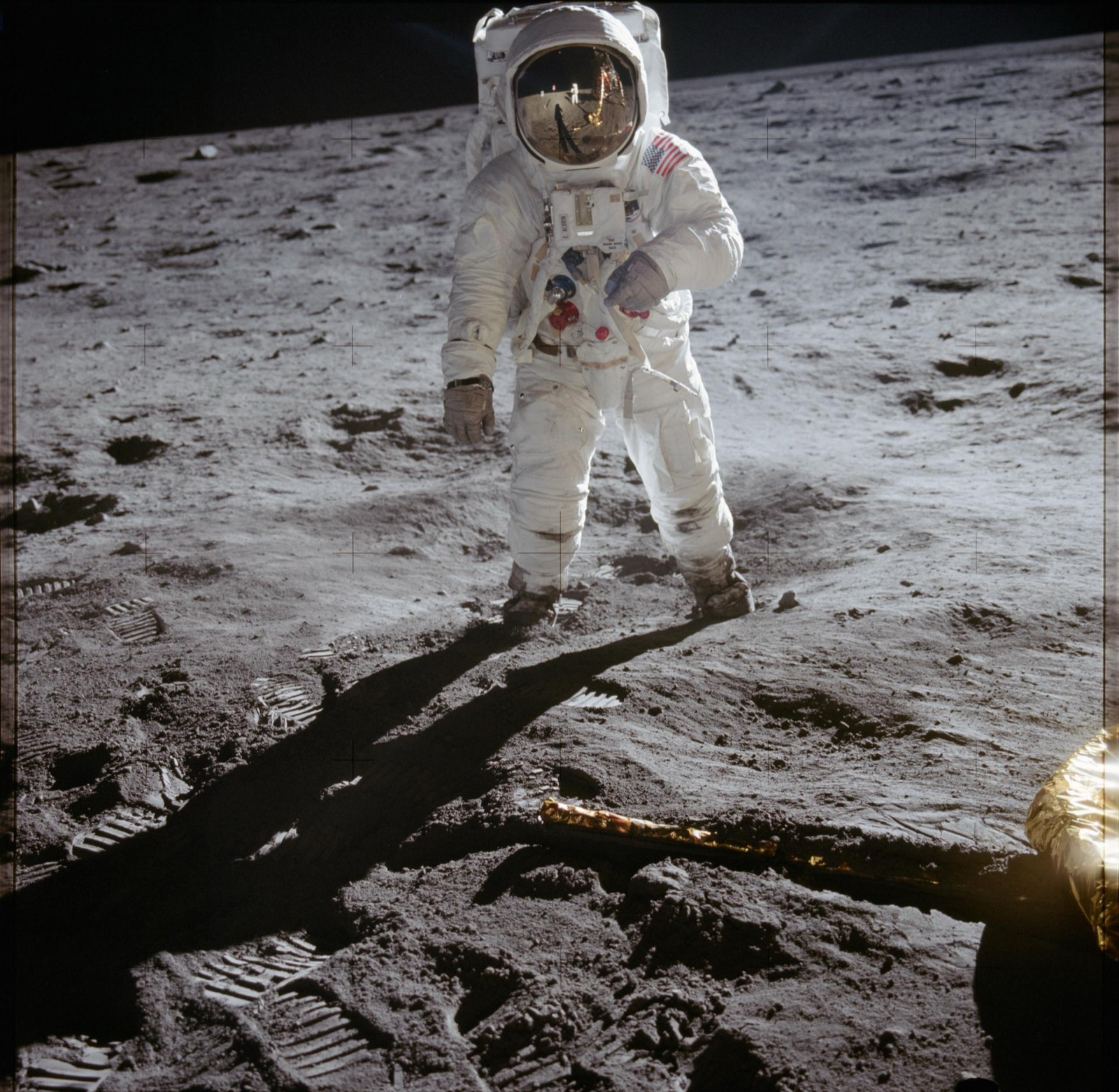
Comet Bennett very nearly acquired a unique distinction: being photographed from the vicinity of the Moon during a crewed mission. The crew of Apollo 13 planned to photograph the comet during their outbound journey. A first attempt on 13 April 1970 was unsuccessful. On 14 April, after completing the spacecraft maneuver required to set up a second attempt, an oxygen tank in the Odyssey service module ruptured catastrophically, triggering the emergency that is now one of the most famous events in spaceflight history. The scientific objectives of the mission — including the Bennett photograph — were immediately abandoned as the crew fought to survive and return safely to Earth. The lost imagery would have been among the first comet photographs taken from deep space by human eyes, and might have contributed to the same body of ultraviolet and dust observations being gathered by robotic satellites at the same time. Instead, those frames were never exposed.
12 A Possible Medieval Apparition
Comet Bennett may have been witnessed by human eyes long before John Caister Bennett turned his telescope on it in 1969. In 1979, Japanese astronomer Ichiro Hasegawa tentatively identified a comet recorded as being observed in September 363 AD as a possible previous apparition of C/1969 Y1. If this identification is correct, the comet would have been bright enough in antiquity to attract notice — presumably as a spectacular naked-eye object in late Roman skies — and then spent more than 1,600 years traveling far into the outer solar system before swinging back into the inner solar system in time for Bennett's discovery. Hasegawa's identification remains tentative rather than confirmed, as linking historical comet records to modern orbital solutions is notoriously difficult, dependent on the precision of ancient positional descriptions and on the assumption that the orbit has not changed dramatically over many apparitions. Still, the possibility adds a deep-time dimension to what might otherwise seem like a purely twentieth-century story.
13 The Final Fade and Last Sighting
After its spectacular spring of 1970, Comet Bennett retreated steadily. Through summer and autumn it dimmed through the range accessible only to telescopes: around magnitude 10 by the start of July and magnitude 12 by September. In January 1971, nearly a full year after perihelion, it was photographed as an 18.9-magnitude object — roughly 100,000 times fainter than it had been at peak brightness, requiring large telescopes and careful work to detect at all. The final recorded observation came on 27 February 1971, when astronomer Elizabeth Roemer captured the comet on a photograph taken when it was 4.9 AU from the Sun and 5.3 AU from Earth — placing it well beyond the orbit of Jupiter in both solar and Earth distance. At that point the icy nucleus had cooled back into dormancy, and the coma and tails that had amazed observers across both hemispheres had long since dissipated into the void. Bennett would not be seen again, its orbital period carrying it far beyond the reach of any instrument then in existence.