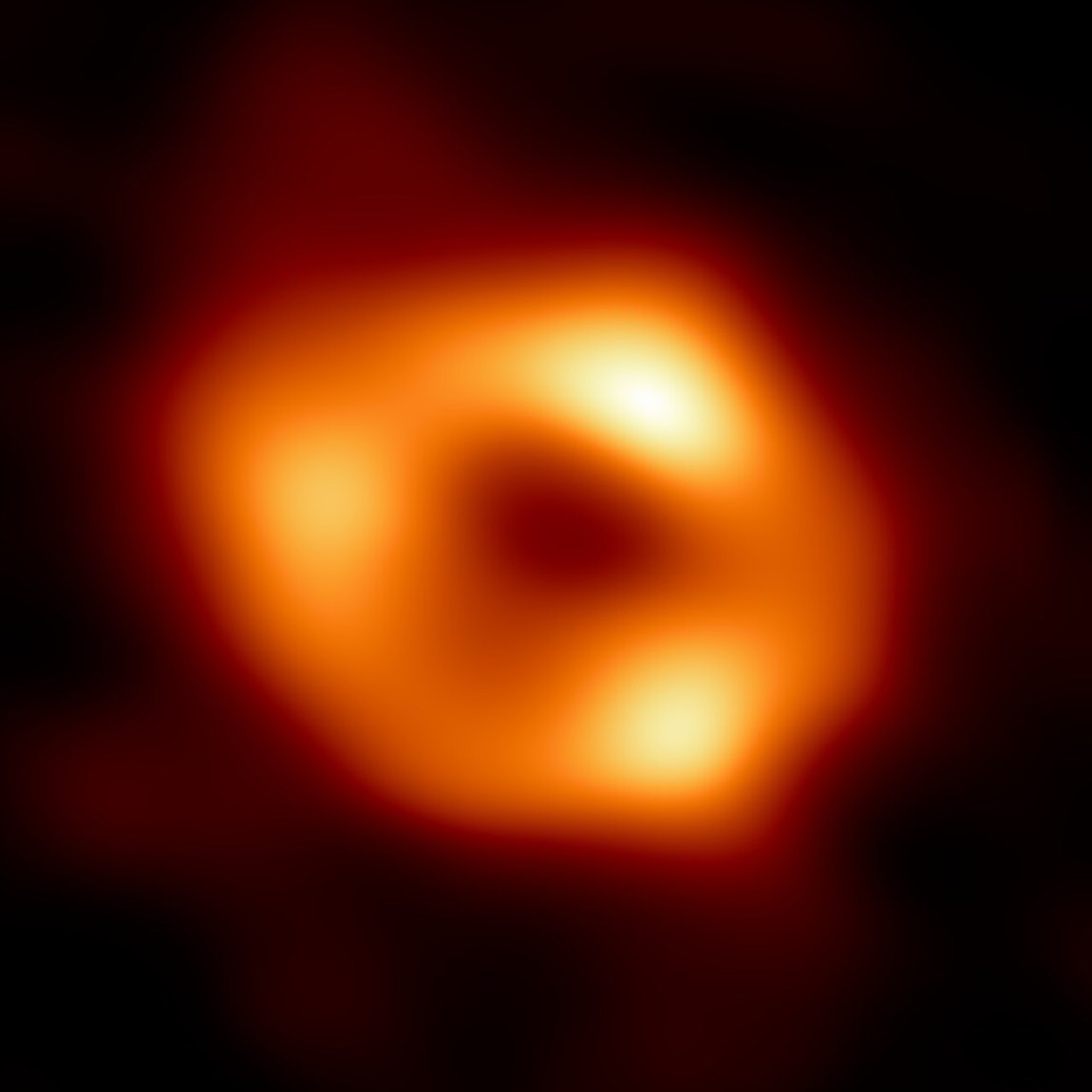
 Radio image · GSFC / NASA
Black Hole · Deep guide
Sagittarius A*
Also called: Sgr A*
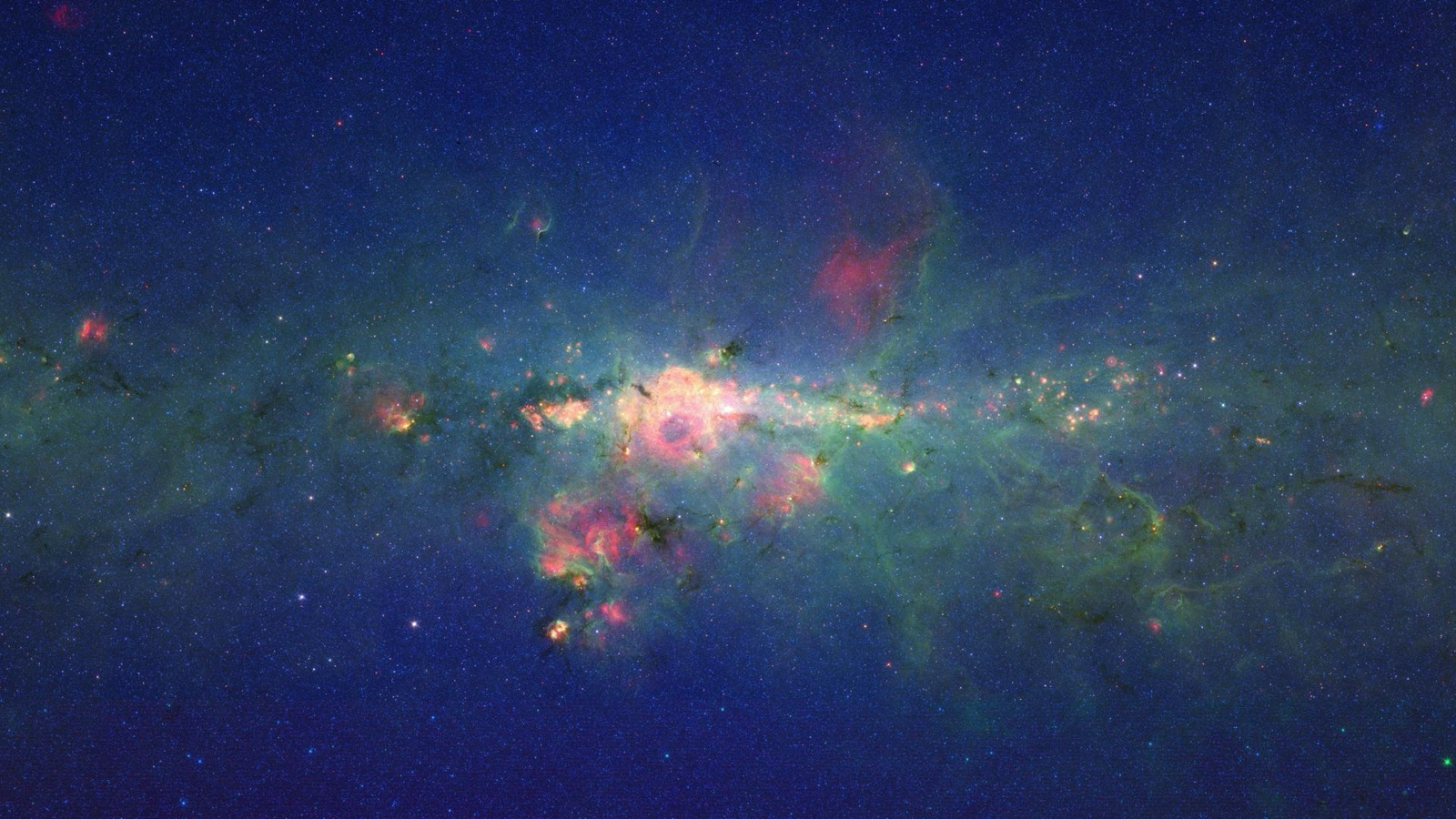
At the center of our galaxy sits a supermassive black hole: 4.3 million Suns in silence.
What is it?
Sagittarius A* (say 'A-star') is the supermassive black hole at the exact center of the Milky Way, 26,000 light-years away in the direction of Sagittarius. It weighs about 4.3 million Suns, yet it is currently quiet — sipping, not devouring. We know it is there because we have watched whole stars whip around an invisible point at up to 24 million km/h, and in 2022 the Event Horizon Telescope photographed its glowing ring.
Go deeper
Sgr A* is general relativity's best-instrumented laboratory: three decades of tracking star S2's 16-year orbit (GRAVITY/Keck) measured the mass to ~4.297 million M☉, detected gravitational redshift and Schwarzschild precession, and earned the 2020 Nobel Prize (Genzel & Ghez, with Penrose). The 2022 EHT image matched Kerr predictions. Sgr A* flares daily at low level; X-ray light echoes show it was ~a million times brighter centuries ago, and the Fermi bubbles hint at major outbursts megayears back — our monster merely naps.
01 How do you weigh an invisible thing?
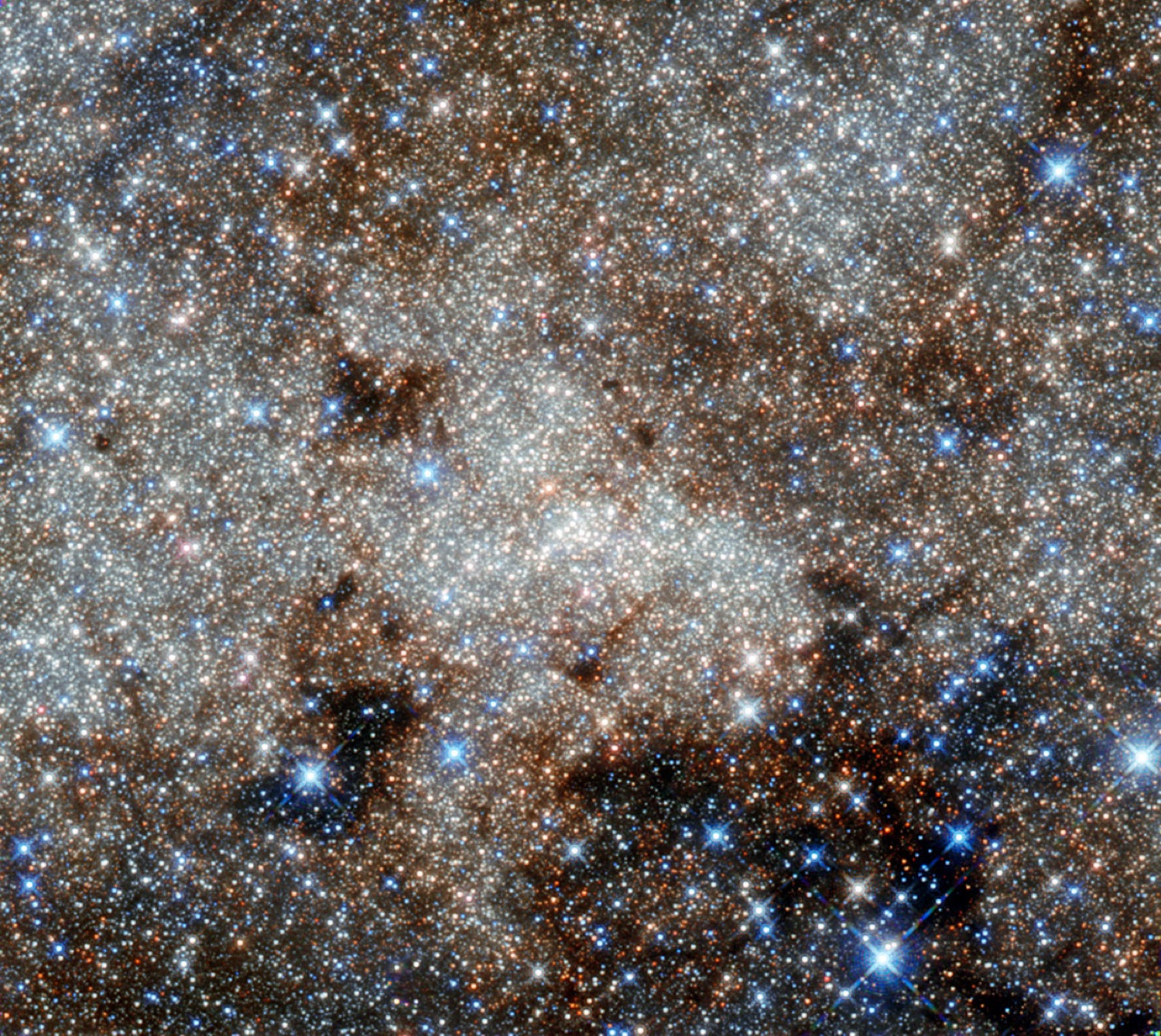
Watch what orbits it. For 30 years, telescopes with adaptive optics have tracked stars circling a blank point at the galaxy's heart. One star, S2, sweeps within 17 light-hours at 3% of light speed. From those orbits, Kepler's laws hand you the central mass: 4.3 million Suns inside a space smaller than our planetary system — and dark. Only a black hole fits.
02 Is Earth in danger?
No. Sgr A* is 26,000 light-years away and we are in a stable orbit around it — the same way Earth orbits the Sun without falling in. Black holes do not vacuum up galaxies; their gravity at a distance is exactly that of any equal mass.
03 When it wakes Deeper
X-ray 'light echoes' bouncing off gas clouds show Sgr A* flared brightly within the last few centuries; the giant gamma-ray Fermi bubbles above and below the galaxy suggest a far larger accretion episode millions of years ago. In 2032-ish, gas cloud/star G2's successors and infalling clumps may briefly light it up again. Galactic centers cycle between naps and firestorms on megayear clocks.
The deep dive
Researched for the Atlas from Wikipedia — Sagittarius A* (22,012 characters read) · updated Sep 20, 2026
04 The name with an asterisk
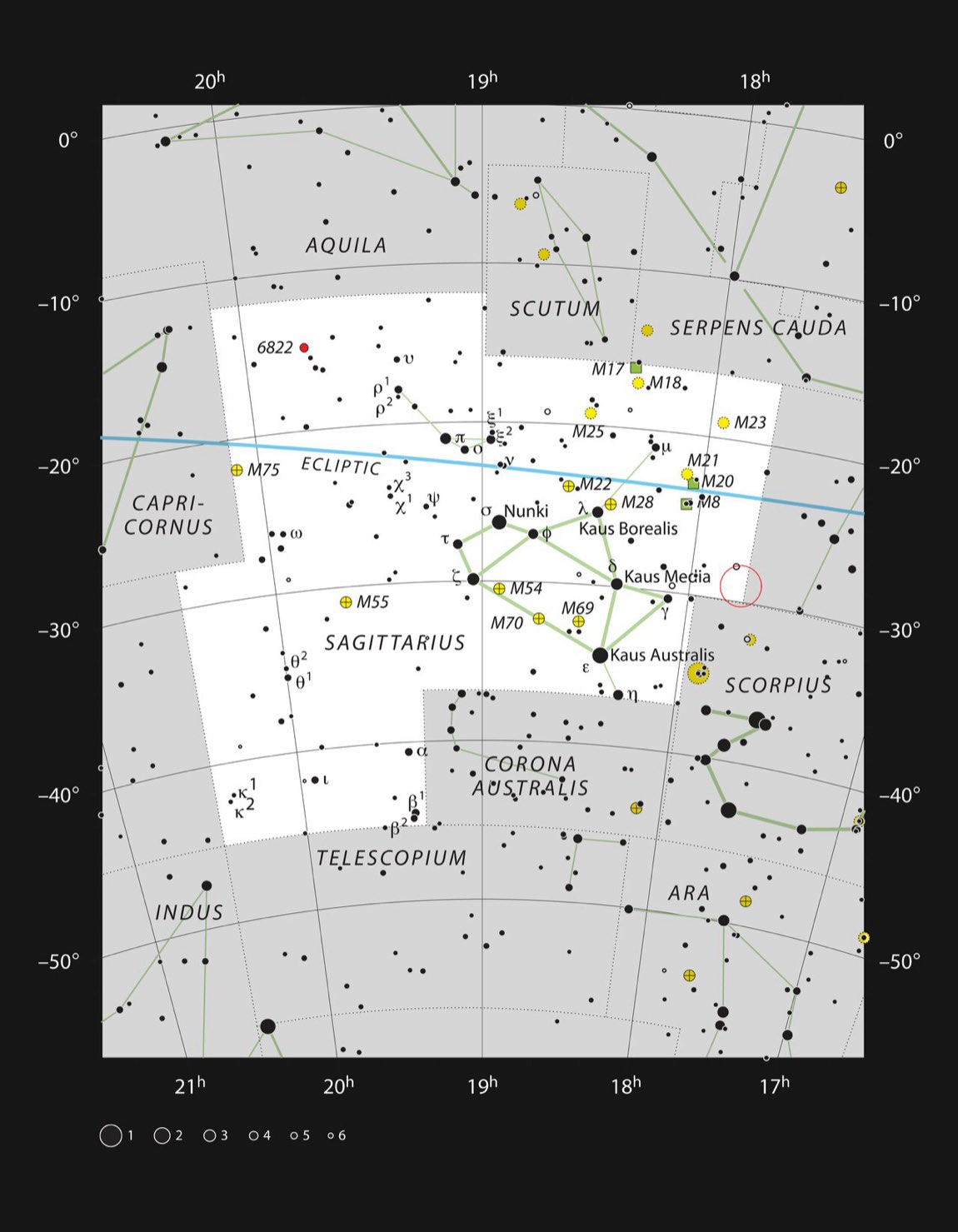
The name Sagittarius A* carries a small piece of scientific wit. The compact radio source was discovered on February 13 and 15, 1974, by Bruce Balick and Robert L. Brown using the baseline interferometer of the National Radio Astronomy Observatory. Eight years later, in 1982, Brown coined the name Sgr A* in a paper because the radio source was, in his words, "exciting" — and in atomic physics, excited states of atoms are traditionally denoted with asterisks. So the star-like symbol after the name is not a footnote marker or a wildcard; it is a deliberate piece of jargon borrowed from chemistry to signal that this object is energetically extraordinary. The broader region had been known since April 1933, when Karl Jansky — considered one of the fathers of radio astronomy — detected a radio signal coming from the direction of Sagittarius. That larger region became known simply as Sagittarius A. Brown recognized that buried inside it was a much more compact, non-thermal component, and that sub-source is the one that today carries the asterisk.
 ⤢
⤢
05 Why visible light never reaches us from it
Despite sitting at the rotational center of our own galaxy, Sagittarius A* has never been seen in visible light and almost certainly never will be from Earth. The culprit is 25 magnitudes of extinction — the combined absorption and scattering of light by gas and dust strewn along the roughly 26,000 light-years of galactic plane between the source and our telescopes. Twenty-five magnitudes of extinction means that visible light is dimmed by a factor of roughly ten billion, making the region effectively opaque to optical instruments no matter how powerful. Astronomers instead work in the infrared K-band, around 2.1 micrometres in wavelength, where interstellar dust is far less effective at blocking radiation. SiO masers — compact radio-emitting clouds that are detectable in both near-infrared and radio bands simultaneously — are used as alignment anchors to stitch together infrared images with radio observations, allowing astronomers to confirm that the stars they are tracking in the infrared are genuinely orbiting the same object they detect with radio telescopes.
06 How the first image took five years to make Deeper
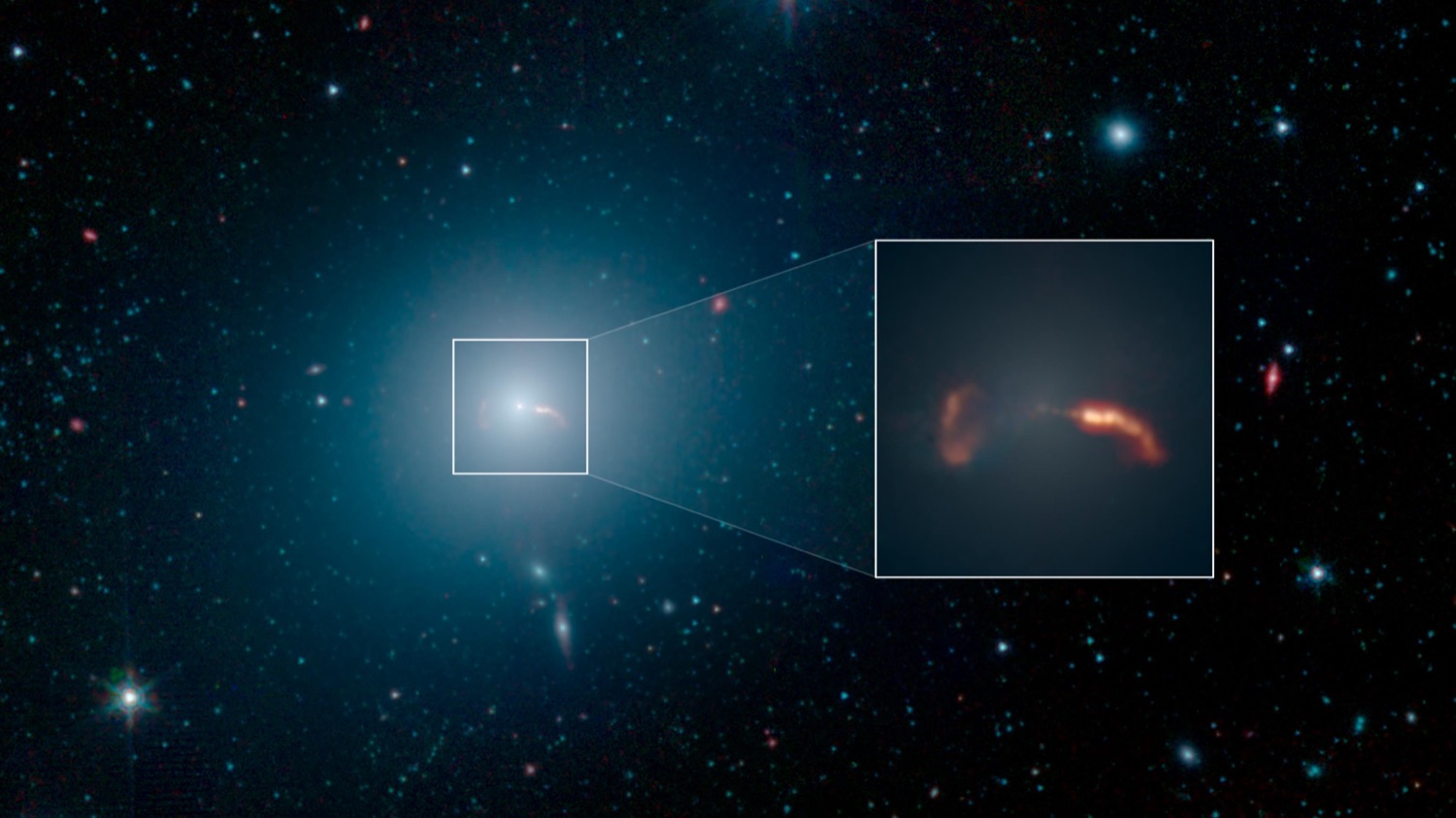
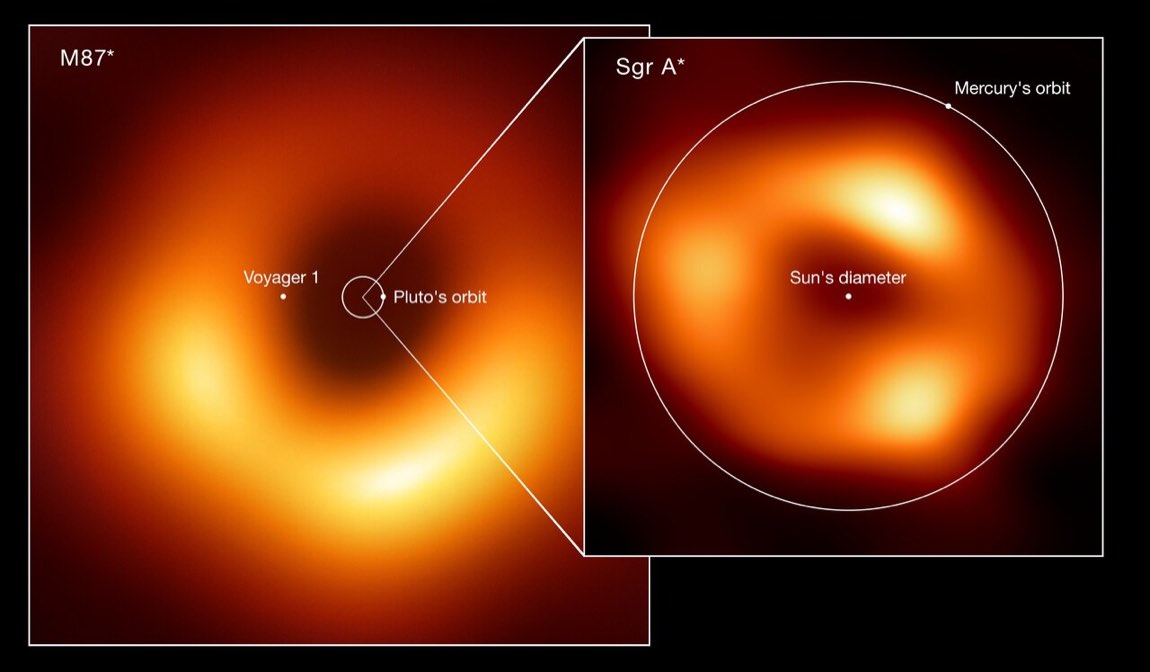
The now-famous image of Sagittarius A* released on May 12, 2022, was built from radio interferometer data collected in 2017 by eight observatories spread across six geographical sites — a configuration that effectively creates a virtual telescope roughly the diameter of Earth. But unlike imaging the black hole in Messier 87, which was the first confirmed black hole image in 2019, Sgr A* presented a special problem: its radio emission varies on the order of minutes. Most radio aperture-synthesis imaging relies on night-long observations of stable sources, but Sgr A* kept flickering during the exposure, complicating the reconstruction of a coherent image enormously. The result of five years of calculations is an overall angular size for the source of 51.8 ± 2.3 microarcseconds. Translated into a physical diameter at a distance of 26,000 light-years, that works out to 51.8 million kilometres — a span smaller than the distance from Mercury to the Sun at its closest approach of 46 million kilometres. The measurements also tested Einstein's general theory of relativity more rigorously than any previous observation, and the results matched the theory's predictions perfectly.
07 Magnetic fields that starve the black hole Deeper
One of the more surprising findings about Sagittarius A* is how little it actually eats given its size. Its average rate of accretion is unusually small for a black hole of its mass, detectable at all only because it is so close to Earth. A 2019 study using the High-resolution Airborne Wideband Camera-Plus, known as HAWC+, mounted aboard the SOFIA airborne observatory offered a compelling explanation. The measurements revealed that magnetic fields in the region are actively organizing the surrounding ring of gas and dust, whose temperatures range from 99.8 to 9,977.6 kelvin (that is, from −173.3 to 9,704.4 °C), into an orbit around the black hole rather than allowing that material to fall straight inward. By keeping the infalling gas circling rather than plunging, the magnetic fields suppress the rate of accretion and keep the black hole's emissions low. This also explains why the Milky Way is not a Seyfert galaxy: the comparatively small mass of Sgr A*, combined with that characteristically low luminosity in radio and infrared emission lines, means our galaxy lacks the brilliant active nucleus seen in more voracious galactic centers.
08 Hot spots moving at 30% of light speed Deeper
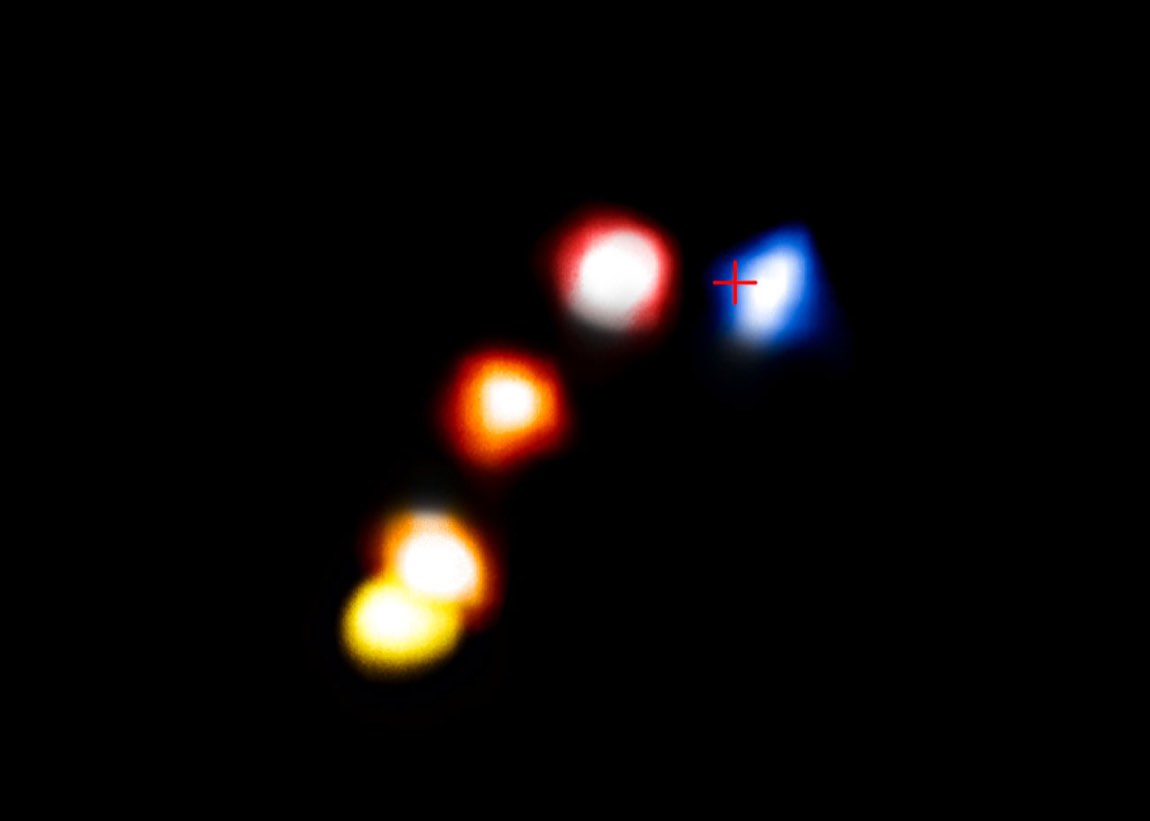
On October 31, 2018, a paper announced what was described as conclusive evidence that Sagittarius A* is a black hole, based on a striking direct detection. Using the GRAVITY interferometer combined with the four telescopes of the Very Large Telescope to construct a virtual telescope 130 metres in diameter, astronomers detected clumps of gas moving at approximately 30% of the speed of light in the immediate vicinity of the black hole. Three prominent bright flares — emission from highly energetic electrons very close to the event horizon — were observed, and they matched theoretical predictions precisely for hot spots orbiting near a black hole of four million solar masses. The flares are thought to arise from magnetic interactions in the superheated gas swirling in the innermost orbits around Sgr A*. Separately, the radio emissions from Sgr A* are not centered exactly on the black hole itself, but appear to originate from a bright spot near the event horizon, possibly within the accretion disc or from a relativistic jet of material ejected from it — a distinction that matters for interpreting the apparent size of the source in images.
 ⤢
⤢
09 S stars: an orbital racetrack around a monster
A cluster of stars known collectively as the S stars swarm in tight, fast ellipses around Sagittarius A*, and they have proven to be among the most powerful tools in all of modern astrophysics. All of their orbits are mapped primarily in K-band infrared wavelengths because interstellar dust makes them invisible in ordinary light. Their high velocities and close approaches allow astronomers to establish hard limits on the physical size of the object they are orbiting. As of 2020, the record holder for closest approach is S4714, which passes within about 12.6 AU of Sgr A* — almost as close as Saturn gets to the Sun — while traveling at roughly 8% of the speed of light. It achieves this because of an extreme orbital eccentricity of 0.985, completing one lap every 12 years. The star S2 is arguably the most historically important member of the cluster: in July 2018, it was recorded moving at 7,650 km/s, or 2.55% of the speed of light, during its closest approach, and its orbit produced a measurable gravitational redshift consistent with the predictions of general relativity to within 10% measurement precision.
10 How spin remains a genuine open question Deeper
A black hole's spin — described by the dimensionless parameter a* ranging from zero for no rotation to one for the theoretical maximum — is one of its most fundamental properties, and for Sagittarius A* it remains surprisingly uncertain. Published estimates span a remarkably wide range: Fragione and Loeb in 2020 found a* less than 0.1, suggesting almost no spin, while Daly et al. in 2023 found a* equal to 0.90 ± 0.06, implying the black hole rotates at 90% of the maximum physically possible rate. Intermediate estimates from different groups include values of roughly 0.22, greater than 0.4, and approximately 0.52. The same 2023 paper by Daly and colleagues also calculated that the ratio of the rotational mass component to the irreducible mass component of Sgr A* is 0.62 ± 0.10, indicating that the angular velocity is 0.62 ± 0.10 of the maximum value set by the speed of light. The wide spread of published spin values reflects fundamentally different measurement techniques and assumptions, and no consensus has emerged. Pinning down the spin precisely would illuminate how the black hole has grown and what kind of accretion history it has experienced.
11 The gas cloud that promised fireworks and fizzled
In 2012, astronomers announced that a gas cloud called G2, with a mass about three times that of Earth, appeared to be on a collision course with Sagittarius A*. Predictions placed its closest approach — a moment astronomers named a perinigricon — in early 2014, at a distance of just over 3,000 times the radius of the event horizon, or approximately 260 AU. Excitement ran high because a full disruption of G2 was expected to trigger a dramatic brightening of X-ray and other radiation from the black hole, offering a rare chance to watch a supermassive black hole actively consume material. Observations were coordinated across Chandra, XMM, VLA, INTEGRAL, Swift, Fermi, the Very Large Telescope, and Keck. The encounter was a striking anticlimax: nothing dramatic was observed. G2 passed by essentially intact, leading UCLA astronomers who observed the cloud on March 19 and 20, 2014, to conclude it likely harbors a central star that held it together against tidal forces. Andrea Ghez and colleagues later suggested G2 might be a merged pair of binary stars that had been orbiting the black hole in tandem and fused into an extremely large single star.
12 A past outburst far brighter than today Deeper
The Sagittarius A* we observe today is a surprisingly quiet object, but evidence preserved in a nearby molecular cloud tells a very different story about its recent past. The European Space Agency's gamma-ray observatory INTEGRAL detected gamma rays interacting with the giant molecular cloud Sagittarius B2, causing it to emit X-rays. The total luminosity of that outburst was estimated at approximately 1.5 × 10^39 ergs per second — about one million times stronger than Sgr A*'s current output and comparable to a typical active galactic nucleus. This strongly implies that Sgr A* underwent a powerful flare in the not-so-distant past, the light echo of which is still illuminating Sagittarius B2. Japanese astronomers confirmed this conclusion in 2011 using the Suzaku satellite to observe the Milky Way's center. Meanwhile, on a much shorter timescale, NASA reported in January 2015 an X-ray flare 400 times brighter than usual — at the time a record-breaker — and in May 2019 the Keck Observatory witnessed Sgr A* become 75 times brighter than usual in a sudden episode, possibly triggered by an encounter with another object passing close to the black hole.
 ⤢
⤢
13 A star flung across the galaxy
In July 2019, astronomers reported discovering a star called S5-HVS1 streaking through the constellation Grus — the Crane — in the southern sky, located about 29,000 light-years from Earth. It is traveling at 1,755 km/s, equivalent to roughly 3.93 million miles per hour or 0.006 times the speed of light, fast enough that it may eventually escape the Milky Way galaxy entirely. The likely explanation for such an extraordinary velocity is an interaction with Sagittarius A* itself: the leading model is that S5-HVS1 was once part of a binary star system that wandered too close to the galactic center, at which point the gravitational encounter with the supermassive black hole disrupted the pair — capturing one star and violently ejecting the other at hypersonic speed. This mechanism, sometimes called the Hills mechanism, had been predicted theoretically for decades, and S5-HVS1 represents one of the most compelling candidate examples found. The discovery adds indirect evidence that the region around Sgr A* is a place of dramatic and occasionally violent stellar encounters.
14 Three gas clouds and a possible common ancestor Deeper
The gas cloud G2 was unusual enough on its own, but it turns out it may not be alone. A cloud called G1 passed near Sagittarius A* approximately 13 years before G2 and was found to share an almost identical orbit. Astronomers proposed that both G1 and G2, along with a gas tail thought to trail G2, could be denser clumps within a single large, continuous but thinner stream of matter feeding gently onto the black hole's disk — more like a constant breeze than a sudden gust. This picture would explain why neither event produced the dramatic X-ray brightening that had been predicted. A third associated cloud, designated G3, was discovered in 2026, and analysis showed that all three clouds have nearly identical orbits. Their common orbital geometry argues against them being independent stellar objects and points toward a shared origin. One proposed source is the stellar wind from IRS 16SW, a star that itself orbits Sagittarius A*, which could be shedding material that clumps into discrete condensations along a common orbital path around the black hole.
15 A potential companion: the black hole next door Deeper
In November 2004, a team of astronomers reported the discovery of a candidate intermediate-mass black hole designated GCIRS 13E, orbiting just 3 light-years from Sagittarius A*. With an estimated mass of 1,300 solar masses, it sits within a cluster of seven stars. Intermediate-mass black holes — those far more massive than stellar-remnant black holes but far less massive than supermassive ones — are notoriously difficult to confirm, and GCIRS 13E remains a candidate rather than a certainty. If confirmed, its proximity to Sgr A* would carry important implications: it could support the hypothesis that supermassive black holes grow over cosmic time by absorbing nearby smaller black holes and stars. This hierarchical merger picture is one of the leading models for how a black hole that began as something comparatively modest could accumulate the equivalent of more than four million solar masses. The existence of unexplained filaments of radio energy found associated with Sagittarius A* in June 2023 adds another layer to the unresolved puzzle of what is happening in the dense environment immediately surrounding the galactic center.
 ⤢
⤢
Could life exist here?
The central light-years are a sterilizing environment of radiation and stellar mayhem. The 'galactic habitable zone' idea puts good real estate — like ours — far from downtown.
Our labels: Confirmed · Strong Evidence · Estimated · Hypothesis · Theoretical · Speculative (see Methodology).
How would we get there?
26,000 years at light speed. Voyager would need ~450 million years. We orbit it; that is as close as we get.
Weird & wonderful
- Stars near Sgr A* move at up to 3% of light speed — orbits you can watch change year to year.
- If Sgr A* replaced the Sun (don't), it would span past Mercury — but Earth would keep orbiting; gravity at our distance would barely change… though the lights would go out.
- Radio waves from Sgr A* were detected in 1933 — nobody knew for 40 years they were hearing a black hole's dinner.