 Photograph · ESO and Palomar Observatory · CC BY 4.0
Asteroid · Deep guide
4015 Wilson–Harrington
Also called: 4015 Wilson–Harrington · 107P/Wilson–Harrington · 1979 VA · 1949 III
A near-Earth object that was seen as a comet in 1949, then lost — and rediscovered decades later as an asteroid.
What is it?
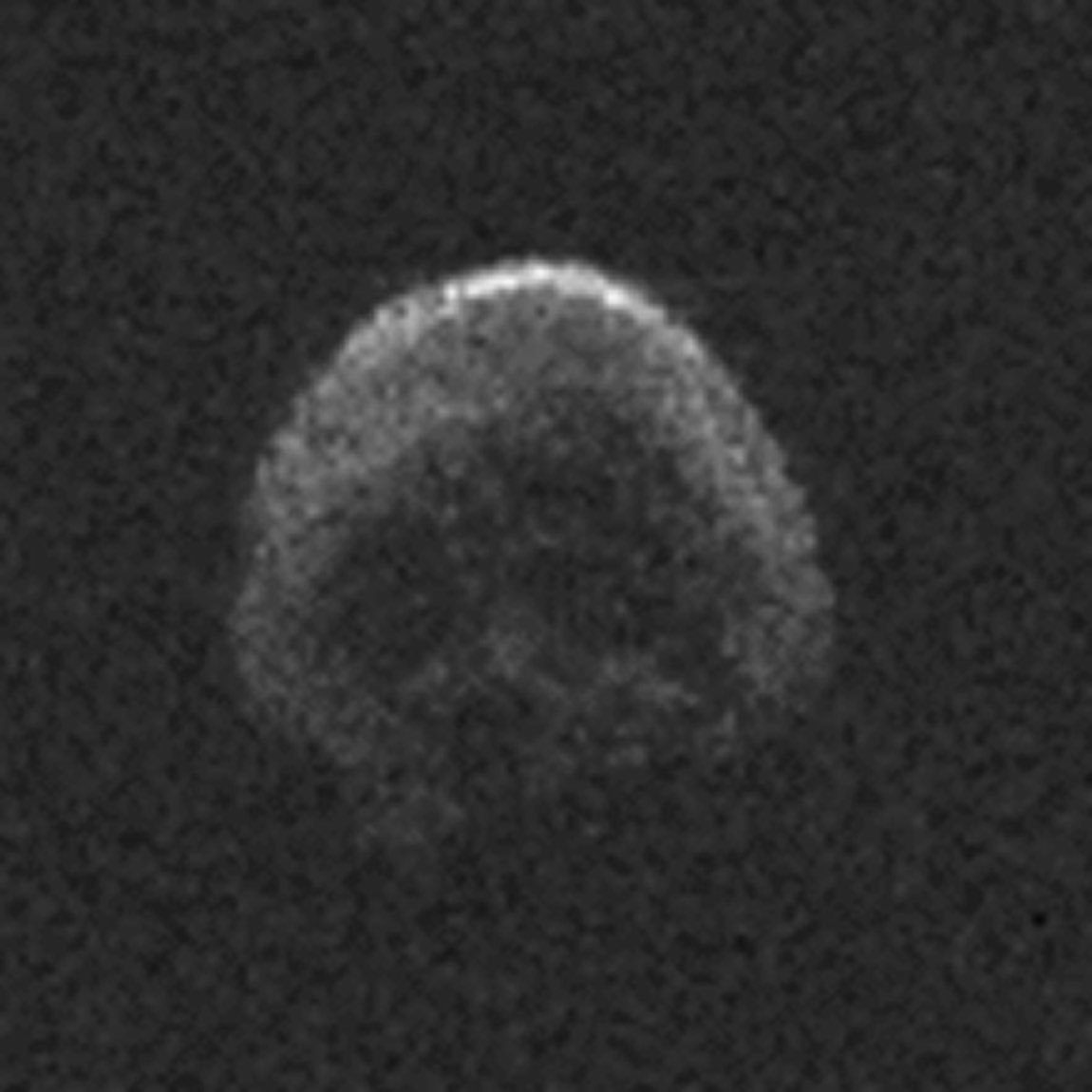
Wilson–Harrington is a near-Earth object about 4 km across that holds both an asteroid number and a comet name, 107P. In November 1949 Albert Wilson and Robert Harrington photographed it at Palomar with a faint tail, but with only three observations the comet was lost. In 1979 Eleanor Helin found an apparent asteroid, 1979 VA, that later proved to be the same object. Its next perihelion is on 25 November 2026.
The deep dive
Researched for the Atlas from Wikipedia — 4015 Wilson–Harrington (3,069 characters read) · updated Nov 14, 2026
01 Discovered twice, decades apart
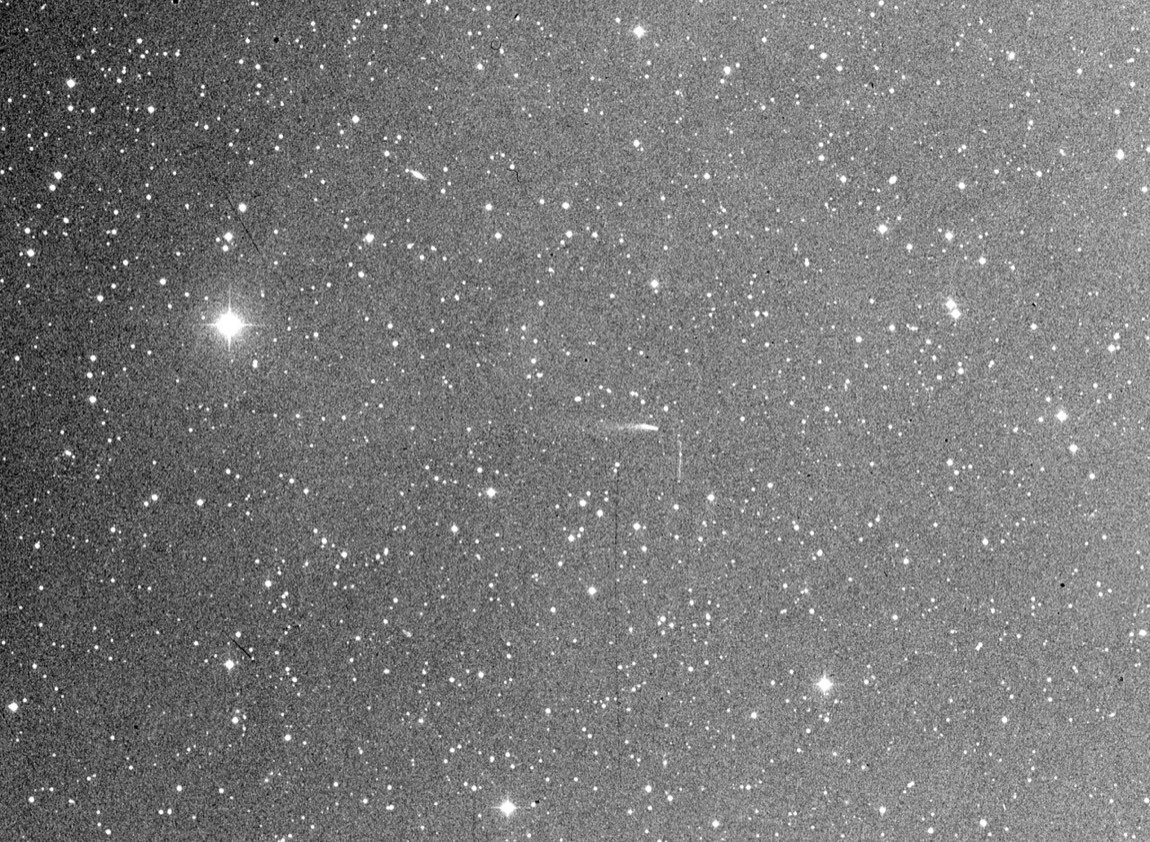
The story of Wilson–Harrington is one of the most unusual cases of double discovery in modern astronomy. Albert G. Wilson and Robert G. Harrington first spotted it on 19 November 1949 at Palomar Observatory, recording it as a comet on just three photographic plates. That tiny handful of observations was not enough to pin down a reliable orbit, so the object was simply lost — no one knew where to look for it next. Thirty years passed. Then, on 15 November 1979, Eleanor F. Helin, also working at Palomar, found what looked like a perfectly ordinary asteroid and catalogued it as 1979 VA. It sat in the asteroid database for years, receiving the permanent number 4015 when it was re-observed on 20 December 1988. Only on 13 August 1992 did careful orbital detective work, combined with a search of old photographic plates, confirm that 4015 and the lost 1949 comet were the same object. The same body had effectively been discovered twice by different people at the same observatory, three decades apart.
02 A record-breaking name nobody planned
Because Wilson–Harrington was independently catalogued as both a comet and an asteroid, it ended up carrying both designations: the comet label 107P/Wilson–Harrington and the asteroid label 4015 Wilson–Harrington. That hyphenated surname created an unexpected record. At 17 characters, "Wilson–Harrington" is currently the longest name of any numbered asteroid — one character beyond the 16-character limit the International Astronomical Union formally imposes on asteroid names. The object thus sits outside its own naming rules, a bureaucratic quirk that persists because stripping either discoverer's name would be historically unfair and scientifically confusing. The dual-status nature also comes with a reporting rule: any new astrometric measurement of this object should be submitted under its minor planet designation, not its comet designation, keeping the observational record tidy even if the object's identity remains delightfully ambiguous.
03 An orbit that blurs two categories Deeper
What makes Wilson–Harrington physically interesting starts with its orbit. Its eccentricity of 0.624 is described as somewhat higher than that of a typical asteroid-belt minor planet and more in line with periodic comets. Most main-belt asteroids travel on nearly circular paths; this object swings in and out in a much more elongated ellipse, the kind of trajectory that hints at an origin in the outer solar system or a history of gravitational nudging. It is classified as an Apollo asteroid, meaning its orbit crosses Earth's path. Its Minimum Orbit Intersection Distance — the closest its orbit can geometrically come to Earth's orbit — is less than 0.05 AU, which combined with its large size earns it the formal label of potentially hazardous asteroid. The object passed 0.4 AU, roughly 60 million km, from Earth on 20 July 2022, then reached perihelion on 24 August 2022. Its next perihelion is expected on 25 November 2026.
04 Comet features that vanished after 1949
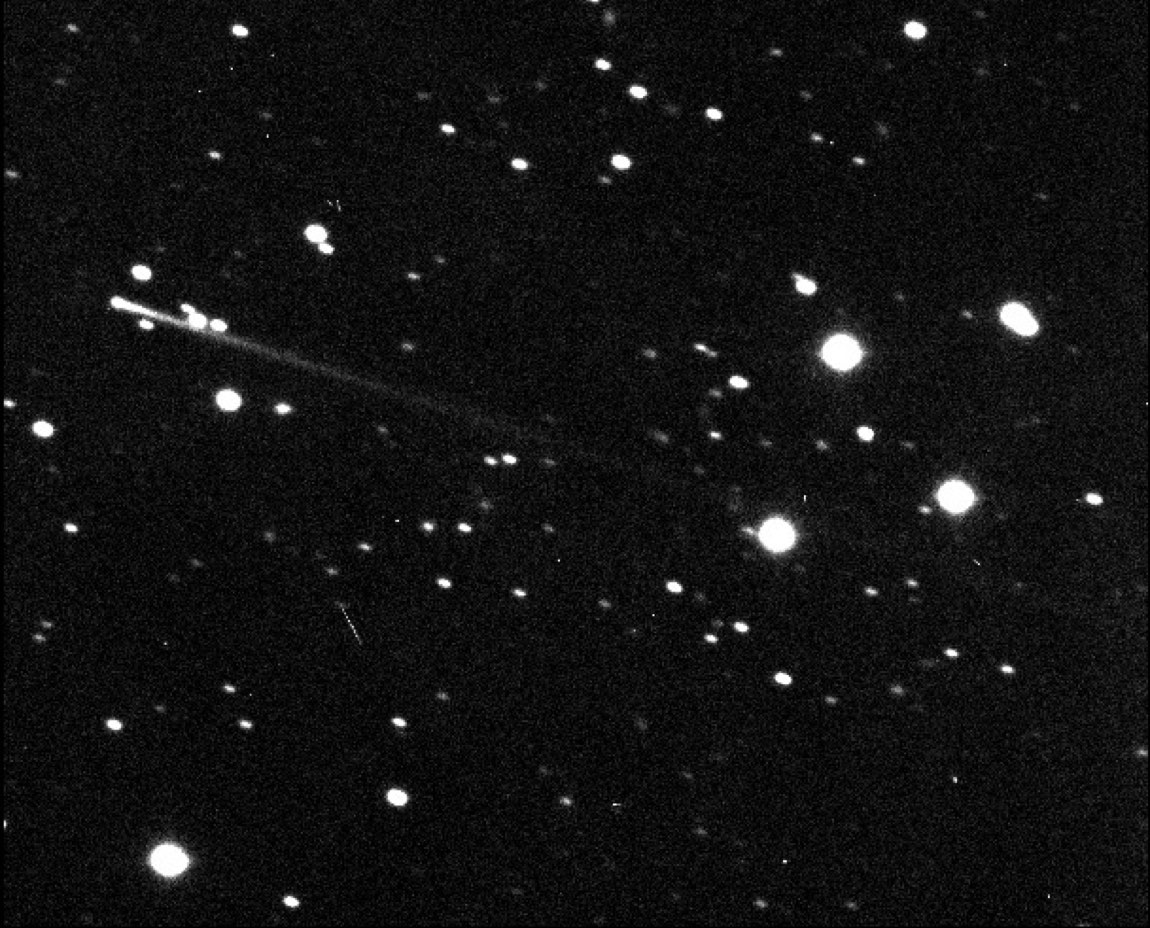
The 1949 photographic plates that Wilson and Harrington captured clearly show cometary features — the kind of faint, fuzzy coma or tail that marks a body actively shedding gas and dust as ice sublimates in sunlight. Yet every image taken of the same object since that rediscovery in 1979 appears entirely stellar: a sharp point of light with no detectable haze around it. Scientists interpret this as evidence that Wilson–Harrington is probably an inactive comet, one whose surface has been so thoroughly crusted over by dark, non-volatile material that only infrequent outbursts can crack through and release fresh volatiles. This places it in a fascinating transition zone between fully active comets and inert asteroids. Whether another outburst might one day be observed — and whether instruments sensitive enough to catch faint cometary activity have simply not been trained on it long enough — remains an open question the article leaves unresolved.
05 One of only nine dual-status objects Deeper
Being listed simultaneously as both a comet and an asteroid is extraordinarily rare. As of the article, only nine objects in the entire solar system carry this dual designation, and Wilson–Harrington is one of them. Its companions in this exclusive group include 2060 Chiron, also known as 95P/Chiron; 7968 Elst–Pizarro (133P/Elst–Pizarro); 60558 Echeclus (174P/Echeclus); 118401 LINEAR (176P/LINEAR); (323137) 2003 BM80 (282P/2003 BM80); (300163) 2006 VW139 (288P/2006 VW139); (457175) 2008 GO98 (362P/2008 GO98); and (248370) 2005 QN173 (433P/2005 QN173). Each of these bodies blurs the boundary that textbooks once drew cleanly between rocky asteroids and icy comets, reinforcing the modern view that the two populations are not sharply distinct but rather form a continuum of objects with varying compositions and activity levels. Wilson–Harrington's place in this tiny club underscores how scientifically significant its dual nature is.
06 How faint it is and what that means for observers
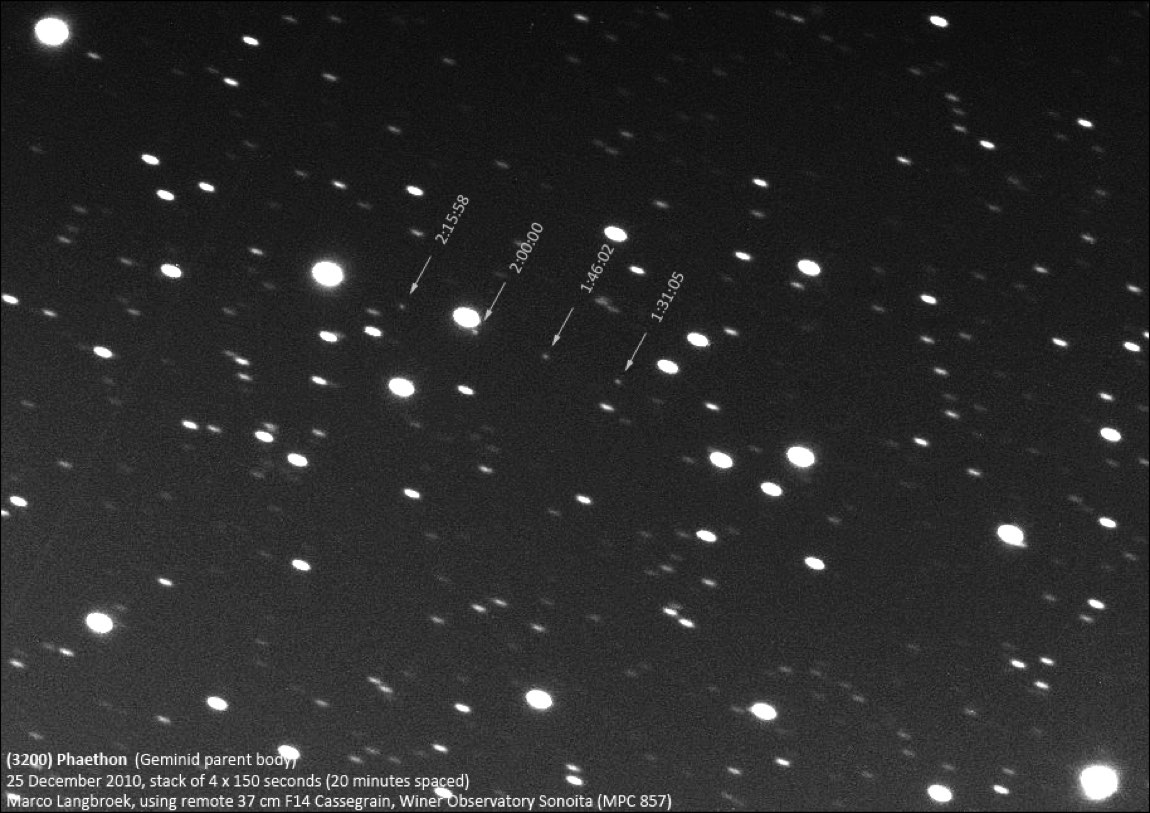
Wilson–Harrington seldom gets brighter than apparent magnitude 16. To put that in context, the faintest stars visible to the unaided human eye on a perfect night reach about magnitude 6 or 6.5; magnitude 16 is roughly 10,000 times dimmer than that threshold. Observing this object requires a substantial telescope and careful planning. Its near-Earth orbit does bring it relatively close — it passed just 0.4 AU from Earth in July 2022, which is less than half the Earth–Sun distance — yet even at that proximity it stayed beyond naked-eye or casual binocular reach. The rarity of cometary outbursts also means that observers hoping to catch it displaying a coma face long odds; most visits will show nothing but a star-like point. Its brightness behavior around the 2022 apparition and the upcoming 2026 perihelion offers the best near-term windows for professional and advanced amateur observers to monitor it for any renewed activity.
07 Two missions that almost visited
Wilson–Harrington came tantalizingly close to receiving its first spacecraft visitor not once but twice. It was formerly included in the mission plan for Deep Space 1, NASA's technology-demonstrating probe that launched in 1998 and went on to fly past asteroid Braille and comet Borrelly. A flyby of Wilson–Harrington was on the table but ultimately did not happen. Separately, the object was also considered as a target for the NEAR mission — the Near Earth Asteroid Rendezvous spacecraft that eventually orbited and landed on asteroid 433 Eros in 2000 and 2001. Neither mission ultimately visited Wilson–Harrington. The article gives no further detail about why it was passed over in each case, but the fact that two separate mission teams evaluated it confirms that the scientific community has long recognized its dual comet-asteroid nature as a compelling reason to send a probe to study it up close.
08 Why its potentially hazardous label matters Deeper
The classification of Wilson–Harrington as a potentially hazardous asteroid rests on two criteria both of which it meets: a Minimum Orbit Intersection Distance of less than 0.05 AU, and a large enough size to cause significant damage if it were ever on a collision course. The MOID is a geometric measure of how closely the object's orbit can approach Earth's orbit, not a prediction that an impact will occur — the two bodies must actually be at the close-approach point at the same time for a real encounter to happen. Nevertheless, the PHA designation triggers ongoing monitoring obligations. Wilson–Harrington's cometary past adds an extra layer of scientific interest: if it were to experience a major outburst and shed significant mass, non-gravitational forces from outgassing could subtly alter its trajectory in ways that are harder to predict than for a purely inert asteroid. This makes precise orbital tracking of dual-status objects like this one especially valuable for planetary defense planning.
09 The long gap between discovery and reunion
The 43-year span between the 1949 comet sighting and the 1992 confirmation that it matched the 1979 asteroid illustrates how difficult solar system bookkeeping was before digital sky surveys and computerized orbital matching. When the comet was lost after those three 1949 plates, there was no practical way to predict where a future search should point. Eleanor Helin's 1979 find was recorded simply as an asteroid designated 1979 VA without any reason to connect it to a decades-old lost comet. It was only after enough asteroid observations accumulated to construct a precise orbit that researchers could run the trajectory backward and forward in time, then systematically search archival photographic plates for earlier appearances. Finding the 1949 images hiding in the archive was the key that closed the loop. The process demonstrates how modern orbital computing transformed our ability to link observations separated by generations and to rescue objects from the "lost" category.