Asteroid · Deep guide
15 Eunomia
Also called: 15 Eunomia · (15) Eunomia · A851 OA
The largest stony asteroid, at the head of one of the main belt's biggest families.
What is it?
Eunomia is the largest S-type (stony) asteroid, about 270 km across, in the middle of the asteroid belt. It is elongated and rotates once every six hours and five minutes. It contains roughly 1% of the belt's mass and is the largest member of the Eunomia family, asteroids that share similar orbits and compositions. Annibale de Gasparis found it in 1851 and named it after the Greek goddess Eunomia.
The deep dive
Researched for the Atlas from Wikipedia — 15 Eunomia (4,447 characters read) · updated Nov 14, 2026
01 The Giant of the Stony Asteroids
Among the many thousands of S-type asteroids scattered through the solar system, 15 Eunomia stands alone at the top. With a volume-equivalent mean diameter of 270 kilometres, it is the largest and most massive stony asteroid known, and it contains roughly 1% of the entire mass of the main asteroid belt. To put that in perspective, a single space rock holds as much material as one-hundredth of everything orbiting between Mars and Jupiter. Despite its dominance among S-types, Eunomia is still only somewhere between the eighth and twelfth largest asteroid overall in the main belt — a reminder of how much mass the larger, darker C-type and other asteroids hold. Its estimated mass is about 3×10¹⁹ kilograms, and its estimated density is approximately 3 g/cm³, which is comparable to ordinary rocky material on Earth and consistent with its stony composition.
02 An Egg-Shaped World With Two Faces
Eunomia is not the reassuringly round ball that many people picture when they think of a large asteroid. It is elongated, irregular, and distinctly egg-shaped, with one end coming to a point and the other ending in a blunt curve. This lopsided geometry is more than a cosmetic curiosity — it appears to reflect a genuine difference in the rock itself. Mineralogical studies using astronomical spectroscopy revealed that the two ends of Eunomia are compositionally different from each other. The pointed end carries olivine and has a mineralogy similar to stony-iron meteorites, while the blunter end is dominated by iron-rich pyroxenes and basalt. This means that if you could fly from one tip of Eunomia to the other, the ground beneath you would shift from one type of rock to something chemically and structurally distinct — a rare and scientifically striking feature for a single body.
03 Signs of a Planet That Never Quite Was Deeper
The uneven surface mineralogy of Eunomia is not easily explained by a simple, uniform history. Scientists interpret it as evidence that Eunomia may have undergone partial planetary differentiation at some point in its past — a process in which a body heats up enough internally for denser materials like iron and nickel to sink toward the center while lighter silicates rise toward the surface. Full differentiation would produce a layered body with a distinct iron core and rocky mantle, much like Earth. Eunomia appears to preserve a mixture of materials from different depths, suggesting differentiation was incomplete when the body was disrupted or cooled. Supporting this interpretation is the unusual overabundance of A-type asteroids within the broader Eunomia family, which are themselves considered consistent with mantle or partially differentiated material. Eunomia may therefore be a surviving fragment of an ancient, partially melted protoplanet from the early solar system.
04 Annibale de Gasparis and the Night of Discovery
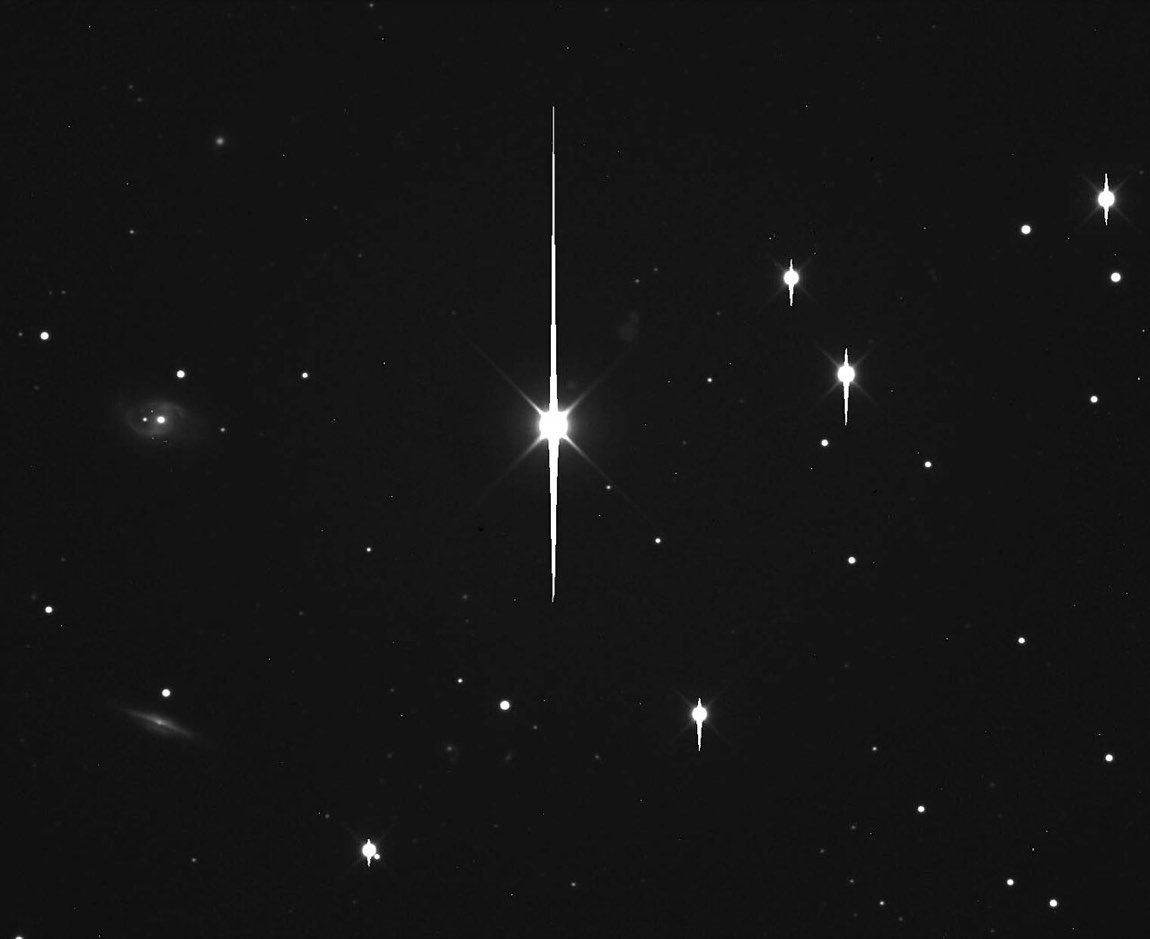
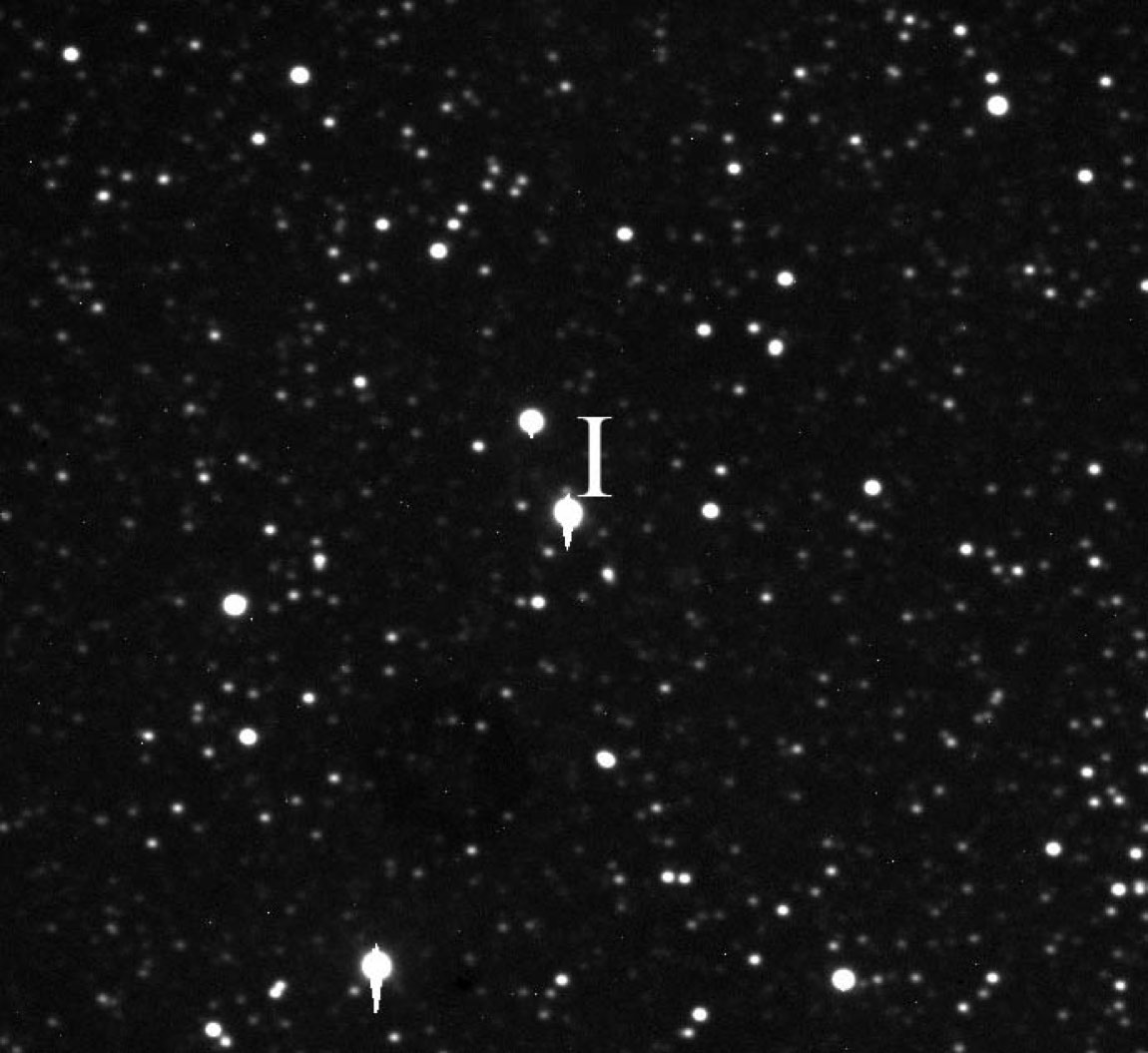
On the night of 29 July 1851, Italian astronomer Annibale de Gasparis was at Naples Observatory in Naples, Italy, scanning the sky around the 18th hour of right ascension just below the ecliptic. There he noticed a starlike object shining at a magnitude of 9 — faint enough to be easily overlooked, but bright enough to catch a careful observer's attention. Eunomia's low position in the sky on that particular night made thorough observation difficult, yet de Gasparis gathered enough data to conclude he had found a new planet, as small solar system bodies were often called in that era. He reported his discovery in a letter to A. C. Petersen in Altona, Germany, who then published the announcement in the journal Astronomische Nachrichten on 22 August 1851. De Gasparis was one of the most prolific asteroid discoverers of the nineteenth century, and Eunomia ranks among his most significant finds.
05 A Name Drawn From Law and Order
De Gasparis chose the name Eunomia deliberately, drawing on Greek mythology. Eunomia was one of the Horae — the goddesses of the seasons and of natural order — and she personified law and order specifically. The choice fit neatly into the convention of naming asteroids after figures from classical antiquity, a tradition that persisted through the nineteenth century. De Gasparis also described a symbol for the asteroid: a star above a heart. This symbol has since been encoded as a character in Unicode 17.0 at code point U+1CEC8. The pairing of an astronomical star with a heart gives the symbol an unusually evocative quality compared to the more abstract symbols assigned to other early-numbered asteroids, and it reflects the personal touch that nineteenth-century astronomers often brought to their discoveries.
06 An Orbit With a Noticeable Stretch
Eunomia follows an orbit in the middle main asteroid belt, circling the Sun at an average distance — its semi-major axis — of 2.64 astronomical units. One full trip around the Sun takes 4.29 Earth years. What makes its orbit stand out slightly is its eccentricity of 0.19, which is high enough to produce a meaningful variation in its distance from the Sun over the course of each orbit. At its closest approach to the Sun, called perihelion, Eunomia comes in to 2.15 AU; at its farthest point, called aphelion, it swings out to 3.14 AU. That is a difference of nearly 1 AU — roughly the entire distance between Earth and the Sun — between the two extremes of a single orbit. Its orbital plane is also inclined by 11.8° relative to the ecliptic, tilting it noticeably out of the flat plane in which most planets travel.
07 A Retrograde Spinner Pointing South Deeper
Eunomia rotates once every 6 hours and 5 minutes — a sidereal day determined by analyzing its lightcurve, the pattern of brightness changes as the asteroid spins and its irregular shape presents different cross-sections to observers. Notably, Eunomia spins in retrograde, meaning it rotates clockwise when viewed from north of the ecliptic, the opposite direction from Earth's rotation. Its north pole points toward the ecliptic south, and its axial tilt is 20° relative to the ecliptic, or 11° relative to its own orbital plane. This combination of retrograde spin and southward-pointing pole is shared by some other asteroids and is thought in some cases to be linked to the Yarkovsky effect — a subtle thermal force that can alter both spin states and orbits over long timescales — though the article does not specifically attribute Eunomia's spin to that cause.
08 Leading a Family of 13,099 Siblings
Eunomia is not alone in its region of space. It is the founding member and largest body of the Eunomia asteroid family, one of the largest known asteroid families in the entire main belt, with 13,099 identified members. The family is thought to have formed when a collision shattered the ancestor of Eunomia — or at least blasted enormous quantities of material from it — sending fragments flying into similar but slightly varied orbits. Eunomia itself comprises an estimated 70% of the family's total mass, which means all 13,098 other members together account for only the remaining 30%. The family occupies the middle main belt, bounded on the outer side by the 8:3 mean-motion resonance with Jupiter and on the inner side by a series of secular resonances. Members tend to orbit with relatively high eccentricities and inclinations, echoing Eunomia's own orbital characteristics.
09 Interlopers Among the Family Members Deeper
Not every asteroid found within the orbital region of the Eunomia family actually belongs to it. Around 20% of asteroids located in that region are spectrally dissimilar interlopers — bodies that happen to share similar orbits by coincidence or by occupying the same dynamical space, but whose spectral signatures reveal different compositions and therefore different origins. Most of these interlopers belong to the overlapping Adeona family, whose namesake is 145 Adeona, a C-type asteroid very different from the stony S-type composition that dominates the Eunomia family. The presence of such a substantial fraction of interlopers is a practical challenge for researchers: without careful spectral screening, a statistical study of Eunomia family members could be contaminated by unrelated bodies. This situation illustrates a broader difficulty in asteroid family science, where orbital proximity does not guarantee common ancestry.
10 What the Spectrum Reveals About the Surface Deeper
Eunomia is classified as an S-type asteroid, the second-most common spectral class among asteroids. Within Michael Gaffey's more detailed sub-classification system, it is an S(III)-type, a designation that implies the presence of calcium-rich pyroxenes on its surface. Astronomical spectroscopy has gone further, identifying specific minerals including olivine, troilite — an iron sulfide mineral also found in many meteorites — and iron–nickel alloy. These are the kinds of materials associated with the deeper interiors or partially differentiated zones of rocky bodies, rather than pristine, unprocessed solar system dust. The identification of troilite and iron–nickel alloy in particular points to a history that involved significant heat. Combined with the spatial variability across Eunomia's surface — different minerals at different ends of its elongated body — the spectral data paint a picture of a geologically complex object with an eventful early history.
11 How de Gasparis Recognized a Moving Object
In 1851, distinguishing a new solar system object from the tens of thousands of background stars required patience and a trained eye. De Gasparis was observing near the ecliptic — the great circle in the sky that the Sun, Moon, and planets follow — because that is where asteroids tend to cluster. When he noticed a point of light at magnitude 9 that did not match the star charts, he suspected it was a moving body. The magnitude he observed, 9, is at the edge of naked-eye visibility under perfect conditions but was easily detected with the telescopes of the era. The challenge that night was Eunomia's low position in the sky, which thickens the atmosphere between the observer and the target and blurs detail, making confident identification harder. Despite that, de Gasparis gathered enough positional information to report a new discovery — a testament to the methodical observation skills that made him one of the foremost asteroid hunters of his generation.
12 Open Questions About Its Inner Structure Deeper
Despite being one of the best-studied large asteroids, Eunomia still keeps significant secrets. Its estimated density of about 3 g/cm³ is consistent with a stony composition and leaves some room for internal porosity, but it does not definitively settle the question of whether it has a differentiated interior with an iron-rich core. The mineralogical evidence from its surface strongly hints at partial differentiation, yet no spacecraft has visited Eunomia to measure its gravity field precisely, map its interior structure with radar, or directly sample its surface. The two compositionally distinct regions — the olivine-rich pointed end and the pyroxene-and-basalt blunt end — could represent exposed layers from different depths of a disrupted differentiated parent body, but the exact history of how those zones came to sit side by side on a single asteroid remains unresolved. Future missions or more refined Earth-based observations will be needed to settle the debate.