Asteroid · Deep guide
52 Europa
Also called: 52 Europa · (52) Europa · A858 CA · Europa (asteroid)
A big but surprisingly lightweight asteroid that shares its name with Jupiter's icy moon.
What is it?
52 Europa is the sixth-largest asteroid, an ellipsoid roughly 378 × 336 × 255 km in the outer main belt. Despite its size it is not especially massive, suggesting a porous interior. Hermann Goldschmidt discovered it in 1858 from his balcony in Paris. It is named after Europa of Greek mythology — the same figure honoured by Jupiter's moon Europa, which is a completely different world.
The deep dive
Researched for the Atlas from Wikipedia — 52 Europa (2,299 characters read) · updated Nov 14, 2026
01 A giant rock that punches below its weight
At over 300 kilometers across, 52 Europa ranks as the sixth-largest asteroid in the entire asteroid belt — big enough that, laid across France, it would cover the country nearly end to end. Yet despite that imposing size, it is notably not correspondingly massive. Its density comes in at only about 1.5 grams per cubic centimeter, which is roughly equivalent to slightly compressed wood and far lighter than solid rock. That low density is a hallmark of C-type asteroids, suggesting a porous, loosely packed interior riddled with voids or ice rather than a dense, consolidated body. Two different mass estimates illustrate how uncertain things remain: James Baer and Steven R. Chesley put the mass at roughly (1.9 ± 0.4) × 10¹⁹ kilograms in 2007, while a later revision by Baer alone nearly doubled that figure to 3.27 × 10¹⁹ kilograms. The discrepancy between those two estimates — both by the same lead researcher — is a candid reminder of how hard it is to weigh an asteroid from millions of kilometers away.
02 An ellipsoid, not a sphere
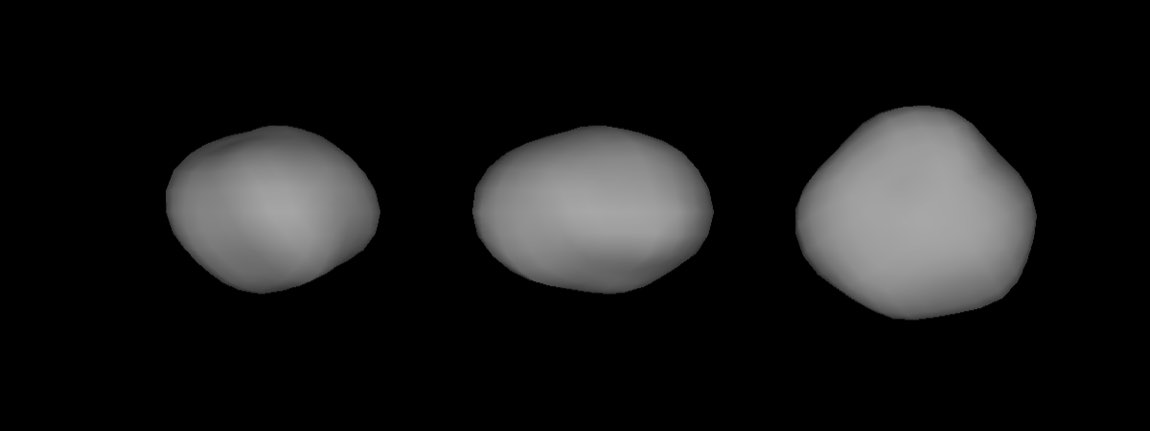
52 Europa is not a tidy ball. Its shape is better described as an ellipsoid, with three distinct measured dimensions: approximately 378 kilometers along its longest axis, 336 kilometers across its middle, and 255 kilometers through its shortest dimension. Picture a slightly squashed, elongated melon and you are close to the idea. That difference of more than 120 kilometers between the longest and shortest axes means that if you stood on the surface, the horizon and the local gravity would feel noticeably different depending on where you were standing — lower gravity near the flatter poles, slightly stronger pull closer to the equatorial bulge. This irregular shape is also part of why interpreting the asteroid's light curve has been so difficult. As Europa tumbles through space, different cross-sections reflect sunlight back toward Earth at different angles, creating a brightness pattern that proved devilishly hard to decode into a clean rotation period for many years.
03 The long dispute over how fast it spins Deeper
Few asteroids have frustrated rotation-period hunters quite like 52 Europa. For a long stretch of observational history, estimates for its spin ranged all the way from about 5.5 hours to 11 hours — a factor-of-two ambiguity that is extraordinary given how many separate observation campaigns were aimed at it. Part of the difficulty stems from Europa's nearly symmetrical ellipsoidal shape: when opposite ends of the asteroid look similar, it is easy to confuse one rotation for half of one, or to alias periodic signals. It had at least been established that Europa is a prograde rotator, meaning it spins in the same general direction as it orbits the Sun rather than backwards. The orientation of its spin pole also remained uncertain for a long time. The most detailed analysis eventually pinned the pole direction to ecliptic coordinates (β, λ) = (40°, 255°) with a stated uncertainty of just 2°. That pole position implies an axial tilt of about 56°, which is steeper than Earth's 23.5° tilt and would produce dramatic seasonal changes in solar illumination across Europa's surface over its 5.44-year orbital year.
04 Carbon, olivine, and a patchwork surface Deeper
52 Europa belongs to the C-type asteroid class — the dark, carbonaceous variety that dominates the outer reaches of the main belt. C-types are thought to preserve some of the most primitive material from the early Solar System, relatively unprocessed since the Sun's formation. Within that broad classification, spectroscopic studies of 52 Europa have detected signatures of olivines and pyroxenes on its surface, minerals that are common in rocky planetary mantles and in certain classes of meteorites. More intriguingly, the article notes some indication of compositional differences between different regions of the asteroid's surface. That kind of patchwork chemistry could hint at an ancient impact that exposed subsurface material, at variations in how solar radiation has weathered different areas over billions of years, or at an original heterogeneity that survived from formation. At this point those differences are only "some indication" — tantalizing but not yet pinned down — making 52 Europa a candidate for more detailed spectral mapping by a future spacecraft.
05 Its place in the belt — and a family it doesn't join
52 Europa travels through the main asteroid belt on a well-measured orbit with a semi-major axis of 3.094 astronomical units from the Sun, swinging between a closest approach of 2.746 AU and a farthest point of 3.442 AU over its 5.44-year orbital period. For comparison, Ceres — the belt's largest body and a dwarf planet — orbits at 2.77 AU, so Europa sits noticeably farther out. Its orbital eccentricity of 0.1125 and an inclination of 7.482° with respect to the ecliptic keep it on a fairly stable, moderately inclined path. Spatially, Europa orbits close to the Hygiea asteroid family, a large dynamical grouping of dark C-type asteroids thought to share a common collisional ancestor. Despite the proximity and the similar spectral type, however, 52 Europa is not a member of that family. Its orbital parameters do not match the tight clustering that defines family membership, suggesting it arrived at its current neighborhood by a different route — either an original orbit or a subsequent gravitational nudge unrelated to the Hygiea breakup event.
06 Discovered from a Parisian balcony
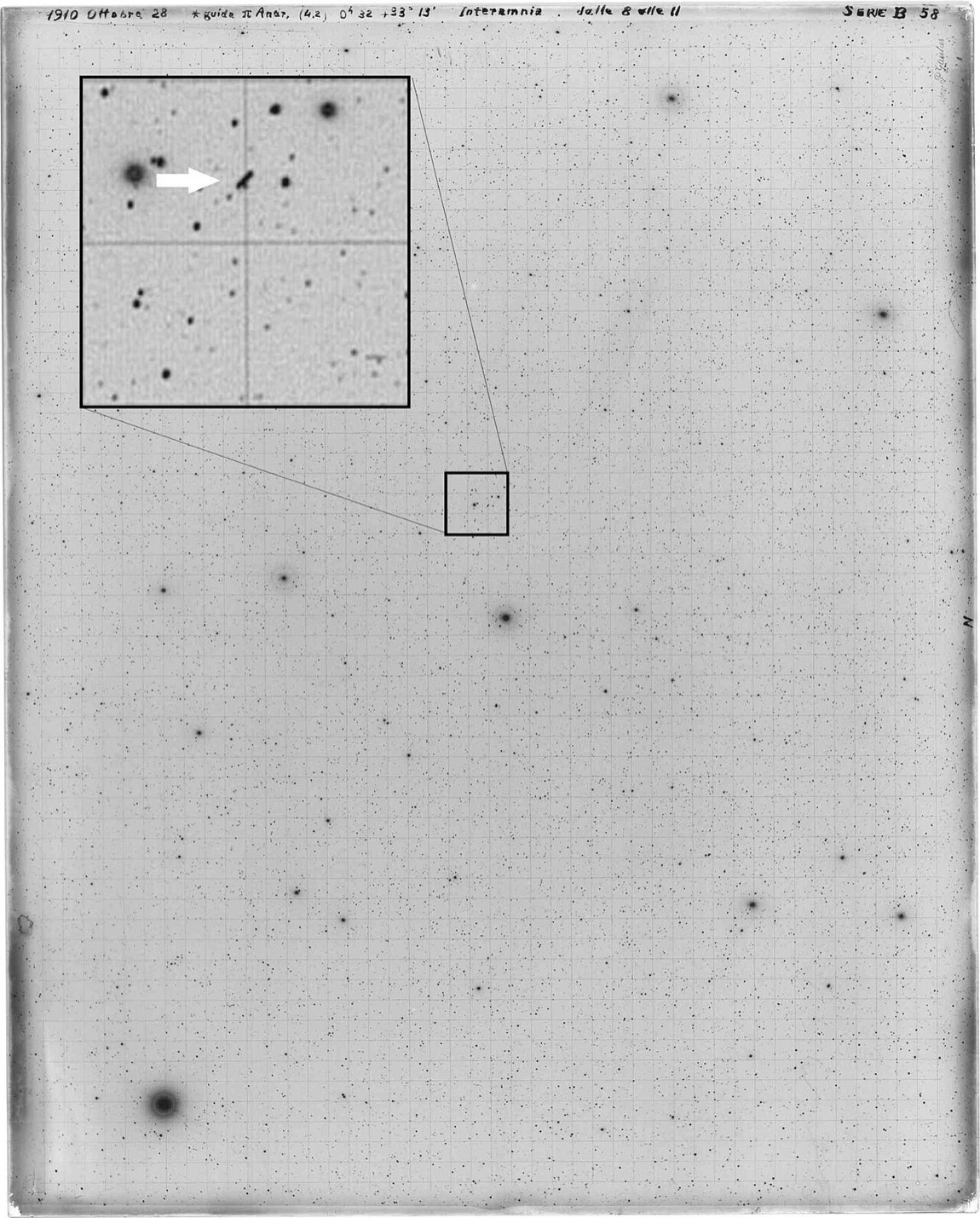
The story of 52 Europa's discovery is a vivid snapshot of nineteenth-century amateur-meets-professional astronomy. On 4 February 1858, Hermann Goldschmidt spotted the asteroid from his apartment balcony in Paris. Goldschmidt was a German-born painter who had taken up asteroid hunting as a passionate side pursuit, eventually discovering fourteen asteroids using nothing more than a small telescope and extraordinary patience. Finding a 300-kilometer space rock from an urban rooftop — before electric city lighting had turned European skies into the orange glow we know today — illustrates both how dark Paris skies once were and how systematically Goldschmidt swept the sky. 52 Europa was numbered sequentially as the fifty-second asteroid to be catalogued, reflecting the still-manageable pace of discovery in the mid-nineteenth century, when each new find was an individual event worthy of a name rather than a database entry number.
07 A name shared with a famous moon
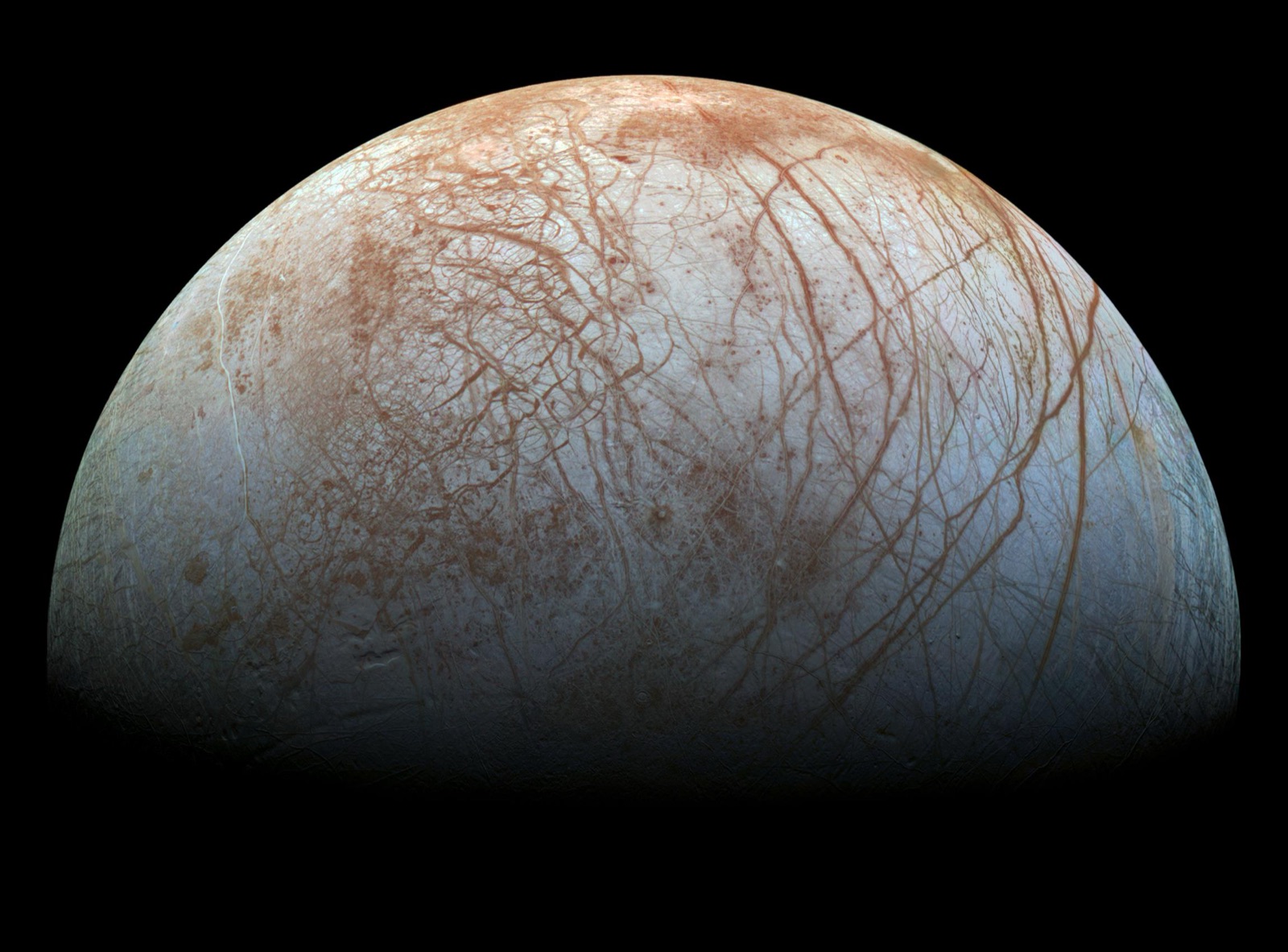
52 Europa takes its name from Europa, one of Zeus's conquests in Greek mythology — a Phoenician princess whom the god famously approached in the guise of a white bull. The name was available in 1858 because the convention of naming Jupiter's moons after Zeus's lovers and companions had not yet been formalized into strict practice. As a result, the asteroid and Jupiter's fourth-largest moon share identical names, a situation that occasionally creates confusion in casual reading. Jupiter's moon Europa has since become one of the most scientifically celebrated objects in the Solar System for its subsurface ocean, while the asteroid of the same name remains far less famous despite being considerably larger in physical diameter. The shared name is not entirely a coincidence of carelessness — both objects were named independently from the same deep well of Greek mythology that early planetary scientists drew upon — but it does mean that researchers must always specify "52 Europa" or "Jovian moon Europa" to avoid ambiguity.
08 The moon hunt that found nothing Deeper
Given Europa's large size, it is a reasonable question whether it might host a small companion moon of its own — gravity, after all, can capture or retain debris around a sufficiently massive body. In 1988, astronomers put that question to a direct test using the UH88 telescope at the Maunakea Observatories in Hawaii, one of the premier observing sites in the world at that time. They searched specifically for satellites or even a diffuse dust ring orbiting 52 Europa. The effort came up empty: no moons, no detectable dust cloud. That null result places constraints on what might be lurking there — any companion object would need to be below the detection threshold of the instruments used. The search was conducted more than three decades ago, and modern adaptive-optics systems on large telescopes, or a dedicated spacecraft flyby, could push sensitivity far deeper. For now, 52 Europa appears to be a solitary traveler, but the definitive word on that question has not yet been written.
09 When an asteroid fooled star cataloguers
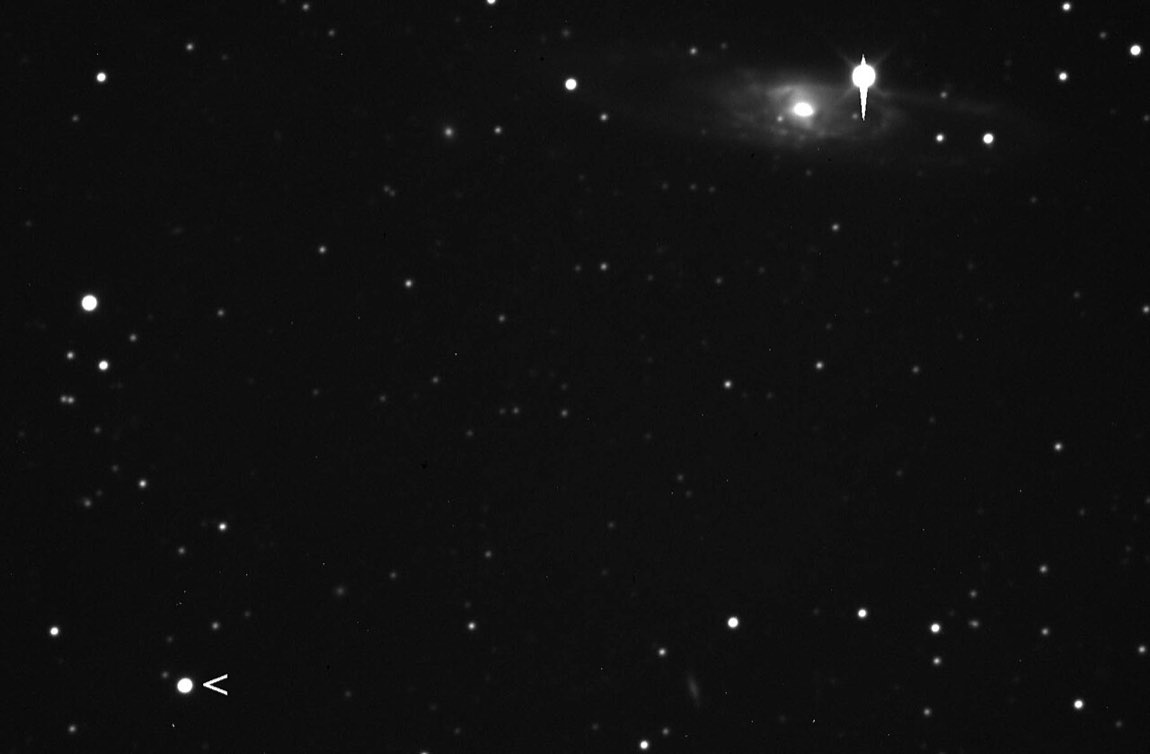
One of the more curious footnotes in 52 Europa's history involves a case of mistaken celestial identity. In 1934, Emily Hughes working at Harvard College Observatory recorded what she believed was a cataclysmic variable star in the constellation Aquarius, catalogued as CV Aquarii. Cataclysmic variable stars are dramatic systems — typically a white dwarf pulling material from a companion star — known for sudden, unpredictable brightenings. The discovery was entered into the astronomical record and presumably influenced subsequent discussions of variable star populations. The problem was that CV Aquarii was not a variable star at all. It was 52 Europa. The moving asteroid had been caught crossing the same patch of sky on the observation date, its brightness changes mimicking the fluctuation signature of a variable star rather than revealing themselves as the motion of a solar system body. The misidentification stood uncorrected long enough to earn a formal catalogue designation before the truth emerged.
10 The second-largest C-type in the belt Deeper
Among C-type asteroids specifically, 52 Europa holds the rank of second largest. That distinction matters scientifically because C-types are the most common asteroid class and are closely linked to carbonaceous chondrite meteorites — some of the most chemically primitive rocks available for study on Earth. The largest C-type, 10 Hygiea, outranks Europa in size, and both objects orbit in the outer main belt where the Sun's heat has been gentle enough to preserve volatile-rich and carbon-bearing minerals over the age of the Solar System. Studying an object as large as 52 Europa gives scientists a chance to understand how big a C-type body can grow before internal heat — generated by radioactive decay in the first few million years after formation — begins to differentiate and alter the primitive chemistry. Europa's low density of about 1.5 g/cm³ suggests that full differentiation never occurred, or that significant porosity survived even if some internal processing took place, though the article does not resolve that question definitively.
11 How to track it in the night sky
52 Europa's orbit keeps it between roughly 2.75 and 3.44 AU from the Sun, which means at its closest approach to Earth it can brighten enough to be a worthwhile target for amateur astronomers with moderate telescopes. Its dark C-type surface reflects very little sunlight — C-types are notoriously low in albedo — so Europa never becomes a naked-eye object the way the brightest asteroids like Vesta can during favorable oppositions. Its orbital period of 5.44 years means that oppositions, when Earth passes between Europa and the Sun and the asteroid is at its closest and brightest for a given year, recur on roughly that cycle relative to the background stars. Its orbital inclination of 7.482° with respect to the ecliptic is moderate, meaning Europa spends most of its time reasonably close to the ecliptic plane and can be found in the standard zodiacal constellations that asteroid hunters routinely patrol. Ephemeris data from JPL Horizons or the Minor Planet Center can provide precise nightly positions for any planned observation.
 ⤢