Asteroid · Deep guide
1036 Ganymed
Also called: 1036 Ganymed · (1036) Ganymed · 1924 TD
The largest near-Earth asteroid — about 35 km across, though it never crosses Earth's orbit.
What is it?
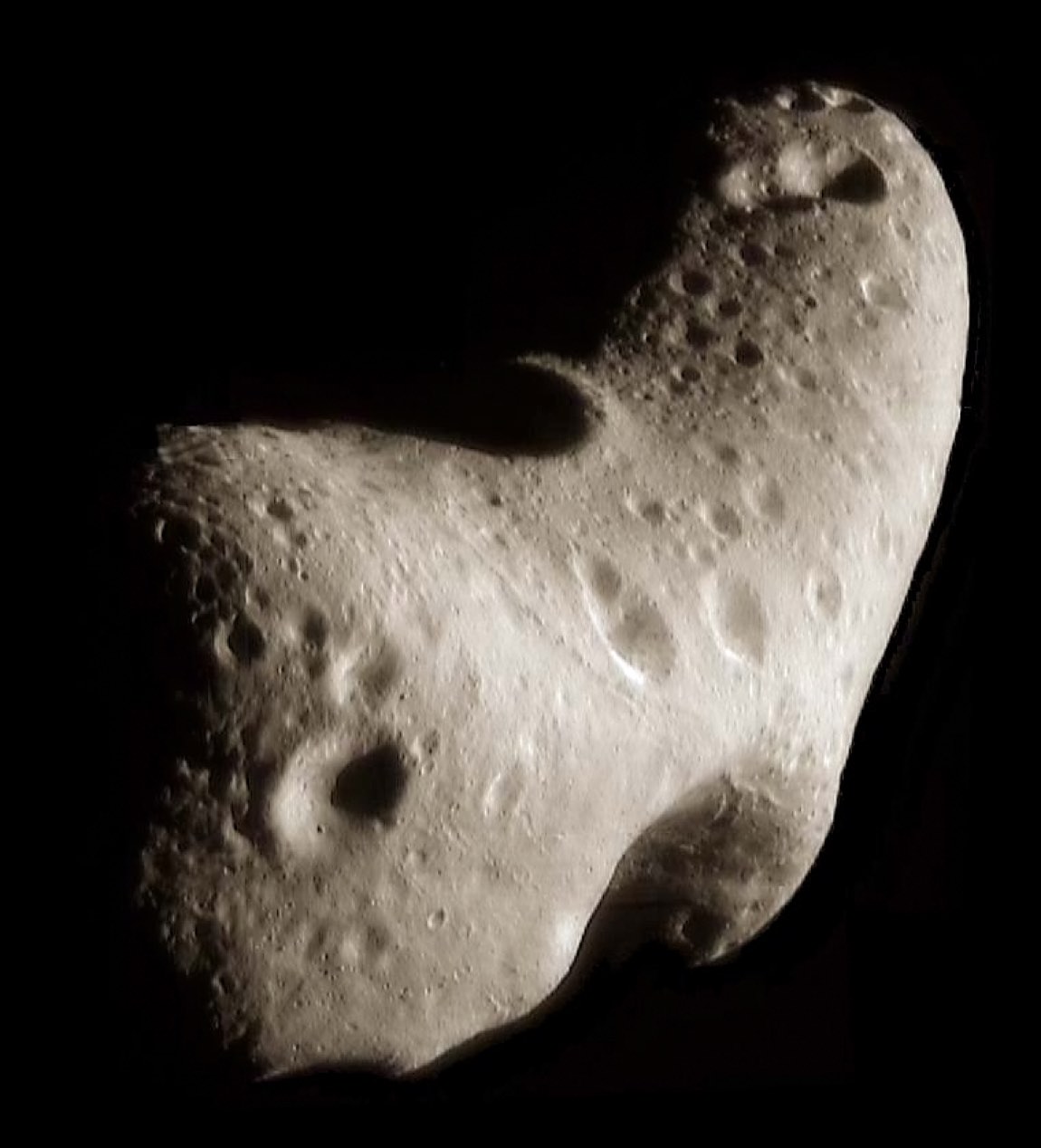
Ganymed is a stony asteroid on a highly eccentric orbit that brings it into Earth's neighbourhood, making it the largest known near-Earth object. At roughly 35–38 km across it is about twice the size of Eros. Despite its size it is not considered a threat, because its orbit does not cross Earth's. Walter Baade discovered it in 1924; its name is the German form of Ganymede, not to be confused with Jupiter's moon.
The deep dive
Researched for the Atlas from Wikipedia — 1036 Ganymed (4,505 characters read) · updated Nov 14, 2026
01 The largest near-Earth asteroid of all
Ganymed holds a remarkable distinction: at approximately 35 kilometers across, it is the largest near-Earth object known. To put that in perspective, 35 kilometers is roughly the distance you might drive during a half-hour highway commute. Despite this imposing size, Ganymed belongs to the Amor group, meaning it approaches Earth's orbital neighborhood from the outer solar system but never actually crosses our planet's path. That classification spares it from being counted as a direct impact threat in the conventional sense. Its closest possible approach to Earth — a figure called the minimum orbit intersection distance — is 0.343339 AU, equivalent to about 51,000,000 kilometers or 134 times the distance from Earth to the Moon. So while Ganymed is a giant among near-Earth objects, it maintains a respectful, if not enormous, margin from our world.
02 An orbit that swings between worlds
Ganymed traces a highly elongated path around the Sun, with an eccentricity of 0.53 — meaning its orbit is far from circular. At its closest, it comes within 1.2 AU of the Sun, and at its farthest it reaches 4.1 AU, pushing well into the main asteroid belt. One full trip around the Sun takes about 4 years and 4 months, or 1,589 days, with a semi-major axis of 2.66 AU. The orbit is also steeply tilted, inclined 27 degrees relative to the ecliptic plane. This combination of high eccentricity and steep inclination means Ganymed does not behave like most asteroids, which travel on more sedate, flatter paths. Instead, it carves a dramatic arc that carries it from near-Earth space out to the realm of Jupiter's neighborhood and back again, crossing the orbit of Mars along the way.
03 A future close shave with Mars Deeper
Because Ganymed's eccentric orbit carries it well past Mars, it qualifies as a Mars-crosser in addition to being an Amor asteroid. This is not merely a geometric technicality — calculations show that on 16 December 2176, Ganymed will pass Mars at a distance of just 0.02868 AU, equivalent to about 4,290,000 kilometers. For comparison, the Moon orbits Earth at roughly 384,000 kilometers, so this Mars flyby will be about eleven lunar distances away from the Red Planet. While that is not a collision course, it is a genuinely close encounter by solar system standards, and it illustrates how gravitational interactions with Mars could gradually nudge Ganymed's orbit over long timescales. Future generations of astronomers — or perhaps even inhabitants of Mars — will have a rare opportunity to observe a 35-kilometer mountain of rock sailing past their sky.
04 Walter Baade and the 1924 discovery
Ganymed was discovered on 23 October 1924 by German astronomer Walter Baade, working at the Bergedorf Observatory in Hamburg. Baade would go on to become one of the twentieth century's most influential observational astronomers, known for his work on stellar populations and the distance scale of the universe, but in 1924 he was making careful photographic surveys of the sky. The asteroid received the provisional designation 1924 TD before being formally numbered 1036. Its early discovery date has been scientifically advantageous: a century of observations means astronomers have an unusually rich baseline of data on its brightness, position, and behavior. A paper published as early as 1931 derived an absolute magnitude of 9.24 from the observations accumulated to that point, only slightly brighter than the currently accepted value of 9.45, showing how reliable those early measurements turned out to be.
05 Named for a Trojan prince turned cup-bearer
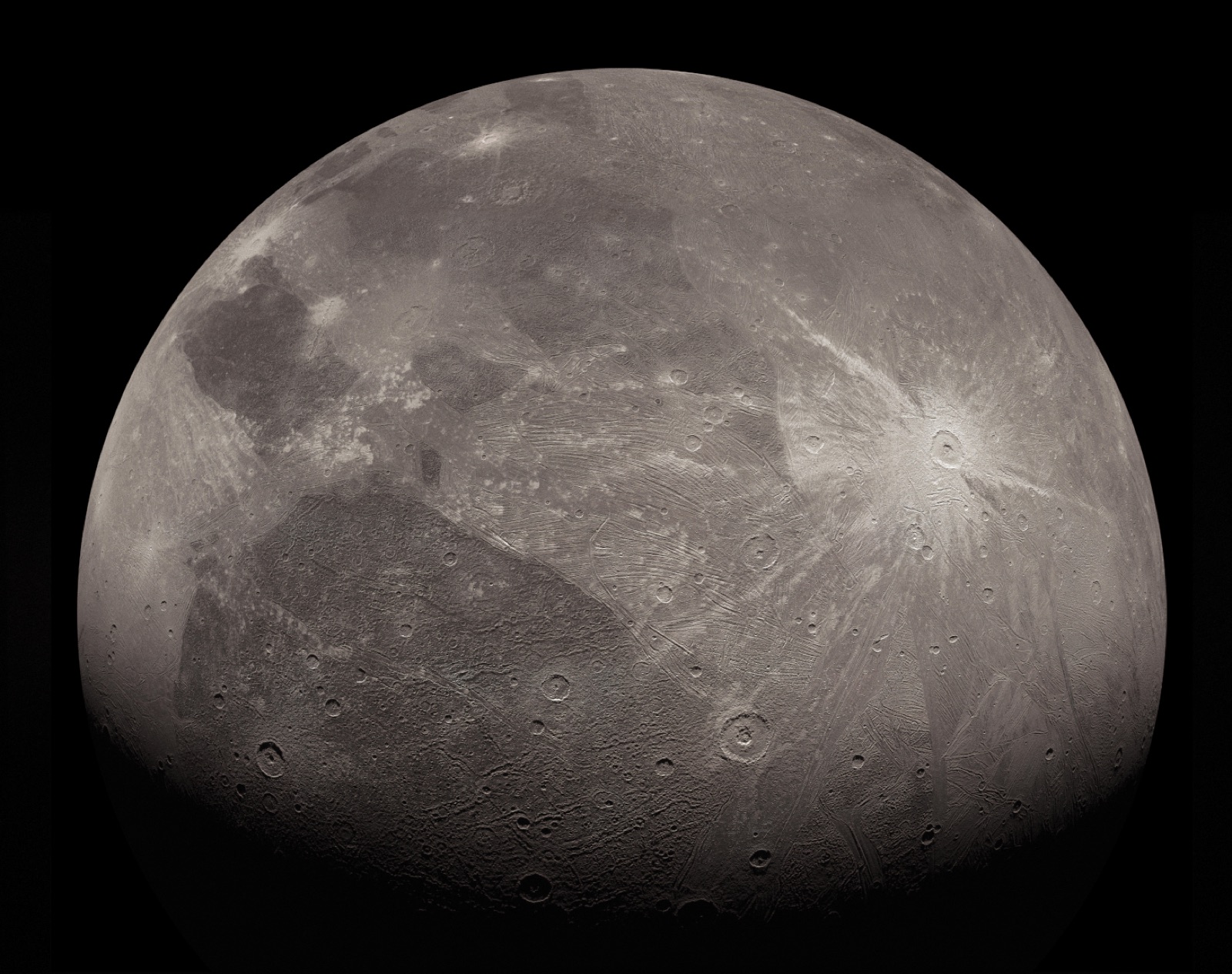
The asteroid's name comes from Ganymede, a figure in Greek mythology described as a Trojan prince who was abducted by Zeus to serve as cup-bearer to the gods on Mount Olympus. The name is spelled in its German form, "Ganymed," reflecting the nationality of its discoverer, Walter Baade. This same mythological figure had already lent his name to a far more famous object: Jupiter's third moon, Ganymede, discovered in 1610 by Italian astronomer Galileo Galilei. That moon is the largest in the entire solar system, so the asteroid Ganymed finds itself sharing a mythological identity with an object that thoroughly outclasses it in size. The naming was not unprecedented — asteroid names and moon names have overlapped in the early history of solar system nomenclature — but it does create a small source of confusion that careful writers navigate by spelling them differently.
06 A stony surface rich in pyroxene minerals Deeper
Ganymed is classified as an S-type asteroid across multiple taxonomic systems, including the Tholen classification, the SMASS system, and the S3OS2 scheme. The S designation signals a stony composition dominated by iron and magnesium silicates, making it relatively reflective compared to darker asteroid types. Surface albedo measurements from IRAS, the Japanese Akari satellite, and NASA's NEOWISE mission cluster between 0.238 and 0.293, confirming that moderate reflectivity. Spectral analysis places Ganymed in the S(VI) spectral subtype, pointing to a surface particularly rich in orthopyroxenes — minerals that also appear in certain types of stony meteorites found on Earth. Metals may also be present, but if so they are buried beneath the surface layer and do not show up clearly in spectral readings. This makes Ganymed compositionally similar to ordinary chondrite meteorites, the most common type to fall to Earth.
07 How big is it, exactly? Competing measurements Deeper
Pinning down Ganymed's exact size has required multiple independent techniques, and the answers do not all agree precisely. Infrared surveys by IRAS, Akari, and NEOWISE return diameters ranging from 31.66 to 37.67 kilometers depending on the method and assumptions used. The Collaborative Asteroid Lightcurve Link derives a mean diameter of 31.57 kilometers with an albedo of 0.2809. A 2012 compilation by researcher Carry gave a diameter of 34.28 ± 1.38 kilometers. Perhaps the most direct measurement came from stellar occultations — moments when Ganymed passed in front of a star and its shadow was timed from multiple locations on Earth. An occultation observed from California on 22 August 1985 provided early size data. Follow-up occultation observations in 2011 yielded a cross-sectional profile with a semi-major axis of 39.3 kilometers and a semi-minor axis of 18.9 kilometers, hinting that Ganymed may not be as spherical as radar images alone suggest.
08 Radar imaging reveals a roughly spherical shape
In 1998, Ganymed became a target for the legendary Arecibo radio telescope in Puerto Rico, which turned its powerful radar beam on the asteroid and produced actual images. Those images revealed a roughly spherical object — a shape that is somewhat unusual among asteroids of moderate size, which more often look like lumpy potatoes or contact binaries. However, the 2011 occultation results, with their notably different semi-major and semi-minor axes of 39.3 and 18.9 kilometers, raise the possibility that the shape is more elongated than the radar snapshot implied, or that the two techniques sampled different cross-sections of the body. Reconciling these measurements remains part of the ongoing effort to characterize Ganymed's true three-dimensional form. Radar observations like those from Arecibo are among the most powerful tools available for studying nearby asteroids without sending a spacecraft.
09 Rotation and what polarimetry reveals Deeper
Ganymed completes one rotation in just over 10.3 hours — a figure pinned down by decades of photometric lightcurve studies. The best-rated measurements from American photometrist Frederick Pilcher at Organ Mesa Observatory in New Mexico gave a period of 10.297 hours, with a brightness amplitude of 0.28 to 0.31 magnitudes. Three independent modeling studies using data from the Uppsala Asteroid Photometric Catalogue, WISE thermal infrared observations, and other sources converged on periods of 10.313, 10.31284, and 10.31304 hours — impressively tight agreement. Those models also determined candidate spin axis orientations in ecliptic coordinates, clustering near ecliptic latitudes of around −73° to −79°, suggesting a steeply tilted rotation axis. Complementing this, Japanese astronomers conducted polarimetric observations and found only a weak correlation between polarization and rotation angle, implying that Ganymed's surface composition and terrain are relatively uniform across its observable face.
10 How observers can spot Ganymed from Earth
With an absolute magnitude of 9.45, Ganymed is too faint to see with the naked eye under ordinary circumstances, but it is a rewarding target for dedicated amateur astronomers with moderate telescopes. Its absolute magnitude represents its brightness at a standardized distance, but during favorable approaches Ganymed can brighten considerably. Its long observational history — stretching back to 1924 — means that its orbit is extremely well determined, making it easy to predict exactly when and where it will appear in the sky. The rich archive of lightcurves gathered since 1985 by observers around the world shows what a productive target it has been for small-telescope photometry. For anyone equipped to record brightness variations over hours, Ganymed's 10.3-hour rotation period is short enough that a single night's observing session can capture a nearly complete lightcurve, revealing the gentle waxing and waning of reflected sunlight as the asteroid turns.
11 Open questions about shape and interior Deeper
Despite nearly a century of observation, Ganymed still harbors genuine uncertainties. The tension between the roughly spherical shape suggested by 1998 Arecibo radar imaging and the distinctly non-spherical 2011 occultation cross-section — with axes of 39.3 and 18.9 kilometers — has not been fully resolved. It is possible the two observations caught different orientations of an elongated body, or that the radar images lacked the resolution to reveal pronounced flattening. The asteroid's internal structure is entirely unknown: whether it is a solid monolith, a fractured rubble pile held together by gravity, or something in between cannot be determined from remote sensing alone. Its S-type composition suggests possible links to ordinary chondrite meteorites, but no spacecraft has visited Ganymed to collect ground-truth data. As the largest near-Earth object, it represents a scientifically compelling target for a future rendezvous mission that could answer these structural questions definitively.