- Surface temperature
- 3,280 K
- Radius
- 0.03 × the Sun
- Luminosity
- 0.000 × the Sun
- Spectral type
- dM6 e
Star · Deep guide
Ross 248
The star Voyager 2 is (very slowly) heading toward.
What is it?
Ross 248, 10.3 light-years away in Andromeda, is a faint red dwarf with one wonderful footnote: in about 40,000 years, Voyager 2 will drift within 1.7 light-years of it — the spacecraft's first stellar 'encounter' after leaving home. Around the same era, Ross 248's own motion will briefly make it the closest star to the Sun.
The deep dive
Researched for the Atlas from Wikipedia — Ross 248 (2,761 characters read) · updated Sep 20, 2026
01 The astronomer who put it on the map
Ross 248 owes its name to Frank Elmore Ross, who first catalogued it in 1926 as part of his second published list of proper-motion stars. Proper-motion surveys like Ross's were the primary tool of the era for hunting nearby stars: a star that appears to drift noticeably against the background of more distant stars from year to year is almost certainly close to us. Ross detected that drift and added the star to the census of the solar neighborhood. Decades later it would prove too faint to be included in the Hipparcos astrometric satellite survey, which was itself designed to measure stellar positions with extraordinary precision — a reminder of just how dim this star truly is. Its alternative designations, HH Andromedae and Gliese 905, reflect its later appearances in variable-star and nearby-star catalogs, each name a small chapter in the history of stellar bookkeeping.
02 A red dwarf by the numbers
Ross 248 carries the stellar classification M6 V, placing it firmly among the coolest, smallest category of hydrogen-burning main-sequence stars. Its mass is roughly 14% of the Sun's mass and its radius about 19% of the Sun's radius — meaning you could line up roughly five of these stars side by side and still not span one solar diameter. Most striking is its luminosity: just 0.2% of the Sun's output. That extraordinary dimness explains why, at only 10.30 light-years (3.16 parsecs) away — practically next door in galactic terms — it remains completely invisible to the naked eye. Every photon it releases is spread across an enormous sphere of space, and by the time that light reaches Earth, far too little of it falls on any given square centimeter of a human eye to register as a visible pinprick of light.
03 Starspots and a landmark discovery Deeper
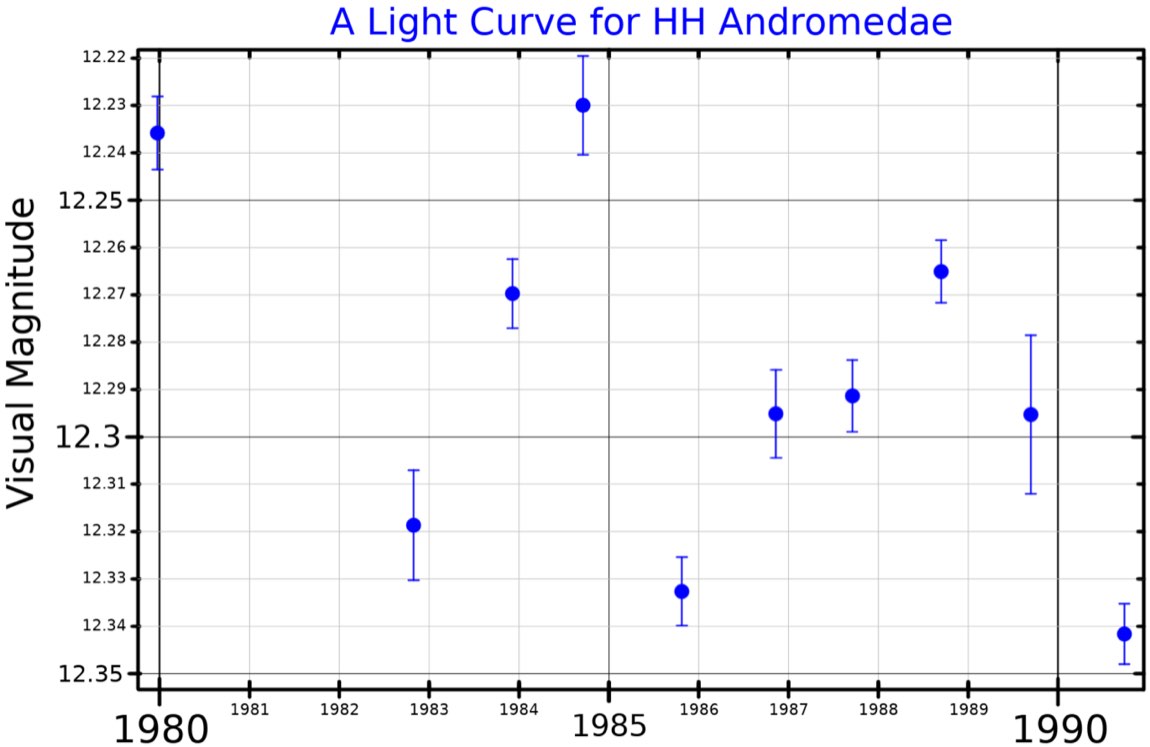
In 1950, Ross 248 made a small but genuine piece of astronomical history. It became the first star for which a subtle variation in brightness was attributed specifically to spots on its photosphere rotating in and out of view — dark, magnetically active regions analogous to sunspots but covering a much larger fraction of the stellar surface. Stars that vary in this way are now classified as BY Draconis variables, a whole class named after their prototype. Ross 248 was the proof-of-concept that launched that classification. The effect is measurable but modest: its visual magnitude oscillates between 12.23 and 12.34, a range of just 0.11 magnitudes. Layered on top of that rotational modulation is a longer-term cycle of chromospheric activity with a period of approximately 4.2 years, though the article notes this cycle carries a qualifier of high probability rather than absolute certainty.
04 Searching hard for a hidden companion Deeper
Astronomers have gone to considerable lengths to determine whether Ross 248 is truly a solitary star or harbors an unseen partner. Proper-motion studies have found no evidence of a brown dwarf or stellar companion orbiting anywhere between 100 and 1,400 AU — a vast stretch of space. Investigators pressed further, turning the Hubble Space Telescope's Wide Field Planetary Camera toward the star and applying the technique of near-infrared speckle interferometry, which uses rapid exposures to cancel out atmospheric blurring and reveal faint companions very close to a bright source. Long-term astrometric monitoring at the Sproul Observatory detected no gravitational perturbations in the star's path across the sky that would betray an unseen orbiting body. All three independent lines of inquiry have returned the same negative result, making Ross 248 appear to be an isolated red dwarf with no stellar or brown-dwarf companion.
05 How its velocity tells a coming story Deeper
Stars are not fixed in space; they move through the galaxy, and the space velocity of Ross 248 has been measured in the galactic coordinate system as U = −32.9 ± 0.7 km/s, V = −74.3 ± 1.3 km/s, and W = 0.0 ± 1.4 km/s. This particular combination of velocities is carrying Ross 248 on a trajectory that converges with the Solar System. The V component, at −74.3 km/s, is especially telling: it represents motion relative to the local standard of rest in a direction that brings the star progressively closer to the Sun over the coming tens of thousands of years. These velocity measurements, combined with precise distance data, allow astronomers to integrate the star's orbit forward in time and predict its closest approach with remarkable confidence — though successive analyses in 1993 and 2022 show that refining the input data shifts the predicted encounter details slightly, illustrating how precision improves with better measurements.
06 The future nearest star to our Sun
Within the next 80,000 years, Ross 248 is predicted to become the nearest star to the Sun, a title currently held by the Alpha Centauri triple system. A 1993 projection by Matthews estimated the star would claim that distinction in roughly 33,000 years, holding it for about 9,000 years. A more refined 2022 analysis places closest approach at approximately 3.048 light-years (0.9345 parsecs), occurring around 36,500 years from now. For context, that closest approach distance is still nearly three times farther than Alpha Centauri is from us today. Nevertheless, Ross 248 will sit comfortably at the top of the nearest-star rankings for nearly a tenth of an average human lifespan's worth of millennia before receding again and ceding the position back to another star. The slow waltz of stellar neighbors is a reminder that even the Sun's cosmic address changes over geological time.
07 What it would take to reach it in time
Hitting a moving target in interstellar space requires both speed and timing. For a spacecraft launched today, reaching Ross 248 at the moment of its nearest approach — roughly 37,000 years from now — would require an escape velocity from the Solar System of 25.4 km/s. That sounds modest by science-fiction standards, but consider that Voyager 1, the fastest human-made object to have escaped the solar system, left at only 16.6 km/s. A future probe would need to travel roughly 53% faster than our current record holder just to make the rendezvous window. Missing that window means chasing a star that is already pulling away. There is no other context in the article that suggests propulsion technology remotely capable of that speed exists or is imminent — making the 37,000-year target simultaneously precise and, for now, entirely theoretical.
08 Voyager 2's accidental near-miss
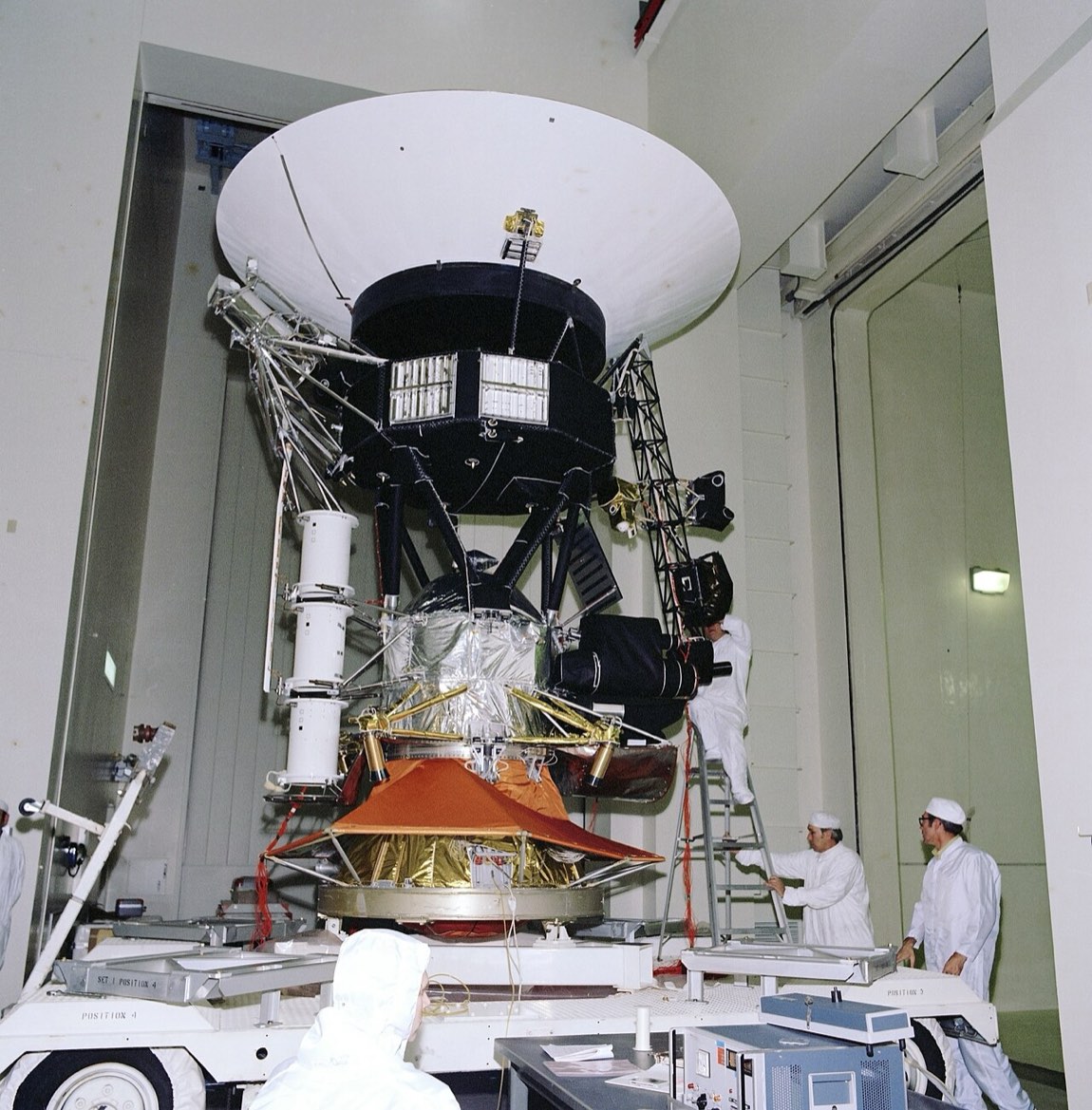
Voyager 2 was launched in 1977 to tour the outer planets, not to visit any particular star. Yet the trajectory it settled into after its planetary encounters will carry it to within 1.7 light-years (0.52 parsecs) of Ross 248 in roughly 42,000 years — a cosmic near-miss by interstellar standards, though still an enormous distance. At its current speed of around 15 km/s relative to the Sun, Voyager 2 has no possibility of slowing down to enter orbit or even linger near the star; it will simply pass through that region of space as a faint, cold artifact of late-twentieth-century human engineering. The encounter is a curiosity of orbital mechanics, not a planned mission objective, and serves mainly as a vivid illustration of how long interstellar travel takes even for objects we have already launched.
09 Ross 248's nearest stellar neighbors
From our vantage point on Earth, we think of Ross 248 as a neighbor of the Sun — but Ross 248 has its own neighbors in the local stellar cluster. The closest other star system to Ross 248 is Groombridge 34, a binary system sitting just 1.8 light-years away from it. The next nearest is Kruger 60, another binary, at 4.5 light-years. Both of those distances are comparable to or smaller than the Sun's distance to Alpha Centauri, painting a picture of a moderately rich patch of the galactic neighborhood. These proximity relationships shift over time as all of these stars move through space on their own trajectories, but at the present epoch, Ross 248 is embedded in a loose grouping of dim red-dwarf and binary systems that collectively represent one of the denser concentrations of stars within roughly 15 light-years of the Sun.
10 Finding it in Andromeda's sky
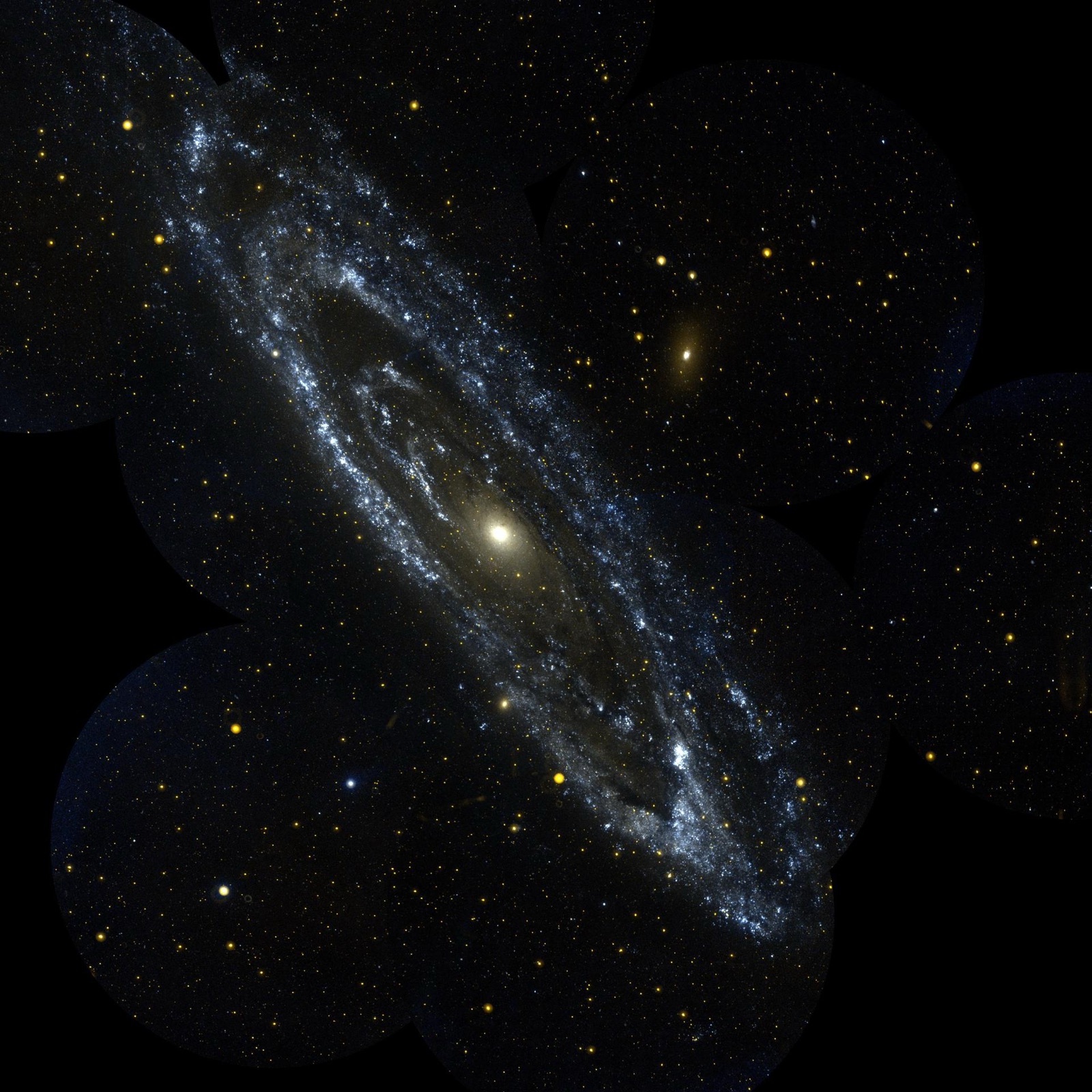
Ross 248 sits in the northern constellation of Andromeda, a region of sky most famous for the Andromeda Galaxy, which is easily visible to the naked eye on a dark night. The star itself is anything but easy to see: with a visual magnitude that ranges between 12.23 and 12.34, it requires at least a moderately sized amateur telescope to detect at all. Even binoculars, which typically reach to around magnitude 10 under good conditions, fall short by nearly two full magnitude steps. For observers equipped with a decent telescope and a precise finding chart, knowing that this unremarkable faint smudge is one of the ten closest stars to the Sun can lend it an outsized sense of importance. Its invisibility to the naked eye is also the reason it was catalogued relatively late — not until 1926 — despite being closer to us than the vast majority of stars visible in any direction.
11 Why being dim kept it out of Hipparcos Deeper
The Hipparcos satellite, operated by the European Space Agency and active from 1989 to 1993, revolutionized stellar astrometry by measuring the parallaxes and proper motions of more than 100,000 stars with unprecedented precision. However, it had a brightness limit: stars fainter than roughly magnitude 12.4 were generally excluded from its primary mission catalog. Ross 248, with a visual magnitude hovering around 12.23 to 12.34, sits right at or beyond that boundary, and the article explicitly notes it was too dim to be included in the Hipparcos survey. This is a somewhat ironic gap: a star close enough to be among the Sun's nearest neighbors, and therefore among the highest-priority targets for precise distance measurement, was excluded from the most comprehensive precision astrometry mission of its era purely because of its intrinsic faintness. Ground-based observations and subsequent missions have since filled in its astrometric data.
 ⤢
⤢