 Photograph · Drew Farwell · CC BY-SA 3.0
Star · Deep guide
Regulus
The Little King of Leo is a star spinning on the edge of flying apart.
What is it?
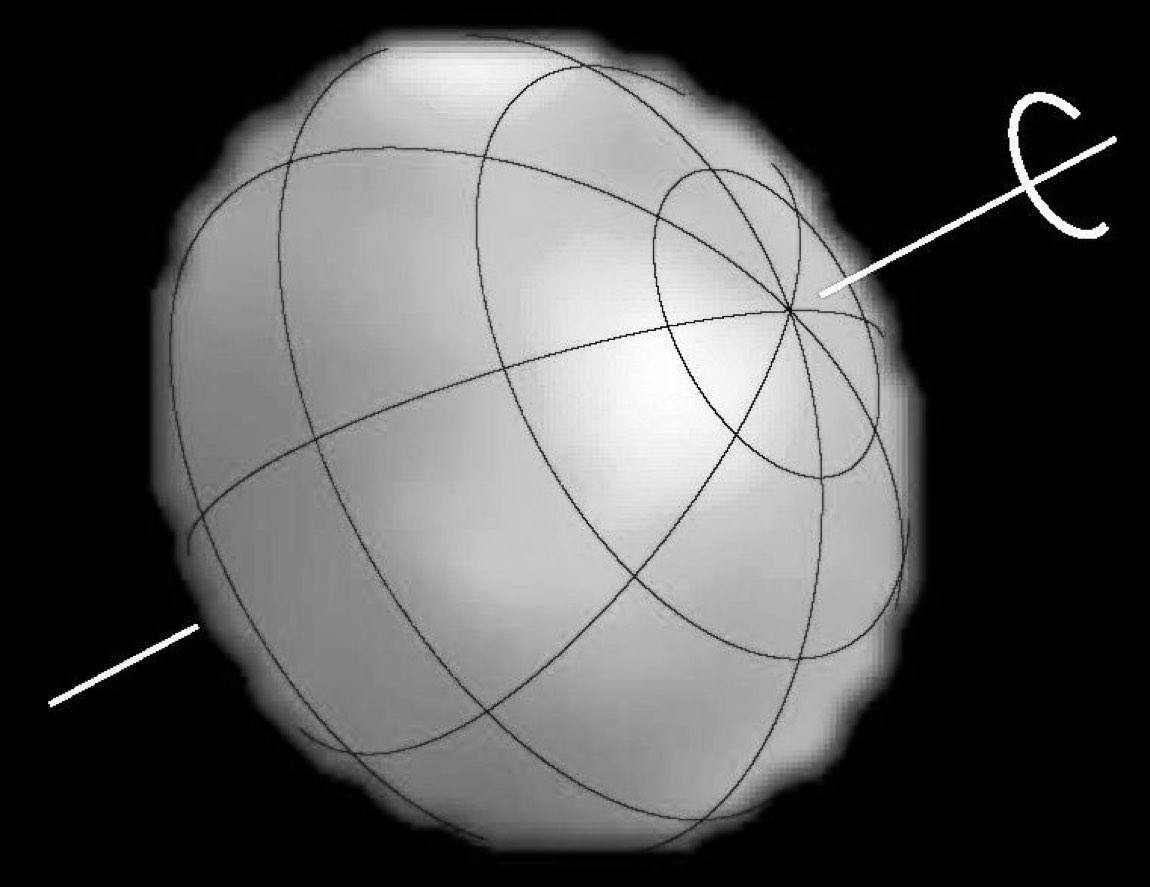
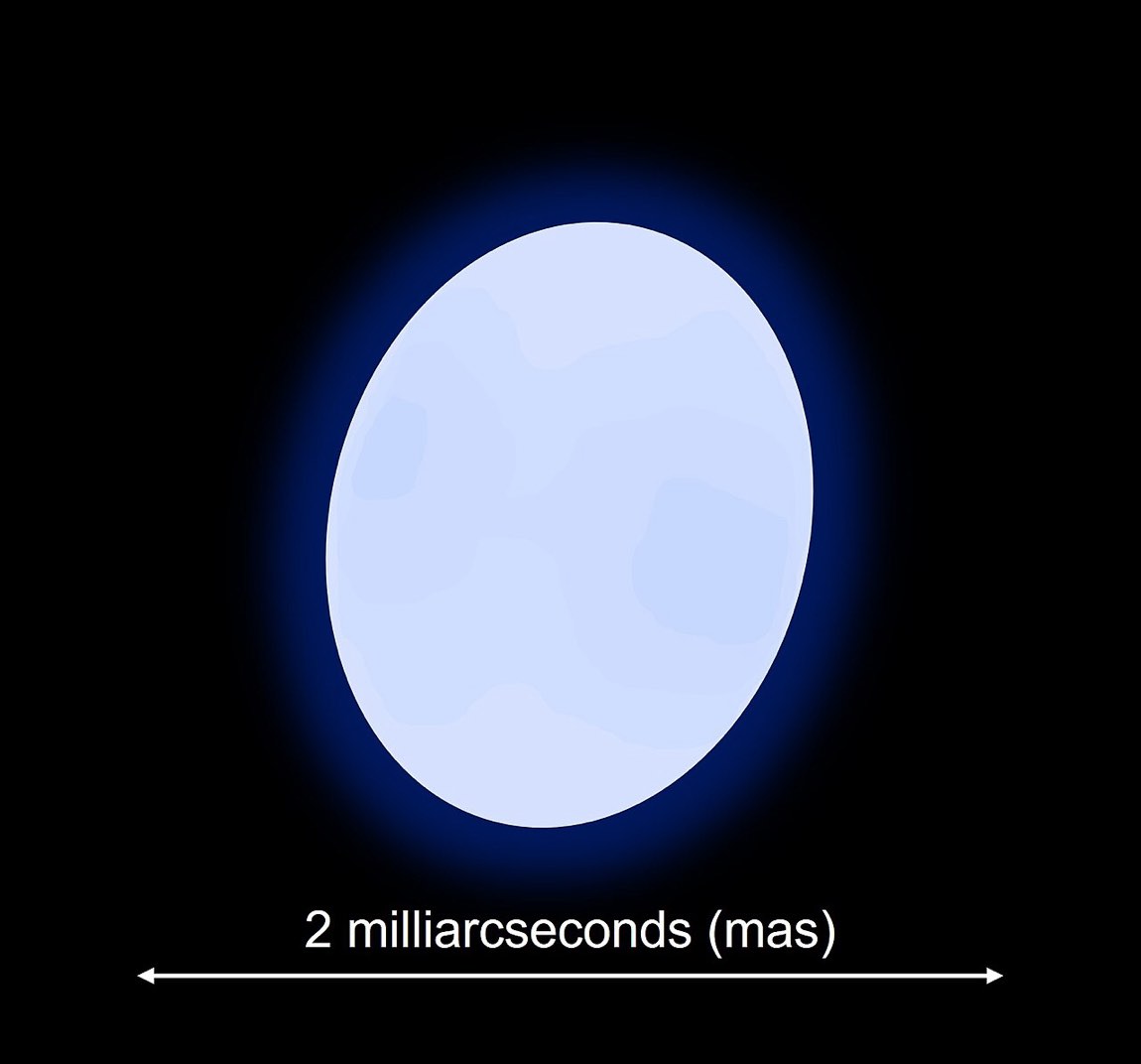
Regulus, 79 light-years away at the heart of Leo, whirls around in under 16 hours — about 96% of the speed at which it would tear itself apart. The spin flattens it dramatically and makes its poles hotter and brighter than its equator. It leads a small entourage: at least three companion stars, including a white dwarf.
The deep dive
Researched for the Atlas from Wikipedia — Regulus (9,022 characters read) · updated Sep 20, 2026
01 A Name Fit for Royalty
The name Regulus is Latin for 'prince' or 'little king', and the star has carried regal titles across nearly every major ancient civilization. Babylonians called it Sharru, meaning 'the King', and recorded it in the MUL.APIN as Lugal — also meaning king — with the description 'star of the Lion's breast'. In Persia, Regulus was considered one of the four royal stars of the Persian monarchy and was known as Miyan, 'the Centre'. Arabic astronomers called it Qalb al-Asad, 'the heart of the lion', a phrase that traces back to the Greek Kardia Leontos. Medieval astrologers counted it among the fifteen Behenian stars, associating it with granite, mugwort, and a specific kabbalistic symbol. In Chinese tradition it is the Fourteenth Star of Xuanyuan, named for the Yellow Emperor, and is also called Nüzhu, representing the emperor's wife and queen. Indian astronomy knows it as the primary star of the nakshatra Maghā, meaning 'the bountiful'. The IAU formally approved 'Regulus' as its official name in its first bulletin of July 2016, cementing a title that humanity had effectively agreed upon for millennia.
02 A System of Four — at Least
What the unaided eye sees as a single bright point is actually at least four stars organized into two pairs. Regulus A is the dominant pair: a brilliant blue-white star orbited by a faint companion — almost certainly a white dwarf — with an orbital period of roughly 40 days. That companion has never been directly observed because it is so much fainter than the primary. The second pair, Regulus BC — also catalogued as HD 87884 — sits about 5,000 AU from Regulus A, which is roughly 125 times the distance between the Sun and Pluto. Regulus B is a K2V orange dwarf that would shine at magnitude +8.1 if seen alone, bright enough for binoculars. Regulus C is a fainter M4V red dwarf at magnitude +13.5, requiring a substantial telescope. The BC pair's orbital period around each other is about 600 years, and their separation was measured as 2.5 arcseconds in 1942. The entire A and BC grouping shares a common proper motion, suggesting they orbit each other over a timescale of several million years — longer than the age of recorded human civilization by a factor of thousands.
03 Spinning So Fast It's Nearly Tearing Apart
Regulus A's primary is one of the most dramatically spinning stars known. With a rotation period of only 15.9 hours — compared to the Sun's leisurely 25 days — its equatorial surface moves at about 320 kilometres per second, which is 96.5% of the critical angular velocity at which the star would begin flinging its own material into space. The result is a strongly oblate shape: the star bulges noticeably at the equator. This distortion triggers a phenomenon called gravity darkening, where the equatorial regions, being farther from the dense core, are significantly cooler and dimmer than the poles. The poles are not merely a little warmer — they are five times brighter per unit surface area than the equatorial region. This asymmetric brightness also causes the star to emit polarized light, a measurable consequence of its extreme spin that distinguishes Regulus A from ordinary, slowly rotating stars. The star contains about 4.15 times the mass of the Sun, yet it completes a full rotation in less than two-thirds of a single Earth day. Its distorted shape also means that the simple two-body gravitational equations of Kepler's third law no longer apply cleanly to its orbit with its companion.
04 An Age Problem Hidden in Plain Sight Deeper
For a long time, astronomers estimated Regulus A to be quite young — somewhere between 50 and 100 million years old — based on comparisons of its temperature, luminosity, and mass against stellar evolution models. Then came a complication: its faint companion is almost certainly a white dwarf, the burnt-out remnant of a star that has completed its entire life cycle. Forming a white dwarf takes at least 1 billion years under normal circumstances, which would make the system at least ten times older than the temperature-and-luminosity estimate suggested. The leading explanation for this contradiction is a history of mass transfer. The star that is now the white dwarf was once the more massive of the pair, but it shed enormous quantities of material onto what is now Regulus A, inflating and reinvigorating it. Regulus A essentially received a massive 'rejuvenation treatment', leaving it looking hotter, brighter, and younger than its true age. This kind of stellar cannibalism is not unique to Regulus, but the system offers an unusually clear case study in how binary interactions can completely disguise the real history of a star that appears perfectly ordinary when observed alone.
05 A Possible Brown Dwarf at the Edge Deeper
Far beyond the BC pair, at an angular separation of 7.55 degrees from Regulus, lies an object catalogued as SDSS J100711.74+193056.2 — a brown dwarf with an estimated mass of roughly 60 times that of Jupiter, which puts it tantalizingly close to but below the threshold for hydrogen fusion. Its effective temperature is estimated at 1,600 K and its spectral type is L9 or T0, placing it on the borderline between the L dwarf and T dwarf categories. The estimated physical distance from Regulus is about 3.9 parsecs, or approximately 12.6 light-years, which would give it an orbital period of around 200 million years if its orbit is circular — comparable to the Sun's own journey around the Milky Way. The evidence for a physical association comes from a shared proper motion, similar radial velocity, and comparable metal abundance with Regulus B. However, the enormous separation makes the gravitational bond extremely weak, and astronomers cannot yet confirm it is truly bound. It may have been flung outward by past dynamical interactions within the system, and future close stellar encounters could strip it away entirely.
06 The Star Nearest the Ecliptic
Of all the bright stars in the sky, Regulus hugs the ecliptic — the apparent path of the Sun across the sky — more closely than any other. It sits just 0.465 degrees from the ecliptic, a nearness that has made it astronomically useful and visually dramatic for thousands of years. The practical consequence is that the Moon frequently passes in front of it, an event called an occultation. These occultations occur in spates every 9.3 years due to the slow precession of the lunar orbit, with the most recent spate centered around 2026. Planetary occultations are rarer: the last time a planet covered Regulus was July 7, 1959, when Venus passed in front of it, and the next such event will not happen until October 1, 2044 — also by Venus. Other planets will not occult Regulus over the next few millennia due to their orbital geometries. Even asteroids have gotten in on the act: in 2005, the asteroid 166 Rhodope occulted Regulus and was filmed from Italy, and in March 2014, the asteroid 163 Erigone cast its shadow across New York and eastern Ontario, though cloud cover prevented any confirmed observations.
07 Occultations and a Test of Relativity Deeper
When the asteroid 166 Rhodope crossed in front of Regulus on October 19, 2005, observers in Italy captured the event on film — but the scientific value went beyond simply timing the asteroid's shadow. Astronomers used the event to measure differential bending of light, finding the results consistent with the predictions of general relativity. This is the same gravitational lensing effect famously confirmed during the 1919 solar eclipse, but demonstrated here with a modest asteroid and a bright star rather than the Sun and background stars. The 2014 occultation by asteroid 163 Erigone had similarly high scientific aspirations. The shadow path was predicted to pass through New York City and eastern Ontario, providing millions of potential observers and a rare chance for precise asteroid shape measurements. The International Occultation Timing Association recorded zero confirmed observations, however, as cloud cover blanketed the entire region. Such events illustrate that even a brilliant, well-studied star like Regulus can still serve as a precision instrument for testing fundamental physics — if the weather cooperates.
08 How and When to Spot Regulus
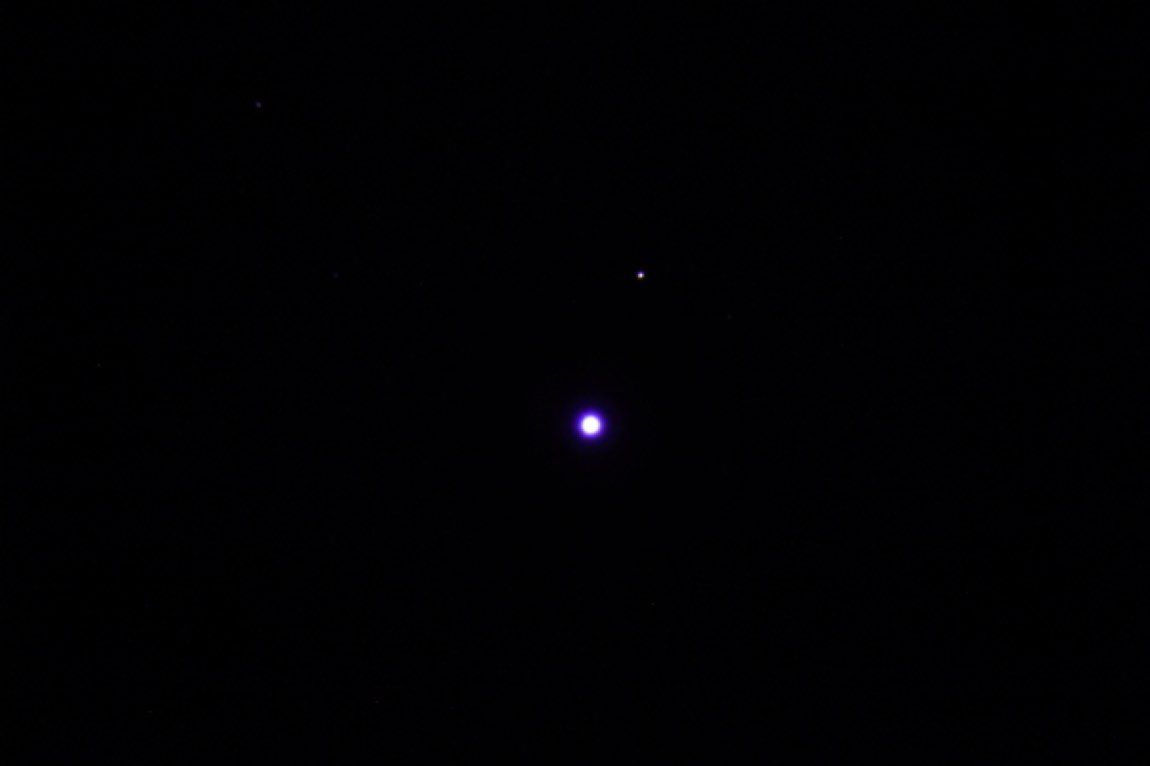
Regulus is the twenty-first brightest star in the night sky, with an apparent magnitude of +1.35 — bright enough to see easily from city suburbs on a clear night. The best time to observe it from the northern hemisphere is during the evening sky of late winter and spring, and it can be watched crossing the entire sky during late February. In practical terms, Regulus is visible at some point of night throughout the year except for roughly a month on either side of August 22–24, when the Sun is too nearby. Finding it is straightforward: Regulus is the brightest star in the 'Sickle' asterism, a curved chain of six stars — including Zeta, Mu, Gamma, Epsilon, and Eta Leonis — that traces the head of the constellation Leo. Regulus itself marks the base of the Sickle's handle. The BC companion pair lies 177 arcseconds from Regulus A, a separation large enough for amateur telescopes to split. Regulus also passes through the field of SOHO's LASCO C3 coronagraph instrument every August, briefly becoming a solar-monitoring asset in addition to a naked-eye spectacle. Heliacal rising — the star's first pre-dawn reappearance after passing near the Sun — occurs in the first or second week of September.
09 Gravity Darkening: Poles vs. Equator Deeper
Gravity darkening is not merely a curiosity of stellar physics — in Regulus A, it produces a star that is genuinely two different stars depending on which part you examine. The phenomenon arises because the star's extreme rotation causes centrifugal effects that reduce the effective gravity at the equator compared to the poles. Lower effective gravity means lower pressure and temperature in the outermost layers, which means the equatorial photosphere glows less intensely. The quantitative contrast in Regulus A is striking: the polar regions are five times brighter per unit surface area than the equatorial belt. This is not a subtle effect at the margins — it fundamentally changes how the star would appear if you could observe it up close from different angles. Viewed pole-on, it would look far more luminous and blue than viewed equator-on, where the cooler, dimmer surface dominates. The oblate shape caused by rapid rotation further complicates the star's spectral appearance as seen from Earth because different rotational geometries intercept different temperature regions. The emission of polarized light — directly detectable by instruments — is a measurable signature of this broken spherical symmetry, giving astronomers an additional diagnostic tool beyond ordinary spectroscopy.
10 Its Place Among the Royal Stars of Persia
In ancient Persian astronomical tradition, four stars were elevated above all others as 'royal stars', used to mark the four quarters of the sky and given regal significance in both astronomy and astrology. Regulus — known in Persia as Miyan, meaning 'the Centre' — was one of these four, alongside Aldebaran, Antares, and Fomalhaut. Its position near the ecliptic made it especially useful for tracking celestial time and the positions of planets. Across neighboring cultures, the name and status were consistent: in Sogdiana it was Magh, 'the Great'; in India it was known as Maghā, 'the Mighty', as well as the primary star of the lunar mansion Maghā in the nakshatra system. Babylonian astronomers, who called it Sharru, identified it as marking the 15th ecliptic constellation. The Greek name Basiliskos — the Greek equivalent of Regulus, meaning 'little king' — was Latinized to Basiliscus in medieval European texts, and the traditional name Regulus itself first appeared in print in the early 16th century. This star's reputation as a king or prince, a heart of the lion, a centre of the sky, was apparently universal across cultures that independently developed systems for mapping the heavens.
11 The Companion Pair: BC Up Close Deeper
While Regulus A commands attention with its spectacular spin and brightness, the BC pair is an intriguing double star system in its own right. Regulus B is a K2V star — an orange dwarf somewhat cooler and smaller than the Sun — and Regulus C is a fainter M4V red dwarf. The two orbit each other with a period of approximately 600 years, and their angular separation was measured at 2.5 arcseconds in 1942. The entire BC pair sits approximately 5,000 AU from Regulus A; for scale, that is roughly 23 times the distance of Pluto from our Sun. Despite this enormous gap, Regulus A and the BC pair share a common proper motion through the galaxy, which is the strongest evidence that they are gravitationally bound and physically related rather than a chance alignment. Their mutual orbit, if they do complete it, takes several million years — so no human timescale could ever witness a single revolution. The Henry Draper Catalogue number for the BC pair is HD 87884, a designation that predates the understanding that these stars were companions of the brilliant Regulus A they sit beside in the sky.
12 Open Questions That Remain Unresolved Deeper
Despite being one of the most studied bright stars in the sky, Regulus leaves several important questions unanswered. The companion to Regulus A's primary star — almost certainly a white dwarf — has never been directly detected; its existence is inferred from spectroscopic radial-velocity variations rather than direct observation, because it is simply too faint relative to its blazing neighbor. The star's severely distorted, oblate shape means that the standard two-body Keplerian orbital equations do not strictly apply, and the long-term perturbations on the orbital period have not been fully characterized. The question of whether the distant brown dwarf SDSS J1007+1930 is genuinely gravitationally bound to the system remains open; its enormous separation of roughly 3.9 parsecs makes the binding energy so small that the conclusion is genuinely uncertain. And the apparent youth of Regulus A — looking 50 to 100 million years old when the system should be over a billion years old — while explainable by mass transfer, has not been confirmed by direct measurement of the white dwarf's cooling age. Each of these threads represents active or potential research, meaning that this seemingly familiar, naked-eye star still has real mysteries embedded within it.
 ⤢
⤢